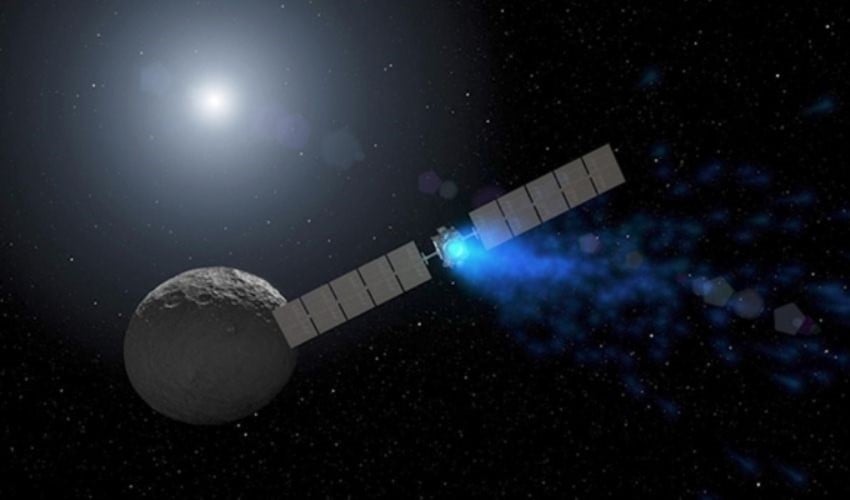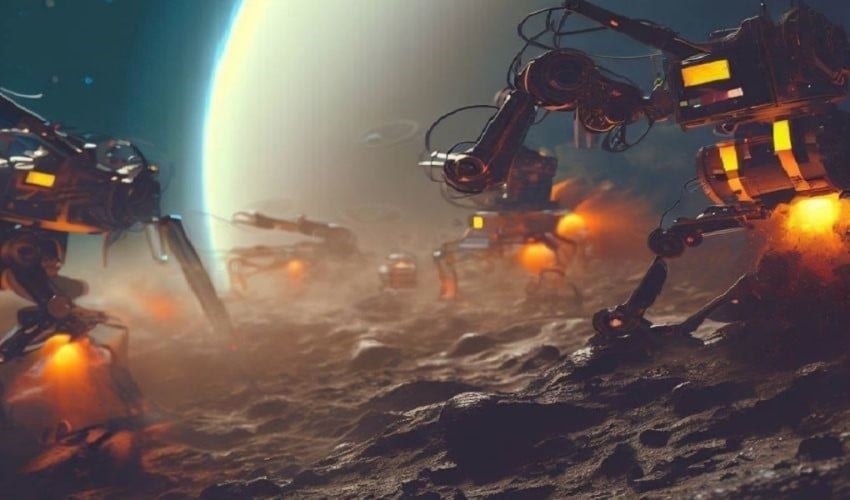
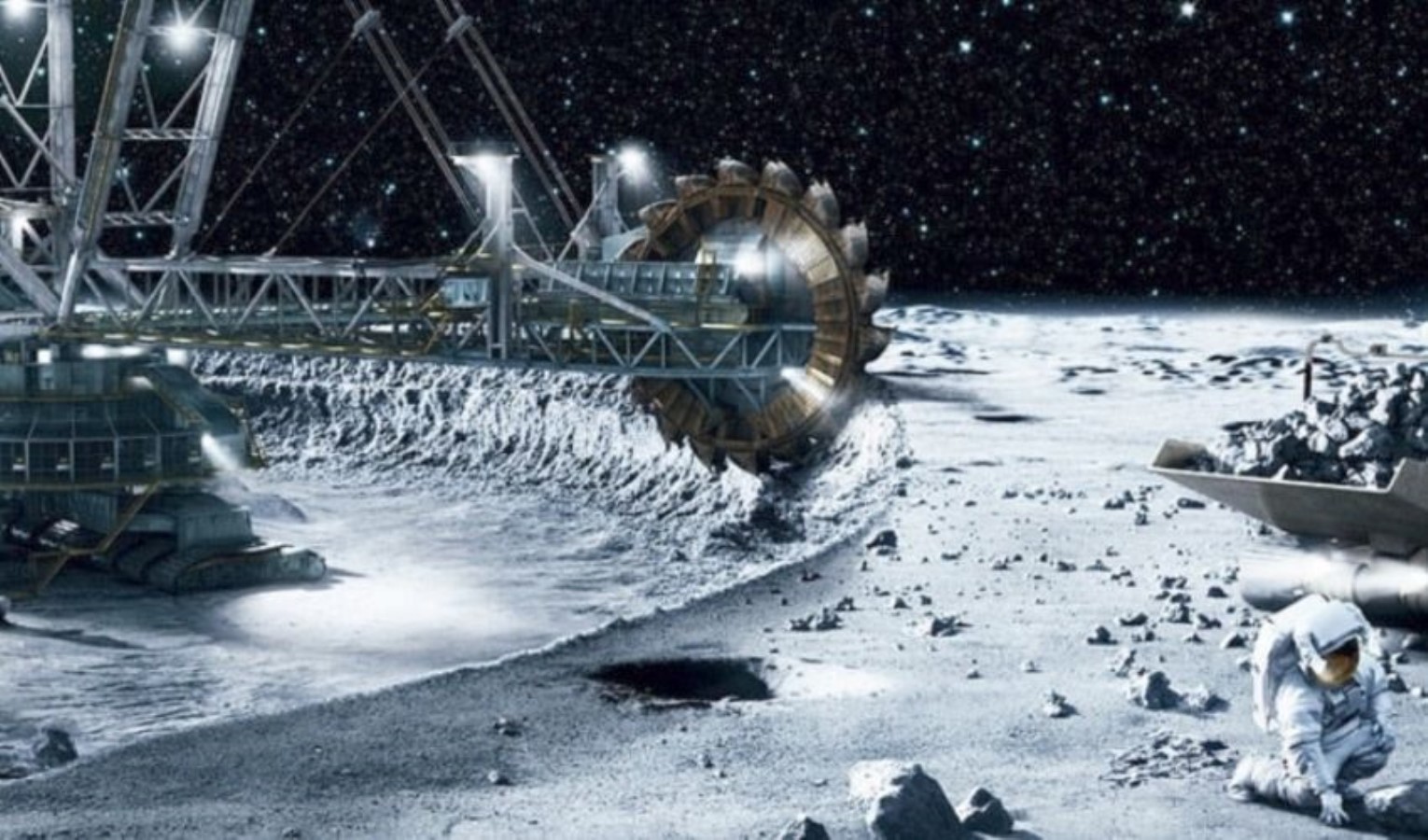
While the limited natural resources on Earth struggle to meet the demands of a growing population and the need for raw materials to sustain production in developing technologies continues to rise, the vision of space mining, proposed as a solution to this problem, could transcend the pages of science fiction and become a reality of the 21st century.
THE IDEA OF MEETING RAW MATERIAL NEEDS HAS BECOME ATTRACTIVE
While space mining was considered nothing more than science fiction before the 1970s, exploration missions that gained momentum with the space race between the Soviet Union and the US pushed scientists to evaluate the potential applications of the theory.
The rapid depletion of rare earth elements and platinum-group metals, which are extracted from the Earth's crust and are critical for technological and economic developments, has made the idea of meeting raw material needs from asteroids attractive.
It is estimated that meeting raw material needs from space would not only reduce the environmental damage caused by mining activities on Earth but also lower the production costs of many technologies due to the abundance of valuable minerals.
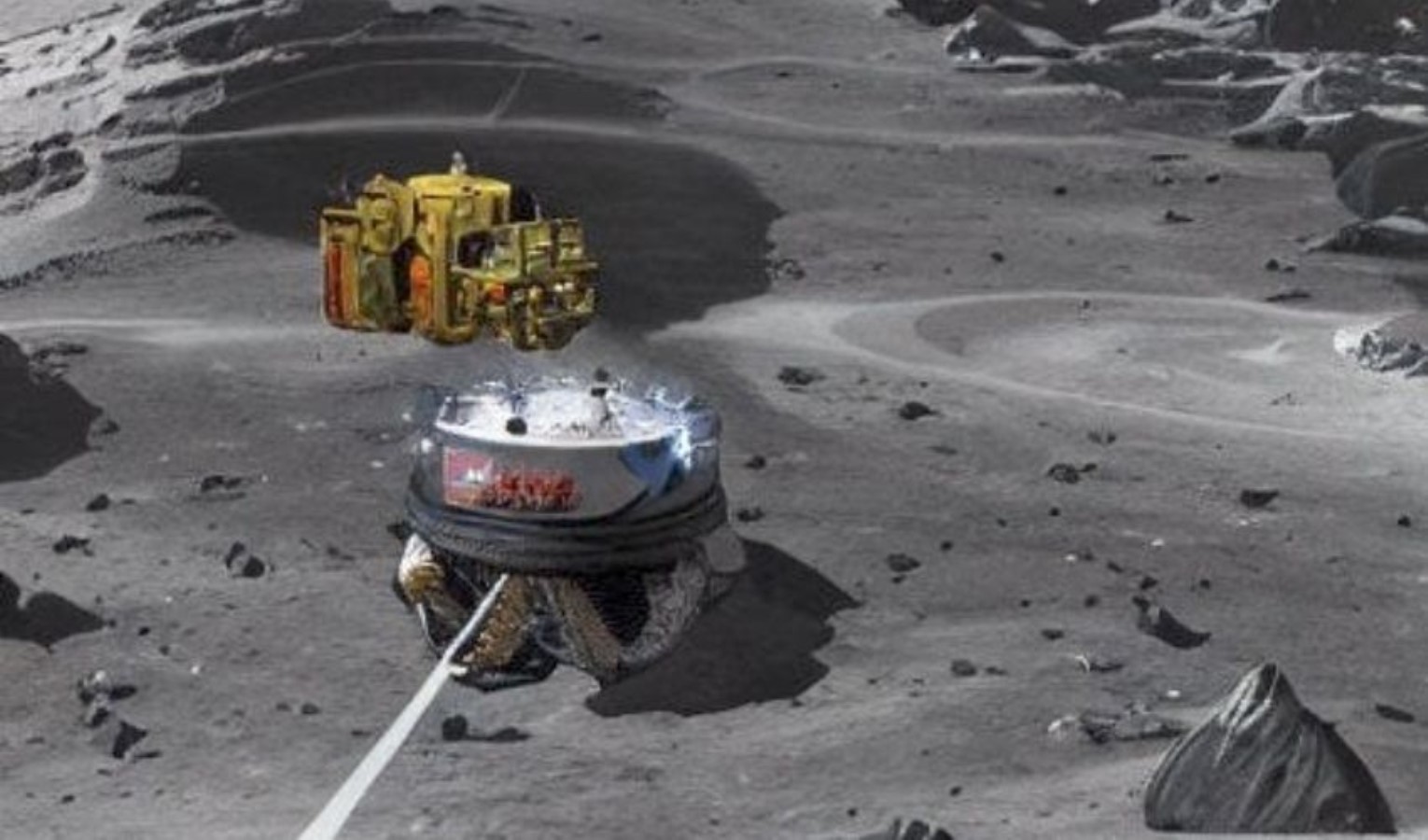
Asteroids are divided into three types based on the proportion of their components: C-type, which has a high percentage of clay and silicates used in fertilizer production; S-type, which contains silicates, nickel, and iron; and the rarest type, defined as "metallic" M-type, which is most likely to carry precious metals.
Researchers, considering the limited payload capacity of spacecraft, have stated that transporting raw asteroid fragments to Earth would be quite costly and have suggested processing the ore on the asteroid surface using biomining, or by transporting it to the orbit of the Moon or Mars.
In addition, the lack of sufficient R&D on logistics and the adaptation of mining techniques to the space environment due to high-cost space flights, as well as the inability to conduct reliable mineral surveying and exploration on asteroids, can be listed as the main obstacles to asteroid mining.
Companies such as AstroForge, TransAstra, and Lunar Outpost, which aim to break new ground in space mining in the US, are targeting to transport asteroids to Earth in the shortest and most profitable process with vehicles capable of identifying, exploring, capturing, and operating asteroids. While Matt Gialich, CEO of AstroForge, claims that precious metals will be extracted from asteroids in the next 10 years, Joel Sercel, CEO of TransAstra, describes the 10-year vision as "insanity."
FUTURE GOALS
The Japan Aerospace Exploration Agency (JAXA) became the first space agency to obtain a clean sample from an asteroid by bringing less than 1 milligram of material from the "Itokawa" asteroid to Earth with the first "Hayabusa" spacecraft sent in 2003. JAXA's second attempt, "Hayabusa 2," was launched into space in 2014 and returned to space to complete its mission, which will last until 2031, after dropping the 5.8 grams of samples it collected from the "Ryugu" asteroid to Earth.
The "Osiris-Rex" spacecraft, which NASA launched into space in 2016, returned to space to study the "Apophis" asteroid after dropping approximately 250 grams of samples it collected from the Bennu asteroid to Earth. Both target locations of Osiris-Rex were chosen from among C-type asteroids that have come to the fore with the possibility of hitting Earth in the next century.
NASA's "Psyche" spacecraft, sent to explore "Psyche," the largest of the M-type asteroids about 280 kilometers wide orbiting the Sun between Mars and Jupiter, will remain in the orbit of the celestial body for about 2 years to map the asteroid without collecting samples from the surface.
Scientists emphasize that space bases built for use in deep space exploration are of critical importance for mining operations to be carried out in the Asteroid Belt between Mars and Jupiter, where the most asteroids are concentrated in the Solar System.
With this vision, the International Lunar Research Station (ILRS) in cooperation with the Russian Federal Space Agency (Roscosmos) and the China National Space Administration (CNSA), and NASA, JAXA, the European Space Agency (ESA), and the Canadian Space Agency (CSA) aim to build bases on the lunar surface with the Artemis project.
Article 2 of the 1967 Outer Space Treaty, to which 110 countries are parties and which forms the framework of international space law regarding exploring, using, and accessing resources in space, states: "Outer space, including the moon and other celestial bodies, is not subject to national appropriation by claim of sovereignty, by means of use or occupation, or by any other means."
The Artemis Accords, signed by many countries led by the US, which contain provisions regarding the establishment of a permanent base on the Moon, the use of the Moon as a stopover for the journey to Mars, and the extraction of precious metals on the Moon, state: "the extraction of space resources does not inherently constitute national appropriation under Article II of the Outer Space Treaty."
The Commercial Space Launch Competitiveness Act, passed by the US Congress in 2015, also includes the provision: "In accordance with the Outer Space Treaty, a state, legal or natural person cannot claim ownership of a celestial body, but can mine on a celestial body for profit and sell the products." After the US, Luxembourg became the second country to pass a bill addressing ownership issues regarding space mining in 2017.
Researchers warn that the fact that the Outer Space Treaty, which focuses on space armament in line with Cold War-era needs, does not contain definitive judgments regarding space mining could lead to conflicts if competition in this field increases in the future.
News Source: AA