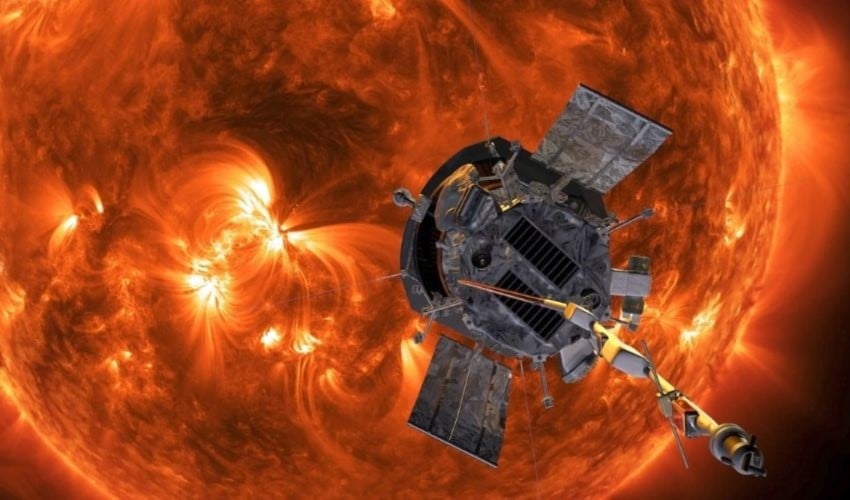
According to the latest status updates from the space agency, the probe has (once again) broken the record for the fastest object ever created by human hands, reaching a speed of 635,266 km per hour.
This new milestone reached by the spacecraft was made possible thanks to the gravity assist it received during its previous flyby of Venus, and it occurred in the middle of its 17th "encounter" with the Sun, which began on September 27 and lasted until October 3.
IT WOULD ORBIT THE EARTH 15 TIMES AN HOUR AND TRAVEL FROM ISTANBUL TO ANKARA IN 2 SECONDS
In a report by Popular Science Turkey citing ScienceAlert, it is noted that if we were to assume an aircraft were traveling as fast as the Parker Solar Probe on October 9, that aircraft would orbit the Earth approximately 15 times an hour or travel from Ankara to Istanbul in just 2 seconds. Of course, no passenger could survive such a journey. Still, it sounds impressive.
This latest close approach by the spacecraft also represents a new record in terms of distance, reaching just 7.26 million km from the Sun's plasma "surface." To prevent it from vaporizing in temperatures reaching 1,400 °C and to protect the sensitive instruments it carries, the spacecraft is covered with an 11.5 cm thick carbon-composite shield.
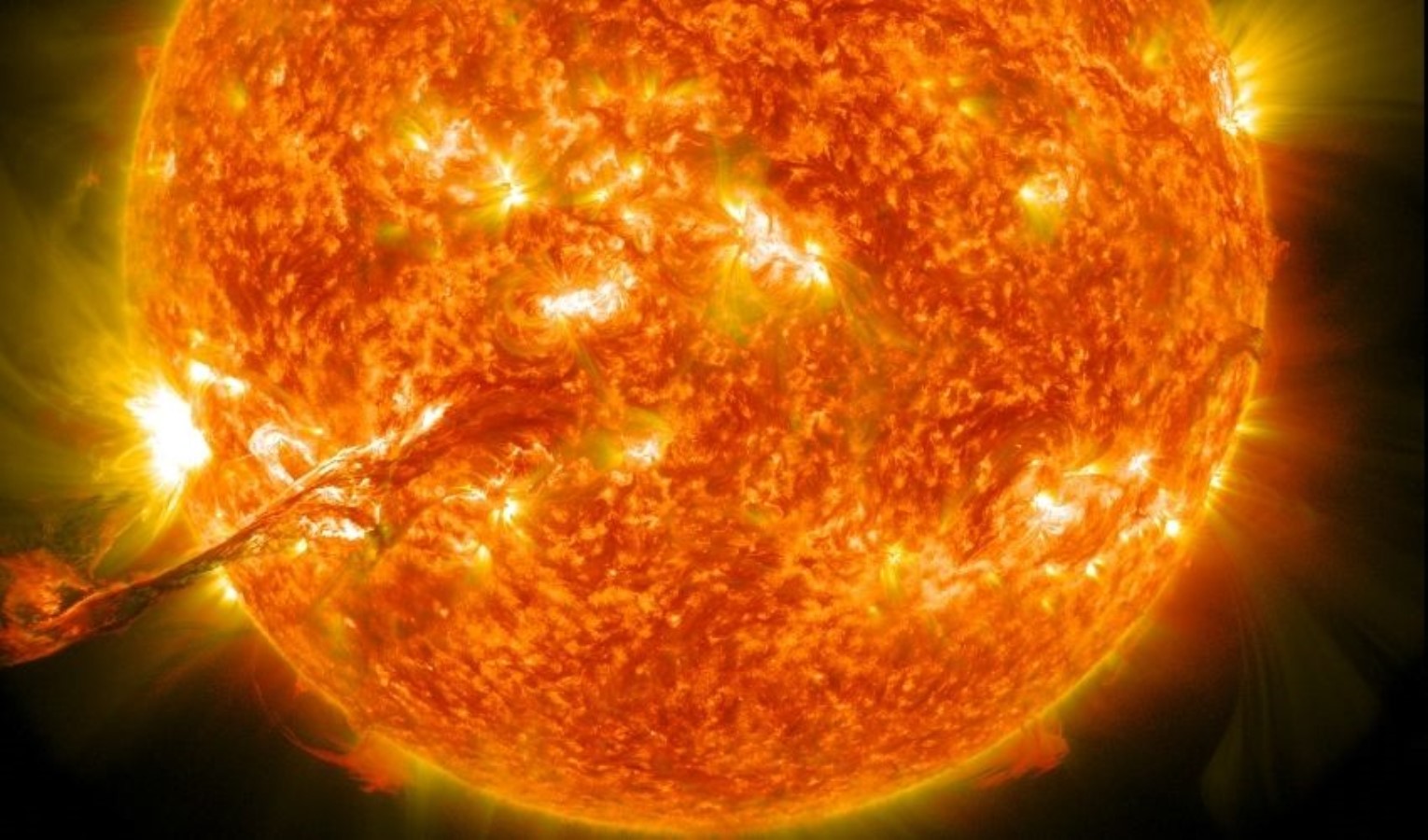
These instruments measure and image the Sun's surface, helping researchers better understand the origins and evolution of solar winds and predict environmental changes in space that could affect life on Earth. For example, last month the probe passed through one of the most intense coronal mass ejections (CME) ever observed. In doing so, the probe helped confirm a 20-year-old theory that CMEs interact with interplanetary dust. This is expected to improve experts' ability to forecast space weather.
Despite its grueling journey, NASA reports that the Parker Solar Probe is in good condition and that "all systems are operating normally." Despite the numerous records it has broken, the probe is far from finishing its mission. There are seven more close approaches planned for 2024. At that point (well within the orbit of Mercury), the probe will eventually be unable to withstand the extreme effects of the Sun and will vaporize in the solar winds. A scientist working on the space mission told PopSci in 2021 that this would be "like a poetic ending."
News Source: 12punto