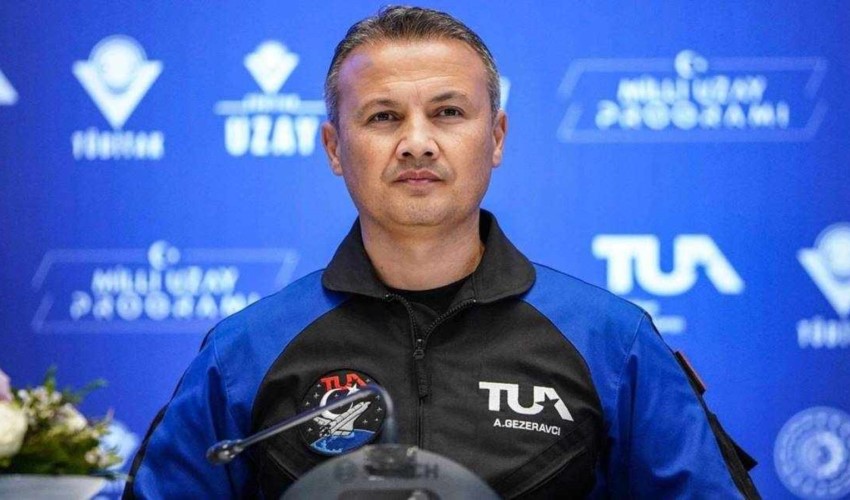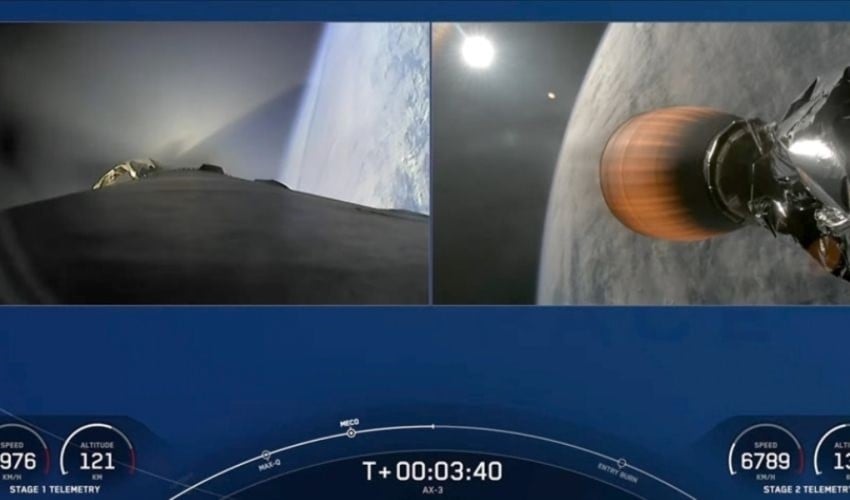
Mehmet Nefes, Director of the TÜBİTAK Space Technologies Research Institute, made evaluations regarding the sending of Turkey's first astronaut, Alper Gezeravcı, into space.
Stating that they have sent Gezeravcı off to the International Space Station (ISS), Nefes noted that the journey would take approximately 36 hours. Nefes said that as TÜBİTAK Space, they feel the peace of mind of completing an important step of a project they are proudly involved in.
Stating that Gezeravcı will conduct 13 scientific experiments when he arrives at the ISS, Nefes expressed that Gezeravcı will return to Turkey with the important results and outputs of these experiments.
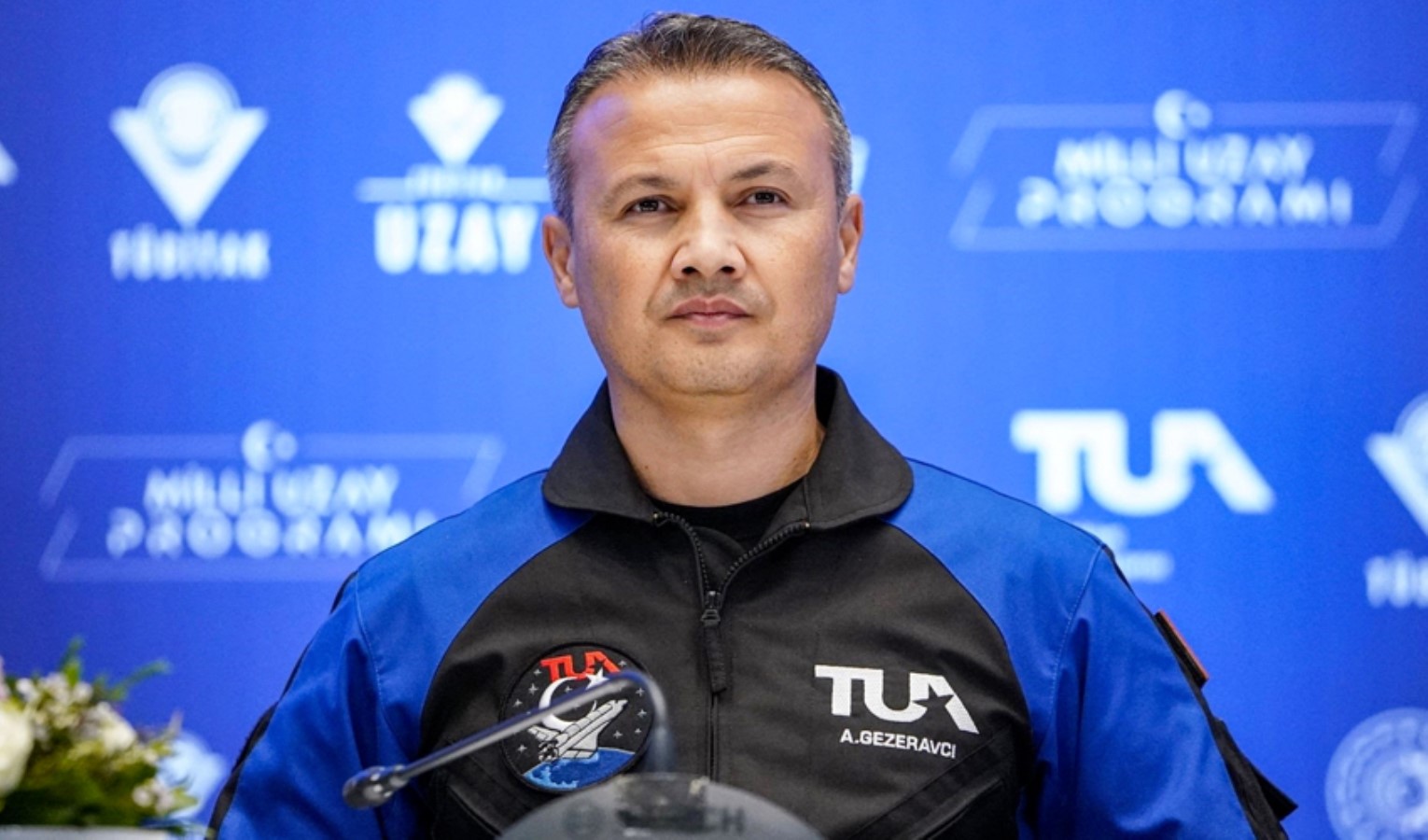
Nefes stated that with the realization of the first manned space mission, one of the important projects and goals of the National Space Program will also have been completed.
Stating that there are other projects in the National Space Program, Nefes noted the following:
"We, as TÜBİTAK Space, are also involved in these projects. The Moon Mission is one of them. We are also continuing the construction of domestic communication and observation satellites. We have developed 5 observation satellites in our past, and we continue to develop new ones. Our teams are working. We are producing Turkey's first national communication satellite, and we have reached the final stage there as well. Approximately 6 months later, the launch will take place at the air base where Alper Gezeravcı's launch was carried out. Our work on this continues as well."
Nefes said that 3 of the 13 experiments to be conducted in space belong to TÜBİTAK, and the experiment named MİYOKA belongs to TÜBİTAK Space.
Explaining that the MİYOKA experiment to be conducted in space will involve the integration and analysis of lead-free soldering techniques in space, Nefes used the expression, "It is a valuable experiment from which we hope to see the benefits in the electronic card designs we will use in our future projects. We will follow up on its outputs in a way that will continue in the missions after Gezeravcı returns."
Touching upon the ongoing projects related to space, Nefes stated that one of the goals included in the National Space Program is the Moon Mission.
Emphasizing that they are the executor of this project as TÜBİTAK Space, Nefes made the following evaluations:
"We plan to complete the first phase in 2026 and send the first spacecraft to the Moon. It is a long-term project, and analysis will be carried out on the Moon in the projects that follow. We are planning to develop vehicles that can land there. We are currently in the design stages for that. In the AYAP Project, system-level design stages are currently ongoing. We also have more comprehensive activities regarding Deep Space studies. With our qualified human resources within TÜBİTAK Space, we are transferring the knowledge and experience we have gained in the observation and communication satellite projects we have developed to date to the Moon Project. We are continuing our work by growing stronger."
EXPERIMENT RESULTS ARE QUITE CRITICAL
TÜBİTAK Space Chief Engineer Bülent Avenoğlu also stated that Turkey's first astronaut, Alper Gezeravcı, has begun his space journey, and that he is expected to complete this journey and move to the International Space Station by Saturday afternoon.
Avenoğlu, who is also responsible for the MİYOKA Project, which will be tested in space, said, "The purpose of the MİYOKA experiment is lead-free soldering research in a microgravity environment. Since heavy metals and lead are harmful to human health, efforts are being made to remove them from all areas and our lives. For this reason, lead-free solders are now being switched to in all electronic components."
Stating that because space is a conservative field, they have continued to use leaded solders and components in their projects to date, Avenoğlu noted the following:
"The purpose of this experiment is to examine the differences that occur when new-generation electronic components are soldered in a space environment, when they are soldered with 100 percent tin, and to observe the space performance of lead-free components, in order to use them in future projects such as the Moon Project and other deep space missions. The experiment results are very critical for us. We will both use them in future projects and share these results with the ISS through articles. We continue to work with all our might to be one of the leading organizations in this field both in our country and in the world."
News Source: AA