



What is happening in Üsküdar is a political fracture so serious that it cannot be explained by a few municipal council members changing parties without principles or by the ambition of the ruling power in terms of Turkish politics.
Moreover, it is not surprising at all.
The history of today's picture is not far off; it must be sought in the change that began in the CHP after 2010. Because after that date, it was not only the chairman and management staff that changed in the main opposition; the party's view of its own organization, its people, and its institutional memory also changed.
A significant portion of the Republican, Kemalist, and memory-bearing cadres of the party were pushed aside over time. The word "nationalist" (ulusalcı) was moved beyond a political definition and turned into a label that discredited these cadres; it made defending the fundamental values of the Republic appear almost outdated, rigid, or even a fascist stance.
Moreover, the destruction was not only ideological.
The value of working for years in the organization, accompanying each other's lives in pain and joy, losing elections, getting back on one's feet, waiting at ballot boxes, and engaging in politics for years with the same people in one's district has gradually diminished. The weight of office, money, and personal power centers has increased against the political memory formed by struggling shoulder to shoulder in difficult times.
The CHP has been conducting politics away from the opportunities of the central government for nearly a quarter of a century. During this time, organizations were economically exhausted and faced pressure; their members lost their jobs and paid the price. With the recent winning of municipalities, large budgets, employment opportunities, and broad spheres of influence have emerged.
This time, economic power has also changed the political hierarchy within the party.
When local governments and their economic power take precedence over the organization in politics, the democratic order is reversed. The party cannot manage its municipality; the municipality begins to manage the party.
This institutional erosion, which increased even more during the Kılıçdaroğlu era, unfortunately did not end with Kılıçdaroğlu's departure. Following the victory of the Istanbul Metropolitan Municipality, a new political power center of a magnitude that the CHP had not seen for many years formed around Ekrem İmamoğlu.
This structure was contrary to the traditions of the Republican People's Party and was an unprecedented structure that had never been experienced before.
Having claims in politics is legitimate. Wanting to be President is also legitimate. However, when a personal political goal takes precedence over the party's institutional mind, ambition corrupts the compass of politics.
Indeed, the Istanbul voter, beyond seeing a mayor with his services, encountered an ambitious local administrator who acted like the boss of the Republican People's Party and made policies regarding general politics from the very first day he took office.
The balances in Istanbul's 39 districts, especially the transformation of candidates and council lists in winnable municipalities into the cadres of this future political march, must be re-evaluated today along with their consequences.
The 2025 presidential primary, in which Ekrem İmamoğlu is the sole candidate, cannot be evaluated independently of the point this concentration of power has reached in terms of its historical timing and single-candidate method.
Being aware of all this reality and seeing Ekrem İmamoğlu as a preliminary remedy to get rid of the current government is unfortunately the most unfortunate approach.
If we were to support our view with a quote from Mustafa Kemal Atatürk again: The lesser of two evils is the worst of evils.
Üsküdar is one of the most important examples of this process.
The choice of the Üsküdar candidate was again made by Ekrem İmamoğlu.
Sinem Dedetaş's professional merit should be kept out of this discussion.
Her success at City Lines (Şehir Hatları), her engineering background, and her performance in public administration are evident. She is a successful bureaucrat who is honest, hardworking, has high common sense, a solid character, and is qualified to take on much more important responsibilities in Turkey.
She is a true woman of the republic.
However, she is not an experienced politician.
Moreover, she was not raised within the Üsküdar organization; she does not know the structure and sensitive balances of the district.
Being a candidate for mayor based on merit, or even winning, is not the same thing as knowing a district's political cadres and managing a crisis.
The value of organizational memory emerges here. People who have done politics together for years know who will resist under pressure, who can change in the face of office, and who will stand by their organization in difficult times.
Yet these are not written in resumes.
They are hidden in the organization's memory.
The price of not taking this memory into account sufficiently while preparing the Üsküdar Municipal Council lists is evident today. The power relations formed after the Istanbul Provincial Congress, the party convention, and thereafter have taken precedence over the natural balances of local organizations in this process.
In many districts of Istanbul, the Beylikdüzü team is in charge of critical tasks. The situation of Özlem Vural, who was elected deputy mayor in Beykoz Municipality despite the organization and the will of the elected mayor, with the imposition of İmamoğlu brought from Beylikdüzü, is clear.
The example of Nazım Akkoyunlu is also one of the concrete examples of this cadre mentality.
Akkoyunlu, who originally came from Beylikdüzü, was brought to the head of Üsküdar KENT AŞ after his management position in an IMM subsidiary.
Akkoyunlu is the first person arrested within the scope of the investigation into Üsküdar Municipality. No criminal judgment can be established against anyone without a finalized judicial decision. However, while Üsküdar has its own political and organizational accumulation, it should also be questioned why cadres brought from other political centers have become so decisive within the municipal structure and work almost like a shadow mayor.
Üsküdar is undoubtedly at the top of the districts that the People's Alliance (Cumhur İttifakı) can never digest losing.
Because of its historical texture, the deep traces of the Ottoman Empire it carries, and the fact that it is the district where the President has lived for many years, the AKP could not digest losing in Üsküdar.
With the establishment of the Republican People's Party government in Üsküdar after 30 years, the power balances of many anti-secular foundations and religious communities have also been shaken.
When we evaluate the issue in light of these facts, it is being watched with silent shame all over the country that the People's Alliance, and especially the AKP, has resorted to irrational pressure and immorality to take back Üsküdar.
The issue is not that the other side can risk so much lawlessness and injustice due to their ambition and arrogance. The real issue is to create cadres where principled people who can withstand these ugly pressures are together, and to make a solid political structure that cannot be infiltrated sustainable.
In Üsküdar, in the intervention made to the municipality, unlawful arrests were made first, detention decisions were given in a hurry to seize the council balance; before the deputy mayor election, which was renewed with various maneuvers, four CHP municipal council members were transferred to the AKP with various tricks.
But the betrayal is not limited to these four people.
After the four-person transfer, the number of members of the two sides in the Municipal Council was equalized to 21 to 21. In the deputy mayor election, the AKP candidate received 23 votes. Two council members remaining in the CHP and New Party group, contrary to the assurance they gave their friends, voted for the AKP candidate in the secret ballot.
Openly changing parties is an unacceptable political choice. Staying in one's own group and telling friends that they will vote for the CHP's candidate Sibel Tan Çetinkaya, and then supporting the AKP candidate at the ballot box is a worse moral problem.
Even more serious than this is what is told in Üsküdar politics about one of these two people.
It is said that the council member in question, after actually voting for the AKP candidate, in order to prevent reactions from his close circle and family, changed the ballot paper he used with artificial intelligence in a way that would give the impression that "Sibel Tan Çetinkaya" was written on it, and used this image to clear himself.
If this information, which his friends claim to have detected, is true, beyond political disloyalty, there is a conscious crime of deception and slander here, which is even heavier than lack of principle.
Moreover, it is alleged that the bargain discussed in Üsküdar politics is not limited to these six people, and that contacts extend to ten council members. The fact that two votes were enough to win the election that day does not mean that other relationships have ended. Therefore, subsequent critical votes should be watched carefully.
The tension between the CHP and the New Party cannot be kept separate from this picture either.
To pit the Republican opposition, which has struggled under pressure for years and is economically exhausted, against each other with personal ambitions without acting with common sense, as a result of personal scores and surprise judicial decisions given over ugly global interventions played in this geography, weakens the political resistance of the main opposition, and it has indeed weakened it.
Indeed, while this situation works for the AKP, it serves the purpose of dividing and ruling the opposition by using the power of the government and justice in municipalities it could not win at the ballot box.
In this process, Üsküdar has acted with common sense and sanity in order to overcome the destruction of this unnecessary and nonsensical separation historically, and has given a message of unity and solidarity to the society as much as possible.
It can be said that the AKP has resorted to similar and much heavier methods for years. This is not an excuse for the Republican People's Party; it is actually where its historical responsibility begins.
A party founded by Mustafa Kemal Atatürk cannot defend the Republic while simultaneously reproducing the methods of the political order it struggles against by becoming like the government within its own structure.
It can win a congress.
It can win a convention.
It can win municipalities.
It can even come to power.
But it cannot change Turkey by turning into its opponent's understanding of politics.
While all this is happening for the Republican People's Party and the New Party,
Perhaps one of the saddest images of the picture in Üsküdar from the other side is the AKP Youth Branch members celebrating the result with screams and jumping.
Yet youth, all over the world, throughout history, is at the forefront of social forces that first object to injustice. The moment a young person's political affiliation takes precedence over their sense of justice, the problem is no longer just that young person's, but the order that left them this understanding of politics.
This is the meaning of Atatürk entrusting the Republic to the youth: The Republic expects from the youth not unconditional loyalty to a party; but loyalty to reason, conscience, independence, and national sovereignty.
And today is September 9.
The Great Offensive, which started from Kocatepe on the morning of August 26, 1922, closed the last great curtain of the occupation with the Turkish army entering Izmir on September 9. When we look back at September 9, it is not just the liberation day of Izmir; it is the blessed victory of the national will against the imperialist calculation that sees Anatolia as a shared geography.
The fact that the founding date of the Republican People's Party is September 9 is also a part of this historical memory. It is also very valuable that the patriotic cadres who decided to reopen the CHP, which was closed by the September 12, 1980 coup, chose September 9 again as the second founding date of the CHP in 1992.
For this reason, celebrating the founding anniversary of the Republican People's Party today is to remember the political legacy of a will for independence extending from the Defense of Rights (Müdafaa-i Hukuk) to the National Forces (Kuvâ-yı Milliye), from the Great Offensive to the Republic.
It is for this reason that writing such an article about Üsküdar on September 9 is very painful.
Because the historical responsibility of the Republican People's Party is not just to win elections. It is to fulfill the requirements of its founding philosophy against every political regulation that could open the unitary structure, national sovereignty, and citizenship unity of the Republic of Turkey to debate.
It is gratifying that the Republican People's Party is still alive against all betrayals from within and without.
However, it is not Kemalism to approve of a "Framework Law" understanding that will erode the founding principles of the Republic and divide the citizenship bond of the Turkish nation into ethnic and regional political identities on the one hand, and to walk to Anıtkabir with crowds on the other.
Happy 103rd anniversary of the Republican People's Party and the liberation of Izmir once again.
The Republican People's Party needs purification not only in local governments but also in its management cadres. The party must be managed by true patriotic and republican cadres; it must appear before the Turkish nation with anti-imperialist decisions.
History will surely grant the Republican People's Party power with principled cadres in these lands one day.
Precisely for this reason:
"There are no hopeless situations, there are hopeless people."
— Mustafa Kemal Atatürk
Most Read

Results of the day in the Champions League
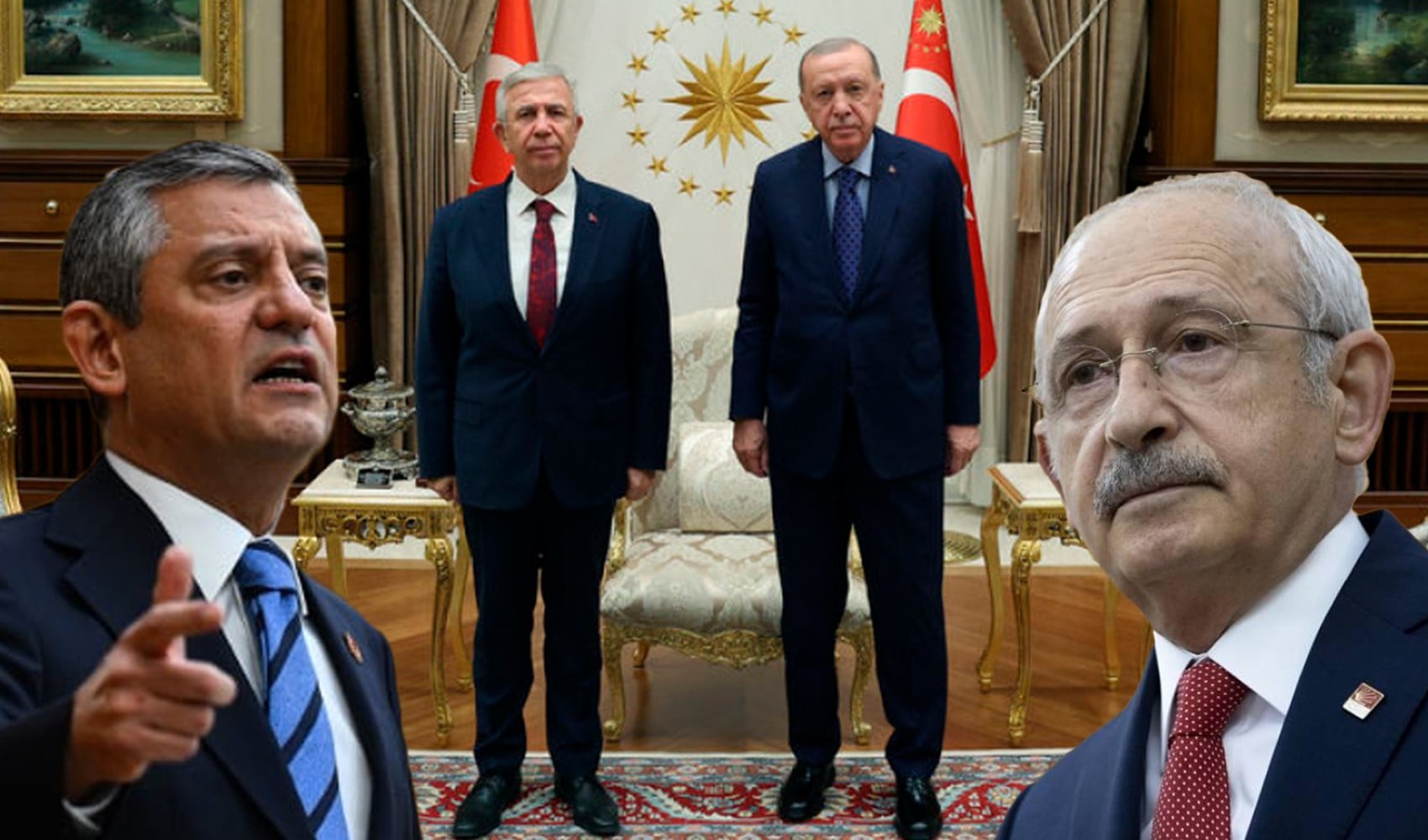
Bombshell claim regarding the future of Yavaş after meeting with Erdoğan
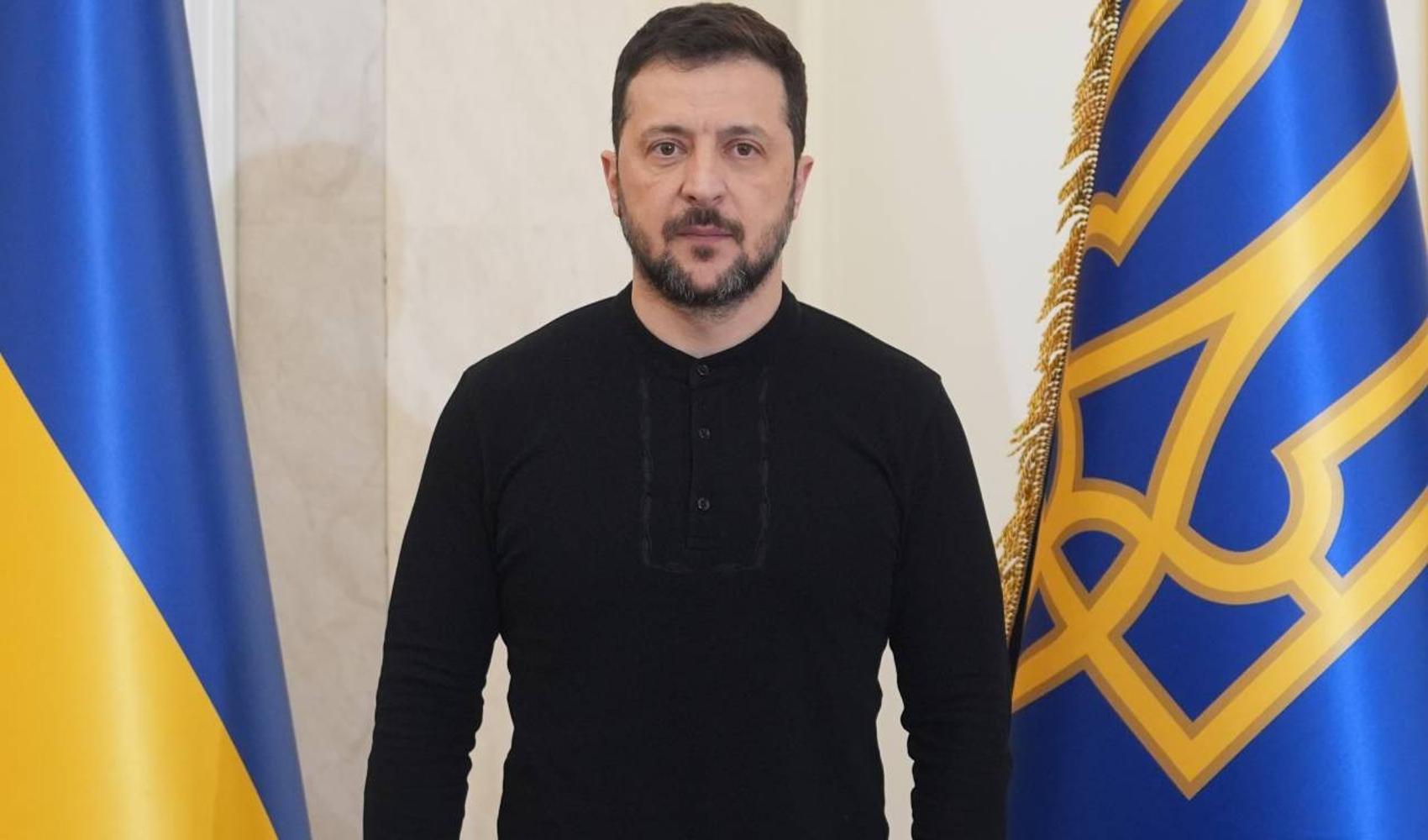
Zelenskyy's plane narrowly escapes drone attack in Moldova

Galatasaray's Champions League journey gets off to a rocky start
This is how we 'took' Syria!..
If the right is rising, one must first look to the left

Balart… Fig…

September 9 in the shadow of Üsküdar Municipality

Innocent in appearance, destructive in essence!

Which class is artificial intelligence for?