


The meaning of tourism: Not selling a country, but telling its story


September 27 is World Tourism Day. Every year on this date, we discuss tourism revenues, visitor numbers, bed capacity, and new markets. The numbers are certainly important; in 2025, Turkey generated 65.2 billion dollars in tourism revenue and hosted 63.9 million visitors. The value-added directly created by tourism also reached 5.1 percent of the economy in 2024.
However, when we begin to describe tourism only with numbers, we forget the true reason for travel a little. People do not just go to a country; they go to encounter a culture. They set out to see the architecture of a city, the history of a cuisine, the story of a square, the delicacy of a craft, and the daily life of another society. The true value of tourism begins exactly here.
A visitor coming to Istanbul does not just see the Bosphorus; they walk upon layers stretching from Rome to Byzantium, from the Ottomans to the Republic. Cappadocia is not just a beautiful landscape; it is a joint work of nature and humanity with its churches carved into rocks, underground cities, and a settlement culture shaped over centuries. Someone going to Ephesus does not just look at ancient stones; they try to read the trade, faith, politics, and art of the people who once lived there.
Precisely for this reason, we need bolder questions in Turkey's tourism debate. More visitors or more qualified visits? More hotels or better-preserved heritage? More consumption or a deeper cultural encounter?
Because growing a destination and developing it are not the same thing.
Perhaps it is time to look a little at tourism elsewhere. In different geographies of the world, travel is moving away from being a list of places to go and transforming into a way of approaching the culture of the place visited. Today, people set out not just to see a city, but to stay in a century-old castle, spend a night in a living temple, wake up in the silence of an old monastery, sit at the table of a local family, or learn a craft alongside a traditional master, or cross continents in the compartment of a historic train.
There is another important side to this: These experiences turn tourism from being merely a consumed service into a relationship established with culture. When you stay in a temple, you are not just staying in a room; you are experiencing the rhythm, the silence, and the way of life that has been maintained for centuries. When you sleep in a castle, you are not just in a different bed, but waking up within the history of the structure. When you sit at a local table, you go beyond the food on the menu and touch the memory of a geography.
Gastronomy is one of the best examples of this. Seeing a country's cuisine as consisting only of dishes on a restaurant menu is to fail to see the agriculture, seasons, migrations, trade routes, religious traditions, and family culture behind that cuisine. The taste of an olive oil can tell of the Aegean, a spice blend of old trade routes, and a bread shape of centuries of dining habits. Good tourism tells the visitor not only what to eat, but why we eat the way we do.
Turkey has an extraordinary advantage here. Thousands of years of history, the architectural heritage left by different civilizations, living crafts, regional cuisines, wine culture, coffee and dining traditions, music, and folklore… But their existence alone is not enough. It is necessary to be able to tell them with the right stories, the right experiences, and the right cultural perspective.
Today, for the experienced traveler, the story of the neighborhood where a hotel is located, the source of the food in the restaurant, the knowledge of the guide, the artisan they encounter, and how the structure they visit is protected are just as important as how many stars a hotel has. Travel is increasingly changing from seeing to understanding, from consuming to encountering.
Technology and artificial intelligence will accelerate this transformation even further. Algorithms can give us information about almost every corner of the world in seconds. But no algorithm can experience the time embedded in the stone of a structure, the hand movements of a master, the meaning of a meal shared at a table, or the afternoon light of a city on its own.
Perhaps it is time to think about World Tourism Day a little differently this year. Before wanting more tourists, we should talk about designing better trips; before building more structures, we should talk about protecting what we have; before counting more visitors, we should talk about telling better stories.
Because the true success of tourism is not measured only by how many people come to a country. The real issue is how many people leave that country taking with them a new story, a new understanding, and a feeling of being able to look at the world a little differently.
And perhaps this is still the simplest definition of good tourism:
Not to sell a country; but to tell it correctly.
To protect it. To keep it alive.
And to ensure that those who come understand it a little better when they leave.
Would you like to get notifications about new developments and save news?
- NotificationsNew developments and breaking news
- SaveNews is stored in the app
Most Read
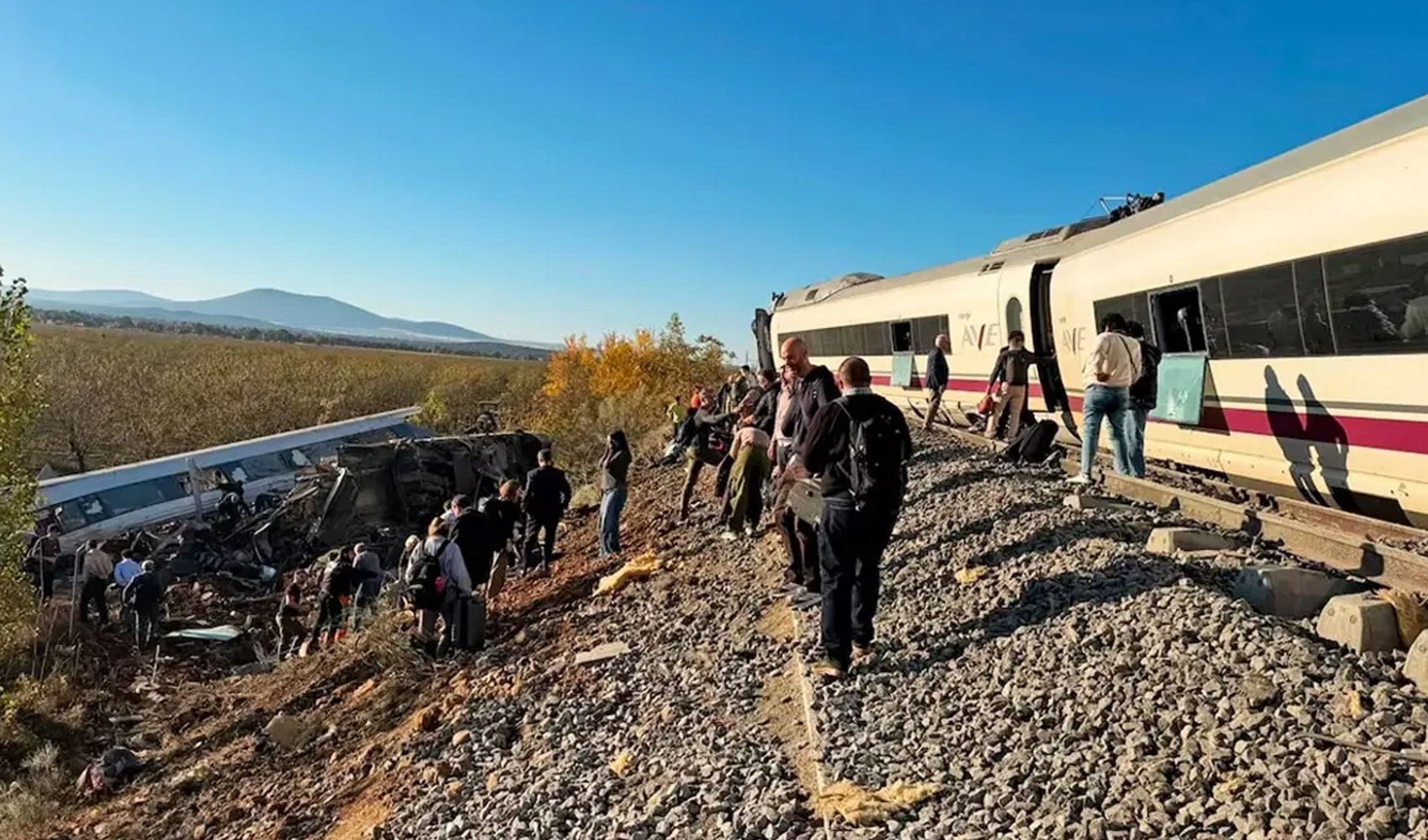
Two high-speed trains collide in Spain!
New formula for indefinite alimony regulation
Can Yayınları Editor-in-Chief Cem Akaş has passed away

Surprise results emerge from the ballot box in Israel

Allegations involving Turkey in the case of 748 kilos of cocaine seized in Ecuador
With the Republic, sovereignty was taken from the palace; it cannot be returned to the palace!

The digital era for IDs begins

NEW Party decision from Mustafa Sarıgül!

A condition from Montella to Fenerbahçe!
AKP's Tayyar received both fuel and a lesson from a gas station attendant