


We must move from sociocultural division to political goals



"VOTER CLASSIFICATION" AS AN ANALYTICAL BLINDNESS
In contemporary political science literature, the concept of the "voter base" is generally read through demographic data and cultural affiliations; this situation causes political actors to develop strategies based on "image management" and "daily discourse" rather than ideological depth. In the case of Turkey, the structural fragmentation that emerged within the CHP axis following an appellate court decision is the most concrete evidence of this shallowness. Instead of discussing the ideological/programmatic differences (if any) between the two structures, evaluating them through the images and daily rhetoric of the executive cadres reduces political analysis to a parody of "cultural conflict."
THE "CHP VOTER" PHENOMENON AND IDEOLOGICAL INCONSISTENCY
The heterogeneous mass defined as the "CHP voter" is built not on an analytical class, but rather on a negative consolidation (opposition to Erdoğan) and a vague sense of cultural heritage (Kemalism). However, this mass's claim to Kemalism faces a lack of executive leadership capable of translating it into a political program.
At this point, the fundamental tension defining the mass is as follows:
Orientation toward the West: Pro-Westernization in terms of lifestyle and sociocultural codes.
Anti-Imperialist Reflex: A claim of opposition to imperialism on the axis of Kemalism.
This "strange aggregate" contains a structural contradiction: it adopts the Western lifestyle and therefore looks to Western countries for help, yet is opposed to the West on a political level. This contradiction is not merely a "preference," but also an erosion of consciousness stemming from the absence of a political program.
THE TURKEY PROJECT AS A HISTORICAL CONTINUITY
Turkey, beyond being a geopolitical coincidence, is the name of a rational "modernization and independence" program that has been ongoing for centuries. This program, which evolved from the Young Turks to the Committee of Union and Progress, and from there to Kemalism, historically represents a rebellion against the dependency relations that developed after the Treaty of Balta Liman (1838).
The political problem of today is the inability to produce a current and consistent equivalent of this historical program (modernization and full independence). An opposition line trapped in cultural sensitivities cannot carry this historical program.
WE MUST MOVE FROM IMAGE TO PROGRAM
In political analysis, "accepting voter masses as a given" and defining this mass solely through sociocultural data is to deny the transformative power of politics. Progressive politics needs a rationale that will transform this mass—rather than taking it as it is and feeding its cultural weaknesses—into the requirements of the historical program, that is, the axis of modernization and independence.
Image politics cannot fill the void in Turkey's historical program. On the contrary, a state of "cultural distraction" that consumes itself leaves Turkey's structural problems unresolved. The success of political parties should be measured not by the "images" of their executive cadres, but by their capacity to reconstruct this historical program according to the conditions of the day (in technological, economic, and geopolitical contexts).
Would you like to get notifications about new developments and save news?
- NotificationsNew developments and breaking news
- SaveNews is stored in the app
Most Read

Video response to Kim Jong-un claims

Murat Ağırel’s police statement has been revealed
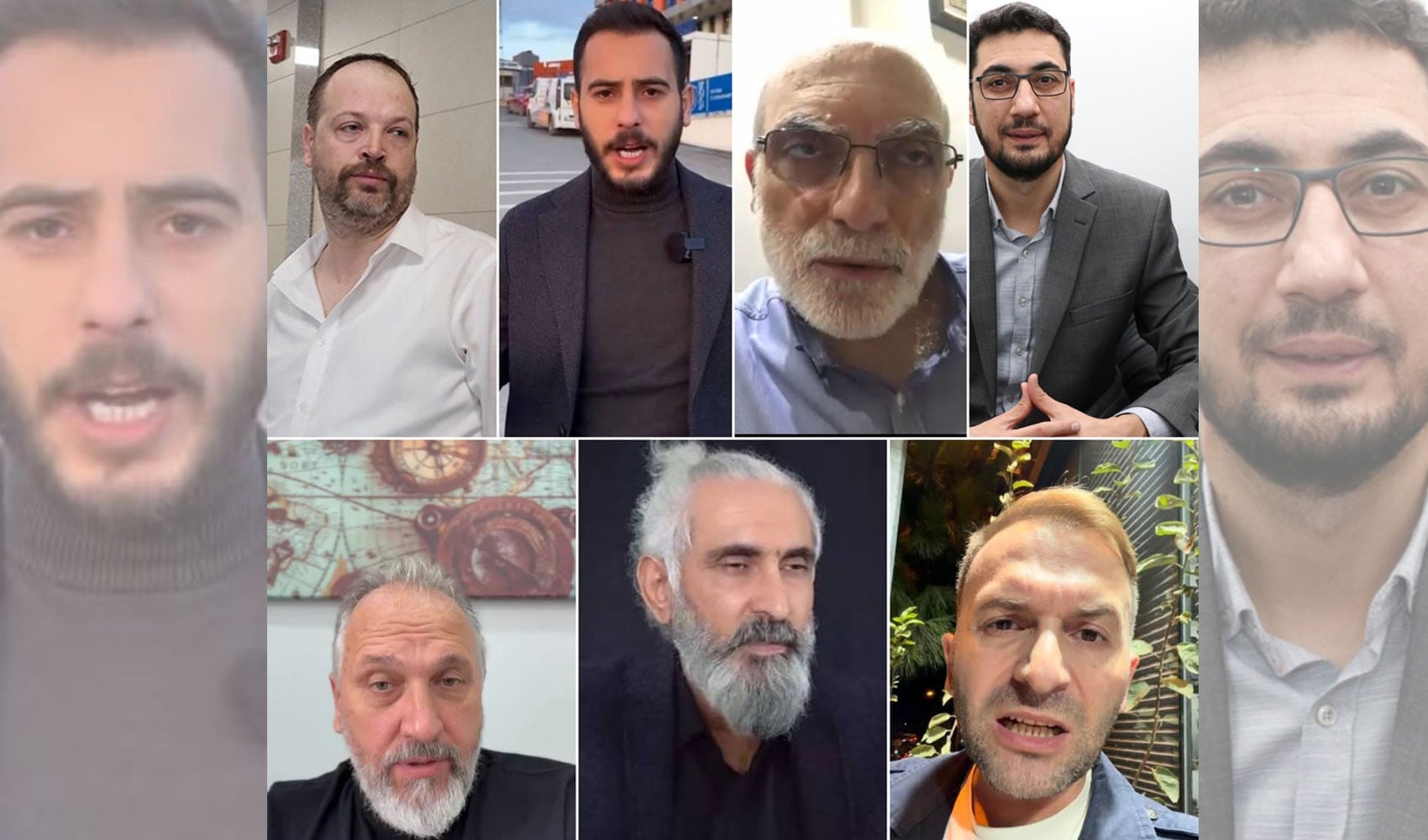
Azerbaijan issues arrest warrants in absentia for 7 people living in Turkey

The Orionid meteor shower will be visible from Turkey!

The penalty for Ronaldo, who left the national team camp, has been announced

Fatoş Seğmen reveals the cause of her daughter's death

Latest status in the race between AKP and YENİ Party revealed

Injury shock at Liverpool: He may miss the Fenerbahçe match

Who authorized the concert held in a parking garage?

From brotherhood to a distant partnership...