


We need a compass and a route



The terms "left" and "right" are increasingly becoming hollow political markers today. Once expressions of social classes, economic preferences, and different visions for the future, these concepts now gain meaning in most places through cultural affiliations and reactions developed against the rhetoric of the opposing camp.
People continue to define themselves as "leftist" or "rightist"; however, it is becoming increasingly unclear which political route, economic program, or shared understanding of the future these definitions correspond to. The compass is being lost; often, only polarization remains.
This situation necessitates a serious questioning, especially for circles that have long defined themselves as "left." The left needs to look again at the needs and realities of today, rather than settling for repeating concepts inherited from the past.
It does not seem possible for the left to become a social direction and center of attraction again without establishing new links between humanity's aspirations for equality, freedom, solidarity, and justice, and concrete political positioning.
Because the world has entered a completely different political era following the globalization wave that has been rising since the 1990s. The idea of globalization, once presented as the carrier of progress, prosperity, and emancipation, is increasingly giving way today to the rise of "right-wing" populist and fundamentalist movements.
In many European countries, from England to France and from Italy to Poland, as mainstream politics loses trust and the ability to represent in the eyes of the masses, right-wing movements speaking from outside the center are transforming this discontent into political power.
The reaction directed at the technocratic and globalist ruling elites concentrated in Brussels in Europe, although seemingly bearing local characteristics, is actually an expression of a deeper unrest experienced on a global scale.
The masses are reacting not only to specific governments or policies but to all established structures that they believe do not represent them. Unfortunately, the target of this reaction is not limited to political elites or economic preferences. Fundamental institutions of modern society such as science, democracy, law, and the culture of living together are also under attack. Because the anger felt toward the reckless and globalist policies of the central ruling elites, who have turned these institutions into a shield for their own legitimacy, is eventually directed at the institutions themselves.
FROM THE WELFARE SOCIETY TO THE CRISIS OF GLOBALIZATION
The welfare society established in the Western world after the Second World War was not just an economic preference. It was also one of the important tools of the political struggle waged against the Soviet Union and collectivist economic models.
Workers had achieved high purchasing power, social rights had expanded, and public guarantees had been strengthened in many areas from education to health. While broad segments of society benefited from the fruits of prosperity, political objections directed at the foundations of the system also weakened over time.
During this process, the state in the West became increasingly centralized in the hands of technocratic administrations. While the rhetoric of participation and civil society was maintained, fundamental decisions began to be determined by experts, bureaucratic institutions, and supra-national mechanisms, moving away from the direct intervention of broad masses of people.
However, with the collapse of the Soviet Union, the historical and political conditions that kept the welfare state alive also changed. In the age of globalization, customs duties, social policies, and public interventions that protect local production, labor, and social balances against global competition began to be seen as obstacles. While capital mobility was encouraged, the security of labor was eroded; while the social nature of the state was weakened, constant adaptation and sacrifice were expected from the citizen.
Faced with this transformation, the masses first lost interest in mainstream politics; then they began to openly react to this order that left them unprotected. Labor struggles, strikes, and waves of social anger seen in Western countries, especially in France and England, were early signs of this rupture. In the face of economic and social crises, the last supports that broad segments could rely on were the law and the remaining institutions of the social state. But these institutions also became increasingly dysfunctional; at least in the eyes of the masses, they lost their capacity to protect them.
Thus, the masses, who were expected to follow the route drawn by mainstream politics in the face of global problems such as migration, terrorism, the climate crisis, and economic uncertainty, but who experienced insecurity, impoverishment, and loss of representation in their daily lives, turned to options outside the center at the first opportunity.
THE VOID FILLED BY THE POPULIST RIGHT
Today, the space opened outside of mainstream politics is largely occupied by right-wing populist movements. One of the important reasons for this is that the European left has long been drawn within the boundaries of the system. Recognized cultural and social rights and the European institutions thought to protect them reconciled a significant portion of the left with the existing order. Thus, especially in prosperous countries, the left preferred to defend the institutions and political ideals of this order rather than developing a critique of the collapsing globalization order.
The left thought it could only protect social rights and democratic gains through the continuation of the European Union and globalist institutions. However, this attitude made it difficult for it to connect with the growing anger regarding the precariousness of labor, the deterioration of income distribution, the dissolution of local communities, and the crisis of representation. The dilemma faced by Jeremy Corbyn and the socialist circles supporting him during the Brexit process in England was one of the clearest examples of this tension: To the extent that the left could not establish a strong bond with the real concerns experienced by the working classes, it was perceived as a defender of the globalist center.
In the West, political sensitivities remembered in the name of the left gradually narrowed around ecology and identity issues. These are, of course, not unimportant topics; on the contrary, they are among the fundamental issues of our age. However, when detached from the agenda of labor, distribution, social security, economic independence, and class justice, the bond the left establishes with broad masses of people weakens. It is precisely in this void that right-wing populism gains strength.
Indeed, the anti-globalization rhetoric of right-wing populist actors like Giorgia Meloni, who does not hesitate to commemorate Mussolini with mercy, can find resonance not only among conservative or nationalist voters but also among poor segments who are becoming economically insecure. Because the claim to voice the problems of the losers of globalization was not sufficiently strongly undertaken by the left for a long time. The right filled the space of social objection that the left abandoned or made secondary with its own language.
A NECESSARY LESSON FOR TURKEY
There are important lessons to be drawn from these developments, especially for countries like Turkey that are squeezed between the center and the periphery. Turkey must abandon the illusion that it can build its future under the roof of the post-1945 world paradigm, which is now dissolving. This does not mean breaking away from the world, closing in on itself, or turning to authoritarian and fundamentalist politics. On the contrary, it means developing a more independent, more egalitarian, and more democratic political orientation by seeing the flaws of the collapsing order.
Turkey must never give up on science, law, democracy, and the culture of living together, which are the indispensable gains of the post-war order for humanity. However, it must not leave these values to the monopoly of technocratic administrations disconnected from the people, globalization policies that produce inequality, or political elites who try to make their own responsibility invisible.
The real task for those who call themselves "Left" emerges here: while defending science, law, democracy, and freedoms, to put labor, economic independence, social justice, public security, and the people's demand to have a say in their own future back at the center of the political project. Because a new route can only be drawn by re-establishing the link between humanity's great aspirations for equality and freedom and today's concrete insecurities.
Would you like to get notifications about new developments and save news?
- NotificationsNew developments and breaking news
- SaveNews is stored in the app
Most Read

Video response to Kim Jong-un claims

Murat Ağırel’s police statement has been revealed
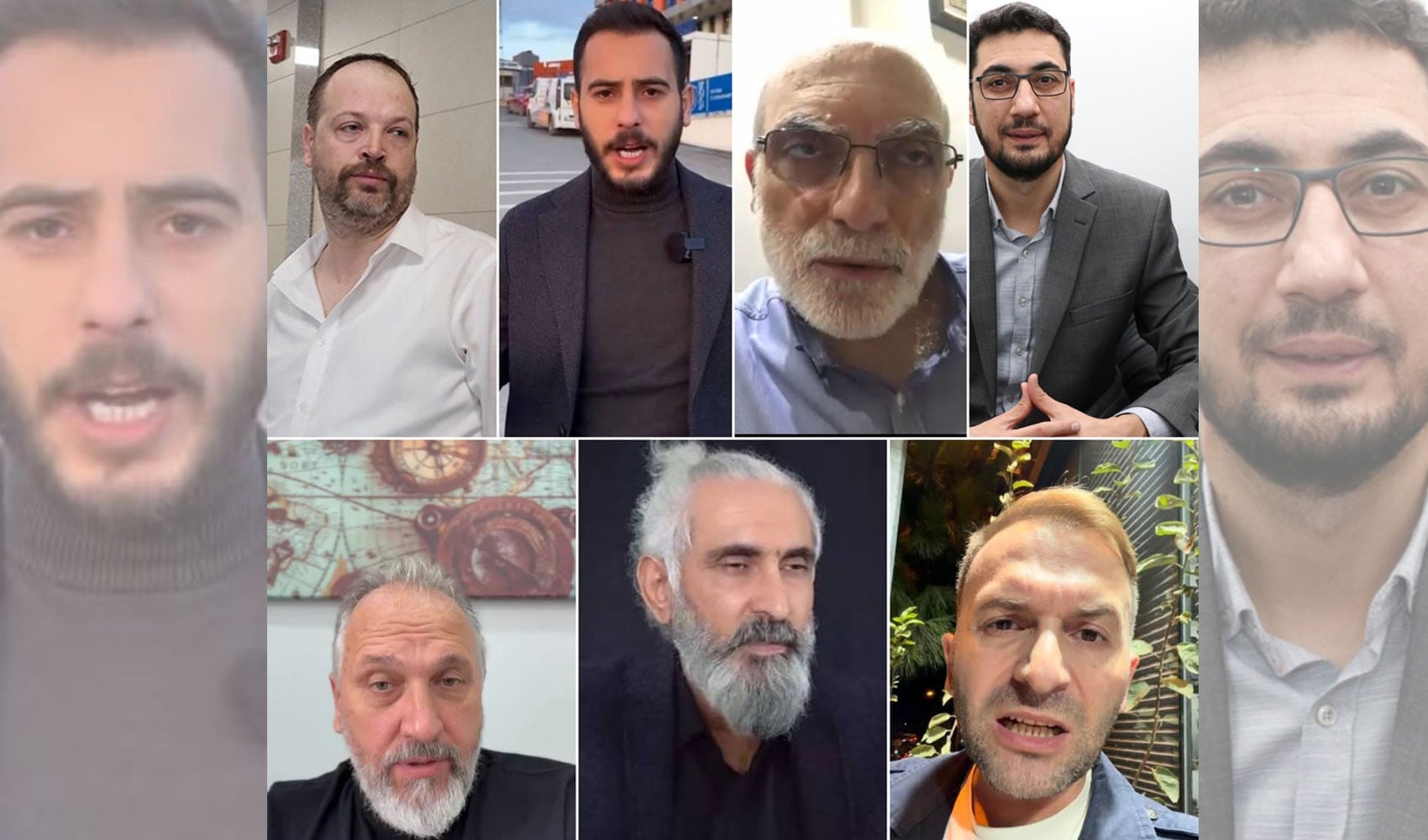
Azerbaijan issues arrest warrants in absentia for 7 people living in Turkey

The Orionid meteor shower will be visible from Turkey!

The penalty for Ronaldo, who left the national team camp, has been announced

Fatoş Seğmen reveals the cause of her daughter's death

Latest status in the race between AKP and YENİ Party revealed

Injury shock at Liverpool: He may miss the Fenerbahçe match

Who authorized the concert held in a parking garage?

From brotherhood to a distant partnership...