


A brief historical note on Mustafa Kemal



Genius is a quality that does not fit into the molds of doctrine. A genius is a person who challenges systems, can break free from the influence of traditions, and blazes a trail. There is no school for being a genius. A genius cultivates themselves; they are not an apprentice to any doctrine. A genius is not swept away by social movements. They become the source and set the direction for new movements.
The embodiment of these words is Atatürk. Atatürk was a pragmatic statesman and politician. When analyzing doctrines, he would measure their practical value. He did not accept that systems bound to rigid principles and failing to adapt to changing conditions would benefit societies. He would pass judgment on political and social movements by considering the results they provided in the field of application.
In 1918, he wrote these words in his notebook from a book he read in Karlsbad:
Conservatism? Never! How is it possible to preserve something in a universe that has a necessity for constant change? Conservatives are those men who want to hold the water of a river in their hands. Nothing remains in their fingers but a piece of mud. I am not a conservative, because I cannot preserve an aged and broken world…
Conservatism was the belief of those who wished to maintain the established political and social order. Mustafa Kemal, however, wanted change. “If great authority and power fall into my hands, I will realize the desired revolution in our social life at once with a coup,” he said. He was neither a Conservative, nor a Liberal, nor a Socialist, and he could not be.
Economic Liberalism was the doctrine of those who favored free enterprise. At that time, when one said Liberal, it was understood as those who were committed to individual liberty in politics and economics and did not want state intervention.
Mustafa Kemal: “No good has come to the country from Liberalism.”
The Gazi and those around him focused on statism for weeks as an alternative to the economic policy of past years and preferred the definition of moderate statism. However, while adding immediately afterward that “the state would not leave any market to its own devices and would establish industrial facilities in accordance with a five-year plan,” he was not thinking like the liberals. He was not of a nature to leave the country's economy to the natural flow of events. He had not adopted liberalism by seeing it as a dogma.
He was not a Socialist either. The socialist movements of 1918 were against the means of production and exchange being under private ownership. Mustafa Kemal, on the other hand, had not neglected private enterprise while defining statism. Statism was the political power directly intervening in the economy to regulate production, distribution, sharing, and consumption.
Our statism, while taking individual labor and activity as a basis, is to direct the state's interest toward areas required by the general and high interests of the nation, and especially to economic fields, in order to bring the nation to prosperity and the country to development in as short a time as possible. The system of statism applied by Turkey is not a system taken from the ideas put forward by socialist theorists since the nineteenth century. It is a system born from Turkey's needs and unique to Turkey.
In his private conversations, Mustafa Kemal spoke of the state establishing industrial facilities, raw materials being processed by public economic institutions, and the execution being carried out within the framework of a plan to be prepared.
The national struggle led by Mustafa Kemal brought freedom and full independence to Turkey. The capitulations were buried in history. Turkey reached prosperity. Privileged foreign companies were nationalized. Atatürk is a genius and at the same time a visionary. In the light of his observations and experiences, he is a true leader and guide who seeks solutions to problems on the path of science.
Prof. Dr. Duran BÜLBÜL
Would you like to get notifications about new developments and save news?
- NotificationsNew developments and breaking news
- SaveNews is stored in the app
Most Read

Video response to Kim Jong-un claims
Murat Ağırel’s police statement has been revealed
Azerbaijan issues arrest warrants in absentia for 7 people living in Turkey

The Orionid meteor shower will be visible from Turkey!
The penalty for Ronaldo, who left the national team camp, has been announced

Fatoş Seğmen reveals the cause of her daughter's death
Latest status in the race between AKP and YENİ Party revealed
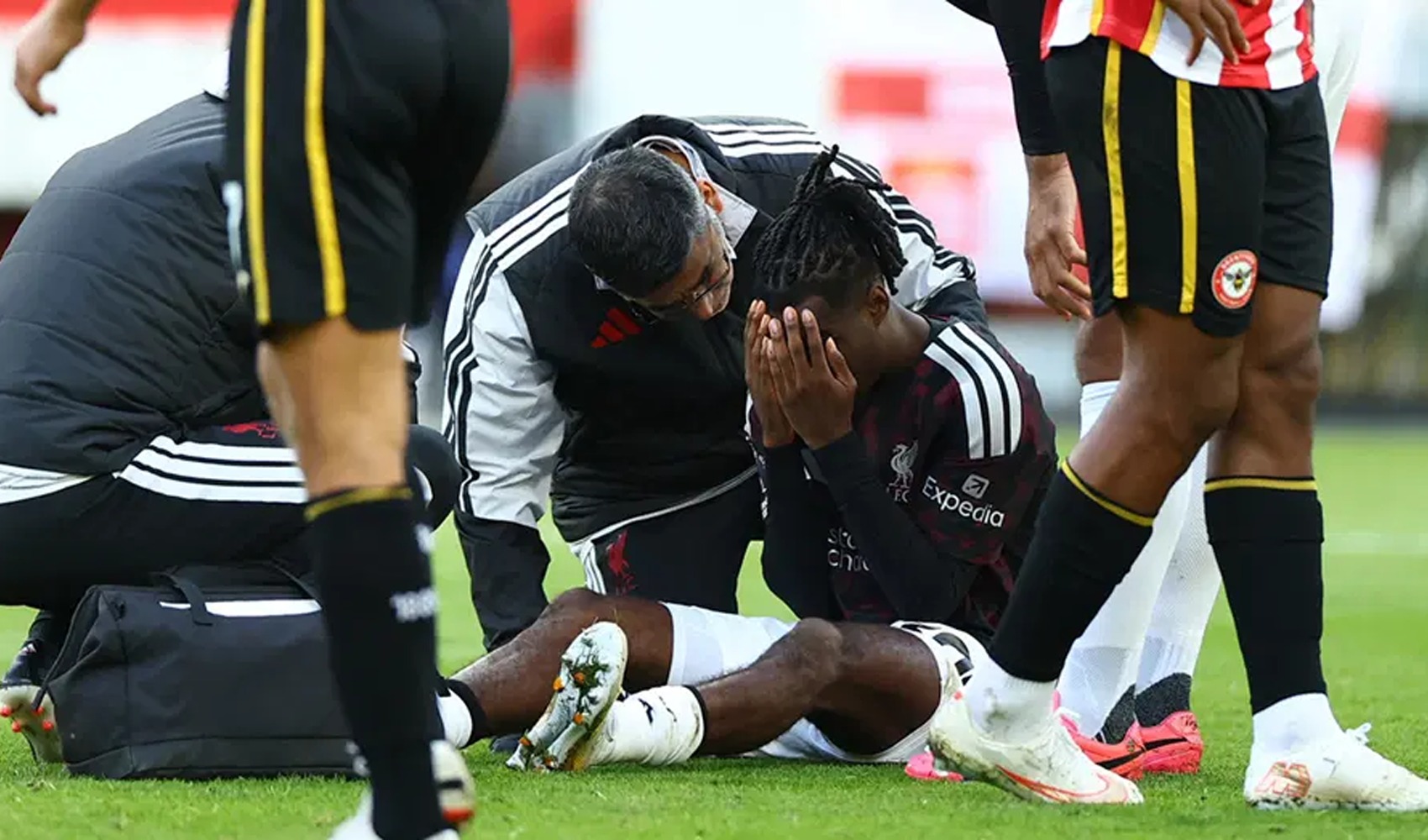
Injury shock at Liverpool: He may miss the Fenerbahçe match

Who authorized the concert held in a parking garage?
From brotherhood to a distant partnership...