


The state that became subcontracted and ineffective under AKP rule



The AKP government, which came to power in 2002, has rendered the state ineffective and cumbersome in the name of downsizing, affecting all public services provided by the state in every field.
The first order of business for the AKP government upon coming to power was to change the state's expenditure system, liquidating the Accounting Law No. 1050 and replacing it with the Public Financial Management and Control Law No. 5018 in 2003.
The AKP has amended the Public Procurement Law No. 4734, which entered into force in January 2002, countless times, turning state tenders into a source of rent. The political power, by changing both the expenditure system and the procurement system in the name of transparency, has transferred all public operations of the state to specific groups and the private sector.
Thus, the AKP has imposed subcontracting on the state by liquidating the planned development period along with the institutions of the Republic.
One of the most important of these was the General Directorate of Village Services, which was established by Decree Law No. 235 dated 08/06/1984, based on the authority granted by Law No. 2680 dated 17/06/1982, through the merger of the General Directorate of Soil and Water and the General Directorate of Soil Settlement, established in 1960 and 1965 respectively.
The planned development period, which was interrupted during the Democrat Party era, began again with the establishment of the State Planning Organization (DPT) on September 30, 1960, and the 1961 Constitution.
One of the initiatives of the AKP government that would provoke our economic and social life in line with the impositions of the IMF and the World Bank was the closure of the General Directorate of Village Services with Law No. 5286 on 13/01/2005.
So, what did the General Directorate of Village Services do? It had 30 thousand machines, bulldozers, graders, loaders, trucks, and excavators, and 60 thousand personnel (50 thousand of whom were workers, and 10 thousand were civil servants, engineers, and technical staff).
Due to large-scale landslides, earthquakes, and engineering structural problems, settlement, and slippage in our country, the technical staff structure of the general directorate consisted of geology, civil, electrical-electronic, environmental, mapping, geophysical, mechanical, chemical, mining, and agricultural engineers, as well as architects.
The Provincial Directorates of Village Services in all provinces were closed, and the personnel, machinery, and equipment were transferred to the governorships, except for Istanbul and Kocaeli. All personnel, machinery, and equipment of the Istanbul and Kocaeli Provincial Directorates of Village Services were transferred to the two Metropolitan Municipalities.
I would like to give an example. At that time, 1447 personnel were working at the Ankara Provincial Directorate of Village Services. 150 of them consisted of engineers and technical staff. The General Directorate of Village Services did not tender all its work; it did it itself. The Village Services was an institution that worked in natural disasters such as earthquakes, landslides, and floods. This institution would open roads, perform repairs and maintenance on village roads, and build drinking water systems. It ensured the efficient use, protection, and development of soil and water resources in accordance with the principles and policies included in development plans and programs. It carried out expropriations and agreements such as the construction of dams, airports, factories, and defense-related facilities, and the protection of historical and natural assets.
According to the Settlement Law No. 1306, it was responsible for allocating land for villages to be relocated or consolidated, preparing zoning plans for other towns and villages, preparing model projects for housing and agricultural business facilities for those in need, providing loans based on the self-help method for those building their own homes, and building or having built infrastructure, social facilities, and economic facilities that would create employment for villages.
Some of the duties of the General Directorate of Village Services included providing loans to make housing and agricultural facilities of the population in villages located in active earthquake zones where the probability of an earthquake is highest earthquake-resistant, carrying out free immigrant affairs, accepting settled immigrants in accordance with special laws, and manufacturing or having manufactured all kinds of tools, equipment, vehicles, and machinery, as well as all materials for their operation and repair, when necessary.
Due to the wrong policies of the AKP government, villages were emptied and piled up in cities. The General Directorate of Village Services, one of the most important institutions in the history of the Republic, was closed and liquidated overnight. If this institution had not been closed, the General Directorates of Village Services in our 10 provinces would have been able to intervene in the earthquake immediately with all their personnel, machinery, and equipment, and we would have survived the earthquake with minimal damage.
Indeed, it should not be forgotten how the Village Services intervened immediately with its machinery, technical equipment, and personnel in the 1999 Istanbul, Sakarya, and Kocaeli earthquakes.
Since the day AFAD was established, allocations have been sent from AFAD budgets to all governorships for the purchase of machinery and equipment for earthquakes and other natural disasters. I wonder how many machines and equipment have been purchased with these allocations, and how many technical personnel have been trained by AFAD for earthquake preparedness?
It is necessary to ask: how many machines, how much equipment, how much food stock, how much medical supplies, and how many tents and containers are in AFAD's inventory regarding these earthquake zones?
It is necessary to ask what percentage of its total personnel are experts in earthquakes, what their qualifications are, and how many of them are experienced in earthquakes? If one pays attention, the first thing both AFAD and the Red Crescent did was to provide account numbers to collect donations.
The result, the point we have reached, is that we have seen once again how state institutions are rendered ineffective under the guise of downsizing, which is impossible to compensate for. It is not possible to continue this structure any further.
Would you like to get notifications about new developments and save news?
- NotificationsNew developments and breaking news
- SaveNews is stored in the app
Most Read

Video response to Kim Jong-un claims

Murat Ağırel’s police statement has been revealed
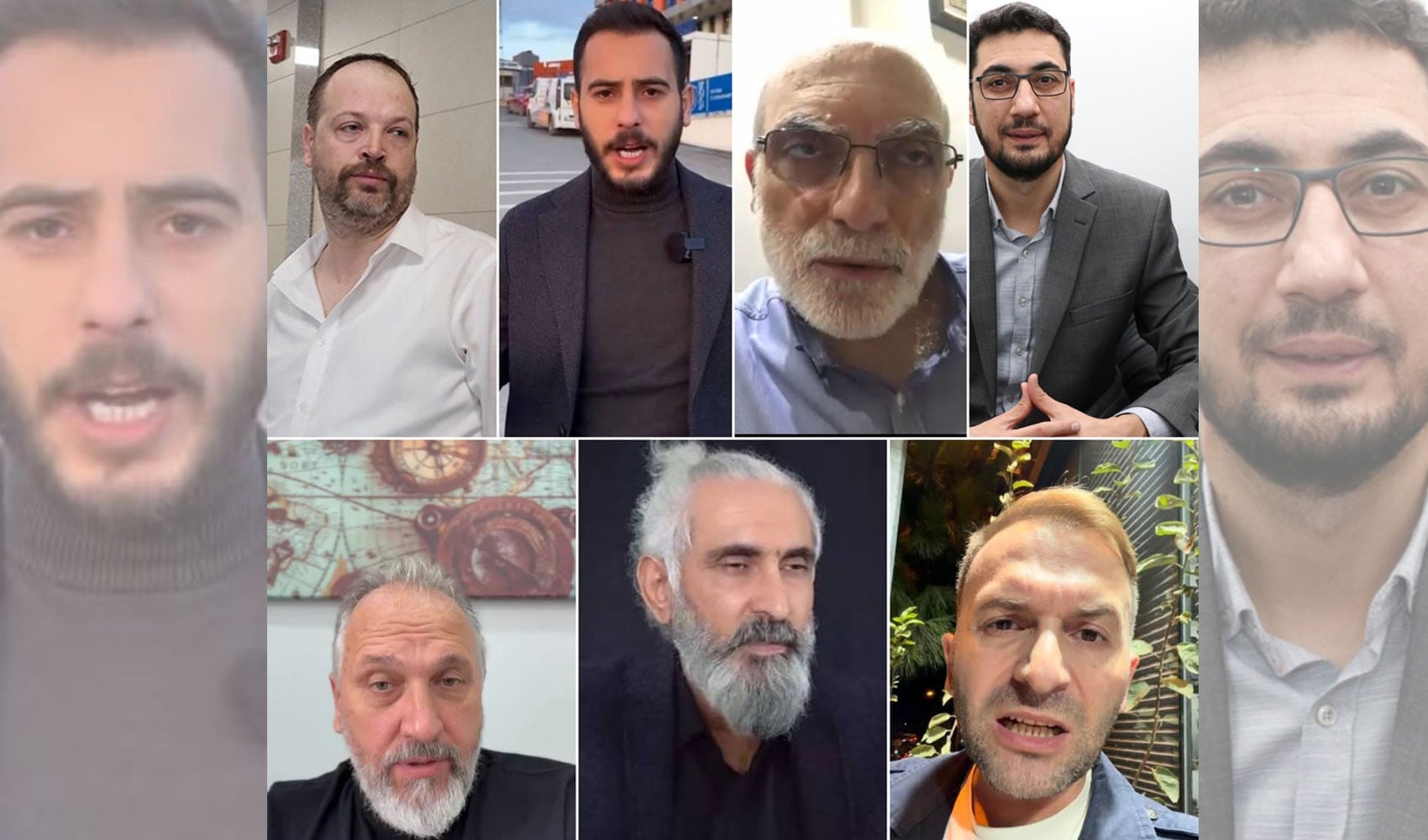
Azerbaijan issues arrest warrants in absentia for 7 people living in Turkey

The Orionid meteor shower will be visible from Turkey!

The penalty for Ronaldo, who left the national team camp, has been announced

Fatoş Seğmen reveals the cause of her daughter's death

Latest status in the race between AKP and YENİ Party revealed

Injury shock at Liverpool: He may miss the Fenerbahçe match

Who authorized the concert held in a parking garage?

From brotherhood to a distant partnership...