


Lithuania: The most protein-rich of the Baltic triplets



I am in Vilnius, the capital of Lithuania, to give lectures as part of a 3-week program.
During this visit, I will write down my impressions, though it is impossible not to compare it with Turkey. After all, this is a country 20 times smaller than Turkey, with a population of 4 million.
It is a typical Central European city. Religious and less tolerant; there is a Jewish quarter but no Jews, there is Kibinai but no Tatar-Turks; despite being a country, it is filled with churches that have no congregants.
It is built around the Neris River.
It is as flat as a tray and lush green.
We could call it a 'Green Konya'.
Its land area is about the size of Konya.
Extremely fertile soil.
The city is spotless.
The roads and sidewalks are beautifully designed.
The shops and cafes are bright and inviting.
At the Vilnius Gediminas Technical University Department of Civil Engineering, we are spending time with Lithuanian students as part of a very intensive program.
There are also professors participating in the program from Germany and other European Union member states. It is a very beneficial program for the students.
They spend time with different instructors from various countries and receive training.
After the 6-hour daily program, I explored the surroundings whenever I found time and chatted with the department faculty.
We discussed comparisons between the old and the new, as well as current issues like the war in Ukraine.
Since there were no male instructors, I established all communication with female faculty members.
Either it is forbidden for men to work at the university here, or men simply do not prefer it.
Or perhaps the habit of discrediting the male generation, a legacy from the Russians, still persists.
In this short time, I understood the following.
Their memories regarding the Russian era are full of pain.
What they experienced during the Cold War is the primary reason for the hatred that has formed against Russia.
They neither fear nor like the Russians. What they remember from the years corresponding to their childhood is decay, hunger, famine, oppression, fear, nepotism, and bullying.
Listening to the professors around 35-40 years old, I was reminded of the 2006 film by Florian Henckel,THE LIVES OF OTHERS film.
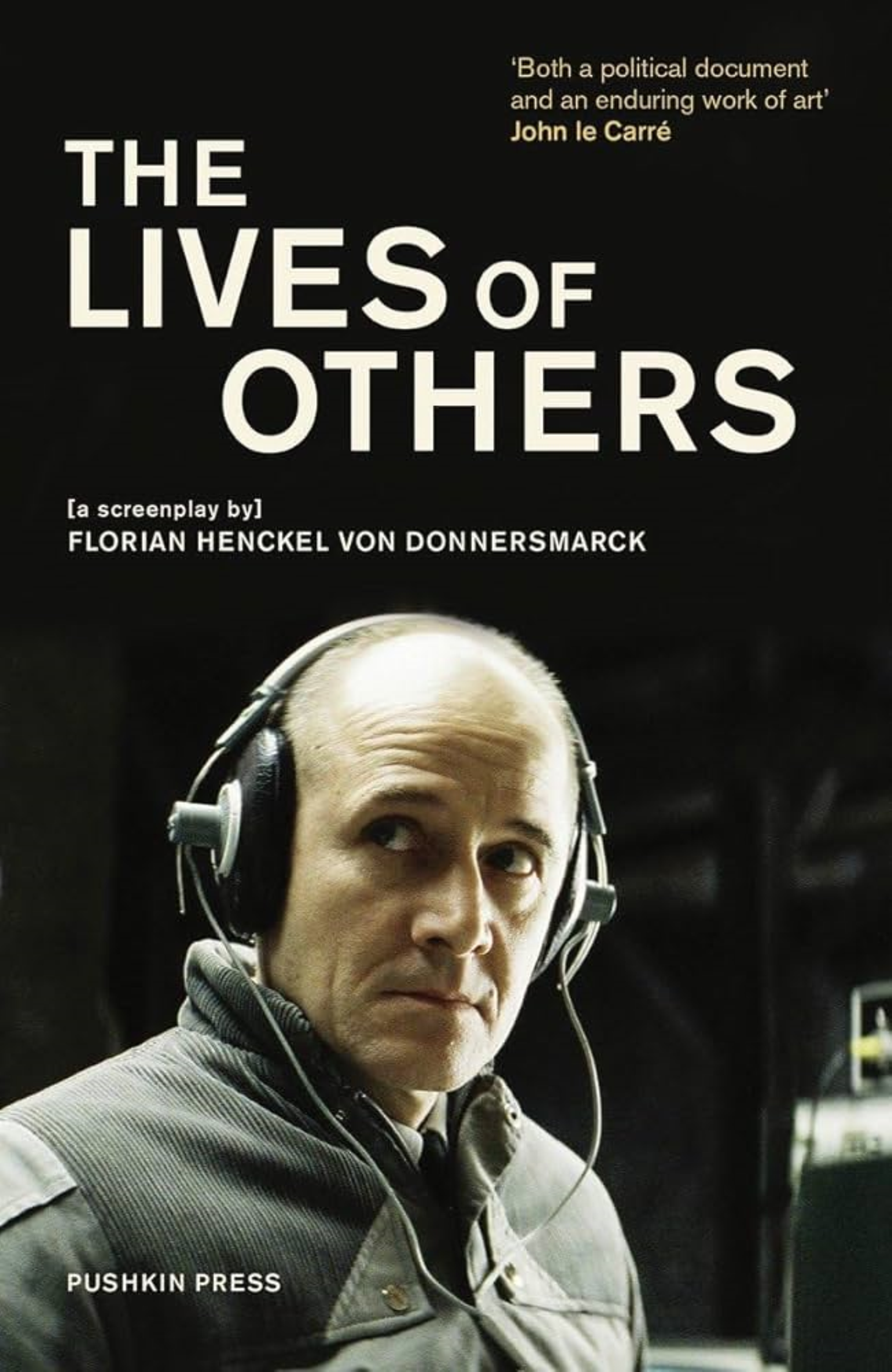
It tells the drama of a writer being followed by the state in 1984 East Germany and his lover, who ends her life by throwing herself in front of a car.
You want to say, 'May God never let this happen again.'
They lived through a situation that could cause couples to inform on each other without the other's knowledge.
During the Cold War, I don't think we experienced anything as bad as that in Turkey. Of course, there were informants among us, but I don't think there were people snitching on their own families.
Perhaps that's also because there were no WhatsApp groups back then. However, I have heard reports of a colleague being summoned to give a statement after a complaint from one of their sons-in-law regarding messages written in a family WhatsApp group.
During this visit, I also went to Riga. Everything I wrote about Vilnius applies to Riga as well, but Vilnius is much more dynamic, lively, and developed.
I took a 4-hour bus ride between Riga and Vilnius. The roads are full of trucks. As far as I understand, they are providing logistics for the war in Ukraine.
In Vilnius, balconies are adorned with Ukrainian flags. I also saw Israeli flags here and there.
You may have seen it in the news.
Lithuanians had gifted a Bayraktar drone to Ukraine at the beginning of the war.
Hatred of Russia has pushed support for Ukraine to the highest level.
They do not want to be neighbors with the Russians again.
They do not want the Russians to cross to the west of the Dnieper River.
They are extremely satisfied with the new life they have built with the support of the European Union since 1989.
When I enter a large supermarket, it is immediately clear that they have established their systems, given the food variety, technological infrastructure, and hygiene.
There is almost no one who does not speak English.
I taught my classes in English at Vilnius University.
Along with the professors, the students' English is also above average.
The new generation, especially those raised in the post-Cold War era, speaks English very well.
Interestingly, despite being members of the European Union, there is no one who speaks German or French.
Russian has already become a thing of the past.
The old communists who know Russian are nowhere to be seen. Most have either kicked the bucket or retreated to the countryside.
Since the pensions of those remaining are very low, just like ours, they rarely come down to the city center.
They are waiting to fade away.
This place has become a fantastic tourism destination. Prices are extremely reasonable. Both food and beverage, as well as accommodation costs, are not painful. The food is delicious, the staff is friendly, and the people are hospitable and helpful.
I haven't been ripped off yet.
The people are extremely warm, a sense of calm and tranquility prevails, and there is no pushing or shoving.
I traveled from Riga to Vilnius on a very comfortable bus with a ticket I bought for 15 euros from a ticket clerk who had excellent diction and English.
For the curious Turks, let me write it right away: a liter of gasoline is 60 liras.
Looking at the personal grooming and clothing of the people on the street, you would think the average income level is 50 thousand dollars. But it is not quite like that. The minimum wage is around 600 euros, but looking at the market prices, it is clear that this will go a long way.
They are at a middle-income level for now.
Since there are no immigrants or refugees, the city is spotless.
There are no unevolved masses around.
They have not been occupied yet, unlike Italy or France.
It is clear that they are renewing both the infrastructure and the superstructure with funds from the European Union. They have built very beautiful buildings next to the structures remaining from the Russian era. Looking at the construction machinery I see around, it is immediately obvious that basic engineering principles are being followed.
They are very sensitive about bicycle lanes.
They don't even let you pause. Those gentle people suddenly turn into strict teachers. They won't move on without giving your rearview mirror a sharp tap.
They also use the horn quite often,
Or perhaps they warned me so much because I committed a few traffic violations.
They have a town called Trakai that all tourists visit, right near Vilnius. They call them Karaims. Crimean Karaites. Jewish Tatars. Jewish Turks.
They settled in this region in the 1400s.
Due to environmental pressure, their old characteristics have not remained, but since they feed on dough-based foods, their anatomical structures haven't changed much. Also, a Tatar dish called Köbete still retains its name.
They have neither become Orthodox as the dominant religion nor have they been able to remain Jewish.
They have remained "in-between," caught in the middle.
As you can see, they have "been unable to please either side."
Would you like to get notifications about new developments and save news?
- NotificationsNew developments and breaking news
- SaveNews is stored in the app
Most Read
Video response to Kim Jong-un claims
Murat Ağırel’s police statement has been revealed
The Orionid meteor shower will be visible from Turkey!
Fatoş Seğmen reveals the cause of her daughter's death
Latest status in the race between AKP and YENİ Party revealed
Injury shock at Liverpool: He may miss the Fenerbahçe match
From brotherhood to a distant partnership...
Who authorized the concert held in a parking garage?
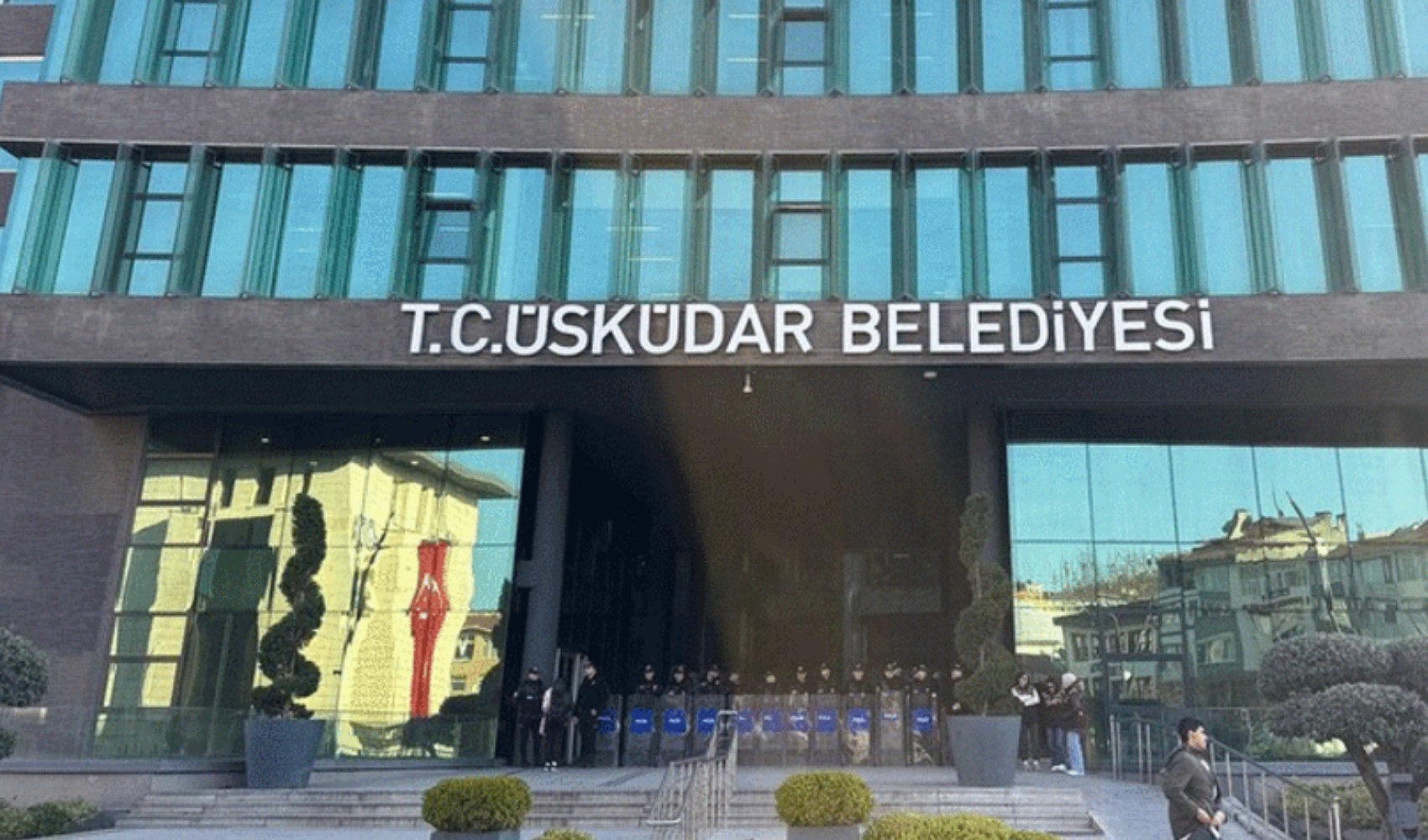
Acting mayor of Üsküdar has been determined
Good news from Izmir, may Istanbul be next