



As painful as the newborn baby gang tragedy we are experiencing—and which I fear will expand further in scope—is, I find the interpretation of the issue by various circles to be quite disheartening in terms of determining what needs to be done to prevent such gangs from forming again.
First, let me critique a view included in the statement by the Turkish Medical Association (TTB) regarding the matter. The TTB states that at the root of the incident lies a perspective that views hospitals as commercial enterprises and patients as customers.
Respected and dear friends, conducting business requires as much honor and conscience as the practice of medicine. What I would have expected from you first and foremost was to explain why medical service, by its very nature, cannot be provided according to the rules of commerce without compromising honor and conscience.
There is a truth at the foundation of health (or more accurately, medicine or the practice of medicine – H. Yazıcı, 12punto 12/8/2024) services that is either unknown or known but ignored. That is that in the implementation of certain individual and societal services on earth, the rules of commerce do not really apply. In some cases, making a service cheaper and more accessible by lowering its cost strips that service of its status as a service. For example, the performance duration of Beethoven's 9th Symphony is, as a rule, around 65 minutes, and the orchestra playing it requires a specific number of violins, wind instruments, and choir members. To tell people that I will let you listen to a cheaper 9th Symphony by shortening the performance duration and reducing the number of violinists and choir participants makes what is being listened to no longer the 9th Symphony (M. Gladwell – American author). Similarly, reducing patient care time to 5–10 minutes under the guise of increasing medical service also strips medicine of being medicine. What is forgotten, or unknown even to some colleagues, is that at least 75% of making an accurate diagnosis for a patient comes from listening to the patient's complaints. As the famous saying goes, “You can fool some of the people all of the time, and all of the people some of the time, but you cannot fool all of the people all of the time.” At the root of the medical services impasse we are experiencing lies, first and foremost, this act of stripping medicine of its essence.
Another reason why medical service does not function according to the rules of commerce is that the quality of this service cannot be easily evaluated by the recipient. A significant portion of illnesses resolve on their own. On the other hand, if you buy rotten meat from a butcher, you change butchers; you don't visit the greengrocer again who hides bruised produce at the bottom of the paper bag. However, it is much harder to evaluate unnecessary medication or incorrect medical intervention in terms of quality.
The third reason that separates medical service from commerce is the higher level of service expectation from both the patient receiving the service and the physician providing it, primarily as a result of the continuous advancement of medical science. Market saturation, which can be seen in commercial trade, rarely occurs in medical service. The main motive for this insatiability is the final reason I will list next.
The fourth and most important point in distinguishing medicine from commerce is the right of mankind, regardless of their level of wealth, to access medical services as equally as possible simply as human beings. Naturally, mankind has almost never, in any region, fully achieved this equality as possible, which I have written in italics. In my opinion, the tragedy of Mao's barefoot doctors (communism), the comedy of the 12 September mandatory physician rotation (fascism), and the tragedy manifesting itself in the dominant and declining life expectancy in the US in recent years (savage capitalism) all lie in the failure to know or the willful ignorance of the distinctions between medicine and market services that I have tried to summarize roughly.
Now let me return to the concrete event, namely the newborn baby gang case. When viewed from the outside, the incident appears to be a series of disasters caused by a handful of healthcare workers, including physicians. So, what is the first action taken against this incident, which was brought to light with the great help of the media? To immediately close a dozen hospitals where the gang was found to have infiltrated.
According to the main opposition and the TTB, what should be the next urgent step? The immediate nationalization of health services. I must confess, I felt as much sadness at these reactions and proposals as I did at the brutality of the newborn gang. Closing a hospital in a day is not much like closing a watermelon stand or a massage parlor. Okay, I am sure the patients in these hospitals were moved to other hospitals. However, moving patients from hospital to hospital is a procedure that creates life-threatening risks even under planned conditions and requires special expertise. At the very least, in the opposition media I have been able to follow, I have not seen or read any details about exactly how this patient transfer was implemented.
So, what should we do? The newborn baby gang incident is not an event of a few hospitals, a few physicians, and the last few years, as it began to emerge in a short time, even within days. As I have tried to explain as best I can, when fixing physicians and medical services, one must first understand and explain what the physician and the medical profession are. The next step is to ensure access to medicine and medical services as equally as possible.
The way to achieve this is not to nationalize all medical services, but through a widespread and effective, true general health insurance. I am aware that a proper health insurance system will have a high public cost. However, in this context, I believe that my country is not so much poor as it is a country with an ever-increasing income gap.
Again in this context, I argue that the most effective and urgent initiative to fix our income distribution is to establish an effective judicial system. Moreover, I can think with my humble physician's mind that transitioning to a proper judicial level is the cheapest way to put my country on the right path, and I am surprised by those who cannot think of it. A proper judiciary would both enrich the entire country and prevent all kinds of gang formations, including newborn baby gangs, and punish those that occur. It is precisely for this reason that falling into the despair that our most fundamental problem is that we do not want a proper judicial system, especially because of my profession, which I respect deeply, and my conscience, weighs very heavily on me.
Most Read
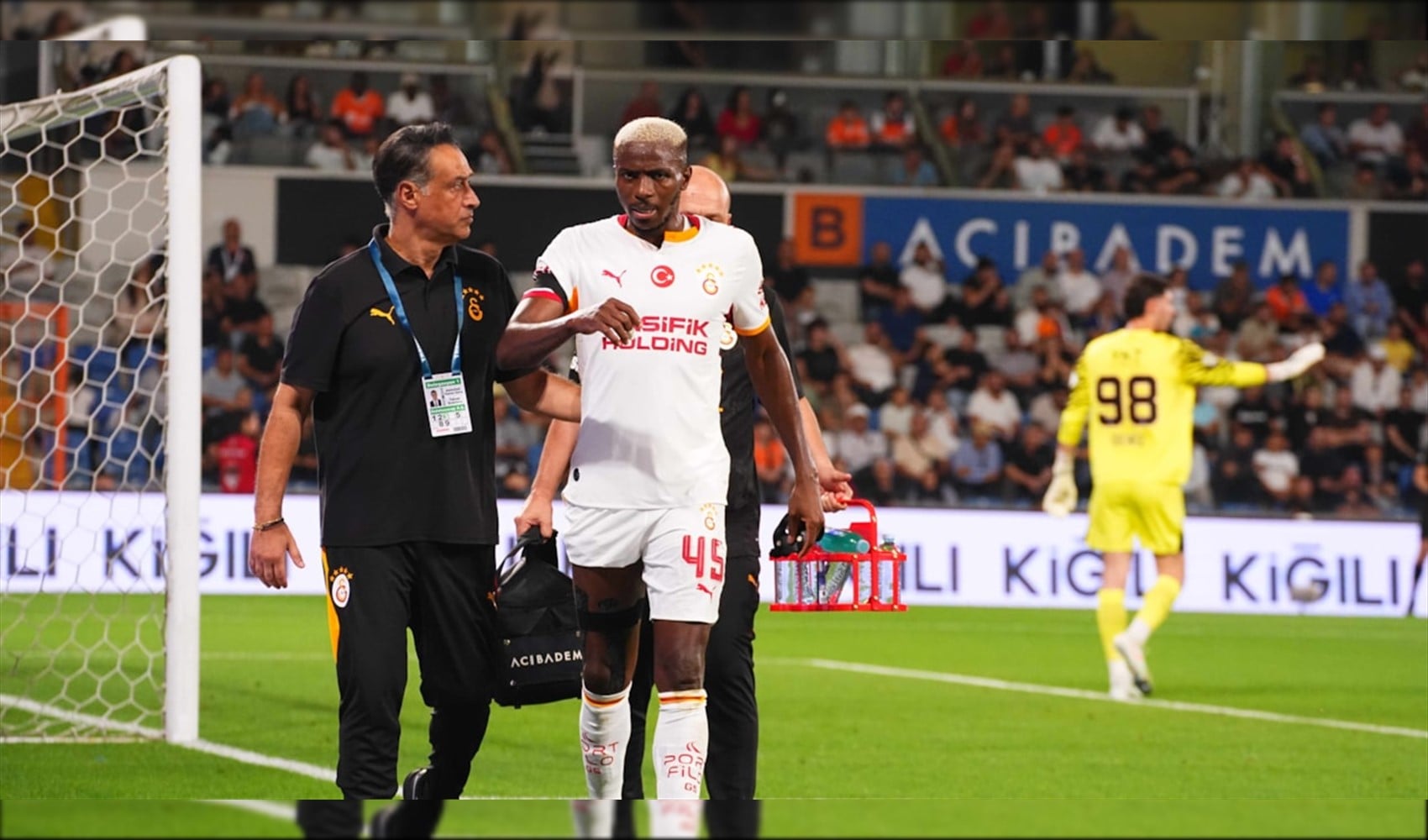
Galatasaray announces injury updates for Osimhen, Lemina, and Singo

Attention online sellers: Tax monitoring expanded
VAR for the Fenerbahçe-Beşiktaş derby has been announced!
Bridges and highways are being privatized: 15 July and FSM are also on the list

Peugeot September 2026 price list is out

New details emerge in 'panel' operation targeting lawyers

First statement from Osimhen after injury in Başakşehir match

Özlem Şanver: 'He said he would change, I believed him; should I be beaten just because I didn't leave?'
Gökçek era detail in ABB investigation

Mourinho explains why he substituted Arda Güler