



I often think that both Adam Smith and Karl Marx, upon hearing about Trump's visit to Communist China alongside over a dozen billionaires—including Musk, who considers posing with a chainsaw a feat—would have likely done more than just turn in their graves; they would have surely somersaulted. I find myself wondering what kind of magical affliction self-interest is, that it eventually brings the godfathers of capitalism and the godfathers of communism together in private.
Meanwhile, I learned something I am truly ashamed not to have known or heard of until this age: in ancient Athens, there was a deep divide between the rich and the poor. So much so that Socrates used to say that one should think of countries with deep chasms between the rich and the poor—using Athens as an example—not as one country, but as two separate ones. Following this line of thought, his student Plato, in his famous work titled The Republic, stated, "There should be no more than a fourfold difference in income between the richest and poorest in a country; the rich should give any income exceeding this to the state." Socrates also likened the rich's passion for wealth to a bowl with a hole in the bottom that could never be filled, while describing them as slaves to money. I also learn that the famous lawmaker Solon, who lived roughly a century and a half before Socrates, had banned slavery due to debt in Athens, but this practice could not prevent class struggle in Athens, which is constantly taught to us as the cradle of democracy. Throughout the Peloponnesian Wars, which lasted intermittently for over fifty years, an oligarchy was established first with the rich gaining the upper hand, then a democracy where the poor prevailed, and later an oligarchy where the rich emerged victorious once again. I am learning all of this from an article by DL Williams titled "Elon Musk Confirms Ancient Concerns About the Superrich," published in the NY Times (Elon Musk Confirms Ancient Concerns About the Superrich, GOOGLE); the author is a political science professor who focuses on the influence of economics on politics.
I also have a story about the subject of equal distribution. This story is not about Solon, Socrates, or Plato. Furthermore, it is not related to civil wars, oligarchy, or democracy; it is a story about an event that, when first heard, most of you will laugh off, and perhaps even be angry with me for taking up your time with.
That evening, I had two guests at my home. One was PD Saville, who taught me rheumatology and the foundations and some subtleties of scientific research in the US, and the other was the famous British rheumatologist CG Barnes. He, like me, was interested in Behçet's syndrome, and we had joint scientific publications on the subject. Furthermore, in the recent past, and with his initiative, we had worked together in the senior management of what was then the European League Against Rheumatism. They had been staying with us for a few days, and the next morning they were going to give a talk at Cerrahpaşa.
It was a hot summer day. After dinner, we sat on our small balcony. First, they asked me a few questions about current events in Turkey, and then, with a sharp transition, they moved on to British politics. Barnes, although he later regretted it quite a bit, was a staunch Thatcherite in those days. In contrast, Saville was vehemently against Reagan first, and then Thatcher. I need to add some extra information about my mentor here. Saville came from a deeply rooted Labour Party family. His father had served as a member of parliament for the same party. Moreover, Lord Beveridge, the pioneer of the socialization of health services in England, was a close friend of his father. Even more interestingly, following this implementation after World War II, a large number of British physicians had migrated to the US, and my mentor was among them. However, years had passed, and I think my mentor had come to regret that decision a little.
It was approaching eleven o'clock, and the argument was heating up. I had to intervene. "I have been watching your debate with interest and learning for a while now. However, we need to go to bed. We are taking the 8:00 AM ferry to the other side tomorrow morning. If you want to take a shower, press the green button next to the shower first. This starts the flow from the water tank." They suddenly stopped their argument and looked at me sternly.
I regretted intervening like that. One of those looking at me so sternly was my dear mentor, and the other was a valuable colleague, older than me, from whom I had also learned a lot. Just as I was about to say "excuse me," I was snapped at, almost in unison: "Hasan, you have been talking about the water problem in the city you live in for days. How can you put a water tank in your house in such a region?"
I was stunned, but I had learned my lesson. I remember my guests from that evening with respect and gratitude.
Most Read
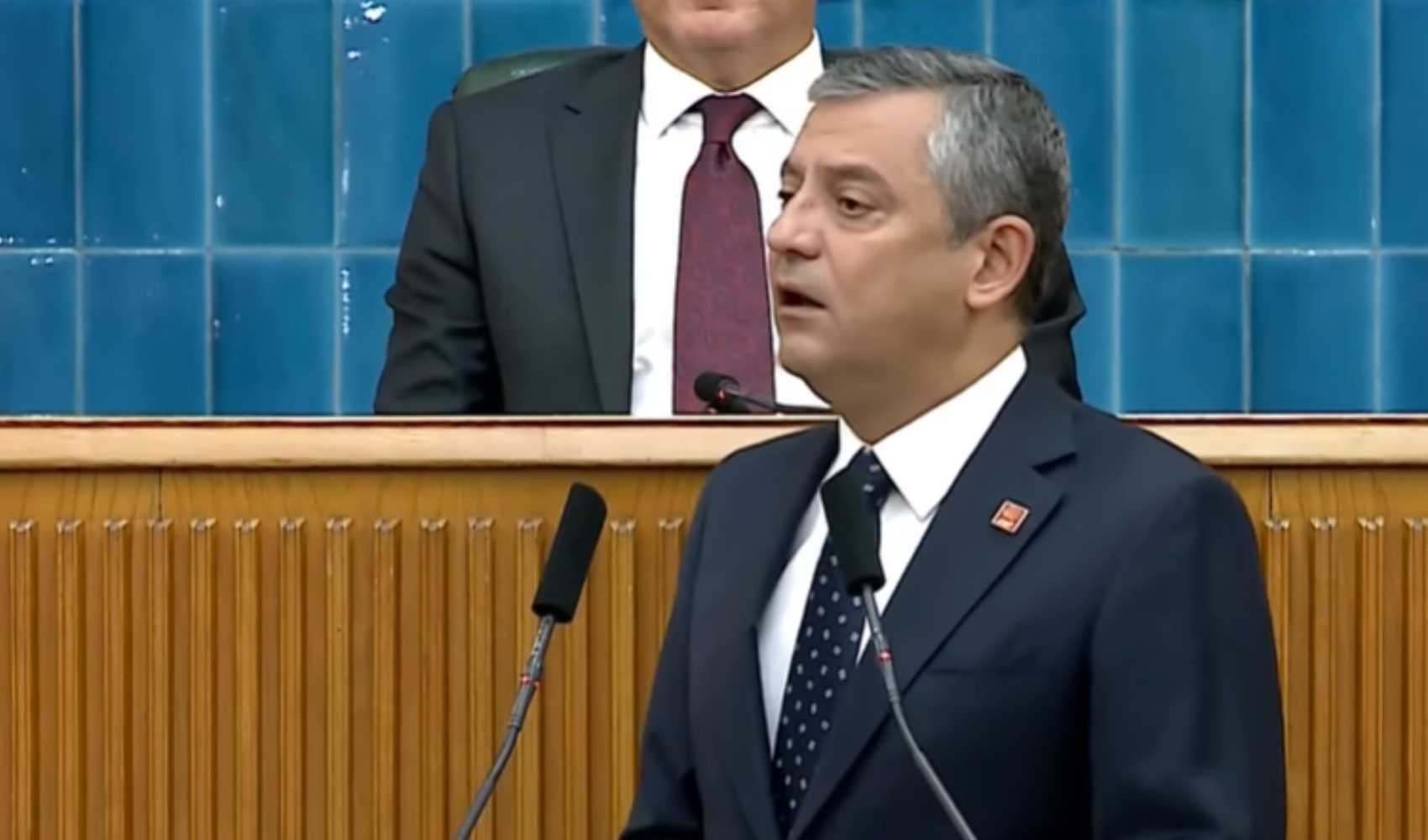
Historic words from Özgür Özel at the CHP group meeting

Air Force Academy student Veli Bilgin has died
Is this an opportunity for Özgür Özel to shed the CHP's ideological baggage?

The same refrain
Why you should not let your children play Roblox
Collapse: What kind of alternative program?
Tuncer Bakırhan calls for a framework law
After the final: The political economy of football
Here are the names that will be in Özgür Özel's new party!
Major crisis in CHP