


Being moral is sometimes both very easy and very difficult


Perhaps I should start by saying what should be said last. The fact that the relationship between good and evil with morality is sometimes as complicated as possible is the basis for the difficulty I have put in the title.
Let's say you are an internationally renowned neurosurgeon. The whole world knows very well that only through your vast experience and skillful hands can difficult brain tumors be successfully removed and your patients restored to health. Furthermore, over the years, you have trained and continue to train many new surgeons whose level of science and skill is close to or perhaps has even surpassed yours.
However, as the story goes, in the country where you work, there is an authoritarian prime minister who insists on having his own way. Recently, he sent a physician who is a close relative of his, wanting you to train him as a skilled neurosurgeon. He doesn't just want it; he orders, "You will take my nephew under your wing immediately." Meanwhile, you have a list of neurosurgery residency candidates in front of you, ranging from Chinese to American.
Now, I ask you, "Oh world-renowned neurosurgeon." As far as I can see, you have three options, and what do you say?
Option A: Saying, "If I were the prime minister, I would also send my young physician nephew to such a famous surgeon by my order," and immediately taking the nepotistic nephew as an assistant.
Option B: Taking the privileged relative under your wing, with a pricking conscience and a heavy heart, thinking that if you do not obey the prime minister's order, all kinds of direct or indirect attempts will be made to end your medical practice and teaching, and as a natural consequence of this, many patients who depend on you will not be able to find healing.
Option C: As soon as you receive the order, saying, "One cannot practice medicine or teach in this country," quitting your job immediately, and perhaps looking for ways to continue your medical practice in another country.
First, putting morality aside for a moment, let's agree on what good and evil are in the options I have presented. I would say that in the options I listed above, good is this highly talented neurosurgeon continuing his profession successfully, serving his country and all of humanity on one hand, and training surgeons similar to himself on the other. Evil is the disruption or termination of these functions. Let me emphasize immediately: the good and evil I am talking about are solely from the perspective of society. The evil or good that comes to you as an individual is a separate issue.
Now it is time to examine how the good and evil in the same options align with morality and immorality. I don't know about you, but in my opinion, behavior A is definitely immoral but, at first glance, at least not evil in terms of the continuation of the service provided to society. I say at first glance because there is a danger that new assistant candidates who learn about the immorality of the professor who took the nephew as an assistant through nepotism will say, "One cannot work with this immoral and cowardly professor," and this very important neurosurgery center will disappear over time.
The immorality of behavior B and the evil it will cause are in some ways less than option A. Especially if our professor, while occasionally overcoming the fear of the prime minister established within himself, says things like, "As I am sure you will understand, I took this nephew as an assistant under duress," he might at least find the opportunity to train talented young people for a while longer. Ultimately, the erosion of good is less in this example.
As for behavior C, I think some would interpret it as moral and others as completely Don Quixote-like. However, there is also the dimension of goodness. It is clear that our famous surgeon quitting his medical practice and teaching will result in at least his own country's loss.
A recently read and much-admired article caused me to rethink all of this (Resisting, Strategically Complying, or Being Complicit? Physician Options Under Moral Pressure; MK Wynia, N Engl J Med, August 13, 2026). It turns out that resignations among government-employed physicians in the US have increased significantly in recent days. The main reason for this is that the Trump disorder expects physicians to carry out non-scientific practices that are directly harmful to health and patient care. As you can understand, in my scenario, option C corresponds to Resisting in the article I mentioned, option A to Being Complicit, and option B to Strategic Compliance.
The article also emphasizes how much this trilemma of morality, which we are discussing, has occupied human reason and conscience throughout history. I understand that in the trilemma of the famous neurosurgeon in question, the answers of Socrates and his student Plato would be option C, while Aristotle's answer, being a bit more pragmatic, would be option B. No one would even look at option A.
Finally, let me underline this. There is no such trilemma regarding the current fund tragedy. It is both very immoral and very evil.
Would you like to get notifications about new developments and save news?
- NotificationsNew developments and breaking news
- SaveNews is stored in the app
Most Read

Two high-speed trains collide in Spain!

New formula for indefinite alimony regulation

Can Yayınları Editor-in-Chief Cem Akaş has passed away

Surprise results emerge from the ballot box in Israel

Allegations involving Turkey in the case of 748 kilos of cocaine seized in Ecuador
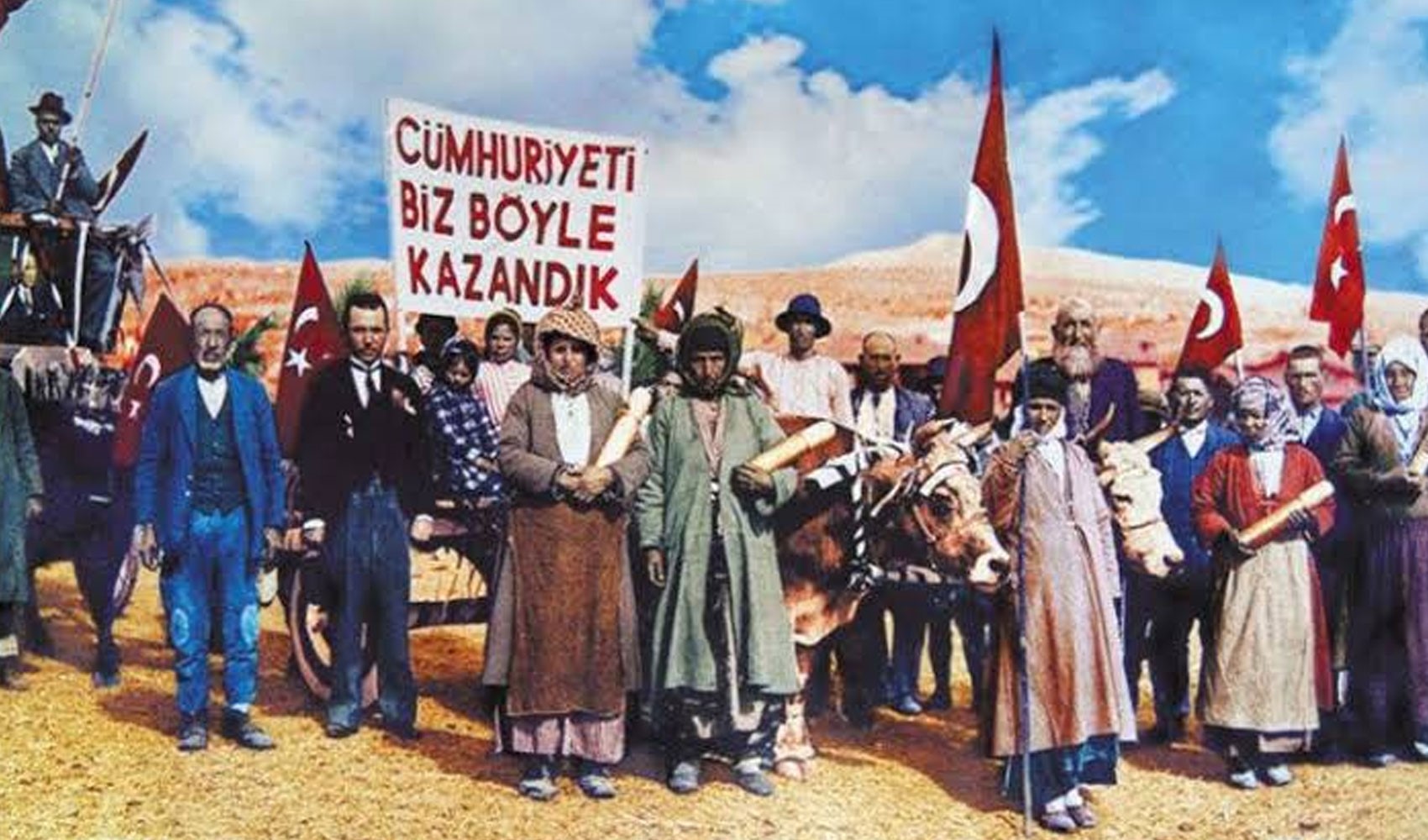
With the Republic, sovereignty was taken from the palace; it cannot be returned to the palace!

The digital era for IDs begins

NEW Party decision from Mustafa Sarıgül!

Striking claim regarding the Erdoğan-Aliyev meeting!

Social media move from Oktay Saral following his resignation