



If it is madness to be able to say "they will go as they came" to those who arrived with all their might and weaponry, then it is an act of genius to also send our colonial governor on the same ship as a bonus while fulfilling that promise. Trying the untried is a form of behavior unique to youth. The power to attempt to realize one's dream is found only in those who have not lost their youthful energy. This is why the Founder's hope lies in the youth. For this reason, he addressed his suggestions, his advice, the reasons behind his actions, and his concerns about the future not to his own generation, but to the youth. While the harm that can be done to adults is limited to their labor and time, the harm done to the hope of the youth destroys not just the young person's present, but their future. Surely, in that era as well, there were those who spoke of international law because of the signatures the sovereigns placed on the Mudros and Sèvres treaties on behalf of a Turkish public that could not even read or write. From Atatürk to Alexander, these lands have raised the greatest dreamers of their generations in every era, and these dreamers have turned their dreams into reality with their own generations. Undoubtedly, there is nothing more godlike than turning what is in one's mind into reality. Unfortunately, this sacred determination—in the true and full sense of the word—can reside in the human body for at most 30-35 years under normal conditions; it cannot live longer than that.
The Turkish youth, however, have no choice but to seize the future of the thieves in order to compensate for their own stolen youth. Once the youth find what they are looking for, they should not even question who it belongs to; they must drain the swamp without wasting time trying to convince mosquitoes not to suck their blood. The last wishes of those who stole the youth's most precious asset—their youth that will never return, their hope in life, their future, and their joy—should not be asked, even if just for the sake of formality; one should be suspicious of anyone who asks. Whatever is done to cancer should also be done to these enemies of freedom and thieves of the future.
I mentioned in previous articles that the richest 10% of Turkey owns 60% of the country's wealth. I cannot provide a statistic on what percentage of total crimes the most criminal 10% commit on their own. The incident involving our martyred policewoman Şeyma Yılmaz and Yunus Emre Geçti, who was able to roam the streets despite having 26 criminal records, is not the fate of these lands, but its current cancer—a problem that must be solved. First of all, the fact that criminals can remain free despite dozens of crimes is a very familiar phenomenon for us lawyers. The execution law has changed 40 times in 20 years; convicts have been released before elections due to the voting pressure of their large extended families, only to end up back in prison while committing the crime they know best somewhere between two elections. This Turkish-style phenomenon is the most beautiful equivalent of the phrase "as if" in Turkish. We are no different from wolves and sheep forced into the same coop. For us, who are at the very beginning of the journey of modernization, to grasp what equality and justice are and how the concept of democracy—which means the rule of the people—should be interpreted, we must try to make the impossible possible. But this requires going directly to the 'Z', and for this, it is not enough to just open space for the youth and those who come from the youth in decision-making mechanisms; one must leave the entire track to those with fiery blood.
The lives of us innocent citizens, who would commit hara-kiri if a wrong word slipped from our mouths, are unfortunately turned into hell by criminals and their families who can raise their voices in an organized manner. I mentioned in previous articles that the concepts of justice, equality, freedom, and democracy are still very new and raw. The whole world is living this firsthand the moment they step out onto the street. How all contemporary world cities have ended up due to fugitives, how inadequate the humanitarian laws of contemporary countries are for these people, and that being born human and being a human are not the same concepts can now be seen even by the blind. Because we humans waste time accepting rather than perceiving, it seems it will be too late to find a humanitarian solution by the time we accept the situation.
We need to clarify with a social consensus where the freedom of one ends and the freedom of another begins, and where the finish lines are. Living with criminals at any moment of one's life makes it impossible for us innocent people to live in a way that befits human dignity. Unlike world democracies where inhumane massacres and civil wars occur, because we received our democracy as a turnkey project, many concepts still hang in the air in Turkish democracy. We need to separate the good from the bad, the innocent from the criminal, the wise from the ignorant—that is, we need to say goodbye to those who could not become one of us. For nomadic societies like ours, there seems to be little benefit other than an instant reward and punishment system. Furthermore, with transportation, life, the economy, and communication accelerating so much, there is no other way to bind the youth, who have no patience to wait for either reward or punishment, to the country. What the public understands by democracy is not a legal paperwork process where the citizen reports a criminal to the police, the police take it to the prosecutor, the prosecutor to the judge, and from there it moves to higher courts, only to end with an amnesty as desired by the politicians' core voting base, the families of the convicts. We need to taste the feeling of justice by seeing the criminal punished immediately, just like the feeling of satiety one gets while eating. As far as I have experienced for ten years, the justice system in Turkey is like eating paper so that our empty stomachs do not churn.
Social Justice Score (S.A.P.); it is possible to clean up society by integrating a reward-punishment system into human life from birth to death, by making a desirable citizen rating determined according to different variables, just like the Findex we use for loans. Just as banks determine interest rates based on credit scores, increasing the price, availability, and accessibility of every service we normal people receive from the state is both the right and the need of the good people of this country. It is not a favor or a luxury for a good person with a high S.A.P. score to be attended to first when they go to a police station or hospital, or for the judge, prosecutor, or official dealing with them to see on their screen that they are an exemplary citizen when they have business at the courthouse or any government office, and to treat them as they deserve; it is the return for the taxes paid and the rules followed to the letter—that is, the citizen's right. Above all, since those who respect the laws and those who break them at every opportunity are not equal, isn't treating them equally the greatest injustice of all?
Most Read

Galatasaray announces injury updates for Osimhen, Lemina, and Singo

Attention online sellers: Tax monitoring expanded
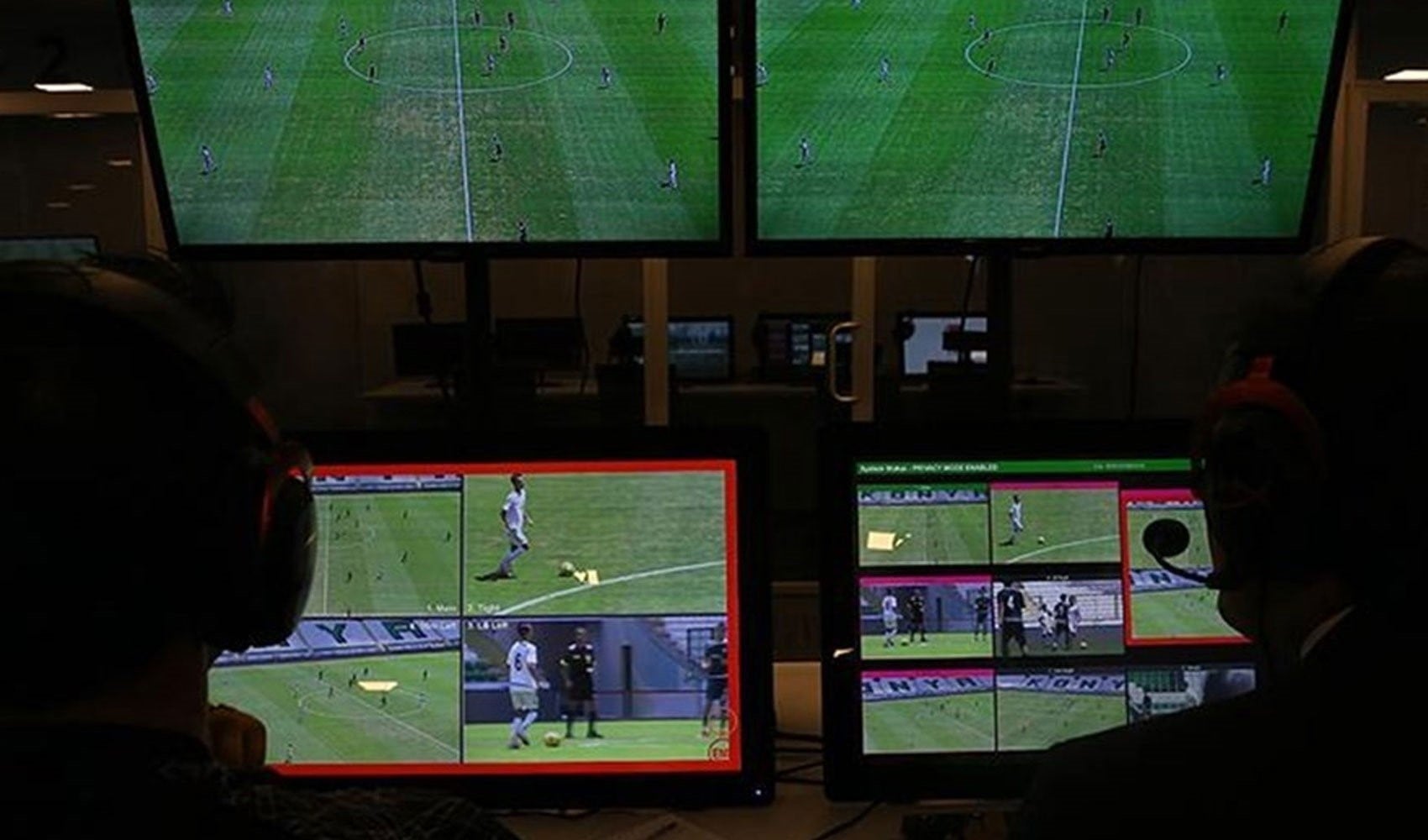
VAR for the Fenerbahçe-Beşiktaş derby has been announced!
Bridges and highways are being privatized: 15 July and FSM are also on the list

Peugeot September 2026 price list is out

Another bankruptcy in the construction sector

New details emerge in 'panel' operation targeting lawyers

First statement from Osimhen after injury in Başakşehir match

Özlem Şanver: 'He said he would change, I believed him; should I be beaten just because I didn't leave?'

Mourinho explains why he substituted Arda Güler