


The Anatolian sun will rise again: Secularism



The revolution of secularism, which entered the Constitution of the Republic of Turkey on February 5, 1937, as the complete separation of state and religious affairs, has been placed under constitutional protection by Article 174 of our Constitution, just like other revolutionary laws. The protection of these revolutions was entrusted to the Grand National Assembly of Turkey by Atatürk.
Atatürk: Many games are seen in the world of politics. However, when ignorance and bigotry rise up against the Republic, which is the result of a sacred ideal, and against modern behavior, it is especially the side of the progressives and Republicans. It is not the place that serves as a source of hope and effort for reactionaries. Doing what civilization commands and demands is sufficient for humanity.
Atatürk: In the Republic of Turkey, everyone worships God as they wish. The Republic of Turkey has no official religion. There is no one in Turkey who can attempt to force their ideas on others, and this cannot be permitted.
Atatürk: Dervish lodges must be closed down definitively. The Republic of Turkey has the power to provide enlightenment in every field. None of us are in need of the enlightenment of dervish lodges. We draw our strength from civilization, knowledge, and science; we recognize nothing else.
Atatürk: Read our history, and you will see that the evils that have ruined, enslaved, and devastated the nation have always come from irreligion and wickedness under the guise of religion.
Atatürk: Friends, gentlemen, and oh nation; know well that the Republic of Turkey cannot be a land of sheikhs, dervishes, disciples, and madmen. The truest and most real path is the path of civilization.
Atatürk: The moment bigots find no support from the state, their lamps run out of oil. Because our nation does not, in any way, like bigotry.
Today, because bigots find support from those who govern the state, they have filled their lamps with oil and taken to the streets, saying they want the caliphate and Sharia.
Our country is experiencing the deepest and longest-lasting crisis of the Republican era. In the last twenty years, our country has moved away from the values of the Republic and the principles and revolutions of the great leader Mustafa Kemal Atatürk in every field, and these have been hollowed out. One of these is secularism.
Our nation has suffered greatly for centuries from the inability to implement the principle of secularism, which is based on the removal of religious beliefs from state administration and ensuring they play no role in the political decision-making process; development and progress on the path of science have lagged behind; religious figures who identified with state administration grew increasingly powerful in the late Ottoman period, and they tried to maintain their existence in the early years of the Republic by placing obstacles in front of modern thought.
Undoubtedly, the most important element of Atatürk's revolutions is secularism. Atatürk, who said, "Religion and sect are matters left to everyone's conscience. No one can force anyone to accept a religion or a sect. Religion and sect can never be used as a tool for politics," aimed to remove religion from politics and state affairs and to protect its high place in consciences, and he made it a principle to keep religion away from all kinds of calculations and interests in the modern Republic. However, today, religion has once again become the fundamental reference in state administration. Along with this, religious communities (cemaats), which are one of the main indicators of deviation and divergence in religion, have taken this as an opportunity to dominate state administration, forming their own class in politics, trade, and education. These communities, which are one of the root causes of deviation and divergence in religion, have come to dominate every field of state administration with the cooperation of imperial powers. The primary criterion for all appointments, promotions, and even benefiting from state tenders has become these communities.
The caliphate, which was abolished on March 3, 1924, by Law No. 431 in the Grand National Assembly of Turkey—that is, the "Holy Book State," or in other words, the "State of Religion and Sharia"—has been sought to be revived by organizing through open or insidious movements, and science and religion have been pitted against each other, but science has emerged victorious.
This revolutionary approach in the Grand National Assembly of Turkey undoubtedly took popular sovereignty as its basis and brought a society left in the darkness of the Middle Ages into the light.
On March 3, 1924, three laws were discussed and approved in the Grand National Assembly of Turkey. The first of these is the abolition of the "Ministry of Sharia and Pious Foundations" (Şer’iye ve Efkaf Vekâleti), which could be called a "Ministry of Religion" or "Ministry of Sharia" in today's terms, and which has no place in a secular and democratic state. The other two are the adoption of the "Law on Unification of Education" (Tevhîd-i Tedrîsât Kanunu) and the abolition of the caliphate. Furthermore, the law for the expulsion of the Ottoman dynasty and the House of Osman from the country was also passed by the assembly on this date.
March 3, 1924, is the day when religion was definitively separated from the state with the abolition of the caliphate institution. However, today, it is being attempted to be made dominant in state administration again.
Under the conditions of that day, the caliphate order defended by interest groups such as merchants, usurers, tithe collectors, and farm stewards had clearly become the divine cover for a specific colonial order. On the path opened by the great leader Atatürk, the Grand National Assembly of Turkey destroyed a 407-year-old state of religion and Sharia that had reigned since Yavuz Sultan Selim and established a modern Turkish state in its place. Today, however, the same interest groups, even if their names have changed, are longing for the pre-Republican process.
Atatürk secularized the state by setting aside legal rules that were outdated and did not fit the times or reason, but he never touched the rules of Islam based on faith and worship.
The screams of those who shouted that "religion is being lost" back then were not about religion being lost, but about their interests being lost. The caliphate had become an order of interests hidden under the cover of a religious state. In fact, the caliph was the caliph of the landlord, the feudal lord, the steward, the usurer, the shopkeeper, the religious figure... that is, not of the Islamic religion, but of the entire medieval order of domination. Our country is at a crossroads today. They will decide either to return to the darkness of the Middle Ages or to popular sovereignty as a requirement of a strong parliamentary system and the right to the budget.
The Grand National Assembly of Turkey abolished the caliphate by relying on the awakening of the people and the power of the revolution. The revolution was carried out in the name of the people, in the name of popular sovereignty, to destroy the Sharia state, and on behalf of a society that had not awakened, had not become conscious, had been exploited for centuries, had lost its freedom, and had lived under oppression.
Atatürk expressed the dangers of using religion as a tool for politics with these words: "If a politician who has perhaps never prayed in his life preaches and advises innocent people to pray at night in addition to the five daily prayers, would the target of this action not be understood?".
These words, spoken by Atatürk years ago, are thought-provoking in these days when Turkey's development is expected from Imam Hatip schools and the religious state is presented as the primary regulator in instruction, education, and politics.
Secularism is not irreligion; on the contrary, it is opposing the exploitation of the nation in the name of religion by self-serving individuals, leaving behind certain legal rules that do not fit the times or reason, and surrendering religion to the conscience of individuals.
Secularism means leaving the individual free in turning to God, and the state free in managing the country and world problems. Neither can the state force the individual toward a specific religious orientation, nor can individuals or groups of people force the state toward a religious understanding or pressure.
The Republic of Turkey was founded by fighting not only against imperialism but also against ignorance and superstition; this is the meaning of the War of Independence and the Republic of Turkey state.
However, despite the long time that has passed since the Republican revolutions, the war between the modern, democratic Republic of Turkey state and the opponents of secularism continues today. Mentalities left in the darkness of the Middle Ages are trying to transform the Republic of Turkey state into an Islamic state, make the Constitution the Quran, and make Sharia dominant.
Secularism is not against religion, but against the exploitation of the nation in the name of religion by ignorant and self-serving individuals, and it aims for law and science to guide the state. Declaring war on Atatürk's revolutions and full independence is declaring war on the Republic of Turkey state. Until the Anatolian sun's order is re-established in a popular and humane way, the struggle for secularism will be the victory of modern democracy along with a strong parliamentary system.
Would you like to get notifications about new developments and save news?
- NotificationsNew developments and breaking news
- SaveNews is stored in the app
Most Read

Video response to Kim Jong-un claims

Murat Ağırel’s police statement has been revealed
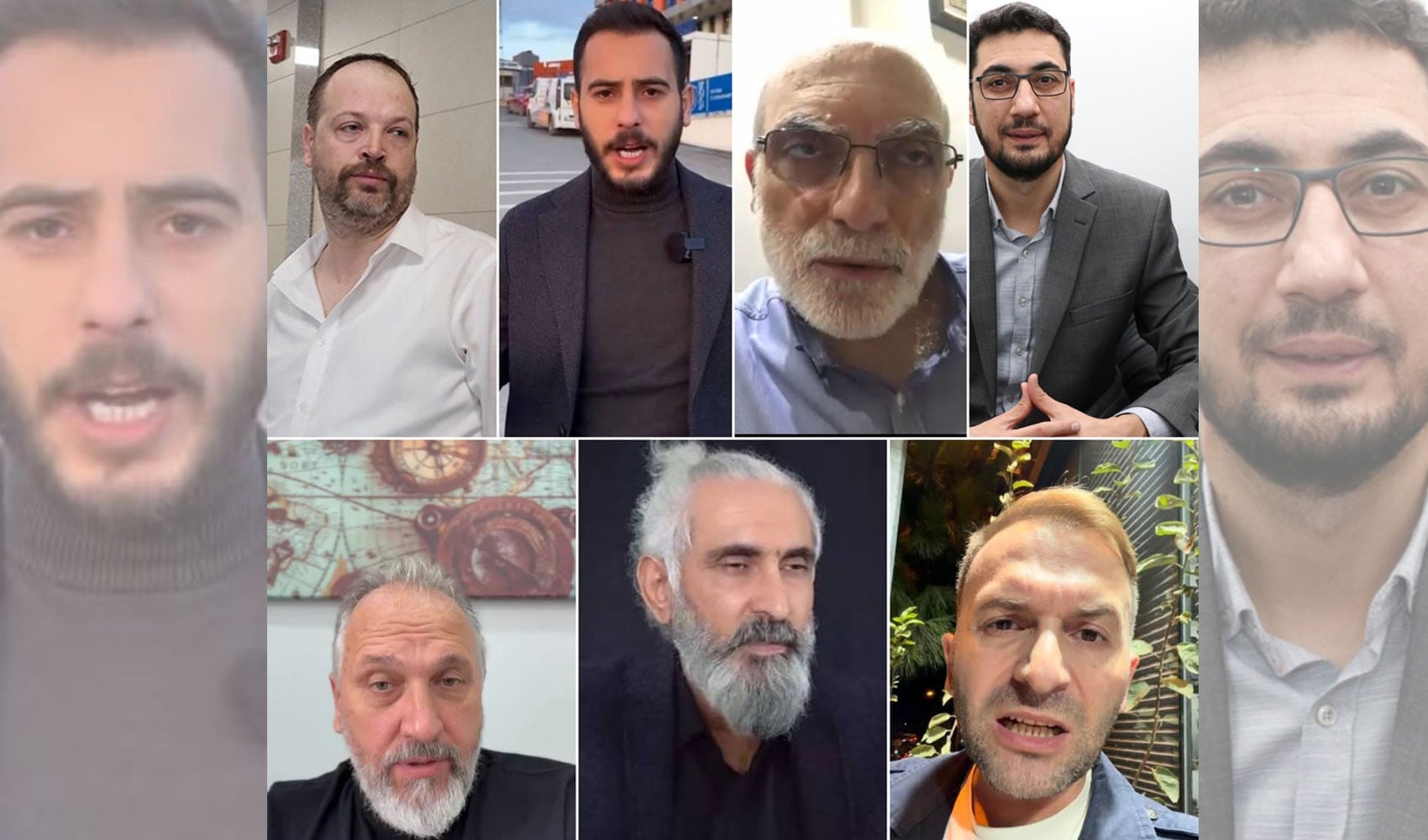
Azerbaijan issues arrest warrants in absentia for 7 people living in Turkey

The Orionid meteor shower will be visible from Turkey!

The penalty for Ronaldo, who left the national team camp, has been announced

Fatoş Seğmen reveals the cause of her daughter's death

Latest status in the race between AKP and YENİ Party revealed

Injury shock at Liverpool: He may miss the Fenerbahçe match

Who authorized the concert held in a parking garage?

From brotherhood to a distant partnership...