


Amartya Sen



WHICH ONE RUNNING OUT CAUSES FAMINE: MONEY OR FOOD?
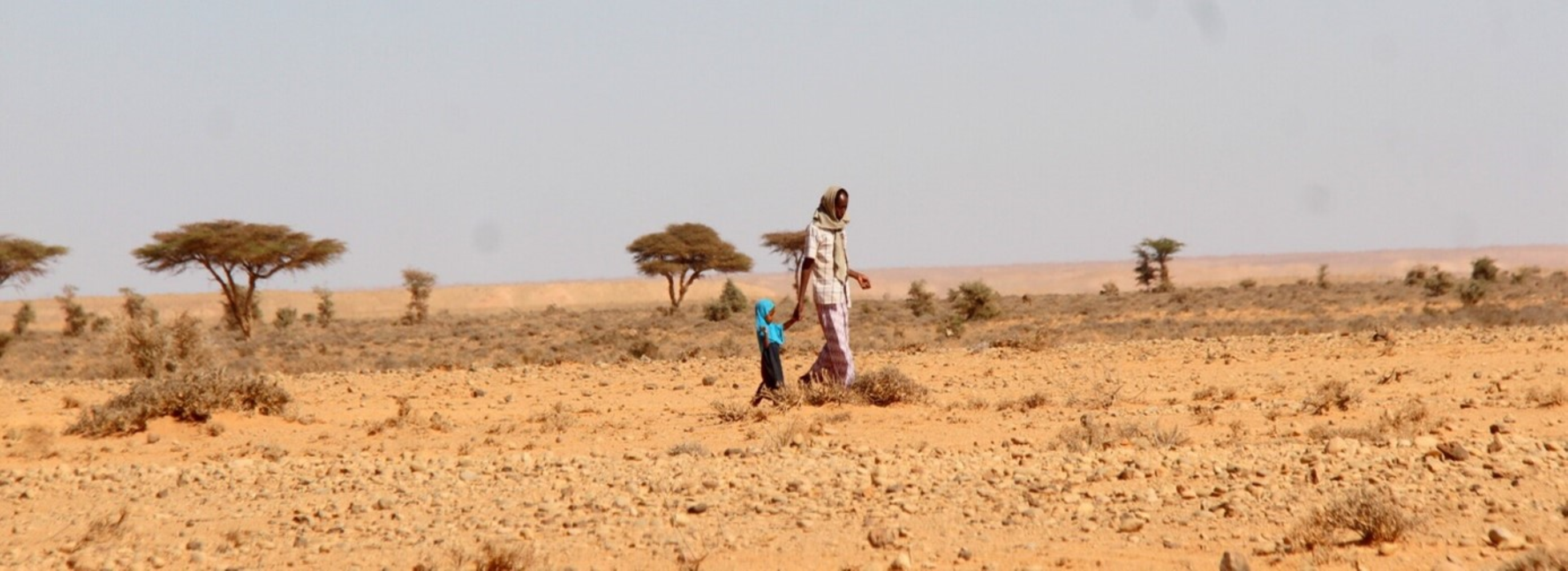
What is the best way to accurately express a country's social welfare?
Is it the number of construction projects in that country, the number of tenders awarded within the country, or the giant hotels built on the coastlines that cost tens of thousands of euros per night? Could all of these be indicators pointing to a level of development?
The UNDP, which stands for the United Nations Development Programme, says no, in very sharp terms, in response to this question, based on globally accepted evaluation criteria and measurement techniques. It cannot be!
What the Living Conditions of a Society's Most Disadvantaged Members Indicate
In his work "A Theory of Justice," John Rawls, while discussing the fundamental principles of social justice, says, "a just society develops policies aimed at improving the conditions of its most disadvantaged members." In other words, to understand the welfare level of a society, one needs to look at the most disadvantaged people living within that society.
Which segment or segments are the most disadvantaged in our country, and how do we, as a society and as a state, treat these segments? It is certainly possible to list these segments and the injustices they are subjected to one by one, but the answer to this question relies on each of our observations regarding the community in which we live.
How do we treat animals? How well are we preparing our children for the future world they will live in, and what about women, the elderly, the youth, men... are there answers we can give with peace of mind regarding each of them?
This is exactly what the UNDP does; by basing its observations on the principle of impartiality, it holds an impartial mirror to countries that do not reflect realistic figures about themselves. These studies, based on the principles of equality and inequality, are carried out in more than 170 countries. UNDP has target topics that serve to create a picture of how a country treats its citizens, such as poverty reduction, sustainable development, democratic governance, energy and environment, and crisis prevention and recovery.
AMARTYA SEN AND THE HDI
One of the most well-known reports of the UNDP is the Human Development Index (HDI), whose story is as remarkable as its content.
Amartya Sen, who spent his childhood during the great famine in Bengal, India, witnessed the great famine that caused between 1.5 million and 3 million people to die of hunger and poverty through the eyes of a small child of about ten years old, and analyzed throughout his education how a society could be dragged into such a deep abyss in plain sight. Therefore, his works, which have been translated into many languages, have deeply influenced the world and independent scientific studies in this field.
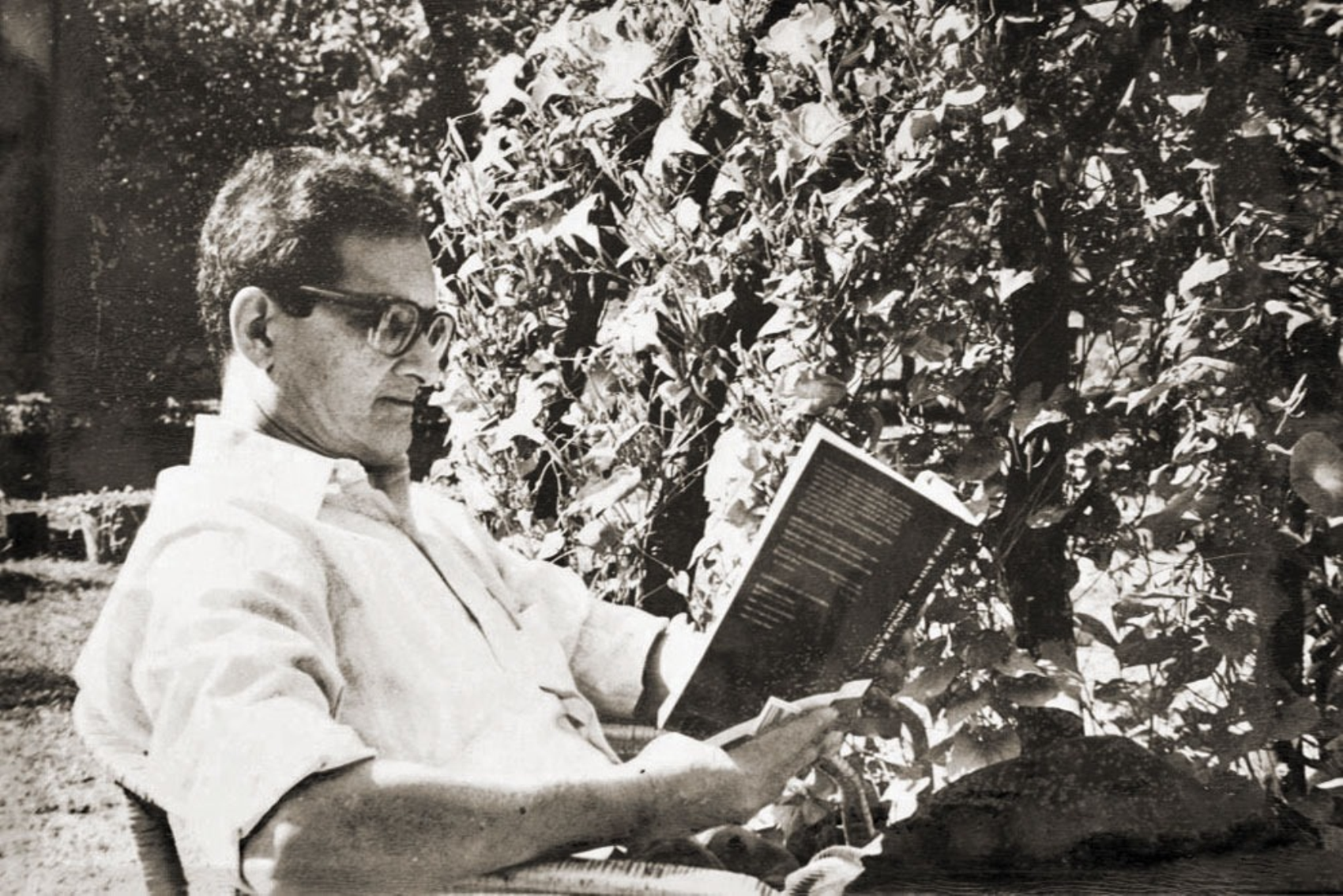
The HDI Index was also created based on the book "Development as Freedom" by the Indian economics professor and philosopher Amartya Sen, who was awarded the Nobel Prize in Economics in 1998 for his "contributions to welfare economics."
WHAT IF FREEDOM IS THE ONLY WAY TO DEVELOPMENT!
Isn't it an ironic realization? For a society that has entered a process of contraction because it restricts freedoms, degrades education, and moves away from fundamental principles such as independence and freedom, freedom must be the most bitter prescription that can be written for salvation.
In his work "Development as Freedom," Amartya Sen argued that the concept of development should not be measured only by economic growth, but above all by the expansion of individual freedoms. According to him, a country's development is related to its citizens' ability to lead a healthy, educated, and free life. Therefore, social welfare and justice are concepts that must be evaluated beyond economic growth.
While analyzing how a country can be dragged into a disaster like famine, Amartya Sen also examines the methods of preventing this disaster in detail. Amartya Sen speaks of five main forms of freedom for the restoration of development in society. According to Sen, the realization of these criteria is directly related to the country's redevelopment:
Political Freedoms: The right to participate in politics and freedom of expression.
Economic Facilities: The right to access economic resources and reach job opportunities with justice.
Social Opportunities: The right to access education and health services.
Transparency Guarantees: Transparent governments and the fight against corruption.
Protective Security: Social security systems that protect people against poverty and emergencies.
As a child of a country where millions of people were dragged to death step by step by ignoring leading signs such as political mistakes, an environment of oppression, and severe inflation, Amartya Sen addresses all countries in the world in this situation from the field of economics to which he dedicated his life with this sentence: "Freedom is the ultimate and most important instrument of development."
In summary, Amartya Sen says that the rights and freedoms summarized in the five points above are interconnected, but only if applied together can freedoms be created within the community, injustices be eliminated, and thus, with new paradigm shifts occurring within development economics, the doors to holistic and sustainable development can be opened.
Going Beyond the "Traditional Famine" Definition
In his study "Poverty and Famines," Amartya Sen draws attention to the relationship between war-induced inflation and wage workers working seasonally in the agricultural sector while examining the causes of famines. He states that the war in Southeast Asia triggered inflation due to high investments in military infrastructure, increased purchasing power through military personnel stationed in the region, and the increase in food demand in the surrounding area. Agricultural workers usually lived on their savings during seasons when they were unemployed, but these savings lost value rapidly due to inflation, and at the same time, food prices rose rapidly.
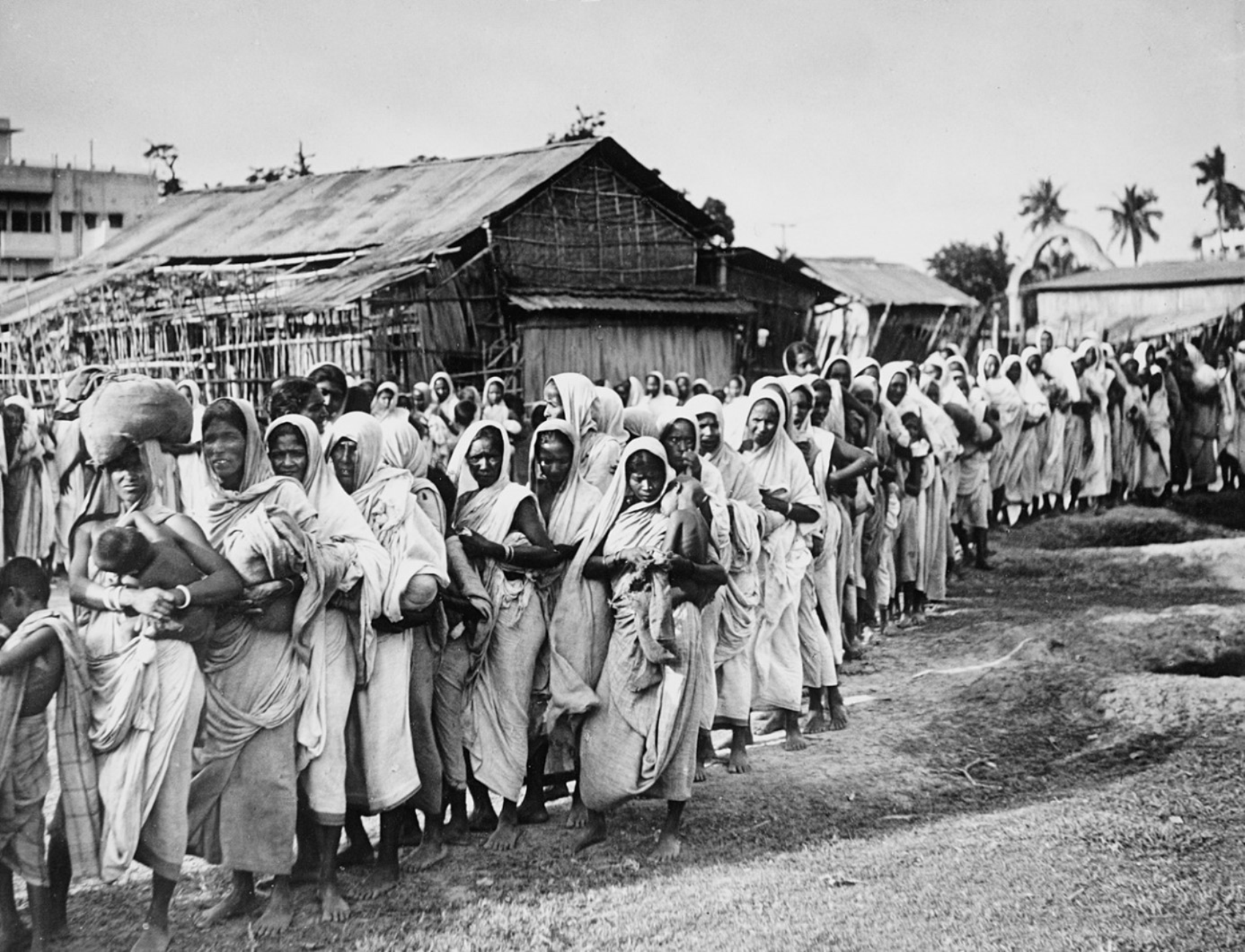
In this context, Amartya Sen emphasizes that famine does not stem solely from local (due to poor harvest) food shortages, but rather from the decline in purchasing power caused by inflation.
According to him, famine is not the result of the physical absence of food, Food Availability Decline (FAD), but the result of the collapse of property rights (Failure of Exchange Entitlements - FED).
FAD: Food Availability Decline
FED: Failure of Exchange Entitlements
In his theory, Amartya Sen argues that the cause of famines is not a physical drop in food supply, but rather a collapse in people's ability (property rights) to access and purchase food. Since this situation arises due to reasons such as economic factors, price increases, loss of income, and inflation, it indicates that solutions created with the traditional understanding of famine will not be functional in the long run. Does it sound familiar?
Amartya Sen says that the only way to save the public from deep poverty and famine is possible only by going beyond the traditional famine perspective. Sen says that socioeconomic policies should be reorganized in a solution-oriented manner and social safety nets should be established with urgency.
The absence of a shortage of food in the country does not mean there is no famine in the country; a severe contraction in people's purchasing power also means famine. The way to solve this is neither to increase the amount of food nor to increase the flow of money whose value is falling rapidly in the market.
The real solution in the long run is to include the people experiencing this contraction in the country into a social system and to create a new system that will ensure the country's redevelopment, where pressures are reduced, freedoms are guaranteed, the education system is improved, and people believe that as a result of the education they receive, their talents will be valued, they will be hired, and they can be useful.
Would you like to get notifications about new developments and save news?
- NotificationsNew developments and breaking news
- SaveNews is stored in the app
Most Read

Video response to Kim Jong-un claims

Murat Ağırel’s police statement has been revealed

The Orionid meteor shower will be visible from Turkey!

Fatoş Seğmen reveals the cause of her daughter's death

Latest status in the race between AKP and YENİ Party revealed

Injury shock at Liverpool: He may miss the Fenerbahçe match

From brotherhood to a distant partnership...

Who authorized the concert held in a parking garage?

Acting mayor of Üsküdar has been determined

Good news from Izmir, may Istanbul be next