


Vaginal birth is the 'norm'; it is not normal! Your body, your life, your decision!



Systematic schools of thought that oppose women giving birth via cesarean section and argue that this method is contrary to human nature are too complex to be explained with simple sentences or the one-sided stance of a fixed idea.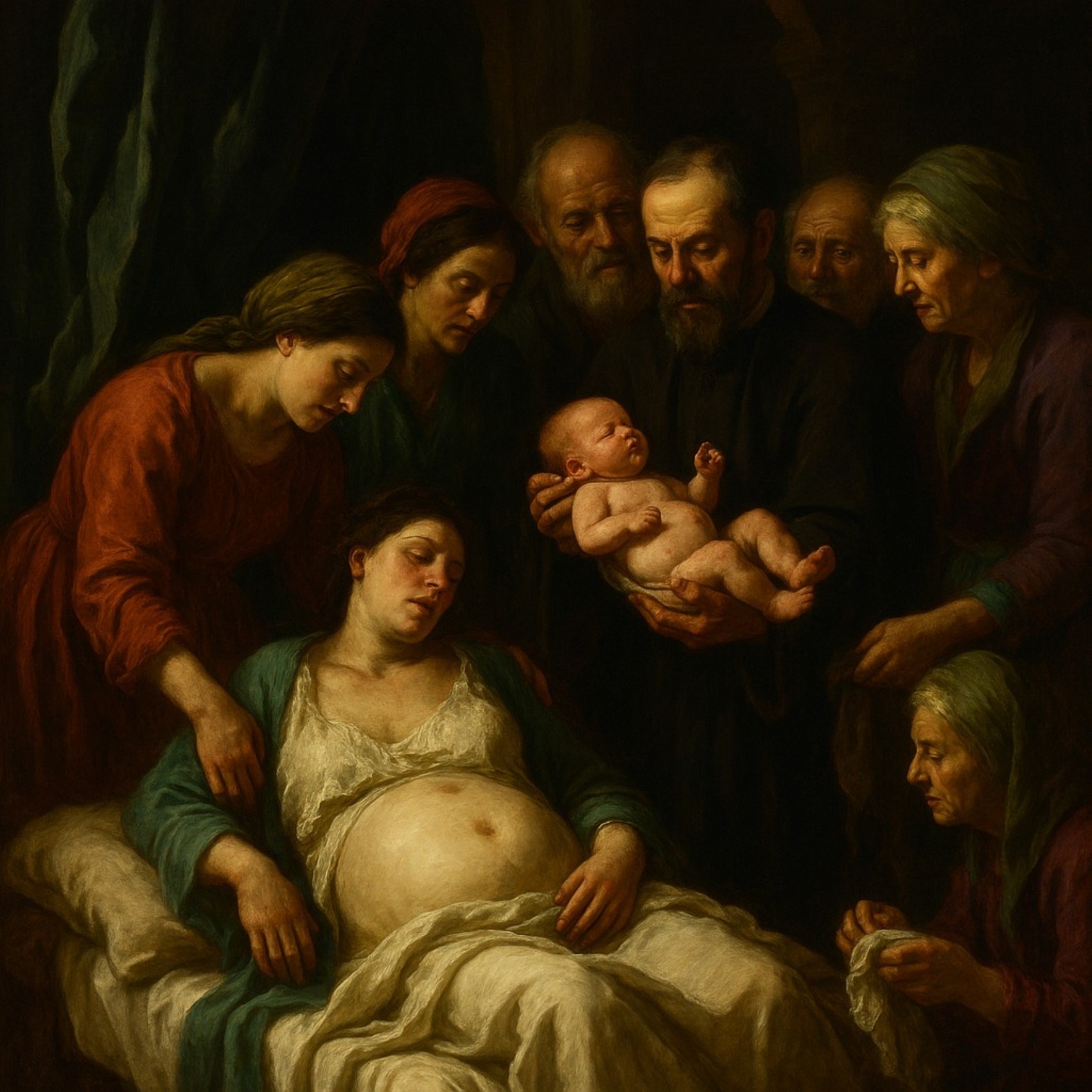
When the subject at hand is essentially a woman's social identity and the personality assignments imposed upon this identity by patriarchal hegemony, the issue turns into a multi-layered inquiry where psychoanalysis, gender theory, the imperative discourses of dogmatic patterns, religious symbolism, and misogyny are intertwined.
First, it is necessary to analyze the reasons for anti-cesarean sentiment and what this opposition corresponds to in the definition of gender, and I believe it would be appropriate to start with the biological difference of women.
When we evaluate it from a pure and uninterpreted perspective, the female body is capable of biological abilities that the male body cannot perform, such as becoming pregnant, giving birth to a child, and feeding that child after birth with a fluid produced within her own body.
When viewed from the window of ability, this feature, which should elevate women to a superior position, has been turned upside down when it encounters male-dominated thought.
The biological superiority in women, which ensures the continuation of the human species, has been integrated with attributes such as terrible helplessness, inherent wildness, and being a creature of 'fitrat' (nature/disposition), thereby reducing women to the position of a "helper-object."
While the "ancient patriarchy" subjects women to such a demotion in terms of humanity, it rewards its own kind by placing itself at the center of all universal criteria as the "essential-subject," with the attribute of being the most precious entity.
In other words, through an androcentric imposition, it has positioned the woman, whom it declared wild, as an "object of desire, reproduction, and service" that enables the man's reproduction, satisfies his sexual needs, and performs his daily chores, in the face of his own god-like position.
In the social order shaped around this positioning, the fixed idea of patriarchy does not, of course, only target the pregnant woman; it also subjects the girl child, the young woman, the 'bride'—which is the institutional slave identity it assigns to women—and all of the woman's intermediate identities to the sharp limitations of the male pen.
Not content with this, it expects women to feel ashamed and inadequate simply because they are women, and it dares to gift this state of shame to itself as a kind of pleasantry within the masculine corridors of the patriarchal palace.
NORM-NORMA-NORMALITY
A woman's biological superiority is recklessly imprisoned within a normative framework determined by patriarchal narrative, and these norms are loaded onto the shoulders of womanhood as a fault to be ashamed of. And it is loaded in such a way that the idea that a woman should be ashamed because she is pregnant, menstruating, or breastfeeding her baby is instilled as a 'NORMAL' behavior.
It is necessary to briefly touch upon the concept of normality in this regard. The word "normal" creates an association in the minds of many of us that is integrated with concepts of what happens naturally or what should be correct, right? However, when we look at the etymology of the word, the paths of reason in philology take us to a completely different channel.
The word "normal" comes from the Latin word "norma"; "norma" is the name given to the "square" (gönye) used by carpenters to measure the accuracy of a line.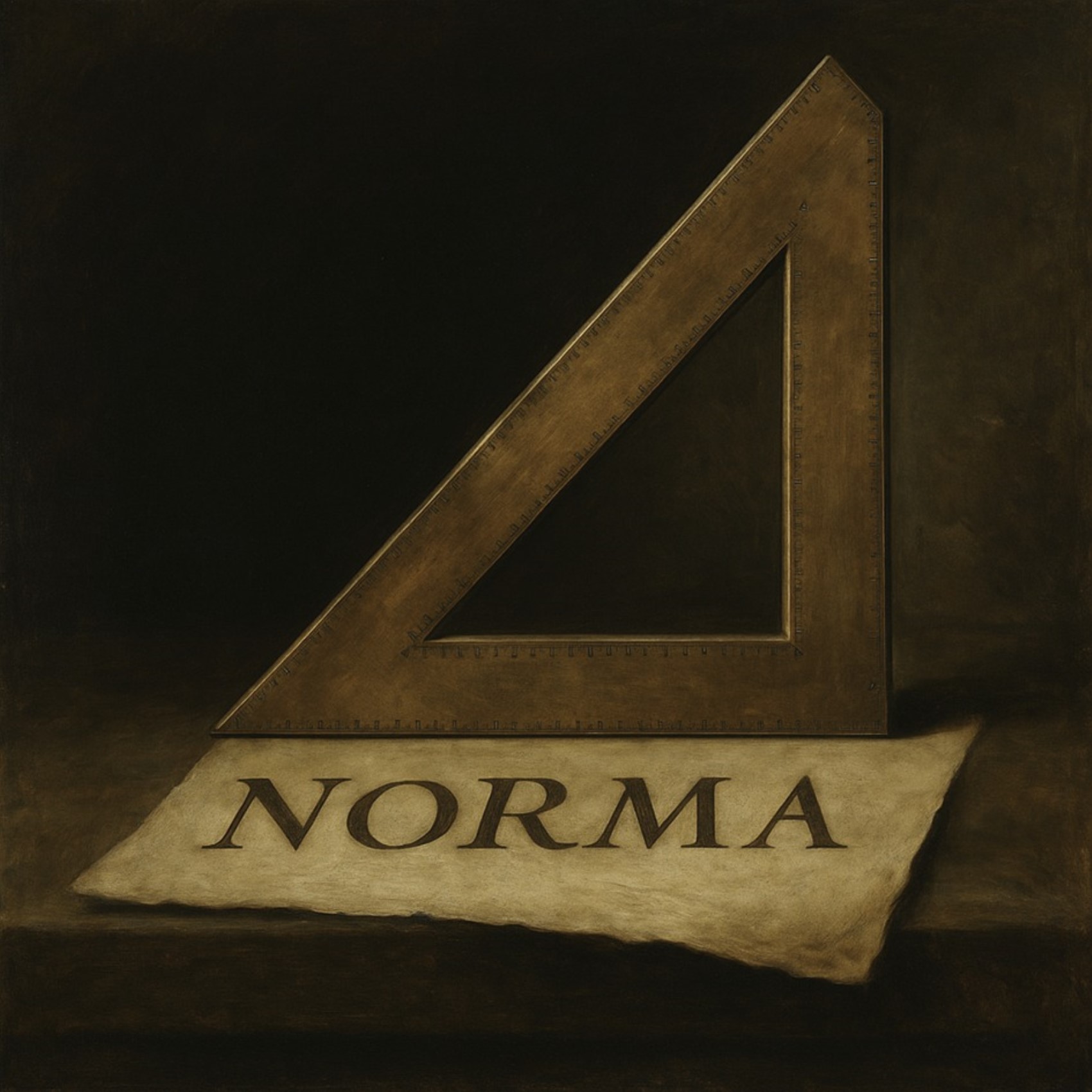
Transforming from a concrete carpenter's tool into an abstract cultural measure, the norm, used in the sense of rules or standards that conform to the correct line, appears before us as an ideological concept that is clearly seen to turn into the most powerful tool of power in the analyses of Foucault and Butler.
Let us recall what the French thinker Michel Foucault said under the heading of "biopolitics":
"Modern powers regulate life itself, not just by punishing individuals, but by creating social norms or supporting existing norms."
American philosopher and feminist thinker Judith Butler, on the other hand, addresses Foucault's concepts of power and norm in the context of gender, and with the thesis she creates on the same plane, she speaks to us about gender being performative.
So, what does it mean for a gender to be performative?
It means that the female body is constantly subjected to questions of "how should a woman behave?" by social discourses and power relations. Patriarchy shapes womanhood and motherhood by imprisoning them within a normative framework through the traditional-political answers it gives to these questions over and over again.
Echoing within this framework: "True motherhood happens with vaginal birth," "A woman wanting painkillers or preferring a cesarean section during birth makes her motherhood feelings deficient," "The ideal mother is the mother who selflessly endures pain"—these imposing normative answers are quite far from the answers a woman would give by considering her own health, her baby's health, her emotions, and her psychology.
THE IDEOLOGICAL SANCTIFICATION OF PAIN
In this context, the sanctification of vaginal birth as a ritual involving pain and danger is nothing more than an effort to discipline the female body through gender norms.
Therefore, in this framework, the fact that a woman's preference for a cesarean section is considered "contrary to nature" stems from the answer patriarchal norm-setters give to the question, "Whose life is sacred and worth protecting?"
The real perversion in the matter is that while the woman who risks death and prioritizes suffering severe pain is sanctified by the patriarchy with the title of true motherhood, the woman who prioritizes her life, her fears, and her emotions in the birth scene—where she is forced to realize the "sacred motherhood" norm at the cost of her own life—is morally devalued and declared a sinner by the patriarchy.
So, who is truly sacred in the book of "sacred motherhood" whose author is the hegemonic male? Is it the woman herself, who is an individual, as the patriarchy claims? Or is it the man who places himself at the center of the universe as the "unconditional subject"?
If this attributed "sacredness" were only related to a woman's biological ability to give birth, would women who become pregnant out of wedlock face the danger of being rejected by society, insulted, or even killed in some places?
When explaining the concept of "grievability" in "Frames of War" and "Undoing Gender," Butler says, "Not every life is considered equally worth grieving; power itself determines which loss is 'important'."
So, how is it that while men and women are two genders of the same species, the patriarchy, which centers the continuation of the male lineage, does not see the life of a woman who dies in childbirth as a grievable value?
THE CONCEPT OF OBJECT OF DESIRE IN LACANIAN THEORY AND GRIEVABILITY
At this point, while trying to understand the issue, psychoanalytic theory offers us a different perspective. According to Lacan, the essential emotion in humans is desire; the beings chosen as objects for this desire are temporary. In the event of the loss of an object of desire, the desire itself does not extinguish; the person enters an effort to obtain a new object of desire.
So, for the "essential-subject" patriarchy, which declares the woman its "helper-object," how important can it be for the woman to die while giving birth?
Even if the loss of the woman is a sad situation, there is no social obstacle to finding a new object of desire. This may be considered a ruthless assessment of men, yes! It is certainly unfair to think that a man who loses his wife will not be sad, but the concept of masculinity in society "rationalizes" not the mourning of the loss of a woman, but the transition to a new woman.
The chasm between the social statuses of a widow and a widower is a very striking example of this situation.
A man whose wife has died is a subject of sad pity and compassion; he is placed on the gold-leafed throne of the masculine perception system, his flaws are covered, his bad sides are filed down, and he is elevated to the position of an owner who has gone shopping again. He is rewarded with the protective love of traditional patriarchy by finding a better, new wife as soon as possible.
A woman who loses her husband, on the other hand, is a woman who is no longer "a virgin" and "has no owner" in traditional dogmatic society. Moreover, if she has been kept out of social and economic life throughout her marriage, and therefore has no financial security, she is positioned as an object of desire who will be exposed to the harassment and perversion of other men.
The only path left to the widow is either to try to become a part of society again by forcibly finding a new male-owner—which the gears of the patriarchal wheel force the woman to act in this direction—or this woman has to live a life where she is excommunicated, pushed out of society, and alienated from the traditional system.
SANCTIFYING THE DEATH OF A WOMAN
So, does the patriarchy settle for this reward it gives itself? Of course not!
As if it were not enough to declare the woman ungrievable, it also attempts to reward the woman if she dies. It instills in the woman the idea that if she dies in the birth bed, this is the greatest honor she can achieve...
How? Traditional dogma promises the woman unconditional paradise if she dies in the birth bed.
If, by chance, she is not a woman lucky enough to die and go to heaven, then she must suffer as much pain as possible so that the young woman can be cleansed of her sins through the pain she suffers. This is why the women accompanying the birth manipulate the young woman with all their might to have a vaginal birth and never consider a cesarean section during this process.
The idea that the severe pain she will suffer will completely erase her old sins is whispered into the ear of the young woman, who is already believed to be a sinner and has been convinced of this situation herself, for nine months and especially during birth.
We understand correctly, yes, the patriarchy is so in love with itself that it says to its woman: "Your suffering for me is an opportunity I have bestowed upon you, make good use of it."
In other words, a woman should be grateful for the pain she suffers while giving birth to her master's child; and even if she dies, she and everyone around her should sanctify this death with happiness because she is a "martyr."
So, what does this perversion mean for a woman who is convinced of traditional dogma with all her sincerity?
For a young woman who has chosen the path of acceptance to survive by integrating into the system, this holy death promised by the man and the opportunity to shed sins through pain are more valuable than the entire life she would live almost happily.
Because the woman within this system has already been convinced that she is the object of all sins because she was born a woman. She has been convinced that the more pain she suffers while giving birth naturally, or even if she dies if possible, the more she will be cleansed of her sins or rewarded with unconditional paradise.
Therefore, the probability of a young woman who has been convinced that she will definitely be the obedient bride of patriarchal dogma and will be cleansed of her sins while giving birth dying is much higher than other young women.
NORMATIVE DISCOURSES AND REALITIES
What is made invisible behind all these normative discourses is the reality of a woman's birth experience:
What a woman experiences throughout pregnancy, the pain she suffers during vaginal birth or cesarean section, bodily fragmentation, feelings of helplessness, severe nausea experienced during the first months, the fear of birth and death experienced for 9 months, the risk of losing her baby, the psychological and physical burden she will undertake, the hormonal changes awaiting her after birth, social factors, her changing life, starting to live with a new human being who is dependent on her for everything, and being responsible for him with her entire existence, and feeding her baby from her own body are ignored.
During pregnancy, which is simplified by calling it a natural process, none of the discomforts experienced are physical reactions that the woman already knows and is prepared for. When she feels nauseous, she does not say, "ahh, how nice, I'm nauseous"; she feels sick, she is uncomfortable, she feels exhausted. The degree of this discomfort she feels is not less or different from the pain a man would feel if he encountered the same discomforts.
While her vagina is tearing during birth, while an incision is made to her perineum with external intervention so that she can give birth, or while it tears on its own, a magic hand does not come in lights and take the child out without causing any pain, nor does it put the woman in white lace clothes, decorate her hair with a red ribbon, and put her to bed.
The woman bleeds, is torn, and screams in pain. No authority can or should say to a woman enduring this pain, "your suffering is normal and natural."
No one can demonize a woman's possibility of giving birth with less pain, her desire to take painkillers, or her desire to give birth by cesarean section, and reduce a woman with such human desires to the status of a "deficient mother" who withholds her sacrifice from her child.
THE PATRIARCHAL VOICE OF THE WORLD HEALTH ORGANIZATION
Even though the World Health Organization (WHO) has softened its statements regarding cesarean sections in recent years and has done the favor of saying that the woman should also be included in the decision-making mechanism, it indirectly supports the policies of states locked at a maximum of 15% cesarean rate by saying with its most masculine voice, "even if cesarean rates exceed 10%, no significant increase has been observed in the survival numbers of women and children."
The issue is not just death or survival rates; there is something between these two extremes that the WHO and masculine health policies ignore: THE WOMAN!
There is a woman whose reality of being an individual is ignored with statistics, and who is reduced to a tool function to support the reproductive policies of states!
There are the woman's fears, mental health, and the dangers she will face!
• Traumas that will occur due to experiencing extreme pain during birth,
• The danger of alienation from her baby,
• Postpartum depression...
Suicides due to postpartum depression, which is among the leading causes of maternal death even in the West, is only one of the risks a woman faces. With so many risks, doesn't the WHO saying "even if a cesarean is performed, there is no change in the survival rates of the woman or the baby" show how thousands of years of patriarchal bullying is still effective on women?
Giving birth, becoming a mother, is only and only about the woman herself, who is a human, an individual, a subject. She is the one who has 100% authority to decide about her own life and what she will experience. She is neither a toy of the patriarchy's sick fantasies of causing pain, nor a reproductive object whose costs must be kept low by state policy.
For this reason, from a feminist perspective, the duty that falls upon each of us, men and women, is to empower the young woman who risks becoming a mother by risking her life, within society, enough to make her own decisions, to understand the games of traditionalist dogma and state policies, and to fight against them.
Because what is at stake is the mental health and life of both herself and her child. Neither a traditional mother-in-law, nor a dogmatically feeling mother, nor a manospherical husband, nor state policies that instrumentalize women with statistics have a say in a woman's life and how she will feel.
Your body, your life, your decision.
Would you like to get notifications about new developments and save news?
- NotificationsNew developments and breaking news
- SaveNews is stored in the app
Most Read

Video response to Kim Jong-un claims

Murat Ağırel’s police statement has been revealed

The Orionid meteor shower will be visible from Turkey!

Fatoş Seğmen reveals the cause of her daughter's death

Latest status in the race between AKP and YENİ Party revealed

Injury shock at Liverpool: He may miss the Fenerbahçe match

From brotherhood to a distant partnership...

Who authorized the concert held in a parking garage?

Acting mayor of Üsküdar has been determined

Good news from Izmir, may Istanbul be next