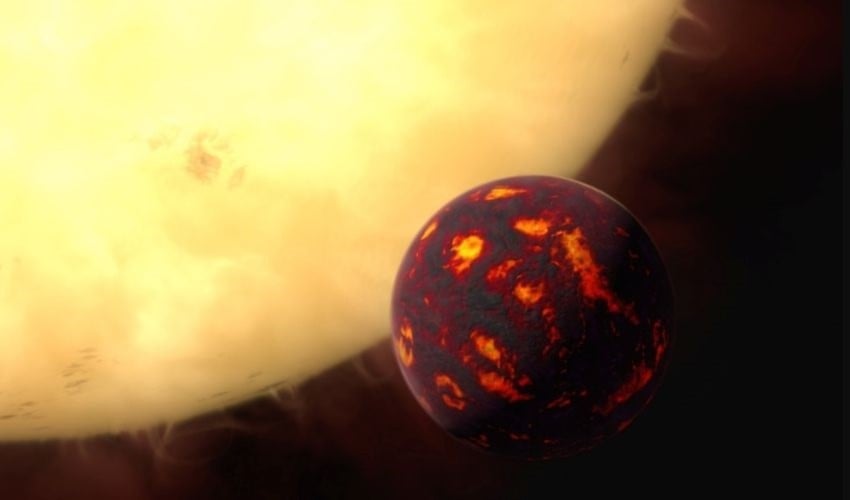
The planet 55 Cancri e has always puzzled astronomers, who have observed evidence of an atmosphere during some secondary eclipses but not during others. However, geochemical gas emissions from the planet's magma ocean may provide the answer to this question.
ORBITS ITS STAR EVERY 18 HOURS
Most of the planets we discover would be quite inhospitable places for humans, but few are as extreme as the super-Earth 55 Cancri e, where temperatures make even Venus seem acceptable. Observations made as it passes behind the star 55 Cancri A, known as secondary eclipses, result in inconsistent signals that astronomers have been eager to explain.
If you are one of those people who sees the word "signal" in details related to astronomy and immediately thinks of aliens, you will be disappointed. No one could even imagine that such a hot world could support life, let alone a technological civilization. According to astronomers, signals can refer to anything that is not noise, and in this case, it refers to signs of specific gases that could represent an atmosphere.
The confusing part of these signals is that although 55 Cancri e orbits its star every 18 hours, giving us plenty of chances to look for gas, the gases only appear at certain times. While some teams have reported signs of hydrogen cyanide and nitrogen, others say there is no hydrogen and likely no gas at all. Even more strangely, the results obtained when the planet passes in front of the star are much more consistent.
In a paper recently accepted for publication, Dr. Kevin Heng of Ludwig Maximilian University argues that this is not because some teams are wrong, but because they are observing at different times.
Heng suggests that there are gas chambers beneath the surface of 55 Cancri e, which occasionally vent to create a thin, temporary atmosphere. At such high temperatures, gases move rapidly. Aided by direct exposure to stellar winds from the star, molecules can escape the planet's gravity in a single orbit, which explains the differing observations.
Heng argues that this theory is testable, but only if we observe the planet at optical wavelengths at the same time that the JWST captures 55 Cancri e in infrared light. If his theory is correct, both should detect either an atmosphere or what Heng calls the "naked rock" phase.
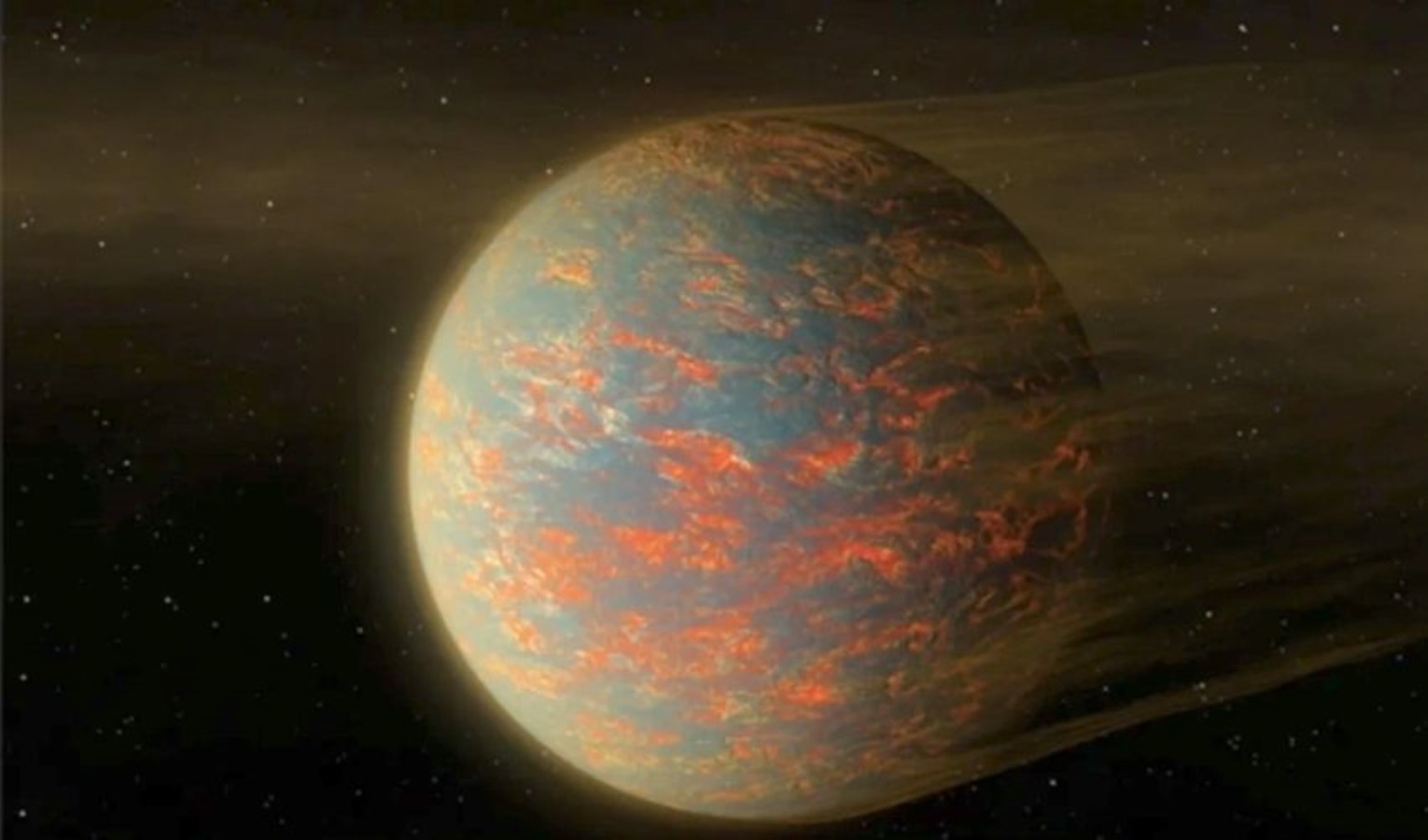
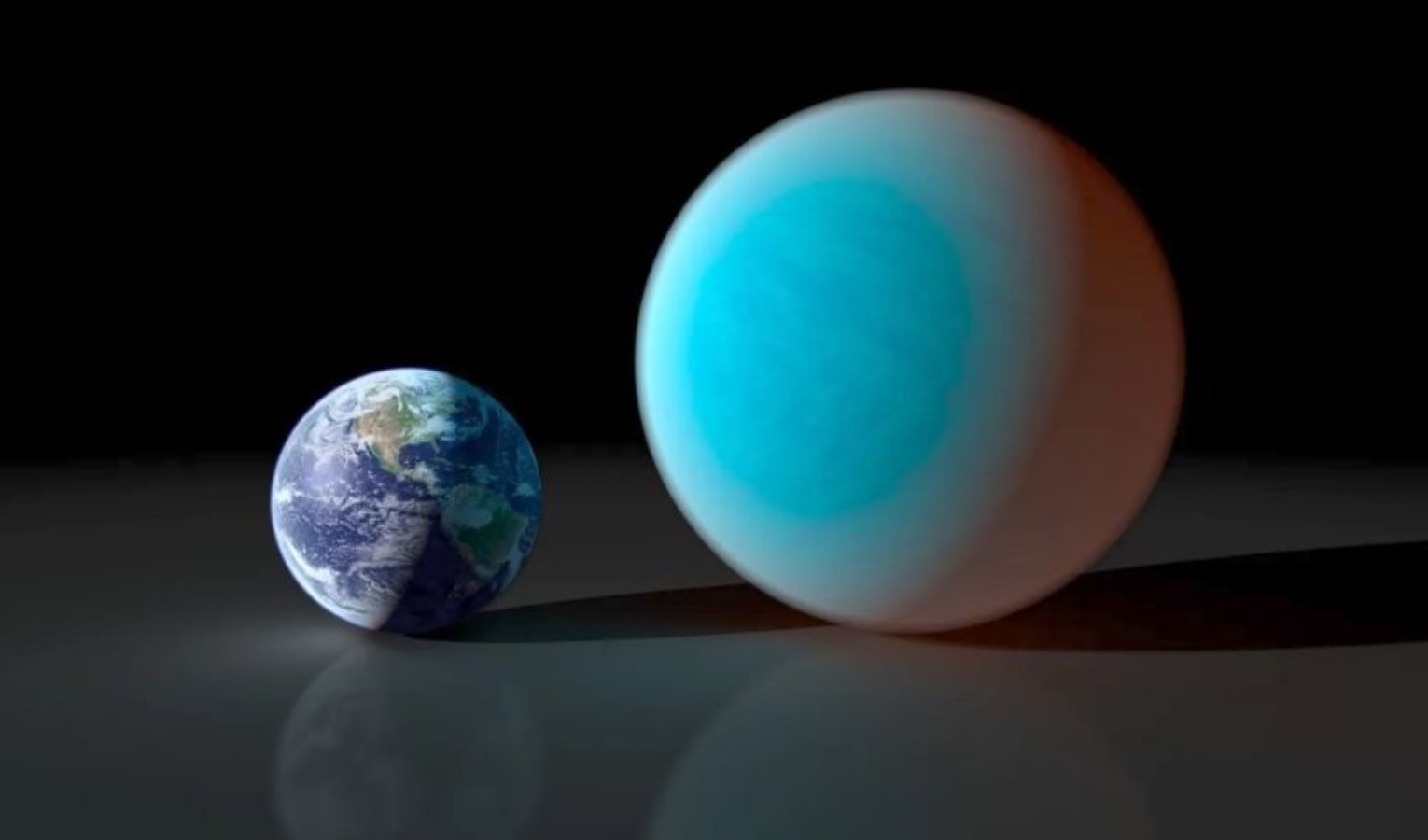
55 Cancri e has a mass approximately eight times that of Earth. When the planet was discovered in 2004, it was recorded as the first Super-Earth (a rocky planet significantly larger than our own) ever found. It is almost certainly tidally locked with its star, meaning the side facing the star must be in a molten state with temperatures reaching thousands of degrees. However, unlike many such worlds, even the side that never faces its star is thought to be surprisingly hot, likely exceeding 1,100°C.
Astronomers study the atmospheres of planets that pass between us and their stars by observing how the light is affected as it travels toward us. Using secondary eclipses is less intuitive. Normally, we see a combination of light from both the planet and the star, but it can be difficult to distinguish between the two.
News Source: 12punto