


Does an attack really begin when the first shot is fired?…


I have children. Sometimes I drop them off at school in the mornings, and sometimes I go to pick them up when school ends.
While waiting in front of the gate, I inevitably look around. Children come out, parents wait, school buses pull up, vehicles stop, and security guards try to control the flow of people. When my children see me, they come over and we leave.
It is probably an ordinary school dismissal for many parents… For me, it is a bit different.
Because I have worked in security not as one of the jobs I did for years, but as a profession. When I enter a place, it is almost impossible for me not to look at the entrances and exits, the positioning of cameras, the movement of the crowd, and uncontrolled areas. I think this is professional deformation.
When I read the news that a weapon was used near a high school in the Turgutlu district of Manisa and that students were injured, the first thing that came to my mind was not how many security guards were at the school gate or how many cameras were there.
What came to my mind was what happened before that weapon was used.
We do not know the reason for the incident in Manisa or the attacker's motivation today. The investigation will reveal these. Therefore, trying to decipher the attacker's psychology, intent, or background based on a few photos and scraps of information on social media has nothing to do with a security analysis. However, the incident is important for discussing how we think about security.
We often define security through physical measures.
Cameras, security guards, turnstiles, X-ray devices, card access systems, high walls, locked doors...
They are all necessary. When we look at the measures announced for the new academic year, we see a significant security organization. The Manisa Governor's Office has announced that 531 garden guards will be assigned to 507 schools for the 2026-2027 academic year, and 59 teams and 118 personnel will be assigned to school entrances and exits. Efforts to protect students from crime, addiction, peer bullying, and digital risks are also included in the plan.
However, physical security has a natural limit. A camera can show where a person is. A turnstile can make it difficult for an unauthorized person to enter. A security guard can intervene in an incident they see.
But which system sees a person who has not yet committed a crime but whose behavior has begun to change?
One of the methods used for this in the security world is “Behavioral Threat Assessment and Management.” At its core, it is not about labeling people as “dangerous” based on their appearance, thoughts, or the groups they belong to. On the contrary, it is about moving away from the label attached to the person and looking at the change in behavior over time.
Is an obsessive interest in a person or institution developing? Are they talking about violence more and more? Have they started to systematically collect information about a specific target? Are behaviors that could be considered reconnaissance or preparation emerging? Is the discourse that was previously seen only as anger gradually combining with intent and preparation?
This distinction is very important. Because one of the most dangerous mistakes that can be made in the name of security is to see everyone who behaves differently as a potential attacker.
One of the current examples of this approach is the article titled “Pathway to Violence or Pathway to Hope? Behavioral Threat Assessment and Intervention Are Key” published by ASIS Security Management on June 4, 2026. The article explains, through the approach of Dr. Karie Gibson, one of the directors of the FBI's Behavioral Threat Assessment Center, that behavioral threat assessment focuses not only on identifying the person at risk but also on steering the person away from the path to violence through early intervention. Listening, connecting, and activating appropriate intervention channels are treated as part of the security process.
I have evaluated weapons, explosives, critical facilities, and physical security measures for a significant part of my professional life. As the years passed, I understood this better:
The most difficult sensor in security is not a camera or a detector. It is the human.
Moreover, the subject is not just schools. The same approach applies to a factory, office, hospital, shopping mall, critical facility, or a large event. Think of an employee whose behavior has changed significantly after a dispute at work. A person who increasingly focuses on a manager, a visitor observing a facility in an unusual way, or someone who begins to express violence as a solution more and more...
The evaluation of these is not a job that a security guard can do alone.
There must be a flow of information between management, security, human resources, guidance or psychological counseling units, and law enforcement when necessary. A small change in behavior seen by one person can gain meaning when combined with information held by another. Perhaps one of the biggest blind spots of our physical security systems is here. We invest in walls, cameras, doors, and technology. However, we do not design with the same detail who will collect, who will evaluate, and who will act on the weak signals coming from humans.
We do not know why the attack in Manisa happened today. For this reason, it would not be right to use the incident as proof of any theory.
But I know that the next time I go to pick up my children from school, I will look at the gate, the camera, and the crowd around again. Perhaps it is necessary to look at one more thing now.
When a person's behavior in a school, factory, company, or public institution begins to change toward violence, do we have a system that can notice this?
Because some attacks do not begin with the first gunshot. That sound may be the moment we first notice them.
Would you like to get notifications about new developments and save news?
- NotificationsNew developments and breaking news
- SaveNews is stored in the app
Most Read
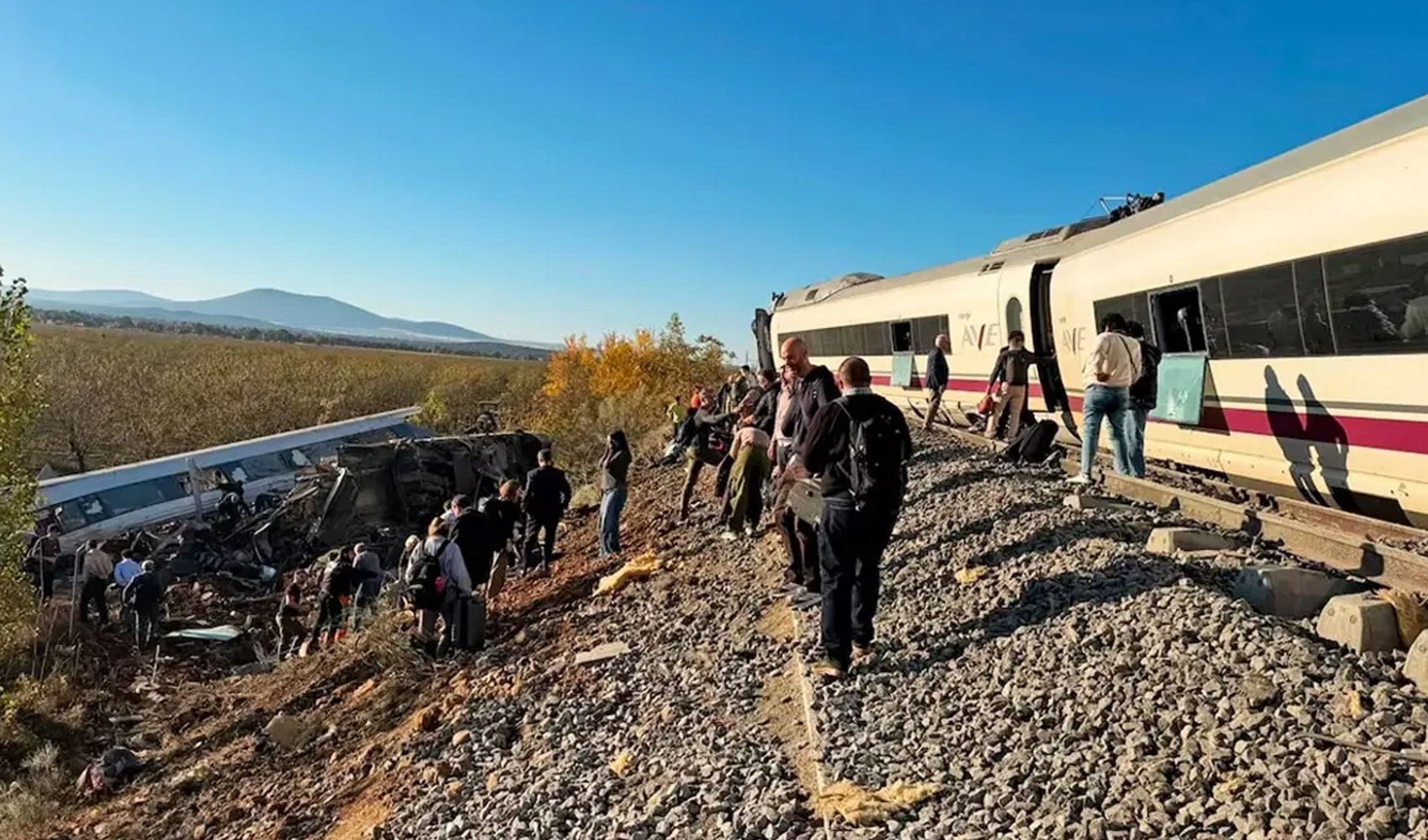
Two high-speed trains collide in Spain!

New formula for indefinite alimony regulation
Can Yayınları Editor-in-Chief Cem Akaş has passed away
Surprise results emerge from the ballot box in Israel

Allegations involving Turkey in the case of 748 kilos of cocaine seized in Ecuador
With the Republic, sovereignty was taken from the palace; it cannot be returned to the palace!

The digital era for IDs begins

NEW Party decision from Mustafa Sarıgül!

A condition from Montella to Fenerbahçe!
AKP's Tayyar received both fuel and a lesson from a gas station attendant