


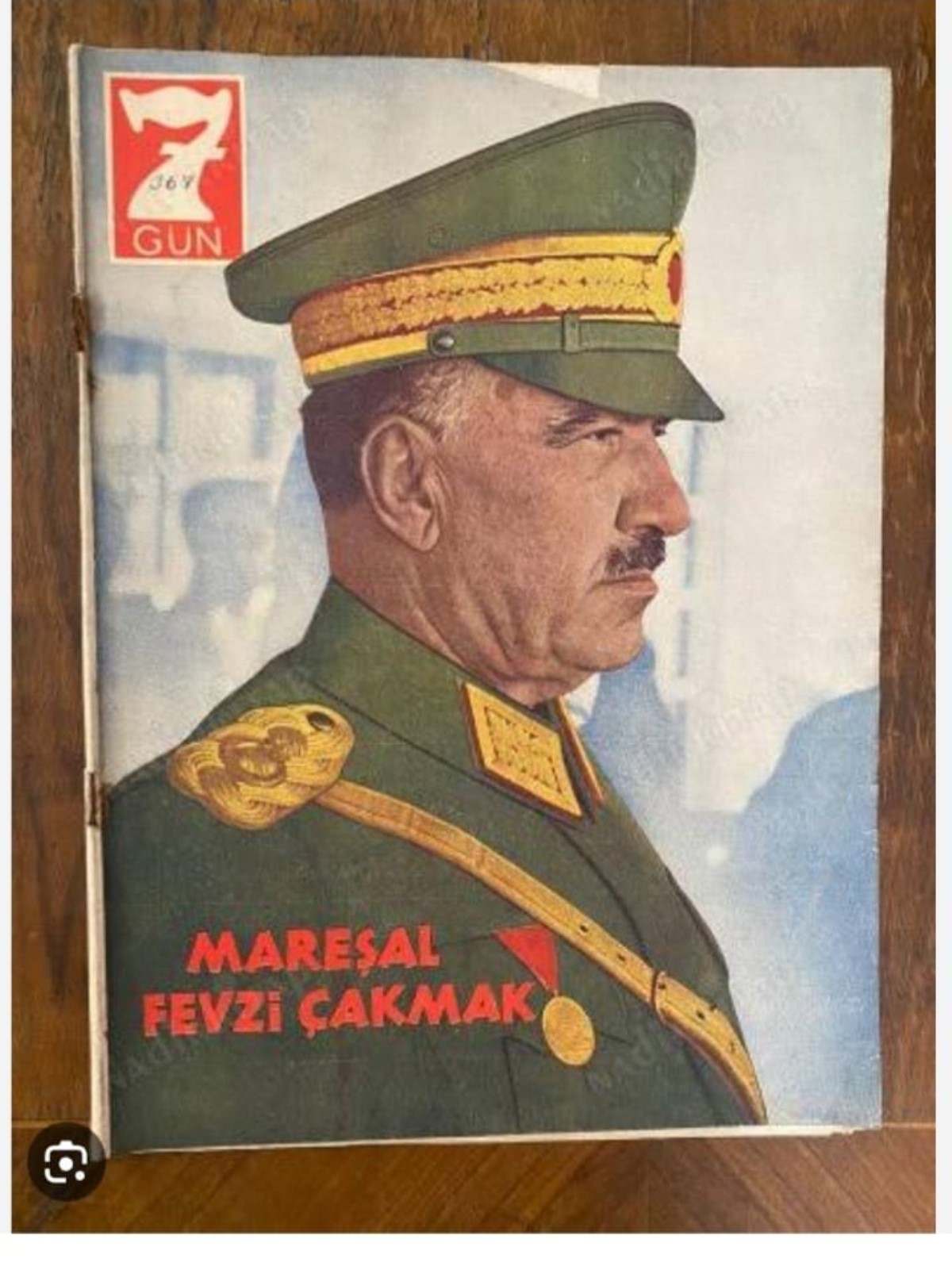
What was our Republic's conservative Marshal preserving?



The meaning of the Fevzi Pasha portrait in town and village coffeehouses
An important detail from my childhood memories concerns Fevzi Pasha. In town and village coffeehouses, there is often a portrait of “Marshal Çakmak.” A portrait of Gazi Pasha—though not always—accompanies it. But you will never see a picture of İsmet Pasha. I believe this custom dates back to the Democrat Party years.
Marshal Çakmak is a symbol upon which all colors of the Turkish right, which gathered on the basis of opposition to İsmet Pasha, agree. According to these circles, there is a testament of Atatürk that was destroyed: to the effect of “make Fevzi Pasha president after me.” Another story is that it was he who saved Colonel İsmet Bey from the wrath of Enver Pasha on the Palestine front. According to the story, Enver Pasha, angry at Colonel İsmet Bey, wanted to have him executed by firing squad. Fevzi Pasha saved him. I am sure that stories similar to this are still being stirred up in Anatolian coffeehouses.
UNDER WHAT CONDITIONS DID FEVZİ PASHA JOIN THE NATIONALISTS?
Fevzi Pasha was ahead of Atatürk in terms of admission to the War Academy, age, and career. When our Marshal graduated from the General Staff class with the rank of staff captain in 1898, Atatürk was still a student at the Manastir Military High School. Although there were occasional overlaps in their duties on the Çanakkale and Palestine fronts, they did not have a close relationship.
On the other hand, considering his conservatism, he had a character opposite to that of the Gazi. Fevzi Pasha was an Ottoman general with skills for working efficiently within the status quo. He was hardworking. He was patriotic. He was loyal to his state. He was someone who did not like to take risks and sought solutions within the system. İnönü also resembles Fevzi Pasha in his inability to take risks at decision thresholds. However, the great Atatürk was a true revolutionary with the moves he made.
For this reason, the Minister of War did not grasp the gravity of the situation until the “British bayonet” entered his office, and he looked at the National Forces (Kuvayı Milliye) with suspicion. With these same thoughts, he had taken part in the “Advice Commissions” sent to Anatolia to pacify the national resistance. In December 1919, he had wanted to arrest the head of the Representative Committee in Sivas and take him to Istanbul. Fevzi Pasha is confused with Ahmet Fevzi and Ali Fevzi Pashas who took part in these missions. Our Marshal is Kavaklı Mustafa Fevzi. Even just the hesitations and vacillations of Fevzi Pasha invalidate the view put forward by a media-savvy writer that the national war of liberation was the product of a “state mind” organized in Istanbul.
THE MINISTER OF WAR OF THE ISTANBUL GOVERNMENT BECOMES A DEPUTY AND MINISTER IN ANKARA
When Fevzi Pasha reached Ankara on April 27, 1920, the Grand National Assembly of Turkey (TBMM) had opened, and the foundations of the convention had been laid. As of that day, he was neither a member of the Ottoman Chamber of Deputies nor a newly elected deputy in accordance with the Representative Committee circular. Under normal conditions, he could not have been a member of the TBMM. He could have taken a position in the TBMM army, which could not even be spoken of yet.
The joining of the Istanbul Government's Minister of War to Ankara was a major transfer for the nationalists. For this reason, they made him a deputy for Kozan through an indirect method. Like Istanbul, Izmir, and Edirne, the Kozan district was also under occupation. With the formula of Memalik-i meşgule (occupied territories of the country), Karabekir, İnönü, and Cafer Tayyar had been elected as deputies for Edirne. The same method was used for Fevzi Pasha. His mandate was created in this way. It is his election as a Kozan deputy that ensured he was brought to the positions of Minister of National Defense and subsequently Chief of the General Staff and Chairman of the Council of Ministers as soon as he arrived in Ankara. The same formula would be used for Fethi Bey (Okyar) upon his return from exile in Malta. Afterwards, Fethi Bey would be brought to the Ministry of the Interior and would hold contacts in Paris and London in this capacity.
In the Great Offensive, the south of the front was held by the 1st Army under the command of Sakallı Nurettin Pasha, and the north by Yakup Şevki Pasha's 2nd Army. İsmet Pasha was the front commander, and Fevzi Pasha was the Chief of the General Staff. Above them all was the TBMM President and Commander-in-Chief Gazi Mustafa Kemal Pasha. This is the reason why he was in the vehicle that brought the commander-in-chief from Belkahve to Izmir after the Great Victory.
THE ISSUE OF LOYALTY TO GAZI PASHA
One cannot speak of the loyalty of many figures within the national struggle cadre to Atatürk. One can speak of the acceptance of his leadership—for a time.
In terms of Cebesoy, Orbay, Bele, and Karabekir, Mustafa Kemal was accepted as prima inter pares (first among equals). Generals such as Sakallı Nurettin and Ali İhsan Sabis, on the other hand, were against both his person and his command. Politically, they were never on his side.
The military elite of the national struggle were elected to the second parliament in great majority from Gazi Pasha's quota of candidates. The great victory and the Lausanne Conference had frozen the conflicts for a while. Fevzi Pasha was also elected as an Istanbul deputy from the Gazi's list. He held the titles of soldier and deputy together until Law No. 385. The revolutionary laws of March 3-4, 1924, transformed his position within the government into that of Chief of the General Staff reporting to the presidency. For Fevzi Pasha, this meant being the commander of the republican army until he was retired due to the age limit in 1944.
THE MARSHAL'S UNDERSTANDING OF MILITARY SERVICE AND NATIONAL SECURITY
It is possible to say that Fevzi Pasha's 20-year understanding of the Chief of the General Staff was an army outside of politics under the command of Atatürk. The main reason for this is the preference for army members to remain outside the political sphere, which had been attempted to be implemented since Mahmut Şevket Pasha. Experiences such as officers falling into the Unionist-Entente distinction during the Balkan Wars and the Halaskar Zabitan movement attempting to overthrow the government convinced Fevzi Pasha that the military bureaucracy should remain completely outside of politics. This is also the reason for his very late joining of the Anatolian movement. He had perceived the Defense of Rights (Müdafaa-ı Hukuk) as Unionist politics.
Despite the harsh armistice conditions, he believed that if a solution were to be found, it would be possible through the existing government. He saw initiatives beyond this as revolutionary, and Mustafa Kemal Pasha as an ambitious general.
For these reasons, Fevzi Pasha had forbidden officers from following literature other than the military profession, and even from reading daily newspapers, after their War Academy education. He probably saw such things as Young Turkism.
The prestige of the republican army stemmed from our national war of liberation and the great victory. The Marshal's understanding of national security also carried traces of the XIX century. For example, he thought that Fascist Italy had ambitions to occupy Anatolia by landing on our Mediterranean coasts. For this reason, he was against strengthening the connection of the provinces on the Antalya-Mersin line to Central Anatolia with new roads. According to the Marshal, the Taurus Mountains should not be easily crossed. Haşim İşçan, the first elected mayor of Istanbul who served as governor in Mersin for a while, recounts in his memoirs how Fevzi Pasha opposed new roads.
Again, with the thought that the Russians could attack from the Black Sea coasts, he had the Iron and Steel factories built in Ereğli and the arms industry in Kırıkkale. According to Fevzi Pasha, the most vital investments in terms of defense had to be in Central Anatolia. When the Second World War broke out, he started to have the Çakmak Line built in Thrace, but the line could not be finished due to a lack of resources.
FEVZİ PASHA IN THE SINGLE-PARTY PERIOD: HIS ATTITUDE TOWARDS REVOLUTIONS AND KURDISH UPRISINGS
Fevzi Pasha did not establish any closeness with the pashas who led the Progressive movement. Yet their views largely overlapped. He took a position “behind Gazi Pasha” at the head of the republican army. We see the Marshal in single-party regime pictures together with Atatürk (President), İnönü (Prime Minister), and Kazım Özalp (TBMM President).
In the words of Falih Rıfkı, when Atatürk set his mind on a revolutionary movement, he would first convince Diyanet Affairs President Börekçizade Rıfat Efendi. He would say, let's go to Fevzi Pasha now. I am not of the opinion that there could be a serious negotiation in these visits. The meaning of these visits, in my opinion, may not be to get approval but to “win hearts.” Apparent approval may have occurred during the removal of the state religion article from the constitution in 1928 and the inclusion of secularism in the constitution in 1937. I am of the opinion that this manifested itself in the form of having the decision approved/persuading rather than seeking approval.
The republican revolution was a nation-state project. The policy of leaving regional feudal lords free in their sovereign areas, which the Ottomans had maintained from Yavuz Selim to Abdülhamit, could not be continued. The commander of the republican army that suppressed all armed uprisings from Sheikh Said (1925) to Seyit Rıza (1937) is Fevzi Çakmak.
Fevzi Pasha's early military career had largely passed in Balkan lands. He had commanded at various levels the suppression of separatist movements in Albania, Macedonia, and Bulgaria for nearly 10 years.
In that respect, it is not possible for Fevzi Pasha to have had alternative thoughts to government policies in the face of feudal-separatist movements. From the classical Ottoman centuries to the republic, the ruling elites—the bureaucratic elite—acted with the reflex of protecting the state. There is no doubt that Fevzi Pasha thought the same way.
FEVZİ PASHA'S FIERCE ANTI-COMMUNISM
Our relations with the Soviets had gone exceptionally well until the 1941 Turkish-German non-aggression pact. Suritz's long Ankara embassy is proof of this. The fact that the Russians came to the 10th-year celebrations with a large delegation and made the documentary “Turkey's Heart Ankara,” which still retains its value today, and the contributions they made to the establishment of our first heavy industry facilities are examples of sincere cooperation. Some Marxists who were educated at the Moscow KUTV, such as Şevket Süreyya Aydemir, Cevat Emre, and İsmail Hüsrev Tökin, entered the service of the Kemalist state in the 1930s. With their accumulation, they tried to bring a leftist interpretation to Kemalism. It can even be said that the Kadro magazine—initially—was met with warm interest. As long as Marxism remained at an academic and intellectual level, it did not pose a problem for Kemalism. The TKP, which was affiliated with the Comintern, was a party that the Soviets did not care about, despite its existence during the single-party period.
THE HARBIYE AND NAVY TRIALS IN THE LATE 30S
Fevzi Pasha was pious, conservative, and a fierce anti-communist. He was under the delusion that communist ideas could infiltrate the army. However, I think that at the end of the 30s, the number of communists that the state already knew and that intelligence was following was not more than a few hundred. Nazım Hikmet's rise in the world of thought and art, which began with “We are tearing down the idols,” had been met with interest by the young generation, and his poems, writings, and even the poems he read on records had begun to attract attention. This included War Academy students. It was inevitable that any publication containing the issue of class in the army, which Fevzi Pasha headed, would be strictly followed.
As a result, the Harbiye and Navy trials (1938), which went down in our judicial history as a black stain, were opened. According to the allegation, a group including Nazım Hikmet and his close circle and some military students had incited the army to overthrow the government. Thus, when Nazım's trial adventure, which began in Ankara, ended with the decisions made on the deck of the Erkin Ship, our poet had been sentenced to a total of 38 years. Some of the other names convicted in these trials are: Kerim Korcan, Kemal Tahir, Hikmet Kıvılcımlı, A.Kadir.
The heavy sentences given to Turkish communists—with the involvement of Minister of Defense Kazım Özalp, Chief of the General Staff Fevzi Pasha, and Minister of the Interior Şükrü Kaya—were given with the intention of leaving no communists outside. I suggest looking at Falih Rıfkı's articles serialized in the Dünya newspaper in 1965 on this subject.
Nazım's letter addressed to Atatürk, who was lying sick in Dolmabahçe, from the Erkin ship, ending with “I swear by the Turkish revolution and your head that I am innocent,” was not delivered to him. The letter had been mailed by a military judge who believed in his innocence. This person is Haluk Sehsuvaroğlu, who left the Naval Forces after Nazım Hikmet was convicted on charges of “inciting the army to rebellion.”
Nazım, Kemal Tahir, and Kıvılcımlı suffered until 1950. Retrial and amnesty attempts hit the Fevzi Pasha barrier despite Nazım's great-uncle Ali Fuat Cebesoy. In the trials, no causal link other than Nazım's poems could be established in the lockers of the War Academy and Naval Academy students. That, too, had no legal value.
As for İsmet Pasha's situation, Atatürk was seriously ill when Nazım and his friends were convicted. Bayar had been prime minister since September 1937, not İnönü. İnönü was a reclusive and uneasy former prime minister at this time. I think İnönü got to know Nazım after the Epic of the National Forces (Kuvayı Milliye Destanı), which he finished in Bursa Prison in 1941, was delivered to him. Furthermore, he would not want to come face to face with Fevzi Pasha for a conviction finalized in the appeal court. I do not believe there was any politician who could change Fevzi Pasha's decision to “not leave communists outside” while the Second World War was continuing. This includes President İnönü. It is said that he also met the amnesty intercessions by putting the Marshal's daughter in between with anger.
FEVZİ PASHA'S POSITION WITHIN THE ARMY-RETIREMENT-ENTRY INTO POLITICS
It is understood from memoirs and other publications that Fevzi Pasha's chief of general staff position, which seemed as if it would last for life, did not please the army very much. His constant presence at the top of the military hierarchy hindered career mobility at all levels. Including the position he occupied. In my opinion, the decision to retire him may have even been met with joy by the generals who had been waiting for “advancement” for years. After him, Kazım Orbay, Salih Omurtak, and Nafiz Gürman were brought to the Chief of the General Staff. These names were the commanders who came right after him in the hierarchy. All of them had participated in the War of Independence.
After Fevzi Pasha was retired, the fundamental determinant of his life became hostility towards İsmet Pasha. The reason for this is that he felt the Turkish army belonged to him. After his retirement, our Marshal rejected all offers made to honor him by saying, “I will be busy with worship and rest.” I estimate that he never met with İnönü in a private sense after he was retired.
Despite this, he was elected as an Istanbul deputy in 1946 by accepting the Democrat Party's offer. As we can guess, the former Unionist, committee member, and Atatürk's last prime minister Celal Bayar wanted to make maximum use of him against İsmet Pasha.
Another circle that wanted to make use of him is the Human Rights Association—founded in 1946. Inside this association were names like Zekeriya Sertel, Tevfik Rüştü Aras, who wanted to liquidate İnönü and was liquidated himself, and Cami Bey, a former Unionist and the first Minister of the Interior of the First Parliament. They also wanted to make use of the Marshal's charisma. By making him the president, they wanted to create a protective shield against the “Recep Peker Government.” When the association was accused of “communism,” he distanced himself from this circle.
In the first multi-candidate presidential election held in 1946, the Democrat Party's candidate was Fevzi Pasha. In this election, 59 votes would be cast for Çakmak and 3 votes for Yusuf Kemal Tengirşenk. Although the founder of the Democrat Party—the cunning politician Mahmut Celal Bey—was thinking of making use of the Marshal, he saw him as a “rival” for the future period of power.
Until the “extreme democrats” left the party in 1948, he was the most central figure of the “front that hates İnönü” in many projects, including bringing down İsmet Pasha with a coup. Even if it was without his knowledge and approval.
Fevzi Pasha would later accept the honorary presidency of the Nation Party (Millet Partisi), which would be closed in 1954 on the grounds that it was the focus of anti-secular activities. He was going to enter the election from this party in 1950. If he had lived long enough.
After President İnönü's July 12, 1947 Declaration, while the moderate wing of the Democrats (Bayar, Menderes, Köprülü, Koraltan) adopted a conciliatory transition, the party of those who saw this attitude as “collusion” became the Nation Party. The party became a haunt for many far-right, anti-Semitic (like Cevat Rıfat Atilhan), fascist, and reactionary people. All these segments were actually using the party and Fevzi Pasha's presence as a lightning rod.
Çakmak died on April 10, 1950. He was being treated for diabetes and malignant prostate. İnönü went to visit him. He did not accept the meeting with the excuse that he was “sleeping.” His funeral was turned into a counter-revolutionary demonstration just before the 1950 elections. He was buried in Eyüp Sultan next to his daughter who died at a young age in 1939.
What can be said finally about Fevzi Pasha?
As can be seen, Fevzi Pasha was increasingly exploited by more right-wing, even reactionary elements after he entered politics. The fate of our professors Ali Fuat Başgil and Hüseyin Nail Kubalı had been the same. I always wonder why Atatürk did not bring Yakup Şevki Pasha or Cevat Çobanlı to the chief of general staff position. I am thinking of writing a speculative article on this in the future.
It is possible to compare Fevzi Pasha's final days to Cemal Tural. Tural Pasha was brought to the chief of general staff position after Cevdet Sunay was taken to Çankaya. When he could not determine his position well against the civil authority, he was retired. He, too—like Fevzi Pasha—was drawn into the vortex of politics with anger. He had an unsuccessful Nation Party chairmanship experience.
Our Marshal respected dervish sheikhs like Küçük Hüseyin Efendi and Arvasi, and protected the Jews of Turkey, whom he viewed as dhimmis. However, he was the cause of the innocent convictions of a historian like Kıvılcımlı, a novelist like Kemal Tahir, and Nazım Hikmet, the creator of a magnificent work like the Epic of the National Forces.
I would like to finish by answering the question at the beginning as follows: What our Fevzi Pasha thought he was preserving under the republican regime was the state embodied in the identity of Atatürk. Even if there were reservations he did not pronounce regarding its content.
Would you like to get notifications about new developments and save news?
- NotificationsNew developments and breaking news
- SaveNews is stored in the app
Most Read
Statement from Nihat Zeybekci on the fund investigation
New 75,000-seat stadium plan for Fenerbahçe
Interpol and MIT tracking yields results in Izmir
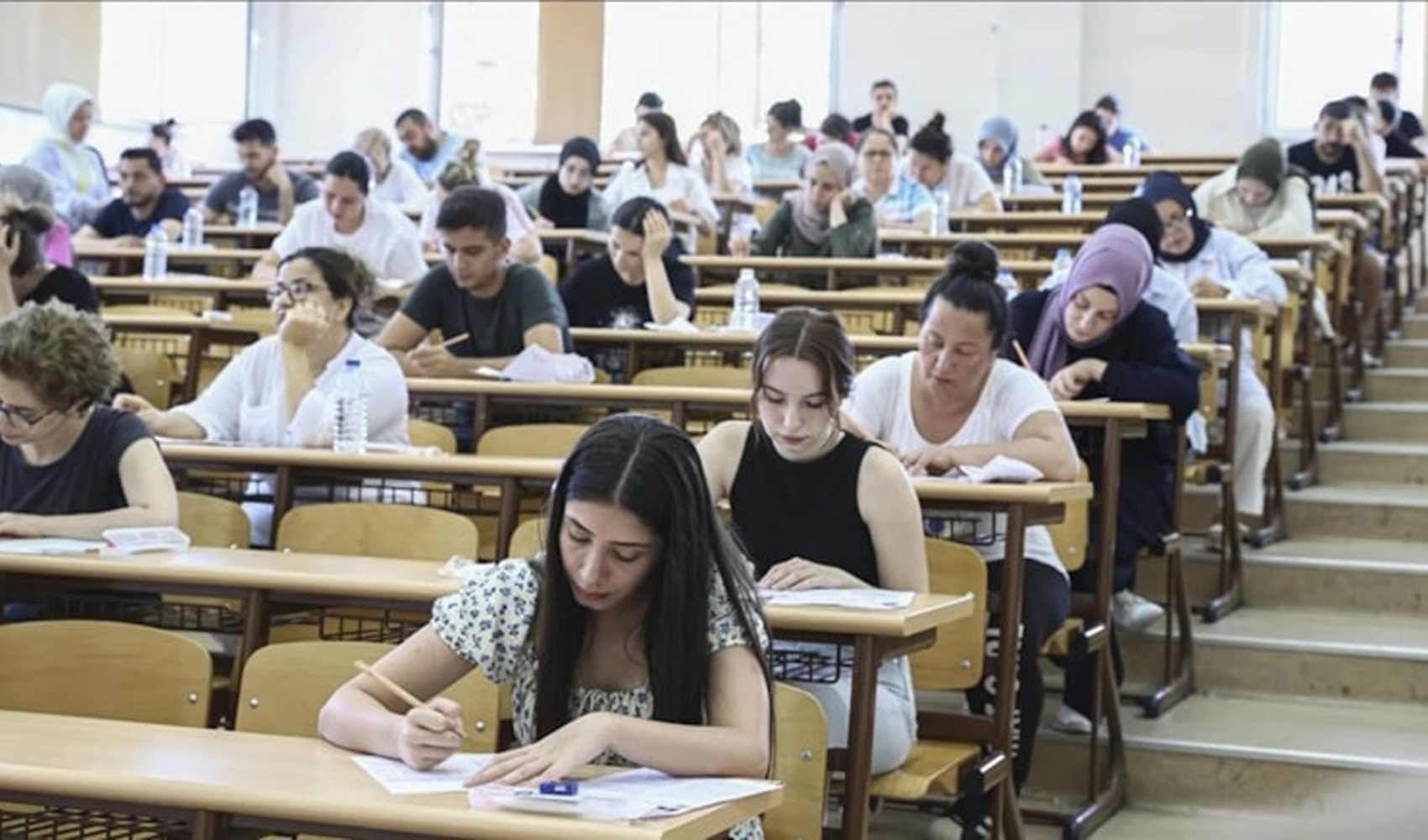
ID convenience for KPSS candidates

2027 Budget: Taxes for the people, tax exemptions for capital
The reality of Akkuyu and the longing for national nuclear power
To whom and how was the Petition of Intellectuals submitted? Who accepted the petition?
The Çanakkale robbery -1- How was the Troy treasure smuggled out?

Artificial intelligence and the new imperialism

Ministry investigation into unauthorized promotional messages