


Political power and anti-communism in the 60s



PERCEPTION OF THE LEFT UNDER SINGLE-PARTY AND DEMOCRAT PARTY RULE
In Turkey, socialism has always been considered synonymous with communism. During the War of Independence and the early republican period, relatively light sentences were handed down in trials, and prisoners were released through various amnesty laws. For example, the rulings in the Turkey People's Communist Party (TKİF) case (1921) and the Communist Party of Turkey (TKP) case (1927) are illustrative in this context. The arrival of a Soviet delegation for the 10th-anniversary celebrations of the Republic, and Voroshilov bringing a sword from Stalin as a gift to Atatürk, became a hallmark of Turkish-Soviet friendly relations. While the Soviets treated the TKP as an insignificant party tied to the Comintern, Turkey's official policy was to ignore TKP-CPSU relations. This routine was broken in the summer of 1938, when Atatürk's health was rapidly deteriorating. The Military Academy and Navy trials that were opened resulted in heavy prison sentences.
Well-known figures of the Turkish left, such as Nâzım Hikmet, Hikmet Kıvılcımlı, Kemal Tahir, and A. Kadir, were tried in military courts. As a result of the trials held on the ships Yavuz and Erkin, all suspects accused were convicted. Shortly before Atatürk's passing, the Military Court of Cassation upheld the sentences.
Turkey's distinguished writers had been convicted. This is one of the most shameful decisions ever made in our judicial history. It is my personal conviction that the duo responsible for these people rotting in dungeons until the 1950 amnesty were Fevzi Çakmak and Şükrü Kaya. The Chief of General Staff and the Minister of the Interior were of the mind that there should be no communists left outside as war approached. In this regard, one should look at the serial published in Vatan newspaper and the book titled "Nâzım'ın Özgürlük Savaşı" (Nâzım's Freedom War) by former prosecutor and Nâzım Hikmet's lawyer, Mehmet Ali Sebük. Let us also note that Sebük was elected as an İzmir deputy from the Democrat Party in the 10th term.
In the upheld conviction rulings, the charge of "attempting to overthrow the government" was leveled. Yet, there was nothing proven according to either the universal rules of criminal law or the Turkish Penal Code (TCK). The indictments were completely empty.
The conjuncture changed in the 50s. However, the transition to multi-party democracy did not bring freedom to the left. Articles 141-142 of the TCK continued to hang over leftist thought like the sword of Damocles.
Democrat Party governments adopted the fierce anti-communist policies known in the US by the name of Senator McCarthy. Turkey became a loyal follower of the US on this path. In practice, anti-communism meant suppressing all forms of leftist thought.
Every attempt at activity and publication regarding social and class issues was violently suppressed by the Menderes governments, being counted as "communist propaganda."
There were waves of arrests. Even the September 6-7 provocations were blamed on leftists. Kemal Tahir and Aziz Nesin remained in detention for six months during the martial law command of General Nurettin Aknoz. Aknoz is remembered for his famous remark, "Let's hang these communists in bunches."
While democracies were being re-established in Europe after the Second World War, legal leftist parties represented the left wing of the regime. For example, even the Communist Party in France was a legal party, outside of the Socialist Party. Socialist and social democratic parties were seen as parties within the system. In Italy and Germany, however, there was a ban on forming fascist and communist parties, due to the political history of these countries.
In Turkey, on the other hand, a system of "demagogic twin parties" had been established. Multi-party politics was born in a sterile ideological environment. Turkey had established democracy not according to European standards, but with the vision of becoming a kind of "Little America." The May 27 coup plotters also viewed the political spectrum with the same mindset. The thoughts of the National Unity Committee members regarding political issues were quite confused. Most thought on the basis of reaction. After the 1961 elections, some joined the Workers' Party of Turkey (TİP). Others joined the totalitarian-leaning Republican Villagers Nation Party (CKMP). The majority of the "14" acted together with Türkeş.
THE ENTRY OF THE WORKERS' PARTY OF TURKEY INTO PARLIAMENT
The Workers' Party of Turkey (TİP) was founded on February 13, 1961, by 12 trade unionists. Kemal Türkler, İbrahim Denizcier, Kemal Nebioğlu, Rıza Kuas, and Şaban Yıldız are the first names that come to mind.
Later, intellectuals such as Mehmet Ali Aybar, Behice Boran, Adnan Cemgil, Cemal Hakkı Selek, Fethi Naci, Yaşar Kemal, and Murat Sarıca joined the party. These names worked effectively within the party. Some became deputies in the 1965 elections.
TİP was concerned not only with working-class issues but also with the village, the peasantry, and the feudal relations that still persisted in the country. Imperialism was TİP's constant agenda. TİP constantly tried to warn Turkish public opinion on these issues.
At the 1966 Malatya Congress, the National Democratic Revolution (MDD) supporters, who had maintained their presence as a faction within the party, lost their effectiveness. After this, the idea of achieving socialism through the parliamentary path by winning elections (the legalist line) became dominant in the party.
The years when TİP was effective in parliament correspond to the period when Demirel was Prime Minister and the Justice Party (AP) was in power.
JUSTICE PARTY GOVERNMENTS AND ANTI-COMMUNISM
The Justice Party remained under multi-faceted pressure from the time it came to power in 1965 until the March 12, 1971 memorandum. First of all, there was dissatisfaction within the army against the AP government.
Demirel tried to turn this attitude in his favor by having Cevdet Sunay elected President. The government made significant improvements to the TSK Personnel Law. In this way, it succeeded in eliminating the negative attitude toward the government to some extent. There were circles that interpreted these moves by Demirel toward the army as an attempt to "buy the army." Even some members of the National Unity Committee (who had all become natural senators by then) thought this way.
The Justice Party's real problem was the rising socialist left wave. They exerted great effort to prevent TİP from entering parliament. They were not successful. In the next election, they neutralized them by changing the electoral system.
TİP's presence in parliament seriously disturbed the Justice Party majority. Despite being a small group, their discourse and politics led the AP government to follow a policy of encircling TİP. TİP had to be suppressed. Otherwise, it could grow.
TİP deputies were mostly accused of engaging in communist propaganda. According to the AP, touching on the class issue meant being "communist." As in the example of the lifting of Çetin Altan's parliamentary immunity, TİP members were constantly accused of engaging in communist propaganda through their actions inside and outside the assembly. According to the AP members, talking about class and exploitation was communism.
TİP members, on the other hand, accused the AP of being American collaborators (often using the term "lackeys") and representing the interests of the ruling classes.
TİP's style was politically correct. TİP was a socialist party. But these attitudes inevitably meant playing with the government's raw nerves. TİP's claims largely overlapped with reality. The AP was continuing the policy of closeness with the US in the economic, political, and military fields that it had inherited from the DP. More clearly, it was following a pro-American policy.
There was also no doubt that the AP was a party that organized the interests of the ruling classes in Turkey. It had taken the dependent classes of society (workers, peasants) in its wake and come to power. Just as the Democrat Party did in the 50s.
In the 50s, politics was easy in a Turkish-style McCarthyist environment where the class issue was not discussed. In the 60s, conditions had changed, and new actors had entered politics. Mobilization in society had increased. TİP's discourse, which warned the laboring classes, was shaking the foundations of the order. It could not be expected that this style of politics would simply be watched by the AP government. TİP was pursuing class politics. It was trying to bring socialism to power using legal means.
Justice Party members launched a violent counter-offensive by raiding TİP party congresses, beating deputies in parliament, or initiating legal proceedings under the allegation of "communist propaganda."
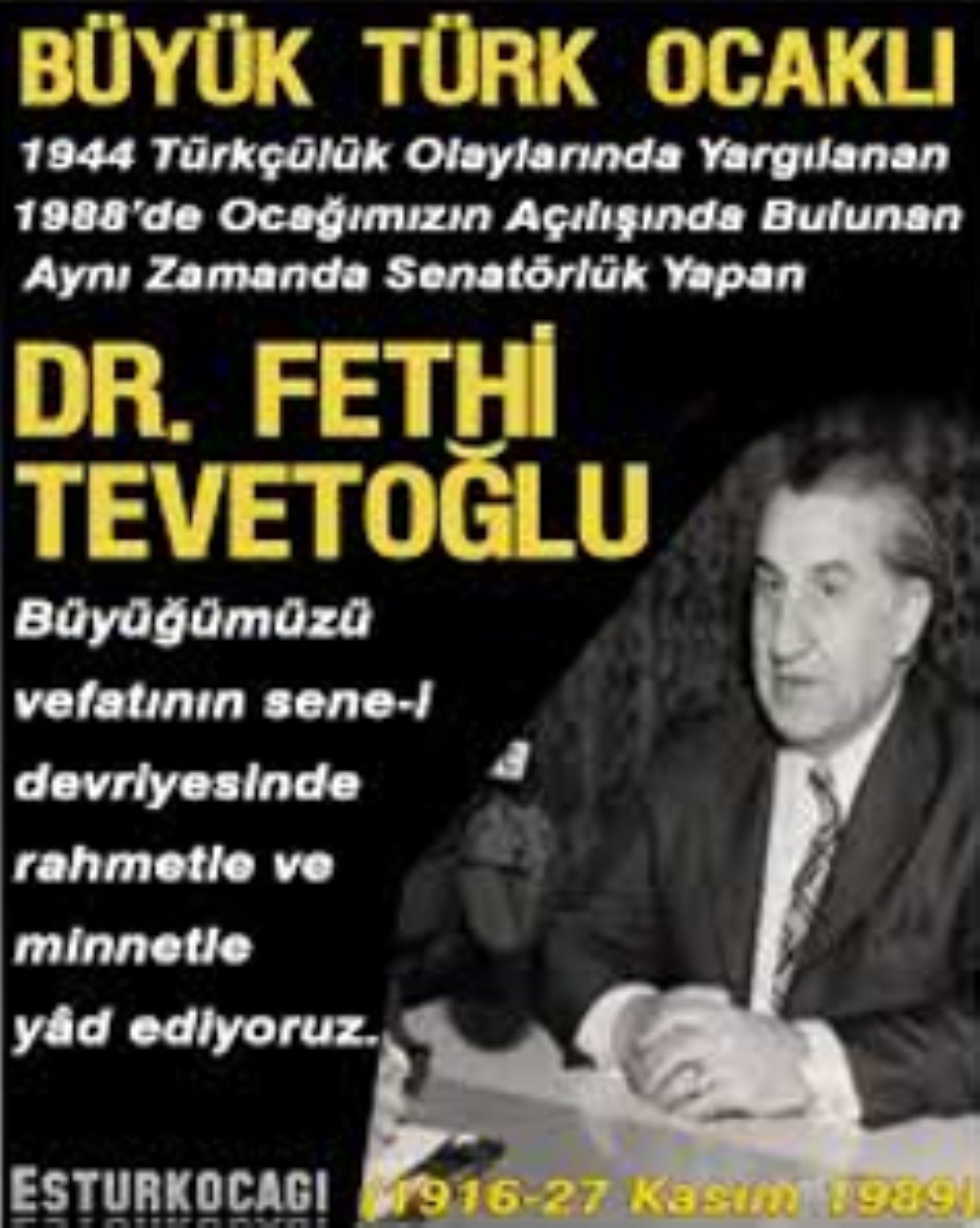
For the AP members, TİP was a "deep red party." There was a need for a violent struggle against this party with all available tools.
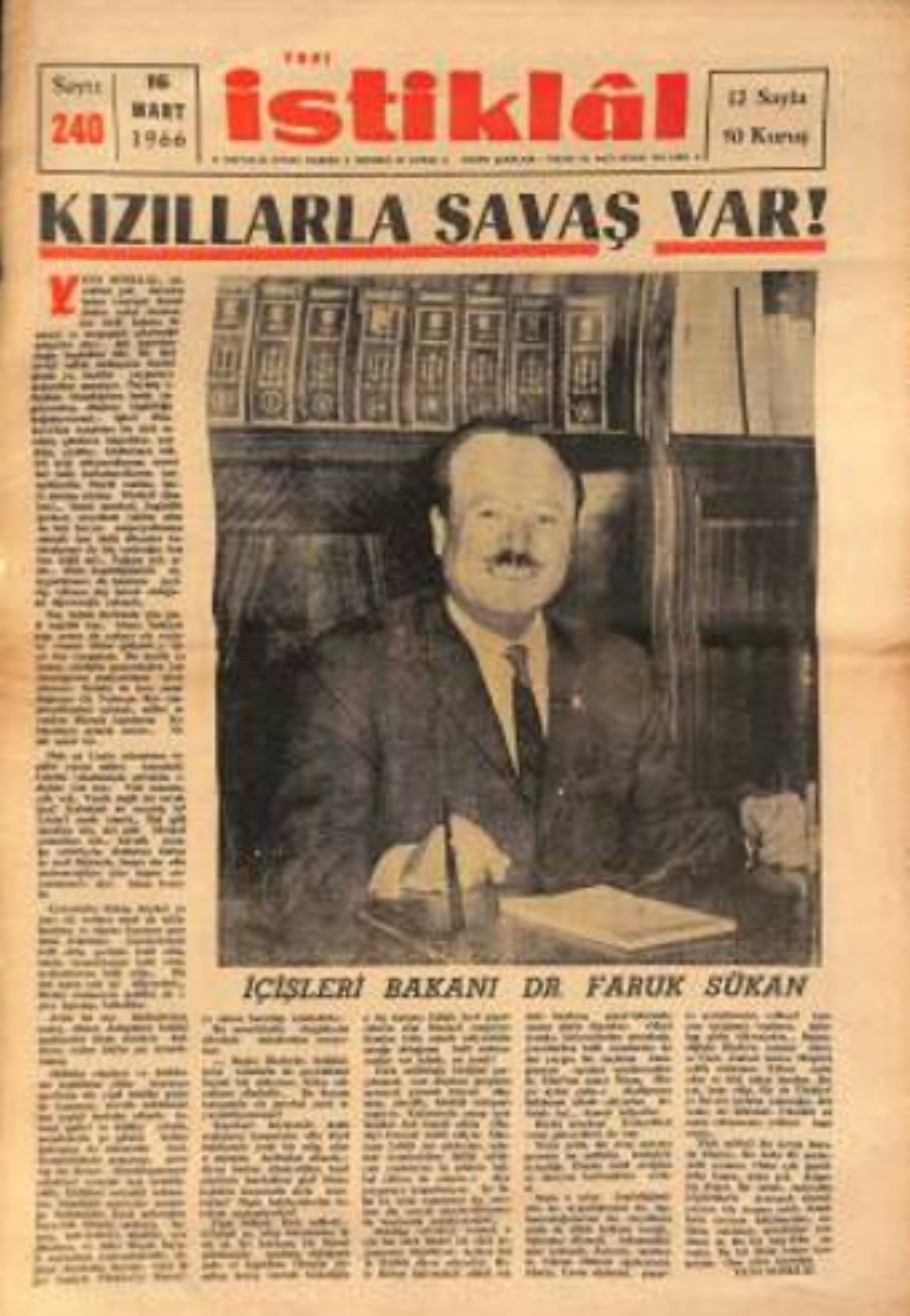
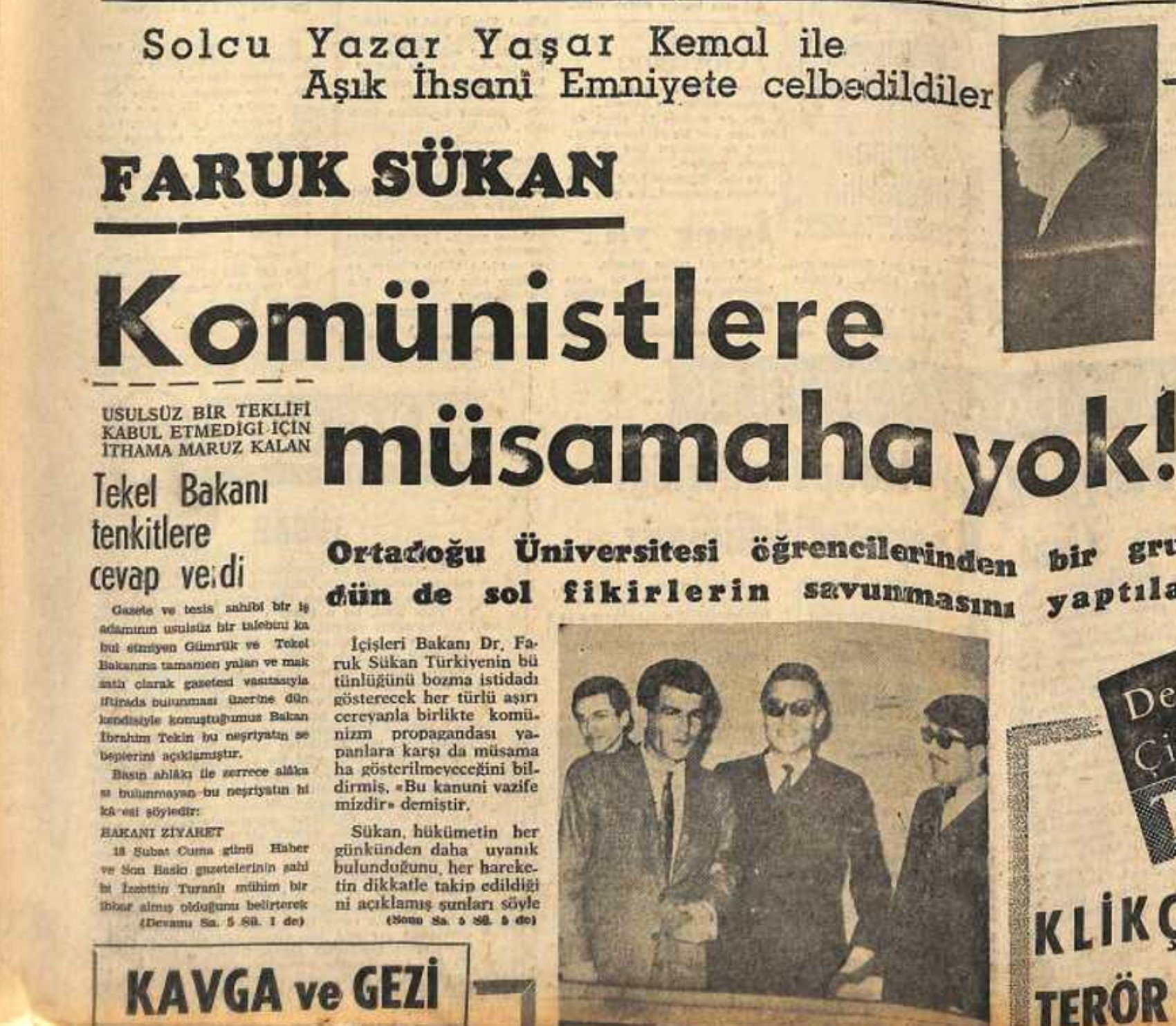
The AP parliamentarians who drew attention with their harshest attitudes toward the left were: Samsun Senator Dr. Fethi Tevetoğlu, Istanbul deputy İlhan Egemen Darendelioğlu, and Antalya deputy Osman Yüksel Serdengeçti. Darendelioğlu later moved to the MHP. Osman Yüksel Serdengeçti was expelled from the Justice Party. The most well-known name within the Justice Party for his anti-left stance was Minister of the Interior Dr. Faruk Sükan. Sükan was a Konya deputy. An interesting piece of information is that Dr. Sükan had completed his residency in internal medicine in Paris alongside Nihat Reşat Belger, one of Atatürk's doctors.
YÖN MAGAZINE: DOĞAN AVCIOĞLU, MÜMTAZ SOYSAL, CEMAL REŞİT EYÜBOĞLU
The Yön manifesto was published in the first issue of Yön dated December 20, 1961. The magazine chronologically coincides with the establishment efforts of the 1961 democracy. Although the 531 intellectuals who signed the manifesto looked favorably upon the Constitution, they did not see it as the key to solving Turkey's problems. The solution lay in adding a new spirit to the Turkish revolution.
With the manifesto, perhaps for the first time, imperialism was openly brought to the attention of the public. Another point that draws attention in the manifesto is the signatories' positive outlook on Turkey's future and their trust in intellectuals. The newly established democracy had provided a discussion platform to seek solutions to the problem of underdevelopment.
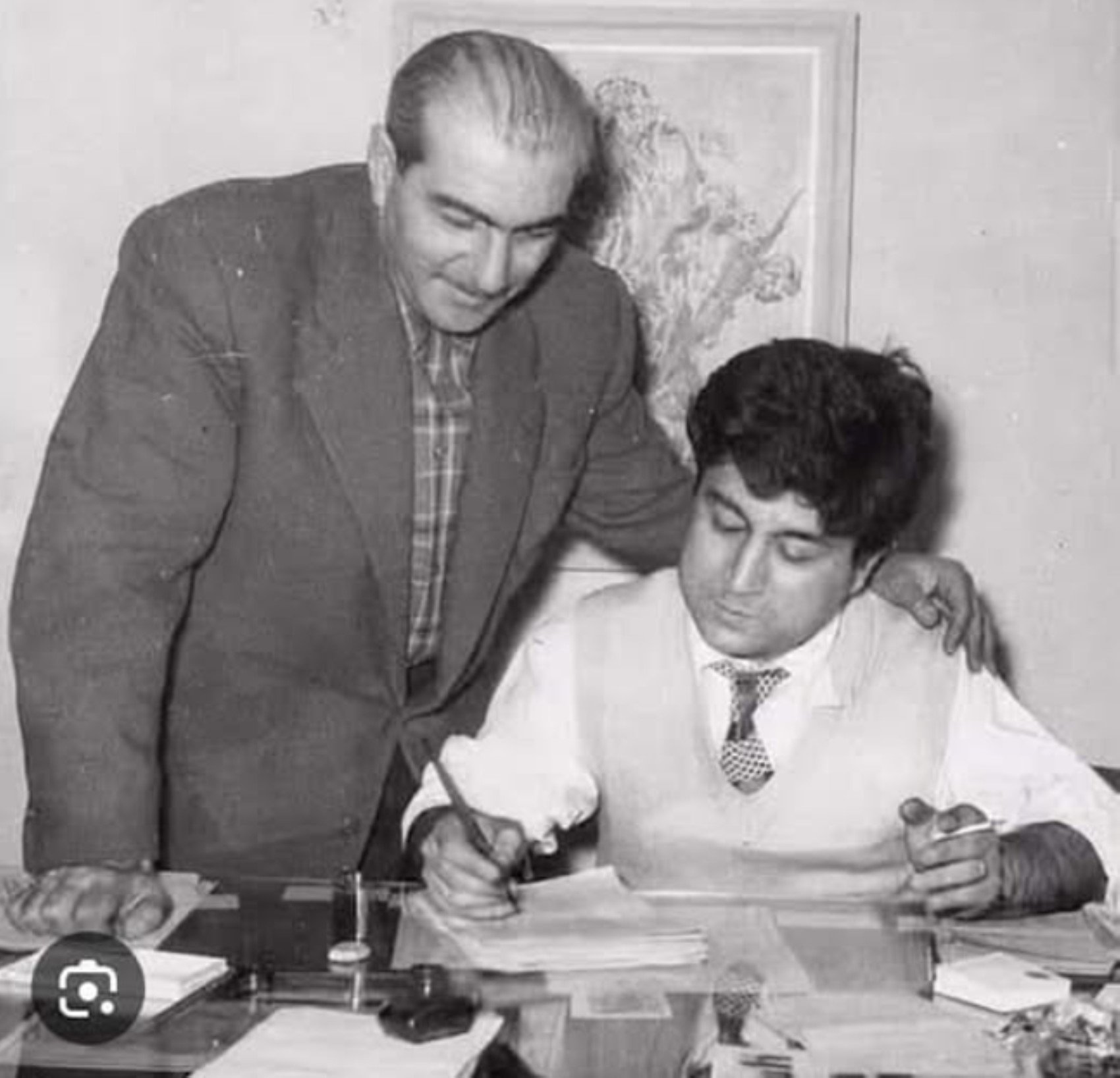
The founders of the magazine were Doğan Avcıoğlu, Mümtaz Soysal, and Cemal Reşit Eyüboğlu.
In the Yön Manifesto, the fundamental issue is far above the expectations of multi-party political life, democratic social order, and the rule of law.
When the Yön archive is scanned, it is seen that the published articles served this purpose. The political stance adopted by the founders after the 60s is of a nature that explains the magazine's development line.
WHAT WAS THE NATIONAL DEMOCRATIC REVOLUTION THESIS? WHICH FORCES WOULD BE THE VANGUARD OF THE REVOLUTION?
The National Democratic Revolution (MDD) thesis basically argues that the social conditions and class relations in Turkey are not suitable for a socialist revolution.
According to this thesis, as long as there is a comprador bourgeoisie dependent on imperialism and unresolved feudal ties in Turkey, a socialist revolution cannot be realized. The democratic revolution is what must be realized first. Since the national bourgeoisie will also be included in the alliance in this revolution, the nature of the revolution will be a National Democratic Revolution.
It is possible to realize such a revolution with the support of all of Turkey's progressive forces.
Here, the concept of "Vibrant Forces" (Zinde Güçler), frequently mentioned in MDD literature, comes into play. The Vibrant Forces consist of Kemalist intellectuals and the segment of the army that has preserved its revolutionary essence. Turkey has joined the North Atlantic Alliance and taken sides with the US. This is a significant deviation. Despite this, officers who preserve "Kemalist Revolution values" constitute the weighted segment of the Vibrant Forces. These dynamic groups carry the potential to be the vanguard of the national democratic revolution.
The MDD places special importance on the Vibrant Forces in the path to realizing the revolution.
After TİP entered parliament with a remarkable number in 1965, the MDD circle moved away from TİP. The decisions taken at the 1966 Malatya Congress meant that there was no longer any room for the MDD within TİP.
1968 YOUTH EVENTS, VIETNAM WAR, PARIS UPRISING
In the West, the 1968 uprisings were interpreted as youth events. This development, which shook the social order, was a reaction to the Cold War balance that emerged after the Second World War.
The Cuban Missile Crisis that broke out in 1962 and the issue of nuclear-tipped missiles concerned Turkey very closely as well. The world came to the brink of a nuclear war. Once the seriousness of the matter was understood, the parties had to take a step back.
In the end, the Soviets dismantled their missiles in Cuba, and the US dismantled the Jupiter missiles it had deployed in Turkey. The world breathed a sigh of relief. A nuclear war had been averted.
Another aspect of the 60s was the increase in production. In the capitalist world, capital accumulation, production, distribution, fertility, and the debate on increasing the quality of life had begun. Especially among university youth, the socio-economic order began to be questioned.
On the other hand, the 60s correspond to a "shift to the left" all over the world. The common denominator of the left is anti-Americanism. The Vietnam War reinforced this even further. The US was found guilty in everything it did. Everywhere in the world, the US was seen as the source of evil.
For young people, Che Guevara, who was killed by US-backed forces in Bolivia, had become an "icon."
The increase in information and communication opportunities, and the use of weapons with chilling power such as cluster bombs and napalm bombs against the people of Vietnam, witnessed the rise of an anti-war generation in the US and Europe.
HOW DID TURKEY PERCEIVE '68?
In the 60s, the hegemony of ideological thought was on the left. With enthusiastic productivity, the youth were under the influence of the left. The youth were leftist. They were socialist.
The general voting majority, however, was on the right. On the right, the perception of the left was identified with hostility toward property and religion. According to the average right-wing voter, the left was communism. It was irreligion.
For the standard perception in the 60s, we can say this: young people, teachers, writers, and university professors were all leftists. They were all against national and spiritual values.
RADICAL LEFT FORMATIONS AND THE JUSTICE PARTY
The real major danger against the Justice Party governments came from radical leftist groups. The ideological source of these groups was the MDD theses.
Doğan Avcıoğlu and Mihri Belli are—with nuances—the intellectual fathers of the National Democratic Revolution theses. With the difference that while Avcıoğlu saw the Vibrant Forces as the engine of the revolution, Belli valued guerrilla activities (urban and rural guerrilla).
Both names saw Turkey as a country where the transition to socialism through parliamentary means was not possible.
While Doğan Avcıoğlu explained this situation with the words that the left can never emerge from the ballot box because a "coalition of conservative forces" prevents it, he continued as follows: "the people are in pursuit of the enemies of the people."
Mihri Belli, who had TKP roots, also saw Turkey as a country that had not completed its bourgeois democratic revolution. He found a national uprising against imperialism and collaborator classes to be necessary.
The Avcıoğlu circle had acted distantly toward TİP from the beginning. Belli, on the other hand, was in contact. He tried to separate TİP from the legalist line. He was not successful. The groups closest to Belli's thoughts would come from within the leftist youth movements.
The MDD went through a number of separation processes within itself. In the end, it split. The main line is the Aydınlık Socialist Journal circle. The other was the PDA (Proletarian Revolutionary Aydınlık).
Gün Zileli, Cengiz Çandar, and their friends, who broke away from the ASD, began publishing the Proletarian Revolution Aydınlık magazine. Doğu Perinçek became one of the important figures of this group. Korkut Boratav and Hikmet Kıvılcımlı also supported the PDA. The PDA was the vanguard organization of the Revolutionary Workers' and Peasants' Party of Turkey (TİİKP).
Ultimately—in my opinion—the source of all groups such as THKO, THKP-C, and TİİKP was the National Democratic Revolution thesis. The difference between them would be their revolutionary strategies, areas of action, and priorities.
The common goal was the same. To destroy the existing order. This practically meant overthrowing the Justice Party government and Prime Minister Demirel.
HOW DID THE LEFT EVALUATE THE JUSTICE PARTY GOVERNMENTS?
The common thought of the left was this: With the transition to multi-party political life and the DP government, the Turkish Revolution had gone off the rails. The gains achieved after the Republican revolution had been lost. Society had fallen into the hands of reactionaries, and the government had become an ally of the imperialist world.
Joining NATO had diverted Turkey from the independence-seeking line coming from the national war of liberation, and we had turned into a country managed by a comprador bourgeoisie dependent on imperialism in an underdeveloped country.
It was not possible to solve this situation with general voting. Due to Turkey's social conditions, a "coalition of conservative forces" would always emerge from the ballot box.
The people were under the hegemony of reactionism, feudalism, and collaborator rulers. The Justice Party was a party that revealed exactly these relations. Its coming to power was therefore inevitable. According to the left, Demirel was America's man. He was a Morrisonian.
THE TRANSFORMATION OF THE FEDERATION OF IDEAS CLUBS INTO DEV-GENÇ
In 1960s Turkey, a quite exciting leftist rise was experienced. After the 1965 elections, two new developments occurred.
The first was TİP's entry into parliament. This was important. The second was that the Justice Party had come to power alone despite the national remainder system. This was another phenomenon that had special importance for the left.
The AP's coming to power caused the left to question what elections and general voting meant under Turkish conditions.
The Federation of Ideas Clubs (FKF) was founded by students of the Ankara Faculty of Political Sciences immediately after the 1965 elections (in November). I would like to mention a few interesting names here: Ümit Hassan, Ataol Behramoğlu, İsmet Özel, and Hüseyin Ergün.
At the October 9-10, 1968 Congress, the FKF transformed into Dev-Genç: The Federation of Revolutionary Youth Associations of Turkey. Atilla Sarp was elected president.
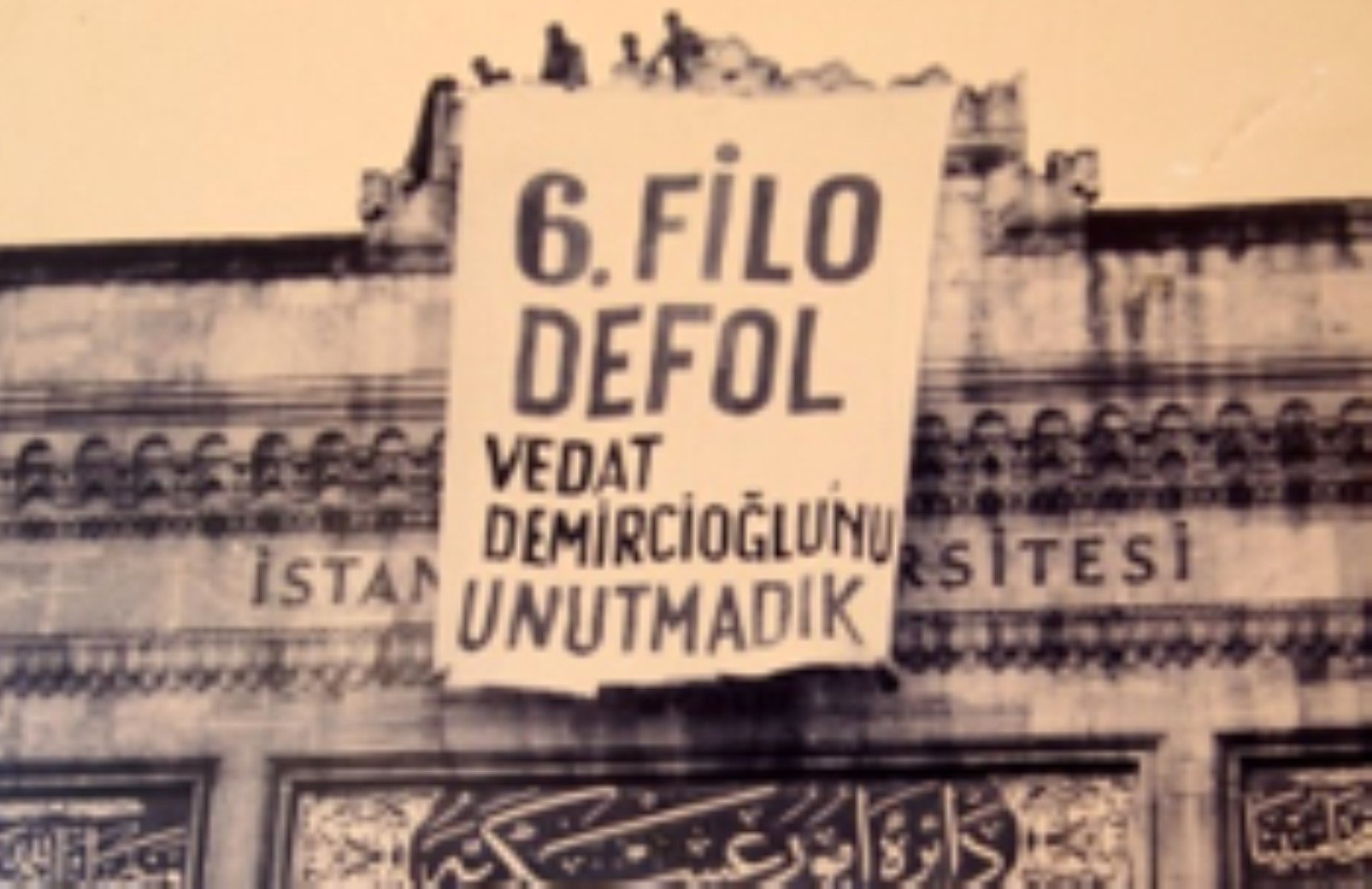
The most important reason for the FKF radicalizing and transforming into Dev-Genç, which engaged in armed actions—in my opinion—is the way the 1968 6th Fleet protest actions were suppressed by the government. In July 1968, the US Mediterranean Fleet (the Sixth Fleet) caused demonstrations, and Vedat Demircioğlu was killed in the İTÜ Gümüşsuyu dormitory.
The arrival of the Sixth Fleet at the Port of Istanbul, the government's way of intervening in the events, and the Bloody Sunday events caused student associations to radicalize.
THE ARRIVAL OF THE SIXTH FLEET: JULY 1968 AND FEBRUARY 1969 EVENTS
Turkey was accepted into the North Atlantic Alliance in 1952. The US, the leader of the alliance, established large naval fleets in the Atlantic and Pacific. This was a kind of world gendarmerie. The last fleet is the Mediterranean fleet: the Sixth Fleet. Its headquarters is Naples. Its founding date is February 12, 1950.
This fleet was guarding the US's Mediterranean and Middle Eastern interests. It was used in the Lebanon Crisis and the Suez Canal crisis. The Menderes governments supported the Sixth Fleet operations with great enthusiasm. The fleet, as official discourse, performed an important function that kept NATO's Eastern Mediterranean wing under security. In practice, it was the US's strike force.
It had come to Turkey from time to time and appeared in the ports of Istanbul and İzmir. The appearance of the fleet in Turkish seas was an ordinary result of the alliance system for those who governed Turkey. Turkey was a member of the North Atlantic Alliance, and the US was a friendly and allied country.
The visit of this fleet, which was considered a symbol of imperialism, to our ports was met with reaction among leftist youth.
After TİP entered the assembly, the first attack on the government was through US relations. The presence of American bases in Turkey was brought to the agenda. While the left argued that a part of Turkish territory was under occupation, Prime Minister and AP Chairman Demirel was saying, "There are no bases, there are joint defense facilities."
When the Sixth Fleet first came to Istanbul, Vedat Demircioğlu, a Law Faculty student staying in the İTÜ dormitory, was killed. (July 24, 1968) The AP Government, especially Minister of the Interior Dr. Faruk Sükan, was interpreting anti-US actions as the red danger, a rehearsal for a communist revolution.
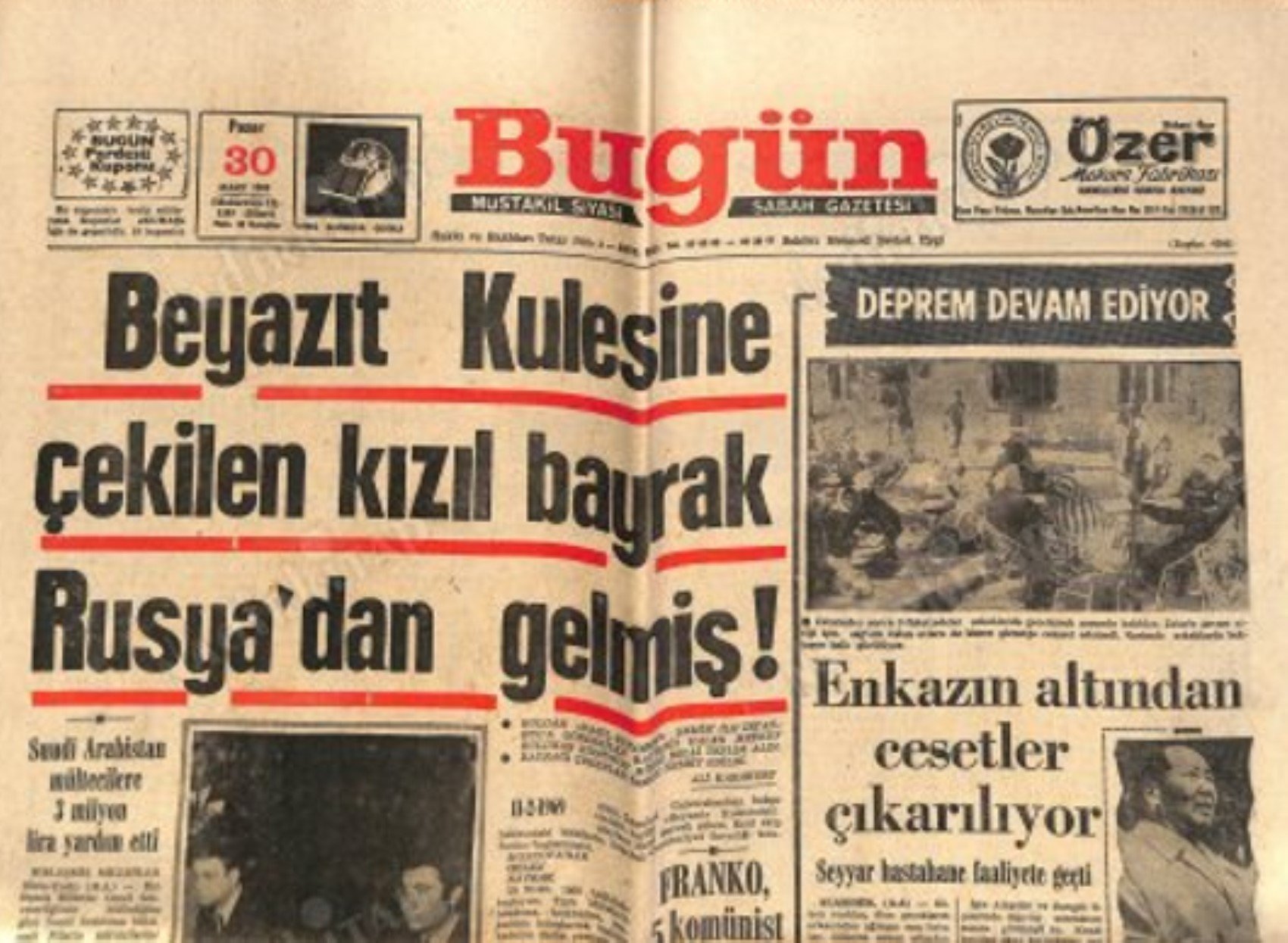
Anti-imperialist demonstrations were distorted by the reactionary press, and religious circles were provoked. The "They hoisted a red flag on the Beyazıt Tower" provocation is the most famous among these.
Mehmet Şevket Eygi from the newspaper Bugün, and İsmail Kahraman, the president of the National Turkish Student Union (MTTB) which had by then passed into the hands of the sharia supporters, are the well-known figures whose names have reached the present day from that time.
In 1969, anti-US actions grew even larger. On Sunday, February 12, 1969, the protest march of leftist student groups, which was to be started from Beyazıt and ended in Taksim, was attacked by the idealist-shariaist alliance. Many students were killed and injured.
For this reason, the events are remembered in our history as the Bloody Sunday events. The police only supervised the events in Taksim. The state's security forces turned a blind eye to the paramilitary actions of Turkey's conservative forces. It was not difficult to find a cover to legitimize the attacks anyway: national sensitivity against a communist uprising. Helping the security forces.
During the Justice Party governments, Prime Minister Demirel remained silent in such events, and mostly Minister of the Interior Dr. Faruk Sükan spoke.
Sükan is known for his words, "We are even monitoring the breathing of leftists." These words of Sükan meant an admission that a McCarthyist policy was being implemented on a Turkish scale. Dr. Sükan also has a book titled "Türkiye'de Aşırı Sol Hareketler Üzerine" (On Extreme Left Movements in Turkey). (1969)
THE JUSTICE PARTY'S ATTITUDE TOWARD THE CHP
The CHP had turned toward the "Left of Center" at its 1966 Convention. Although its content was somewhat vague, the Left of Center evoked socialism. In my opinion, the Left of Center was a call for populism whose class basis was not fully defined. It was not even social democracy. From the perspective of the Justice Party, however, it was Marxism.
As the Ecevit supporters grew stronger in the party, the Left of Center rose in waves. Feyzioğlu and other conservative Kemalists were reactive to this change. They were called "Göbekçiler" (Navel-gazers), meaning conservatives in the center.
Demirel's job was easy under these conditions. Defending conservatism, nationalism, free competition, and private property (actually capitalism) was enough. Provided that the flag of anti-communism continued to wave on the front line.
WHICH FORCES DID DEMİREL UTILIZE AGAINST THE LEFT?
From the Sixth Fleet protest actions onward, Demirel governments began to take increasingly harsher measures against the left. It began to use conservative power centers against the left.
These would be Islamism represented in the National Turkish Student Union and the idealist commandos whose name began to be associated with the MHP.
The Justice Party governments had one common point with these conservative forces: anti-communism. The Justice Party either ignored the actions of these groups against the left or supported them through indirect means.
From the 1969 "Bloody Sunday" to the March 12, 1971 memorandum, while leftist groups turned to more radical actions, the military wing of the National Security Council held the government responsible for the severe disruption of public order. In the end, the high command forced Demirel to resign with a memorandum broadcast in the 13:00 bulletin of Turkish radios on March 12, 1971.
In my opinion, there had been a revision in the political field with the memorandum. The civilian administration option had become insufficient against leftist groups that severely threatened the social order. The alliance of ruling classes brought the military wing to the fore against the left. This was the fundamental reason for Demirel being forced to resign.
THE ATTITUDE OF JUSTICE PARTY GOVERNMENTS TOWARD REACTIONARY MOVEMENTS
The Justice Party continued the tradition of religious exploitation. It had inherited this policy from the DP. Even though the Democrat Party elite were not very religious people, the image of "serving religion" was an easy and result-oriented path.
The Justice Party successfully continued to overlap the religious aspect, which is the main texture of village and town culture (provincial conservatism), with the class interests of the urban bourgeoisie.
Until the May 27 revolution, the counter-revolutionary ideology was not fed by liberal discourse. According to these circles, Atatürk's revolutions were wrong in every aspect. They were aimed at destroying Islam. It would be appropriate to interpret Demirel's attitude toward religious circles as indirect patronage rather than open support.
Demirel tried to place secularism in the context of "freedom of religion." However, secularism is not freedom of religion. It is a legal institution that makes the intervention of religion into the state sphere impossible.
Participating in religious rituals and going to prayer, which were never seen during the single-party and Democrat Party rule periods, began with Demirel's premiership. Especially Friday and holiday prayers performed in congregation.
For the first time, an iftar dinner was given in the Parliament by TBMM Speaker Ferruh Bozbeyli. These were important innovations for 60s Turkey.
Demirel took care to join the congregation and perform holiday prayers in his village. Minister of Foreign Affairs İhsan Sabri Çağlayangil's participation in prayer at the Sultanahmet Mosque together with ministers from other Arab countries at an Islamic Conference gathered in Istanbul was condemned in secular circles. Opposing politicians going to prayer and the mosque in the name of secularism has always worked to the Justice Party's advantage.
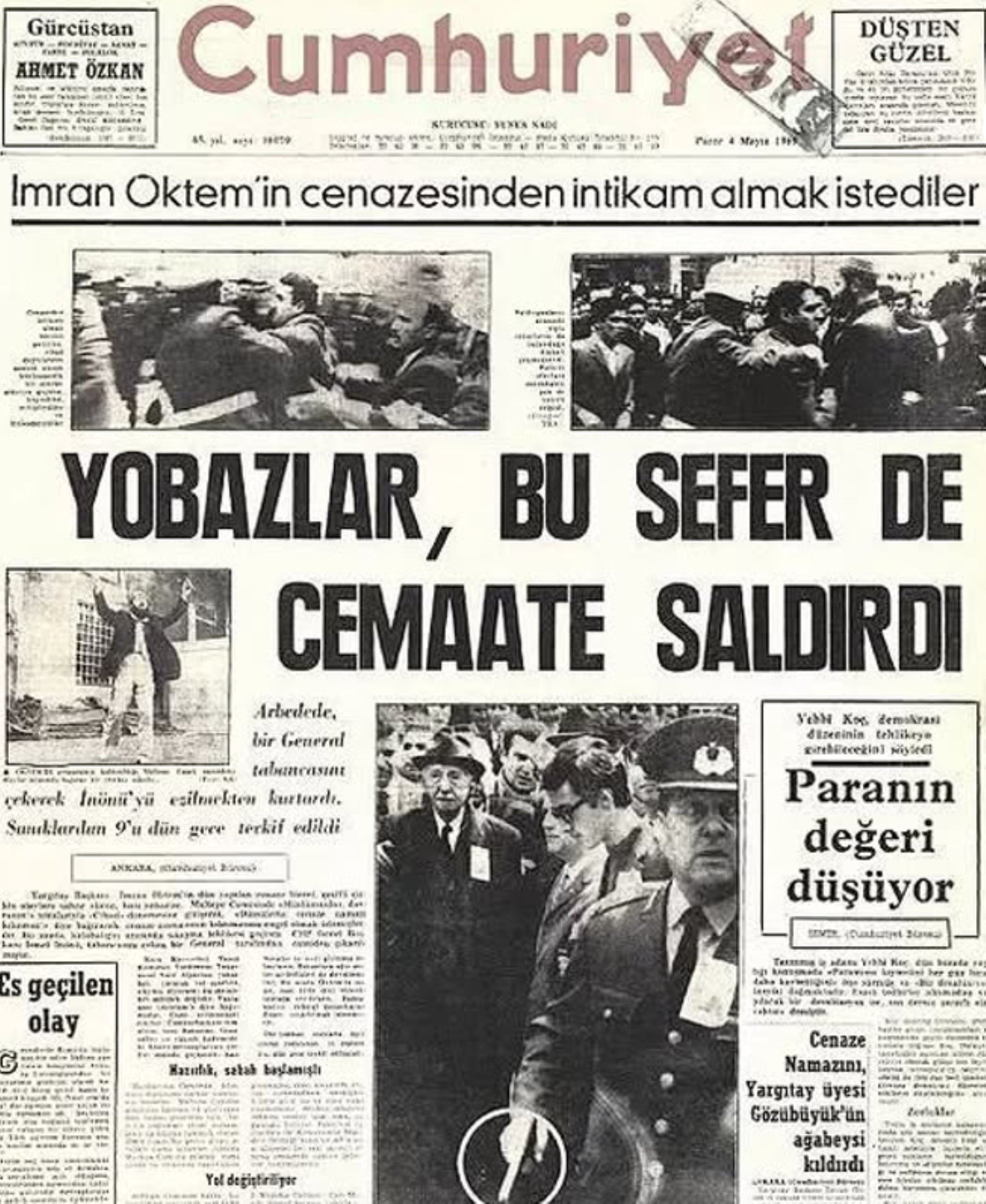
During the Justice Party rule, the largest reactionary demonstration would be experienced at the funeral of Court of Cassation President İmran Öktem. Öktem had lashed out at reactionaries at the opening of the judicial year before his passing and emphasized the secular nature of the state.
İmran Öktem's speech was interpreted as irreligion in religious circles. When Öktem passed away, the imam-hatips of the Ankara Maltepe Mosque refused to lead the funeral prayer. The mosque's permanent imams did not perform their duties. As a justification, they claimed that Öktem was not a Muslim.
The demonstrations against the congregation waiting for the funeral reached the dimensions of threats. A brigadier general (Nabi Alpartun), who wanted to protect İsmet Pasha who was attending the funeral, drew his weapon and shouted at the reactionary group that was demonstrating, "This country is not ownerless."
This action of the general has symbolic importance in our history. It is clear that ideological motifs transferred from the Young Turk revolution to the republican revolution are in the background of the event. There is the suppression of the March 31 uprising, the suppression of reactionary uprisings in the war of liberation, and the Kemalist policies applied against reactionary uprisings in the early republican period. The general who drew his weapon acted with the "class reflex" of the leadership that founded the state.
THE JUDICIARY'S ATTITUDE TOWARD THE LEFT IN THE 60S
The dominant party of the 1961 democracy, which lasted for nearly twenty years, was the Justice Party. The AP held power mostly alone or through coalitions.
TİP's entry into parliament and leftist activities outside of parliament disturbed the AP governments.
The judiciary, on the other hand, continued the attitude it had maintained against the left since the 30s. Prosecutors did not hesitate to file lawsuits. Judges also did not hesitate to hand down sentences.
I see this situation as the judiciary's reflex to defend the state "against the left" within the alliance system that Turkey was in. In other words: Cold War vigilance.
The Turkish Constitutional Court had drawn the left boundary of the regime as the Workers' Party of Turkey. TİP remained a legitimate-legal party until it was closed down for Kurdish nationalism during the March 12 period, "despite the government's efforts to criminalize it." Throughout the 60s, the debate over whether the Constitution was open or closed to socialism constantly maintained its heat.
The judiciary established a control mechanism, especially over newspapers, books, and magazines, that did not make one miss the 50s. This mostly turned into oppression.
In my opinion, these practices had no direct connection with the Justice Party governments. I would like to give some examples to understand the atmosphere of freedom of thought in the 60s:
For example, Andre Malraux's novel "Man's Hope," which tells of the Spanish Civil War, was confiscated. Aziz Nesin had gone to Russia as a guest of the Soviet Writers' Union and returned. While Nesin was in Moscow, he had done some research in the State Archives. He especially found the Nâzım-Münevver correspondence. He transcribed some of them by hand. When he returned, he was met with incredible espionage scenarios. According to the allegations, he had returned with a document containing instructions he received from the TKP. He was interrogated at the police station.
Upon these pressures, Nesin wrote an open letter to Prime Minister Demirel in the Akşam newspaper. He condemned the police's attitude. The ownership of the newspaper belonged to Malik Yolaç. But there were leftist columnists. Refik Erduran had used Yolaç's motorboat to help Nâzım escape. (1951)
Orhan Kemal was arrested many times. A heavy regime of oppression was established over the Sol, Dost, and Onur publishing houses, which were founded to publish Marxist literature. Confiscation decisions were given for many leftist publications, including the Manifesto. Books on "guerrilla literature" by Mao and Che Guevara were confiscated.
A high school student named Gürbüz Şimşek was reported by his teacher because he did an assignment in which he compared Atatürk and Lenin and explained Turkish-Soviet relations, and he remained in detention for a while.
In 1933, the documentary "Heart of Turkey: Ankara" had been filmed by the famous Soviet director Sergey Yutkevich. This documentary, which we now watch with great pride, was seen as communist propaganda. It was banned in the 50s. In the 60s, it was wanted to be broadcast on TRT. It was again seen as objectionable from an ideological perspective. It was removed from the broadcast.
Writer Şadi Alkılıç was sentenced to 6 years and three months in prison for his article "The only way to save Turkey is socialism." Yaşar Kemal had also become one of the targets of the judiciary. Lawsuits were filed against him.
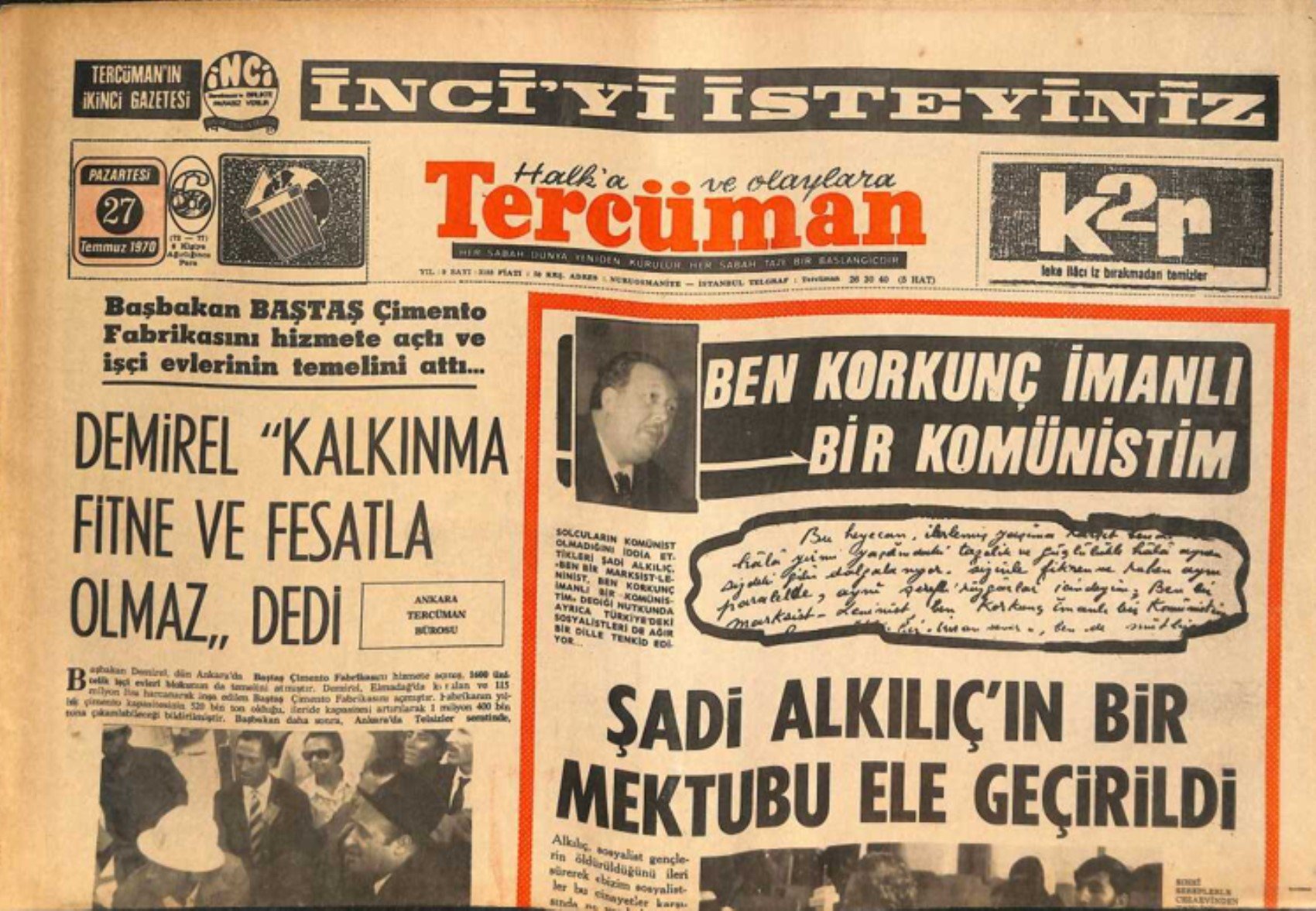
Çetin Altan was subjected to prosecution many times due to his articles in Akşam. His parliamentary immunity was lifted. The judiciary had established pressure, especially on publications, with the motives I mentioned at the beginning.
In daily life, anti-communism was also at noteworthy dimensions. Violent actions were organized by AP organizations against leftist teachers. Typical anti-communist action was in the form of beating leftists (giving a public beating).
But I cannot pass without reminding of an interesting point:
While the AP majority and the government were accusing the left, from the CHP which defined itself as Left of Center to social democracy and socialism, of communism, President Sunay, Prime Minister Demirel, TBMM Speaker Ferruh Bozbeyli, and Minister of Foreign Affairs Çağlayangil were making visits to Moscow. The Soviets were also making return visits.
The Soviets had made Turkey's first development plan in the 30s and had built the Karabük Iron and Steel Factory. In the 60s, Soviet aid was again requested for the Ereğli Iron and Steel Factory, and in the 70s for the İskenderun Iron and Steel Factory. The Soviets again supported Turkish heavy industry investments. The Soviets supported Turkey in building the Aliağa refinery and the Seydişehir Aluminum Facilities. They ignored the TKP members living in Russia.
While on one hand, a "witch hunt" was continuing against leftists, and communists were being sought under every stone, on the other hand, heavy industry investments were being made with Soviet aid. A quite ironic situation, indeed.
Would you like to get notifications about new developments and save news?
- NotificationsNew developments and breaking news
- SaveNews is stored in the app
Most Read
Statement from Nihat Zeybekci on the fund investigation

New 75,000-seat stadium plan for Fenerbahçe
Interpol and MIT tracking yields results in Izmir

ID convenience for KPSS candidates

2027 Budget: Taxes for the people, tax exemptions for capital

The reality of Akkuyu and the longing for national nuclear power

To whom and how was the Petition of Intellectuals submitted? Who accepted the petition?

The Çanakkale robbery -1- How was the Troy treasure smuggled out?

Artificial intelligence and the new imperialism

Ministry investigation into unauthorized promotional messages