


A Look at Kemalist Turkey from Post-War Europe



Political consequences of World War I in Europe
The First World War led to radical changes in European politics. Class-based political parties began to make their voices heard effectively. Undoubtedly, the 100-year tension of labor-capital contradictions that emerged after the industrial revolution had reached its peak. Factors such as the burden of the war being placed on broad masses of people in human and material terms provide important clues for understanding this sub-period of European politics.
The collapse of all fronts towards the end of the war and the striking social-political discourse of the 1917 Bolshevik Revolution—despite the long-lasting civil war—became a development that had to be taken into account in establishing the new political status quo in Europe. Bolshevism deeply influenced the left wing of European politics with a discourse of a world without exploitation, the nature of which was not yet fully known.
NEW DEVELOPMENTS IN GERMANY AND HUNGARY: SPARTACISTS, BELA KUN.
After the establishment of the Weimar Republic in Germany, the suppression of the Spartacist movement, which followed in the footsteps of the Bolshevik revolution, and the inability of the Social Democratic Party and the communists to address the problems, pushed the defeated Germans toward a new option. This would be the increasingly powerful National Socialist Party. The NSDAP reorganized Weimar around its own revanchist and revisionist program. The leader of the movement, Adolf Hitler, came to power by taking advantage of the disorganization of the social democrats and socialists. Eventually, he established the Third Reich.
In Hungary, Bela Kun had been taken prisoner by the Russians during the war years and had become a Bolshevik. He was one of the founding leaders of the Comintern. In 1919, he staged a 3-month socialist revolution rehearsal. He failed. He returned to Russia. Admiral Horthy did not allow the Hungarian Republic to join the Bolshevik front.
Developments in Germany and Hungary are significant in terms of showing the dimensions of social-political conflicts. If one were to draw up a post-war balance sheet, the developments that threatened the ruling classes in Germany and Hungary were suppressed. The theory of Permanent Revolution put forward by Trotsky could not be implemented. Germany and Hungary also suffered a heavy defeat. It became certain that there would be no European revolution.
THE RISE OF THE LABOUR PARTY IN ENGLAND AND FASCISM IN ITALY
For England, the most important development was the Irish question reaching serious proportions. Eventually, the problem was postponed with the enactment of the Irish reform act. Improving the living standards of the working class was one of the important items on the post-war agenda. The conservative-liberal party competition that had continued since the nineteenth century had been suspended during the war years with national coalitions. The most important development after the war was the Labour Party coming to power under the presidency of Ramsay MacDonald. The party had been founded at the beginning of the century (1900). Although the Labour Party governments established from 1924 onwards were not long-lasting or stable, they are important in terms of British political history. British parliamentarism had established institutions. This included the parties. Whigs and Tories. That is, conservatives and reformers. Thus, British democracy had produced a third political option: This was the Labour Party. The Labour Party replaced the liberals over time.
In Italy, fascism took control at a very early date. While Italian left-wing parties, socialists, and communists were competing with each other, the process that began with the March on Rome resulted in Mussolini taking power. The disorganization allowed Mussolini to establish an authoritarian administration by banning other political parties. Gramsci's party was closed down. His parliamentary membership was revoked. He was convicted.
After more than a century of German-Russian partition, Poland had transitioned to a republican regime; it began to be governed by unstable coalitions consisting of numerous political parties.
RESTORATION OF THE THIRD REPUBLIC IN FRANCE
The situation in France was different. France's political institutions were established with the Third Republic. This republic was the new regime established by the war with Prussia. It was built by the class alliance that ensured the suppression of the 1871 Paris Commune. With this expression, I want to point to the class basis of the issue. It would not be wrong to even say that the Third Republic was brought to life with Prussian support.
The background of this class alliance is formed by the International, which had been rising since 1864. It is also known as the First International. It was a movement that included Marx, Engels, and other socialist thinkers and politicians, targeting especially the industrialized capitalist countries of Europe. This movement of thought had challenged the order with the 1848 Communist Manifesto even before the International was founded. Although the suppression of the 1848 and 1871 communes by the ruling powers led to a setback in socialist, communist, anarchist, and syndicalist movements, the Second International was founded in 1889. Although this international contained different programs and factions within it, unity was maintained until the world war.
POLITICAL PARTIES OF THE THIRD REPUBLIC
The Third Republic can be analyzed by taking into account the political trauma that Napoleon III (Louis Bonaparte) created in French history. The Third Republic was brought to life with a regime restoration.
Monarchist and constitutionalist tendencies (Orleanist and legitimist factions) were liquidated, and the Republic was re-established with a series of reforms made until 1875. In this respect, conservatism in France has two historical versions: one in the form of monarchism and the other in the form of republican-Catholicism.
Center and left-wing parties are represented in different colors between solidarism and socialism. The names the parties carry may be misleading from today's perspective. For example, parties on the center-left carry the names Radical, Radical Socialist, or Radical Democrat. Here, radicalism essentially means adherence to the principles of the French revolution and the republican tradition. Socialists constitute the further left of politics.
THE 1905 LAW AND THE REMOVAL OF RELIGION FROM THE STATE SPHERE
One of the fault lines of the Third Republic, which lasted 70 years until France was occupied by Germany in 1940, was class contradictions, and the other was anticlericalism, opposition to the Church.
It is possible to define the issue as follows: The French revolution had already taken power with the enlightenment values of the bourgeoisie on a ground against the aristocracy and the clergy. During the First Republic, the sharpest forms of anti-clericalism emerged, and even months and years were stripped of religious terminology. Over time, this attitude softened. In the Third Republic, more or less all parties on the liberal right, center, and left advocated for the removal of the church from the state sphere. This platform can be defined as the front of secular republican parties. The biggest step in this regard was the 1905 law on the removal of the Church from the state. The secularization of the Third Republic was carried out by Aristide Briand and Emile Combes (Left bloc government).
The leaders of the process were severely condemned by the Catholic church. After Napoleon Bonaparte made Catholicism the official state religion, the state became neutral toward religion. The debate continued for quite some time even after the law was implemented. Eventually, the church obeyed secularism and a compromise was reached. Catholicism lost its political power in France.
As for the positions of the political parties of the period, the Radical, Radical Socialist, republican, and Socialist parties showed differentiations ranging from social liberal to solidarism and socialism. The common denominator that united the parties on the left of the center was the anti-clerical stance.
GENERAL POLITICAL SITUATION WHILE TRANSITIONING TO THE PEACE PERIOD
When the First World War began, the French left, with all its colors, took an anti-war position in principle. However, after a while, it joined the national front (sacred union: Union sacrée). The Second International dissolved. After 1917, the country was governed by Georges Clemenceau as prime minister. We see him at the opening of the Paris Peace Conference that ended the war. For a long time, the French saw Clemenceau as a victorious hero of the war. The prime minister of the government representing France at the Paris Peace Conference was a radical republican.
In England, there was a fluctuating political process between conservatives and liberals. It would be correct to evaluate the background factors that ensured the successful outcome of Lausanne in this context. Ultimately, the National Unity Government provided in England throughout the war had dissolved, and power was up for grabs. This is the reason why Sir Horace Rumbold, the High Commissioner in Istanbul, was the representative in the second period of the Lausanne negotiations instead of Lord Curzon. He is also the one who signed the treaty on behalf of the Great Britain government. In the first session of Lausanne, we see Mussolini representing Italy. The negotiations would be conducted by Garroni.
While the Lausanne process was continuing, radicals and their allies were forming the power bloc in France. One of the events that should be emphasized in French politics from 1918 to 1936 is the dissolution of the Second International.
The Communist International (Comintern), founded in 1919, resulted in splits among French, German, and Italian socialists. Those who were of the opinion that organizational ties with Moscow should be kept tight on the path to world revolution joined the Comintern. They separated from the socialist parties and founded communist parties. This was the case in all three mentioned countries. The party that was quickly thrown out of the system among these was the Italian Communist Party. This would be followed by the banning of all left-wing parties in Weimar Germany.
In France, the Socialists remained as legal parties of the system. The Communists parted ways with the socialists in 1920. The party's publication, L’Humanité, remained with the communists.
There was a vast republican area to the right of the socialists and communists. This area was the field of center-left, liberal-solidarist, and radical parties.
From the 1920s until 1936, when Socialist Leon Blum became prime minister, dominance in French politics passed into the hands of radical, radical socialist, and socialist parties. To put it more clearly, France was governed by an alliance of left-wing parties until the German occupation. Although the socialists did not take part in the government at the beginning, they entered into an electoral alliance. They enabled the center-left to remain in power.
The Left Cartel and the Popular Front were born as a result of this alliance. The defining names in this alliance are Leon Blum and Edouard Herriot. An important development in 1936 is the start of the civil war in Spain. The war took place between the republicans and General Franco's nationalist forces.
Armed support units from all over the world, including Soviet volunteers, arrived. The Republican Popular Front was excited in terms of morale but disorganized and undisciplined in military terms. The front was defeated. Spain entered under the Franco administration, which would last 40 years. Francisco Franco was the embodiment of Spanish right-wingism in the identity of a general.
THE COALITION OF RADICAL DEMOCRATIC PARTIES FOUNDED BY THE RADICAL PARTY
Apart from all these developments, the Radical Party brought together the secular democratic parties of Europe. The platform was named the International Entente of Radical and Similar Democratic Parties.
The union was, as it was called in Turkey at that time, the “international entente of radical and similar parties.” Most of these parties were parties of newly established republics. Their common points were anti-communism and their efforts to combine classical liberal values with the idea of a solidarist social state.
Except for the French Radical Party, the others were opposition parties. Many were also weakly represented in their own parliaments. It is possible to classify these parties as parties of Scandinavian, Benelux, Central, and Eastern European countries. For example, the Danish Venstre Party, Finland's National Progressive Party, Sweden's Free-minded National Association, Norway's Venstre Party, the Belgian Liberal Party, the Dutch Free-thinking Democratic League, the Polish People's Party, the Romanian National Liberal Party, the Bulgarian Radical Democratic Party, England's Liberal Party, and France's Republican, Radical and Radical Socialist party came together on this platform. While England's representative among the parties participating in the platform was the Liberal Party, in Bulgaria it was the opposition radical party. At that time, the Agrarian Party was in power in Bulgaria.
What united these parties against the rising fascism and communism were the ideas of a democratic environment, freedom, and social solidarity. Within these pursuits, the Radical alliance organized a series of meetings from 1928 to 1933, the first in London and the last in Sofia. As can be guessed, the French Radical party led the organizations.
The Radical Party's interest in Turkey can be traced back to the War of Independence. There was a circle in France that thought the national struggle was just and legitimate. The members of the Radical Party played a central role here. After the split in the Entente front, the 1921 Ankara Agreement was signed by Franklin-Bouillon and Yusuf Kemal Tengirşenk.
Claude Farrère's arrival in İzmit via Istanbul and his meeting with the Turkish commander-in-chief before the Great Offensive increased the interest shown in the Ankara government in the French press and intellectual circles.
Publications such as the study Mustafa Kemal and the Awakening East based on interviews by Paul Gentizon, a correspondent for Le Temps de Paris, and the book translated into Turkish as Turkish Nationalism during the War of Independence by Madame Berthe Georges-Gaulis showed that there was a different atmosphere in France during the national struggle period.
Although France was the country that caused the most problems for the Turkish delegation regarding the abolition of the capitulations and financial issues during the Lausanne negotiations, they changed their negotiators in the second period of the conference. Maurice Pellé was appointed as a negotiator. Pellé was the French high commissioner in Istanbul. This was important. Pellé had intervened against the defeated Greece and England after the Great Victory. The same person would be the representative who signed the Lausanne Peace on behalf of France.
After peace was established in Lausanne, a very important representative of the French Radical party, Albert Sarraut, was appointed as ambassador to Ankara to the Republic of Turkey. Sarraut would later serve as prime minister twice. This was a very meaningful choice. The cadres governing France were aware that there was a revolution in Turkey that reminded them of their own history.
THE IMPORTANCE OF EDOUARD HERRIOT'S VISIT TO TURKEY
The proposal to join the union of radical parties came to the agenda before the second CHP Congress (1927). The party participated in some meetings as an observer. An important development was Edouard Herriot, the mastermind of the platform, stopping by Turkey before the Radical parties meeting to be held in Sofia (1933). The CHP sent Necip Ali and Necmettin Sadak to this congress as observers.
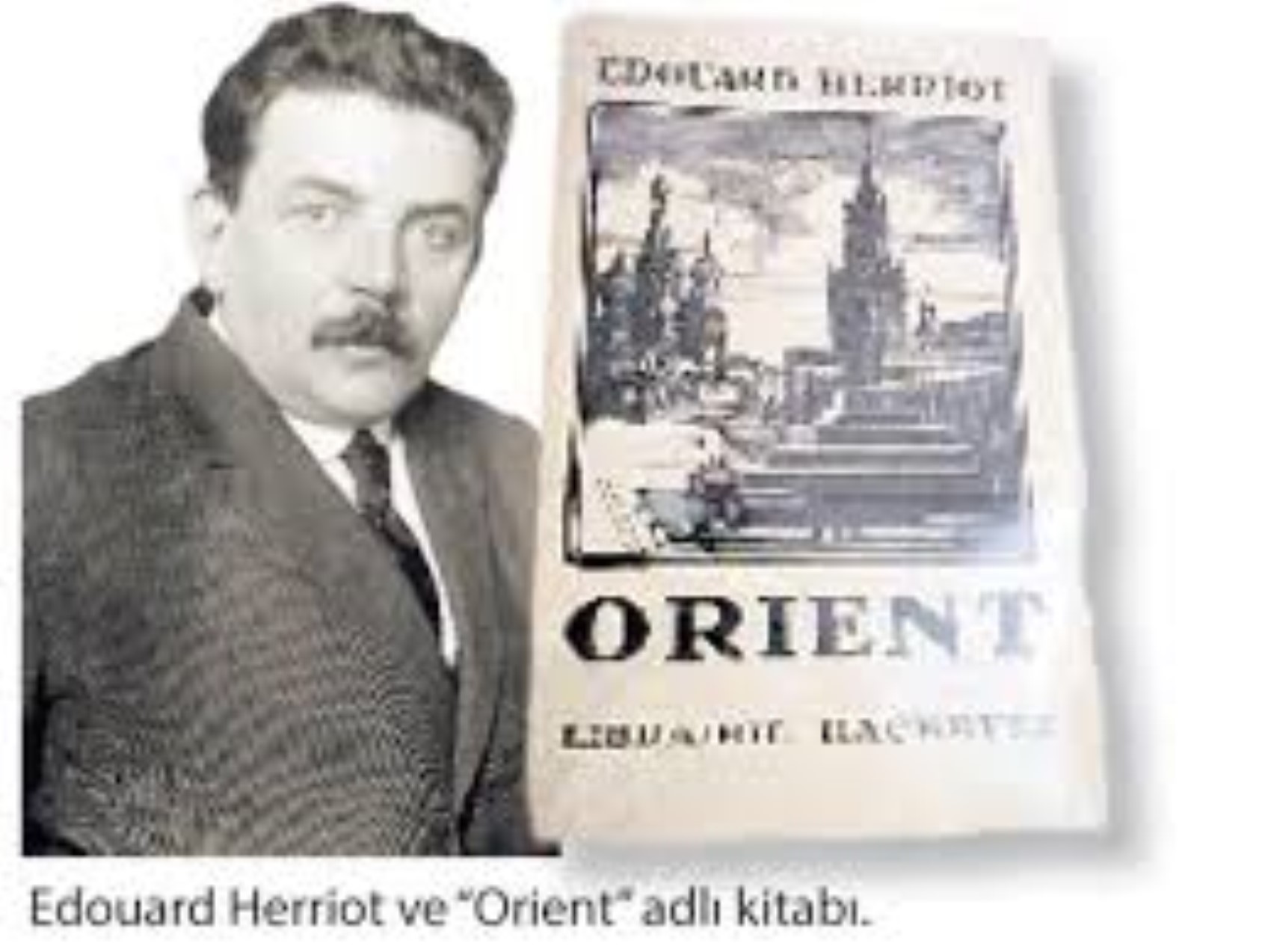
At this stage, it is useful to provide some information about who Herriot was. He was one of the most important political actors of the Third Republic. He is one of the most important figures of the Radical Party. He was not in the government when he came to Turkey. He had served as prime minister and minister. The Turkish government welcomed him with importance as if he were an official. They showed him special attention.
Herriot entered Turkey via İzmir. He was welcomed by state and party officials (Governor Kazım Dirik and CHP provincial chairman Hacim Muhittin Çarıklı). He was also welcomed by Muhittin Üstündağ in Istanbul. He met with government officials in Ankara. Upon his return from Sofia, he came to Istanbul again. He had a long meeting with President Mustafa Kemal Atatürk at Dolmabahçe.
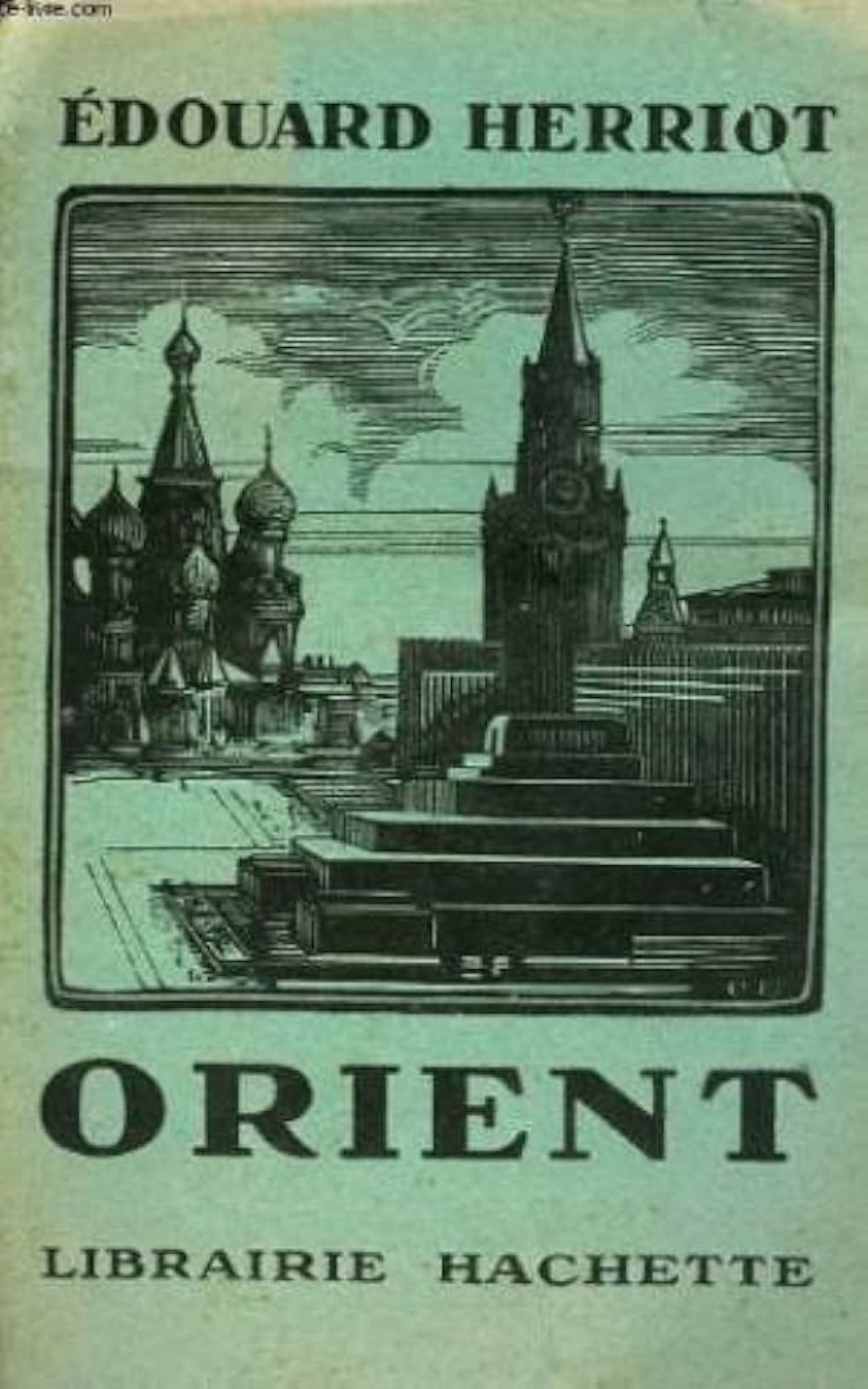
This visit and meeting are enlightening about how the CHP was perceived in the French center-left. After meeting with Atatürk, Herriot gave a series of lectures about Turkey. He published his lectures in a book titled Orient. The book was released by Hachette in 1934.
French radicals valued the anti-monarchical and secular character of the Turkish revolution. They correctly evaluated Turkey's break from the old regime and the Ankara Convention. They found Atatürk's revolutions close to their own political values. These were the ideas of enlightenment, secularism, social solidarity, and progress.
When Herriot left Turkey, he understood that they were looking in the same direction as Atatürk. By the date he came to Turkey, the legal revolutions that gave vitality to the Turkish revolution had almost been completed, and secularism had been included in the party program in 1931.
Herriot was kept under surveillance in Germany during the occupation period. He played an important role in the establishment of the Fourth Republic. He served as a member of the constituent assembly and as president of the assembly. He was a member of the French Academy. He was a historian, statesman, and politician who had correctly analyzed the direction of Kemalist Turkey.
The fact that the platform of radical and democratic parties found the CHP close to them and invited them to their meetings is significant in terms of conceptualizing Kemalist Turkey. I would like to mention some sources written on this subject here. First of all, those who first drew attention to the subject were Mete Tunçay and Zafer Toprak. Hakkı Uyar wrote an article titled “CHP’s Relations with Europe’s Radical and Democratic Parties (1926-1936).” Two graduate theses supervised by Uyar should also be mentioned here: Başak Bıçak’s “The Effects of French Republicanism on Ottoman-Turkish Modernization” and Murat Turan’s “CHP’s Relations with World Parties (1923-1950).”
The Radical Party's republican-solidarist thought (solidarism) also formed the basis of the nation-state building process in Turkey. It would not be wrong to say that the thought, which thinkers such as Charles Gide, Leon Bourgeois, Leon Duguit, and Emile Durkheim were largely influential in, was the dominant ideology of Third Republic France.
The fact that the parties that were members of the organization defended a progressive and democratic Europe against the totalitarian regimes rising in Europe, established relations with the CHP in power in Turkey, and that the party was in close contact despite not being a member of the alliance, is a phenomenon that should be taken into account in order to understand the intellectual foundations of the CHP.
Would you like to get notifications about new developments and save news?
- NotificationsNew developments and breaking news
- SaveNews is stored in the app
Most Read
Statement from Nihat Zeybekci on the fund investigation

New 75,000-seat stadium plan for Fenerbahçe
Interpol and MIT tracking yields results in Izmir
ID convenience for KPSS candidates

2027 Budget: Taxes for the people, tax exemptions for capital

The Çanakkale robbery -1- How was the Troy treasure smuggled out?

To whom and how was the Petition of Intellectuals submitted? Who accepted the petition?

The reality of Akkuyu and the longing for national nuclear power

Artificial intelligence and the new imperialism

Ministry investigation into unauthorized promotional messages