


Alparslan Türkeş’s New Delhi Exile



HOW DID TÜRKEŞ BEHAVE WHEN THE DISMISSAL PAPERS FROM THE COMMITTEE WERE SERVED?
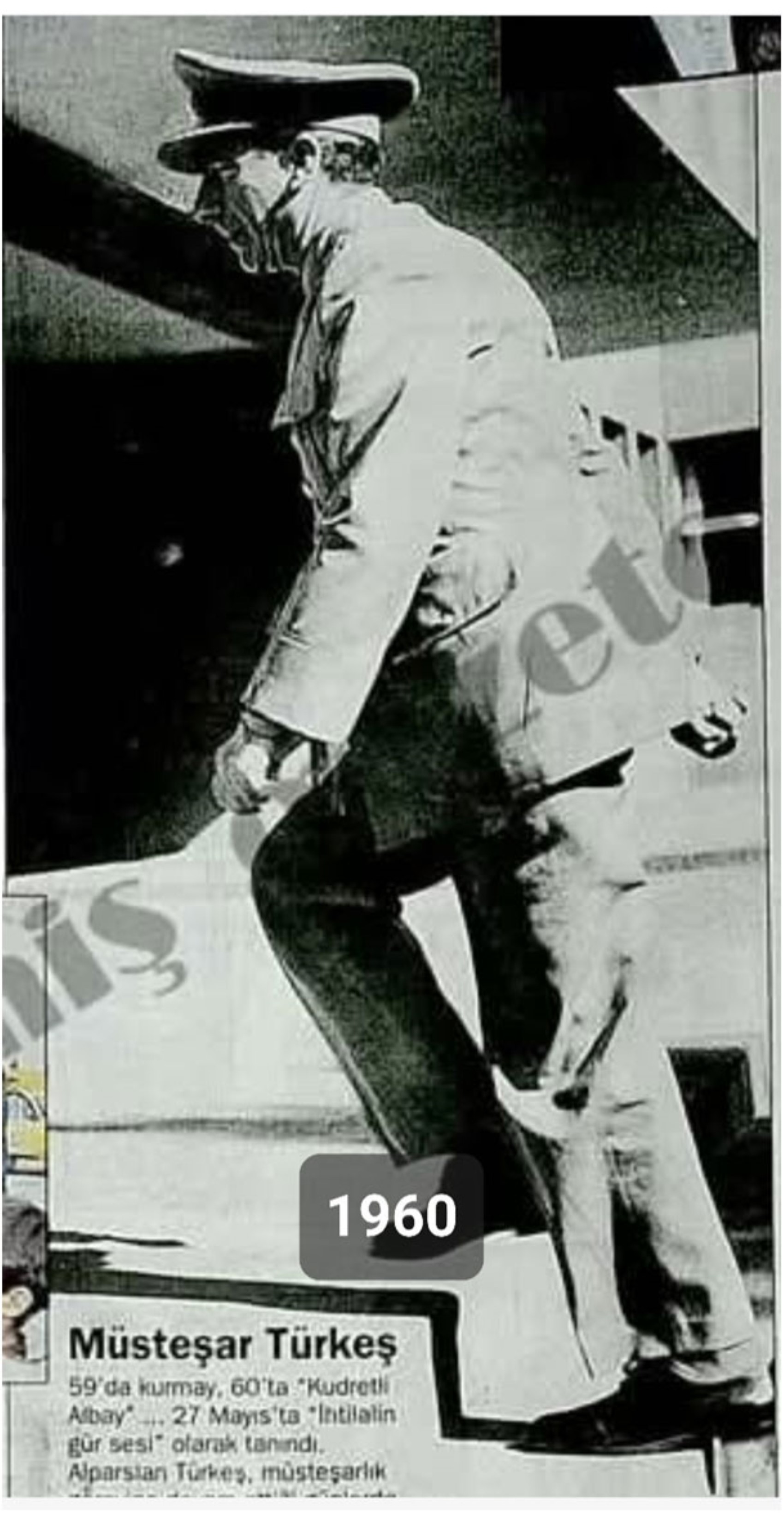
While Türkeş was a member of the National Unity Committee (MBK), he was living on Kader Street in Gaziosmanpaşa, Ankara. Türkeş’s house was surrounded by nearly a hundred armed soldiers and armored vehicles, and force was used to intern him.
The liquidation operation was carried out by Madanoğlu simultaneously with the other members of the '14'; Türkeş resisted the officers who brought the notification from Head of State Gürsel, and as a result, the door was broken down to enter. Force was used. In Selcen Türkeş’s memoirs, it is written that the daughters locked arms around their father to prevent them from taking him. In the end, the soldiers who came for the notification took Türkeş and brought him to the Mürted Air Base.
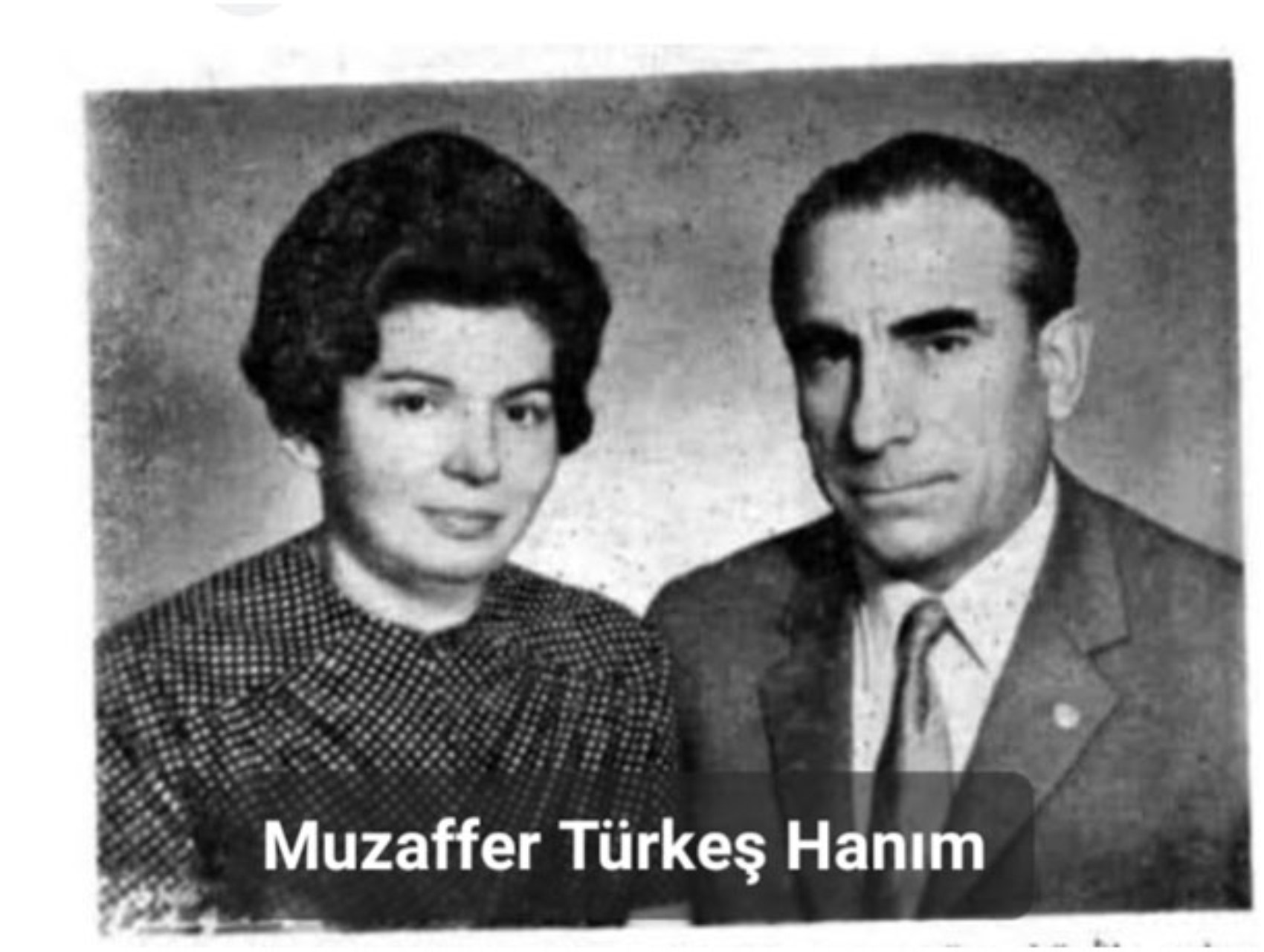
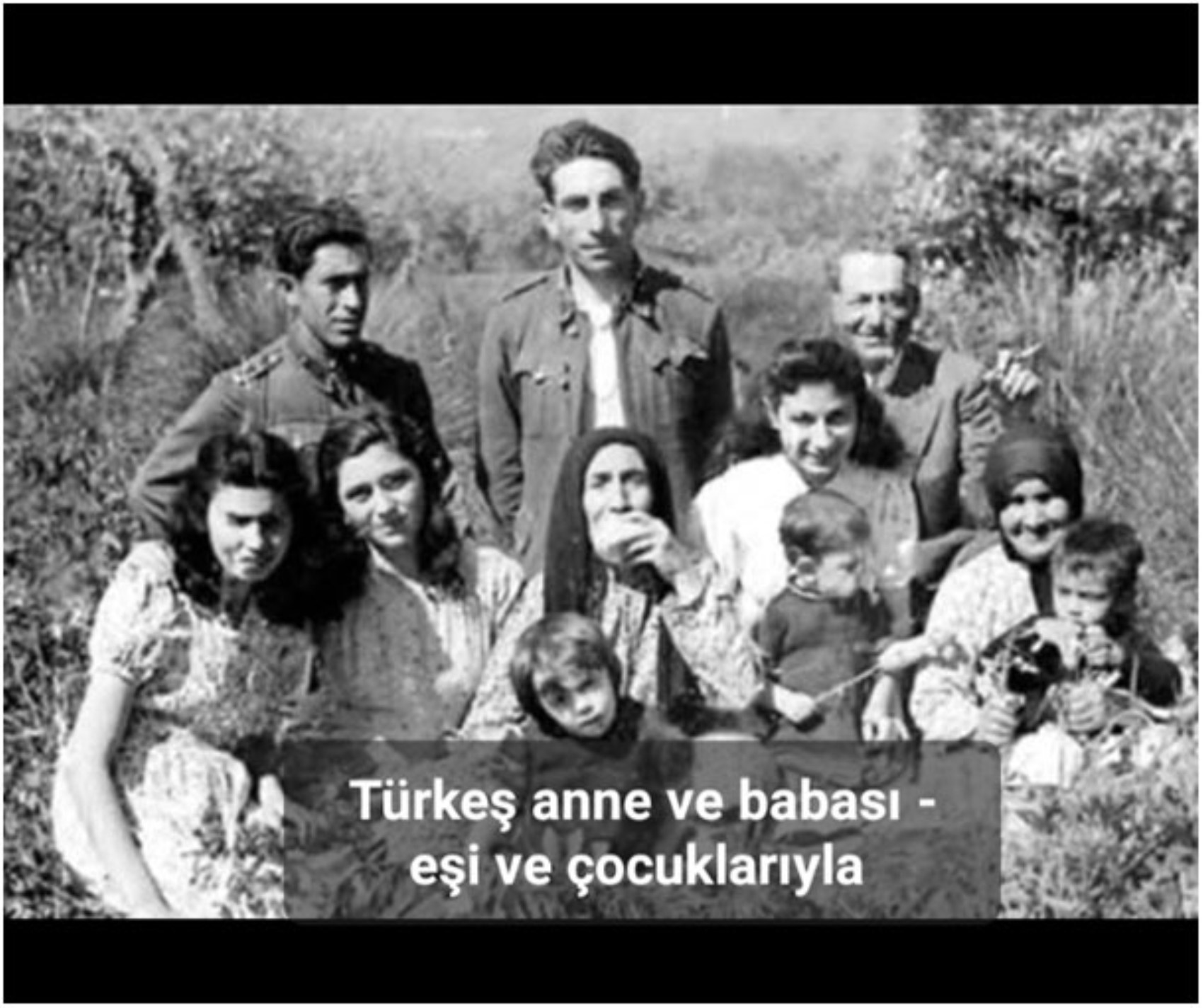
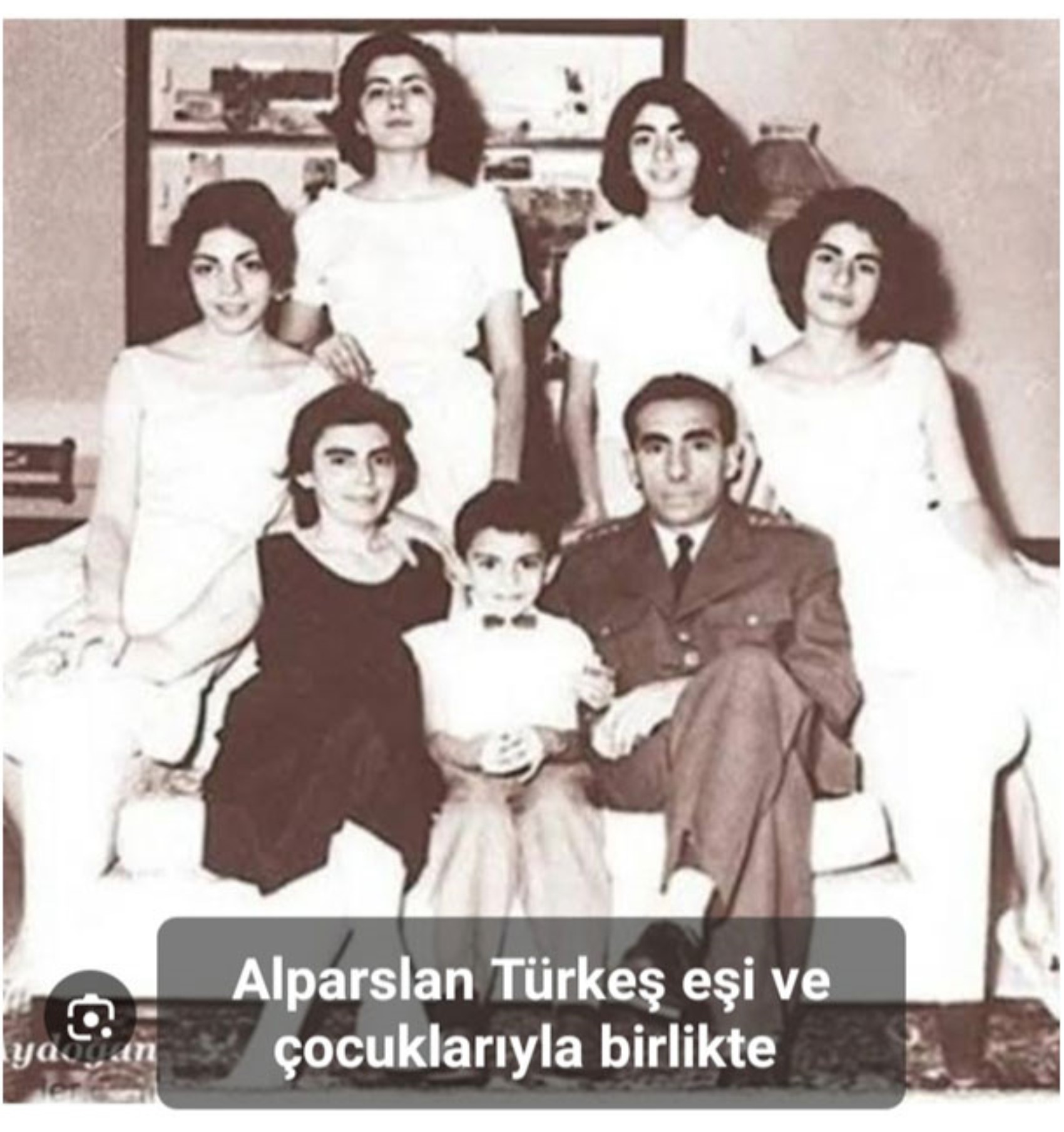
Held at Mürted between November 13 and November 19, Türkeş was retired from the army and assigned as a Government Advisor to the New Delhi Embassy, and sent to India. His wife, Muzaffer Hanım, and his children were with him. He had four daughters and his youngest child, Tuğrul Türkeş. Since Tuğrul Bey was born in 1954, he may not have even started primary school yet.
COULD CEMAL MADANOĞLU HAVE WANTED TÜRKEŞ EXECUTED BY FIRING SQUAD?
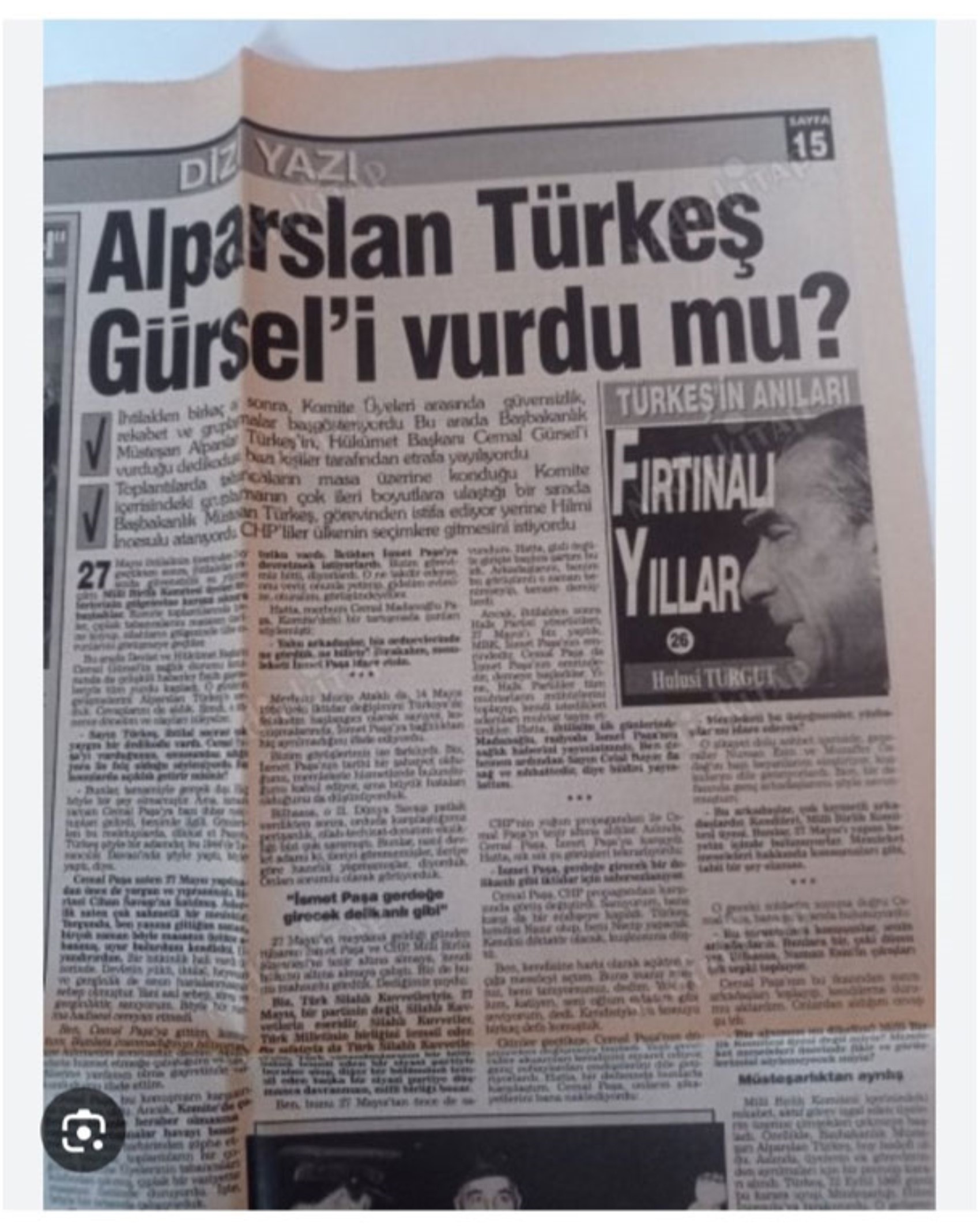
There is quite a bit of speculation regarding Alparslan Türkeş’s relationships with Madanoğlu and Gürsel. The most talked-about claim in the public eye is that Türkeş shot Cemal Gürsel. As is known, Gürsel, the chairman of the Committee, was partially paralyzed from the beginning of 1961. This is the reason he greeted Queen Elizabeth II at Esenboğa with a cane. The paralysis progressed over time.
He was even unable to deliver the opening speech of the Constituent Assembly for this reason. This is why the Committee’s second most senior General, Fahri Özdilek, delivered the opening speech.
I do not believe at all that the root cause of Cemal Gürsel’s health problems was "being shot with a pistol by Türkeş during an argument." I am of the opinion that the real reason was diabetes and cardiovascular problems. This is why we saw Gürsel with a cane from 1961 onwards.
Another speculation regarding Türkeş concerns Cemal Madanoğlu. According to rumors, after the internment of the 14, he—especially—wanted to have Türkeş executed by firing squad. I would not want to believe this is possible. According to what has been written, CIA Ankara station chief Ruzi Nazar prevented this by speaking with Gürsel personally. It seems the US intervened. Considering the relationships between Ruzi Nazar and Türkeş that dated back to their years in the US, I also found it within the realm of possibility that such things might have crossed Madanoğlu’s mind.
CEMAL GÜRSEL’S DISSOLUTION AND RECONSTITUTION OF THE COMMITTEE
Cemal Gürsel announced that the 14 had been expelled from the Committee via a letter. Subsequently, he held a meeting with the new 23-member delegation of the MBK. The decisions of Head of State and Commander-in-Chief Gürsel were published in the Official Gazette on the same day.
This historic decision was published in the Official Gazette dated November 13, 1960, and numbered 10654 (duplicate), under the heading "Statement Made by the Presidency of the National Unity Committee" and related decrees. The decision published under the signature of Cemal Gürsel is as follows:
"Recently, differences of opinion and conviction have emerged among the esteemed members of the National Unity Committee that endanger the high interests of the country, and the work of the committee has become impossible. Faced with this situation, as the Commander-in-Chief of the Turkish Armed Forces and Chairman of the National Unity Committee, I hereby announce that I have dissolved the National Unity Committee in order to protect the peace and safety of the country. The committee memberships of the individuals whose names are listed below have ended. They will be assigned duties abroad as required by the high interests of the country..."
After Türkeş and the others who were liquidated were interned, they were retired from the army under security measures. They were sent to our diplomatic missions abroad with the title of "advisor." This was an exile decision.
The liquidated radical group was sent to places far from each other.
The exile of the 14 was an Ottoman-style banishment.
Some were exiled to the Maghreb, some to the Mashriq.
There was no job description for the advisory role. They were simply subject to mandatory residence. The countries the 14 went to are as follows. Let us start with the three names closest to Türkeş: Muzaffer Özdağ (Tokyo), Dündar Taşer (Rabat), Ahmet Er (Benghazi). As for the others: Orhan Kabibay (Ottawa), Orhan Erkanlı (Mexico City), Münir Köseoğlu (Stockholm), Mustafa Kaplan (Lisbon), Muzaffer Karan (Oslo), Şefik Soyuyüce (Copenhagen), Rıfat Baykal (Tel Aviv), Numan Esin (Madrid), İrfan Solmazer (The Hague), while Alparslan Türkeş was sent to New Delhi.
The conclusion I draw from this distribution is this: The Cemal Gürsel-Cemal Madanoğlu duo (the leaders of the new MBK) decided to send the names they considered dangerous to regions far from each other.
The group close to Türkeş, in terms of their worldview, are not types inclined toward liberal democracy. These are names in favor of a corporatist-authoritarian state. The political lines of those sent to Europe after their return were generally different from them.
THE ACTIONS OF THE COMMITTEE’S RADICAL WING FROM MAY 27 TO NOVEMBER 13
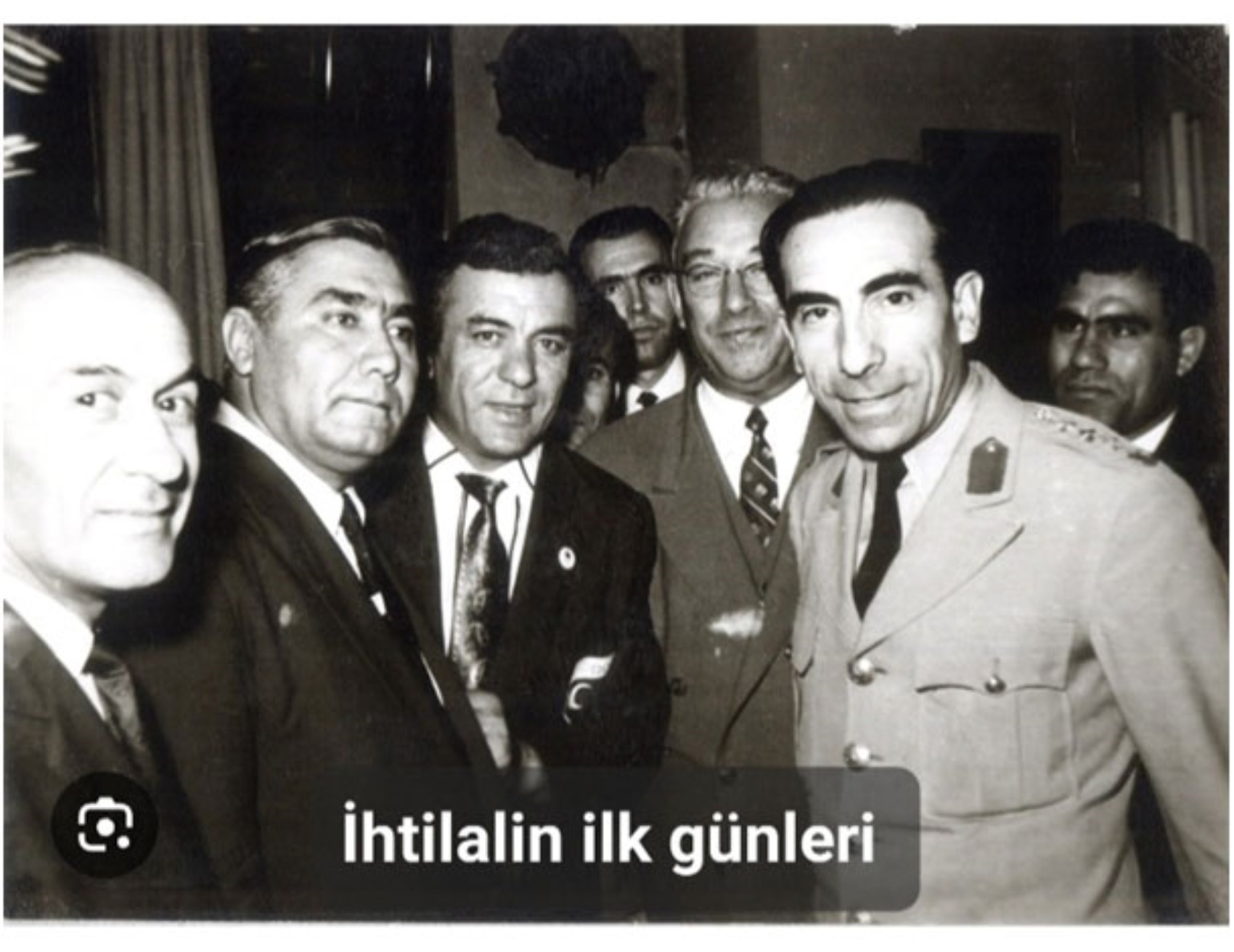
It is significant that Türkeş was brought in as the Undersecretary to the Prime Ministry after the revolution. Head of State Gürsel had also taken on the prime ministry; however, the de facto power had passed into the hands of Türkeş. In this way, he had gained great power over the bureaucracy. The other committee members did not understand this at the beginning.
Madanoğlu had quickly grasped Türkeş’s careerist attitude. The reason for the eagerness Türkeş showed to read the revolution declaration and become the Undersecretary to the Prime Ministry was understood shortly thereafter.
I am of the opinion that most of the radical decisions until November 13, 1960, were the ideas of the 14. For example, the 'Eminsu' operation carried out in the army chronologically comes at the beginning of these.
The Eminsu incident is the forced liquidation of 235 generals and nearly 5 thousand officers from the army—under the guise of retirement. The root cause is the nepotistic military hierarchy created during the DP government period. It is known in our political history as the Retired Revolutionary Officers (EMİNSU) incident.
Although it is said that this large-scale liquidation was done to rejuvenate the army, I believe the real reason was to sever the ties of the generals who remained silent during the revolution with the army. 235 generals, including 3rd Army Commander Ragıp Gümüşpala, were removed from the army. This operation is larger in quantity and quality than the operation carried out by the Young Turks after the Young Turk revolution and by the Kemalists after the War of Independence.
I think the real power behind the decision was the young members of the committee. As a result, the committee members in the lower-middle ranks expelled Menderes’s generals from the army and established a new military hierarchy. In the meantime, I would like to remind you that Fahri Korutürk was also removed from the Naval Forces Command by being made an ambassador.
We see that Prime Ministry Undersecretary Türkeş later focused on state reforms and the liquidation work at the university. (The 147 incident)
With Law No. 114 enacted on October 27, 1960, 147 faculty members were removed from their positions.
This decision led to protests at the university and the resignation of rectors. Following the decision, Alparslan Türkeş, Muzaffer Özdağ, İrfan Solmazer, and Numan Esin came to Istanbul University in person. They met with faculty deans, senate members, and protesting students. At the meeting, Türkeş and the committee members defended the "justification and reformist purpose" of the liquidation law enacted. Upon being pressed by the students, Türkeş made harsh statements accusing some of the liquidated professors of "treason."
During Türkeş’s undersecretariat, issues such as the reform of the Presidency of Religious Affairs and worship in Turkish came to the agenda. On August 18, 1960, Law No. 62, the "Law on Revolution Courts," was accepted. Let us immediately state that these courts had nothing to do with the Yassıada High Court of Justice.
The law gave the government (Council of Ministers) the authority to establish permanent or mobile Revolution Courts where it deemed necessary. (Like the Independence Tribunals) However, these courts were never actually established and never conducted trials.
The 147 incident took place on October 28, 1960. The date of the liquidation of the 14 by the Madanoğlu-Gürsel duo is November 13, 1960. Only two weeks had passed.
MADANOĞLU AND TÜRKEŞ HAD DIFFERENT AGENDAS
It is possible to address the Madanoğlu-Türkeş contradictions in several dimensions. For one thing, Madanoğlu had understood Türkeş’s "desire to seize the revolution and prolong military rule."
In my opinion, Türkeş did not enter the committee "with the intention of returning to multi-party political life." Madanoğlu, on the other hand, was thinking of holding elections immediately and transferring power. The wing of the committee close to Madanoğlu did not have a special agenda. They had overthrown a government that had lost its legitimacy. They did not have a goal like holding onto the country’s administration for a long time.
They were in favor of holding elections immediately after enacting the minimum legislation to overcome the trauma experienced by Turkish democracy. In fact, until the autumn of 1960, there was no thought of a Constituent Assembly.
Türkeş and the radicals close to him, however, had big plans. They were of the opinion that civilians had ruined everything after Atatürk. They looked down on İsmet Pasha; they thought he was taking the country backward. Even if they said the opposite later, they did not have much interest in institutions like "multi-party political life" or "Western Democracy."
Türkeş had been in the US for a long time after the Second World War, no matter what. Twice. (1948-1950) and (1955-1957).
Despite this, he had no idea about American democracy. The official justification for Türkeş’s presence in the US was "military training." He was sent to military training programs in the US twice for long periods. This point is an important detail in Türkeş’s biography. I would like to interpret the event as follows: The Pentagon wanted to establish an anti-communist secret organization in countries like Turkey. And it did. This was the reason for the intelligence and counter-guerrilla training.
In fact, in detailed biographies of Türkeş, you will see that he received guerrilla training in the US. The purpose of this training was to establish, train, and prepare guerrilla organizations in the North Atlantic alliance’s European and Southeastern European wing (meaning Greece and Turkey) against a possible Soviet invasion. It is not difficult to guess what these expressions correspond to: Gladio.
I think the most concrete proof of this is the Türkeş-Ruzi Nazar relationship. Nazar was an Uzbek-born Soviet intelligence officer who had been captured by the Germans. After the Allied victory, he had been employed in CIA cadres with anti-communist ideals. He met Türkeş in the US, stayed in Turkey for a long time, and died in Turkey at the age of 92. We know that in the 60s, Ruzi Nazar was the CIA Turkey Desk Chief.
MADANOĞLU’S LIQUIDATION OF TÜRKEŞ
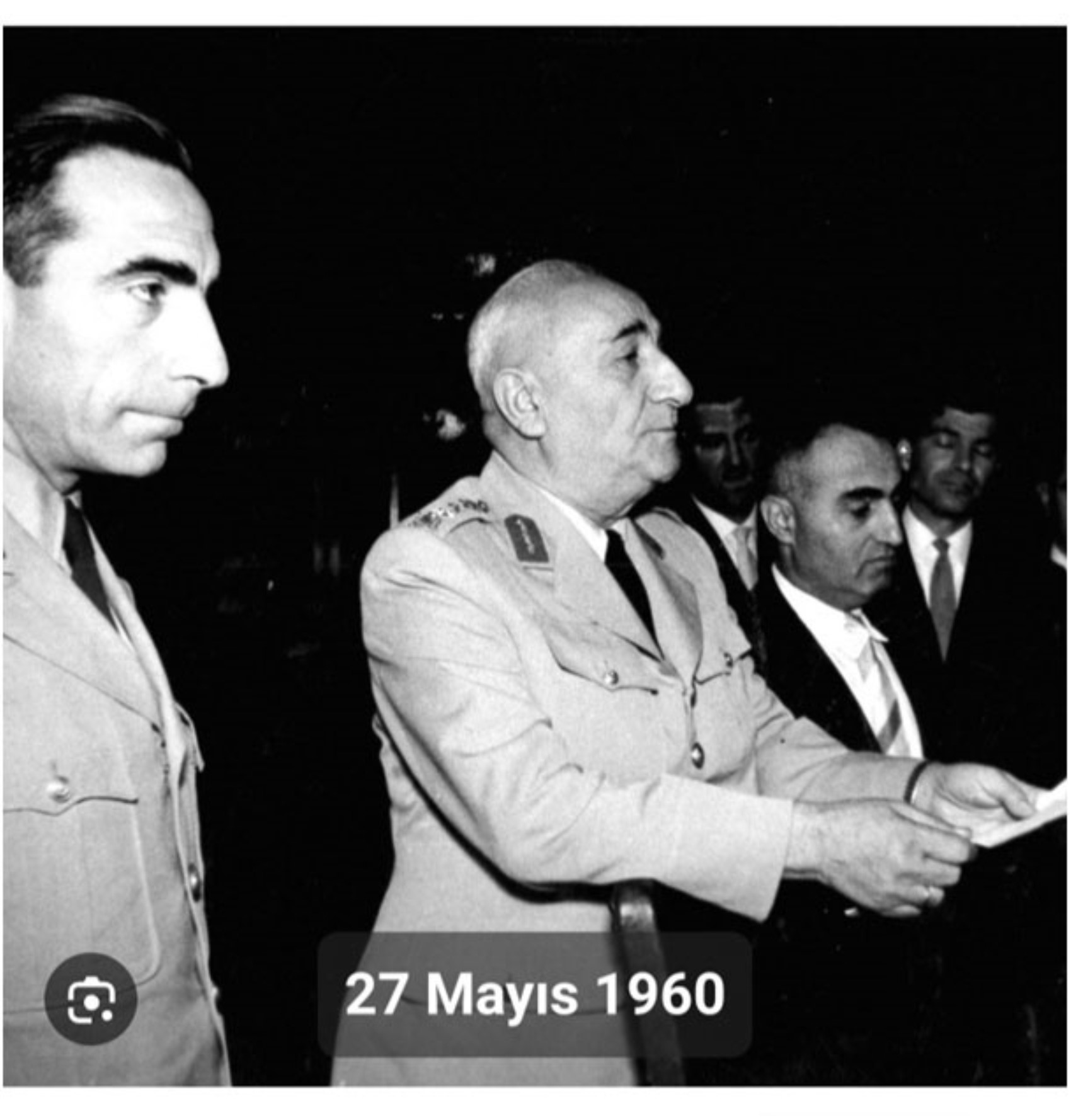
The junta that wanted to overthrow the Democrat Party actually consisted of lower-middle-ranking officers. Kabibay, Türkeş, Erkanlı, Taşer, etc. For this reason, it attached importance to the transfer of generals serving in key positions. Madanoğlu was aware of the junta. But he was not in contact. His joining the junta corresponds to just before the revolution. Madanoğlu’s duty in Ankara was very important: He was the head of the Land Forces Logistics Department. He was at the rank of Major General. Apart from this, another important position was the command of the Presidential Guard Regiment: Osman Köksal was at its head.
In my opinion, it is Madanoğlu who ensured the success of the revolution. After Madanoğlu, the participation of General Cemal Gürsel, General Fahri Özdilek, Major General İrfan Baştuğ, and Major General Sıtkı Ulay in the revolutionary cadres gave the junta a strong organizational image.
Türkeş knew the young revolutionaries from before. The generals joined the action later. They had not had any collaboration with the junta. Türkeş reading the revolution declaration gave him a superiority over the other members. He was brought to the undersecretariat position alongside the Committee Chairman (Gürsel), who also took on the prime ministry duty. This duty meant de facto prime ministership.
Türkeş interpreted this duty quite broadly until he was expelled from the committee. He struck poses like Gamal Abdel Nasser. He attempted to reorganize the state. He put forward the idea of Revolution Courts. These courts were conceived as a kind of Independence Tribunal that would protect the military regime. The committee accepted the law for the establishment of the revolution courts. Thanks to İsmet Pasha’s resistance, the law was never actually implemented. He attempted to establish various High Councils. These aimed to reorganize the state according to corporatist principles.
Madanoğlu, while being an aggressive and harsh general, thought that the military should quickly withdraw from politics. He was even in favor of not accepting any duty after civilianization was realized. His actions were also in this direction. He served as the Ankara Martial Law Commander. In the summer of 1961 (after the constitutional referendum was held), he resigned from the committee. Of course, he did not accept a senatorship either. While the other members of the committee entered the TBMM, Madanoğlu retired.
It is Cemal Madanoğlu who, with the approval of Cemal Gürsel, implemented the plan to liquidate the 14 (led by Türkeş) in the face of the expansion of the influence Türkeş gained through the undersecretariat and his long-term military dictatorship plans.
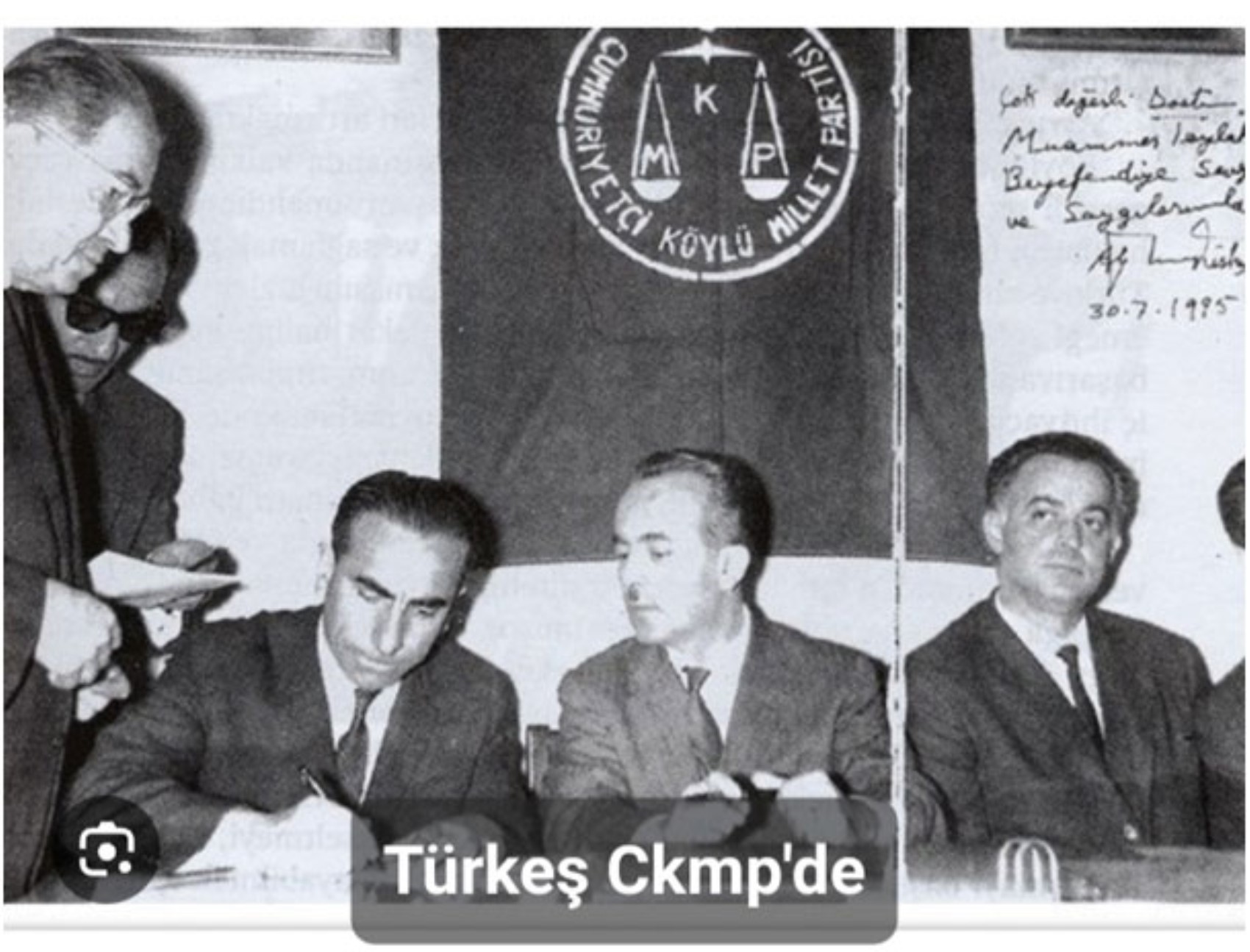
After returning from his New Delhi exile, Türkeş became the leader of the CKMP. He was even nominated by his party in the 1966 presidential election. Madanoğlu, on the other hand, was not in parliament because he did not accept natural senatorship. Later, he was appointed as a quota senator by Cevdet Sunay. Türkeş saw Madanoğlu as the culprit of the November 13, 1960 operation. This was, of course, true. This was the reason he felt great anger toward Madanoğlu.
For this reason, after Türkeş returned from exile and entered politics, he was always against Madanoğlu. Madanoğlu was one of the most important members of the "Vigorous Forces" organization around Doğan Avcıoğlu’s Yön Magazine on March 12.
I am sure that there was a relationship between the opening of the Madanoğlu Case and the faction within the MIT loyal to Türkeş. But this is not a determining relationship. It is a secondary relationship. There has always been a Türkeşist wing in the army and the MIT. Both on March 12 and September 12. My opinion is that they were likely the ones who reported the March 9ers (leftist coup) to the March 12ers (rightist coup).
The fact that the Madanoğlu case resulted in an acquittal is related to the political balances of the period. Convicting the National Unity senators along with Madanoğlu would have meant convicting May 27.
HOW DID TÜRKEŞ AND HIS FAMILY LIVE IN INDIA?
It is understood from the memoirs that Türkeş had difficulty adapting to the climatic conditions during his New Delhi exile. They complained about the humidity and heat. Finding a house was not easy. The allowance given was quickly exhausted. His wife and children were with him. He had 5 children, four girls and one boy. It must not have been easy at all to support a family of seven in India.
They experienced quite a few difficulties in finding suitable schools for the children. They enrolled the youngest brother, Tuğrul, in a private English primary school in New Delhi.
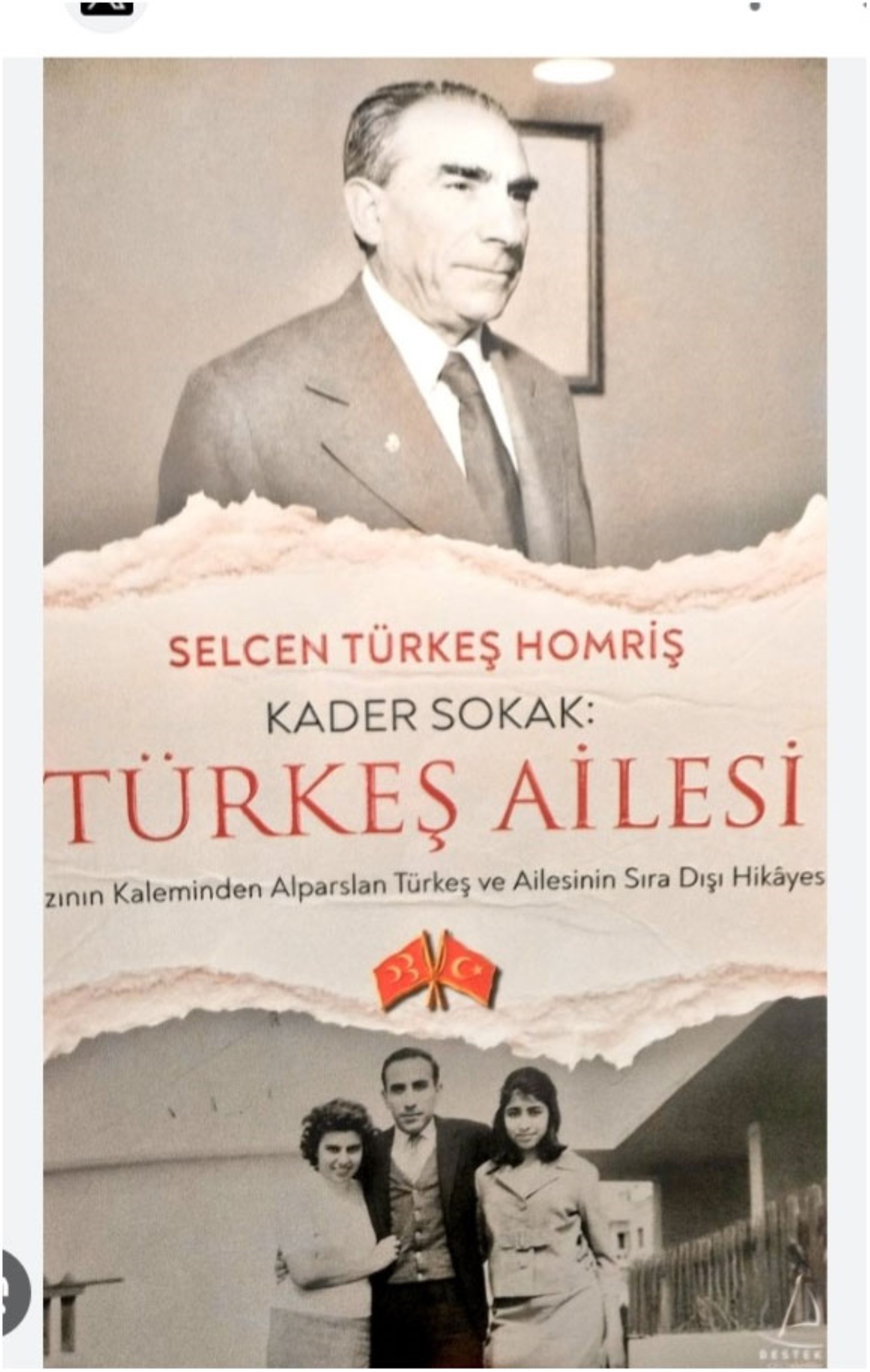
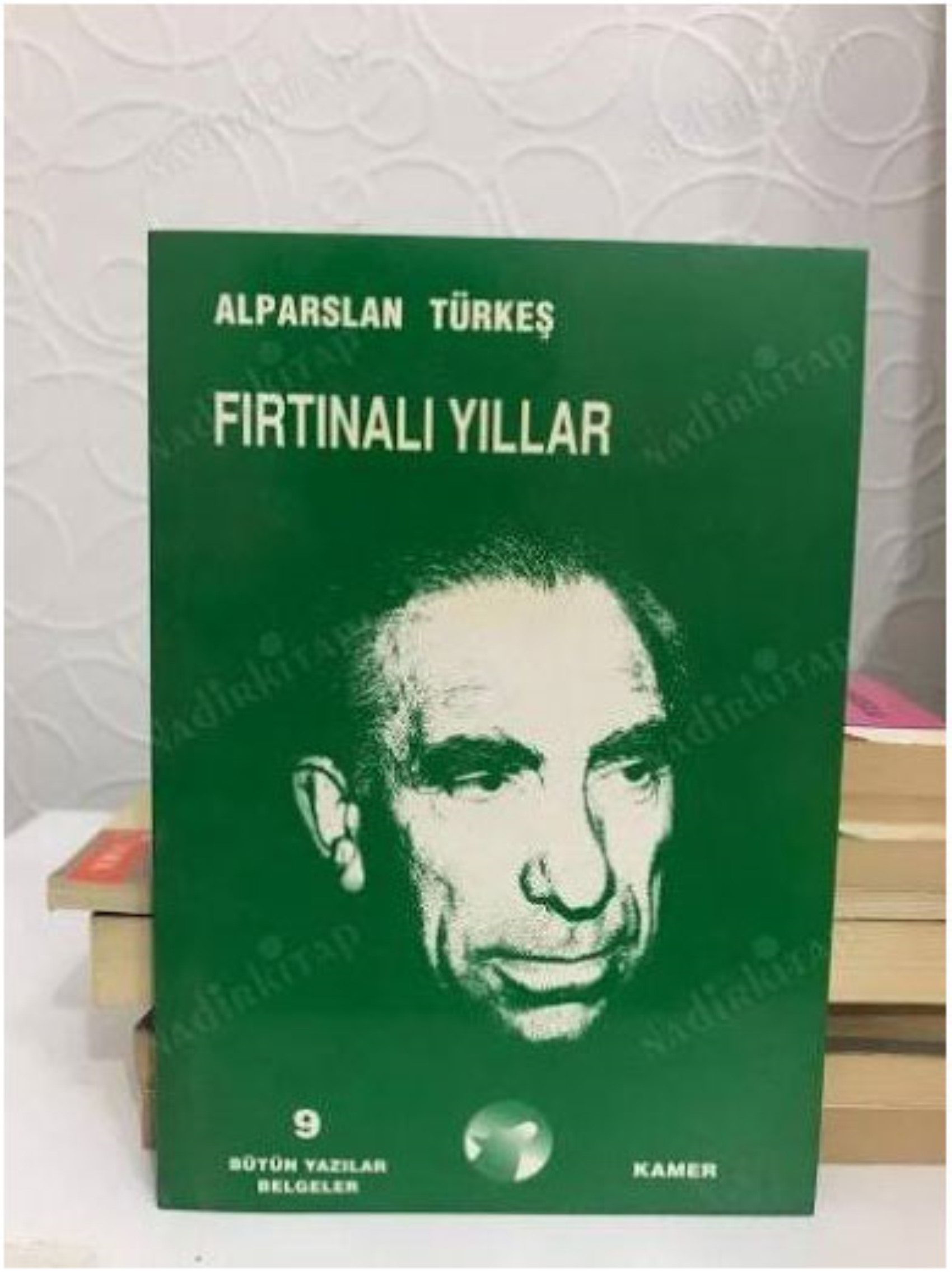
Information regarding the daughters’ school life can be seen in Selcen Türkeş Homriş’s memoirs titled "Kader Sokak: The Türkeş Family." The girls did not know any English when they went to India. They suffered quite a bit in the beginning.
Türkeş struggled quite a bit for his children’s tuition fees, and even thought about selling some of his property back home.
During the New Delhi exile (1960-1963), Türkeş’s daughters (Ayzıt, Umay, Seven Bige, and Selcen) attended a Catholic nun school called the Convent of Jesus and Mary, one of India’s most prestigious English missionary schools.
I must add a note; from the sources I looked at while writing this article, I learned that the second daughter, Umay Günay Türkeş, is a Turcology professor in Cyprus.
TÜRKEŞ HAD GONE TO EUROPE A FEW TIMES WHILE IN EXILE
Türkeş’s exile life lasted 2.5 years. His return: February 23, 1963. During this time, he went to Europe many times and met with the 14. They met in cities like Paris, Bern, and Brussels. They talked. They discussed what they would do. In the meantime, let us also state that there was an intense traffic of correspondence among the exiled former National Unity members. These trips became more intense after the adoption of the 1961 Constitution and the elections.
The fundamental issue at the meetings was the path to be followed and the issue of leadership.
After the CHP/AP coalition was formed, Türkeş met in Paris with Cevdet Perin, who came for a NATO meeting. Cevdet Perin was an Adalet Party deputy.
At the Brussels meeting on July 27, 1962, Türkeş’s leadership demand caused controversy. Orhan Erkanlı and Orhan Kabibay opposed this proposal. They considered themselves worthy of this position. These names later took an attitude close to the CHP. Muzaffer Özdağ, Rıfat Baykal, and Ahmet Er joined Türkeş.
THOUGHTS ON TÜRKEŞ’S LETTER TO PREVENT EXECUTIONS
It is said that Türkeş made intense efforts to save Menderes, Polatkan, and Zorlu from the death sentences. I am not of that opinion. Türkeş wrote a letter to Cemal Gürsel while the Yassıada trials were about to end. Date: September 7 (before the decisions were announced).
I think this was a strategic move. The letter was a forward-looking political investment. In the letter, New Delhi Embassy advisor Alparslan Türkeş mentioned that the execution of the possible death sentences would "have bad results." That is all.
Türkeş holds İsmet Pasha responsible for the execution of the Yassıada decisions. As is known, DP circles have always found İnönü’s initiatives before the Committee insincere. However, İnönü did everything he could to prevent the executions. Adnan Bey’s wife, Berin Hanım, went to the Pink Mansion in a panic after the decisions were announced and met with Mevhibe Hanım and İsmet Pasha. This is sufficiently explanatory.
On the right, İnönü is held responsible for the executions. This is a completely wrong assessment.
The Armed Forces Union and the Talat Aydemir junta were the ones applying pressure on the MBK before the voting. The MBK wanted to commute the decisions to life imprisonment. The majority was in this direction. The decision came out in the direction of 9/13 execution with two members changing sides.
In September 1961, power was de facto not with the MBK but with the Armed Forces Union. This is the reason for Madanoğlu’s resignation from the Committee after the İrfan Tansel incident.
The Committee had lost its power over the army. As a result, the letter Türkeş wrote to Gürsel has no political importance.
The Committee was under the pressure of the SKB. Since even İnönü’s letter was not taken into account, the meaning Türkeş attributes to his own letter is exaggerated. It is nothing more than an effort to garner legitimacy on the right.
IF İSMET PASHA HAD NOT BEEN PRIME MINISTER, DEMOCRACY COULD NOT HAVE BEEN TRANSITIONED TO
After the adoption of the constitution by referendum, it was aimed for the parliament to open without problems through Round Table Meetings. From September 1961 to May 1963 (the second Aydemir uprising), the only formula to keep the junta tendencies in the army under control was this: Gürsel as President - İnönü as Prime Minister. Cevdet Sunay at the head of the army.
İsmet Pasha accepted the duty not out of ambition to be prime minister, but to establish and settle democracy once again. He did not have a thought like taking revenge on the Democrats. He made more effort than Demirel regarding the amnesty of the Democrats and the restoration of public rights. It is Celal Bayar who—in the end—understood İnönü’s sincerity. The 1969 Bayar-İnönü meeting is proof of this.
HOW WAS THE DECISION TO RETURN TO TURKEY TAKEN? HOW WAS IT IMPLEMENTED?
The 14 decided to return with the thought that there was no legal obstacle left after the transition to civilian administration. The political environment had relatively softened. The return would be cautious. Caution meant coming in small groups via different routes. The decision to return was taken at the Brussels meeting on July 28, 1962.
Alparslan Türkeş came to Beirut from New Delhi with his wife Muzaffer Hanım and his children. He sent his family to Ankara. He himself went to Europe. Final consultations were made. The return began. The first to arrive were Orhan Kabibay, Orhan Erkanlı, and Numan Esin. (February 1963) Türkeş entered Turkey by road via Yugoslavia-Greece. He was welcomed at the border gate by Turkists-Turanists. March 23, 1963. After staying in Istanbul for a while, he went to Ankara. The last to arrive was Muzaffer Özdağ, who was in Tokyo.
Tokyo exile Muzaffer Özdağ was in constant communication with Türkeş through correspondence. In the meantime, he took a close interest in the Turkestan and Kazan Tatars who took refuge in Japan. The fact that Prof. Dr. Ümit Özdağ is Tokyo-born is because he was born while his father was in exile. After returning, Özdağ’s togetherness with Türkeş continued within the CKMP.
WHAT CAN BE SAID ABOUT TÜRKEŞ’S THOUGHTS?
Alparslan Türkeş’s thoughts correspond to the radical right. Analyzing Türkeş’s thought in detail is not the subject of our article. But it is still useful to make an assessment in terms of its main lines.
When the "Nine Lights" doctrine put forward by Türkeş is examined, we see that it approaches nationalist-collectivism in many ways. What Türkeş meant by collectivism is the rejection of class struggle. This thought is accompanied by fierce anti-communism. The corporatist state is the most dominant feature of the CKMP-MHP-Idealist Hearths discourse. Corporatist organization is also the most fundamental characteristic of fascism and national socialism.
This view advocates that society should be organized not according to classes, but according to professional groups, and work in harmony under state arbitration. It sees class conflict as a threat to the nation and the state.
The most distinctive feature of the Türkeşists is the idea of authoritarian leadership. It is the 'Başbuğ' (Leader) cult. The "Başbuğ" character represents unquestionable authority, a loyalty-oriented leadership understanding, and the profile of a single leader who drags the masses behind him.
Another element of Türkeş’s understanding of politics is the Strong State Authority. According to Türkeş, the state is a sacred and absolute entity that must be protected, above the individual and society. The state is at the center of everything. Nothing can exist outside the state.
MANEUVERS MADE TO SAVE TÜRKEŞ FROM HIS COUP HISTORY
Türkeş was one of the organizers of May 27. In fact, in his own words, his junta-ism went back to İsmet Pasha’s National Chief period. (1941) When the wing of the committee close to Türkeş was liquidated while studying the authoritarian state, they suddenly adopted a democratic jargon. As if they were not the sharpest actors of the junta once upon a time.
Türkeş took part in the power bloc during the MC governments. (1975-1980) After September 12, his party tried to take place in the center-right. Devlet Bahçeli, who came to the head of the party after Türkeş, also made a big U-turn and became an ally of the AKP.
Recently, Türkeş’s involvement in May 27 is almost being tried to be erased from history.
As if Türkeş had not walked the corridors of the prime ministry on the morning of May 27 with the pleasure of having seized power, and had not tried to garner power through the prime ministry undersecretariat. The Türkeşists are billing the responsibility for May 27 to the CHP. They are trying to hide that their own leader (Başbuğ) was an active junta member.
DISCUSSION ON THE CONTRADICTIONS OF ALPARSLAN TÜRKEŞ AND THE MHP
Alparslan Türkeş is the historical leader of the MHP; he is one of the organizers of the May 27 revolution. If you accept May 27 as a coup, Başbuğ Türkeş is a coup plotter.
This historical fact constitutes one of the paradoxes of the MHP. This situation was ignored in the 70s and was not reminded much. The common enemy was generally leftists.
The MHP re-entered parliament in 1991 with an electoral alliance (RP-MHP-IDP). Türkeş was elected as a deputy. The effort to give the impression that Türkeş remained outside of May 27 continued. According to the Türkeşists, he had entered May 27 with good intentions and had been expelled by the other wing of the junta.
After the 2014 elections, the MHP turned toward the AKP. In the 2018 and 2023 elections, it took its place behind Erdoğan. This turn (not a political maneuver) has forced a change in the paradigm of looking at recent history.
This change in perspective meant reviewing the transformation dynamics in the country’s history since May 27, 1960.
Devlet Bahçeli made it a principle not to cause problems for the AKP government. However, there was an annoying area in the relationship. The AKP was claiming the legacy of the Democrat Party and cursing May 27. Even though there is no causal link, neither historically nor ideologically.
The AKP has been maintaining its power since 2002 with the "coup plotters-national will" dilemma. This dilemma seems to have created an easily sustainable area of political exploitation. Even though we have learned over time that the Islamist right has nothing to do with either the Democrat Party or respect for the results of general elections. For now, the situation is like this.
According to this discourse, the AKP represents the national will, and all political parties that are not on the same line as it become coup plotters. It is, of course, impossible to give up this extraordinarily productive area.
The contradictions between the MHP and the AKP caused scenes that were difficult to explain during the conversion of Yassıada into Democracy Island.
If May 27 is a coup—that is what they say—what was the party (MHP: Türkeş, Bahçeli) founded by one of the most important organizers of the coup doing there?
For this reason, the method adopted to explain this paradox remained ironic.
Now let us come to the scenarios of clearing Türkeş of the sin of May 27. The model is actually very simple: The Türkeş wing of the junta joined the revolution with the intention of preventing fratricide. Madanoğlu, by convincing the high-ranking generals of the committee, expelled the 14 from the committee. In this way, he derailed the revolution. The rest of the committee is responsible for all the evils of May 27. Not those who were sent into exile. The Yassıada trials and the execution of the sentences are their responsibility.
At this very point, an anachronistic piece of evidence is also put forward. The letter Türkeş sent to Cemal Gürsel from New Delhi asking for the sentences not to be executed if death sentences came out of the Court. Date: September 7, 1961. With this letter, Türkeş’s junta-ism is erased from history. A credit of democracy is opened for him.
These claims do not correspond to reality. They are overly abstract. In reality, the Türkeş faction constituted the radical wing of the Committee. As a matter of fact, this wing was extraordinarily reluctant about the return to multi-party political life. It was even opposed. They were of the opinion of managing the country with an authoritarian regime of indefinite duration (you can call this a military dictatorship if you wish). They thought they could carry out "great revolutions" that even Atatürk could not do. Such "serious work" could not be left to civilians.
Eminsu, the 147 incident at the university, and the ideas of Revolution Courts were largely their work.
Instead of transitioning to democracy immediately, they embarked on the work of reorganizing the State/society according to corporatist principles. And with great self-confidence. If Madanoğlu’s November 13 operation had not happened—in all likelihood—Türkeş would have carried out an operation on the Gürsel-Madanoğlu faction.
As a result, the 14 were in favor of the continuation of the closed regime. They were dreaming of a long-term military regime. Madanoğlu and other moderates, who are presented as coup plotters/junta members, had planned for elections to be held and power to be transferred to civilians after a rapid transition calendar. Within this faction were the most senior generals of the junta: such as Cemal Gürsel and Fahri Özdilek.
Following the liquidation of the 14, the Constituent Assembly law was enacted. The House of Representatives convened. The Constituent Assembly covered all segments except the Democrat Party members.
The 1961 Constitution was completed on the "anniversary" of May 27. After being negotiated in the constitutional commission, it was accepted by the public vote held on July 9.
If the other faction (the Türkeşists) had seized power, none of these would have happened. For these reasons, counting the 14 who were sent into exile as the "democratic wing" of the committee is contrary to historical facts.
The 14 continued their contact with each other throughout their two-and-a-half-year exile. Upon their return, they organized to take part in political life. However, the content of this desire to take part was—in my opinion—a bit ambiguous. They could have organized a coup with the Armed Forces Union or directly with Talat Aydemir. This potential existed. I am sure that this crossed their minds.
They met many times in Paris, Bern, and Brussels. I am truly curious about how this freedom was provided despite them being official employees at our embassies. The biggest dispute among them arose over the issue of leadership. Türkeş was saying, "I am your most senior. I should be the leader." He was even imposing this view.
Those who joined him are the names who would be by his side in the seizure of the Republican Villagers Nation Party. Only one member entered the Workers Party of Turkey: Muzaffer Karan. Some of the rest moved closer to the CHP, and one name started to engage in international trade.
Immediately after his return, Türkeş was arrested on the grounds that he had "a connection" with Talat Aydemir’s second uprising. (May 21, 1963) He was detained in Mamak Military Prison for 4 months. He was acquitted on September 5. According to the claim, a leadership dispute had broken out between Türkeş and Aydemir. Upon this, he decided not to participate in the action and reported him. There is not enough evidence regarding the "reporting." But his contact with his old friend Aydemir is certain.
The conclusion I draw from this picture is that for the 14, the idea of participating in multi-party political life—was not non-existent, but—was the last option.
When the thought structures of the 14 are analyzed—predominantly—it would be appropriate to say that they were radical right-wingers. As a result, those who accepted Türkeş as their leader all joined the CKMP together. At the party’s 1965 Congress (July 30-31), Türkeş was elected chairman. His rival was Ahmet Tahtakılıç.
While returning to the country, Türkeş had said, "we will either seize a party or we will found a party." Thus, the goal was achieved.
Tuğrul Bey, one of Türkeş’s children, has been an AKP deputy for a long time. His son Ahmet Kutalmış, from Seval Hanım, also entered parliament from the AKP in the 24th term. His youngest daughter, Ayyüce, became a deputy from the İYİP in the 2023 elections. As can be seen, the Türkeş Family continues to engage in politics on the right. Before his death in 1997, Türkeş had been consecrated by Çiller as a wise statesman. Çiller’s real goal was to keep the MHP in reserve. Whereas when Mesut Bey (Yılmaz) made an electoral alliance with the BBP, he had said, "you are letting murderers into parliament."
Türkeş had also abandoned the authoritarian state-führer prinzip discourse after the September 12 trauma. He was trying to give the impression of a moderate politician looking for a place for his party within liberal democracy.
In my opinion, Türkeş’s political struggle from his India exile until September 12 was aimed at seizing the "state." It is useful to remember the commando camps and the para-military actions directed at the left. When Rahşan Hanım was forming the triple coalition in 1999 (DSP-MHP-ANAP), she meant this when she said, "Let the MHP first give its self-criticism, then we will talk about forming a government." At this point, I recommend that you review the indictment of the MHP and Idealist Organizations Case.
As a result, it is not possible to evaluate the political understandings of the MHP cadres in the Nationalist Front governments between 1975-1980 as an element of liberal democracy.
This thought of mine also applies to the current situation of the MHP.
Would you like to get notifications about new developments and save news?
- NotificationsNew developments and breaking news
- SaveNews is stored in the app
Most Read
Statement from Nihat Zeybekci on the fund investigation

New 75,000-seat stadium plan for Fenerbahçe
Interpol and MIT tracking yields results in Izmir
ID convenience for KPSS candidates

2027 Budget: Taxes for the people, tax exemptions for capital
The reality of Akkuyu and the longing for national nuclear power

To whom and how was the Petition of Intellectuals submitted? Who accepted the petition?

The Çanakkale robbery -1- How was the Troy treasure smuggled out?

Artificial intelligence and the new imperialism

Ministry investigation into unauthorized promotional messages