


Ara Güler in pursuit of 'Noah's Ark'



A CHILD AT THE FLORYA SEA MANSION BEACH
After Ara Güler's father, Dacat Derderyan (Güler), married Verjin Hanım, he became successful in the pharmaceutical warehouse business. He must have increased his wealth significantly, as they moved out of the Ankara Apartment where they had been living. The Ankara Apartment was likely located somewhere near Talimhane. The place they moved to next was the Güler Apartment, which Ara Güler later used as his office and archive.
From interviews conducted with Ara Güler, we understand that his father, a graduate of the Istanbul School of Pharmacy (Higher Education), bought a summer house in Florya. After the armistice, Florya became an increasingly popular district in the 1930s. The construction of the Presidential Sea Mansion further increased interest in the region. To understand what kind of state the Atatürk Republic was, it is worth listening to Güler's words; Ara Güler says the following:
“We had a house next to the Florya Mansion, above the public beach. I have seen Atatürk. Because he always sat there. In his striped swimsuit. There were no barricades or anything like that. When he came, we, all the kids, would gather... He had a boat with a cut-off stern. I was one of the kids who would swim by holding onto the back of that boat.” From these words, it is possible to understand the feelings of little Mıgırdiç Ara Derderyan regarding the Atatürk Republic.
SPECULATIONS ABOUT NOAH'S ARK
There are many speculations that Noah's Ark actually exists. One of the early examples of this in the 20th century is Major Vladimir Roskovitsky, a pilot in the Tsarist Army. The major stated that he noticed the remains of Noah's Ark during a reconnaissance flight (before the October Revolution of 1917). Since then, many expeditions have been carried out in pursuit of Noah's Ark. Ed Davis (1943), Fernand Navarra (1952), Eryl Cummings (1970), Ray Anderson (1970), Dr. John Morris (1972), and James Irwin, one of the Apollo 15 astronauts who went to the Moon in 1971, were also among those interested in this endeavor. In 1982, he contacted President Kenan Evren and, by obtaining special permission, embarked on the task of searching for Noah's Ark on Mount Ararat.
Among these, Navarra's expedition has a special aspect. It was written that Navarra returned from his 1952 trip with a piece of wood; Navarra had the object he found analyzed using the Carbon-14 method;
According to the report, the find was a piece of oak wood that was 5,000 years old.
Following this discovery, in 1960, the Evangelist George Wonderman set out on an expedition with his team. As is known, Evangelists hold a belief that considers the Torah and the Bible together. Wonderman and his circle regard these findings as proof of their faith.
In the meantime, it is worth noting that the myth of Noah's Ark is of greatest interest to creationist circles in the West. One of the institutions showing interest in finding the ship is the ICR (Institute for Creation Research). This institute is not an official organization and has no academic standing.
WORLD WAR II AND MOUNT ARARAT
During the final stages of the war, American aircraft provided material support to the Red Army via a route passing over Mount Ararat. American pilots persistently reported seeing the remains of a ship at the foothills of Mount Ararat with dimensions consistent with those mentioned in Genesis. This information once again piqued the interest of creationist missionaries after the war ended.
THE CROSS OF SAINT JACOB OF NISIBIS
Saint Jacob of Nisibis is an Armenian saint. Born and died in Nisibis, Noah's Ark holds an important place in the story of Saint Jacob. Perhaps it would be more accurate to explain it this way: Mount Ararat is significant to the Armenian community both in terms of their own ancient, authentic history and their Apostolic Christian-Gregorian beliefs.
Armenians identify their national identity with Mount Ararat. The civilization created around the mountain since the Urartian centuries is one of the fundamental references of Armenian literature.
Armenian kings were the first to adopt Christianity as a state religion. The first churches and monasteries were also built by Armenians. Very few Armenians are Catholic or Orthodox. They have their own national church: the Armenian Apostolic Church. The foundation of their faith is the words of the apostles. Armenian Christianity is an early-period (old-believer) form of Christianity.
Believers of this faith, as in other Abrahamic religions (Judaism and Islam), also attach importance to the narrative of the Great Flood and Mount Ararat.
The story of Jacob of Nisibis climbing Mount Ararat, finding Noah's Ark made of ebony wood there, and being given a piece of wood from the ship by an angel is a significant part of this narrative.
We know that this cross made of wood is preserved in the Etchmiadzin Cathedral, the oldest Christian structure. The cathedral is located near Yerevan in present-day Armenia.
With this symbol, the Armenians connect their national identity to Mount Ararat, Jesus, Christianity, and the Great Flood.
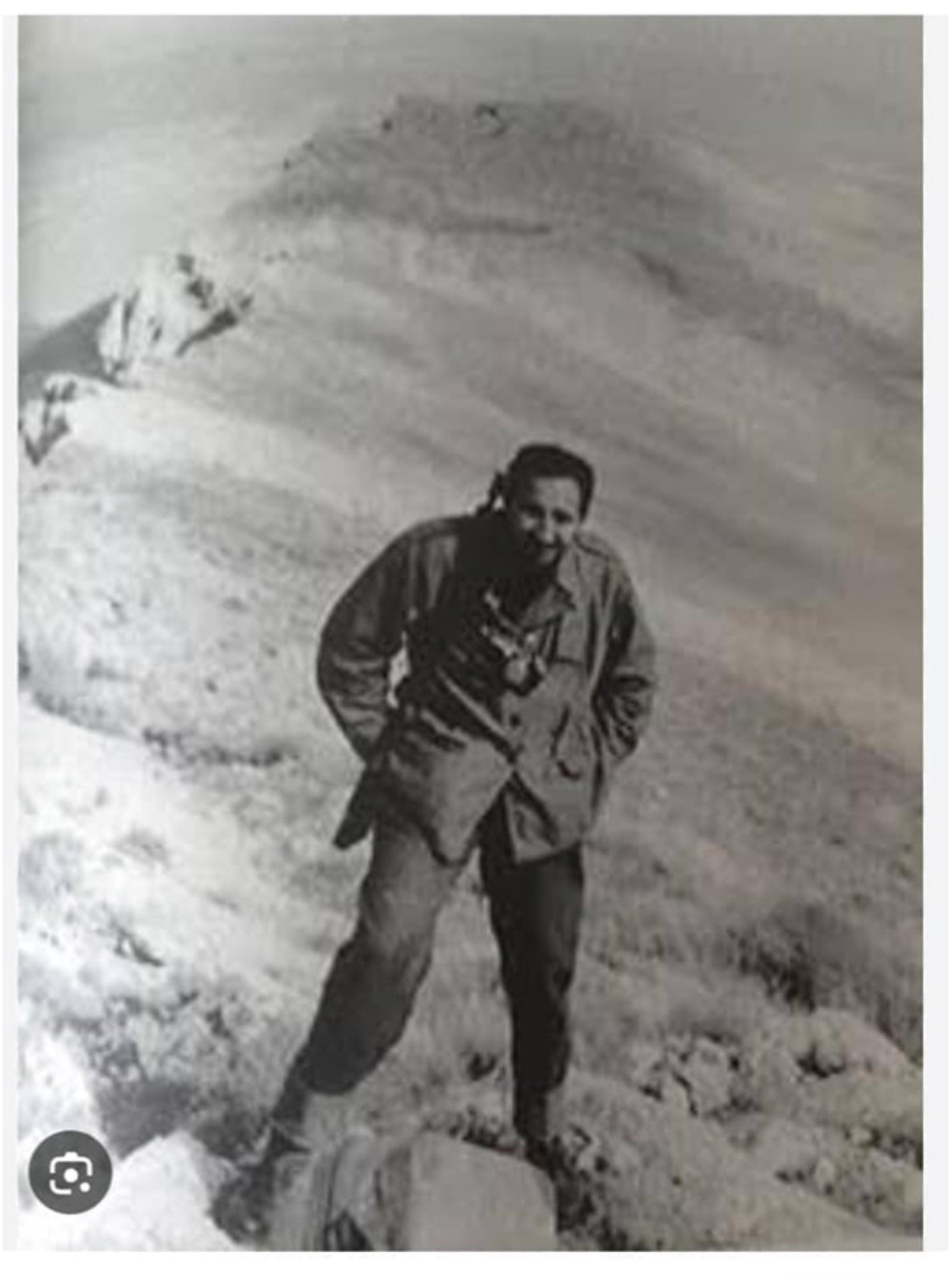 (Ara Güler on Mount Ararat)
GÜLER'S MAGAZINE JOURNALISM IN THE 50S
When the Second World War ended, many changes took place in the 'free world.' The magazine press underwent radical innovations. Magazines printed on glossy paper, such as Time and Life, became part of daily life. The equivalent of this publishing style in Turkey was 'Hayat Mecmuası' (Life Magazine). Hayat was introduced to our publishing world by Şevket Rado.
In this environment, Ara Güler achieved international fame with the photographs he published. He worked as a photojournalist in Turkey for foreign magazines such as Paris Match, Stern, and Life. Güler had begun working as a photojournalist at the Yeni İstanbul newspaper in the early 1950s.
Güler achieved international fame by introducing three significant locations: the Commagene royal statues on Mount Nemrut in Adıyaman, the Durupınar site on Mount Ararat, and the ancient city of Aphrodisias. The latter was a true discovery.
Starting with the latter, the story is well-known. Photojournalist Ara Güler, who was covering the opening of a dam by Prime Minister Menderes, lost his way with his friends as darkness fell on the return journey. In the distance, they saw a village illuminated by faint lights. This was Geyre Village. The village was, in fact, built directly over the ancient city of Aphrodisias.
At that time, while scientists were aware of the city's existence, its location was unknown both in Turkey and the rest of the world. Güler introduced the ancient city he found to the world. His discovery made a great impact. The second was the Commagene kings.
The Mount Ararat and Noah's Ark expeditions, which are the subject of our article, took place in two phases. The first phase of the story involves a climb up the mountain with an American missionary.
In 1958, Ara Güler was working for the newspaper Yeni İstanbul. He accompanied American missionary John Libi, who wanted to find Noah's Ark, on an expedition. First Lieutenant Şahap Atalay from the Turkish Army served as a guide for the group. They set up camp at 4,600 meters and climbed to the summit. The photographs Güler took during this expedition received great attention.
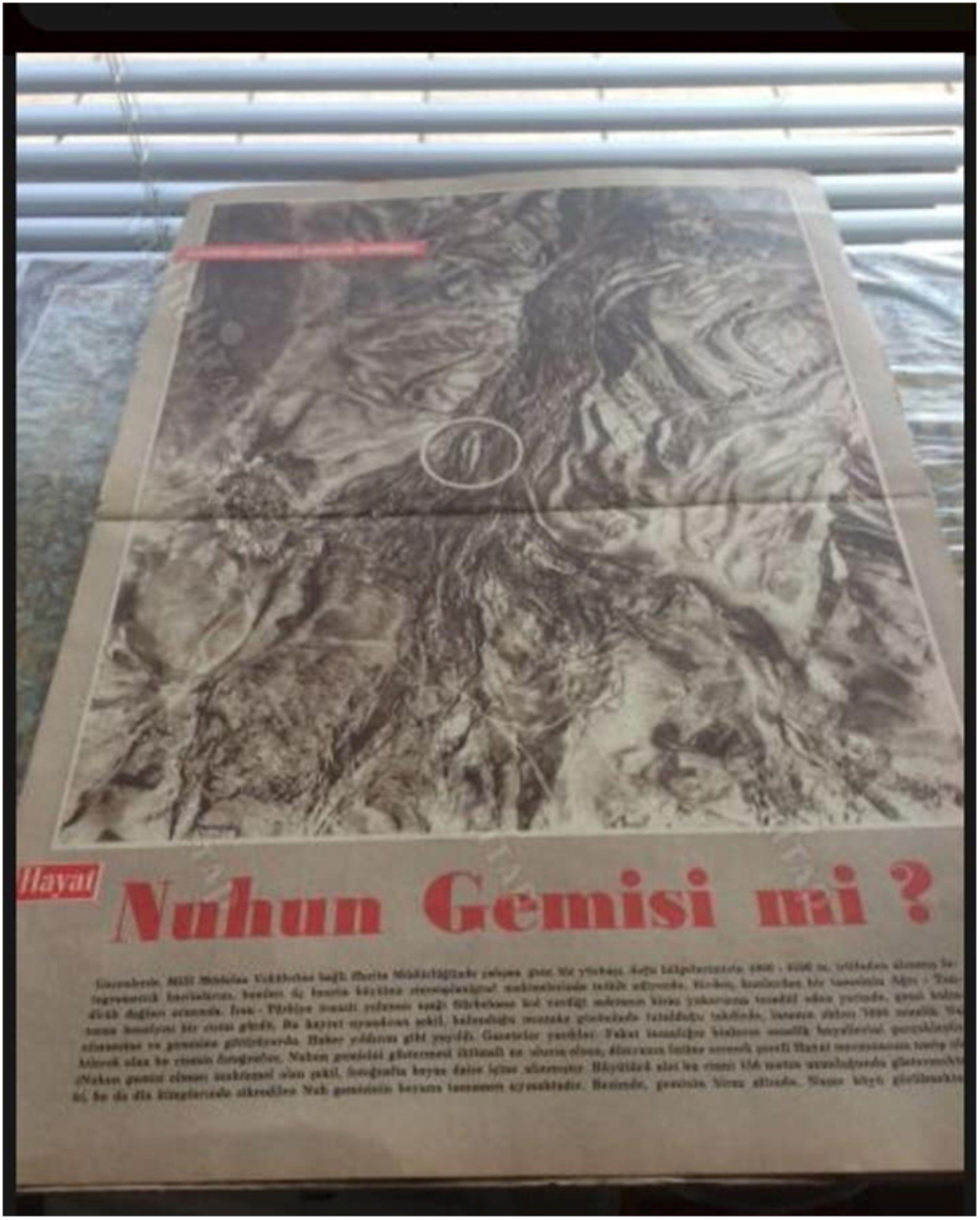
(Hayat Magazine Noah's Ark report)
ARA GÜLER'S MOUNT ARARAT AND NOAH'S ARK PHOTOGRAPHS
Ara Güler's truly sensational photographs date back to 1959. In September of that year, Major İlhan Durupınar, who was serving at the Ministry of National Defense Mapping Directorate, noticed a 'formation that strongly resembles Noah's Ark' at the foothills of Mount Ararat in photographs he had taken from an altitude of 4,500 meters. He sent the pictures to Hayat Magazine with the note: 'This is a gift from the Turkish Army to Hayat Magazine. We believe this is Noah's Ark.'
Following these reports, Hayat Magazine owner Şevket Rado becomes excited. Together with Hikmet Feridun, they decide to produce a story on Mount Ararat and Noah's Ark.
In the photographs sent by Major Durupınar, an atypical geological structure formed as a result of the petrification of wood in a hollow area at the foothills of Mount Ararat can be observed.
Upon this, Ara Güler goes to General Ragıp Gümüşpala. At that time, General Ragıp was the commander of the Third Army, headquartered in Erzurum.
Having secured permission from Gümüşpala and been allocated an artillery observation plane, Güler takes the photos from a light, glider-like aircraft. The pilot is a young man from Rize who is doing his military service in Erzurum. After some quite thrilling dives, Ara Güler returns with sensational photographs and publishes them. The pictures spark excitement both in the magazine world and among devout Christians. They are considered proof of the accuracy of the Holy Scripture.
Ara Güler's photos are published by Magnum Photos. After the news spreads in the West, many church members come to visit Ara Güler. They express their gratitude for proving the existence of Noah's Ark, stating that he has performed a great service to humanity. According to believers, the discovery proves the accuracy of the Bible.
A BRIEF BIOGRAPHY OF ARA GÜLER
Ara Güler was named one of the seven best photographers in the world by Photography Annual. Born in Istanbul in 1928, Güler had a four-year marriage with Perihan Hanım in 1975. He made his second marriage to Suna Hanım, the granddaughter of the famous Azerbaijani politician Ahmet Ağaoğlu (daughter of Sezer Taşkıran). The couple, who married in 1984, lived together for more than twenty years. Suna Hanım passed away in 2010.
I cannot pass without mentioning an interesting event in Güler's biography. Ara Güler, who became famous for his expeditions, Istanbul photographs, and portraits, went to the Soviet Union to take pictures of the Armenian composer Aram Khachaturian; however, the two Armenians could not communicate in Armenian; their Armenian dialects were different—Eastern and Western Armenian. Khachaturian did not know English or French, and they could not communicate in Armenian either. They could not find a common language to speak.
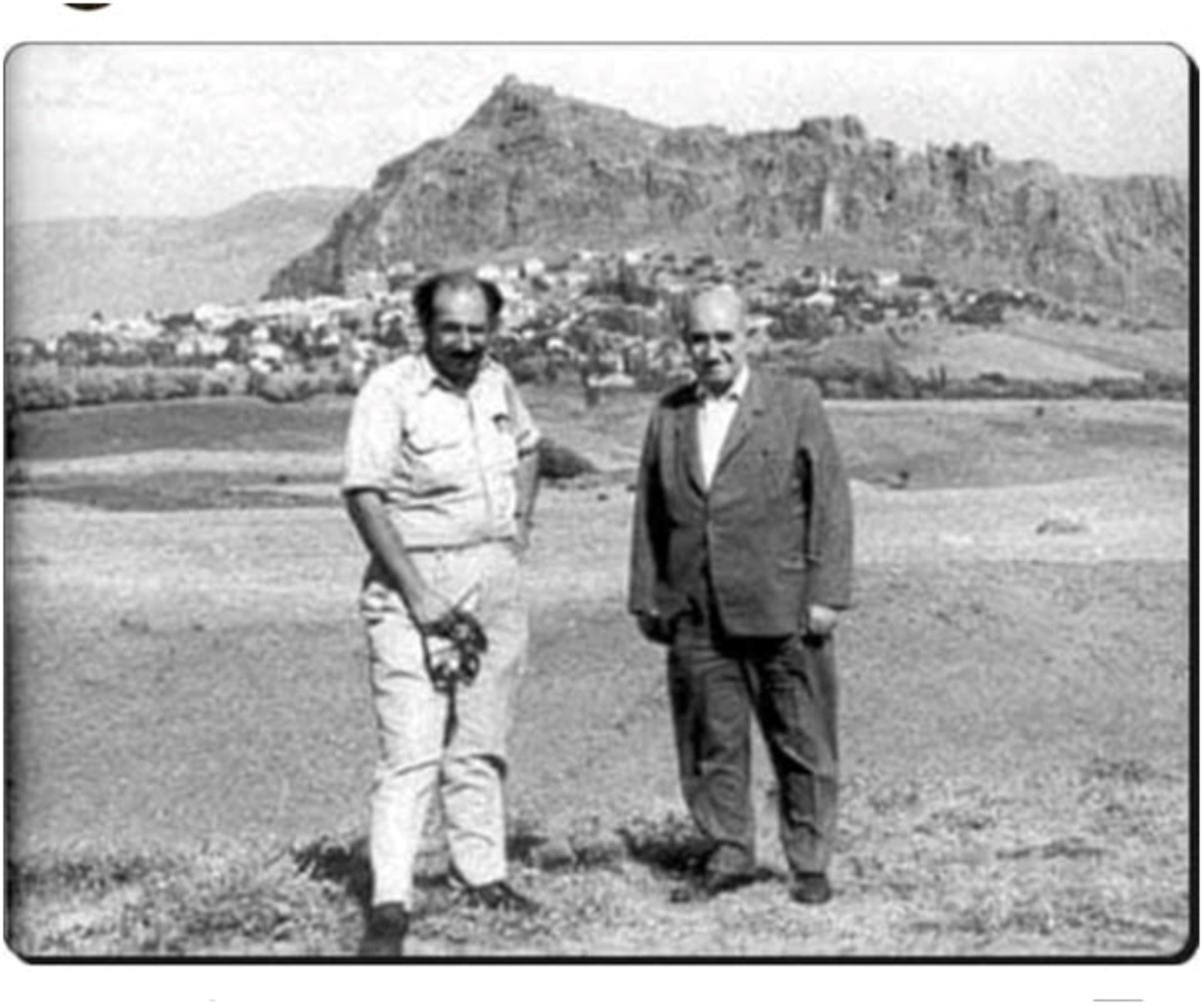
(Ara Güler with his father, Pharmacist Dacat Bey, in Şebinkarahisar)
THOSE BROUGHT FROM HIS VILLAGE UPON THE DEATH OF DACAT DERDERYAN
Ara Güler's father, Pharmacist Dacat Bey, was from the village of Yaycılar in Şebinkarahisar. When he passed away, a group of his fellow villagers from the place where he was born and raised arrived with a very meaningful gesture. When Dacat was six years old, he had been sent to Istanbul to study at an Armenian school. His mother had prepared a bag of dried mulberries and black cherries as provisions for the road. Dacat had eaten these throughout the journey to Istanbul and never forgot it. He had mentioned this when they visited their village before his death. When the news of Dacat's passing reached the village, a group of villagers came to Istanbul with dried fruits and nuts. Ara Güler buried his father by placing the dried fruits brought from his village into his coffin.
YAŞAR KEMAL’S LEGEND OF MOUNT ARARAT
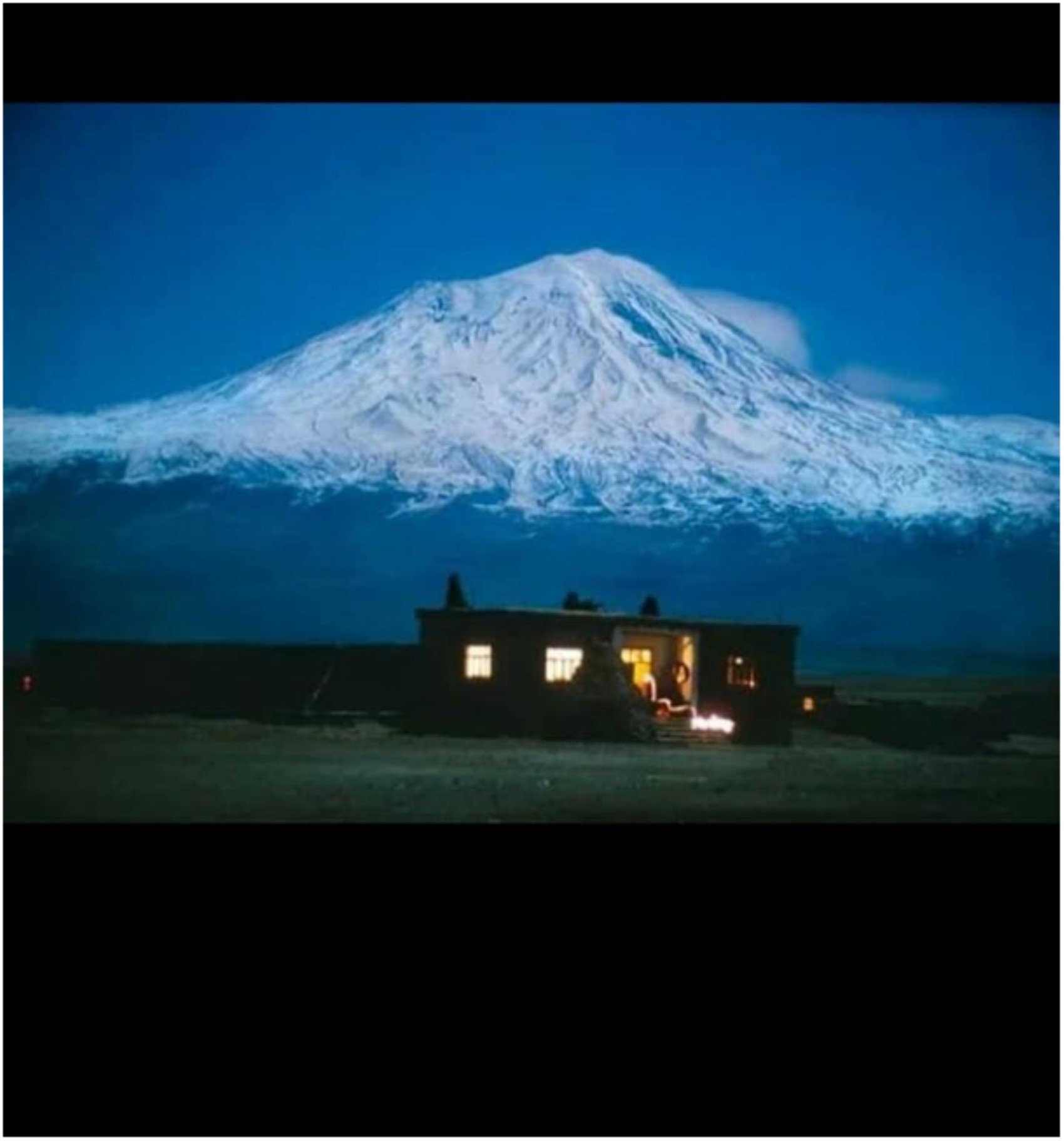
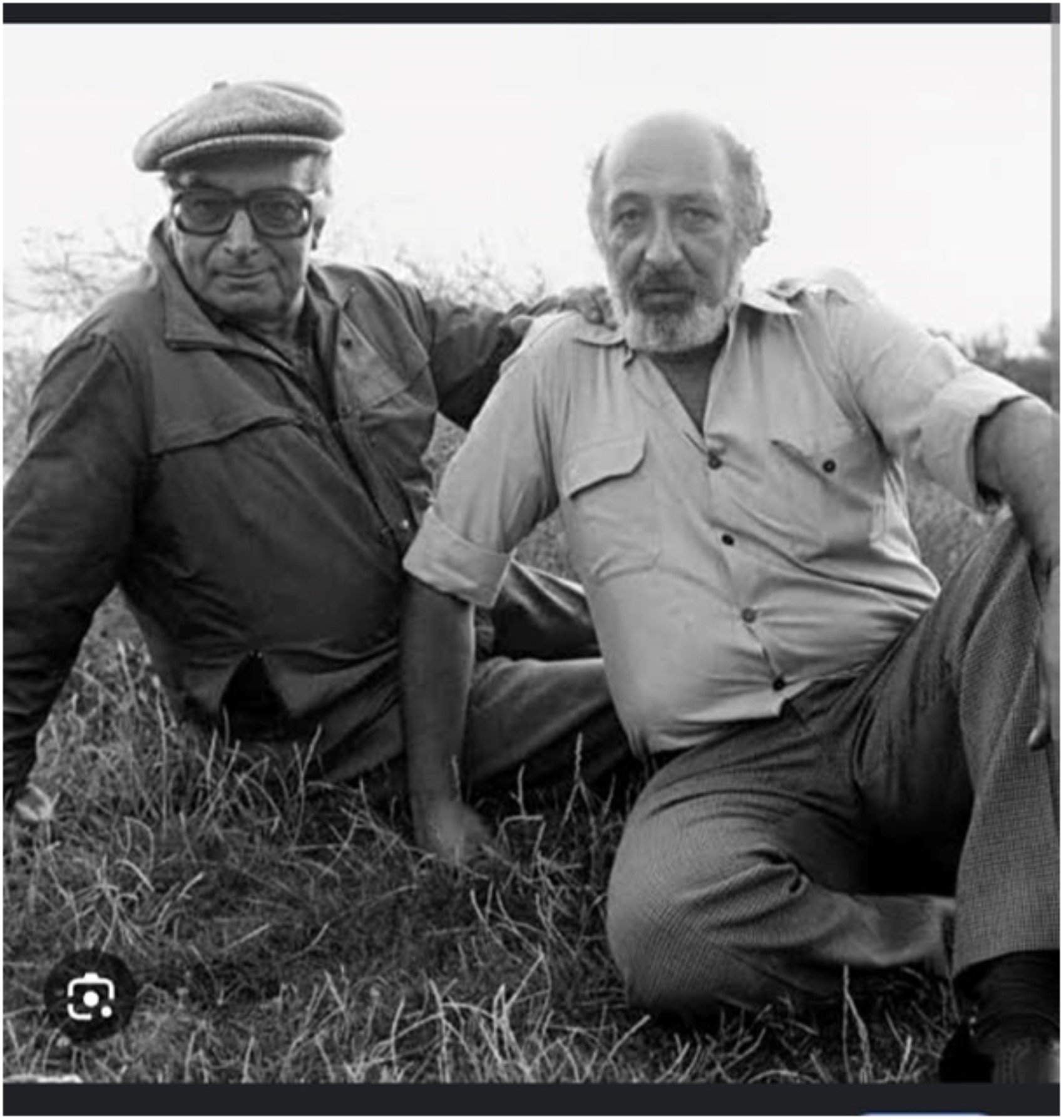
Ara Güler was the first friend Yaşar Kemal made in Istanbul. In the 1950s, Ara Güler was working as a photojournalist for the newspaper Yeni İstanbul, while Yaşar Kemal was a reporter for the Cumhuriyet newspaper. He was also publishing travelogues, which he later compiled into a book titled 'Bu Diyar Baştanbaşa' (This Land From End to End). One of the pieces in the book focuses on Mount Ararat. The writing takes place mostly around Lake Küp, a volcanic crater lake. Our famous author wrote 'The Legend of Mount Ararat' in the 70s. The novel was also adapted into a film. In the film, it is possible to see the theme of the mountain's wrath, which has persisted since ancient Armenian culture. Fatma Girik and Hakan Balamir starred in the film.
(From the book 'A Look at Yaşar Kemal for a Moment')
ARA GÜLER’S VISIT TO YAŞAR KEMAL
What encouraged me to write this piece is the wonderful meeting between Ara Güler and Yaşar Kemal in Vaniköy towards the end of their lives. After Tilda's passing, Yaşar Kemal married Ayşe Baban and lived in Vaniköy.
Recordings of the delightful conversation, sweetened by the playful banter between two friends in a house with a magnificent view reached by a decauville railway, are available online. The pair, who met in Istanbul in their thirties, remained close throughout their lives and worked together from time to time. They published joint books and albums. Beyond that, both were involved in Noah's Ark expeditions in the 50s. For these reasons, I wanted to write about Mount Ararat and the myth of Noah's Ark, which captivated these two figures of our art and literary life.
ARA GÜLER'S ART
Ara Güler was a well-known photojournalist in the 50s. His international recognition grew even further through his photojournalism on Aphrodisias, Mount Nemrut, and Noah's Ark.
He became one of the most successful photographers on a global scale. Although he did not view photography as art, he interpreted it as "recording the moment for history."
Throughout his artistic career, he took highly successful photographs of many celebrities such as Churchill, Sophia Loren, Dali, and Khachaturian. Portraits of many important figures in Turkish politics and literature are also his work, such as İnönü, Ecevit, Yaşar Kemal, Orhan Kemal, and Attila İlhan.
Ara Güler's photographs of Mount Ararat and Noah's Ark, which are the subject of this article, are also among the finest examples of his 'capturing the moment' journalism.
Would you like to get notifications about new developments and save news?
- NotificationsNew developments and breaking news
- SaveNews is stored in the app
Most Read

Statement from Nihat Zeybekci on the fund investigation

New 75,000-seat stadium plan for Fenerbahçe
Interpol and MIT tracking yields results in Izmir

ID convenience for KPSS candidates

2027 Budget: Taxes for the people, tax exemptions for capital

The reality of Akkuyu and the longing for national nuclear power

To whom and how was the Petition of Intellectuals submitted? Who accepted the petition?

The Çanakkale robbery -1- How was the Troy treasure smuggled out?

Artificial intelligence and the new imperialism

Ministry investigation into unauthorized promotional messages