


What was the reason for the Asian Mode of Production (AMP) debate?



HOW DID SENCER DİVİTÇİOĞLU’S AMP THESIS EMERGE?
The AMP first came to the agenda in European academic circles in the 1960s, particularly in France. This approach was an attempt to bring a new interpretation to Marxism. The goal was to conceptualize the functioning of Eastern societies within Marxist terminology.
In Turkey, Selahattin Hilav was the first to publish an article on the subject. He was followed by the publications of Sencer Divitçioğlu. İdris Küçükömer entered the issue from his own perspective. Kemal Tahir, a writer who had long been critical of the Republic, also played a central role around the AMP with his concept of the “Benevolent State” (Kerim Devlet). I would like to point out that these figures were translator-philosophers and economic theory-economic history academics.
Divitçioğlu’s AMP thesis contradicted the thesis that societies would reach socialism by passing through the evolutionary line of primitive communal, slave, feudal, and bourgeois societies. Sencer Divitçioğlu’s AMP thesis received reactions not only from the National Democratic Revolution (MDD) supporters but also from academia.
The main issue was that Sencer Divitçioğlu’s Ottoman society and AMP thesis contrasted with the revolutionary strategy of the MDD (National Democratic Revolution).
Publications regarding the AMP followed a certain course of development. In his short article titled What is the AMP? (1966), Selahattin Hilav interpreted his approach as a return to Marx. This was followed by Sencer Divitçioğlu’s treatise titled The Asian Mode of Production and Underdeveloped Countries.
Sencer Divitçioğlu developed his work into a book. The title of his book was The Asian Mode of Production and Ottoman Society (1967). The book contained a challenge to leftist intellectuals who viewed Ottoman society as a kind of military feudalism.
The AMP thesis spoke of the existence of a bond between Ottoman society and the state (political society) that did not exist in feudalism. In Western academic circles, this was called Oriental Despotism. Divitçioğlu used the concept of the Tyrannical State (Ceberrut Devlet) instead.
This work would also be Sencer Hoca’s professorial thesis that would be rejected. In his book, Divitçioğlu examined the subject through land ownership, production relations, and the distinctions between the state and the people. The book he submitted to the Faculty of Economics as a professorial thesis was rejected on the grounds that “Ottoman society cannot be examined with Marxist historical science.”
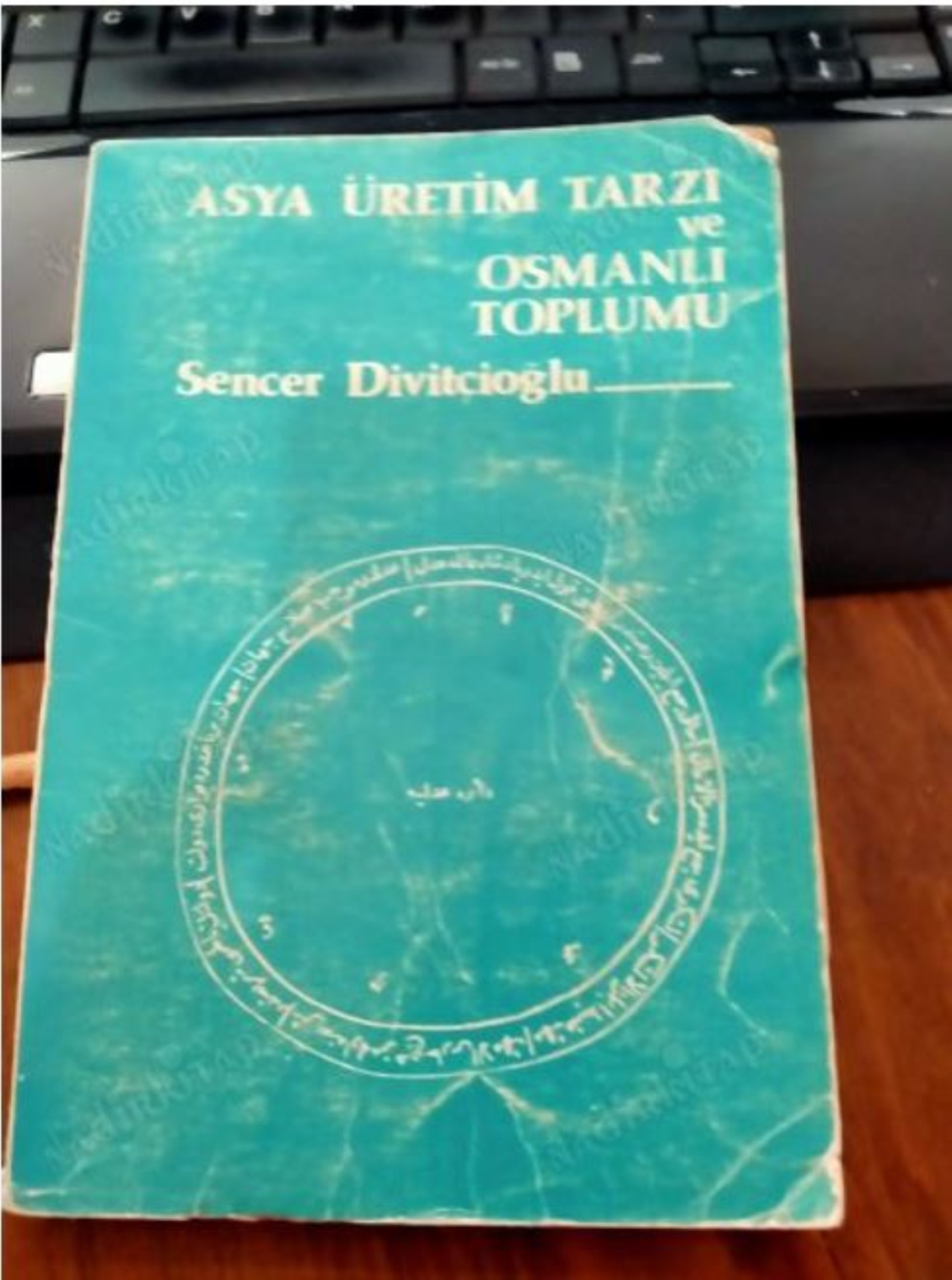
(The first edition of Sencer Divitçioğlu’s book, The Asian Mode of Production)
An important reference regarding the AMP was Attila Tokatlı’s translation of Maurice Godelier’s The Concept of the Asian Mode of Production and the Evolution of Societies According to Marxist Schemes (1974).
I would like to state that I utilized two new sources while preparing this article: Halil Akkurt’s book titled “Debates on Ottoman Social Structure in the Turkish Left (1960-1980)” and Fatih Damlıbağ’s article titled “The Effects of AMP Debates on the Turkish Intellectual World in the 1960s.”
FROM MARX’S AMP WRITINGS TO LENIN AND STALIN
The concept of the Asian mode of production first appeared in an article Marx published in the New York Tribune (1853), and he later had correspondence with Engels in this context. Before Marx, Adam Smith and John Stuart Mill had also spoken of an economic order in Eastern societies where there was no private property in land.
Although Lenin included the concept in his early writings, he was of the opinion that the Asian-style stagnation in Russia had been liquidated after the 1905 Revolution. After the 1917 Bolshevik Revolution, he adopted an approach where the Western European change/transformation model was also valid for Russia. He did not use the AMP in his analyses.
The liquidation of Trotsky and the Left Opposition meant the consolidation of Stalin’s hegemony in every field. This included the theory of socialism. After the 1931 Communist Party Congress, Stalin’s treatise on historical materialism began to function as a holy book. Soviet ideologues never addressed the AMP concept. They even evaluated it as a deviation outside of official ideology.
WHAT WERE GÜLTEN KAZGAN AND MIKHAIL BAKUNIN SAYING?
The Asian Mode of Production is an economic order where collective exploitation exists. On this subject, Gülten Kazgan established a correlation between the AMP state and the socialist state. Professor Gülten said: In Eastern societies where the bourgeoisie does not exist/has not developed/and socio-economic transformation follows a different evolutionary line, a socialist revolution can result in a despotic class seizing power. Despotic bureaucratic power can sit on top of a socialist collective property regime.
In his book titled “Statism and Anarchy” published in 1873, Bakunin argued that state socialism would eventually turn into a despotic rule over the entire society—including the working class—by a privileged class.
With these words, Bakunin had foreseen that having all means of production under state ownership in a socialist order would result in the birth of an AMP-like hegemony.
THE POLITICAL IMPORTANCE OF THE AMP CONCEPT FOR THE LEFT
The AMP came to the agenda and was debated because it was important in terms of socialist revolution strategy. Did we have a feudal past? Or had we reached the 20th century by following a different evolutionary line? That was the issue.
During these dates, topics such as underdevelopment, feudalism, being kept backward, and the Turkish capitalist class being a comprador bourgeois class were being discussed. The dominant group within the Turkish left were the MDD supporters (Yön and Devrim), who viewed parliamentarism as “fancy democracy.” This faction did not like the Workers' Party of Turkey (TİP) for two reasons: bourgeois legalism and favoritism toward Soviet Russia. Similar reservations applied to the PDM (Extra-parliamentary opposition).
A debate began between Doğan Avcıoğlu and Sencer Divitçioğlu in the pages of Yön. The debate would not last long. The MDD must have found it correct not to continue the debate for tactical reasons.
Avcıoğlu had criticized Professor Sencer in two respects: external dynamics and the issue of the dissolution of the AMP.
In his writing, Divitçioğlu emphasized that in societies with an AMP past (which meant Turkey), the goal of a classless society could be reached with a system that did not rely on the working class, unlike the socialist system.
KEMAL TAHİR’S BENEVOLENT STATE
Kemal Tahir thought that the social order he addressed in his novel State Mother (Devlet Ana), which won the TDK novel award, was the AMP. Tahir defined this order as the Benevolent State (Kerim Devlet). The novel covered developments during the founding period of the Ottoman Empire. According to Kemal Tahir, the AMP, in which Professor Sencer addressed the transfer of agricultural surplus to the center with schemes and mathematical formulas, was the Benevolent State he addressed in the novel.
We can speak of the existence of a “Tahiriler Fan Club” around the novelist Kemal Tahir. Within this group, in addition to intellectuals such as Sabahattin Selek, Tahir Alangu, İsmet Bozdağ, Sencer Divitçioğlu, Kevork Acemoğlu, and Orhan Apaydın, there were also directors like Metin Erksan and Halit Refiğ, and sympathizers like Bülent Ecevit and İsmail Cem.
Kemal Tahir’s expectation from the “Tahiriler” was for them to produce works suitable for his Benevolent State abstraction. When he did not find the products satisfactory, he would get angry.
Assuming that the Benevolent State was a synthesis between the state and the people, he thought that exploitation had not taken root in Anatolia and identified it with the AMP. However, Professor Sencer was not of that opinion. The AMP showed that we were different, but not that we were a classless society. The AMP was a class-based society unique to the East.
Kemal Tahir must not have found Divitçioğlu’s conceptual model satisfactory, as he raided Professor Sencer’s house in Kandilli and scolded him, asking, “Where is the Benevolent State in this book?” After that, they rarely met.
İDRİS KÜÇÜKÖMER’S ASIAN-STYLE SOCIETY
An important name connected to this problematic is İdris Küçükömer. Professor İdris’s earliest/most shocking book regarding Turkey’s social structure is “The Alienation of the Order is Westernization.” Here, the professor was reversing Turkey’s class dynamics. In his book, Küçükömer established a model of civil and political society. This book was quite shocking for me as well. Let me immediately state that the segments Küçükömer defined as the dynamic/leftist forces of civil society are the counter-revolutionary forces of today.
Professor İdris, by making a correction in Divitçioğlu’s terminology, adopted the concept of the Asian-style Mode of Production and divided it into two: Nomadic and hydraulic. Initially, the Ottoman Empire was an Asian-style nomadic society.
According to Professor İdris, nomadic (nomadic-pastoralist) Turkish tribes and the settled people and small producers remaining from Byzantium formed the basic characteristic of the Asian-style society within a relationship of mutual interdependence.
Here, I would like to point out that Kılıçarslan and Osman Bey were nomadic leaders who avoided settled life. If we want to conceptualize this phenomenon with Ibn Khaldun—both of them wanted to continue the asabiyyah (spirit) of the nomad. I would also like to remind you that even in the 16th century, nomadic tribes made up a significant portion of the population in Anatolia.
Küçükömer said: “As long as the nomadic (nomadic-pastoralist) maintains its superiority in the war against the settled, it avoids being sedentary.” The small production mode articulates with the nomadic production mode. And the order reproduces its existence. Küçükömer saw the dynamic of the Asian-style society—essentially—this way. Up to this point, I am of the same opinion as Professor İdris.
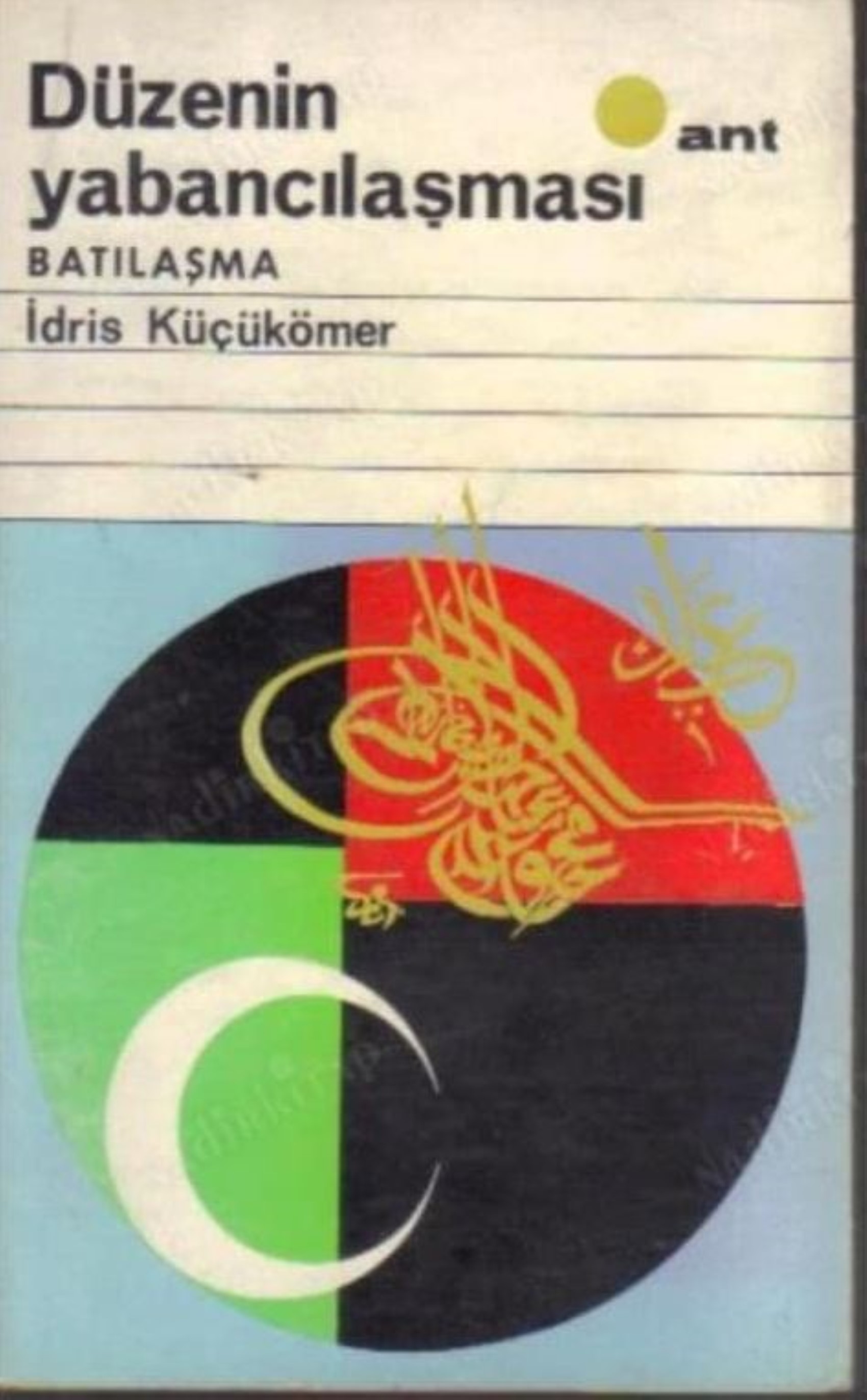
(The first edition of İdris Küçükömer’s book, The Alienation of the Order)
HOW DID THE OTTOMAN AMP FUNCTION?
A superficial look might lead us to the judgment of feudalism regarding the Ottoman social order. However, an important difference from European feudalism is that the Ottoman timar was not a form of private property. The property belongs to the state. The land is, in principle, state-owned (miri) land. The reaya (subjects) are permanent tenants. They have the right to use the land. A kind of usufruct right.
According to the Law Code of Sultan Suleiman, “the son of a subject is a subject.” The subject’s right to use the land passes to his son; however, he cannot sell it. He cannot gift it. He cannot transfer it to someone else.
The timariot sipahi (cavalryman), on the other hand, is a public official. He is responsible for the taxation in kind of the state-owned land. He sustains his life by converting the surplus he obtains into cash. His obligation to the state is to participate in campaigns with a number of cavalrymen-sipahis proportional to the income of the timar in case of war. Just as a timar can be given, it can also be taken away. The property belongs to the Sultan.
The Ottoman peasant is not a serf or a slave. He is a free peasant. He is outside the regime of political execution and confiscation to which the Kapıkulu class is subject. The sipahi has no judicial authority other than tax collection.
The peasant sees the taxation of agricultural production as legitimate for the “eternal state” (devlet-i ebed müddet) and the “order of the world” (nizam-ı alem). Being taxed is a right. It is in accordance with Sharia. Commercial life is also essential to increase the abundance of the realm. The Ottoman Empire legitimizes its agricultural, commercial, and craft life on this basis.
It is true: The Ottoman Empire was born from a nomadic tribe where class formation was not yet sharp. But later it became a class state. The order established was different from European feudalism; however, the reproduction of the order was based on exploitation.
Especially after the principalities were completely liquidated, the order the Ottomans established in Anatolia has nothing to do with the Benevolent State. In fact, after the “Great Flight” (Celali rebellions) when the order fell into financial crisis, I think it is more accurate to call it a Tyrannical State for the Ottoman Empire.
HOW DID THE AMP DEBATE END?
Although the AMP debate appears to be a debate about the Ottoman social order, it is actually a debate about socialist revolution. It is possible to state the issue briefly as follows:
At the end of the 1960s, there were different centers of thought regarding Turkey’s structural nature.
According to one of them, Turkey had realized a democratic revolution under the leadership of the petty-bourgeois class without experiencing the age of bourgeois revolutions seen in the West. This also corresponded to the establishment of the Kemalist national state.
Turkey had won its independence at Lausanne, but it had fallen into the web of imperialism again after the Second World War. The comprador bourgeoisie represented imperialism. For this reason, it was necessary to first complete the incomplete revolution (which the Kemalists could not complete) with the National Democratic Revolution. The socialist revolution would follow it.
The Asian Mode of Production polemic, on the other hand, was brought by leftist thinkers from the West. People like Hilav, Tokatlı, and Divitçioğlu.
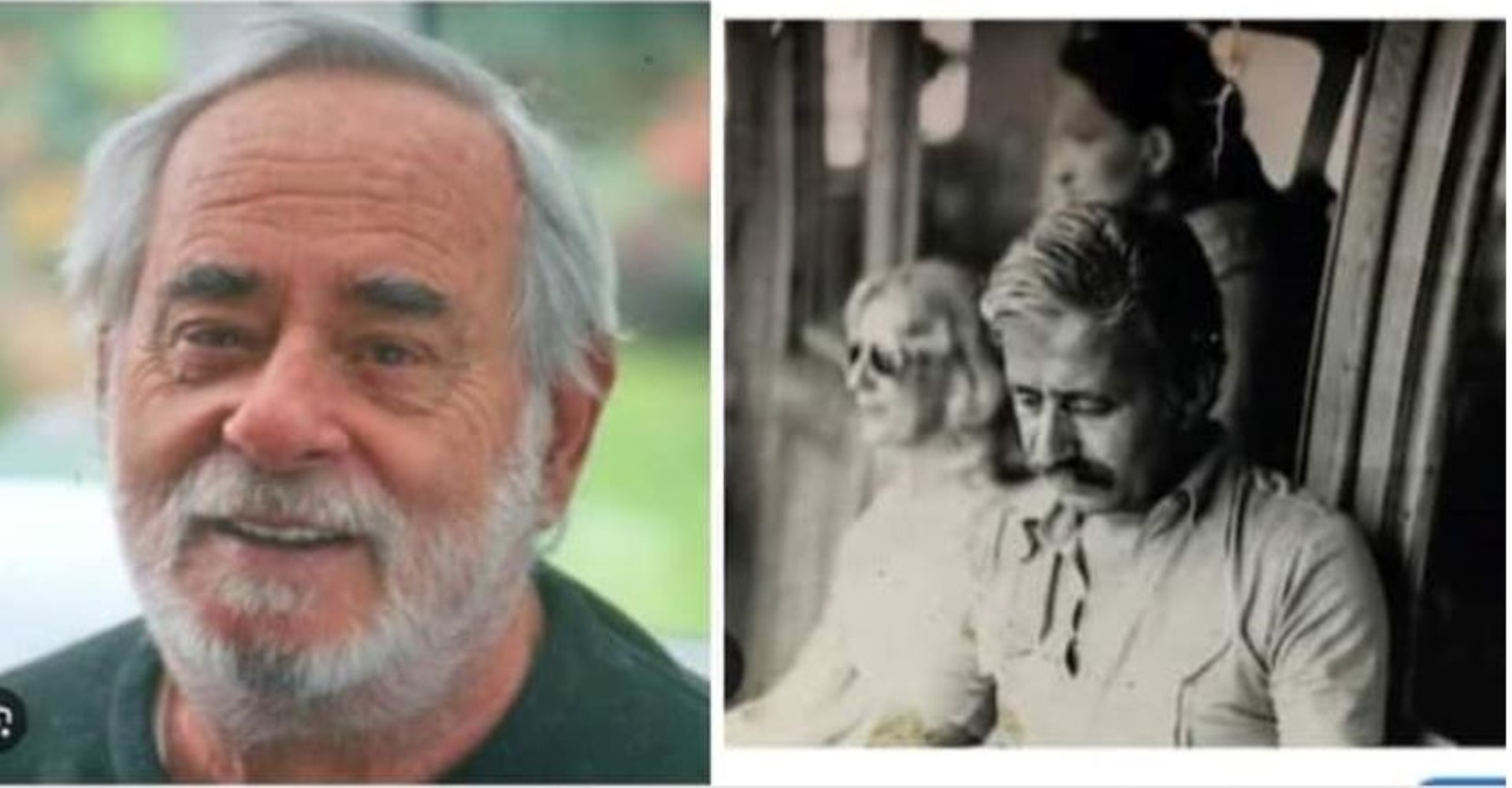
(Sencer Divitçioğlu and İdris Küçükömer)
Divitçioğlu’s AMP treatise and book actually coincided with a state where exploitation existed. The Benevolent State that Kemal Tahir wanted to find was not in the AMP.
İdris Küçükömer, on the other hand, analyzed class dynamics in another way. I fully agree with Professor İdris’s nomadic society/settled articulation.
My objection is that he reversed Turkey’s progressive class dynamics (civil society debate). I have an objection to this. Here, Küçükömer moves away from Divitçioğlu and approaches Kemal Tahir.
Those who adopted the National Democratic Revolution (MDD) thesis generally viewed the thoughts of the AMP circle as fantasy. Because the thesis of “vigorous forces” would remain in the air.
In the end, the AMP thought was excommunicated in academia on the grounds that it was Marxist. It was also excluded by other elements of the left (PDM, MDD, TİP).
Sencer Divitçioğlu, who analyzed the concept with sincere scientific justifications, was removed from the university by martial law during the March 12 interim regime.
The MDD supporters who were directly opposed to the thought (we can read this as the March 9 group) were arrested by the interim regime governments. They were tried.
After the interim regime, Doğan Avcıoğlu focused on the work of writing the History of National Liberation and the History of the Turks. Divitçioğlu, on the other hand, was promoted to professor by a court decision. He expanded his academic field of interest to Central Asian history and the Göktürks.
Professor İdris Küçükömer’s civil society argument was shelved after being used quite a bit by the Second Republicans and Islamists to destroy Kemalism. It was understood that the professor’s civil society dynamics were reactionary forces where the counter-revolution was brewed with malice.
Would you like to get notifications about new developments and save news?
- NotificationsNew developments and breaking news
- SaveNews is stored in the app
Most Read
Statement from Nihat Zeybekci on the fund investigation

New 75,000-seat stadium plan for Fenerbahçe
Interpol and MIT tracking yields results in Izmir

ID convenience for KPSS candidates

2027 Budget: Taxes for the people, tax exemptions for capital

The Çanakkale robbery -1- How was the Troy treasure smuggled out?

To whom and how was the Petition of Intellectuals submitted? Who accepted the petition?

The reality of Akkuyu and the longing for national nuclear power

Artificial intelligence and the new imperialism

Ministry investigation into unauthorized promotional messages