


Atatürk’s health status and his doctors



THE DOCTORS OF MAJOR MUSTAFA KEMAL
The earliest information regarding the Gazi’s health dates back to the Tripolitanian War period (1912-1913). First, I would like to make a few historical notes. The Italian annexation of Derna, Benghazi, and Tripoli was a “casus belli” for the Ottoman Empire. However, it did not seem possible to dispatch troops to the region. There was no navy available to cross the Mediterranean.
Upon this, young officers whose names began to be heard during the Young Turk revolution went to the region through various means. Their goal was to organize a resistance. The Ottoman government had given its unofficial approval to these attempts. Let us keep this fact in mind. For example, Fethi Bey was a military attaché in Paris. He reached the region via Tunisia.
Mustafa Kemal, on the other hand, tried to reach the region from Egypt. Egypt was still Ottoman territory, but it had been transferred to British administration. The Khedive of Egypt was under the tutelage of the British Empire. The expression used by my late professor Tarık Zafer Tunaya for this form of relationship was “political sovereignty”—meaning sovereign in politics, but not in reality. Britain was turning back uniformed Ottomans from Alexandria.
Mustafa Kemal went to Alexandria with forged documents from the port of Piraeus in Greece, which was by then an independent state. There, he caught a feverish illness. He was able to cross the desert with significant delay and reached Libya. In my opinion, the cause of this feverish illness was a microorganism that the Gazi’s body was not familiar with.
With him were Yakup Cemil, Sapancalı Hakkı, and Ömer Naci. I would like to remind you of these individuals’ connections to the Teşkilat-ı Mahsusa (Special Organization).
RECURRING EYE INFECTIONS
Atatürk contracted a serious eye infection in Tripoli. His first close doctors date back to those days. These names are Mim Kemal Öke, Rasim Ferit Talay, and İbrahim Tali. Let me state my opinion regarding Atatürk’s eye infection. The great Atatürk had a slight strabismus in his left eye. Some attribute this to a particle that splashed into his eye on the battlefield. I am not of that opinion. Of course, such incidents also occurred. But that is not the reason for the strabismus. If you look carefully at his pictures from the Manastır Military High School, you will understand what I mean. Look especially at the picture where he is sitting next to Kazım Özalp.
DR. RASİM FERİT TALAY AND DR. MİM KEMAL ÖKE
Among his close doctors, Mim Kemal Öke and İbrahim Tali were military doctors. Dr. Rasim Ferit Bey was a civilian doctor. After graduating from the Medical School (Tıbbiye), he specialized in surgery in Paris. Dr. Rasim Ferit had been sent to Libya on behalf of the Red Crescent (Hilal-i Ahmer). I think their first encounter was there.
In a picture of a horse race held in Ankara during the early republican period, Zehra Aylin is next to the Gazi. Zehra is a martyr’s child whom he took under his protection in Amasya. The person seen in the background of the picture is Dr. Rasim Ferit Talay.
When the Tripolitanian War ended in favor of the Italians, Dr. Rasim Ferit Bey recommended an eye clinic in Vienna to Major Mustafa Kemal. Atatürk went to Vienna via Trieste and received treatment there for a while. If this is the case, this must have been the Gazi’s first trip to Vienna.
We know Mim Kemal Öke as a surgeon and radiologist. He performed most of the invasive procedures done on the Ata.
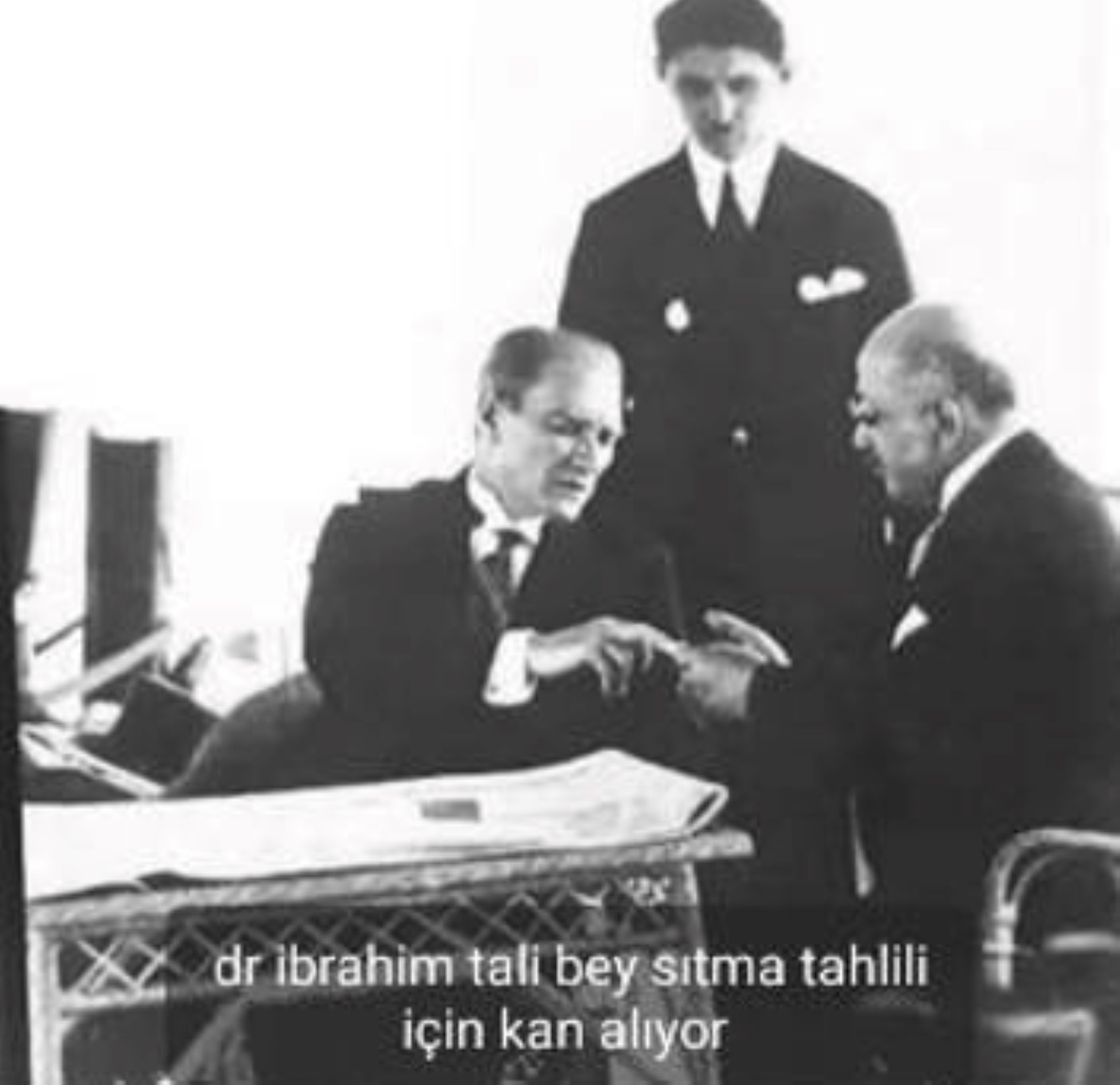
HIS RELATIONSHIP WITH DR. İBRAHİM TALİ BEY IS VERY OLD
His relationship with Dr. İbrahim Tali Bey is even older. Dr. Tali Bey was a graduate of the Mekteb-i Sultani (Galatasaray High School). He studied in the military branch of the Medical School. He is one of the figures closest to Atatürk. However, he was not involved in active politics. He mostly preferred to take on foreign assignments. In this regard, I suggest you take a look at my article titled “The Diary of Dr. İbrahim Tali Bey.”
Dr. İbrahim Tali Bey was the head of the Health Board of the Gazi’s Ninth Army Inspectorate. As of that date, he was a colonel (miralay). Refik Saydam, who was on the same board, was a major.
If you wish, let me introduce Tali Bey to you as follows: He is the one who took a blood sample from Atatürk’s finger when he went to Istanbul for the first time after the republic (he had come by train as far as İzmit). For a malaria test. There is a picture of this event that took place on the Ertuğrul yacht. July 1, 1927.
While on the subject, let us note that like many figures of his generation, Atatürk contracted malaria multiple times and received quinine treatment.
DR. MAJOR REFİK BEY SUBMITS A REPORT
We know Dr. Refik Saydam as Atatürk’s Minister of Health. I would like to make a note regarding the patient-physician relationship with Dr. Refik Bey. Mustafa Kemal Pasha had been elected as the Erzurum deputy to the Istanbul Chamber of Deputies. This was the fourth and final term of the Ottoman parliament. The Gazi was the chairman of the Representative Committee (Heyet-i Temsiliye) at that time. Since Istanbul was under occupation, it was not a safe place. He was advocating for the Parliament to convene elsewhere. Dr. Refik gave Atatürk a “urinary tract infection” report so that he could be “granted leave” by the Parliament. As is known, a while later, the Parliament was raided by the allies. The deputies were taken into exile in Malta. Atatürk was proven right.
UPPER RESPIRATORY TRACT INFECTION IN GALLIPOLI
In the photographs from the First World War, Gallipoli, and the Eastern Front, we see Mustafa Kemal Pasha with a tense facial expression. The Gazi is quite thin physically in these pictures. I can point to the harsh war conditions and irregular nutrition as the reason for this.
During the Gallipoli Campaign, he suffered from a lung infection and, upon insistence, agreed to be hospitalized.
HE CONTRACTS AN EYE INFECTION ONCE MORE IN ALEPPO
Towards the end of the war, he was the commander of the 7th Army. His headquarters were in Aleppo. The year: 1917. Here, he suffered another severe eye infection. Zübeyde Hanım thought her son’s eyes were blind. She hit the road in a panic. She took Abdürrahim with her and made a train journey that lasted more than a week. Finally, she reached her son, the Pasha. I believe Fuat Bulca accompanied her during the journey. There are pictures of Mustafa Kemal Pasha taken with Abdürrahim in the orange grove of Salih Fansa’s house.
Towards the end of this year, Mustafa Kemal Pasha, who had disagreements with the German generals serving at the Turkish headquarters, was placed under the command of the Ministry of War. This means being recalled to the center. Upon notification of this decision, he came to Istanbul.
In the meantime, he was given the duty of accompanying Crown Prince Vahidettin Efendi, who was going to pay a return visit to Kaiser Wilhelm in place of Sultan Reşat. (End of 1917) They went as far as the German Headquarters via Vienna. During the trip, he met with Rauf Bey, who was in Berlin, at a hotel. The trip lasted quite a long time.
TREATMENT AT THE KARLSBAD SPAS
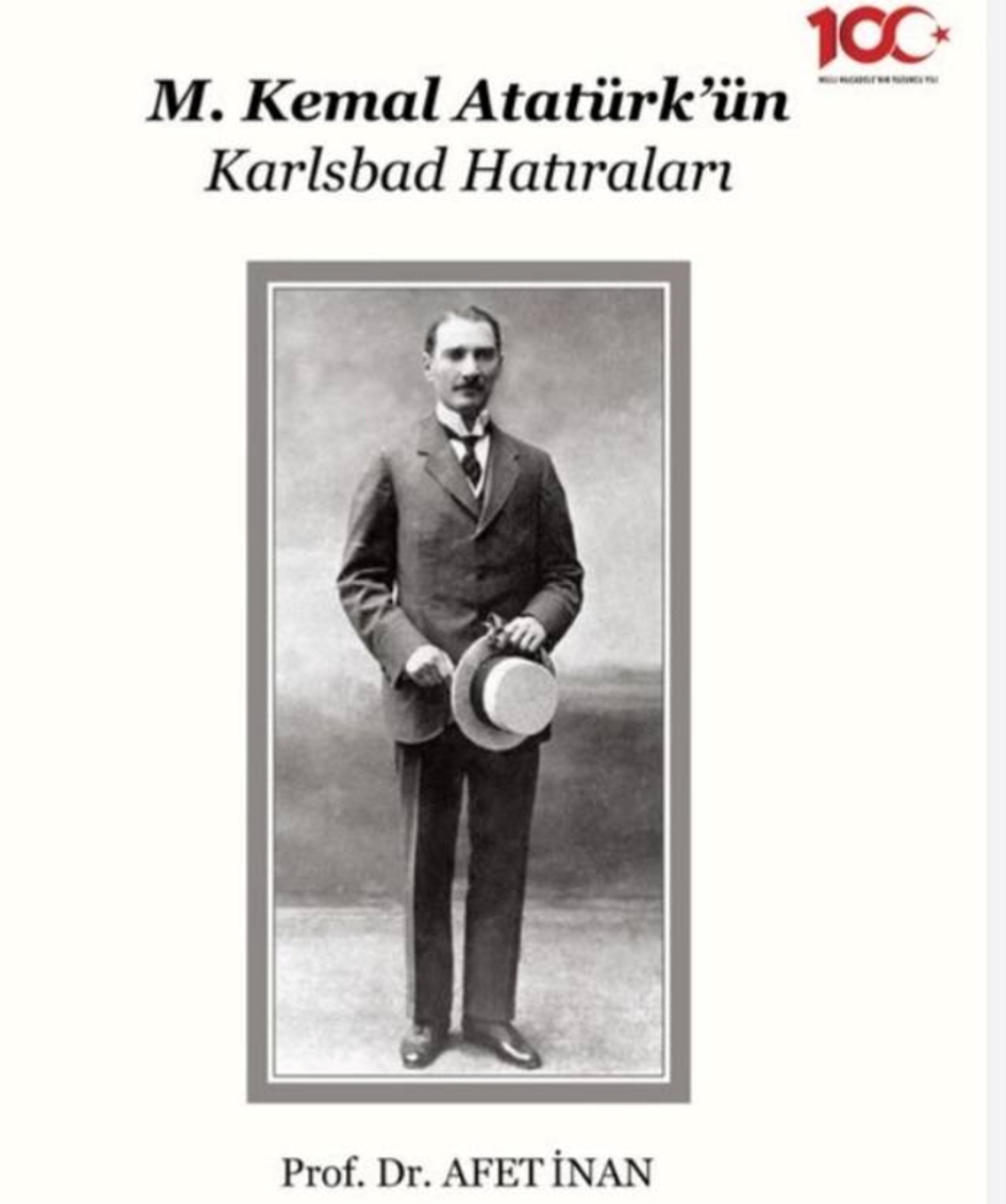
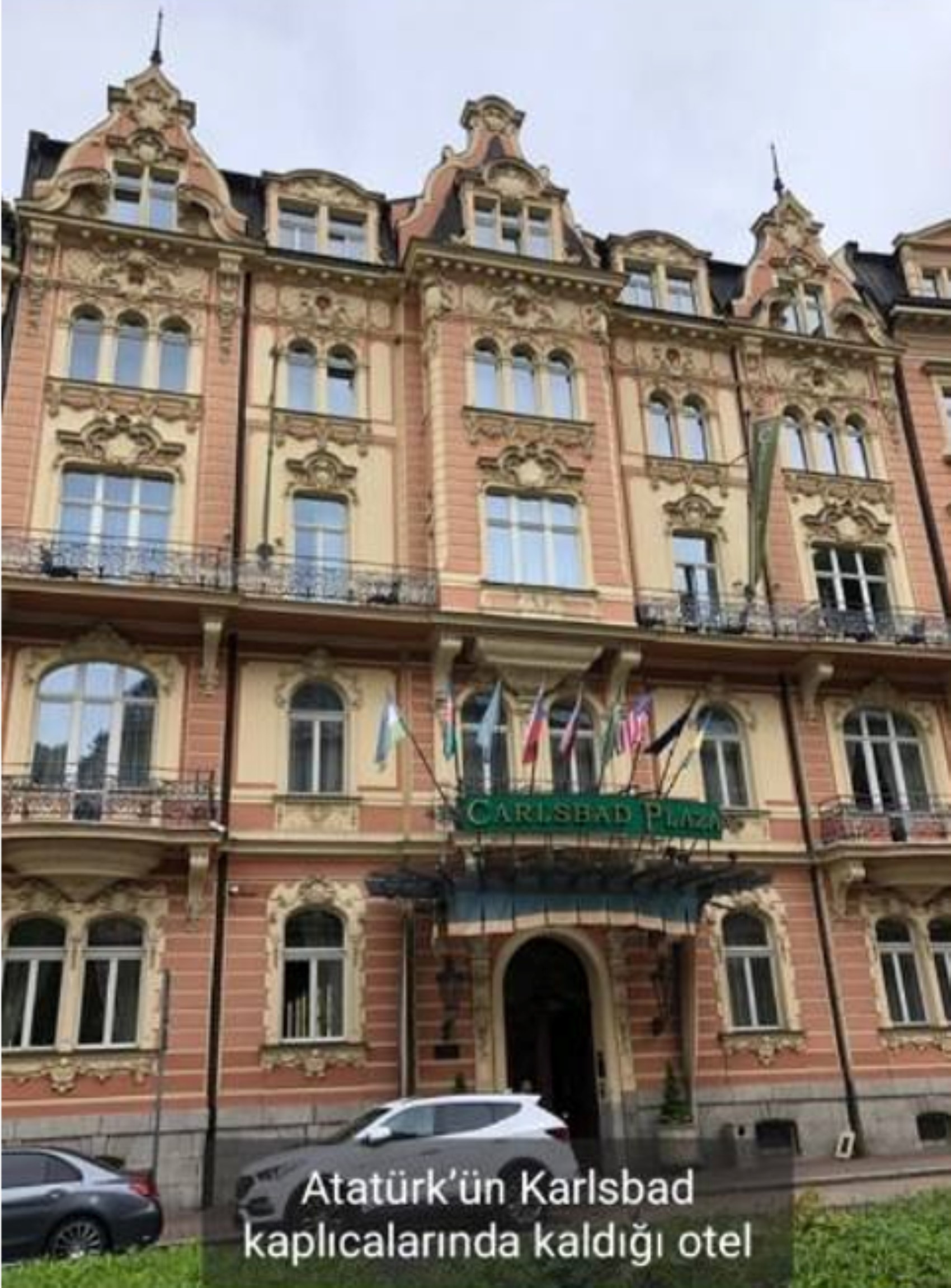
Upon his return, Mustafa Kemal Pasha was again not given an active duty. He went to Vienna on leave to find a cure for the health problems he had been suffering from for a long time. The place he went to is Karlovy Vary (meaning the King’s spa), the Karlsbad spas of today. The recommendation again came from Dr. Rasim Ferit Talay. The treatment lasted a long time.
Atatürk kept diaries consisting of five small notebooks here. Afet İnan found these diaries in Çankaya and published them.
Before the spa treatment, he was examined by the most famous doctors in Vienna. In addition to medication, diet and spa cures were applied. All the medical possibilities of the time were used. My personal opinion is this: I think there was an inflammatory issue with the Gazi. In a period when antibiotics had not yet been discovered, mercury-based drugs were used. He returned to Istanbul with a relative recovery. In the meantime, while his treatment was about to end, he caught the Spanish flu.
ATATÜRK CONTRACTING THE SPANISH FLU (1918)
The Spanish flu is a viral disease like the bird flu that emerged just after the First World War. The virus caused the deaths of millions of people. Mustafa Kemal Pasha, who was receiving treatment in Karlsbad, also caught the Spanish flu. It is understood from what has been written that the illness was extremely severe. Atatürk overcame the infection, but he was physically very worn out. This is the reason for the delay in his plan to return from Karlsbad to Istanbul.
ATATÜRK’S FOREIGN MINISTER TEVFİK RÜŞTÜ ARAS WAS ALSO A MEDICAL DOCTOR
Dr. Tevfik Rüştü Aras is one of the oldest acquaintances of the Halaskar (Savior) Gazi. Aras had graduated from the Beirut Medical School. His first contacts with Tevfik Rüştü Bey were when he was a young staff officer in exile. In Damascus, Aleppo, and Beirut. Their relationship became closer in Thessaloniki. Aras is Atatürk’s foreign minister. He was not among the team that closely followed his health status during the National Struggle and the republican period. In fact, he did not practice medicine effectively after the armistice.
HOW WAS HIS HEALTH STATUS DURING THE ARMISTICE?
Mustafa Kemal Pasha was unwell when he crossed into Anatolia in the capacity of army inspector. Despite the treatment he received in Karlsbad a year ago, his illness had recurred. During his time in Havza, he continued to receive spa treatment whenever he found the opportunity. While Atatürk was trying to awaken the people and establish a Front for the Defense of Rights (Müdafaa-i Hukuk), he was also facing serious health problems.
RIB FRACTURES AND CRACKS DURING THE BATTLE OF SAKARYA
Commander-in-Chief Mustafa Kemal Pasha fell from his horse when it suddenly reared during the Battle of Sakarya. (September 10, 1921) He was taken to Cebeci Hospital. An X-ray was taken. It was understood that one of his ribs was broken and two were cracked. The delegation consisting of Dr. İbrahim Tali Bey, Dr. Adnan Adıvar, Dr. Refik Saydam, and Dr. Murat decided to apply a bandage to the commander-in-chief. The commander-in-chief continued to manage the pitched battle with a bandage wrapping his rib cage.
DR. İBRAHİM TALİ BEY FINDS PRESIDENT GAZI PASHA AND HIS WIFE SICK IN ÇANKAYA (1923)
According to what I learned from Dr. İbrahim Tali Bey’s diaries, when the republic was proclaimed, Tali Bey was on a diplomatic mission in Batum. He wanted to go to Ankara via Istanbul and visit “President Gazi Pasha.” At the Çankaya mansion, the Gazi welcomed him while sick. Latife Hanım was also sick. The lady’s mother had come from Istanbul to accompany her and was taking care of her daughter.
When Tali Bey found Atatürk with a high fever, he suspected a malaria attack. He took blood and brought it to Istanbul. He examined it personally. The result was negative. However, since he could not fully diagnose the cause of the fever, he recommended Professor Frederick Kraus from the Berlin Faculty of Medicine. I have not heard that a doctor by this name came to Turkey for a consultation for President Gazi Pasha. It must have happened like this: After a while, the Gazi began to feel better. He did not invite the doctor either.
HE HAD TWO HEART ATTACKS
It is said that Atatürk had two heart attacks in 1923 and 1927. Both are significant dates. The first one involves the tensions of the transition from the TBMM (Grand National Assembly) government regime to the republic. The second is the year he read the Great Speech (Nutuk) at the second grand congress of the CHP after purging all his opponents.
During these four years, a high-tension period was experienced in domestic politics, and there was an assassination attempt in İzmir. (1926)
It can be thought that Atatürk might have had heart attacks due to this political environment. However, there is also a possibility that these were heart spasms. Since he did not show signs of heart failure in his later life, the attacks may have remained at the level of angina pectoris.
WRONG IDEAS OF HIS CLOSE CIRCLE ABOUT HIS HEALTH
Atatürk was actually lonely, like all great leaders. He gave the impression of being someone who was agile, brave, outspoken, and energetic in a crowd. He was undoubtedly so. But a human is not a one-dimensional being. In his personal life, he also had an introverted, shy, and overly sensitive side.
The victorious commander-in-chief of the battlefields had a tremendous sensitivity towards nature and animals. The things he disliked the most were seeing blood and being left in the dark. He always tried to prevent sacrifices from being made for him.
From his time as a staff officer, he always had a close circle. Some of these were childhood friends. Some of these names were friends from the Thessaloniki Military Middle School and the Manastır Military High School. Like Kazım Özalp, Nuri Conker, and Salih Bozok. Names such as Ali Çetinkaya, Kılıç Ali, Cevat Abbas, and Hasan Rıza Soyak joined them later on various occasions. These are called “zevat-ı mutena” (distinguished persons). Some of these names did not like İsmet Pasha. And of course, the Pasha did not like them either. If you wish, let us leave the reason for this situation to another article.
Despite always having a close circle around him, it was not noticed that Atatürk’s health was gradually deteriorating. For example, according to Kılıç Ali, Atatürk was a completely healthy person except for temporary troubles.
BIOLOGICAL WARFARE AGAINST ANTS
The most concrete example of the failure to understand the Gazi’s health status is the belief that the ants invading Çankaya were the cause of his severe itching. In those days, there was talk of an ant invasion moving from China towards Europe. The bite of this invasive ant species can cause severe itching in hypersensitive individuals.
Upon these thoughts, a biological war was practically declared against insects at the Çankaya Mansion. Atatürk went to Dolmabahçe. Even the army was asked for help. The mansion underwent intensive spraying. What was done was in vain. The problem was with the patient himself.
NİHAT REŞAT BELGER’S DIAGNOSIS OF THE ILLNESS
I cannot say that the doctors around him kept him under medical observation. Except for Tali Bey. However, they would only take an interest in his physical condition when he requested it.
One reason for this is that the great leader did not know anything about health issues and was not curious. In his private life, other than dressing stylishly and being well-groomed, he was not concerned with himself. Only bathing was very important to him.
One of the reasons why his health status could not be understood is his charisma. He is Zeus sitting on Olympus. Like everyone else, his doctors also always approached him with a sense of hesitation.
The example I will give on this subject is interesting. At the beginning of 1938, the illness had progressed significantly, the troubles had become unbearable, and the itching had become even more severe. He went to the Yalova spas. He asked Dr. Nihat Reşat Belger to examine him.
Dr. Nihat Reşat Belger realized as a result of the examination that the itching had nothing to do with eczema or urticaria. When he noticed that the liver had grown by three fingers, he found the real cause: cirrhosis. This means that until that moment, this possibility had never been considered. Perhaps no physician had ever performed an abdominal examination on the “great Atatürk.”
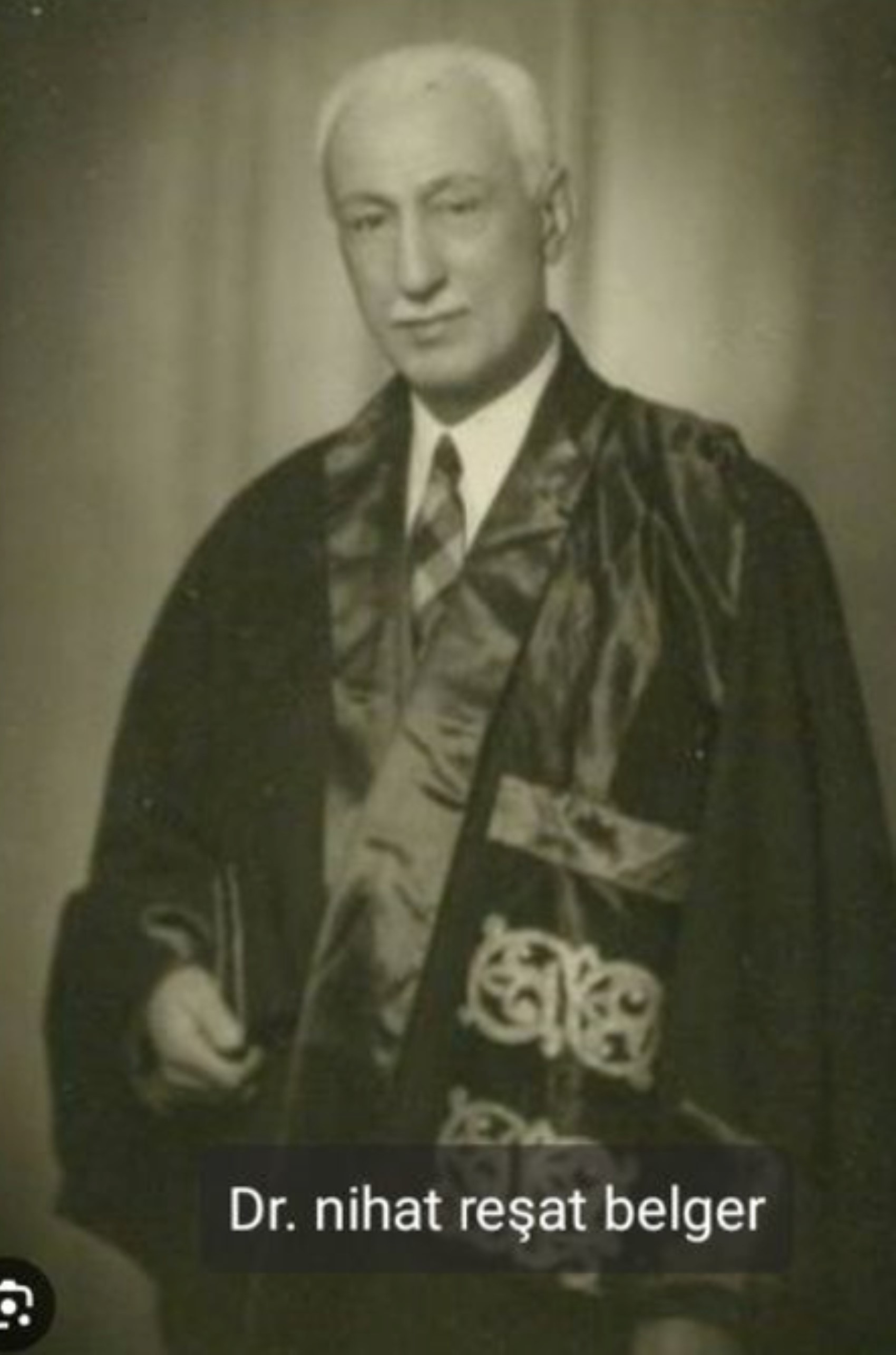
It is regrettable that symptom-relieving treatments were applied to Atatürk’s increasingly severe itching and nosebleeds. It was not thought that there could be a serious cause.
It is understood from the words Dr. Belger used in his memoirs that he approached the “dear patient” almost with a bow. It is also clear that the Gazi accepted the examination in a shy and silent manner without making eye contact.
When the Gazi’s pictures from the 30s onwards are examined, a state of exhaustion is observed on his face. It would be appropriate to call this physiological regression. Because his body biochemistry was disrupted, he had unexpected outbursts of anger and hypersensitivity. This is one of the reasons why his relationship with İsmet Pasha deteriorated.
The fact that the Gazi asked for a car instead of walking 200 meters to get to the hall of the Turkish History Congress held in Dolmabahçe in 1937 is sufficiently explanatory in terms of understanding his health status.
DR. EREN AKÇİÇEK AND BİLAL ŞİMŞİR’S BOOKS
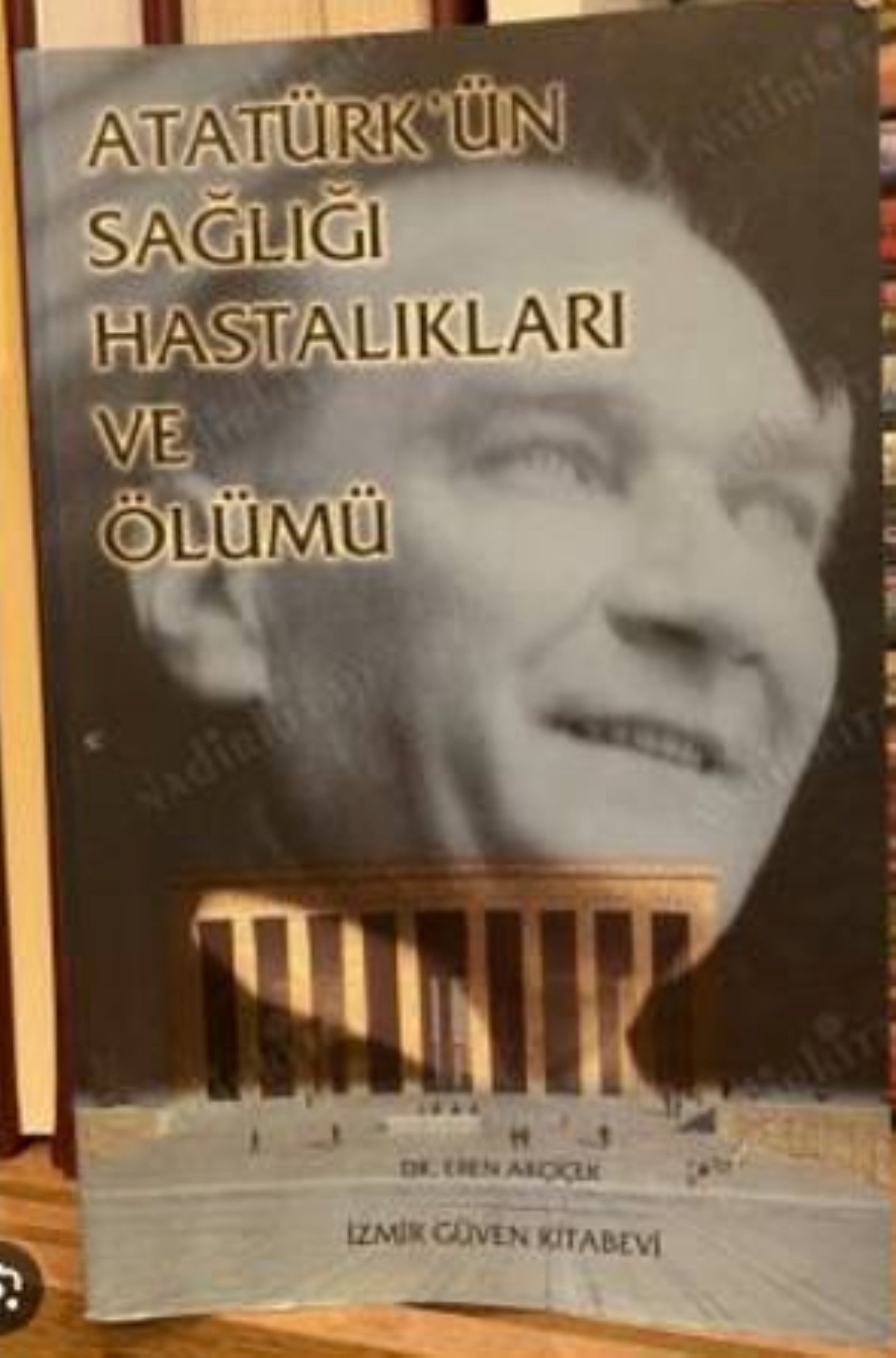
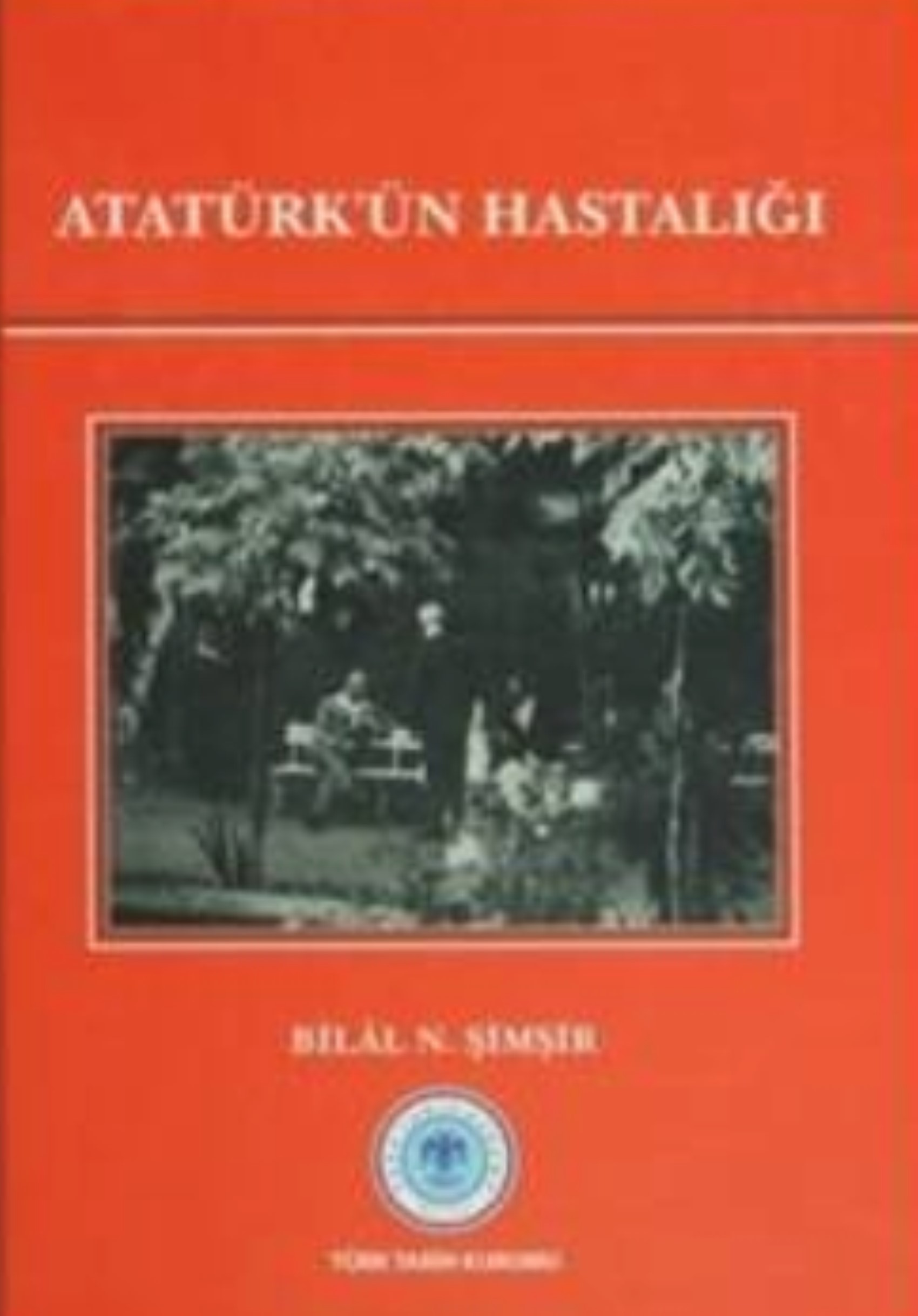
I would like to mention two basic references regarding Atatürk’s health here. The first is a doctoral thesis. The author is already a medical doctor. Dr. Eren Akçiçek. This thesis, which was carried out at the Cerrahpaşa Faculty of Medicine, bears the title “Atatürk’s health, illnesses, and death.” The author of the second book is retired ambassador Bilal Şimşir. His work was published under the title “Atatürk’s illness.” I must say that I am also aware of the existence of many articles while writing this piece.
WHAT WAS THE REAL CAUSE OF CIRRHOSIS? ALCOHOL? HEPATITIS VIRUS?
Gazi Pasha had dental and gum problems from his young ages. He was a patient of the famous dentist of the period, Sami Günzberg. He would go to him. Günzberg is known as the dentist of the Yıldız Palace. He served the entire dynasty. Starting with Sultan Abdulhamid II.
Günzberg’s office was in the Mısır Apartment on İstiklal Street. At first, he would go there. Later, a dentist’s chair was brought to the Dolmabahçe Palace. His treatments began to be performed there.
When the Shah of Iran came to Turkey, he took him to his doctor. It was also Dr. Günzberg who made Atatürk’s dental prosthesis. Mustafa Kemal Pasha was receiving dental treatment during the republic revolution debates. According to his own statement, the reason he kept his speech short after being elected president was the discomfort caused by his new prosthesis. Dr. Günzberg handled the gum problems that required surgical intervention at the Dolmabahçe Palace.
At this very point, I would like to state that I do not agree with the generally accepted views regarding the cirrhosis ailment that caused the Gazi’s death. The generally accepted thought is this: Atatürk’s addiction to rakı caused cirrhosis. I am not of that opinion. Atatürk was someone who drank in a balanced way. He would drink by spreading it over time and with conversation. Of course, there is a link between cirrhosis and alcohol. But it is not the only reason. It can also be seen in people who never drink alcohol. For example, Mehmet Akif Ersoy. Dr. Noel Fiessinger, who was brought to consult on Atatürk four times, also had a similar view. He had frequently diagnosed cirrhosis in his patients from certain regions of North Africa. These patients were devout Muslims. Atatürk was pleased with these words of the doctor, rejoicing that it had nothing to do with rakı.
Today, it is known that some viruses that settle in the liver can cause liver failure (cirrhosis) after a chronic infection. For example, Hepatitis B and C viruses.
These viruses can be transmitted to the patient from poorly sterilized dental instruments. At the beginning of the 20th century, when sterilization facilities were not very good, Atatürk might have caught a virus that would lead him to cirrhosis in Günzberg’s office.
WHAT DID THE CELAL BAYAR GOVERNMENT DO AFTER THE DIAGNOSIS?
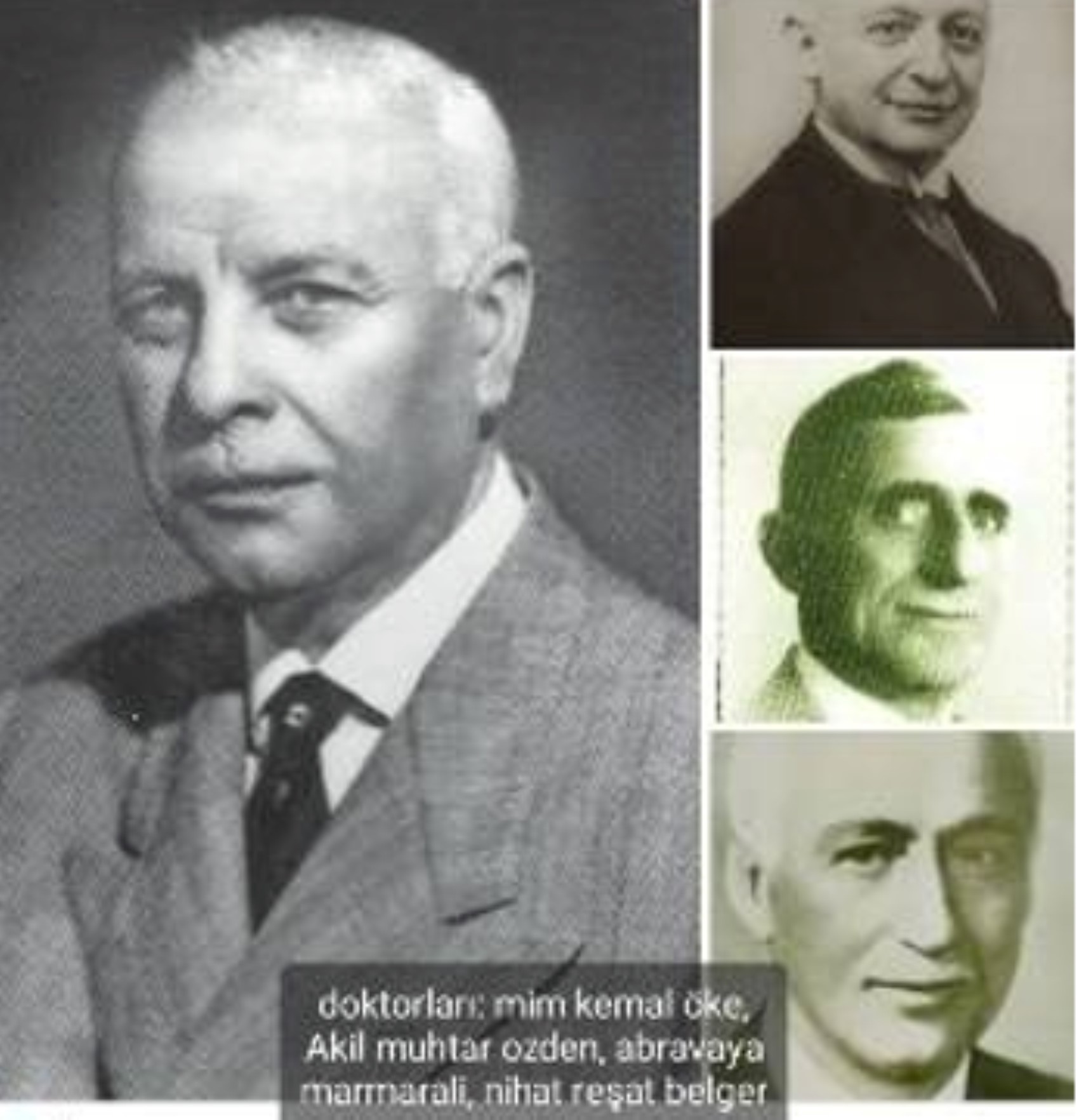
When the seriousness of the Gazi’s health status was understood, Prime Minister Celal Bayar made some decisions. First of all, he established a delegation consisting of Turkey’s most famous doctors. The doctors, most of whom were faculty members at the Istanbul Faculty of Medicine, are as follows: Neşet Ömer İrdelp, Akil Muhtar Özden, Mim Kemal Öke, Abravaya Marmaralı, and Nihat Reşat Belger.
I suggest you take a look at Özel Şahingiray’s “Atatürk’s duty notebooks (1931-1938)” for the doctors’ shifts of coming and going.
There was also the matter of inviting foreign experts. Among these names, the one most frequently consulted was Dr. Noel Fiessinger.
DR. NOEL FIESSINGER’S FOUR VISITS
Dr. Fiessinger came to Turkey four times. The first was on March 28, 1938. He examined Atatürk in Çankaya. He confirmed Belger’s diagnosis. After the arrival of the Savarona (June 1), he came again on June 8. He examined Atatürk on the Savarona. He saw that the illness was progressing. The last one is dated September 6.
Fiessinger was a famous professor at the Paris Faculty of Medicine who specialized particularly in the pathology of liver diseases.
In the meantime, with the advice that sea air would be good for cirrhosis, the Bayar Government bought the Savarona. At a very reasonable price. The Ertuğrul yacht was a very old coal-burning ship inherited from the dynasty. The words “I waited for the arrival of this ship like a child” that Atatürk wrote to Afet İnan with the hope of healing are heartbreaking. Atatürk was hoping that he could recover by getting sea air on this ship.
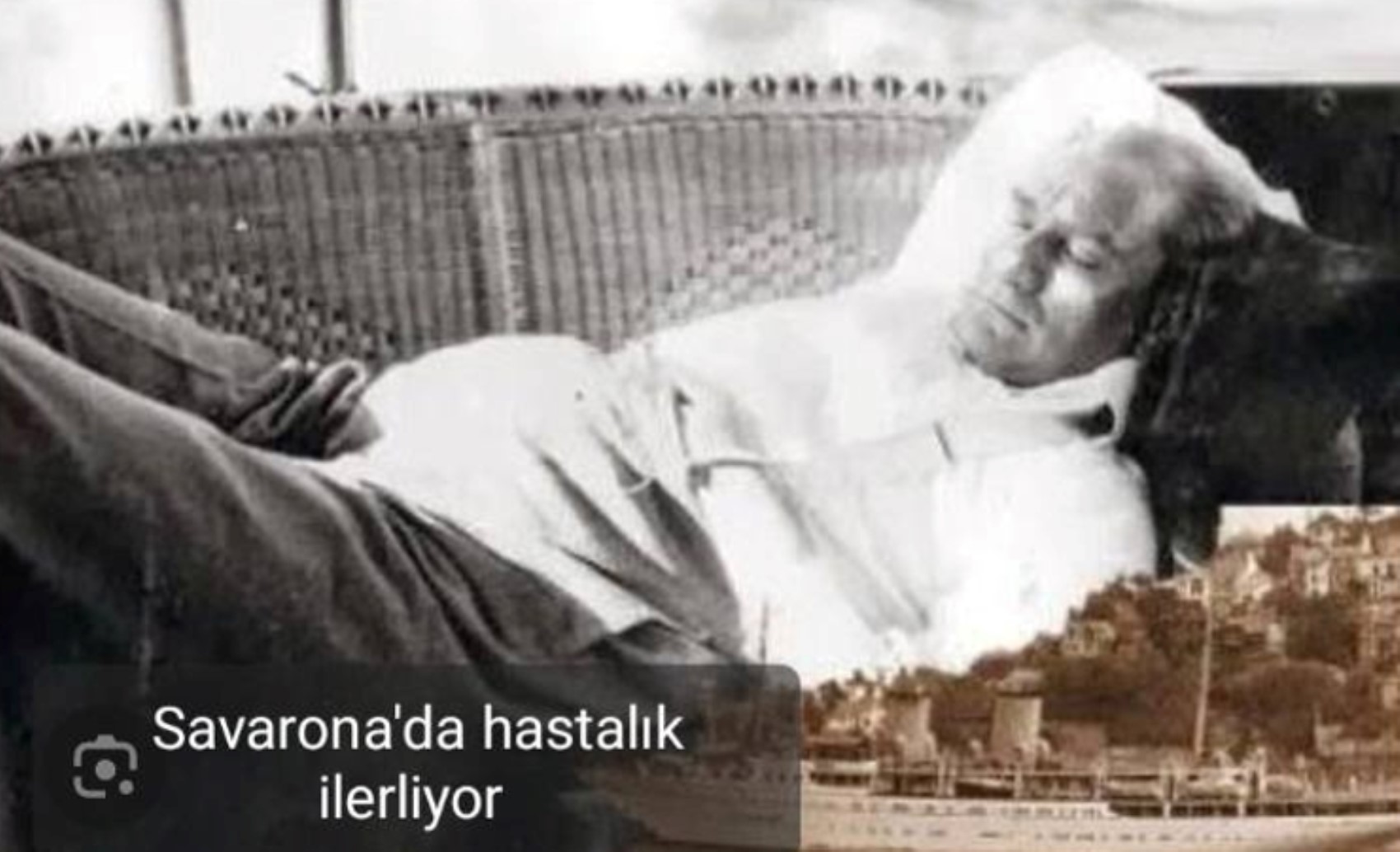
On the night of July 24-25, he was moved from the Savarona, where he had moved on June 1, to his bed prepared at the Dolmabahçe Palace in a wicker chair. He had only been able to stay on the Savarona for 55 days.
In my opinion, staying on the ship under these conditions accelerated the worsening of the situation. The ship, anchored off Dolmabahçe, was constantly absorbing heat in the summer heat, further increasing Atatürk’s fever. Ice blocks were being placed around him.
TWO MORE FOREIGN DOCTORS ARE INVITED
As the course of the illness became more severe, this time German and Austrian doctors were called. Dr. Eppingen (July 31) and Dr. Bergman (August 1) were invited for consultation. After the doctors performed the service expected of them, they left Turkey on August 6.
RAPID WORSENING OF THE ILLNESS
In my opinion, when Dr. Belger diagnosed the illness, the liver was on the verge of failure. The water (edema) collected in the Gazi’s abdomen began to increase rapidly. Atatürk thought he had been gaining weight since 1937. But the “reality” was the accumulation of edema in the abdomen. Look at the pictures taken with little Ülkü at the Florya Sea Mansion. Examine the video of those famous sweater pictures, and you will agree with me.
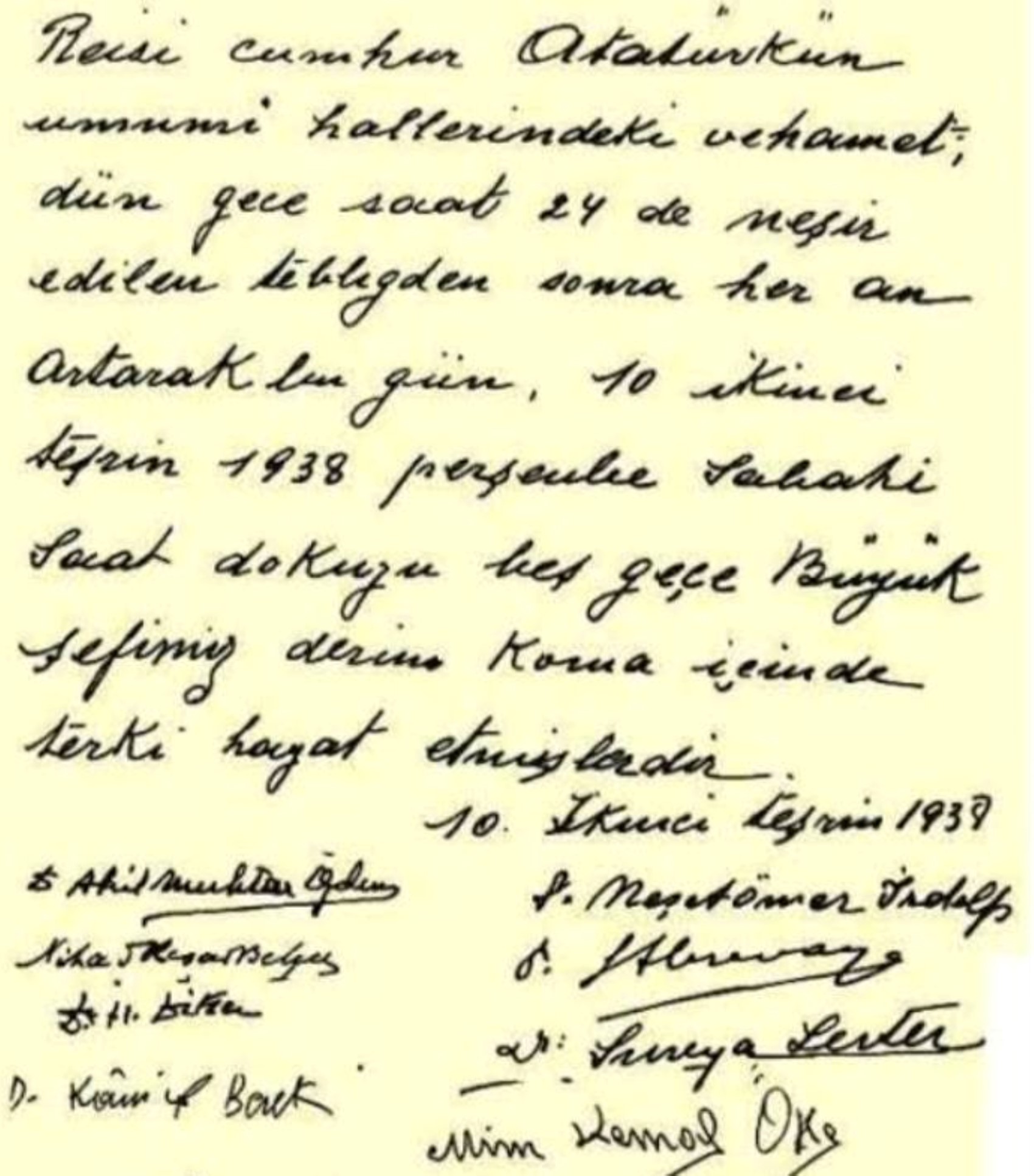
On September 7, Dr. Mim Kemal Öke performed the first abdominal puncture in an operation where Dr. Fiessinger was present. Dr. Öke managed to remove 10.5 liters of water. The amount of fluid shows how much pressure there was on vital organs.
After the first water removal procedure, Dr. Fiessinger and Dr. Nihat Reşat Belger prepared a report together and presented it to the government.
On September 22, the situation came to the same point again. This time, despite the doctors’ concerns, the Gazi insisted on the removal of the fluid himself. Mim Kemal Öke performed the second puncture as well. The result was successful again. The patient was relieved. He asked for a cigarette and coffee. He spent a few days well.
Atatürk asked for the procedure to be repeated when his troubles intensified. The doctors had become very hesitant by now. Mim Kemal Öke reported the excuse that he was in class. Upon this, Mehmet Kamil Berk from the Istanbul Faculty of Medicine was requested. When Dr. Berk saw the Ata’s suffering state, he took the risk and performed the procedure. (November 7, 1938)
TWO COMA STATES
Atatürk had entered a coma for the first time on October 16. He came out of the coma three days later. During the coma, it was seen that he repeated the words “but the language… the language sir, the language… oh my God…”. During the coma, he had been moved to a small bed for ease of intervention. When he noticed this, he asked “what happened to me?”. After Dr. Berk removed the water, he entered a coma again. (November 8) Dr. Neşet Ömer İrdelp and Dr. Abravaya Marmaralı were in his presence. It is said that his last words before the coma were “what time is it”.
TWO EVENTS THAT TOUCHED ME DEEPLY
Two events during Atatürk’s illness touched my heart. The first is his saying “Child, do whatever you are going to do quickly… I am very sick” when Prime Minister Celal Bayar wanted to bring Fiessinger.
The second is that on the night of July 24-25, he was taken to the Palace by motorboat, wrapped in blankets in a wicker chair, accompanied by his friends. Those who took our victorious commander-in-chief to Dolmabahçe were the people who had been by his side since Tripoli. When Atatürk was laid in his cool bed, he said “Oh! I am comfortable now.”
Would you like to get notifications about new developments and save news?
- NotificationsNew developments and breaking news
- SaveNews is stored in the app
Most Read
Statement from Nihat Zeybekci on the fund investigation
New 75,000-seat stadium plan for Fenerbahçe
Interpol and MIT tracking yields results in Izmir
ID convenience for KPSS candidates

2027 Budget: Taxes for the people, tax exemptions for capital
The reality of Akkuyu and the longing for national nuclear power
To whom and how was the Petition of Intellectuals submitted? Who accepted the petition?

The Çanakkale robbery -1- How was the Troy treasure smuggled out?

Artificial intelligence and the new imperialism

Ministry investigation into unauthorized promotional messages