


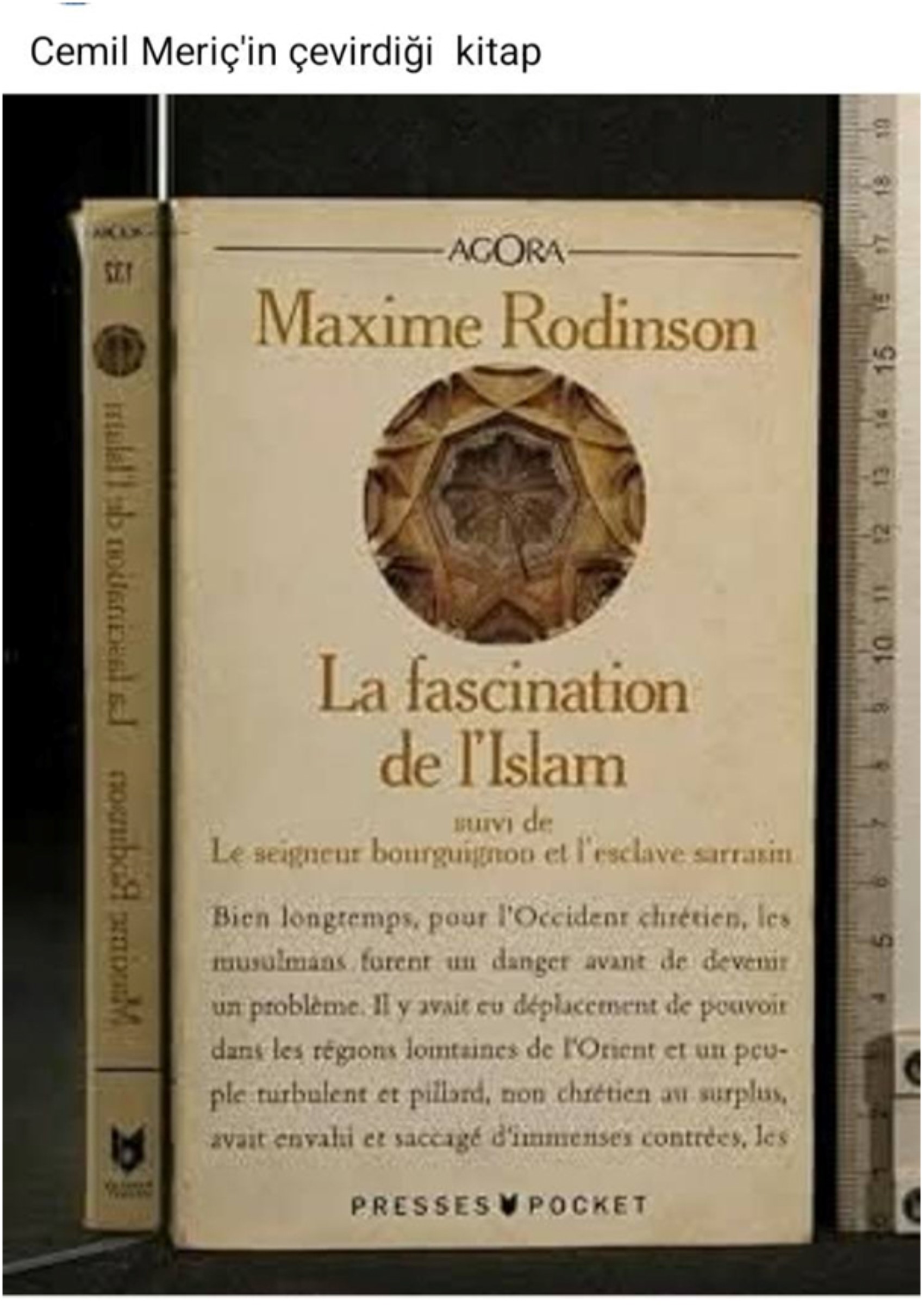
Cemil Meriç’s Maxime Rodinson translation



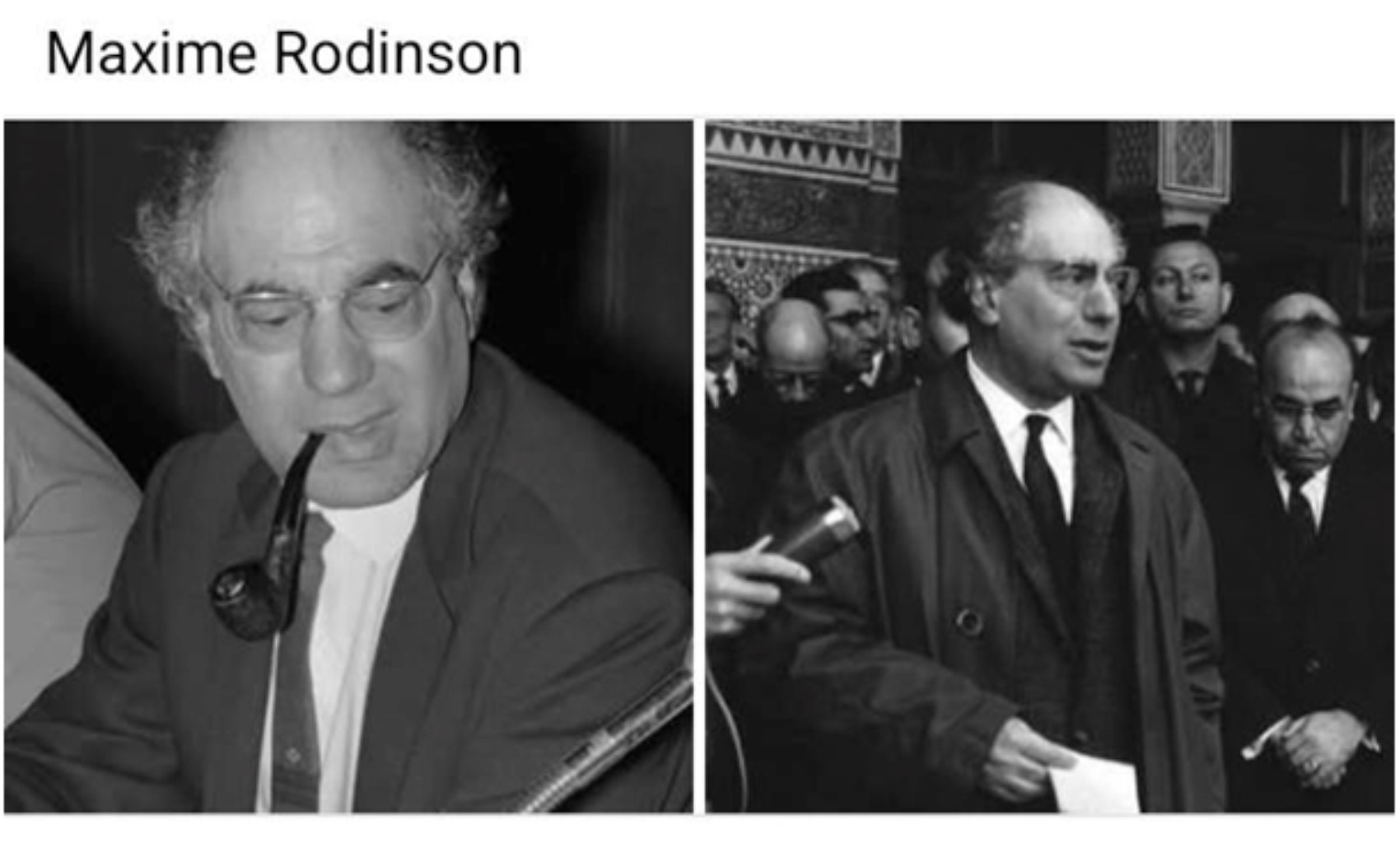 WHO IS MAXIME RODINSON?
Maxime Rodinson was the child of a refugee Polish Jewish family. He was born in Paris in 1915. He lost his parents in the Auschwitz concentration camp.
What saved him was being drafted into the French army at the beginning of the Second World War. From 1939 onwards, he was in Syria and Lebanon—in Beirut, Damascus, and Aleppo. The reason for this was his university education in Eastern languages and history. He was mostly assigned to education and training tasks.
He returned to France in 1948. He began working in the Islamic Works department at the National Library of Paris (Bibliothèque Nationale). From his youth, Rodinson was a member of the French Communist Party. During the period of Khrushchev’s de-Stalinization, he was expelled from the party by the Stalinist-line French Communist Party (PCF) in 1958. Or he left. The reason given was his opposition to Orthodox Marxism. He defined his new political position as follows: I see no difference between being attached to a party and being attached to a religion.
Rodinson did not define himself as an Orientalist. According to him, he was a social historian who utilized history and sociology.
Although his analytical tools were fundamentally Marxist, he valued the knowledge gained from economic and social history. Ultimately, he was a social historian who conducted his analyses using Marxist concepts. When we carefully examine his books and articles, we encounter works that justify this judgment.
The Turkish translations of his books are as follows: Islam and Capitalism (Orhan Suda, 1969), Muhammad (Atilla Tokatlı, 1998), and the book Cemil Meriç published in 1983 under the title “Islam Fascinating the West.”
RODINSON’S VIEW OF HISTORY AND SOCIETY
Let us state right at the beginning that Rodinson is a historical materialist researcher. Let us also not forget that he was a long-term member of the French Communist Party. The reason he left the party in the 50s was his belief that a man of thought does not need a church. The church mentioned here was, as one might guess, Dogmatic Marxism.
Maxime Rodinson used to say: “Extraordinary concepts are not needed for good work. Sciences such as sociology, demography, anthropology, economics, and history are sufficient. By using these disciplines, world history and Islamic societies can be understood. They can be analyzed.”
Rodinson’s objection was not to Marx. His intellectual products were already sources he always referred to. His problem was mostly with Marxist circles. These people existed in the academy just as they did in the party.
Maxime Rodinson found the examinations and conclusions reached by Marx to be mostly accurate. But he did not consider it correct to be completely engaged with him. Rodinson thought: “If we do that, we might drift toward a place resembling the famous myths we criticize.”
WHAT NOT TO DO ACCORDING TO RODINSON?
This quote from Rodinson gives meaning to his intellectual stance: “While opposing the dominant ideologies of liberal bourgeois society, completely attaching oneself to counter-ideologies to prevent this is not a solution either. Although Marx made very accurate findings in many of his examinations, institutionalized Marxism is not the solution.”
ORHAN SUDA’S TRANSLATION OF ISLAM AND CAPITALISM
One of Rodinson’s important books is Islam and Capitalism. It was translated by Orhan Suda. In summary, the book examines the situation of Islam in the face of the development of capitalism. The answer is actually positive. Since there is property and profit in Islam, the conclusion is reached that there is nothing that prevents capitalism. The fundamental issue in the Islamic world is that capitalism did not develop with its own internal dynamics. Capitalism developed and became institutionalized in the West after the industrial revolution. Capitalism was imported into the Islamic world. Or rather, it penetrated it. It spread. Islam’s entry into capitalism occurred in the form of a dependency relationship. Capitalism in Islam is an imported and delayed capitalism.
THE PROPHETHOOD OF MUHAMMAD ACCORDING TO RODINSON
In Maxime Rodinson’s work titled Muhammad, we see Hz. Muhammad as a mystic who believes he is close to God. Rodinson said that this situation stemmed not from revelation, but from his commitment to his cause.
CEMİL MERİÇ’S PERSONAL STORY
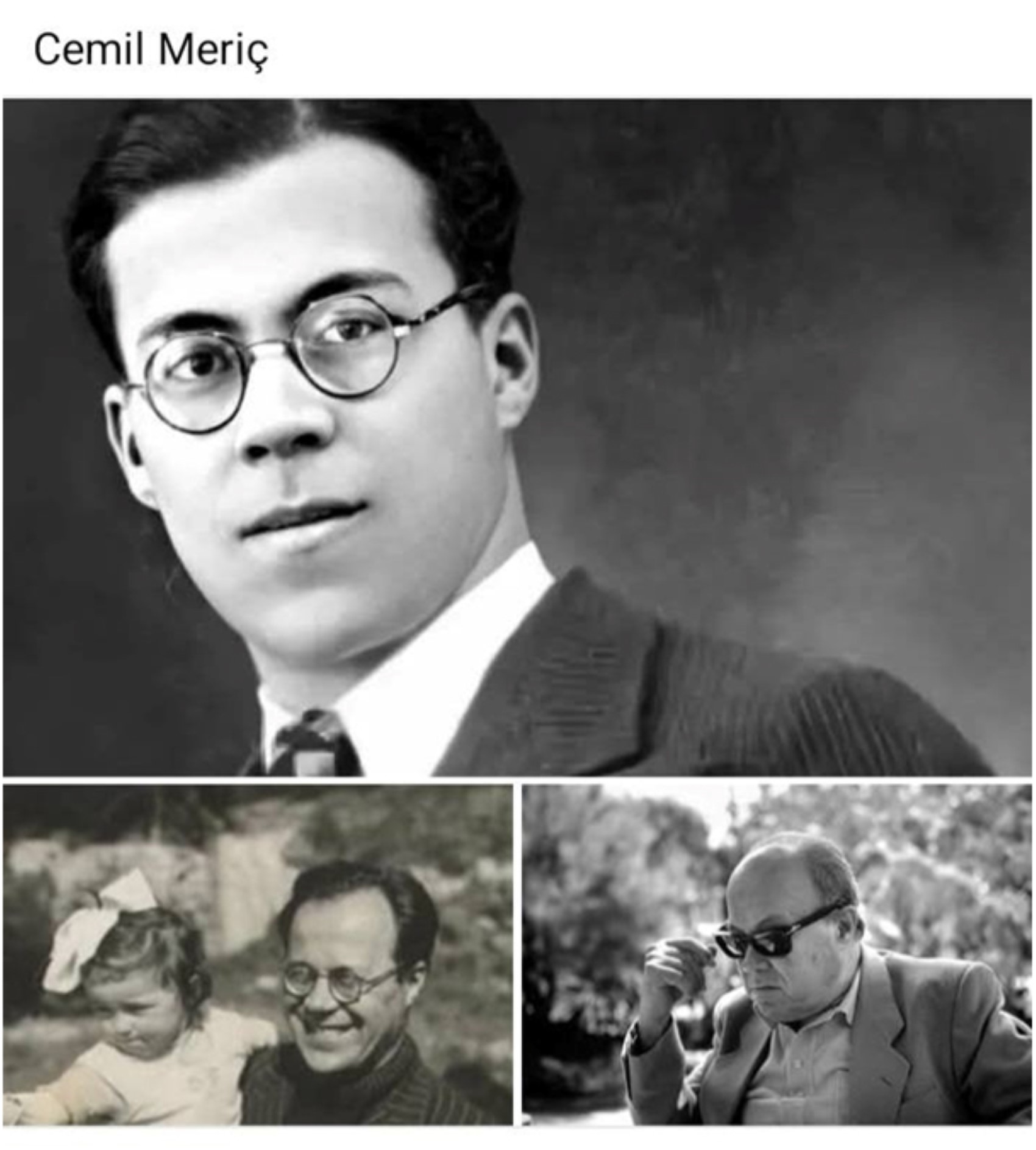
As for Cemil Meriç’s personal story, he was first of all the child of a family that had migrated from the Balkans to Reyhanlı, Antakya. Like Rodinson, he was a refugee. He was also born during the years of the First World War: in 1916.
In Antakya, he received a good education under French colonial rule; he participated in the nationalist resistance, was arrested, and was tried with a death sentence. These are important breaking points in his personality development.
Dücane Cündioğlu mentions his two fundamental fears: first, the fear of being arrested and followed. Its origin lies in the experience he had in his youth. The second is the fear of being left without a job or bread. Cündioğlu defines this fear as the “fear of going hungry.” The anxiety of not being able to provide for his family. Cemil Meriç experienced very difficult economic days during his teaching years before becoming a lecturer; especially during his teaching years in Elazığ. When he returned to Istanbul, the person who mediated his appointment as a French lecturer at the Istanbul University Faculty of Letters was Prof. Sabri Esat Siyavuşgil. During his lectureship, he enrolled in a philosophy doctoral program; presumably, conditions did not allow him to complete his doctorate.
Cemil Meriç worked as a French lecturer at Istanbul University until his retirement. He was always someone respected in the academic community for his intellectual accumulation, but he lived in anxiety until his retirement, and his writings became widely known only after his retirement (early 80s).
LOSING HIS EYESIGHT
Cemil Meriç had vision problems from a very young age. This situation progressed and reached a peak in the 50s. Despite a series of eye surgeries he underwent in Paris in 1955, he lost his sense of sight. He stayed in Paris for about six months with the hope of finding a cure. But no positive results were obtained.
This situation must have been a very serious state of deprivation for a person whose whole life was spent reading and writing. This trauma holds a very important place in Cemil Meriç’s life, even if it is not mentioned too often. I think this situation forms the basis of his state of mind.
A LOVE-HATE RELATIONSHIP: THE WEST
A comment about Cemil Meriç that I largely agree with belongs to Tanıl Bora. In his book *Cereyanlar* (Currents), Bora writes in summary: There are two concepts around which Cemil Meriç revolves his entire cause. *İrfan* (wisdom/enlightenment) and *Umran* (civilization). All of Cemil Meriç’s actions are based on intellectual autonomy and being respected. He says this longing is felt in all his writings.
In his early writings, Cemil Meriç is a utopian socialist. He is without reservations toward the West. He is Westernist. He has no commentary. Later, he complains about the “Ottoman thought” which he would consider the symbol of a “magnificent past.”
As the author correctly points out, the spiritual crisis caused by Westernization became an obsession that brought him closer to the conservative environment.
Cemil Meriç’s relationship with the West turned into a morbid love-hate relationship over time.
There is one more very important point that needs to be expressed here; Cemil Meriç turned his shoulder halfway toward Europe (the West). Not his back. He did not give up on it. In Cemil Meriç’s thought, a resigned reproach toward the West is sensed.
It might seem strange, but I think Cemil Meriç’s story is full of contradictions, ups, and downs. He became an Ottoman defender who had said quite a lot against the Ottomans in the end. I think to understand him, one must understand his state of mind.
THE TURKISH INTELLECTUAL
Meriç finds the Turkish intellectual weak and listless, having moved away from their own cultural roots. He speaks of an intellectual type that has been struggling with an inferiority complex toward the West since the Tanzimat, sometimes with an angry language.
DÜCANE CÜNDİOĞLU’S INTEREST IN CEMİL MERİÇ
As someone who writes constantly, it was Dücane Cündioğlu who seriously took up the task of revealing Cemil Meriç’s complete works. At the end of his studies, Cündioğlu published a trilogy. The titles of the books are as follows: *Bir Mabed Bekçisi* (A Temple Guardian), *Bir Mabed İşçisi* (A Temple Worker), *Bir Mabed Savaşçısı* (A Temple Warrior). Ahmet Turan Alkan has also published works on Cemil Meriç. There is something not coincidental here: We know both authors as figures trying to add originality to conservative orientalism (or Turkology, if you will).
Cündioğlu began writing about Cemil Meriç in Paris: in the years 2005-2006. A bit under conditions of deprivation while living in a 20-square-meter studio apartment. He finished the first volume of his publications on Cemil Meriç there.
The main goal of Dücane Cündioğlu’s research on Cemil Meriç was to reveal the author’s early period before the 70s-80s. During that period, Cemil Meriç was not a very well-known or recognized author. It was only known in certain circles who he was and what he was occupied with.
Cündioğlu defines the Cemil Meriç identity as three-layered: 1. Translator, 2. Critic, 3. Thinker. He sees the author as a man who sought moderation to the extent that his state of mind, full of ups and downs, allowed, and who found it at the end, albeit rarely.
How interesting it is that the source of Cemil Meriç’s intellectual accumulation is not the right-wing in Turkey. On the contrary, it is secular and Western. It is especially French culture and literature. I learned about his friendship with Berke Vardar and Server Tanilli while writing this article. Ultimately, Cemil Meriç is not someone whose accumulation is from the right, even though the Turkish right holds him in high regard.
A GENERAL OVERVIEW OF CEMİL MERİÇ PUBLICATIONS
The first book Cemil Meriç published came out with the title *Saint Simon, First Sociologist, First Socialist*. He also defines a period of his own life this way. During this period, he met Nazım Hikmet and Kerim Sadi.
After the 60s, he became an intellectual respected by right-wing publishers with his thoughts and writings; for example, his translation titled *Ziya Gökalp: The Origins of Turkish Nationalism* from Uriel Heyd and his translation of “Islam Fascinating the West” from Rodinson were published by nationalist-conservative publishing organs.
After his passing, with the approval of his heirs, the copyright of all his writings was given to İletişim Yayınları; he became an intellectual who attracted more attention with what he wrote after the 80s.
Let’s take a look at his major works if you wish: *Umran'dan Uygarlığa* (From Civilization to Civilization), *Bu Ülke* (This Country), *Mağaradakiler* (Those in the Cave), *Kırk Ambar* (Forty Granaries), *Işık Doğudan Gelir* (Light Comes from the East), *Kültürden İrfana* (From Culture to Wisdom), and others. His *Journals* were also published after the 1990s.
THE MEANING OF THE MAXIME RODINSON TRANSLATION ON THE RIGHT
Let us state immediately that this translation was published toward the end of Cemil Meriç’s life. I think Pınar Yayınevi must have thought of this book as a publication with market potential in the right-wing segment. Of course, this is not the only motive.
It is also sensed that the publication has a purpose such as making Islam strong against Western civilization, not letting it be crushed, and fortifying Islam against the West.
I would also like to remind you that the right has always had an intellectual complex against the left.
From the 60s onwards, there was a richness and superiority of leftist thought in every kind of intellectual activity. It is even possible to call this hegemony. In the eighties, a mobilization to learn the West and leftist literature began on the right, which I personally observed. Especially in the Islamist right. The nationalists (Ülkücüler) were not very eager about this.
We see that there was no other thinker besides Necip Fazıl to motivate the “Average Right.” This must be one of the reasons why they clung to Cemil Meriç so tightly without really understanding him.
From the preface Meriç wrote to the translation he made, we understand that he had known Rodinson since 1966. In my opinion, Rodinson’s masterpiece is *Muhammad*. His other important works are *Islam and Capitalism* and *Marxism and the Muslim World*.
Let’s come to Cemil Meriç’s Maxime Rodinson translation. The book is a collection publication. It consists of articles added to the speeches Rodinson made, primarily at the Leiden and Berlin Orientalist meetings.
The title of the translation is also a bit problematic in my opinion. “Islam Fascinating the West” is a quite exaggerated title. Even wrong. Especially since I don’t think someone as materialistic as Rodinson would be very pleased with his book being published under such a title.
The original French title of the book is “La fascination de l’islam,” which was translated into English under the title “Europe and the Mystique of Islam”; in any case, the translation is not the exact equivalent of the cover. The book is actually a slightly modified version of “Legacy of Islam,” which came out in 1983.
When looking at its content, it covers the West’s encounter with Islam, its conflict in the Middle Ages, and the emergence of the idea of living together in later centuries—especially due to economic conditions. Other sections are orientalism and exoticism and imperialism after the 19th century.
CEMİL MERİÇ’S PRAISE OF MAXIME RODINSON
A situation that might be considered strange: Rodinson is the author of the book *Muhammad*, which he wrote in the early 60s after leaving/being expelled from the party and which would be translated into Turkish by Atilla Tokatlı.
Maxime Rodinson’s masterpiece is *Muhammad*. I think that in this book, as in his other works, the fundamental analytical instruments are Marxist historical materialism.
The well-known politician Kasım Küfrevi had published a refutation of Rodinson under the title “Those Who Cast Aspersions on the Prophet” (1969). In his work, Rodinson addressed Hz. Muhammad’s emergence with a claim of prophethood, his beliefs, and the process of becoming a state through a strategic armed struggle. Rodinson viewed Hz. Muhammad as a “passionate leader of the Middle Ages.” He evaluated him as an identity that succeeded in establishing a political order suitable for the construct in his mind. Hz. Muhammad believed that his mission was communicated to him by God (through revelation). And he had succeeded in creating a believing mass.
His teachings became the official ideology of the Islamic state with the Umayyads.
Despite this, it was translated into Turkish and praised by Cemil Meriç (1983). We can understand the reason for Meriç’s praise of a Western Marxist intellectual from these words:
“The left in Turkey generally does not read Rodinson. Because he is a Marxist who has rebelled against the dogmas of the church (meaning orthodox Marxism). He deals with outdated subjects like Islam. The right does not read him either. Because they are generally not at a level to understand him.”
I think the reason why a materialistic Orientalist in the identity of Rodinson fell onto the agenda of the Turkish right—via the Cemil Meriç translation—can be explained by a chain process.
Cemil Meriç had found a feature similar to himself in Rodinson. His autonomy by leaving the party and the knowledge-intensive work technique in his writings.
The reason for the interest in Cemil Meriç rising from the *Ülkü Ocakları* (Idealist Hearths) and the *İlim Yayma Cemiyeti* (Society for the Dissemination of Science) in Anatolia is that he is a subject who satisfies the need to find and exalt an intellectual who is not originally one of them in an intellectually starved environment.
IS THERE A COMMON DIRECTION BETWEEN MERİÇ AND RODINSON?
In my opinion, what brings Maxime Rodinson and Cemil Meriç together is the state of rebellion. I think this is the fundamental determining factor of their identities.
Rodinson was born in Paris as the child of a Jewish immigrant family. He lost his family in a concentration camp. He was interested in the current socio-economic situations of Islamic societies, beyond their languages and histories. At the same time, he was a communist party member. What is good for the conservative community here—and Meriç in the meantime—is his rebellion against the communists. There is a point that should not be overlooked: His rebellion was based on the declaration of scientific and political autonomy. There was no change in his thoughts and analyses. He continued to be a materialist social historian in the study of Islamic societies. He was still a Marxist even after leaving the party.
What Cemil Meriç found close to himself in him was his defiance of Dogmatic Marxism. Meriç saw Rodinson’s “anti-party” stance on the basis of empathy with his own objection to the ideology, institutions, cadres, and Westernization of Turkish modernization. For this reason, he approached Rodinson with empathy.
To put it more clearly, the connection Cemil Meriç established between his own world of thought and Rodinson is, in my opinion, emotional. It is difficult to find an intersection other than their fields of study. I think the problematic side of this rapprochement is reflected in the exaggerated title used in the translation of the book: “Islam Fascinating the West.”
This title has been a title that made the conservative environment feel good. But it is not true.
Would you like to get notifications about new developments and save news?
- NotificationsNew developments and breaking news
- SaveNews is stored in the app
Most Read

Statement from Nihat Zeybekci on the fund investigation

New 75,000-seat stadium plan for Fenerbahçe
Interpol and MIT tracking yields results in Izmir
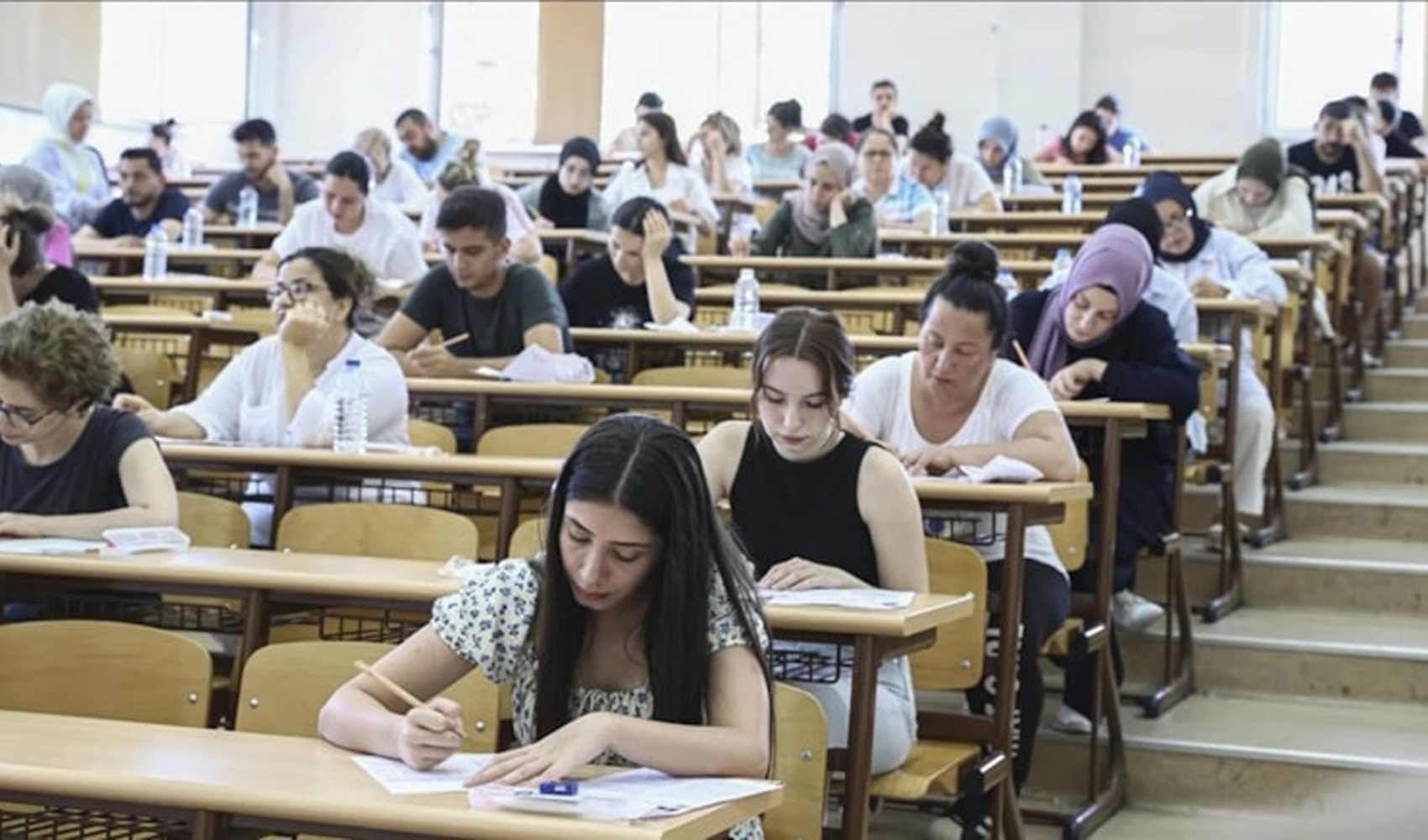
ID convenience for KPSS candidates

2027 Budget: Taxes for the people, tax exemptions for capital
The reality of Akkuyu and the longing for national nuclear power
To whom and how was the Petition of Intellectuals submitted? Who accepted the petition?
The Çanakkale robbery -1- How was the Troy treasure smuggled out?
Artificial intelligence and the new imperialism

Ministry investigation into unauthorized promotional messages