


The Diary of Dr. İbrahim Tali Bey



Dr. İbrahim Tali Bey and Atatürk
I can introduce Dr. İbrahim Tali Bey to you as follows. Let me remind you of a beautiful photograph. It is Dr. İbrahim Tali Bey who is drawing blood from Atatürk's finger on the yacht Ertuğrul. July 1, 1927.
The friendship that developed during the battles of Benghazi and Gallipoli continued throughout the National War of Independence. He is among the oldest of the doctors who were close to Atatürk. The others are Tevfik Rüştü Aras, Refik Saydam, and Mim Kemal Öke.
In this article, we will primarily address the diplomatic side of İbrahim Tali Bey.
It would be accurate to start his inclusion in Mustafa Kemal Pasha's staff from the headquarters of the Ninth Army Inspectorate. That is, from the Bandırma Ferry. He is the chief of health services. His rank is medical colonel. The other doctors are medical major Refik Saydam and medical captain Behçet Adil Feyzioğlu.
The acquaintance between Dr. İbrahim Tali Bey and Atatürk dates back to the days in Benghazi. Another doctor he met in those days is Mim Kemal Öke.
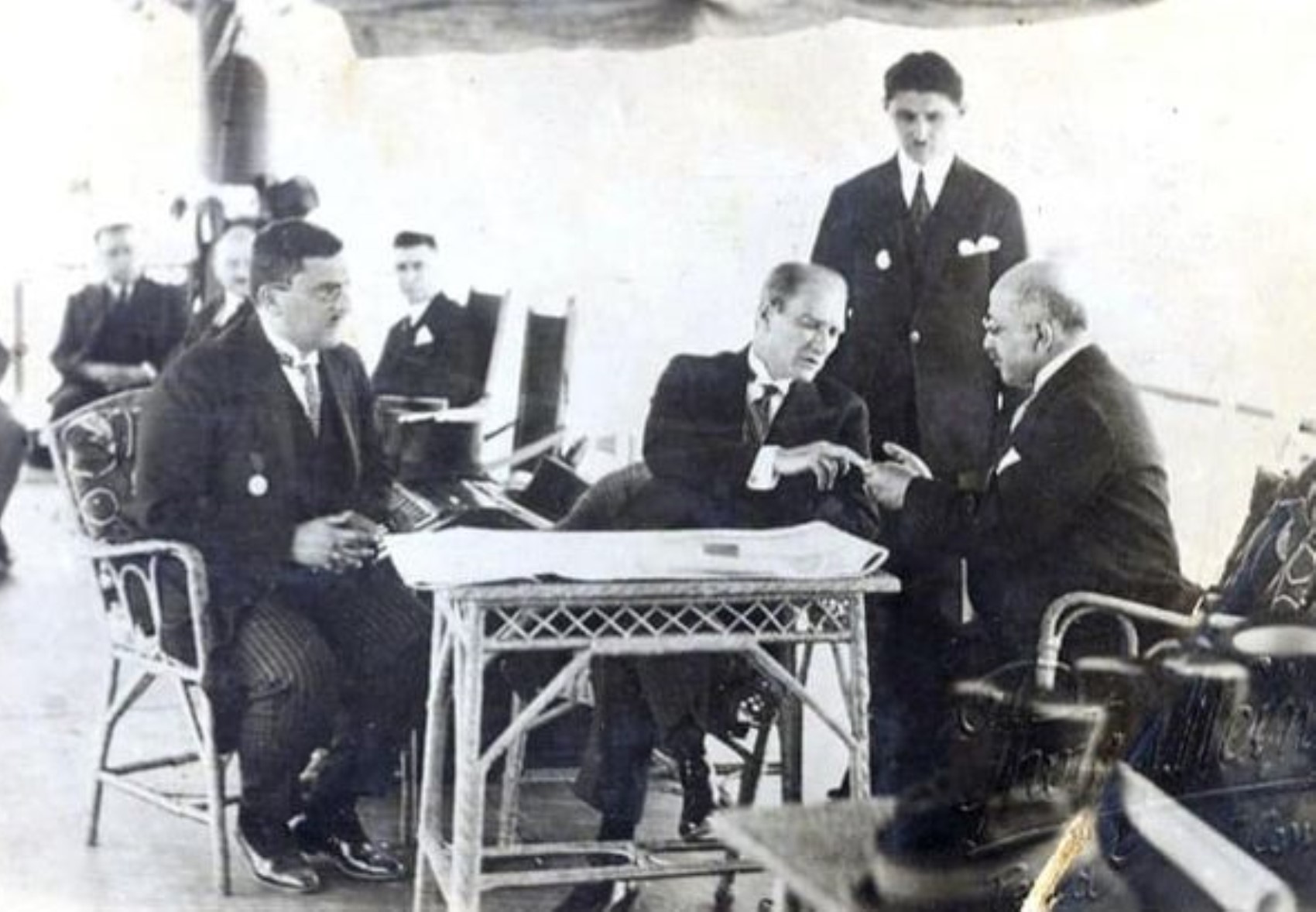
Their first encounter occurred in 1912 due to an eye infection accompanied by bleeding. Atatürk was hospitalized in a field hospital and treated. The second contact was in Gallipoli. Lieutenant Colonel Mustafa Kemal was suffering from a serious upper respiratory tract infection. He was treated under hospital conditions with the intervention of Dr. Öngören and the insistence of Enver Pasha.
The diary of Dr. İbrahim Tali Bey
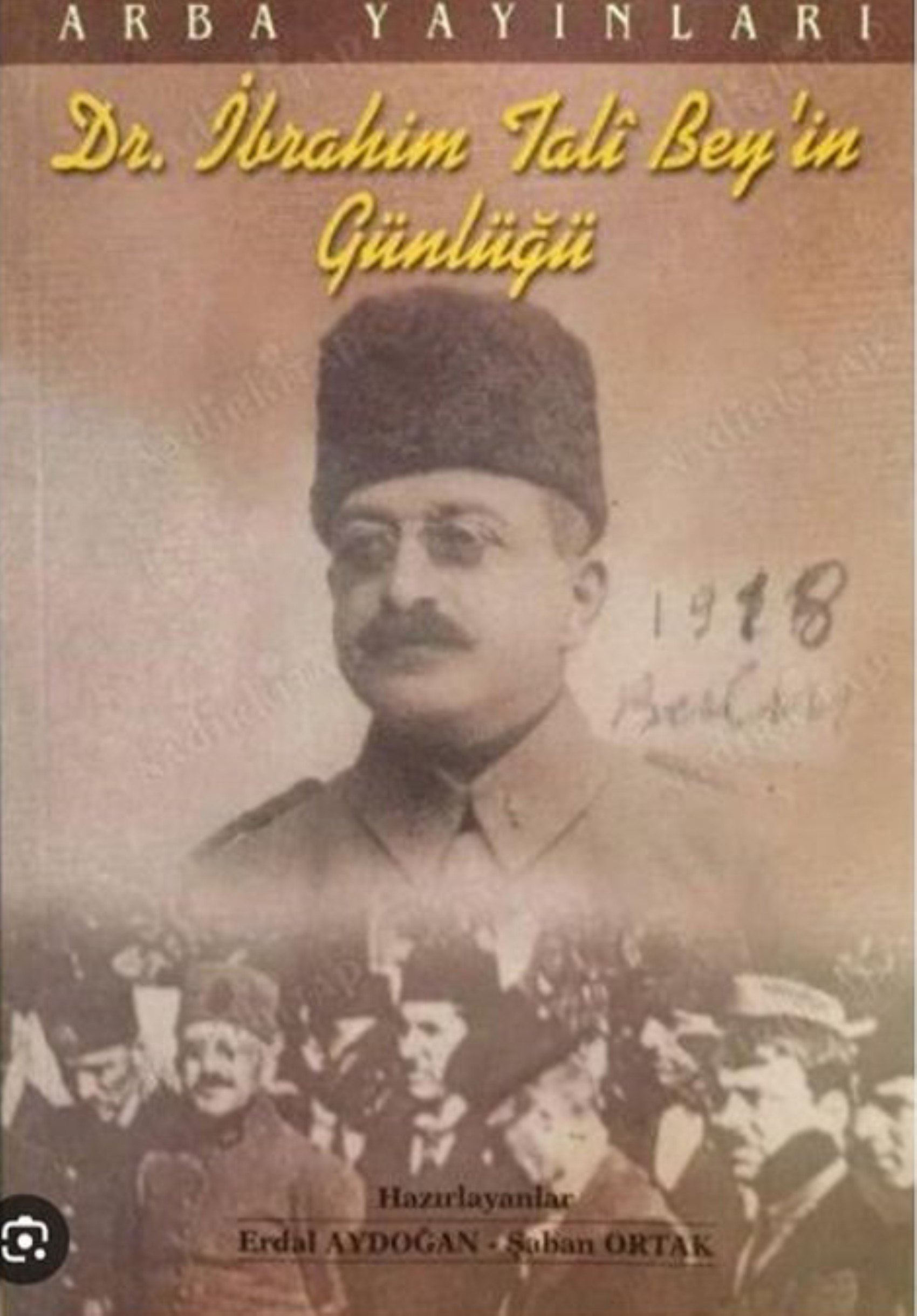
The diary was published by Arba Publishing in 2000. The owner of the publishing house was the late Bülent Demirbaş. The transcription was carried out by Erdal Aydoğan and Şaban Ortak.
The diary begins in Moscow in 1920. He was assigned to the first delegation that went to Moscow; as an advisor. He joined the delegation of Bekir Sami and Yusuf Kemal. The diary begins with the negotiations held with Kamenev and Karahan and ends with his appointment as ambassador to Warsaw in 1924.
He was present as a representative of the TBMM (Grand National Assembly of Turkey) Government at the 1920 Baku Congress of the Peoples of the East, and his declaration was read.
The Bekir Sami-Yusuf Kemal delegation returned from Moscow, but he remained in Russia as a representative until Ali Fuat Pasha arrived in Moscow as ambassador.
On the content of the diary
I felt an uneasy atmosphere in the diary. Records of weapons and equipment received. The calculation of how to sustain daily life is constantly being made. The prices of meat, milk, bread, and butter are frequently recorded in the diary.
Another thing that caught my attention is that he constantly keeps records of the barometer, temperature, humidity, and altitude. He is trying to get a fur coat made in Russia. The weather is very cold and he is afraid of getting sick.
The St. Petersburg-Moscow-Tiflis-Baku-Batum railway line was used quite a lot during the period the diary was kept. During these comings and goings, he craved the meat-based kapuska (cabbage stew) made by a Russian woman at a station, but could not buy it.
His family, education, and daughters
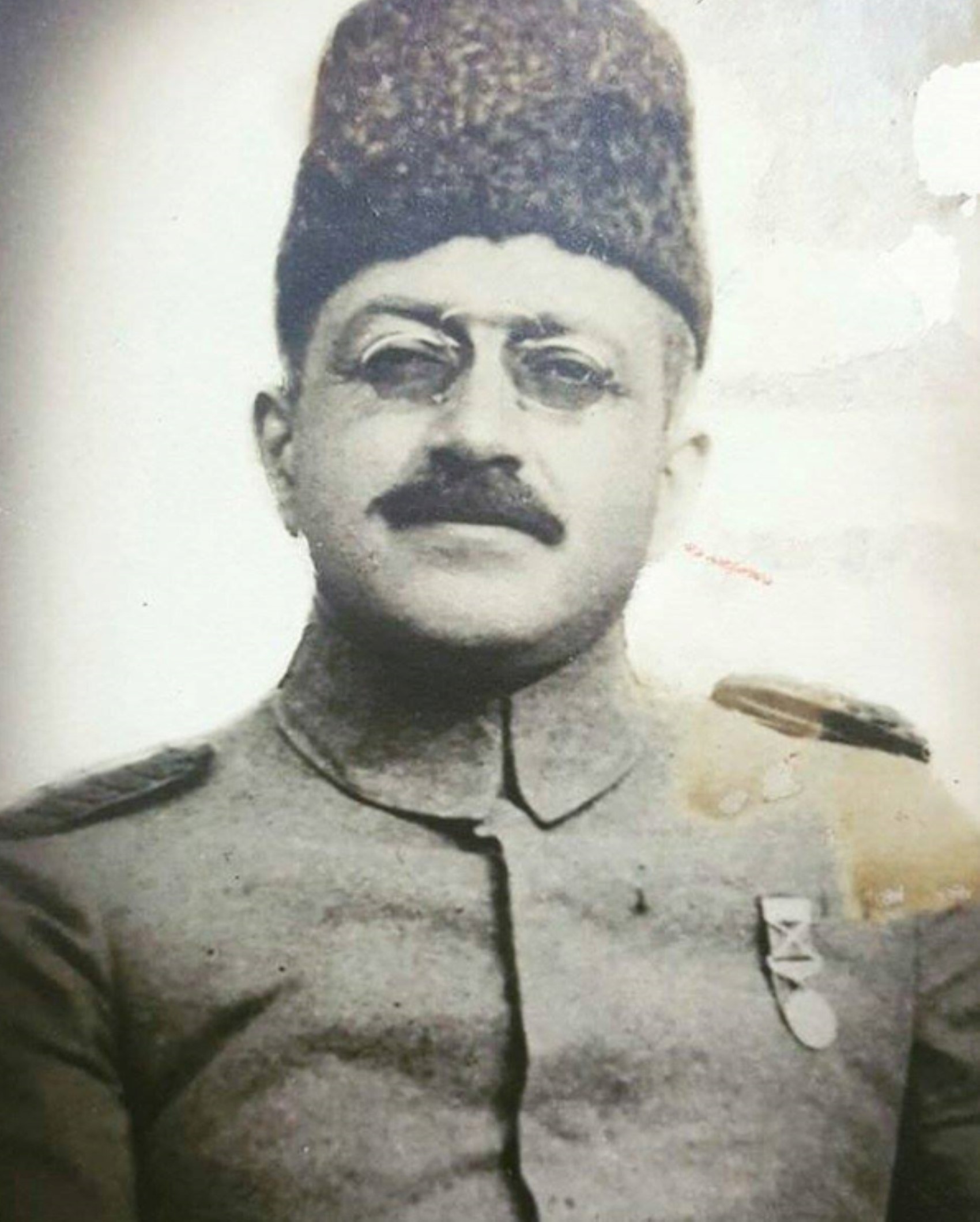
Dr. İbrahim Tali Bey is a graduate of Galatasaray High School and the Military Medical School. He received specialized training and became a surgeon. I can say that I saw a positivist Young Turk portrait in the diaries.
He has three daughters: they are studying in Germany. I did not come across clear information about his wife in the diary. The names of the daughters are: Nimet, İsmet, and Mesadet. I estimate that they were taken to Germany and enrolled in a boarding school while the World War was ongoing. The school is in Weimar. His older sister lives in Jena. They are having difficulty covering school expenses. The Berlin Turkish Club helps the girls with financial matters when necessary. He will go to visit them twice.
It is worth noting: Dr. Öngören's father is Yusuf Tali Pasha, one of the governors of Basra. His father-in-law is Münif Pasha, one of the Ministers of Education. The girls want to be doctors, but their mathematics and science grades are not good. The German headmistress suggests that it would be better if they turned to art and literature.
Encounters with the Ittihadists
It is understood from what Dr. Öngören wrote that he met and spoke with Ittihadists (members of the Committee of Union and Progress) in Moscow, Berlin, and Batum.
We can say that there was very intense Ittihadist traffic on the Berlin-Batum line. Some of them have big plans. Cemal Pasha wants to be the Emir of Afghanistan. Enver Pasha is chasing a great Turan.
He meets with Bahattin Şakir, Sultan Galiyev, and Enver Pasha. He also sees Sanders Pasha in Germany. The Pasha is very pleased. He meets some of them in Batum. I think it must be Halil Pasha. He gives him 100 liras for his children, to be delivered by Enver Pasha. The Pasha must still be in Berlin at that time.
The reason the Ittihadists came as far as Batum was so that if the Kemalist leadership in Anatolia lost power, the Enverist party could replace it. After the victory at Sakarya, this possibility no longer remained. I would like to remind you of the famous saying here. Halil Pasha sent word to the Gazi after the victory, saying let us work together. Atatürk sent a reply saying, "His Excellency the Pasha should rest." This means the era of the Ittihadists is over.
First return to Anatolia: 1921
After Ali Fuat Pasha was appointed ambassador to Moscow, Dr. İbrahim Tali Bey, whose representative duty ended, came to Ankara via the Batum-Trabzon road. The date of his arrival in Samsun with the Italian ship Jean is May 5, 1921. This is his first arrival after the TBMM was established. After the Erzurum Congress, he remained there as the chief of health services of the XV Corps, and then joined the delegation that went to Russia. Around the time he arrived, the Eskişehir-Kütahya battles were taking place. As soon as he arrived, he was assigned to the Officers and Wounded Hospital. This is the period of the Great Greek Offensive.
He participated in the discussions of the "Law on the Unification of the Ranks of Physicians" proposal in the parliamentary commission. This law was intended to be enacted with the idea of equalizing the salary scale of reserve officer doctors under arms and military doctors. He gets angry at some opposition deputies because they do not understand the working conditions of doctors.
Meanwhile, the Reserve Officers' school was opened in the Abidin Pasha mansion. One day, Mustafa Kemal Pasha went to the reserve officers' school together with Franklin-Bouillon.
There is no anxiety in the diaries about the war being lost during the Great Greek Offensive. Dr. İbrahim Tali Bey is always busy with numbers. He only included the statement by İsmet Pasha that we might have to evacuate Ankara.
The Battle of Sakarya and the doctors who treated the Commander-in-Chief
During the feverish days of the Battle of Sakarya, the President of the TBMM and Commander-in-Chief Mustafa Kemal Pasha fell from his horse and broke his rib. August 15, 1921. The doctors who intervened were: Dr. Adnan (Adıvar), Dr. Refik (Saydam), Dr. Murat, and Dr. İbrahim Tali.
Foreign assignment: Batum Consulate General
The fact that the Battle of Sakarya resulted in victory created great joy in Anatolia. The enemy army was forced to retreat. The Turkish success deepened the division in the allied front. The belief in final victory increased.
Meanwhile, İbrahim Tali Bey, who worked as a doctor under the command of the Ministry of National Defense throughout the war, visits the Gazi together with Dr. Refik Saydam: October 29, 1921. He says he wants to go on a foreign assignment. This is an interesting attitude. I think this is a desire to stay away from the feverish political environment and political divisions inside.
Meanwhile, the dismissal of Sakallı Nurettin Pasha is being discussed in the Assembly due to the attitude of the Central Army during the Koçgiri rebellion. His referral to the Independence Tribunal is on the agenda. There is a very tense atmosphere in the Assembly. It is in these days that the appointment of Dr. İbrahim Tali Bey to Batum as consul general is finalized.
He starts his duty in Batum on November 30, 1921. Around the same time, Ahmet Muhtar Mollaoğlu is the TBMM representative (ambassador) in Tiflis. This is an important task at that date. Muhtar Bey will later be sent to Moscow and Washington as ambassador. Dr. Öngören goes to Batum by stopping by Trabzon on an Italian ship.
After the Moscow Treaty, the Ankara Government established diplomatic relations with the governments of Azerbaijan and Georgia. The first representatives of the TBMM government were Muhtar Bey in Tiflis and Memduh Şevket Esendal in Baku.
Nazım Hikmet and Vala Nurettin chat with Esendal in Baku while going to Moscow to study. Memduh Şevket Bey talks to them at length. They are going to Russia to see their "classless society utopia." I am sure Esendal listened to them in silence with a smile. The young people will experience disappointment while still on the road.
The importance of İnebolu
İnebolu is an important center for transitions to Anatolia. From there, you can go to Ankara by carriage (luxury tariff) or freight wagons during the years of the national war of independence. İnebolu is one of the ports visited by ships going to the Black Sea ports and Istanbul. You might wonder how this is possible while the war is going on. There is no cabotage. Ships of Italian and French companies continue to operate. For example, it is possible to see a Russian aristocrat who has been evacuated from Crimea passing through Istanbul to Batum on an Italian ship.
These ships are mostly doing human and cargo transport work in the region. Commercial life continues. Business with the Russians is carried out through other ports.
Steamer voyages are intermittent. The ships do not have a fixed schedule. Delays of a few days are considered normal. Meanwhile, important encounters also take place: such as the return of the Malta exiles, Yakup Kadri's departure to Istanbul. Or Harrington sending his special representative to meet with Refet Pasha.
An interesting piece of information: There is a cinema in İnebolu at that time. The film of the signing of the Moscow treaty is shown in the cinema.
Bolsheviks in power in Georgia
After the Red Army descended into the Caucasus, the political balances at the beginning of the armistice will change. At the beginning of 1922, the Adjara Soviet will be established. The center is Batum. This is an autonomous republic within Georgia. Of course, autonomy is according to Soviet criteria. There is also a strong Menshevik organization in Georgia. Apart from the supporters of the old regime. The Red Army will suppress the Menshevik resistance in a very short time. Dr. Öngören witnesses these in Batum.
Important transitions from Batum
Frunze, who came to Ankara at the end of 1921, is returning. The new Soviet ambassador Aralov will pass to Anatolia via Batum. Dr. İbrahim Tali Bey is there. Meanwhile, Ali Fuat Pasha returns from Moscow in May 1922. Again via Batum.
His trips to Germany
Dr. İbrahim Tali Bey goes to Germany twice via the Moscow-Petrograd-Baltic coasts to see his daughters. Especially in the first one, he arrives at his children's side after spending quite troubled days. There is a civil war in Russia and political and economic chaos in Germany. Despite having a diplomatic passport, he encounters obstacles everywhere. Germany is very chaotic and there is hyper-inflation. He has to use the money he has very carefully.
He follows not only the education of his children but also their physical development; he has written down their height and weight. He takes honey and cod liver oil to the girls from Reval. Dr. Öngören did not neglect to take small gifts to the teachers either.
Reason for going to Germany again
On July 20, 1922, Dr. İbrahim Tali Bey is in Moscow. He has received permission from Ankara and is going to Germany to be with his daughters. He has reached the halfway point. His observations along the railway line are as follows: The Soviet order has begun to settle. Factories are working. He meets Dr. Rıza Nur in Moscow. I honestly cannot remember the reason for this visit. It may be related to the exchange of the agreement made with Ukraine.
Appendicitis surgery in Germany
There was something that caught my attention in the articles I wrote recently.
In the 20s, many people had appendicitis surgery. Some of them lost their lives during or after the surgery. If you wish, let me remind you of some examples: Trotsky's son, Frunze, Kemalettin Sami Pasha, Vasıf Çınar. I find these strange. Dr. İbrahim Tali Bey also received this diagnosis on his second trip to Germany and was operated on. Even though the blood test data was insufficient for a full diagnosis. Because of the professor's insistence on the diagnosis of chronic appendicitis, he accepted the surgery, and it is understood from what he wrote that he spent quite troubled days after the surgery.
This is a period when radiography (X-ray device) began to be used. This tool is rightly considered very important. It is seen as an extraordinary discovery. It is almost sanctified like today's dynamic MRI.
Also, how anesthesia is performed is interesting. The patient is first given a morphine and atropine injection. Then he is put to sleep with ether. The dose of ether is important.
Convalescence and a small vacation with his daughters
This is a village vacation. After the surgery. The name of the village is Paulinzella. I think it must be a place like Polonezköy. His older sister lives in Jena. He takes a small vacation with his daughters. There are long calculations in the diary about how much it cost. Finally, on September 24, 1922, he returns to Batum, his place of duty.
What happened in two months?
While Dr. İbrahim Tali Bey was leaving Batum to go to Germany to see his children and having a surprise appendicitis surgery, a very important event took place. The Great Offensive. This development will change the international status quo, and the Turks will be invited to Lausanne to negotiate peace.
Letters and cards
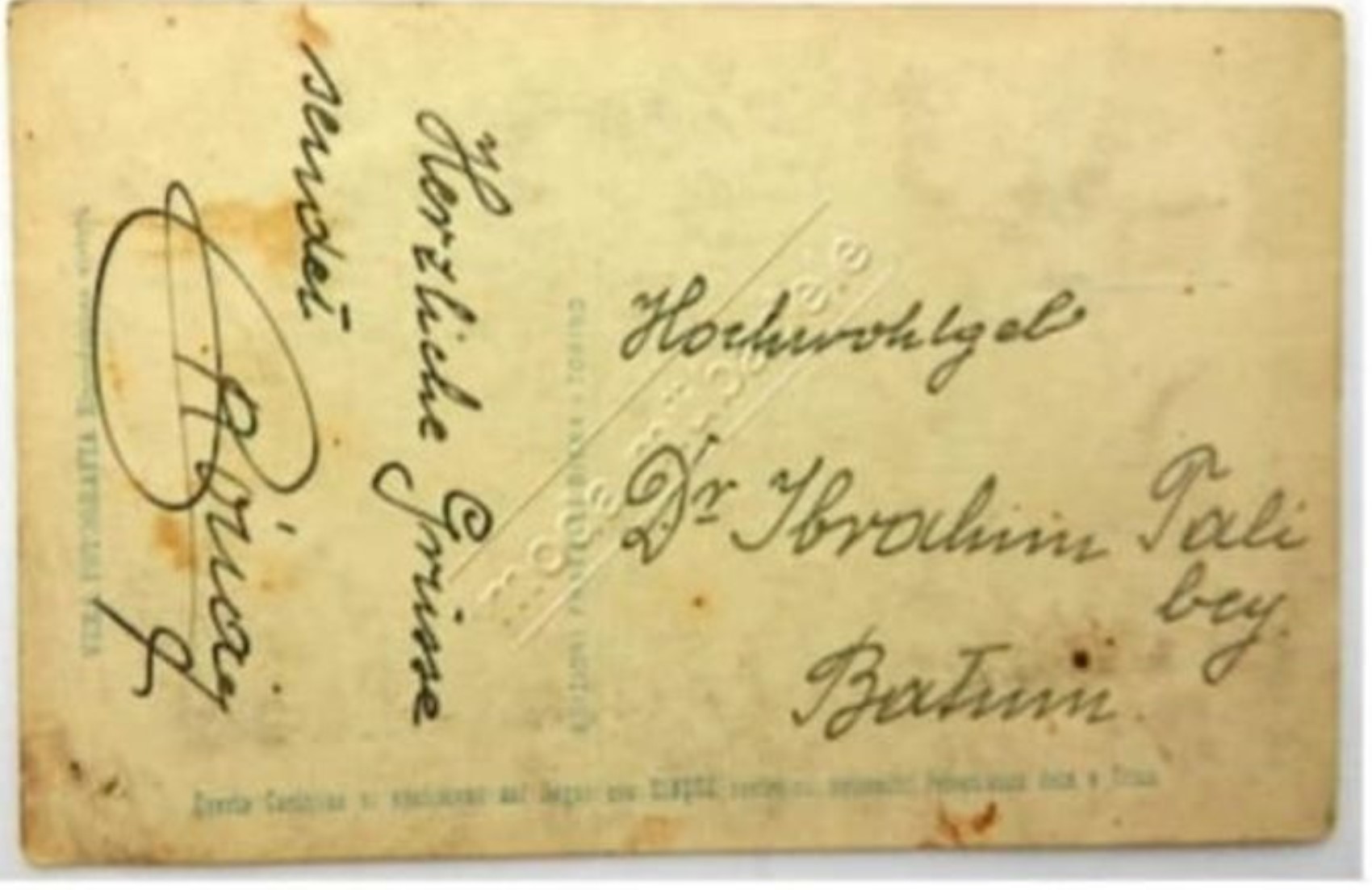
Dr. Öngören definitely sends letters and cards to Istanbul from places where the mail works well. This is one of the things he underlines in the diary. By saying I wrote a letter to Kadıköy and Erenköy. I sent a card. I think these addresses must be his own house and his parents' house. However, very interestingly, there is no very clear information about his wife in the diary.
Things that caught my attention: fur, clothes, and shoes
Dr. Öngören definitely buys fur and has it tailored whenever he finds an opportunity in Russia. The weather is very cold. In Europe, he has clothes and shoes made. There are also orders. For example, Kazım Karabekir Pasha ordered fur. There is nothing ready-made. Everything comes out of the hands of tailors. That is why if they have money and have found a good master, they have clothes and shoes made. It is possible to come across long cost calculations everywhere in the diary.
The last things he was busy with until he returned to Turkey
Ensuring the passage of Turkish soldier groups who had escaped from captivity to Anatolia and the safe delivery of the last Soviet aid to Turkey. Since he mentions the 12th group, there was quite a lot of activity between Moscow and Batum. The ships Preveze and Alemdar are used to transport the incoming aid to Turkish ports. The Black Sea is now safer. The Allies have accepted that the war is over. There are automobiles among the aid sent by the Soviets after the victory. This caught my attention. The point that should be emphasized is this, of course. Important things have been achieved for both sides now. The civil war in Russia has ended, the Turks have defeated the Greek army, and they have been invited to negotiate peace.
Tali Bey witnessed counter-revolutionary attempts in Georgia. These attempts were suppressed by the Red Army. There were executions. He uses the expression "aksi inkılap" for counter-revolution. That is, counter-revolution.
Two patients in Çankaya: Gazi and Latife
After the Republic, he went from Batum to Istanbul; he passed to Ankara and met with the Gazi in Çankaya: the date is November 13, 1923. He found Latife and the Gazi as patients. Latife's mother had set out from Istanbul to Ankara to see her daughter.
He examined the Gazi, suspected a malaria attack, and took blood for analysis. He personally examined it in the bacteriology laboratory in Istanbul. The result was negative. But his doubts still continue. I would like to remind you that Atatürk also caught malaria and had the Spanish flu during the armistice. Since he had doubts about exactly what the attack the President had was, he suggested that Internal Medicine Professor Frederich Kraus from the Berlin Faculty of Medicine be invited. Meanwhile, we know that Atatürk had two heart attacks. Dr. Öngören might have encountered the first one.
Parliamentary candidacy offer and ambassadorship
He was offered a parliamentary candidacy, he wanted a foreign assignment, and initially, an ambassadorship in one of the Balkan countries was considered. Probably because there was no vacant position, he was appointed as ambassador to Warsaw; Poland is a state being re-established at that time. The date of the President's signature on the appointment decree: May 3, 1924.
Evaluation of the diaries
Dr. İbrahim Tali Bey's diaries begin in Moscow. The year is 1920. They end with his appointment as ambassador to Warsaw. 1924.
The diaries cover the time he spent in Russia, Germany, and Batum. Dr. Öngören has a strong observational side.
Dr. İbrahim Tali Bey. He met Atatürk in Benghazi. They met there for the first time.
Tali Bey remained in Russia as a representative of the TBMM government from the autumn of 1920 until Ali Fuat Pasha was appointed ambassador to Moscow in 1921. He is one of the two people who managed the military and financial aid process. The other is Minister of Foreign Affairs Yusuf Kemal Tengirşenk.
The ongoing civil war in Russia is reflected very little in the diaries. Öngören's daughters are studying as boarders at a school in Germany (Weimar). He has three daughters. Germany's economic situation is not bright at all. There is high inflation. This is one of the reasons for the strengthening of fascism. The other is revisionism: This motto means "We were not defeated in the war, politicians betrayed Germany." He has notes every day about the market values of the dollar, pound, mark, Russian Nicholas gold, and Soviet money. He is always worried. Because the value of the money he brought with him changes at any moment. Turkish money is the gold and paper money put into circulation by the Ottoman Bank.
The political environment in Germany is mentioned very little in the diaries. However, the Weimar Republic was established. The founding leader is Friedrich Ebert. Germany is a country where social democracy is strong. There is a serious power struggle between Social Democrats, National Socialists, and Communists. The traces of the Spartacist uprising are still continuing. Tali Bey does not mention these at all.
A significant part of the diaries covers the two-year Batum Consulate General period. During his duty, the Caucasus is being Bolshevikized. The Caucasus federation is being connected to Moscow. These processes are mentioned in the diaries. But with the style of an objective outside observer. There is almost no discussion.
Migration is at the beginning of the issues he is really interested in. There are still Turkish soldiers who were taken prisoner in the First World War in Russia. There are Turkish prisoners even in Siberia at that date. Their return is one of the issues he is most busy with. And the shipment of weapons and ammunition to Anatolia.
Batum, where he is on duty, is an extremely strategic place for entry and exit to Anatolia. According to the Treaty of Brest-Litovsk, Kars, Ardahan, and Batum (elviye-i selase) were left to Turkey. But the front of the victors did not recognize the status quo established with Russia. The Caucasus—including Batum—was subjected to British occupation.
The region was left to the Soviets with the Moscow and Kars treaties. Batum became the administrative center of the Adjara Autonomous region.
Another point reflected in the diary is his closeness to the Great Atatürk as a physician. To the extent that he would take a blood sample, take it to Istanbul, and personally examine it in the bacteriology laboratory.
After the Republic, he became the ambassador to Warsaw, he has parliamentary membership, but we know him primarily for his general inspectorate duties. Eastern provinces and Thrace inspectorates. There are reports he wrote during both duties. İbrahim Tali Bey is involved in politics. But he is not a politician. He is one of the wise men whom Atatürk valued very much. He deemed the surname "Öngören" appropriate for him.
In all this atmosphere, when he went to Germany, he did not neglect to watch "The Marriage of Figaro" (he says teehhül), and in Tiflis, the operettas "Carmen" and "Arşın Mal Alan".
Would you like to get notifications about new developments and save news?
- NotificationsNew developments and breaking news
- SaveNews is stored in the app
Most Read
Statement from Nihat Zeybekci on the fund investigation
New 75,000-seat stadium plan for Fenerbahçe
Interpol and MIT tracking yields results in Izmir
ID convenience for KPSS candidates

2027 Budget: Taxes for the people, tax exemptions for capital
The Çanakkale robbery -1- How was the Troy treasure smuggled out?
To whom and how was the Petition of Intellectuals submitted? Who accepted the petition?
The reality of Akkuyu and the longing for national nuclear power

Artificial intelligence and the new imperialism

Ministry investigation into unauthorized promotional messages