


Fausto Zonaro: Painter to the Imperial Majesty



THE FAUSTO-ELISA ROMANCE THAT BEGAN IN PARIS
The strong woman behind Zonaro is Lisa. Elisa or Elisabetta. The daughter of an engineer and a primary school teacher. She was very curious about photography, the great invention of the 19th century. While Zonaro was trying to create new opportunities for himself in Paris, Lisa had gone to the same city to learn photography. She learned everything there was to know about photography. Lisa must have been one of Europe's first female photographers. They met in Paris.
The young lovers thought they could create opportunities in Istanbul, influenced by orientalists who were enamored with the magical East, like Edmondo de Amicis. The idea came from Lisa. A smart woman. Her intuition was strong.
Lisa came to Istanbul first. The year: 1891. Then Zonaro arrived. Together, they were trying to create a new environment where they could live. They were not yet married.
At that time, there was a community in Pera whose origins went back to the Galata Levantines. Venetians, Genoese. It is said that their numbers were around 14,000. Some were Italian citizens, some were Ottoman.
Elisa and Zonaro, as devout Catholics, were married in 1892 at the Saint Esprit Church. Their first child, Faustino, was born the following year.
Lisa opened a photography studio in Parmakkapı. They began to earn money. The name of the studio: Atelier Elsa Constantinople.
Meanwhile, the first place they lived was Ayaspaşa Mezarlık Street. They experienced the great 1894 Istanbul earthquake here.
CHANGE IN THE 19TH CENTURY AND TRAVELERS COMING TO ISTANBUL
The industrial revolution and the effective use of steam power had increased the possibilities for sea and rail travel. The North American continent had been crossed from end to end by rail in the middle of the century; Europe had been woven with iron networks.
Ottoman Turkey, especially Istanbul, had turned into an accessible "Orient" image. The magnificent Turk was no longer being spoken of. After Karlowitz, the Ottoman Empire had become not a feared, but a curiosity-inducing Muslim empire. It had been connected to Europe by steamships and railways.
Sultan Abdülaziz's travels to France, England, and Germany signaled a new world. In the West, "Turk" was now the name of a fashion. After the Crimean War, the Ottoman Empire had become a part of the Europe of that time.
Meanwhile, Ottoman territory meant new market opportunities for travelers and painters. Especially names like Jean-Baptiste Vanmour, Jean-Étienne Liotard, Antoine Ignace Melling, and Amedeo Preziosi lived in Istanbul for long periods. They became known as early Orientalist artists.
In the meantime, Istanbul books by authors like Théophile Gautier and Edmondo de Amicis had influenced Elisa and Fausto. They began to think of Istanbul as an exotic city that could create new opportunities in the art market.
The idea had come from Elisa. Thus, the first step of the Zonaros' Istanbul life was taken.
INTEREST IN PAINTING IN NINETEENTH-CENTURY OTTOMAN EMPIRE
There is a prohibition on painting and sculpture in Islam. I think the root of this prohibition is a reaction to the idolatry period of the Arabs. Even in my childhood, "making human figures" was considered a sin. Our grandmothers and grandfathers would not pray without turning portrait paintings in the room face down. I would like to remind you that they also thought sculptures were idols. They were not even happy with the presence of a small figurine in the house.
The reason for this attitude is Islam. It is the practice of living Islam. For this reason, there is calligraphy, illumination, and miniature in the Islamic world, but no painting or sculpture.
After the Tanzimat, capitalism did not just put the products of the industrial revolution on the market. It also brought its ideology and its art. And its cultural values. Especially among the ruling elite class, Western life (this was called European, modern life) began to be adopted. Radical changes were seen in daily life, from eating and drinking habits to furnishings.
Europe's art products were also within this scope. The Ottoman aristocracy began to play the piano and paint. At the very least, an effort was made to understand painting and classical music.
They saw this as a sign of elitism. Understanding painting, music, and classical novels defined your class.
As I specifically mentioned in one of my articles, while peace negotiations were being held in Karlowitz, the Ottoman delegates refused to sit on chairs. Instead, they sat together on a divan. The negotiations were conducted this way. Peace was reached with this seating arrangement.
Only 150 years after this historical event, Sultan Abdülaziz traveled to Europe. He went to London, Paris, and Berlin. Not for battle like his ancestors, but as a modern monarch, he was a guest of Europe's emperors. When he returned, he had his statue made. Not only were European-style landscapes imitated in the gardens of his palaces. There were also statues.
The last Ottoman Caliph (by the decision of the TBMM) Abdülmecid Efendi was a painter. When his works are examined, it is seen that he was quite good. Only two centuries had passed since Karlowitz to reach this point.
This is the context in which the Zonaros' arrival in the capital and their gaining prestige among the elite classes and being recognized in society should be evaluated.
Within a few years, the Zonaros found a place for themselves in embassy circles and among the Ottoman ruling elite. Their circle expanded through their painting and photography studio.
Russian Ambassador Alexandre Nelidov also requested that they open a painting course within the embassy for Russians in Istanbul.
They attracted the attention of the Ottoman elite and the palace through the connections of British Ambassador Sir Philip W. Currie and his wife Victoria, Italian Ambassador Collabion, and Greek Ambassador Mavrokordato.
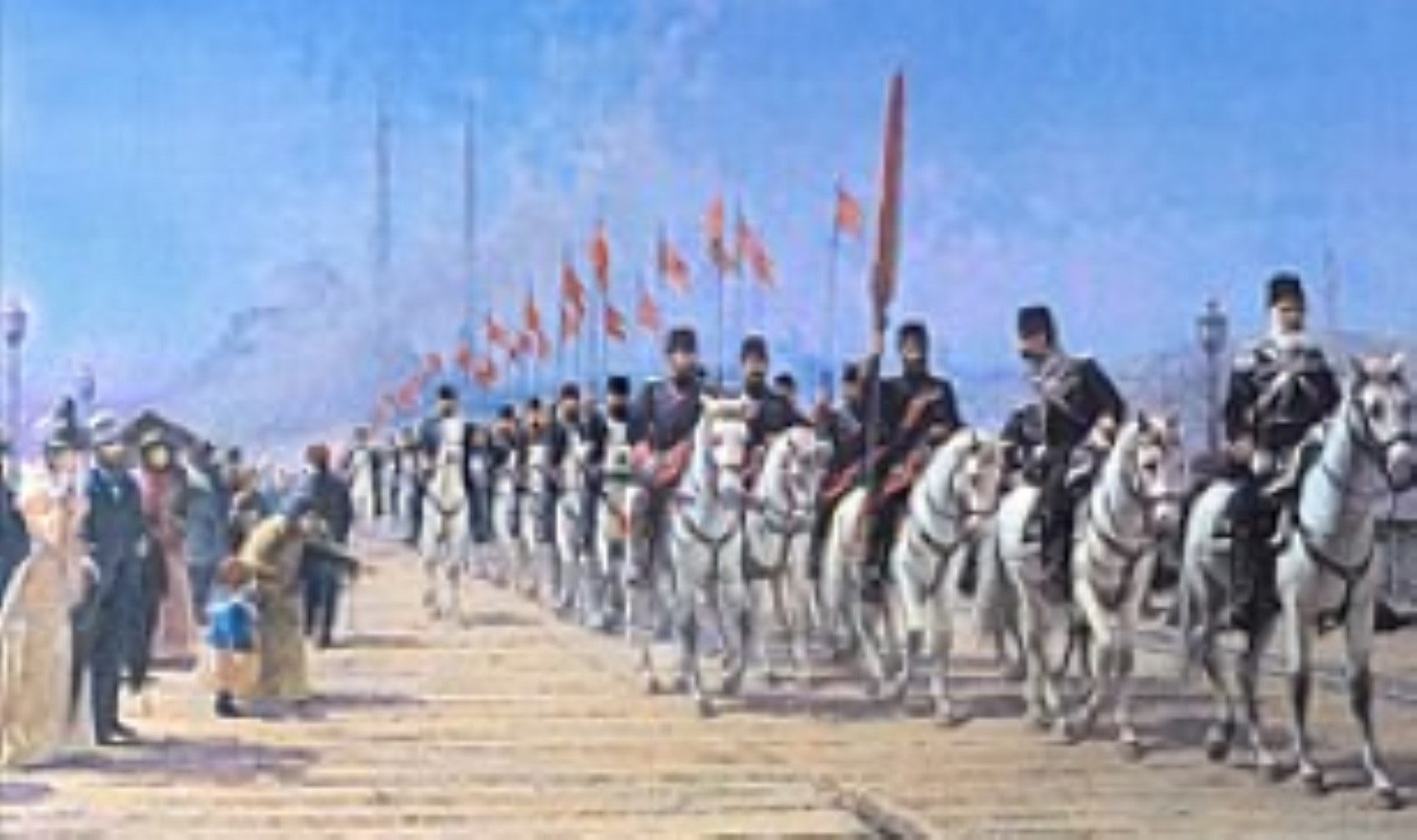
The turning point in the Zonaros' Istanbul life was the presentation of the painting "The Ertuğrul Regiment Passing over the Galata Bridge" to Sultan Abdülhamid. Zonaro had worked very hard to capture this magnificent passage on canvas, and had used the sketches from the photographs taken by Elisa.
Now a very important door had opened before them. This was the state door. Fausto Zonaro had now become the "Painter to the Imperial Majesty." This meant having a place and a salary in the Palace.
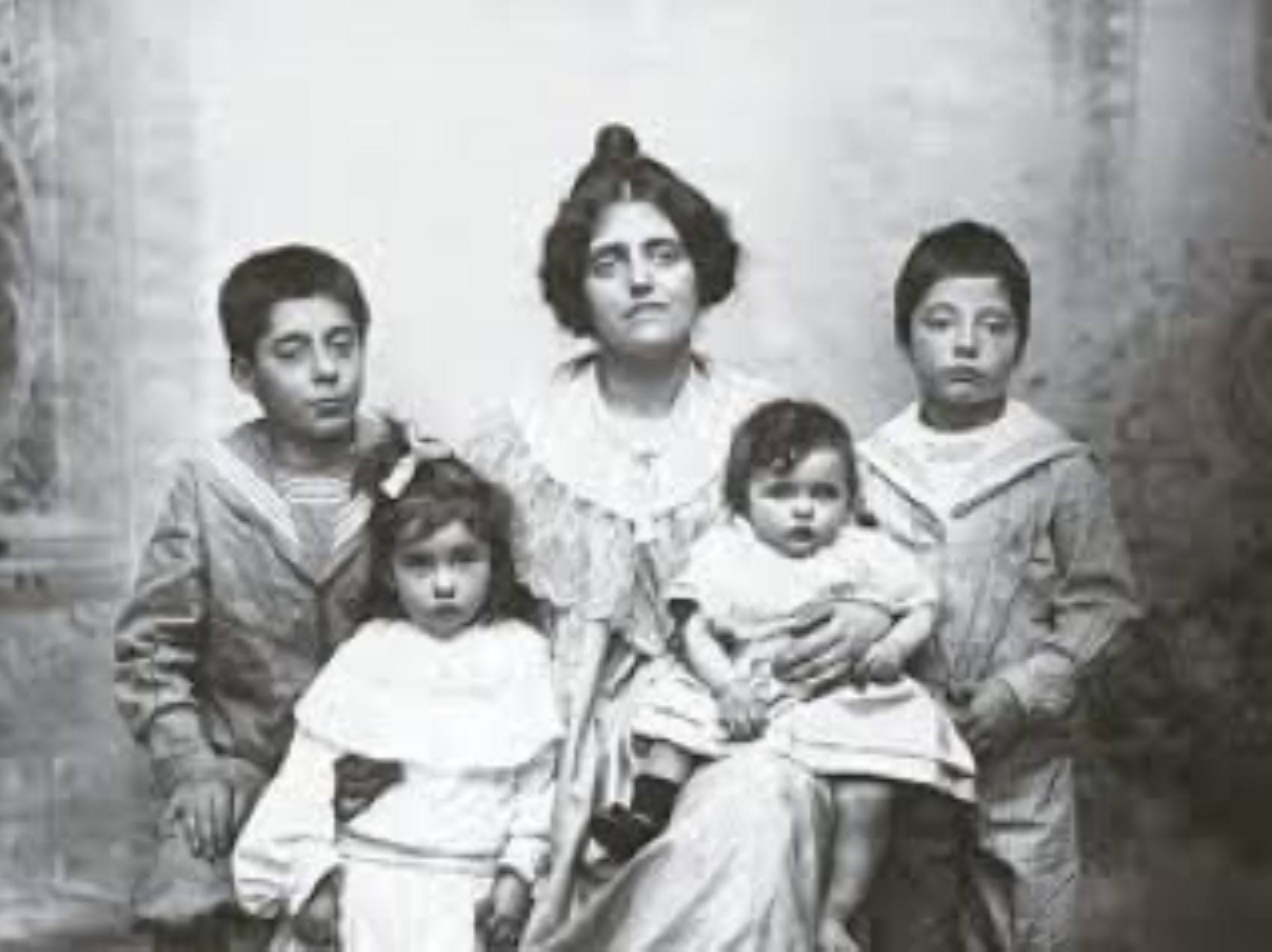
ELISA THROUGH THE EYES OF CELAL ESAT ARSEVEN
Arseven had known the Zonaros since the first "Home Studio" they established in Cihangir. He is also a fan of Lisa. In his writing, he describes an Italian mother with messy hair who shouts to discipline her children. On the other hand, she is trying to introduce her "husband" to the Pera environment with smart steps. It is as if Zonaro is one of the children of this authoritarian Italian mother. This authoritarianism would lead to their separation towards the end of their lives.
Elisa became a photography student at the Pirou studio on Boulevard Saint-Germain in Paris. This person was a very well-known photographer of his time. She apprenticed for quite a long time and learned all the tricks of the trade. There is such a background behind those magnificent paintings in Istanbul.
SULTAN ABDÜLHAMID II'S REWARDING OF THE ZONAROS AND HIS FAVORS
Sultan Hamid was very pleased with the Zonaros' art. He liked the work they did very much, trusted them more and more, and wanted new things. Photographs from Lisa, new paintings from Fausto.
Elisa was given permission to work in the Harem. Documents were provided. Because there were police (zaptiye) around. The Sultan Hamid era did not really allow anyone to be busy with things that attracted attention in public without permission. The city was crawling with spies.
Attracting the attention of the police could lead to having to endure some unpleasant consequences. They had encountered such treatment before they joined the Palace. They even tried to seize the paintings Fausto brought with him on his first arrival at the port customs.
After the presentation of the "Ertuğrul Regiment" painting, which ensured his discovery by the Sultan, Zonaro became someone with a position, a room, and a salary in the Palace. He was under the protection of the title "Painter to the Imperial Majesty."
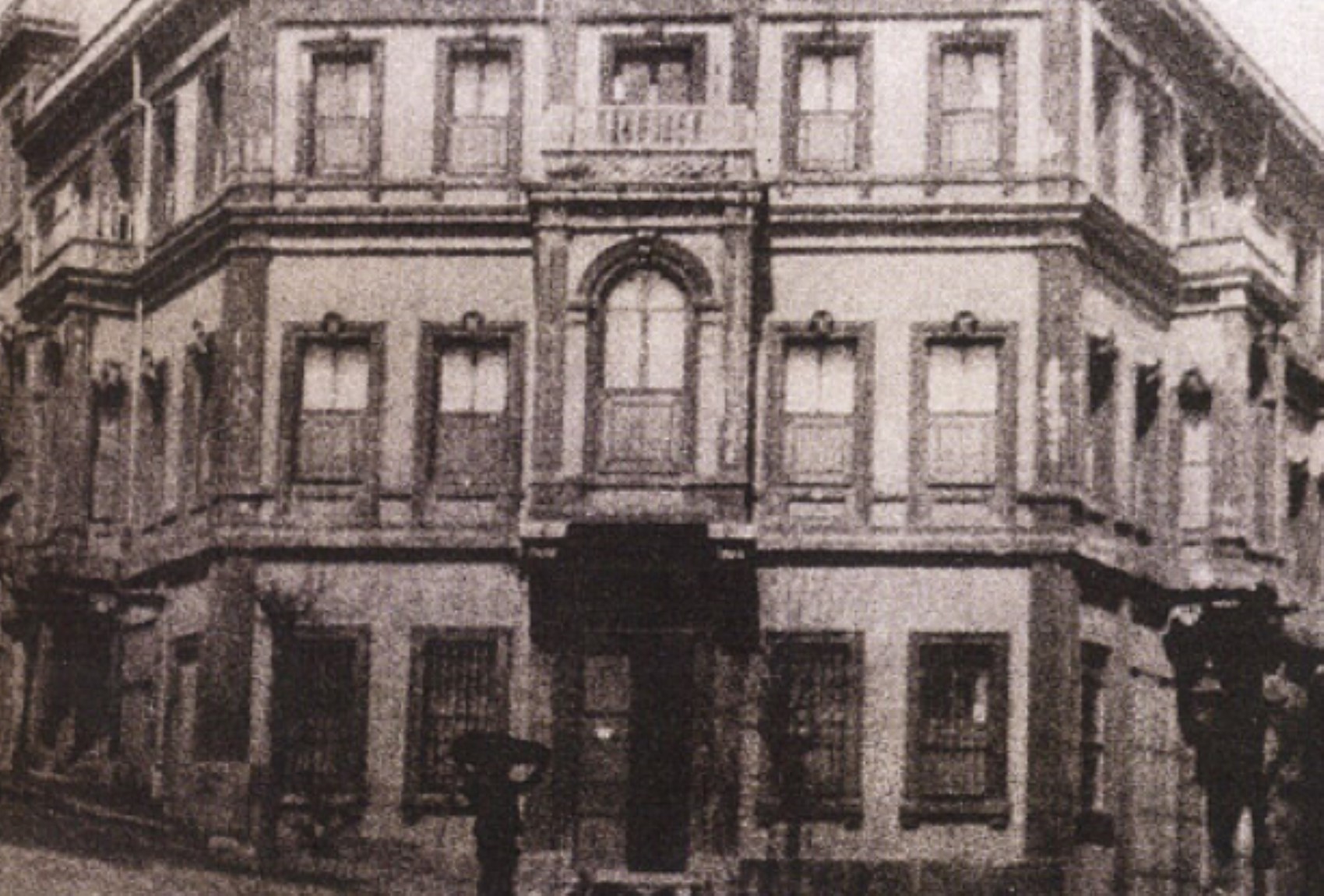
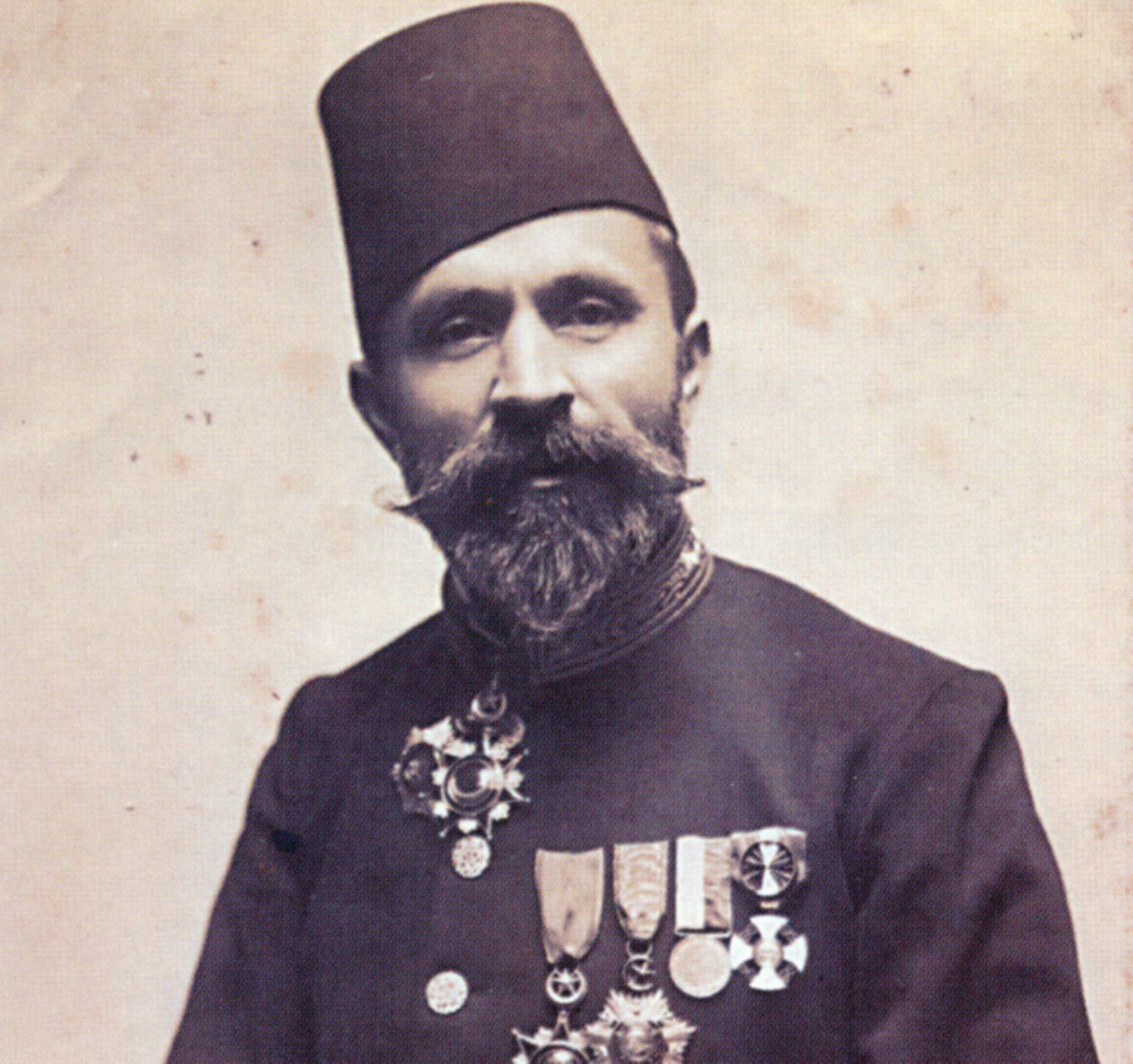
Sultan Hamid also bestowed some Ottoman medals upon Zonaro. In addition to these gestures, he allocated the building number 50 of the Akaretler houses to them. The building is the three-story building at the top of the Maçka slope. The building now used as a Cafe-Restaurant.
The Zonaros used this place as both a residence and a studio. The studio became a frequent destination for the elite of the Sultan Hamid era, a place frequently visited by the Servet-i Fünun circle, the sons of pashas, and Abdülhamid's pashas who wanted their daughters to take painting lessons.
THE FRIDAY PROCESSION PHOTOGRAPHS TAKEN BY ELISA
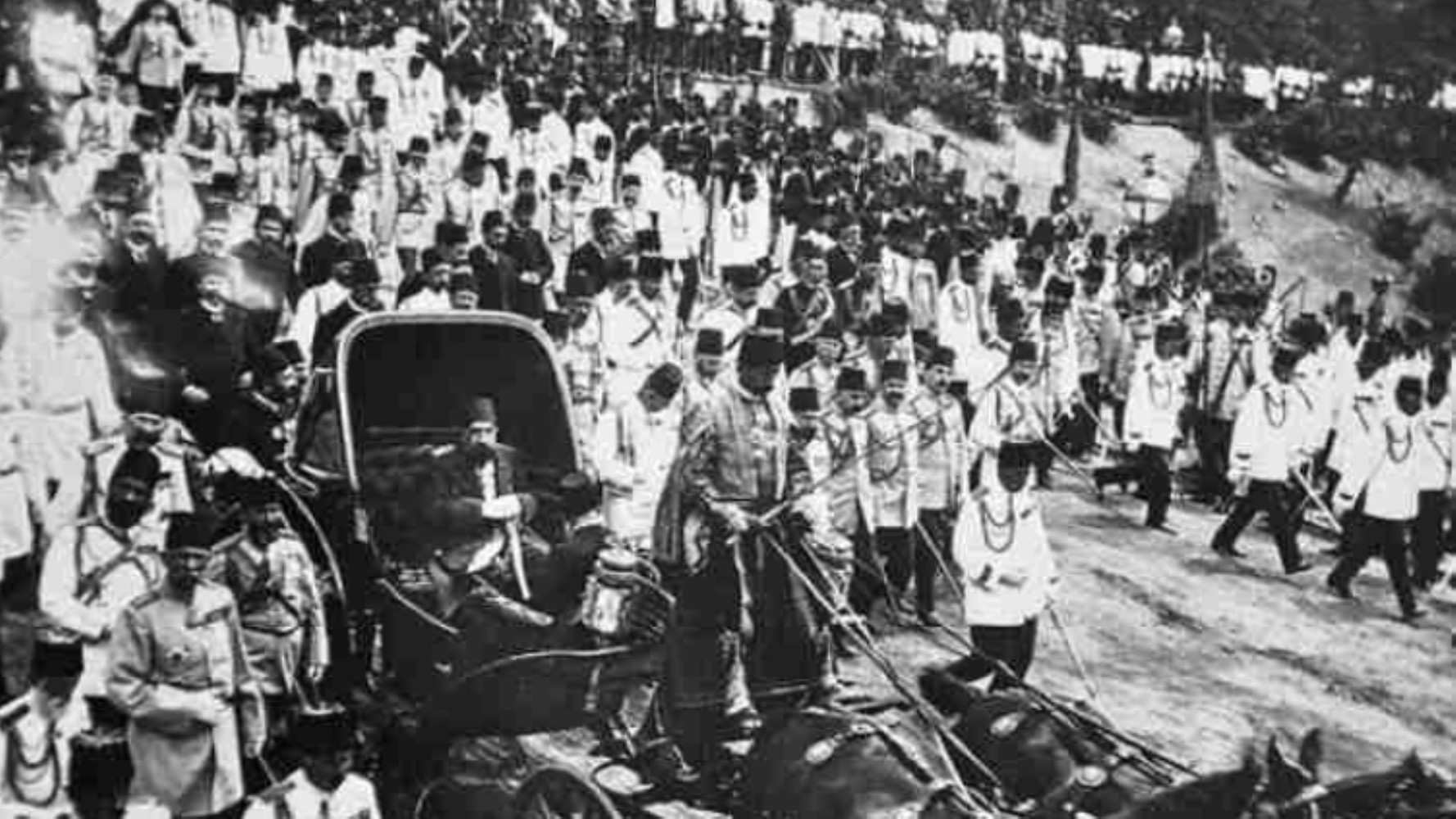
As I mentioned before, many of Zonaro's outdoor paintings were made in the studio using photographs taken by Elisa. Many pictures of Istanbul in the era of Abdülhamid II are the product of Elisa's lens. Including the women of the Harem. In my opinion, one of the most interesting is the picture taken while Sultan Hamid was going to the Friday procession. It is estimated that it was taken from the Viewing Pavilion, which was built for those who wanted to watch the procession ceremony. The pavilion was built especially for foreign mission representatives in the capital.
When I started writing this article, I learned that Zonaro was also among the crowd behind Sultan Hamid. And indeed, he is. The Painter to the Imperial Majesty, Monsieur Zonaro, is one of those accompanying the procession to prayer. The Caliph Sultan is going to Friday prayer. One of those walking respectfully behind him is a Catholic Italian. It is interesting, indeed.
KAISER WILHELM II IN ZONARO'S PAINTINGS
There are pictures taken by Elisa in places where the German Kaiser was present as a guest of Abdülhamid. I would like to mention a few paintings Zonaro made using these. The painting depicting the Kaiser boarding the royal boat at the Dolmabahçe Palace pier is dated 1898. It is currently in the National Palaces Dolmabahçe Museum. Another watercolor painting showing the Kaiser with his wife in a four-horse carriage is dated 1899.
THE KAISER'S SECOND VISIT AND ZONARO
After Kaiser Wilhelm II came for the second time, he had the German Fountain prepared in Germany and quickly gifted it to the Ottoman Sultan. As a token of friendship between the two countries.
He traveled quite a bit in Ottoman territory, going as far as Jerusalem via Beirut. He visited the tomb of Saladin in the courtyard of the Umayyad Mosque in Damascus.
Sultan Hamid attached great importance to the hosting of the Kaiser. Wilhelm II was hosted at the Şale Pavilion. Zonaro's and Aivazovsky's paintings were hung on the walls of the Şale allocated to the Kaiser.
TO WHOM WERE THE COPIES OF THE ERTUĞRUL REGIMENT PAINTING GIFTED?
I thought Kaiser Wilhelm had come to Turkey twice. It turns out it was three times. The first two were during the Sultan Hamid era. 1889, 1898. The last one was during the First World War: 1917. There is a picture taken on the deck of the Yavuz battleship with the Acting Commander-in-Chief Enver Pasha during the third one.
The Kaiser's second visit coincides with the time after Zonaro presented the painting of the Ertuğrul Regiment's passage over the Galata Bridge to Sultan Hamid. His fame had increased. He was now the Palace's painter. He had a salary of 40 liras. Upon the Kaiser liking the painting very much, Sultan Hamid gifted the painting to him and asked Zonaro to make an identical one.
Since I knew about this gifting incident, I thought there were two copies of the painting. While writing this article, I discovered there were three. The third one was gifted to the French.
The story is as follows: The 25th anniversary of Sultan Hamid's accession coincides with 1901. Many important guests had come from Europe. One of them was the French Parliament Speaker M. Paul Deschanel. Like the Kaiser, he also liked the painting very much. Sultan Hamid asked Zonaro to make another copy. The third copy of this magnificent painting was made for the French Parliament and was exhibited in the Parliament for a long time. Then, most likely because we were adversaries with the French in the World War, it was removed, and the fate of the painting is unknown.
DIFFERENCES BETWEEN THE COPIES OF THE ERTUĞRUL REGIMENT PAINTING
While there is a barefoot child and gypsies in the first of the paintings, we see people in Western clothes in the later versions. Serasker Rıza Pasha is also seen at the very front of the regiment. What impresses me most in all three versions of the painting is that the movement is reflected in a perfect way.
WHAT ARE THE SOURCES REGARDING ZONARO?
For those who want to learn the story of the Zonaros in more detail, I recommend the book "Ottoman Palace Painter Fausto Zonaro," published by Osman Öndeş and Erol Makzume together. Another is the publication titled "Zonaro's Memoirs: 20 Years in the Reign of Abdülhamid."
Another source that encouraged me was a doctoral thesis done at Koç University. (2023)
The person who wrote the thesis: Alev Berberoğlu. The title is as follows: "Unwritten Histories of Photography; Elisa Zonaro an Italian Photographer in Ottoman Istanbul"
I can say that the exhibition themed "Elisa Zonaro's Istanbul," organized at the Kazlıçeşme Art Gallery, was the main reason for me writing this article. The exhibition is still open to visitors. The pictures were published by the Zeytinburnu Municipality and are available to be seen on the internet.
IN WHICH COLLECTIONS ARE ZONARO'S WORKS?
Zonaro's Turkey paintings are in the National Palaces, Dolmabahçe Palace Museum, Pera Museum, Axa-Oyak, Suna-İnan Kıraç collection, and other private collections.
PAINTINGS WHERE HE PLACED HIMSELF
Fausto Zonaro can be seen among the dervishes in a state of ecstasy in the painting of Fatih Sultan Mehmet's entry into Istanbul and in the painting of the Üsküdar Rufai Dervishes.
THE FATE OF THE 10 MUHARRAM PAINTING
The subject of 10 Muharram is the Karbala event. This date is very important in the Shia faith. Prophet Muhammad's grandson Hussein was massacred in Karbala along with his family by the army of Yazid. Those who survived this bloody event are those who continue to claim that they are descendants of Prophet Muhammad today. In the Shia tradition, the days of 10 Muharram are days of commemorating the pain. Shias keep the pain of Hussein alive by beating themselves. Sultan Abdülhamid asks Zonaro to paint this important event. His goal is to gift the painting to Razık Han, the imam of the Shia community in Istanbul. When Zonaro completed the painting, the Young Turk Revolution had taken place. The political environment is quite chaotic. For this reason, the painting could not be given to Razık Han. The 10 Muharram Painting is one of the works where Zonaro was most successful; the melancholic expression of pain on the faces of the Shias is extraordinary.
THE IMPORTANCE OF THE HÜCUM (ASSAULT) PAINTING
Sultan Abdülhamid II wants a painting about the Domokos battle won by the Ottoman Army against the Greeks. The painting is undoubtedly very successful. But there are two strange things. First, the Greek Kingdom is a small state established in the Peloponnese peninsula in the first quarter of the nineteenth century by breaking away from the Ottomans—with Western support. This state intends to grow against the Ottomans. It declares war on its former master, the Ottomans. But it is defeated. The first strangeness is that the victory won by the great Ottoman Empire against this small state is exaggeratedly glorified. The second is that Sultan Hamid, who sits behind the walls of the Yıldız Palace, begins to be called Gazi. Zonaro made the sketches for the Hücum painting with soldiers brought from the barracks.
SOME FAMOUS NAMES WHO TOOK PAINTING LESSONS FROM ZONARO
For example, Celile Hanım, the daughter of one of the Sultan's aides and the linguist Hasan Enver Pasha, is one of his students. Celile Hanım is, as is known, the mother of Nazım Hikmet. Another is Mihri Müşfik Hanım, the daughter of the Minister of Medicine Dr. Mehmet Rasim Pasha.
THOUGHTS ON ZONARO'S PAINTING
The art movements that excite me most in painting are the Renaissance and Impressionism.
Impressionism makes itself felt in the painting education Zonaro received. There is no doubt that he was a great painter. During the 20 years he lived in our country, by working in different places in our city, he carefully observed the people in different places, daily life, and relationships, and transferred them to his canvas very successfully. He made a great contribution to our culture and art history.
The feature that arouses artistic excitement for me in Zonaro's paintings is this: He was able to reflect human faces and bodily movements with great vitality. As in the Tulumbacılar (Firefighters) and Hücum (Assault) paintings.
Turkish art lovers organized meetings in his memory on the 150th anniversary of his birth. They organized exhibitions with the help of the private archive in the hands of his family. There is an exhibition currently continuing at the Kazlıçeşme Art Center these days. This time the source is Elisa Zonaro's pictures. The title of the exhibition is "Elisa Zonaro's Istanbul." The pictures recorded in history by Elisa's lens have brought the details of the time to the present day with extraordinary mastery.
Adolphe Antoine Thalasso had defined Zonaro in Le Figaro as the greatest painter of the Turkish school. (1907)
Şevket Rado also said this about him: Monsieur Zonaro, the painter who is always busy with his canvas on the shores of Üsküdar and Salacak. It seems a halo of interest was forming wherever he worked.
After returning to his country, he continued his work in San Remo until his final days. But he would never neglect to paint Istanbul and Orient-themed pictures.
Zonaro's contribution to Turkish painting is, in my opinion, impressionist orientalism. He produced around 2300 works throughout his art life. 1350 of these are related to Istanbul life, which shows that he was a very productive painter.
One of the themes Zonaro worked on is Ottoman women. These could be women from the lower classes, or they could be palace women, or the daughters or women of the Ottoman elite class.
Meanwhile, female privacy, as in the painting "Women Boarding a Boat," has been presented to the attention of those who understand the art of painting with fine details.
One of the important details in his works is that he places himself, his wife, and his children in appropriate places in his paintings. The presence of the Zonaros in the paintings can only be noticed when examined carefully.
As in the paintings of the Ertuğrul Cavalry Regiment, the ritual of the Rufai Dervishes, and Fatih's entry into Istanbul.
THE YOUNG TURK REVOLUTION AND THE ZONAROS' DEPARTURE FROM ISTANBUL
The Young Turk Revolution or the "Proclamation of Freedom" brought serious changes to the Ottoman administration. The real radical changes came onto the agenda after the 31 March (13 April) 1909 counter-revolution attempt. The deposition of Sultan Abdülhamid II, constitutional amendment, party rule, political polarization, etc.
The deposed sultan was taken to Thessaloniki by the decision of the Committee of Union and Progress central committee. This was a forced residence in the Alatini Pavilion. Ali Fethi Okyar accompanied him for a long time.
The deposed caliph (hakan-ı mahlû) was brought back to Istanbul by a political decision again before Thessaloniki fell during the Balkan wars. He was placed in the Beylerbeyi Palace. He lived there under surveillance until his death in 1917.
The overthrow of Sultan Hamid resulted in the Unionists' liquidation of the old regime elite. The Committee of Union and Progress became the defining political actor of the Second Constitutional Era. Figures from their own cadres were brought to important state positions. The peak of this is Talat Pasha becoming the Grand Vizier.
In my opinion, Sultan Hamid, who was an oriental-type despot politically, was the patron of painting, music, and non-political publications. The Yıldız Palace was a place where theater and opera performances were held and Western music was listened to. In these aspects, it was no different from European palaces. He also liked to show this to Westerners (like the Kaiser) who came to visit him.
The fall of Sultan Hamid from power ended the Zonaros' relationship with the palace. He was no longer the "Painter to the Imperial Majesty." He was an Italian painter living in Istanbul. He did not see the interest he expected from Sultan Reşat either.
Finally, in 1910, he left Istanbul with his wife and children. He sent his paintings by ship. They left by train from Sirkeci. Some of his friends came to say goodbye. Touching scenes were experienced.
Zonaro initially thought that the Unionists coming to power would not change his position. He painted the portraits of Enver Pasha (at that time Bey) and Mahmut Şevket Pasha. He received interest. But this was not enough for him to receive patronage. The Unionists were busy with other things.
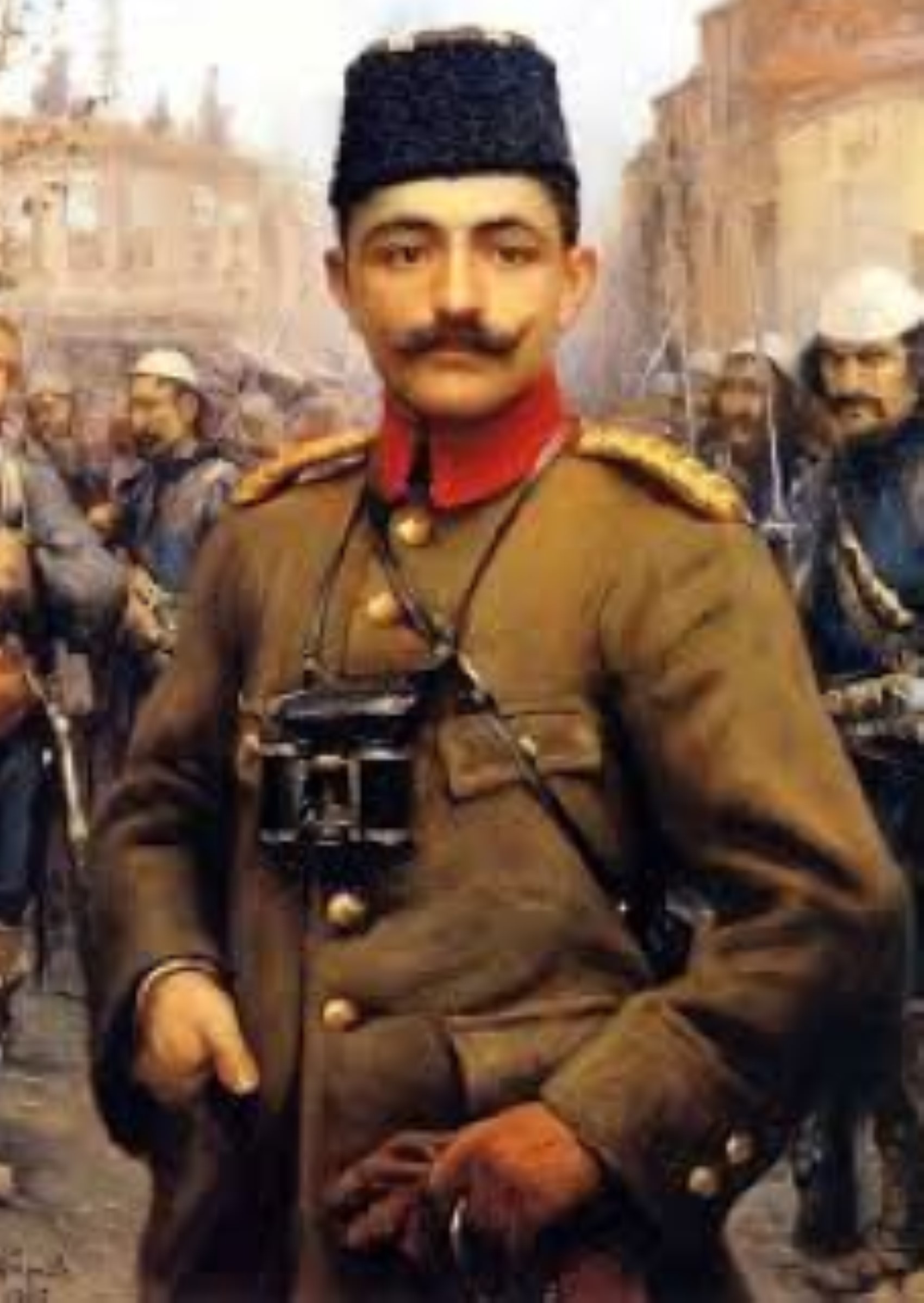
He must have thought that he could maintain his status by painting the portraits of the new state officials and getting along well with them. But that did not happen.
I think two important developments are the reasons why they had to return to Italy.
First of all, he was seen as Sultan Hamid's man. The second factor was the escalation of tension between the Italians and the Tripolitania (Trablusgarb) issue. This tension ended in war. With the Treaty of Ouchy, Tripolitania was lost.
The Zonaros were Italian. They were citizens of a country that would soon be an adversary state. For this reason, they had to leave.
The Zonaros left Istanbul, where they had lived for nearly 20 years and made friends. They returned to their country. But their occupations remained the same.
If a final assessment is to be made, Fausto Zonaro died in San Remo in 1929. His wife Elisa died in Florence in 1945. These dates show that Fausto lived for nearly twenty years after leaving Istanbul, and his wife Elisa lived until the end of the Second World War (35 years).
AFTER RETURNING TO ITALY
The Zonaros had to leave Istanbul due to the exaggerated austerity measures of the Unionists and a bit of their insensitivity. Fausto died in 1929, Elisa in 1945. The relationship of the couple who met and fell in love in Paris in the 1890s had deteriorated quite a bit towards the end of their lives. I do not know the fate of their eldest child, Faustino. The girls appear more in the paintings. We see their carefully dressed daughters in many paintings and family photos. From 1920 onwards, the couple began to live separately. They shared the daughters. Fausto preferred to stay in San Remo with Mafalda; Lisa preferred to stay in Florence with Jolanda.
The year Fausto died, Mussolini had fully consolidated his power, had removed the immunity of Communist deputies by "fabricating criminal files," had stripped them of their parliamentary seats, and had expelled them from parliament. Among them was Antonio Gramsci. After his parliamentary seat was stripped, Gramsci was thrown into prison. He had to live in prison under very bad conditions until the end of his life. In general, the political situation in all of Europe is quite chaotic.
WHICH IS ZONARO'S MOST IMPORTANT PAINTING FOR ME?
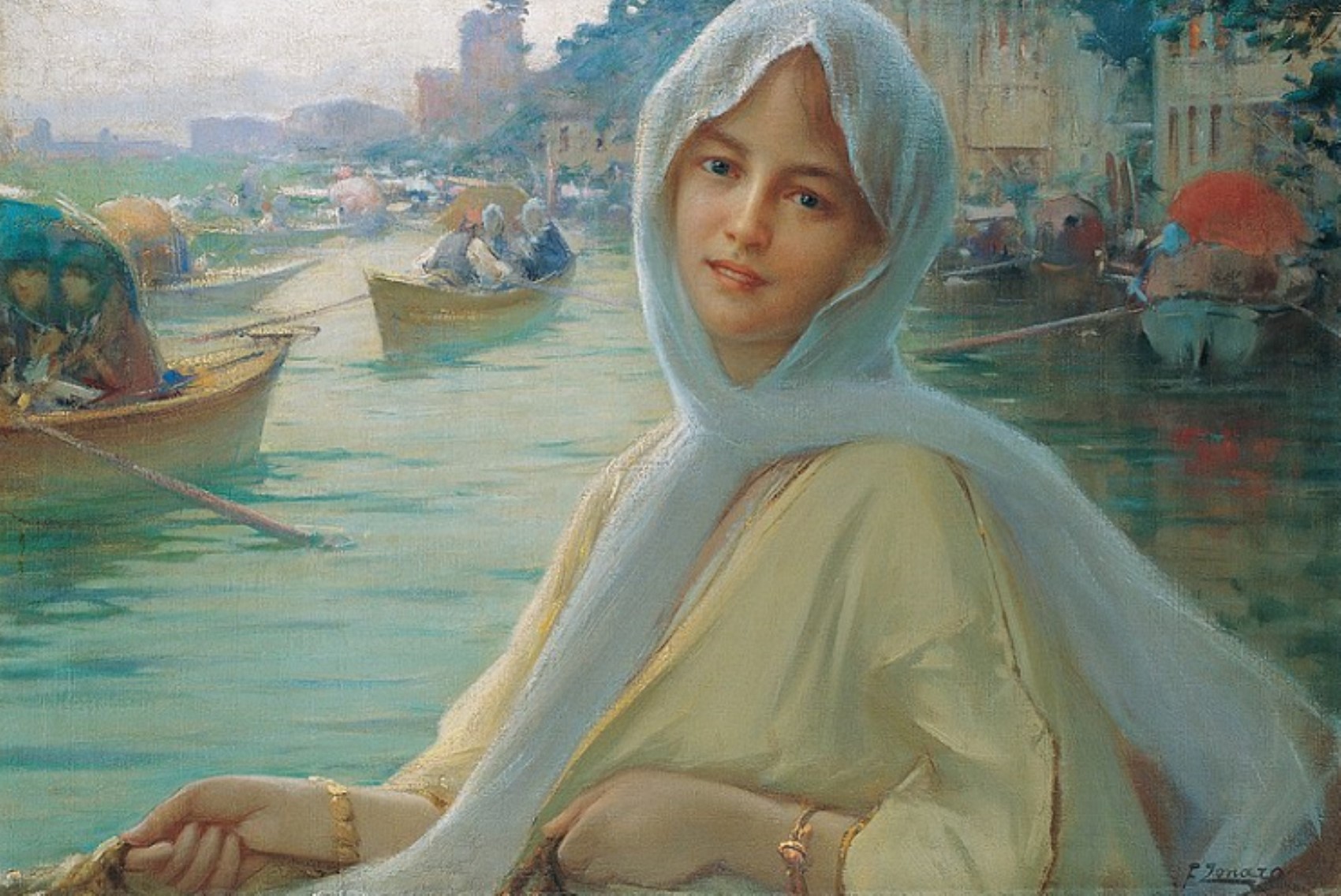
For me, Zonaro's most important painting is "Pleasure in Göksu." His peak work in terms of painting art is the "Ertuğrul Regiment."
Let me introduce you to "Pleasure in Göksu." It must be one of the last works he made before leaving Istanbul, in all likelihood. Perhaps the last one.
The painting reflects a view from the corner at the end of Kızılserçe Street in Anadoluhisarı. There is a Western woman in the boat.
In my opinion, as in many of Zonaro's paintings, this painting was made in the studio by studying the photographs taken by Elisa.
There is misleading information regarding the woman in the painting. Such as the British ambassador's daughter, his own daughter, Lisa herself. I think it is none of them.
At that time, the British Ambassador Sir Gerhard Augustus Lowther had just married an American lady. The couple had just arrived in Istanbul. I think the woman in the painting is the ambassador's young American wife.
Zonaro had painted the previous British ambassador's daughter. In a palanquin in the embassy garden. An Oriental gesture had been intended to be made to her. As a wedding gift. The date this painting was made is the early 1890s. When they first arrived in Istanbul. Even before it was presented to Abdülhamid.
To me, the woman in the "Pleasure in Göksu" painting is Alice, the American wife of the new British ambassador. There are other photographs taken by Elisa from the same spot. Perhaps they were taken on the same day.
The painting is truly very beautiful. It has a special importance for me because this is the road I used while going to and from school. It was made on Kızılserçe Street, which connects Anadoluhisarı to the back neighborhood. Zonaro recorded the lady in the boat in history with magnificent colors.
The woman's physical appearance, her wearing the headscarf tentatively, her Mona Lisa-evoking gaze, and her holding onto a rope against the rocking of the boat are extraordinary.
Would you like to get notifications about new developments and save news?
- NotificationsNew developments and breaking news
- SaveNews is stored in the app
Most Read
Statement from Nihat Zeybekci on the fund investigation
New 75,000-seat stadium plan for Fenerbahçe
Interpol and MIT tracking yields results in Izmir
ID convenience for KPSS candidates

2027 Budget: Taxes for the people, tax exemptions for capital

The reality of Akkuyu and the longing for national nuclear power

To whom and how was the Petition of Intellectuals submitted? Who accepted the petition?

The Çanakkale robbery -1- How was the Troy treasure smuggled out?

Artificial intelligence and the new imperialism

Ministry investigation into unauthorized promotional messages