


From Doğan Avcıoğlu to Today: 'Turkey's Order'



IN WHAT KIND OF ENVIRONMENT WAS 'TURKEY'S ORDER' WRITTEN? WHAT WERE ITS EFFECTS?
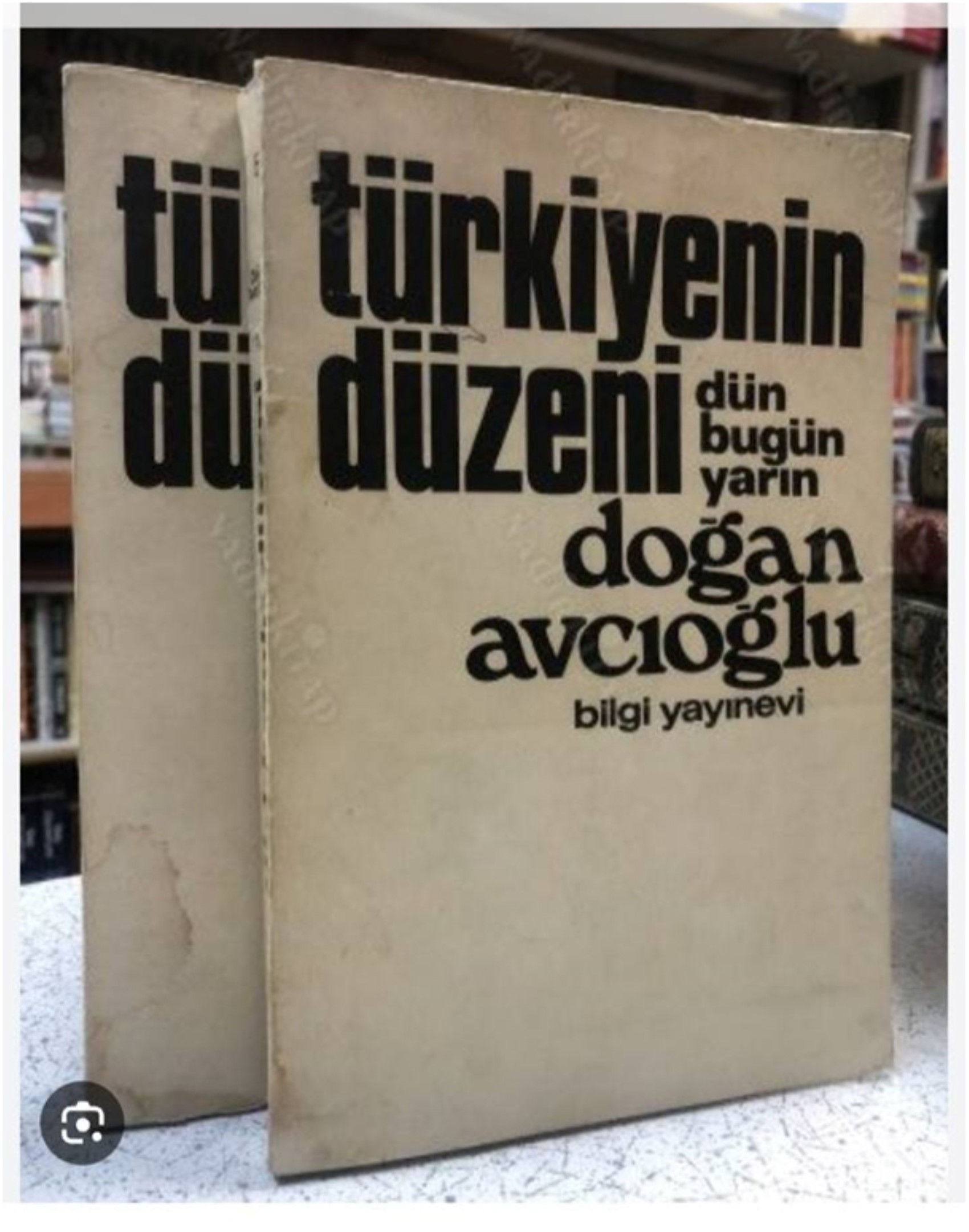 When Avcıoğlu published his book, other books and serialized articles addressing similar topics had also appeared. For instance, Dr. Hikmet Kıvılcımlı had published an article titled “The Grandeur and Decline of the National Unity Committee” in 1967. Behice Boran had examined Turkey’s social/political problems in her book titled “Turkey and the Problems of Socialism.” Sencer Divitçioğlu’s “The Asiatic Mode of Production and Ottoman Society” and İdris Küçükömer’s “The Alienation of the Order: Westernization” (1969) were published around similar dates. 'Turkey's Order' was first printed by Bilgi Yayınevi in 1968.
'Turkey's Order' won the Yunus Nadi Award in 1969. The book was later printed numerous times by Tekin Yayınevi. It has recently been reprinted, creating excitement once again in the world of Turkish thought.
Avcıoğlu wrote his book after the Yön Magazine, where he had served as editor-in-chief since 1961, ceased publication.
It is understood that the book was written with extremely disciplined work. Three places are mentioned as Avcıoğlu’s workspaces: Çamlıca, Dragos, and Büyükada. He lived in Büyükada during the final period of his life. He passed away in 1983 and was laid to rest there.
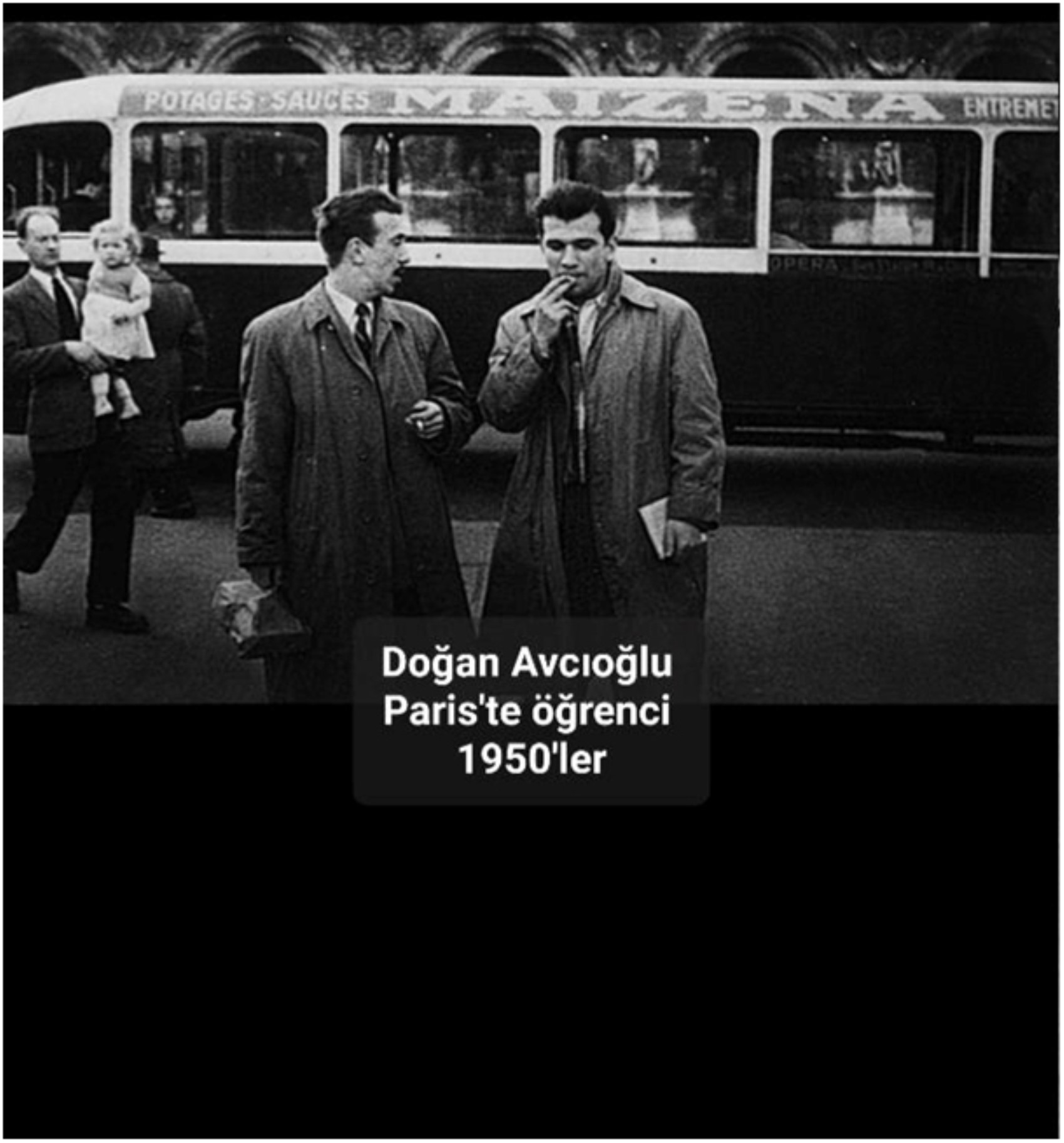
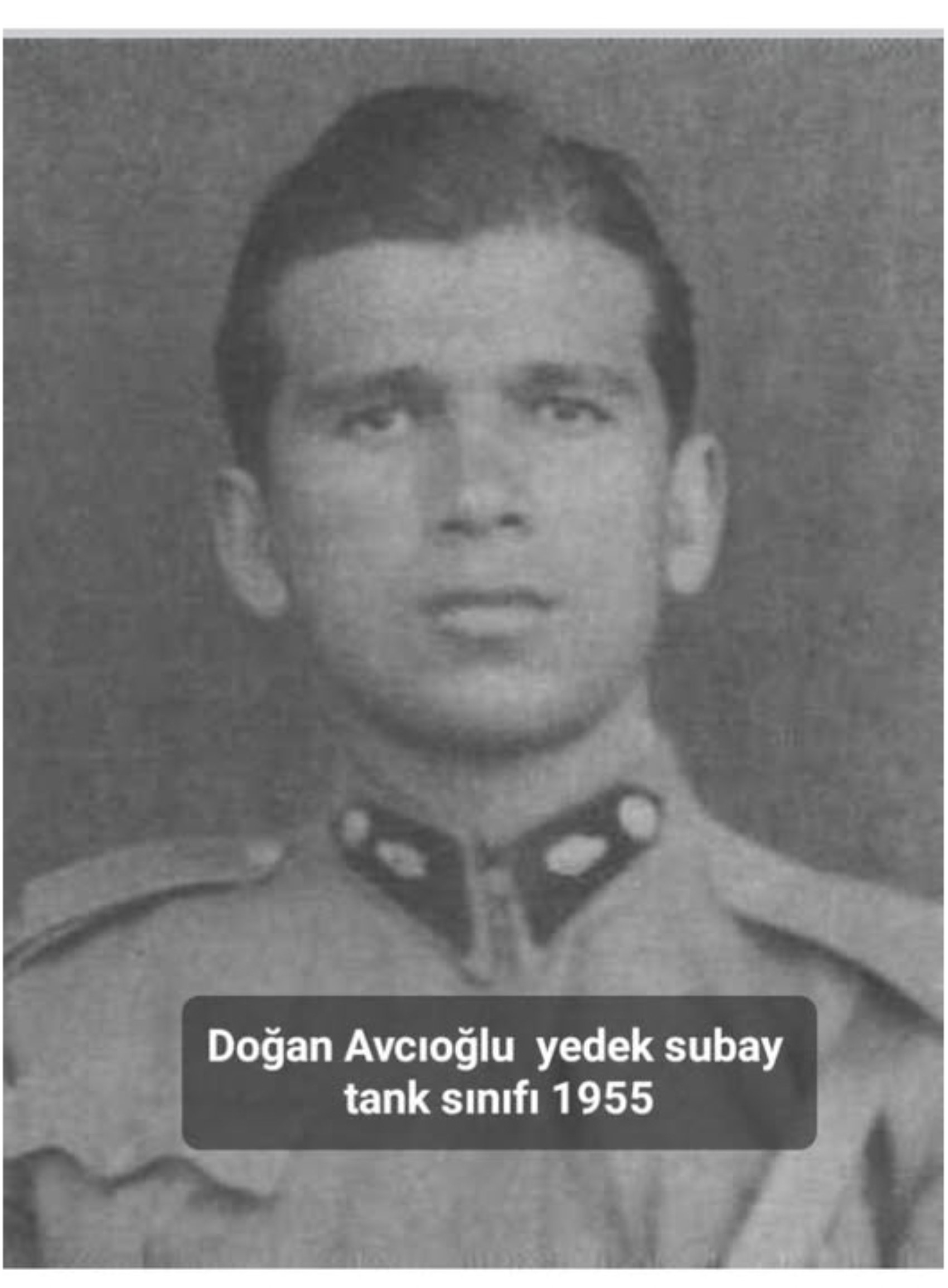
After going to France in 1945 to study economics, Avcıoğlu moved to England. He studied at the LSE for a while. He returned to Turkey in 1955. I have not encountered any record indicating that he received a scholarship from a state institution.
He belonged to a wealthy family in Bursa that valued education. It is understood that his family financially supported Avcıoğlu’s education abroad.
'Turkey's Order' was first published in December 1968. It went through four printings in 10 months. I can say that it is highly probable that everyone who defines themselves as being on the left has a copy in their library. Especially in the older generation.
'Turkey's Order' influenced a wide audience after its publication. Teachers, officers, academics, and all segments of the bureaucratic elite acquired the book. It is even said that the Prime Minister of the period, Süleyman Demirel, read the book. In my opinion, the “Opus Magnum” in the Avcıoğlu literature is 'Turkey's Order'.
It was gifted to me by Dr. Ünal Oskay, who was doing his residency in General Internal Medicine at Haydarpaşa Numune Hospital. (1976)
WHERE IS IT CORRECT TO PLACE DOĞAN AVCIOĞLU IN OUR HISTORY OF THOUGHT?
In 'Turkey's Order', Avcıoğlu points to intellectuals as the leading force of the National Democratic Revolution. Among them, he reserves a special place for the 'Vibrant Forces' (Zinde Kuvvetler).
The fact that Avcıoğlu starts Turkish history from the sixteenth century in his book and adopts the idea of continuity from the Ottoman Empire to the Republic is consistent with his holistic view of history.
These views also overlap with Immanuel Wallerstein’s World-Systems theory, which has attracted great interest since the 60s.
It should be remembered that the book was written in the environment following the May 27 coup. This period also corresponds to a time of feverish search for political thought.
Avcıoğlu is not a theorist. He is a disciplined researcher and writer. After returning to Turkey, he could have been a very brilliant academic. There was an opportunity for this. But he did not choose that. He wanted to have a say in the country’s destiny.
First, he launched 'Yön'. Then he published 'Turkey's Order'. The third stage was the publication of 'Devrim' (Revolution), which we can probably define as a political lever for the Turkish Revolution. Yalçın Küçük interpreted it as: 'Yön' was a platform; it created a suitable ground for 'adjustment fire'. Avcıoğlu started the tank war with 'Devrim' Magazine.
In the meantime, let us recall what the expression “adjustment fire” means. It means target-setting shots made before a major offensive against the enemy. It is an artillery term. As in the example of the shots fired early in the morning on August 26, 1922.
When 'Devrim' began its publication life, Hasan Cemal and Uluç Gürkan were with Avcıoğlu. They were on the magazine’s editorial board.
Hilmi Ziya Ülken has a very apt observation regarding the Turkish intellectual: The professor says that the Turkish intellectual has a “nizam-ı alemci” (world-orderer) aspect. Their agenda is mostly the current problems of the country. They all see a mission in themselves. They try to fix the country and bring order and discipline. Regardless of political inclination.
Doğan Avcıoğlu has a prescription. His goal is to save the country from the hegemony of imperialism and the comprador bourgeoisie.
For this reason, he accuses previous generations of intellectuals who neglected the economic field of wandering on the wrong grounds.
In his own political economy reading, there are Parvus Efendi, Yusuf Akçura, and Şevket Süreyya Aydemir. Avcıoğlu mostly prefers veiled sentences when criticizing the Atatürk and İnönü eras.
Expressions like “pretty democracy” or “Philippine Democracy,” which were frequently used in the left-wing literature of the 60s, especially in 'Yön', do not appear in the book. His failure to mention Gamal Abdel Nasser, the charismatic leader of the Ba'ath Revolutions, can perhaps be considered a requirement of being cautious and prudent.
Is Doğan Avcıoğlu a socialist? Or was he a Kemalist? It is possible to answer this question as follows: While the analyses he put forward and his revolutionary strategy bear the traces of the Bolshevik tradition, the spirit that dominates his writings is the Kuvayı Milliye (National Forces). It is Kemalism.
WHAT IS THE REASON FOR BACKWARDNESS?
In his book, Avcıoğlu points to the existence of a “coalition of conservative forces” as the reason for Turkey’s backwardness. I am of the same opinion.
I also think that Turkey’s ruling classes are not trying to increase production and development, but rather to transfer the wealth created and create rent.
Avcıoğlu speaks of the existence of three paths in development:
The first path, as can be guessed, is the capitalist path of development. The second is the communist/socialist path of development. The third path is proposed for underdeveloped countries like ours: The National Revolutionary Path of Development.
The capitalist path of development can no longer be an option for Turkey. The dynamics and class relations are different. There is the rule of the comprador bourgeoisie in Turkey.
In countries like ours, economic development can be continued with a dependent capitalism. That is already the model being applied. The reason is that the decision-making centers of the capitalist world system leave no other options for Turkey. It imposes the development strategy it deems appropriate.
Imperialism accepts development in certain areas on the condition of being dependent on foreign capital. It even supports it. This has a direct connection with its own needs.
I call this the development illusion. It is seen in countries like ours. American-style development relies on conservative classes and comprador capital. There is development. However, this occurs as a dependent development.
Even the national liberation leadership had to form an alliance with the coalition of conservative forces. These classes caused many revolutionary developments to proceed slowly.
In the Avcıoğlu literature, the liquidation of feudal and capitalist relations is seen as mandatory first.
In Avcıoğlu’s political economy, some sectors of capitalism are interpreted as parasitic sectors. These sectors earn money through money. For this reason, banking, insurance, and foreign trade must be completely nationalized.
This is a political stance. Since imperialism is lurking, the seizure of our national resources can be prevented with these policies. With this policy, the path of imperialist infiltration attempts is blocked.
The West, which brings reactionary-conservative forces to power, has supported practices that adopt its own prescriptions. These policies have made Turkey completely dependent.
According to Avcıoğlu, conservative forces do not leave their positions of power. The power bloc remains in place with a difference in faction. For this reason, a single-party government committed to Atatürk’s revolutions is a more democratic choice than a liberal-looking, collaborative government.
Avcıoğlu continues his views as follows: Due to structural reasons, relationships that will sustain Western-style democracy cannot be established in underdeveloped countries. They cannot be developed. In Turkey, universal suffrage brings forces that prevent the public from becoming conscious to power. Conservative coalitions always emerge from the ballot box.
In underdeveloped countries, universal suffrage, far from cleaning up the remnants of the past, reinforces them. It strengthens them. It masks reactionism/autocracy.
Since a truly capitalist development has not been experienced in Turkey, workers in the cities are semi-peasants. For this reason, the Turkish proletariat cannot become a class for itself. It cannot assume a revolutionary role.
Avcıoğlu sees the Turkish revolution as a petty-bourgeois movement. In my opinion, it is so. It is the realization of the ideals of the age of bourgeois revolutions by the petty-bourgeois class. The bourgeoisie, which played a progressive role in the development of Western societies, cannot play such a role in Turkey.
The bourgeoisie, which carried out the industrial revolution in the West, is in alliance with the ruling classes of the pre-capitalist order in Turkey. For this reason, the agricultural, commercial, and industrial bourgeoisie cannot be national.
ON THE IZMIR ECONOMIC CONGRESS AND THE NATIONAL BOURGEOISIE ISSUE
We must keep in mind that the İzmir Economic Congress was convened in the atmosphere of enthusiasm created by the Great Victory. The basic impulse of the notables and merchants was to be the class that benefited most from the fruits of the victory. Their expectations were for the national government (TBMM State) to support them in every field.
The reflection of the expectations of other classes in the final declaration was weak.
Turkey’s ruling classes had tasted the “national economy” policy of the Committee of Union and Progress. They were expecting its continuation. The Turkish bourgeoisie, which was “fattening up” with an expression once frequently pronounced, was in pursuit of rapid enrichment instead of establishing a national industry. This could be nothing other than the idea of growing their capital through import-export businesses.
Thanks to the Gazi’s vision and Celal Bayar’s talent in financial matters, İş Bankası was established. This bank functioned to create capitalists through the State.
As I mentioned in one of my articles, Bayar’s Ministry of Economy and his role as founding manager of İş Bankası bring his liberal understanding closer to state capitalism. His policies were also in this direction.
In summary, capitalism in Turkey has developed not as an alternative to Statism, but in its shadow.
WHERE IS THE BOURGEOISIE IN THE TURKISH REVOLUTION?
The Turkish bourgeoisie had no demands from Kemalism other than partnership in power.
It cannot be claimed that it was a faithful defender of the revolutions either. It stood behind the leadership, that’s all.
While Gazi Mustafa Kemal was able to establish an administration strong enough to carry out the new Turkish alphabet, the hat revolution, and legal revolutions, he could not find allies to change urban planning, land reform, and production and distribution relations.
For example, it is not a coincidence that there was always a land magnate at the head of the ministry related to land reform. In Avcıoğlu’s famous saying, the coalition of conservative forces never supported reforms that would touch class relations.
Turkish intellectuals often saw the reception of institutions as the most correct way to save Turkey.
However, it was not possible to change a social order carrying the residue of feudal ages by importing steam engines on top of infrastructure and superstructure institutions. This thought was wrong according to Avcıoğlu. I am of the same opinion.
TIP leaders like Sadun Aren and Behice Boran thought that the Turks had completed their bourgeois democratic revolution with the War of Independence.
Doğan Avcıoğlu, on the other hand, argued that the bourgeois revolution in Turkey was not completed due to infrastructure characteristics. This is the reason for the National Democratic Revolution (MDD) theses.
WHAT WERE THE STRUCTURAL PROBLEMS THAT STUMBLED THE CHP?
As Avcıoğlu also very aptly identified, one of the most important problems of our great savior was the shallowness of his cadres. The political horizon of the mass that gathered around him with the idea of “national liberation” was narrow. Even those closest to him.
Structural problems emerged in the establishment of the Republican People’s Party. Under the leadership of Gazi Paşa, the Müdafaa-yı Hukuk (Defense of Rights) movement carried out the war of independence. The Anatolian people were mobilized by local rulers. The People’s Party (Halk Fırkası) was established after the great victory.
When the Müdafaa-yı Hukuk became a party (People’s Party) after the liberation, it turned into a political entity of the intellectual-civil servant mix (bureaucratic elite). In small towns and districts, it began to be represented by the notables. The revolutionary party became the cause of conservatism/status quo and inertia in many places. This structure took on a character that slowed down, and even hindered, the momentum of the revolutionary breakthroughs of the War of Independence leadership.
WHO CRITICIZED DOĞAN AVCIOĞLU AND ON WHAT GROUNDS?
Avcıoğlu does not give a hint as to how the cadres demanding power to carry out the National Democratic Revolution will come to power. But it is not difficult to guess this.
It is possible to summarize the main criticisms leveled at Avcıoğlu as follows. For example, Taner Timur does not find Avcıoğlu’s concepts suitable for historical materialism. He thinks he hid some of his ideas for tactical reasons.
Avcıoğlu had very little contact with the Workers' Party of Turkey (TİP). There are historical reasons for this. He always kept his distance from TİP since its establishment. TİP’s chairman, Mehmet Ali Aybar, sees him as a late Young Turk due to Avcıoğlu’s approach that belittles the proletariat. Let me immediately state that I do not agree with Aybar. Behice Boran, the subsequent chairman of TİP, also mentions that there is no place for the “working class” in Avcıoğlu’s revolutionism.
Similarly, Mihri Belli also says that the revolutionary potential of the laboring classes is greatly underestimated in Avcıoğlu’s theses.
One of the first to write a rebuttal to 'Turkey's Order' is Demirtaş Ceyhun. Ceyhun says that Avcıoğlu is in a state of mind (psychology) that considers civilian-military intellectuals the masters of the country.
As for me, Avcıoğlu is a thinker who has correctly analyzed Turkey from many angles. There are also points where he was wrong. For example, the intellectual accumulation of the 'Vibrant Forces', which Avcıoğlu sees as the leading force of the National Democratic Revolution, is questionable. In my opinion, the Vibrant Forces were not much further ahead than the Unionist officers or the Young Turks. Right here, I would like to recall an observation by Dr. Hikmet Kıvılcımlı. The May 27 coup plotters had no class compass. For this reason, there were many swings while they were in power. The May 27 coup could not be filled. The same applies to the Vibrant Forces.
Another important point in Avcıoğlu’s assessment is that by the 60s, Turkey had become fully integrated into the capitalist world system. It had joined the North Atlantic alliance in the 50s and fought alongside the USA in Korea.
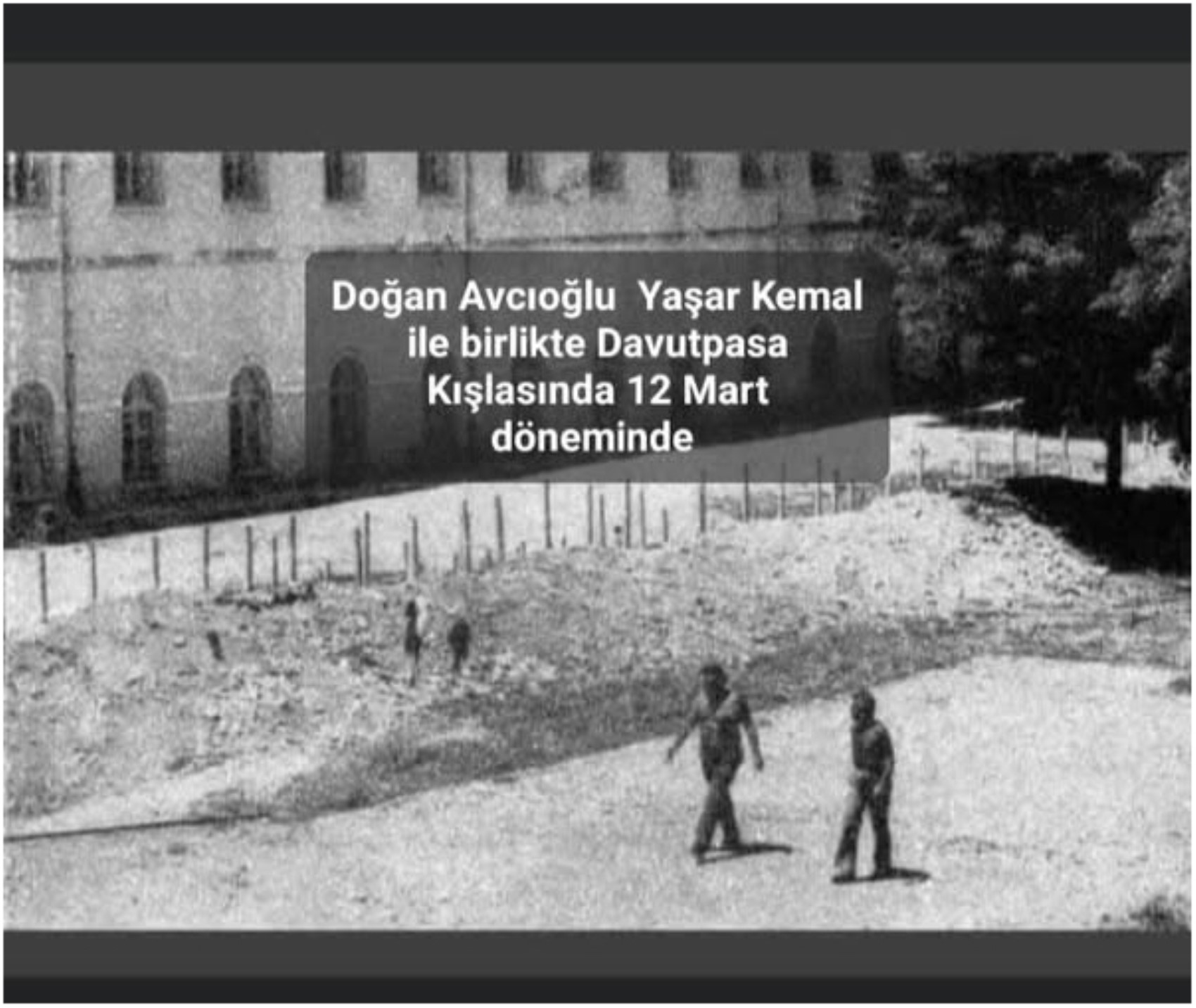
In my opinion, in the Turkey of the 70s, there was no class that could lead a revolutionary action as Avcıoğlu imagined. There was a limited number of cadres dreaming of a National Democratic Revolution. These cadres are known in our political history as the March 9 group. The power of this circle is speculative.
But the truth is this. The March 12 coup was carried out by a faction supported by the comprador bourgeoisie. When the entire March 12 interim regime is examined, it becomes very clear on whose behalf the intervention was made.
March 12 expanded the field of action for the comprador bourgeoisie by liquidating the military and civilian cadres of the MDD. The constitutional amendments made throughout the interim regime and the economic policies implemented are the evidence of this.
In my opinion, Avcıoğlu’s Vibrant Forces could have implemented the National Democratic Revolution program in the 30s (perhaps). 'Kadro' was a platform where this was studied. 30 years after Şevket Süreyya’s 'Kadro', Turkey had changed gears. The comprador bourgeoisie, an ally of international capitalism, had long since taken power from the hands of the Kemalists.
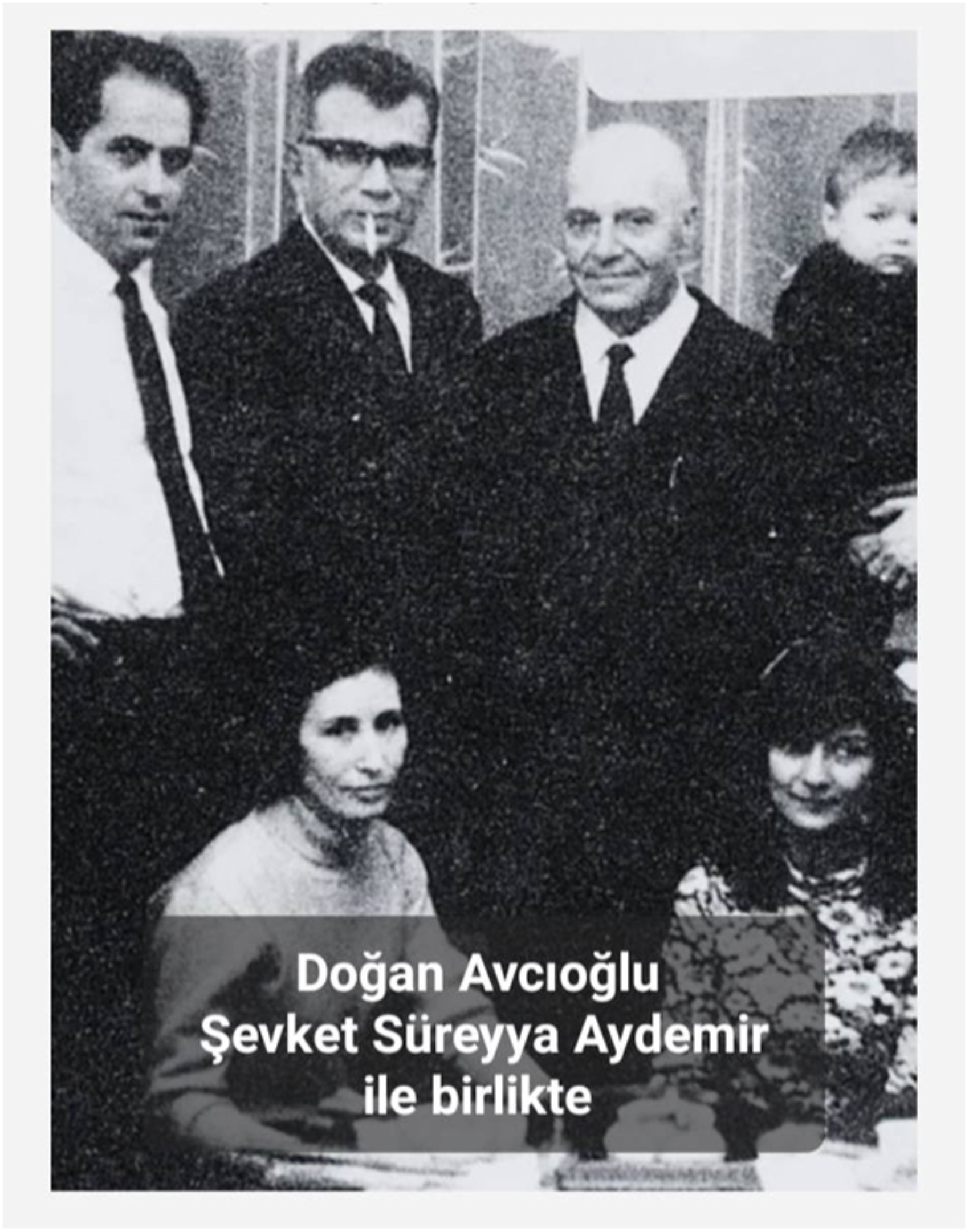
Left-wing circles in the line of Mihri Belli and Doğan Avcıoğlu were of the opinion that the democratic revolution in Turkey was not completed.
My thought is as follows: The bourgeois revolution of the Turks was realized thanks to the leadership charisma of the Gazi. The leadership of the petty-bourgeois class remains in the secondary (minor) plane in my opinion. There are moments in history when great men are decisive. The ideological and political aspect of the revolution is strong. The institutions it created prove this.
The classes with which the petty bourgeoisie (bureaucratic elite) allied were the rulers of the existing socio-economic order. The necessity for Turkish republicans to cooperate with pre-capitalist forces on the path of national liberation has largely determined the economic limits of the revolution and the direction and content of development efforts.
The fact that the ruling classes were allies of the National Struggle negatively affected the depth and breadth of the revolution.
Despite these negative factors, the fundamental nature of the revolution has not changed. The Turks made a revolution intertwined with a national war of liberation. This was a democratic revolution.
WHAT IS THE BASIC PARADIGM IN 'TURKEY'S ORDER'?
Contrary to the theses put forward by the ATÜT circle, Doğan Avcıoğlu is of the opinion that the Ottoman order carried the dynamics of transition to capitalism. (ATÜT circle: This is the group around Sencer Divitçioğlu and Kemal Tahir. We can call them 'Kerim Devletçiler' (Merciful Statists). The exact opposite of this concept is Mehmet Ali Aybar’s 'Ceberrut Devleti' (Tyrannical State).) Avcıoğlu uses the expression 'pre-capitalist order' more often when defining the Ottoman Empire. This also points to a society on the threshold of capitalism.
Avcıoğlu argues that the Ottoman Empire was not an ATÜT, that it had class dynamics on the threshold of capitalism, and that although it had the conditions for transition, it encountered an external factor that hindered development.
This is the 'ittihar' (mercantilism) capitalism created by Europe by plundering trans-Atlantic resources. This development had turned the World system upside down and led to the establishment of a new system.
Avcıoğlu does not see nomadism or Islam as the basis of underdevelopment. According to him, the fundamental determinant is elsewhere. It is the change of world trade routes and the opening of the Atlantic route. I would like to add to this the end of the era of holy war, conquest, and booty.
This new status quo shook the foundations of the Ottoman social order. It led to the strengthening of centrifugal forces and the birth of feudalism. Avcıoğlu interprets the weakening of the center and the strengthening of the Ayan (he uses the expression 'feudal lord' instead of Ayan) as the decline of production and the rise of a reactionary power center. He does not see the Sened-i İttifak (Charter of Alliance) as positive either.
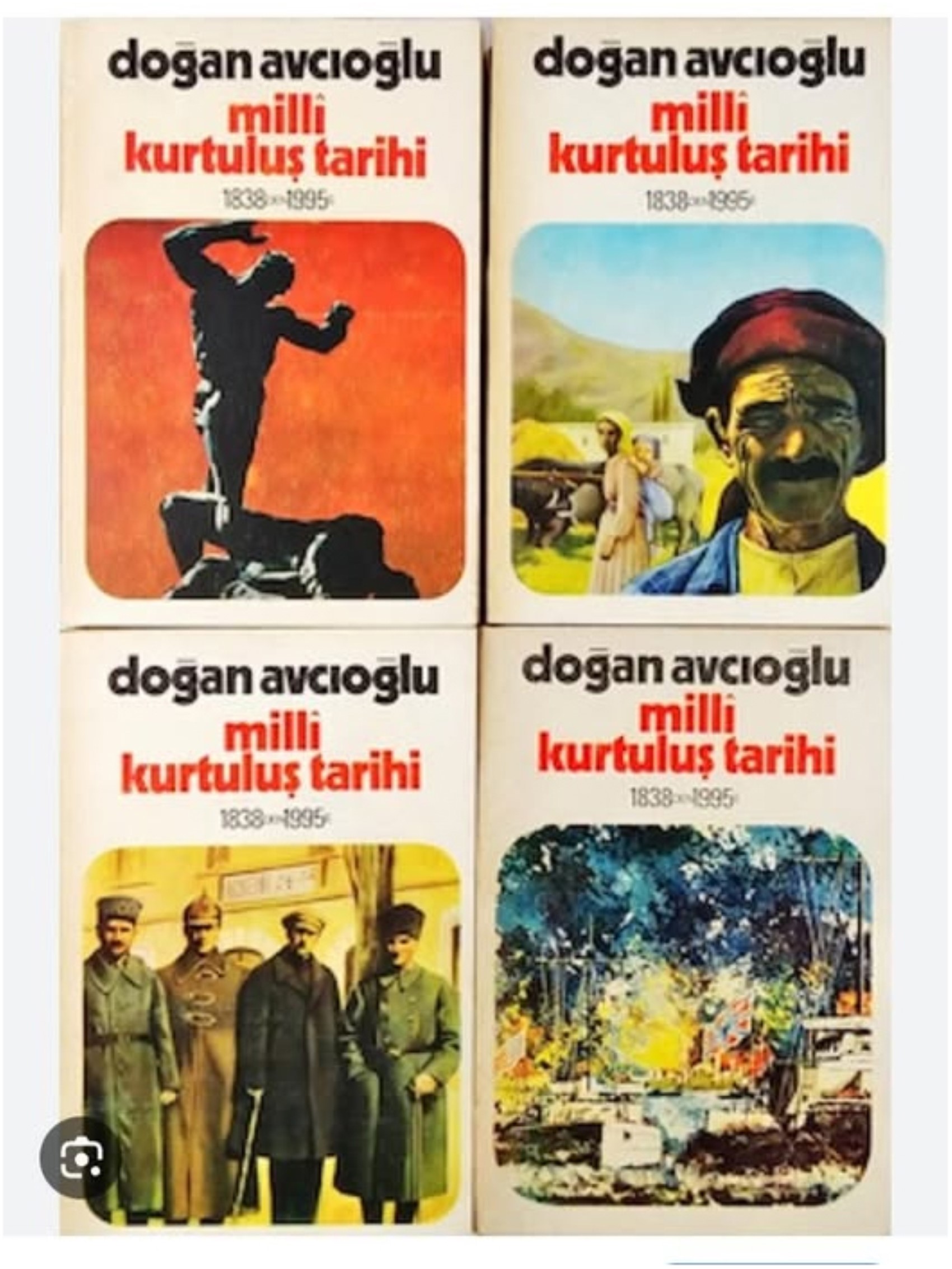
However, in Turkish political science, history, and public law literature, the Sened-i İttifak is sanctified with the discourse of being the Turkish Magna Carta and the birth of democracy. Avcıoğlu thinks exactly the opposite on this subject.
Avcıoğlu mentions that Japan embarked on reforms (Meiji Restoration) 60-70 years after Selim III and Sultan Mahmud II and achieved economic development, and says that this transformation was possible with the strengthening of central authority. According to him, by making concessions to non-central forces, the path was opened not for progress, but for regression.
Avcıoğlu sees feudalism as a parasitic formation that drags productive forces into inertia. As Yalçın Küçük also mentions, to establish democracy, it is necessary to destroy reactionary institutions and strengthen central authority. This is true progressivism.
For this, it is mandatory to resort to Jacobin measures. According to both authors, “history does not record democratic revolutions without Jacobins.” In Avcıoğlu’s thought, central authority is seen as the engine of economic development. The most rational way to produce and distribute resources is centralism and publicism.
Would you like to get notifications about new developments and save news?
- NotificationsNew developments and breaking news
- SaveNews is stored in the app
Most Read
Statement from Nihat Zeybekci on the fund investigation
New 75,000-seat stadium plan for Fenerbahçe
Interpol and MIT tracking yields results in Izmir
ID convenience for KPSS candidates

2027 Budget: Taxes for the people, tax exemptions for capital
The reality of Akkuyu and the longing for national nuclear power

To whom and how was the Petition of Intellectuals submitted? Who accepted the petition?

The Çanakkale robbery -1- How was the Troy treasure smuggled out?

Artificial intelligence and the new imperialism

Ministry investigation into unauthorized promotional messages