


General Wrangel's Army in Istanbul



A REFUGEE ARMY: THE WHITES
Our city, Istanbul, experienced very significant developments during the armistice period: political, social, and demographic. First, we saw the Allied fleet in the harbor. Then, the victors of the war were everywhere in the city in their various uniforms.
In Mudros, Rauf Bey thought he had signed an armistice agreement. The Allies interpreted this as an unconditional surrender agreement. They wanted to implement it as such. In Istanbul and all over the country.
Armistice-era Istanbul also became a city where the idea of liberation was fermented. Our great savior spent six months here studying the options for liberation.
Meanwhile, very major developments were taking place in Russia. At the beginning of 1917, it was almost impossible for the Bolsheviks to take power, yet they succeeded. It was fully understood after a while that their program was very radical.
The former rulers of Russia, which had experienced one of the most rigid examples of a class society for centuries, launched a fierce resistance. This resistance meant a bloody civil war. It spread over a vast area, reaching Siberia, the Far East, the Baltics, Ukraine, and Southern Russia.
One of the sides was the Bolsheviks. Their armed force was the Red Army, which was growing stronger by the day. The others were supporters of the old regime. Their armies bore the color of the Tsardom: The Whites. They were always referred to by this color thereafter. The White Movement, White Refugees, White Army, and so on.
They were fighting on different fronts with different leaders. But their common point was singular: to save Holy Russia from the communists.
This article discusses the story of General Wrangel, an important actor in the anti-communist struggle, and his army.
A dimension of the story that interests us is this: In November 1920, Wrangel brought his army from Crimea to Istanbul via a major maritime transfer operation. In this article, I have covered the fate of the White Movement as much as his story.
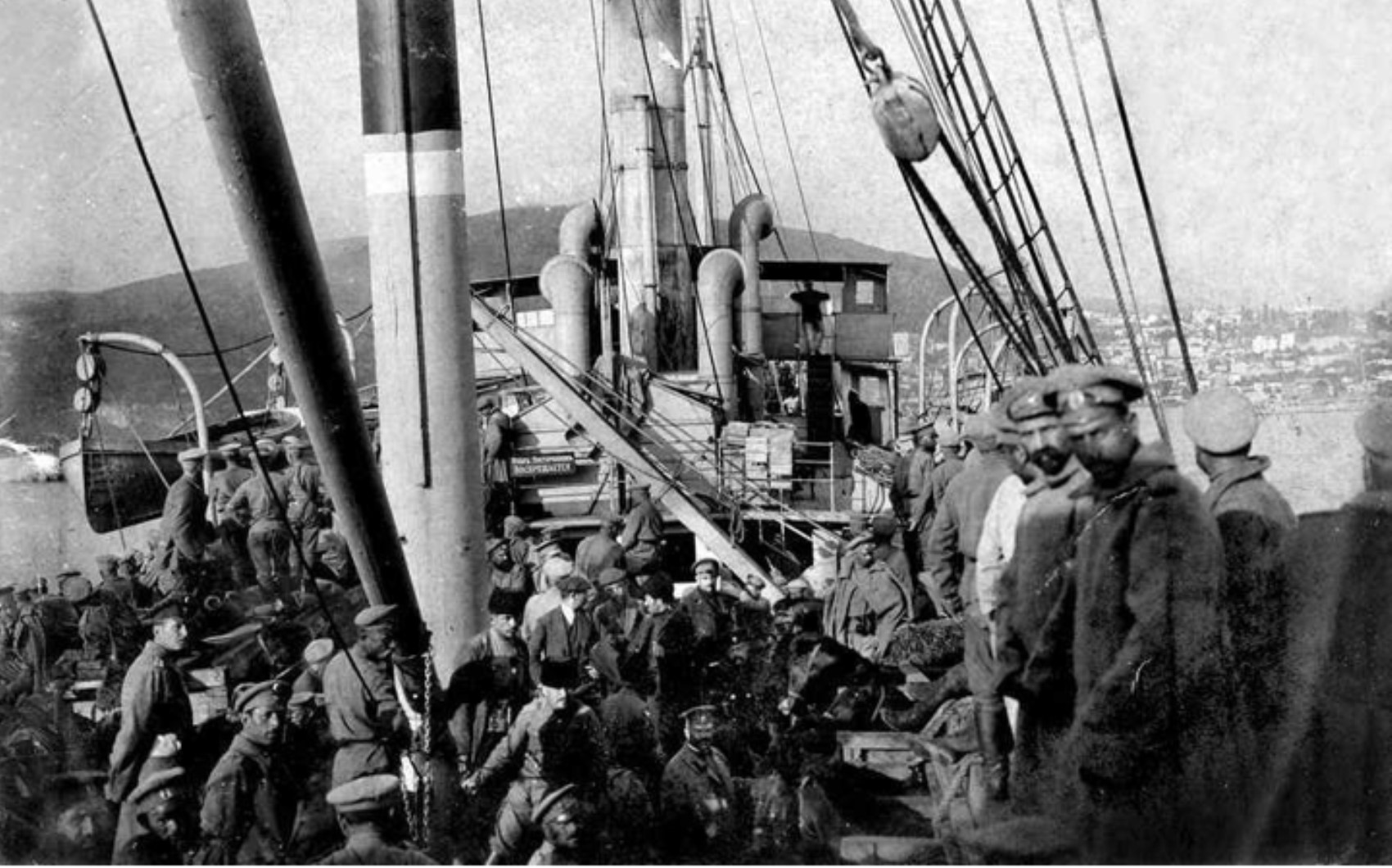
(The evacuation of Crimea by the Whites, 1920)
WRANGEL'S CAREER IN THE TSARIST ARMY
Baron Wrangel (1878-1928) came from a noble Baltic German family. The Wrangel family was a regional dynasty. There were many scholars and well-known people in the family. One branch of the family had ties to the Swedish nobility. The relationship between the Baltic aristocracy and the Tsardom was established as follows: After 1844, the Baltic region came under Russian rule. The Baltic nobles entered the service of the Russian Tsardom. Their children were educated in Russian schools. Wrangel also studied Mining Engineering in St. Petersburg. He graduated in 1901. But his mind was on the military. With his tall stature and impressive physical appearance, he wanted to be a cavalry officer. And he became one.
He joined the army. He received a very successful education at the cavalry school. He served as a commander and fought in the Slavic-Cossack cavalry units in Manchuria during the Russo-Japanese War.
In English, "Cossacks" refers to the Orthodox Slavic Cossacks: the Don and Kuban Cossacks. They are known for their unique attire in the Tsarist army. They are not the Cossacks we know. They are Orthodox Christian steppe peoples. Wrangel increased his military experience. He graduated from the Nikolaev General Staff Academy in 1911; it was clear from his early experiences and education that he would have a brilliant military career.
He fought in the Tsarist army during the First World War. He took on important duties on the East Prussian and Austro-Hungarian fronts. He was awarded numerous medals.
WHITE ARMY COMMAND IN THE CIVIL WAR
Wrangel served under the provisional government during the 1917 bourgeois revolution (Prince Lvov and Kerensky), albeit with dissatisfaction. When the Bolsheviks dissolved the constituent assembly and seized power, he left the army, went to Yalta, and settled there; the Bolsheviks arrested him for a while. Then he was released. He was treated like a disgruntled Tsarist general who had withdrawn from everything. Perhaps they released him because of the heroism he showed throughout the war.
After a while, Wrangel joined the Volunteers, who formed the core of the White Army. The White Army is the common name for the anti-communist armed forces where supporters of the old regime gathered. The most famous generals are Kolchak, Yudenich, Denikin, and Wrangel. Wrangel, whom the Bolsheviks called the "Black Baron" because of the long black Cossack coat he wore, had taken an openly anti-Bolshevik political position since 1918. He became one of the most important figures of the anti-communist struggle.
In the early stages of the White Army's establishment, the front commander in Southern Russia was Anton Denikin. Denikin was a worker's child, coming from the common people, but a loyal protector of the Tsarist order. And one of the strictest ones at that. The Black Baron Wrangel was in a position under him in the early days. They had different views on war strategy.
Denikin thought he could capture Moscow. Wrangel, on the other hand, advocated for building more cavalry power and uniting with the forces of Admiral Kolchak, the White Russian commander in Siberia. He suggested attacking Moscow after thoroughly fortifying the front in terms of the number of fighters and firepower. His plan was not adopted. Denikin was chasing dreams of quick results. In the end, Denikin's plan was implemented. It failed. The White Army was defeated. Frunze, who took over the command after Trotsky, defeated Denikin's forces and advanced toward Crimea. Wrangel took over the command while the front was in the process of collapsing. April 4, 1920.
After this, he wanted to establish a White Russian State managed from Crimea. He wanted to take a series of measures to alleviate extreme poverty under civil war conditions. He especially wanted to make regulations regarding the revitalization of agriculture.
On one hand, he had to stop the Red Army under Frunze's command, and on the other, he had to take measures that would satisfy the public. Naturally, it was not possible for him to be successful in such an environment constrained by time and resources. And he would not be. In the end, he would have no agenda other than saving the remaining army.
Two years after the White Army started the struggle against the Bolsheviks, the command passed to Wrangel. The Whites were already on the verge of defeat. Although Wrangel tried to fix the situation, he was not successful.
However, there was White superiority during the establishment phase of the Red Army. The Whites had advanced as far as Volgograd (Stalingrad) in 1919 with the support of Mark-V tanks provided by the British.
After the First World War ended, the British settled in the Caucasus. They supported Wrangel's forces. Wrangel tried to introduce new economic measures to provide for the people of Crimea and his army. But it was too late. Resources had been exhausted in both material and human terms.
THE EVACUATION OF CRIMEA AND ISTANBUL
The Whites were defeated in November 1920 against the Red Army, which had reached a massive size under Frunze's command. Wrangel was only able to prevent them from reaching Crimea until the evacuation by holding a strait.
The ships of the Tsarist Black Sea fleet were used in the evacuation. This massive transfer of people was carried out from Yalta, Sevastopol, and other ports in the vicinity. In 4 days, more than 150,000 people were loaded onto 126 ships. Officers, soldiers, their families, and children who had lost their mothers and fathers in the war were all loaded onto the ships. Russian noblewomen, Cossack cavalrymen, and orphaned children crossed the Black Sea side by side and reached Istanbul.
About 30 French ships also participated in the evacuation under the command of Admiral Dumesnil. We understand how the more than 150,000 people who left Crimea came to Istanbul under armistice conditions from a newspaper article by Yakup Kadri, who mentions the "hair-raising appearance of the people on the ships." He mentions that the ships were packed with people, that there was no room to stand, and that the refugees brought typhus to Istanbul.
The ships were later kept under protection by France in a port in Tunisia. When the socialist revolution in Russia became definitive, the French recognized the new administration. They chose the path of reconciliation. Once an agreement was reached with the Bolsheviks, they gave them the ships. The Tsarist legacy ships, which were on the verge of rotting, were sold as scrap after a while.
The soldiers were placed in camp areas outside of Istanbul. Around 70,000 soldiers were taken to the refugee camp on the island of Lemnos. The British provided a place in Tuzla. Others were settled in Çatalca and Gallipoli. Camp conditions deteriorated in terms of hygiene and nutrition.
The refugees built a White Russian Monument in Gallipoli to immortalize their lives spent there. This reminded me of the monument built in San Stefano with the approval of Sultan Abdulhamid in memory of Russian soldiers after the 1878 War. As will be remembered, the Young Turks had blown up this monument.
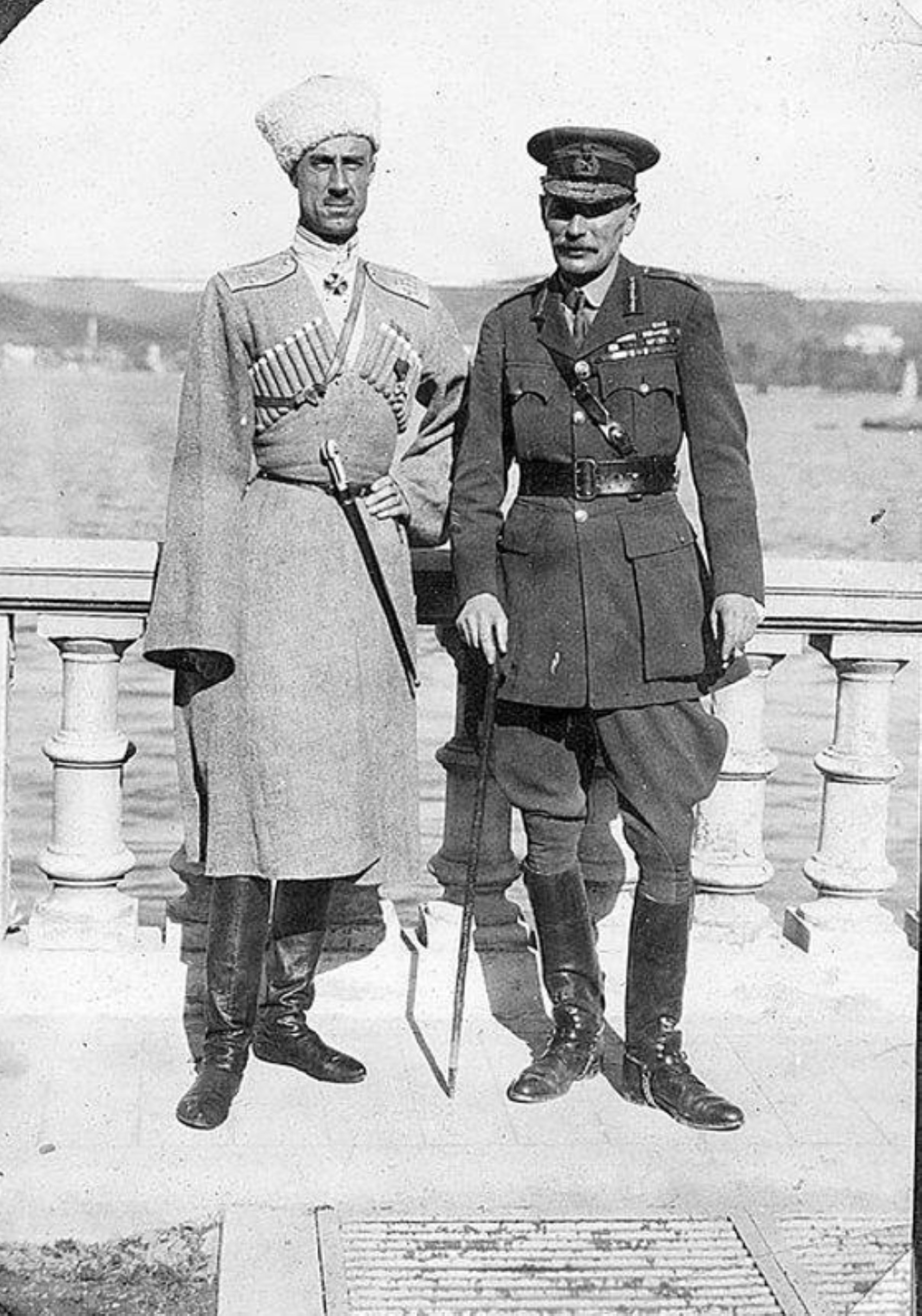
(Wrangel with General Harrington in Istanbul)
Civilians were settled within Istanbul and on the islands. The American YWCA was trying to create opportunities for orphans. The Orient Newspaper, which was being published in Istanbul at that time, is full of extensive news on this subject.
It is known that there is a rich literature regarding the life of White Russians in Istanbul. Let me give two examples: Fikret Adil's *Asmalı Mescit 74* and Jak Deleon's *White Russians* are the first books that come to my mind. There are also a few theses that have been written on this subject.
After a while, Russian cuisine entered the market to sustain life. Restaurants like Rejans, Turkuvaz, Maxim, and Moskovit became a part of Istanbul's dining culture. Russian women became a part of the speculations.
There were also Russian officers employed in interesting jobs. Tsarist officer Nadalski was hired as a gymnastics teacher at Robert College. He settled in the College.
BARON WRANGEL'S FAMILY PICTURES
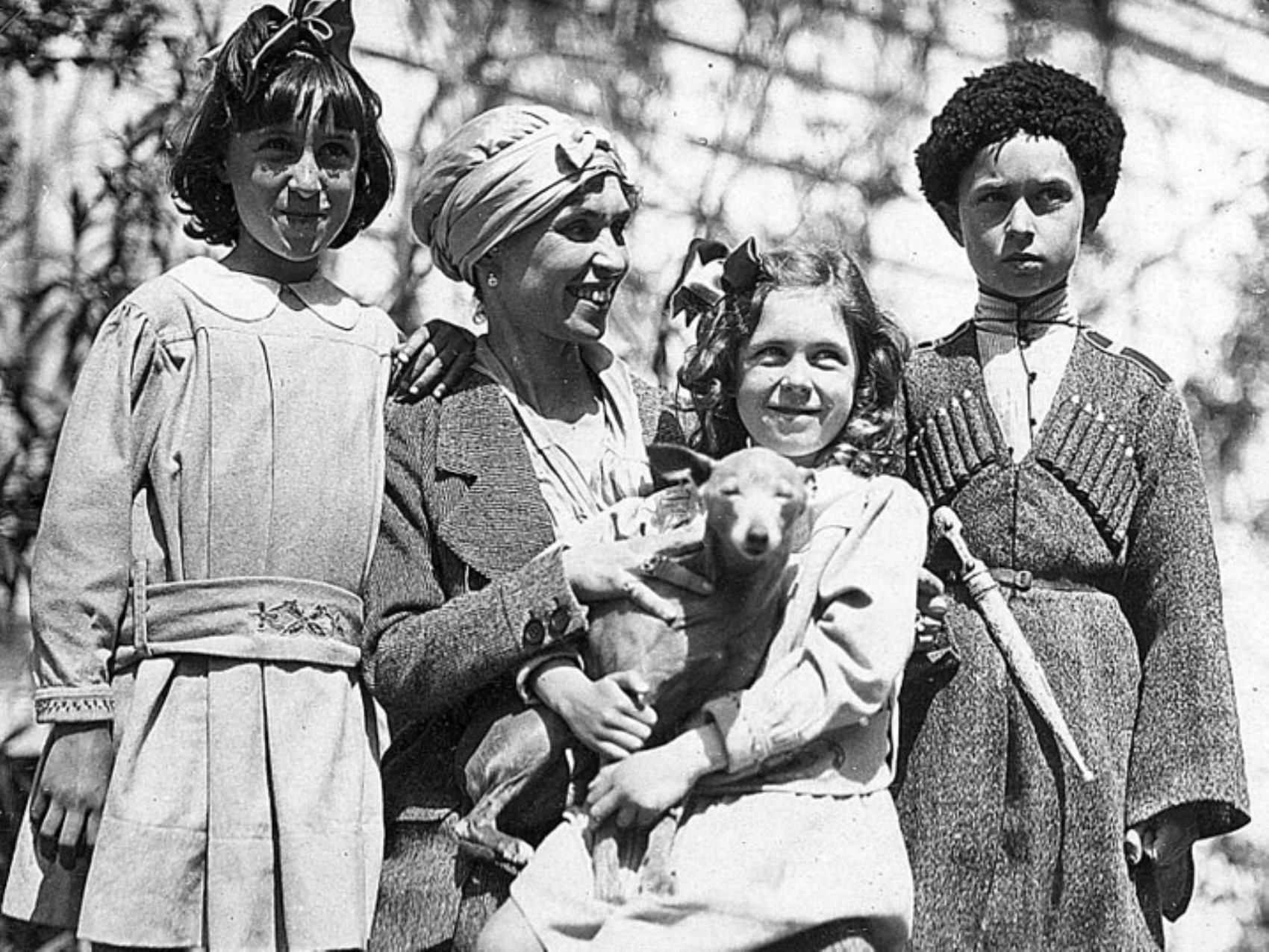
(Peter Wrangel, with his mother and siblings, 1920)
Wrangel's wife, Olga, is an aristocratic woman. They have two daughters and a son. I came across a few pictures of his son. His name is Peter. He was taken in Crimea when he was only nine years old. Before they even came to Istanbul. He must have liked his father being a cavalry general very much, as he is a very good horse rider and weapon user. I estimate that the pictures were taken by the American Red Cross. Since the date is July 23, 1920, the evacuation of Crimea is not yet on the agenda. On that date, the Allies continue to support the White Army's resistance against Frunze.
WRANGEL'S FAMILY IN KINALIADA
After the great Crimean evacuation, some of the refugees were settled on the islands, including Baron Wrangel's family. They were taken under protection by the Red Cross in Kınalıada. There are a few hundred people in Kınalıada. From the White Russians. These must be—in my opinion—high-ranking officers or noble families.
DEPARTURE FROM ISTANBUL AND SERBIA
General Wrangel lived in Istanbul from November 1920 to January 1922. Before leaving Istanbul, he gave a lecture at Istanbul University (Darülfünun). The topic was the problem of Russian refugees living in Istanbul.
He made some attempts with the dream of being able to continue his struggle and keep his army alive. He wanted to settle his army in countries where South Slavs lived. He made initiatives. He did not receive a warm welcome that would meet his expectations in these attempts.
After the dissolution of the Austro-Hungarian Empire, the Kingdom of Serbs, Croats, and Slovenes was established. This state is even one of the signatories in Lausanne. Serbia was a part of this state.
The Serbs, who are Balkan Slavs, accepted the settlement of a significant portion of Wrangel's army. Belgrade became a city where the defeated White Army settled. The Black Baron could not create the environment he wanted in Serbia. In the post-war conditions, every country was struggling with its own internal problems. There was nothing else they could do other than saying "welcome" to the White Army for settlement. They had to fend for themselves.
Bulgaria accepted a number of refugees. Via the port of Varna. However, the Bulgarian government allowed the refugees to enter the country by taking delivery of their uniforms and weapons.
After the Bolsheviks came to power, there are sources that write that around 2 million anti-communist aristocratic, bourgeois, and petty-bourgeois Russian refugees were dispersed to many countries of the world over time, in addition to the Russians who dispersed to Europe via Istanbul. For example, Radio Free Europe, 2020.
NICHOLAS NIKOLAYEVICH: THE TSAR IN EXILE
The soldiers of the lost cause, who gathered in Belgrade, declared Grand Duke Nicholas Nikolaevich Romanov as Tsar in 1926 with the dreams that the White Russian Army would one day defeat the Reds. Nikolaevich had served as the commander-in-chief of the Tsarist Army during the First World War. They recognized him as the commander-in-chief of the army.
WRANGEL AS A MINING ENGINEER IN BELGIUM
Wrangel went to Brussels to support his family. The Black Baron was a mining engineer who graduated from St. Petersburg University. He lived with his family in a small apartment in the Rue-de-bel-air district of Brussels for 14 months. The cavalry general of the Russian steppes had to live in a small apartment. He was tired, depressed, and sick.
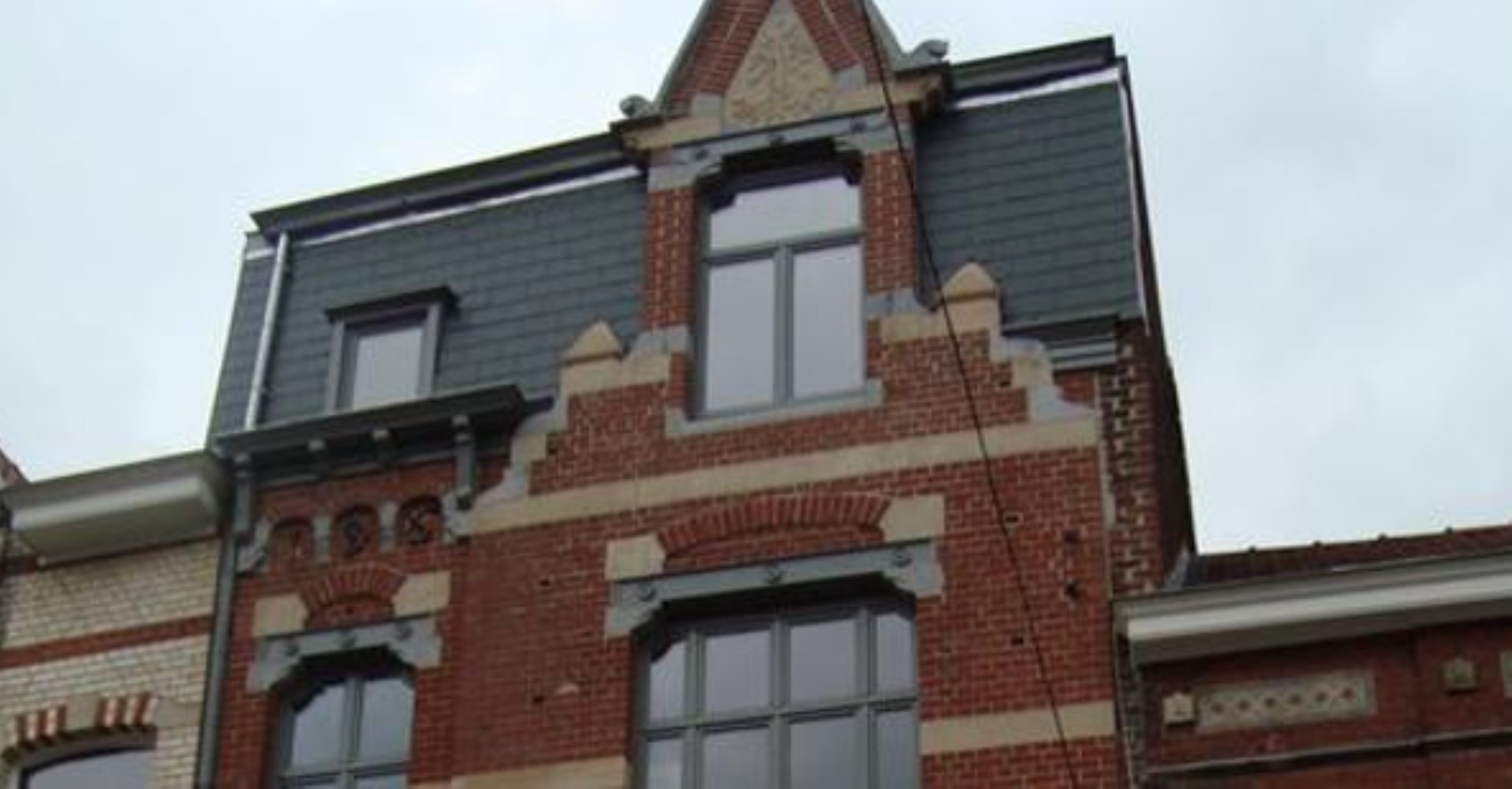
(The house where Wrangel lived in Brussels)
IS THE CAUSE OF DEATH POISONING?
Wrangel died suddenly on April 25, 1928. Although it was reported that he died of typhus or tuberculosis, in my opinion, the possibility of poisoning by a Russian agent is higher. Because in the same city, some of the White Army generals (e.g., Alexandr Kutepov) were kidnapped and killed by Russian agents.
Wrangel's story developed as follows: A Russian, who claimed to be coming from his older brother's farm in the Baltics, had arrived at the port of Antwerp on a Soviet ship. He spent a few days with Wrangel, during which the farm's affairs were discussed.
With the guest's departure, he became violently ill and died. His son, daughter, and wife are convinced that this was definitely the work of the Russian intelligence service.
Previously, the ship that Wrangel used as headquarters in Istanbul had sunk as a result of a collision with an Italian ship (Andrea), and Wrangel had been rescued along with his family. It is judged that this was actually an assassination. My opinion is in that direction.
When Russians are involved, this possibility is of course high. Considering that opposition leader Alexei Navalny was thought to have been poisoned to death in 2020, one believes that this is an inseparable part of the Russian political style.
HIS PAPERS ARE AT STANFORD UNIVERSITY
Wrangel had started writing his memoirs in Istanbul and continued writing them in Belgrade and Brussels. Perhaps he would have continued writing. Given that he passed away at the age of 50. The memoirs were first published in 1928. The first publication on the manuscripts is in German. It was done by General von Lampe in Berlin. The English version was published in New York in 1957 under the title *Always with Honor: The Memoirs of General Wrangel*. Former US President Herbert Hoover wrote a foreword to the book.
His family gave all his papers to the Hoover Institution. The Institution is a research center at Stanford University where documents belonging to the Russian revolution, history, and refugees are largely collected. In fact, Alexandre Kerensky, who served as prime minister before the Bolshevik Revolution (from the SR party), worked here for a long time after seeking asylum in the USA.
PUTIN'S ATTEMPT AT REHABILITATION
The Black Baron Pyotr Nikolayevich Wrangel (1878-1928) was first buried in Brussels. After a while, on the grounds that it was his will, he was brought to Belgrade and reburied in the courtyard of an Orthodox church. (October 6, 1929, Holy Trinity Church)
The Soviet Union collapsed in 1991. After a rather turbulent transformation process, Russia is standing firm. It continues its existence today with an identity that also absorbs the Tsarist tradition.
In my opinion, Putin is a politician who represents the concepts of Tsardom, Bolshevism, and adapting to the international capital order all at once.
In a sense, he became the new Tsar of Russia. Stalin had become that too. He started a policy of reconciliation that legitimizes Russia's Tsarist past. He made calls encouraging the return of White Russian exiles (refugees). Without condemning the October Revolution, Socialist Russia, or the post-Lenin period.
The graves of the last Tsar, Nicholas II Romanov, and his family, who were shot by firing squad along with his wife and children in Yekaterinburg on the night of July 7, 1918, were found. With the approval of the Kremlin, they were buried in the St. Peter and Paul Cathedral. The Russian Orthodox Church declared the Tsar and his family saints. This policy of reconciliation with the past was well received by the public. It was supported. Russians also love visiting shrines, just like us.
In 2015, Putin called for Wrangel's grave to be brought to Russia. But his family did not accept the Russian government's offer of rehabilitation without a Bolshevik self-criticism. They did not accept the return without condemning the old regime. Putin could not accept this either. He himself came from the cadres of the Communist Party. As a result, Wrangel did not return to his country.
In 2007, a bust of him was made in Belgrade with the support of the Russian Government. There is an entry in the Great Soviet Encyclopedia where he is praised, especially as a cavalry general. Putin cares about keeping the Orthodox sensitivities of Russians. He is quite successful in this policy. This is the reason why he wants to bring General Wrangel, who has been in Belgrade since 1929, to the motherland.
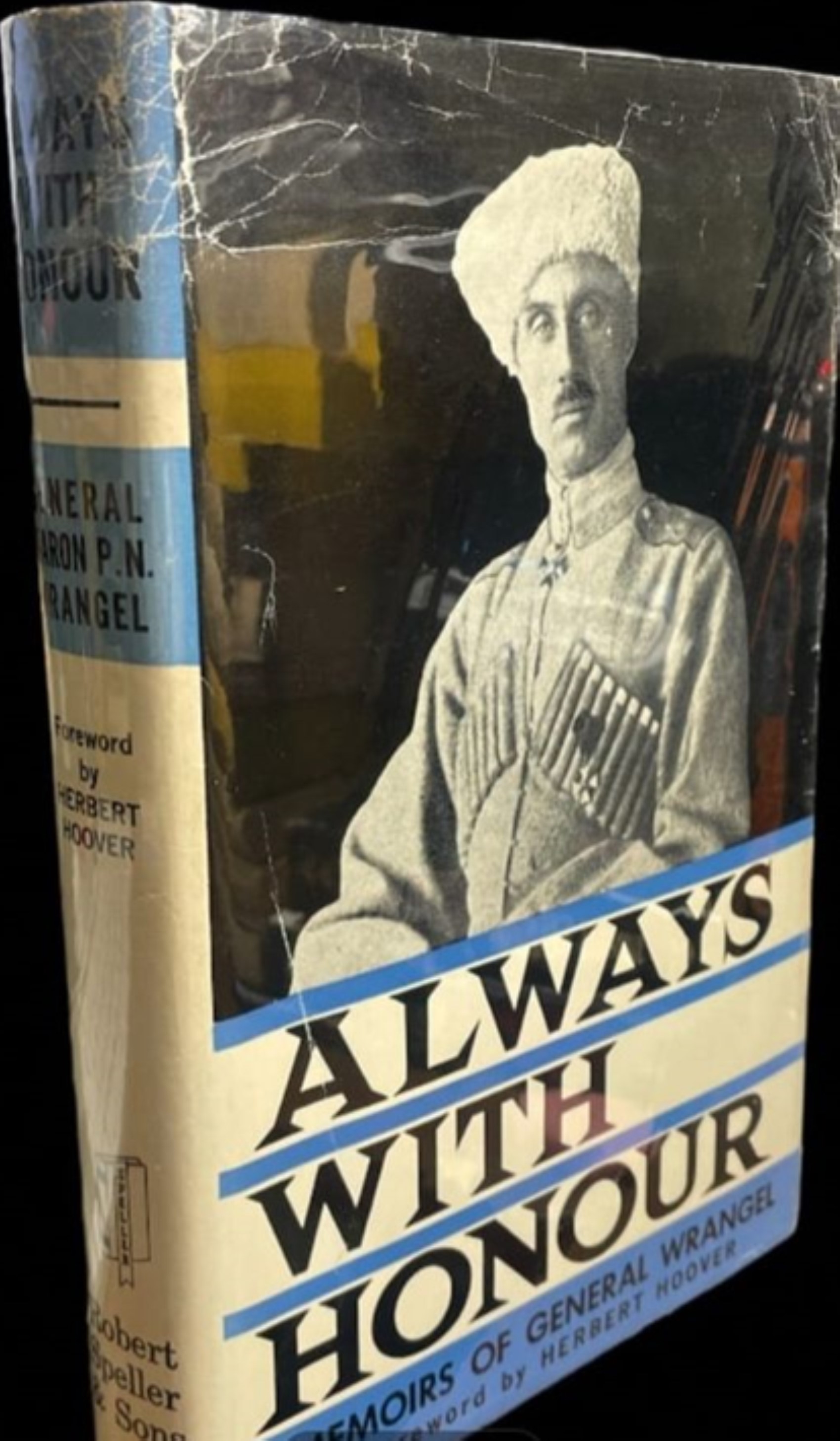
(Wrangel's memoirs, with Herbert Hoover's foreword, 1957)
AFTERWORD
The publication of the English edition of Wrangel's memoirs in 1957, as well as former Republican President Herbert Hoover writing a foreword to the book, is significant. This is a period when the Cold War and anti-communism were on the rise. And this is exactly what brings Wrangel and Hoover together on the same side: fierce anti-communism.
Would you like to get notifications about new developments and save news?
- NotificationsNew developments and breaking news
- SaveNews is stored in the app
Most Read
Statement from Nihat Zeybekci on the fund investigation
New 75,000-seat stadium plan for Fenerbahçe
Interpol and MIT tracking yields results in Izmir
ID convenience for KPSS candidates

2027 Budget: Taxes for the people, tax exemptions for capital

The Çanakkale robbery -1- How was the Troy treasure smuggled out?

To whom and how was the Petition of Intellectuals submitted? Who accepted the petition?

The reality of Akkuyu and the longing for national nuclear power

Artificial intelligence and the new imperialism

Ministry investigation into unauthorized promotional messages