


How should Yusuf Kemal Tengirşenk’s tenure as Minister of Foreign Affairs be interpreted?



Who was Yusuf Kemal?
Yusuf Kemal was elected as a deputy for Kastamonu to the first parliament of the Second Constitutional Era (1908). His second term as a deputy was in the final Ottoman Chamber of Deputies, representing the same province. In the parliaments of the Republic, he was elected from Sinop.
Until the First World War, he worked as a student inspector abroad, having stepped away from his parliamentary duties. He had received a legal education. He worked on his doctoral thesis in Paris and London. He earned his doctorate in Economics. He was one of the founders of the Turkish Hearth (Türk Yurdu) circle in Geneva.
During the war years, he taught criminal law and civil law at the Istanbul Darülfünun (University of Istanbul). He was one of the well-educated, elite figures within the Committee of Union and Progress. However, we do not see him involved in daily political life. This also holds true for the National Struggle and the Republican era. He was involved in politics, but not in the front lines, despite having been elected as a deputy and serving as a minister throughout his career.
REGARDING THE FIRST MINISTER OF FOREIGN AFFAIRS, BEKİR SAMİ BEY
Bekir Sami, the Sivas Congress and despite his membership in the Representative Committee and his representation of Anatolia at the Amasya Protocol—in my opinion—he cannot be considered a nationalist. He was a former diplomat and governor who favored reconciliation with the West. To express it even further, together with Rauf Bey, they had always tried to hinder Mustafa Kemal’s leadership of the national liberation movement.
Within the Association for the Defense of Rights, he represented the conciliatory faction rather than the self-determinationist one. His election as Minister of Foreign Affairs with a high percentage of votes in the first election held after the Grand National Assembly of Turkey (TBMM) passed the Law on the Election of Executive Deputies was related to his past career. His untrustworthy attitude during the initial Moscow negotiations and his failure to act in accordance with the political stance set by the TBMM at the London Conference led to his dismissal. We can attribute these attitudes to two reasons. His stance toward Russia; his father, Musa Pasha, was an Ossetian/Circassian nobleman who had risen to the rank of general in the Russian army. He had sought asylum in the Ottoman Empire in the late 1860s. Bekir Sami had studied at the Imperial School (Mekteb-i Sultani) and in France, and had entered the Ministry of Foreign Affairs. In an environment where the civil war was ongoing, instead of drawing closer to the Bolsheviks—which was called Eastern Policy at the time—he advocated a policy of reconciliation with the Allied powers. This was Western Policy. The attitude Bekir Sami adopted in Moscow and Ossetia had made the Russians suspicious. The agreements he signed in London were contrary to thenationalism” was contrary to [the policy]. In truth, his courage to sign these agreements is worth examining. That Bekir Sami could adopt such a stance shows how uncertain and murky the political atmosphere in Turkey was in the early months of 1921. In all likelihood, he thought he could get the agreements he signed accepted by the Assembly. Ultimately, Musa Paşazade Bekir Sami Bey was relieved of his duties as Minister of Foreign Affairs. As in the cases of Cami Bey, Celaleddin Arif, and Ahmet Rüstem Bey, “to explain Turkey’s cause in Europe” he was effectively removed from Ankara under this official pretext. He remained abroad for a long time.
An interesting point is that Gazi nominated him as a candidate from Tokat for the Second Assembly. Factors such as his background in the foreign service bureaucracy, his Caucasian roots, and his status as a highly respected figure among the Circassians likely provided Bekir Sami with the chance to be re-elected as a deputy.
BEKİR SAMİ BEY'S DISMISSAL AND YUSUF KEMAL'S MINISTRY
Yusuf Kemal’s participation in the Anatolian movement took place during the establishment phase of the TBMM (Grand National Assembly of Turkey). His membership in the 4th Term Chamber of Deputies made Yusuf Kemal a natural member of the First Assembly. Following the Allied raid on the Chamber of Deputies and the circular issued by the Representative Committee, he crossed into Anatolia—along with Dr. Rıza Nur. In the first elections for the Council of Deputies, he became the Minister of Economy.
THE MOSCOW DELEGATION AND THE TREATY
While Minister of Foreign Affairs Bekir Sami Kunduh was at the London Conference, Yusuf Kemal, Dr. Rıza Nur, and Ali Fuat Cebesoy were working to put Turkish-Soviet relations on track in Moscow. This was Yusuf Kemal’s second mission to Moscow. On the first, he had gone with Minister of Foreign Affairs Bekir Sami Bey just a few days after the opening of the Assembly.
While Bekir Sami Bey was returning from his second mission, which would create disappointment in Ankara, the delegation consisting of Minister of Economy Yusuf Kemal, former General Commander of the Kuvayı Milliye Ali Fuat Pasha, and former Minister of Education Dr. Rıza Nur was returning from Moscow with an agreement, money, and arms aid. Yusuf Kemal had signed the Moscow Treaty in his capacity as chief delegate.
With the positive atmosphere this created, he was elected Minister of Foreign Affairs before even returning to Ankara. It should be noted here that by that date, the Candidacy Law No. 47 was already in effect. The election had to be made from among the candidates presented by the Speaker of the Grand National Assembly of Turkey (TBMM), Mustafa Kemal Pasha. On May 16, 1921, he became the second Minister of Foreign Affairs of the TBMM with 174 out of 197 votes. He had left Moscow on May 10 and reached Ankara in June.
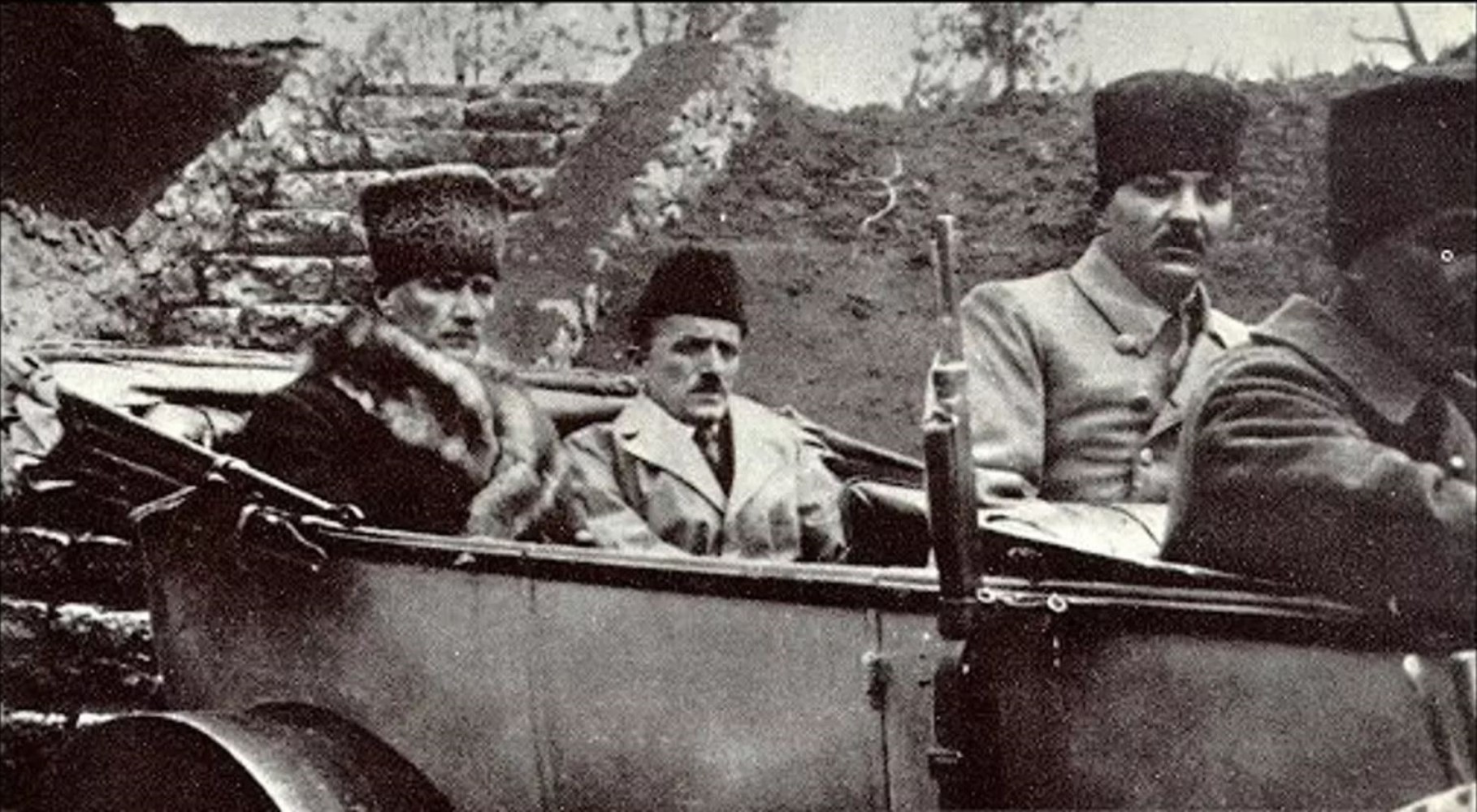
Yusuf Kemal would become Minister of Foreign Affairs again after Law No. 244 was enacted (with the election held on July 12, 1922, receiving 198 out of 203 votes). As can be understood from these results, he became the Minister of Foreign Affairs with the support of a large majority of the Assembly following the Moscow Treaty.
Yusuf Kemal and the Moscow Delegation reached Anatolia via the Caucasus (likely Moscow-Tbilisi-Batumi). They were to return to Ankara via the port of Samsun. However, in the meantime, he received instructions to wait for the French representative Franklin Bouillon, who wanted to cross from Istanbul to Anatolia, and to come to Ankara with him. Thus, the Turkish delegation coming from Moscow met with the French delegation coming from Istanbul in Samsun. No immediate results were obtained from the negotiations with the French. The victory in the Battle of Sakarya would convince the French. Ultimately, France broke away from the Entente and signed the Ankara Agreement, which meant it could make peace on its own if necessary. The signatories were Franklin Bouillon and Yusuf Kemal Tengirşenk.
INCREASING RELATIONS WITH THE SOVIETS AND YUSUF KEMAL IN PHOTOGRAPHS
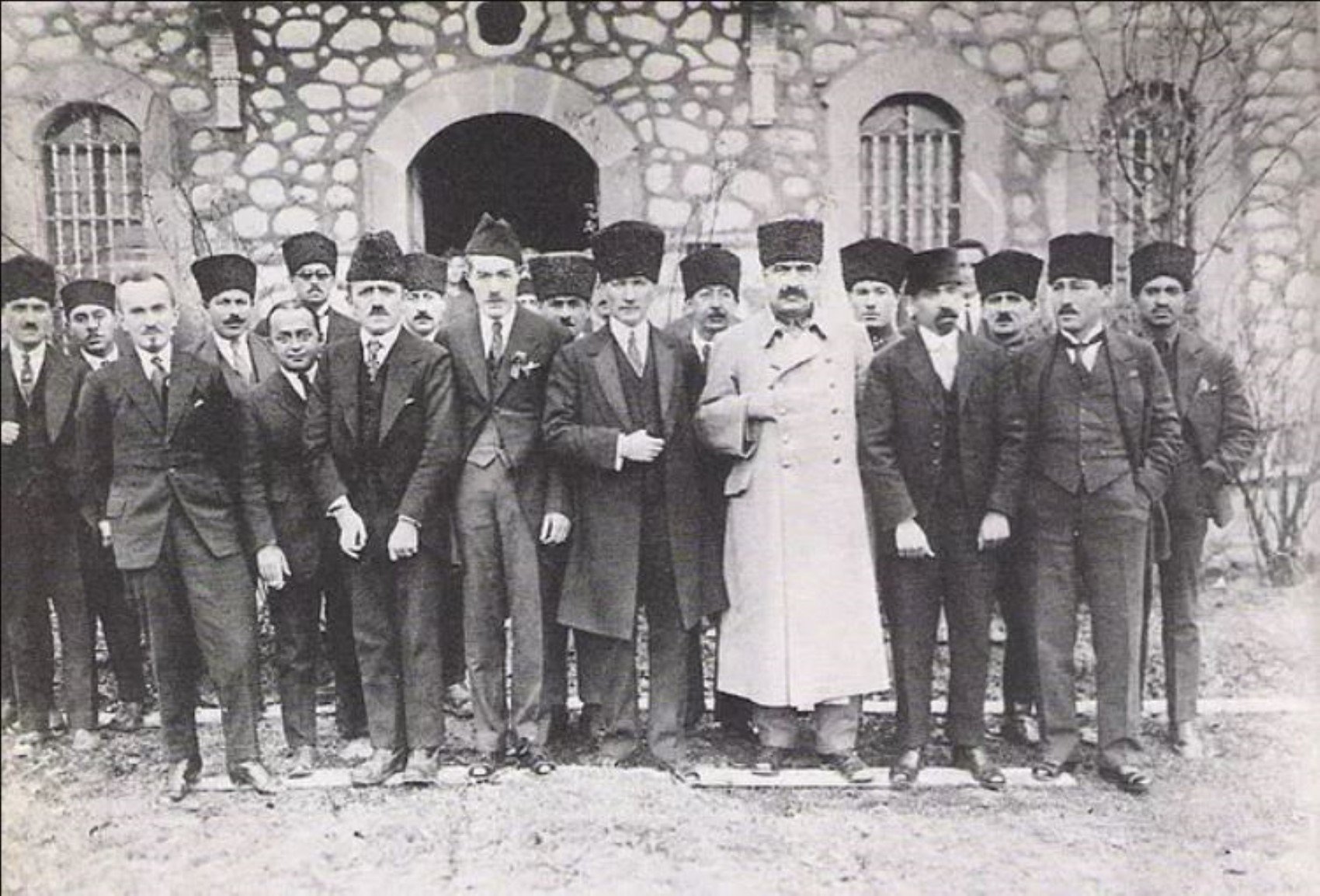
After Frunze's (Soviet representative/commander of the Ukrainian Red Army) long visit to Turkey, the Soviets appointed Aralov as ambassador. Aralov appears next to the commander-in-chief along with İbrahim Abilov in the photographs of the Ilgın maneuvers and Akşehir Station. Yusuf Kemal also appears in Ankara photographs alongside Soviet Russia representatives, Socialist Azerbaijan Republic representative Abilov, Fevzi Pasha, and Mustafa Kemal Pasha.
THE CHANGE IN BRITAIN'S ATTITUDE AFTER SAKARYA
Faced with the de facto dissolution of the alliance, the British were forced to reconsider their position. They declared their neutrality in the Turkish-Greek war. They released the Malta exiles in exchange for a prisoner swap. The situation after the armistice had evolved to this point: The alliance to force the Turks into peace under the terms of Sèvres had effectively dissolved. Italy had long since broken away from the alliance. With the Ankara Agreement, France was also telling Britain that this war was now your problem. The Ankara Government had established a new status quo with the Soviets through the Moscow and Kars treaties and had secured its borders. Thus, only two sides remained on the field: Greece, which occupied Western Anatolia and Eastern Thrace, and the TBMM Government.
If one were to analyze the general situation at the beginning of 1922, the first point to note is that the Malta exiles had returned. This meant that these military and political cadres were gaining strength, and the hand of the Anatolian government had been bolstered. Figures such as Generals Yakup Şevki and Ali İhsan Sabis had returned, as had former ministers and deputies like Rauf Orbay and Ali Fethi Okyar.
Rauf Bey first became the Minister of Public Works and later the Chairman of the Council of Deputies. Fethi Okyar, one of Mustafa Kemal Pasha’s friends since their time at the Manastır Military High School, was elected Minister of the Interior by the Grand National Assembly of Turkey, just as he had been in the cabinet of Grand Vizier Ahmet İzzet Pasha at the time of the armistice.
YUSUF KEMAL'S PEACE TOUR OF EUROPEAN CAPITALS
While the Commander-in-Chief was making maximum preparations to ensure final victory on one hand, he also made a peace initiative on the other. He was certainly not optimistic about it, but it was a good political maneuver in terms of the legitimacy of our sacred struggle.
Minister of Foreign Affairs Yusuf Kemal Bey was sent to European capitals on the instructions of Mustafa Kemal, via Istanbul, to present the thesis of participating in a “peace conference” on the condition that the Greek occupation army be evacuated from Anatolia. By sending the Foreign Minister to Istanbul, the Ankara Government intended to eliminate the opportunity for the Allies to exploit the Ankara-Istanbul duality. In Istanbul, Grand Vizier Tevfik Pasha and Minister of Foreign Affairs Marshal Ahmet İzzet Pasha were concerned with securing the rights of the Caliphate and the Sultanate. They were even prepared to ask openly, “You are not going to establish a Republic, are you?”
Before departing from Istanbul for Marseille by ship, Yusuf Kemal met with Allied High Commissioners Rumbold, Pelle, and Admiral Bristol. Foreign Minister İzzet Pasha, with the effort of a family elder trying to reconcile estranged relatives, arranged for Yusuf Kemal to meet with Sultan Vahdettin. However, Mustafa Kemal had already accepted the meeting. The goal was to have the Sultan approve the legitimacy of the Anatolian movement before heading to Europe. Subsequent moves could be adjusted according to time and circumstances. Vahdettin listened to the visitor with his eyes closed, just as he had during the visit Mustafa Kemal Pasha made before leaving for Anatolia in 1919. A similar reception with eyes closed had occurred during the visit of Rauf Bey and the Felah-ı Vatan group in early 1920.
REACTION TO YUSUF KEMAL'S AUDIENCE WITH THE SULTAN
In the Assembly, Yusuf Kemal’s acceptance of an audience with the Sultan was met with backlash. During the session on March 6, where the acting deputy was present, angry deputies "Since the Sultan is a captive, one must negotiate not with the captive, but with the master (referring to the Allies)," they argued. Such an argument had been developed since the Law on Rules of Procedure. The Assembly had defined itself as the "consensus of the community"as its source of legitimacy.
On the other hand, in a way that was in no way reconcilable with this line of thought, the Law of Fundamental Organization (Teşkilat-ı Esasiye Kanunu) stated that "sovereignty belongs to the nation" and that national sovereignty is manifested and concentrated in the Assembly. Furthermore, it was declared that the State of Turkey was governed by the Grand National Assembly. In other words, there was a State of Turkey, not the Ottoman State. Ultimately, the situation was calmed by the intervention of Mustafa Kemal Pasha. It was accepted—albeit reluctantly—that the negotiation was conducted for tactical purposes for the national cause.
The journey began with nationalist displays, such as hoisting the Turkish flag on the ship that would take Yusuf Kemal from Istanbul, which was under Allied occupation, to Marseille, and making the British officers who were to conduct passport control come aboard to the deck.
The Turkish Foreign Minister was welcomed in Marseille by Franklin Bouillon. They had first met in Samsun in June 1921, and a friendly relationship had developed between them. The Foreign Minister completed his tour of France, including meetings with Poincare, by March 9. Then he moved on to London. The London tour also took place in a very positive atmosphere. The British had softened significantly. They were in the mood of, "Let's put an end to the war, this has dragged on too long. Everyone needs peace." But they had no intention of making any concessions. He returned to Paris from London on March 21 and returned to Ankara on April 3.
The peace-inclined press in London showed special interest in Yusuf Kemal. The Daily Telegraph newspaper published a long interview. Very complimentary expressions were used about him. They were saying that he had met with Chicherin in Moscow, reached an agreement with Bouillon, and was not a man like his predecessor (referring to Bekir Sami). It was mentioned that he was a person of short stature but high ideas. It was emphasized that he was the right-hand man of Mustafa Kemal. Yusuf Kemal met with Lord Curzon together with Nihat Reşat Belger and sincerely explained the Turks' thoughts on ending the war.
Arnold Toynbee invited Yusuf Kemal and his delegation to dinner. Lawrence was also present at the dinner. Lawrence made confessions regarding the Arab provinces. The atmosphere was highly intellectual. There was service at the table that met British standards.
Ultimately, the Ankara Government, through its Minister of Foreign Affairs, had once again reiterated its demand for peace on the basis of the "principle of self-determination of nations." Everyone wanted peace. The negotiations always took place in a very civilized atmosphere. But when it came to granting the rights of the Turks, silence would prevail.
THE FINAL PEACE TOUR BY ALİ FETHİ BEY
Just as Atatürk had tasked Yusuf Kemal, he sent Fethi Bey—in my opinion, this time as a tactic of stalling and distraction—to European capitals in an unofficial capacity. On July 3, 1922, Fethi was granted leave to receive medical treatment. The term 'leave' here means that the Grand National Assembly of Turkey granted permission to its deputy. He reached London a month later after holding unofficial contacts in Europe. Let us also recall in the meantime that Fethi had remained in exile/captivity in the hands of the British in Malta for two years (1919-1921). He spent July and August in this manner. The British Foreign Office stalled him and did not grant him an appointment. However, it would soon be understood that in reality, the Turkish headquarters was stalling the British before the offensive. When the Great Offensive began, Fethi Bey was in Europe.
EVALUATIONS
The Ministry of Foreign Affairs worked under very difficult conditions in an environment where a significant portion of the country was under enemy occupation. The first minister, Bekir Sami Bey, was in reality a former diplomat and governor who had made a mid-level career in the foreign service, who advocated for Westernist policies (Western policy) and did not believe that decisive military superiority could be achieved against enemy forces.
He was chosen as Minister of Foreign Affairs due to reasons such as his membership in the Representative Committee (Heyeti Temsiliye) and his past career. He remained in office from May 1920 to March 1921. He was of Caucasian origin. When he was a very small baby (in the 1860s), his family had migrated to Anatolia with a community of 5,000 Chechen-Ossetian-Circassian-Kabardian people.
He had completed his education at the Mekteb-i Sultani and in France. He was not someone close to the "Eastern ideal," which was frequently mentioned at that time. The Eastern ideal encompassed a broad ideological spectrum ranging from anti-Westernism to socialism.
From the beginning, he was in favor of an alliance with the West against the Bolsheviks, rather than an alliance with the Bolsheviks against the West. He preferred a policy of extracting certain concessions through this approach. He had made plans for this while in Moscow. When these initiatives were understood by Russian intelligence, cold winds blew between Ankara and Moscow. After the negotiations ended in failure, Bekir Sami left the delegation and went to Ossetia. The reason he stated was to stay there and meet with his relatives. But his real goal, in my opinion, was to establish a Caucasian Confederation with the support of the British. Perhaps he had studied the infrastructure and feasibility of a political combination in which he himself would be involved or at the head of. He was in favor of reconciliation with the West.
Yusuf Kemal Bey, on the other hand, was a "nationalist." This expression covers both the Kuvayı Milliye (National Forces) and the Müdafaa-ı Hukuk (Defense of Rights). His knowledge, skills, negotiation ability, and the performance he displayed against the Russians, the French, and even the British brought him to a powerful position in the government. He also gained prestige in the eyes of the Speaker of the Grand National Assembly of Turkey.
The Great Offensive completely destroyed the international status quo established after the armistice. It razed it to the ground. The Allies did not expect such a decisive Turkish victory. The occupying Greek Army and the collaborating Greeks were in a panic. They were trying to take refuge in the Allied ships in the port of İzmir. The Turkish commander-in-chief entered İzmir in a triumphant manner. The Allied headquarters in Istanbul had to intervene. Especially the French [High Commissioner] Pelle, to soften the atmosphere.
Franklin-Bouillon also arrived in haste on a torpedo boat from France. On the same day, Minister of Foreign Affairs Yusuf Kemal and Prime Minister Rauf Bey also reached İzmir. As I recall, there was a friction between him and the commander-in-chief regarding the French text while corresponding with the high commissioners waiting on the Allied ships about the terms of the ceasefire, and Yusuf Kemal was offended by the commander-in-chief testing his French language skills.
A delegation led by İsmet Pasha conducted the armistice negotiations. He also signed the Armistice of Mudanya on behalf of the Government of the Grand National Assembly of Turkey (TBMM). Following this, a debate began over who would attend the Peace Conference. After the enactment of Law No. 244 on the Executive Deputies, Rauf Bey had, in a sense, become an elected prime minister. This gave him strength against Mustafa Kemal Pasha, the natural head of the council of ministers.
He appeared very eager to be the chief delegate at the peace negotiations that were to begin in Lausanne. For two reasons. The first was the desire to erase the negative image of having signed the Armistice of Mudros. The second was the dream of diminishing Mustafa Kemal's credit by being the person who signed the peace treaty. In fact, Yusuf Kemal Tengirşenk, who had served as Minister of Foreign Affairs throughout the War of Independence, could very well have represented Turkey in Lausanne.
But Rauf Bey's excessive eagerness and the fact that İsmet Pasha had conducted the armistice showed that Atatürk had other thoughts in mind. The victory had been won, and all conditions had changed. The Gazi did not want to appoint either Rauf Bey or Yusuf Kemal to this task. In fact, the TBMM was going to determine the delegation members one by one through voting, including even their daily allowances.
The victorious commander-in-chief—in my opinion—wanted to be de facto at the negotiating table himself. This was only possible if İsmet Pasha, who had signed the armistice on behalf of the Grand National Assembly of Turkey, became the head of the delegation.
Yusuf Kemal withdrew after this. He had been suffering from a serious health problem for many years. He went to Vienna for treatment. When the treatment yielded positive results, he was appointed as the representative to London. However, when a law was passed stating that parliamentary membership and diplomatic duties were incompatible, he chose to remain a member of parliament. He returned to Ankara. From then on, Yusuf Kemal (within the reform movements) we do not see him in a very active political position. He was consistently elected as a member of parliament until the 50s. He also served as Minister of Justice in the 30s.
His primary preference was academia. From the time the Ankara Faculty of Law was established, he served as a professor. He taught courses on the economic history of Turkey and the history of the Turkish Revolution. He was teaching the same courses at the Istanbul Darülfünun as well. He retired as a professor.
Although he was an independent member of parliament from the Democrat Party list (like Ali Fuat Pasha), he was not in very close contact with Menderes and Bayar. He even left the DP, just like Halide Edip. We last remember him presiding over the 1961 Constituent Assembly in his capacity as the oldest member. During the Republican era, we did not see Yusuf Kemal in the "feverish arena of politics." He always stood one step back. But, as the title of his book suggests, "In the Service of the Homeland"he continued to remain.
Would you like to get notifications about new developments and save news?
- NotificationsNew developments and breaking news
- SaveNews is stored in the app
Most Read
Statement from Nihat Zeybekci on the fund investigation
New 75,000-seat stadium plan for Fenerbahçe
Interpol and MIT tracking yields results in Izmir
ID convenience for KPSS candidates

2027 Budget: Taxes for the people, tax exemptions for capital

To whom and how was the Petition of Intellectuals submitted? Who accepted the petition?

The Çanakkale robbery -1- How was the Troy treasure smuggled out?
The reality of Akkuyu and the longing for national nuclear power

Artificial intelligence and the new imperialism

Ministry investigation into unauthorized promotional messages