


How was Fatma Hikmet İşmen elected as a senator?



Where did I encounter İşmen’s documents?
There is an International Institute of Social History (IISH) in Amsterdam. It is one of the largest research institutes in Europe. Its archives on Turkey are surprisingly rich. The inventory has expanded through purchases or donations. I went there to work on the İsmail Arar papers. I encountered a massive archive of Turkish leftist history. To give a few examples, the TİP (Workers' Party of Turkey) documents, and the papers of Nazım Hikmet, TKP (Communist Party of Turkey), Dr. Hikmet Kıvılcımlı, Vala Nurettin, and Kemal Sülker are all there.
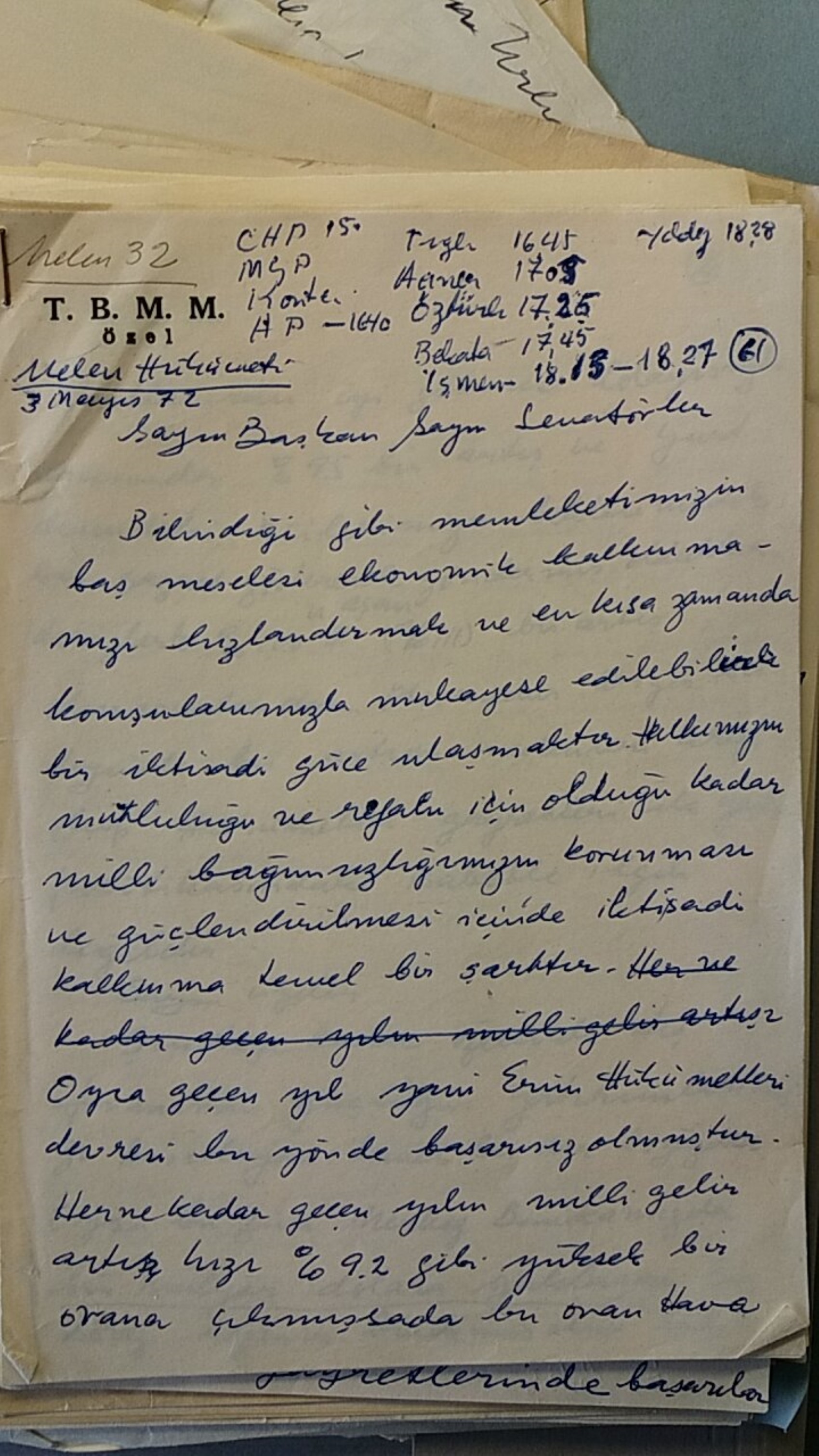
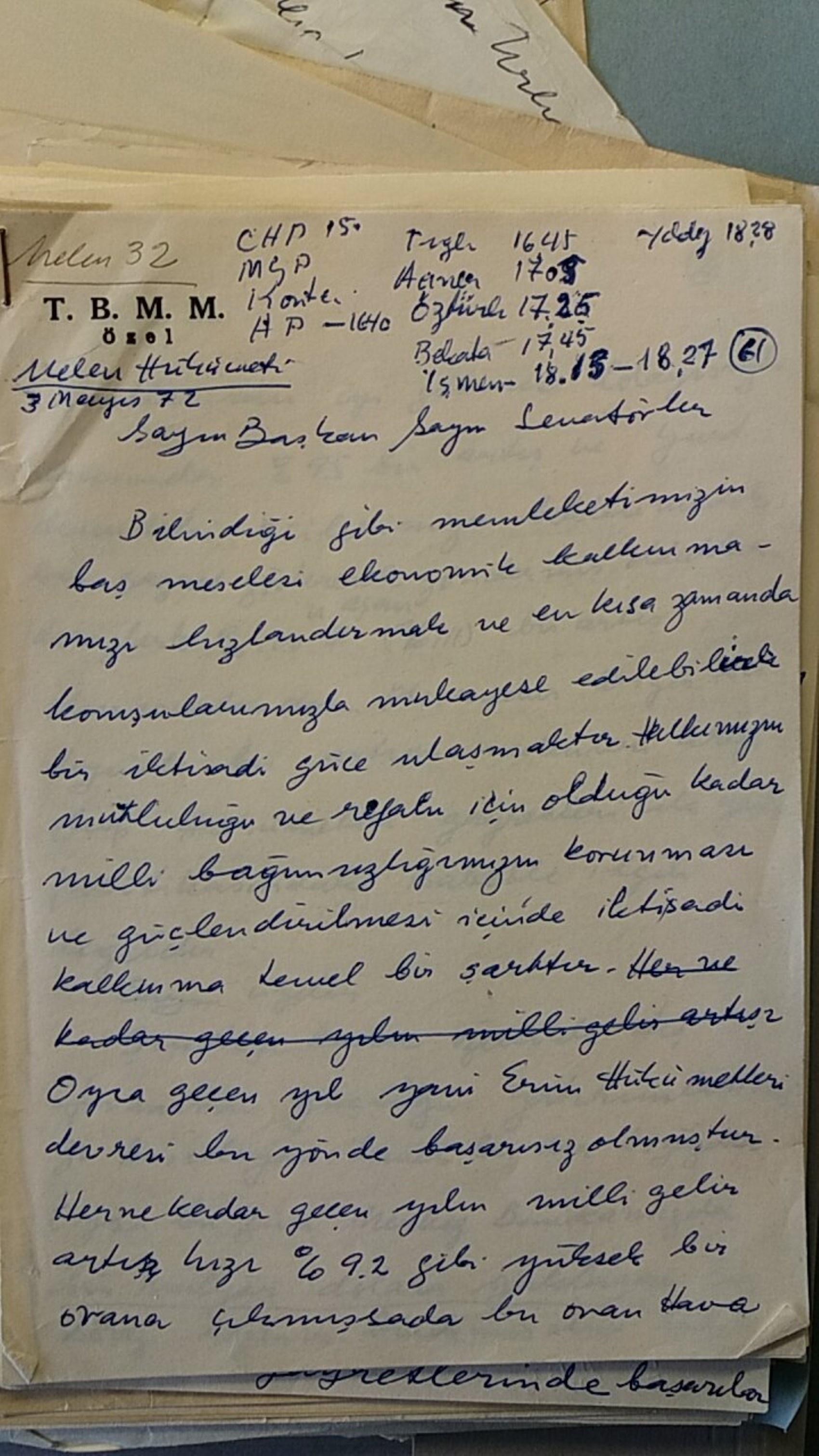
I looked into every file I was curious about as much as my time allowed. The Fatma Hikmet İşmen papers were among them. The private documents she left behind were very intriguing. From her father Hüseyin Hüsnü Bey's meticulous notebooks to her own study notebooks, almost everything regarding her professional and political life was inside the boxes. The conclusion I drew from her archive was this: Fatma Hikmet Hanım had never thrown anything away throughout her life. All her diplomas, experiences abroad, working life, and even the investigation files opened against her and her subscriptions to professional journals were recorded.
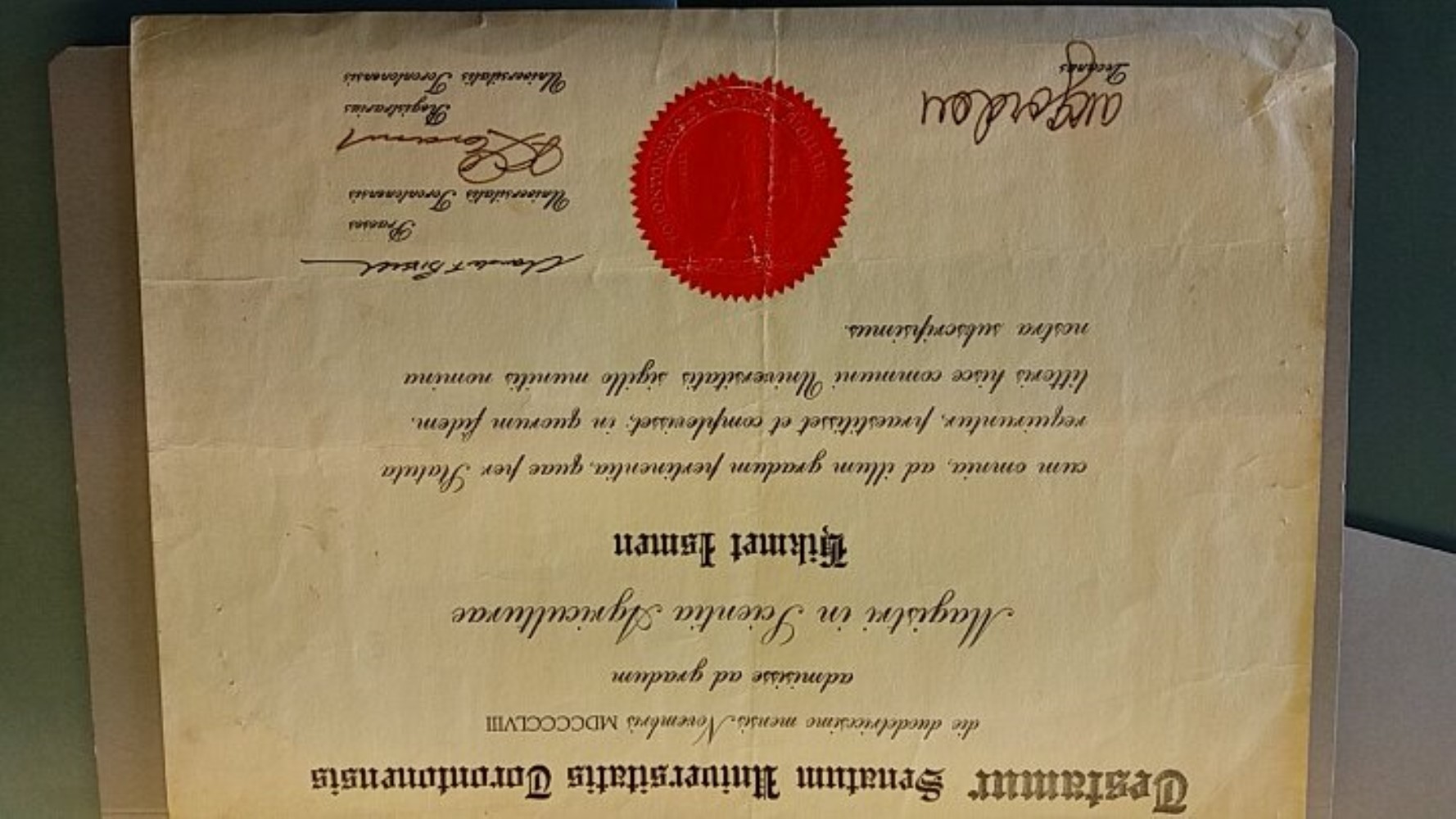
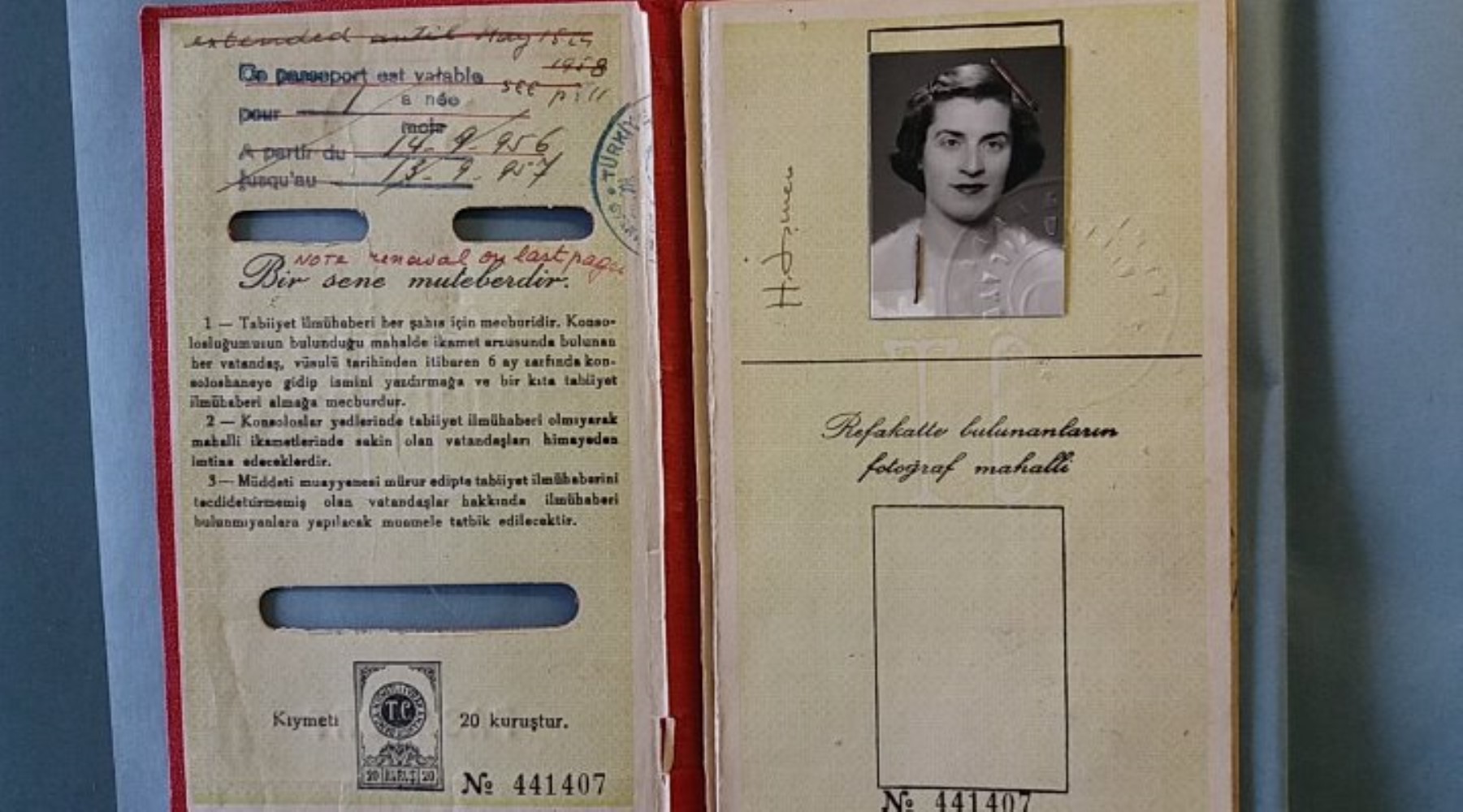
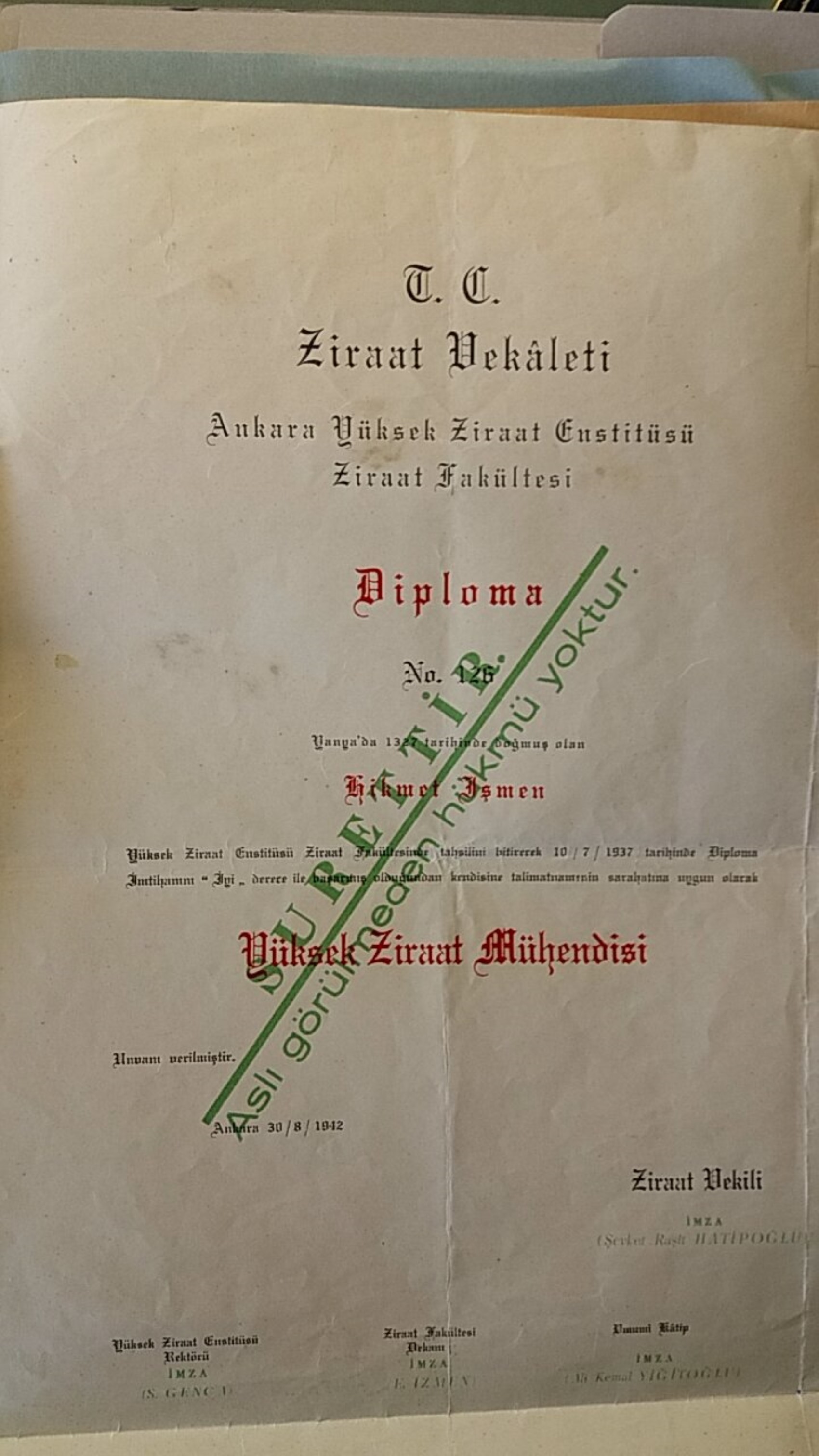
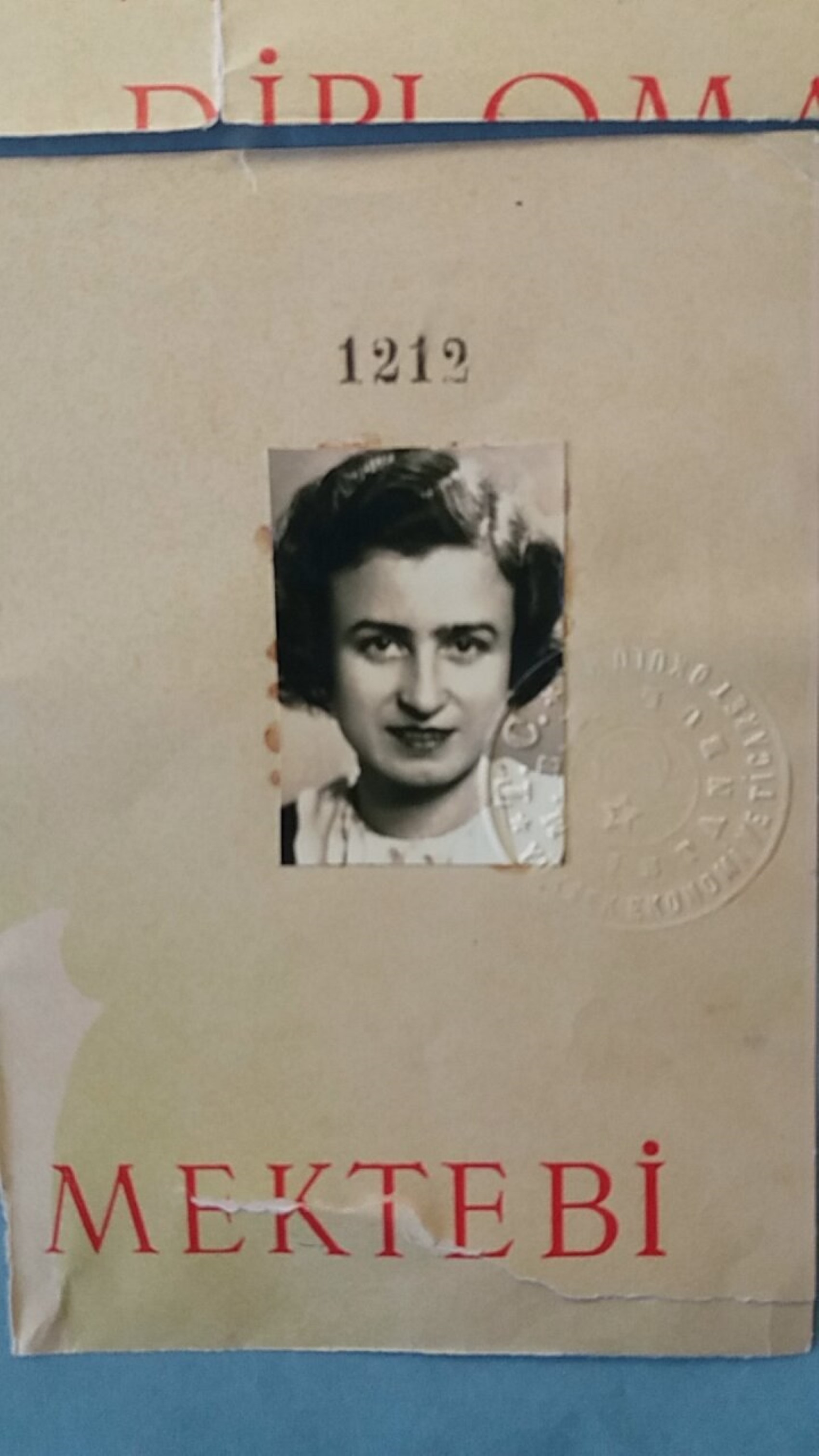
I will not talk about them here. There are other things about her that should be mentioned here. İşmen was the first female engineer to graduate from the Ankara Higher Institute of Agriculture. She specialized in the field of plant viral diseases in the profession she was passionately committed to. From her graduation in 1937 until she entered parliament in 1966, she worked at the Plant Protection institutes in Ankara, İzmir, and Istanbul. She pursued a master's degree in Canada with a scholarship she won. She returned in 1959. I saw her diploma and her passport showing that she entered Canada on October 15, 1956.
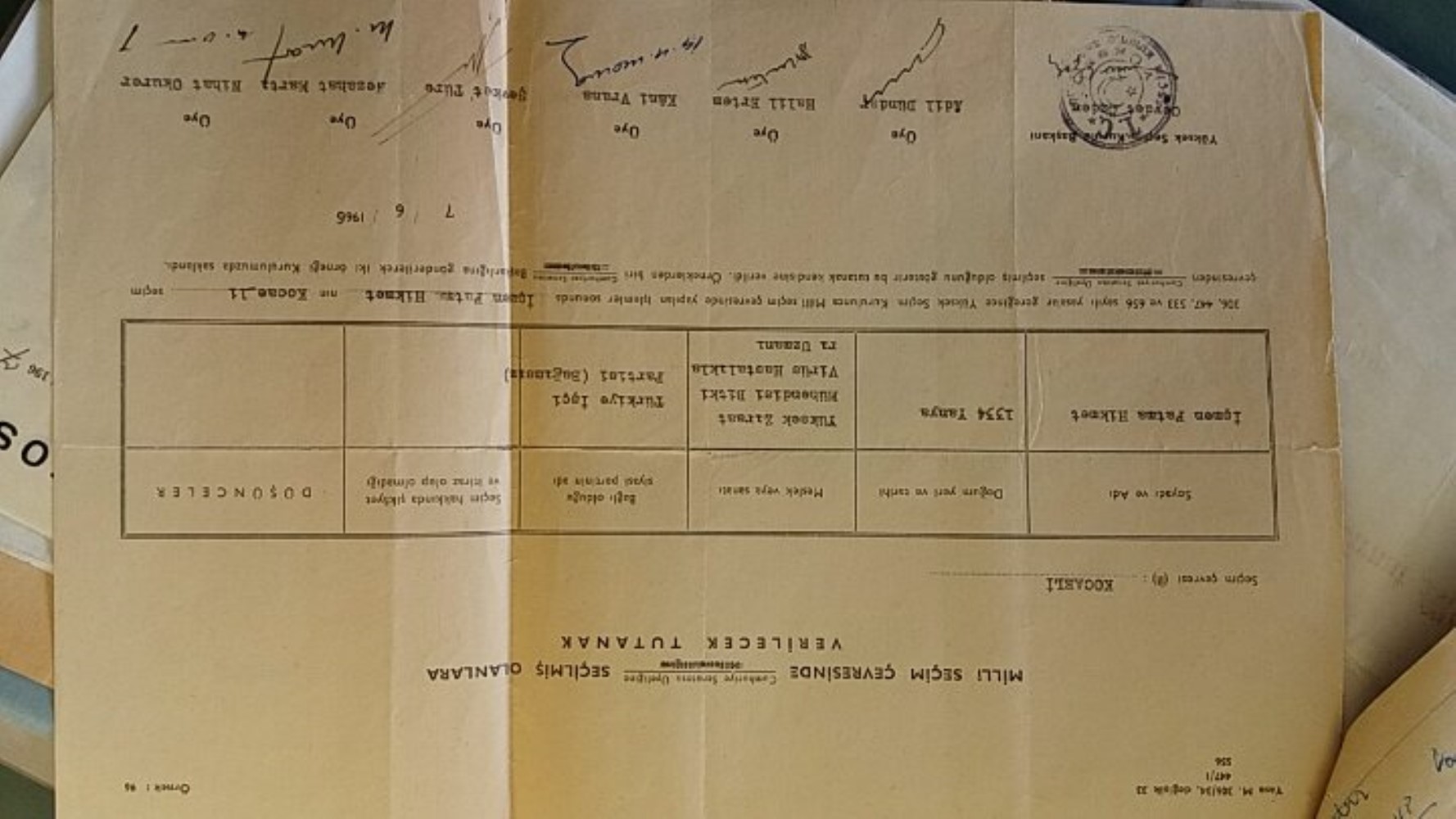
One of the documents I saw shows that she was a parliamentary candidate in the 1965 elections, participated in the primary, and entered the election in 3rd place. Inside the documents is the relevant Election Board record. The document dated 7.6.1966, which shows that she was elected as a TİP senator from Kocaeli, bears the title of the record given to those elected from the national electoral district. It has the signatures of the YSK (Supreme Election Council) president and members. The statement mentions that she was elected as a result of the procedures carried out in the national electoral district.
İşmen's involvement with the TİP began as a rank-and-file member; she traveled to villages and towns and did not have a desire for a political career. When she was elected senator, Demirel was the prime minister, and the Justice Party (AP) had just come to power. It held the majority in the National Assembly and the Senate.
THE PRINCIPLE OF JUSTICE IN REPRESENTATION
The 1961 Democracy had prioritized the “principle of justice in representation.” This was a reaction to the DP years, where distorted representation prevailed. The Constituent Assembly had enacted laws regarding the election of deputies, the fundamental provisions of elections, and Senate elections. These laws adopted a representation suitable for fairness.
The Law on Political Parties would be adopted during the XIIth term of the Grand National Assembly of Turkey, when İnönü was prime minister. In the 1961 elections, the D'Hondt system with a threshold for the electoral district would be applied for the National Assembly, and a majority system would be applied for the Senate of the Republic elections.
For this reason, the Senate elections yielded interesting results. In terms of percentage of votes, it was strange that the CHP, which came in first, won almost half as many senators as the second-place Justice Party. While the Republican People's Party (CHP) won 36 seats with 37% of the vote, the Justice Party obtained 71 seats with 35% of the vote. Other political parties, the New Turkey Party won 27 seats and the Republican Peasants' Nation Party won 16 seats.
The reason for this was that the Justice Party won all the senate seats in the Anatolian provinces with few votes. Thus, the Senate of the Republic began its work with 150 elected members, 23 natural senators, and 15 quota senators selected and appointed by President Gürsel.
As is known, the Constituent Assembly had designed the Senate of the Republic as an Assembly of Notables, envisioned as an institution that would suggest common sense to the legislature against the executive and slow down the process.
The term of legislative mandate for members of the National Assembly was four years. Senators were to be elected for six years. However, the important difference of the Senate from the National Assembly was the principle of renewal by 1/3 every two years.
For this, the members of the Senate were divided into three groups—A, B, and C—by drawing lots. Elections would be held in these electoral districts on a rotating basis every two years. Sometimes senate elections were held together with local government elections and by-elections for vacant deputy seats. As was the case in 1968.
A development that drew attention starting from the 1963 local government elections was the fact that the Justice Party was a rising center of attraction in the eyes of the voters. The Senate renewal elections that were supposed to be held that year were postponed for 1 year by a parliamentary decision. They were held in 1964. Due to the distorted representation in the 1961 elections, the election law was changed, and the proportional representation system was adopted.
SENATE 1/3 RENEWAL ELECTIONS
The date of the first 1/3 renewal elections is June 7, 1964. The election was held in the C group provinces in accordance with the lots drawn. This means that the first senators elected from these provinces served for only 3 years. This was followed by the B Group (1966) and A group (1968) provinces.
The elections coincided with the period after the sudden death of AP Chairman Ragıp Gümüşpala at the Lido Hotel in Ortaköy. For this reason, the Justice Party did not yet have a Chairman elected by the congress. Saadettin Bilgiç was acting as chairman.
Despite these conditions, the Justice Party surpassed the Republican People's Party. With 50.3% of the vote, the AP won 31 senators. The CHP remained at 19 senators with 41% of the vote. Turkey's political direction in the near future was more or less determined by these results. Süleyman Demirel was elected chairman at the congress held after the elections. One year later, he came to power alone.
WHY WAS THE NATIONAL REMAINDER SYSTEM ADOPTED?
Alarmed by the rapid rise of the Justice Party, the New Turkey Party, the Republican Peasants' Nation Party, and the Nation Party cooperated with the CHP to change the election system. The national remainder system was adopted. As can be expected, the biggest objection to this would come from the Justice Party.
The first election held with the national remainder system, which was adopted with the cooperation of other parties despite all of the AP's objections, was the 1965 election. This was a parliamentary election. The fact that the Justice Party came to power alone despite this system is extremely significant.
TİP IN PARLIAMENT
The Workers' Party of Turkey (TİP) was founded in February 1961. Around the same time as the Justice Party. It could not participate in the 1961 elections because it could not complete its organization in 15 provinces. The 1963 local government election—under the chairmanship of Mehmet Ali Aybar—was the first election the party participated in. It was able to receive 0.4% of the vote in these elections. The TİP had begun to be represented in parliament before it had even entered any elections. Niyazi Ağırnaslı, who was elected senator for Kayseri from the CKMP, and Quota Senator Esat Çağa had joined the Workers' Party of Turkey.
The party managed to enter parliament with 15 deputies in the 1965 elections, where the national remainder system was applied. The class discourse of the TİP, which entered parliament, began to disturb the Justice Party government led by Demirel very much. Words that had not been spoken since the transition to multi-party political life began to be spoken in parliament and in election squares; they began to be broadcast on TRT, which was now an autonomous institution. AP members began to treat the TİP harshly inside and outside parliament, and party congresses and meetings began to be raided.
NATIONAL REMAINDER IN SENATE ELECTIONS
The national remainder system would also be used in the 1966 senate 1/3 renewal elections. The system was applied briefly as follows: Senate seats were first distributed in each electoral district according to the simple proportional representation principle. Naturally, remaining votes and vacant senate seats for which it was not yet clear which party had won remained in each electoral district. The remaining votes were collected in a single national pool; the national remainder number was determined by dividing by the number of senators not yet represented. As a result, the remaining vacant memberships were distributed to the parties in order of size, and no vote was wasted.
In this way, the CHP won 5 senate seats and the Justice Party won 4 from the national remainder region. Small parties that would not have won any senate seats if the simple proportional representation system had been applied gained the opportunity to be represented thanks to the national remainder. The YTP, MP, CKMP, and the Workers' Party of Turkey each won one senate seat. This name elected from the TİP was Fatma Hikmet İşmen. İşmen had been nominated from Kocaeli.
Now let's examine how the system that made İşmen a member of the Senate of the Republic worked. The TİP had received only 2,195 votes in this electoral district. This corresponded to 2.8%. Across Turkey, it had received a total of 116,375 votes. It had not won any senate seats with a 3.8% vote rate. However, when the votes were collected in the national remainder pool, one of the 13 vacant senate seats was won by the Workers' Party of Turkey. This was İşmen.
This is how Agricultural Engineer Fatma Hikmet İşmen entered the Senate. In Kocaeli, which was represented by two senators, the first one elected was from the Justice Party. The second membership fell to the TİP.
This election was followed by the A group provinces in 1968. When the March 12 regime intervened, no elections could be held until the 1973 elections that would make Ecevit Prime Minister. The B Group senate seats—including Istanbul and Kocaeli—could only be renewed in 1975. This is the reason for İşmen's nine-year parliamentary tenure. Whereas, the senators of the C group provinces (1961-1964) who were first elected in 1961 could only remain in office for three years.
SPLIT IN THE PARTY - CLOSURE AND İŞMEN'S SITUATION
The Justice Party government intended to liquidate other right-wing parties that were shrinking and tie the voters to itself. Another goal was to keep the Workers' Party of Turkey out of parliament. For this, the election system would be changed again. The new law envisioned the D'Hondt system with a threshold. However, the Constitutional Court accepted the application of the TİP and the CHP. It canceled the threshold provision of the law, finding it contrary to the “principle of justice in representation.”
For this reason, elections were held with the D'Hondt system without a threshold from 1969 until September 12. The Constitutional Court's cancellation decision was fiercely criticized by the government on the grounds that it led to elections being held with a system not envisioned by the national will. According to the Justice Party, the constitutional judiciary had put itself in the place of the legislative assembly. As a result—nevertheless—because the national remainder was abolished, the TİP could only win two deputy seats in 1969. (Mehmet Ali Aybar and Rıza Kuas) In the Senate, it was represented by a single seat: Fatma Hikmet İşmen.
An internal party reckoning began amidst the disappointment of the attitude to be taken against the Soviet Union's 1968 Prague intervention and having fallen to two deputies in the Assembly. A debate began on the strategy to be followed. At the end of this debate, the party split. Mehmet Ali Aybar resigned from the party chairmanship. The TİP passed to the management of the Aren-Boran duo. It was closed during the March 12 period. After the 1973 elections, there were no socialist members left in the National Assembly wing of parliament. Until 1975, Fatma Hikmet İşmen continued to represent socialist thought in the Senate alone.
MY THOUGHTS ON HER BIOGRAPHY
While this article was being written, I came across an article on a reactionary website that used a belittling tone regarding her, containing the phrase “The Socialist Senator granddaughter of the Sultan of Ioannina.” She was not the granddaughter of the Sultan of Ioannina. The person who was a descendant of Tepedelenli Ali Pasha was Nizamettin Nazif Tepedelenlioğlu. Not her.
She was born in Ioannina in 1918. In all likelihood, they had come to Istanbul as refugees during the armistice. That is, before the population exchange. She was the daughter of an officer who raised his children alone after losing his wife. She continued her education in Istanbul and many cities of Anatolia. She enrolled in the Higher Institute of Agriculture to be able to study as a boarding student without paying. She received a very good education there. She went abroad. She developed her professional expertise. In her archive, I came across another diploma that was never mentioned in articles about her. The document showed her graduation from the Higher School of Economics and Commerce (İİTİA). This means that while she was working at the Istanbul Institute of Agriculture, she was also attending this school and graduated.
She was elected Senator in 1966. In her parliamentary life, she waged an honorable struggle against rampant majorities. Despite all the obstacles from sovereign powers that frequently exceeded the limits of courtesy, she advocated for human labor and a world without exploitation. She was extremely closely interested not only in labor issues but also in village, peasantry, and agricultural problems. In the archive in Amsterdam, I saw some letters sent to İşmen by villagers.
After the Constitutional Court closed the TİP, İşmen continued her duty as an independent member. She served on the Agriculture, Public Works, Social Services, and Reconstruction and Resettlement committees. She submitted 28 parliamentary questions about ministers. She took the floor 115 times in the Senate.
I am of the opinion that her primary cause was equality (gender equality). Her private life and the discourse she developed show this. I find İşmen's socialism meaningful together with her identity as a scientist and a feminist.
Would you like to get notifications about new developments and save news?
- NotificationsNew developments and breaking news
- SaveNews is stored in the app
Most Read
Statement from Nihat Zeybekci on the fund investigation

New 75,000-seat stadium plan for Fenerbahçe
Interpol and MIT tracking yields results in Izmir
ID convenience for KPSS candidates

2027 Budget: Taxes for the people, tax exemptions for capital

The Çanakkale robbery -1- How was the Troy treasure smuggled out?

To whom and how was the Petition of Intellectuals submitted? Who accepted the petition?

The reality of Akkuyu and the longing for national nuclear power

Artificial intelligence and the new imperialism

Ministry investigation into unauthorized promotional messages