


İsmet Pasha’s final premiership



COULD İSMET PASHA HAVE BECOME PRESIDENT IN 1961?
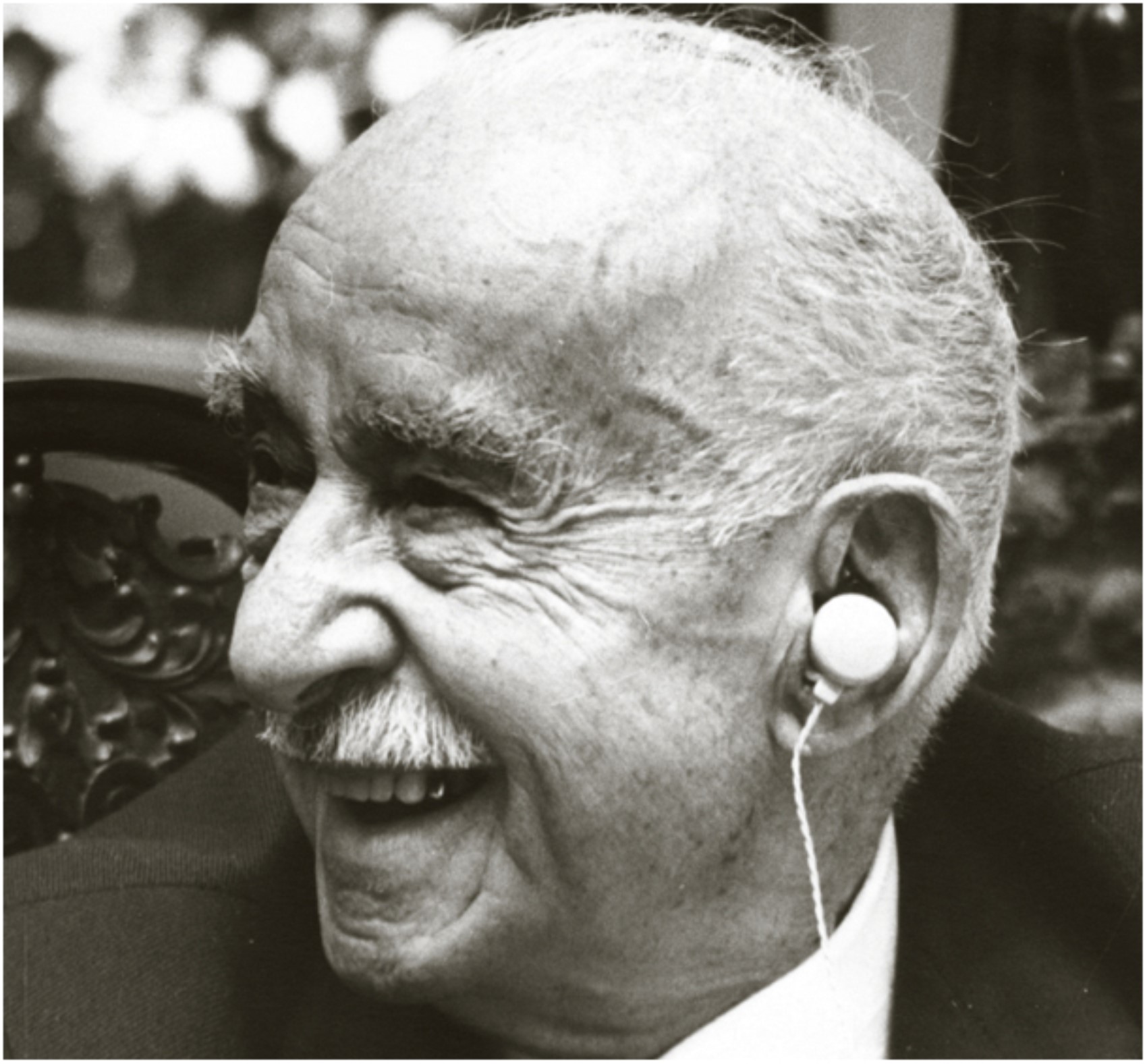
The CHP received 4% of the vote in the 1957 elections and remained only 6% behind the DP. Had an early election been held before May 27, Inönü could have been elected president in place of Bayar (in accordance with the 1924 Constitution). But the scenario of history did not proceed in this direction.
Immediately after May 27, there were discussions and meetings at İsmet Pasha’s home in Heybeliada with General Secretary İsmail Rüştü Aksal regarding the party’s governance strategy.
They believed that the trials of the deposed Democrat Party officials on Yassıada were weakening their reputation in the eyes of the public. This was not true. The reality was the exact opposite.
The National Unity Committee also expected and wanted the CHP to emerge successfully from the elections. The assessment made by Fahri Özdilek, the second-in-command of the revolution with the rank of general and deputy prime minister in the Gürsel governments, who said “was it supposed to be like this?” in disappointment after the elections, supports this thought.
The October 15 elections fell far short of expectations for the anti-Democrat Party front. These results were normal for two reasons. First: for the first time in Turkish political history, an election was held using a proportional representation system. Second: the Menderes cult maintained its power in the eyes of the public.
The proportional representation system, which the CHP had advocated since the transition to multi-party life, is the fundamental reason why a majority capable of forming a government alone could not be achieved.
The National Unity Committee-political party roundtable meetings, which began in August 1961, showed that the Committee intended to relinquish power gradually. This meant Gürsel’s transition from Head of State to the office of the presidency.
It was not considered sufficient for the National Unity members to all become natural senators. The very top of the state had to be secured through the transition of the committee leader from Head of State to President. Only then would they (the revolutionaries) feel safer. Çankaya could not be left in dangerous hands.
In my opinion, if the CHP had reached a majority capable of putting its own candidate (İsmet Pasha) into Çankaya, the National Unity Committee could not have objected to it.
The other person Cemal Gürsel was justifiably suspicious of regarding his candidacy was Ragıp Gümüşpala. Ragıp Pasha was a retired Chief of General Staff. He was resentful toward the National Unity members. He had become the chairman of the Justice Party. If the AP had formed a majority on its own, he could have been a candidate. He was not as strong as İsmet Pasha in the eyes of the National Unity members. The majority to be obtained in the National Assembly and the Senate could have changed the balances.
In my opinion, Ragıp Pasha also had the “office of the presidency” in mind.
In my view, the candidate who had no chance at all was Professor Ali Fuat Başgil. Extreme revisionists misled the professor. They wrote impossible scenarios in their minds. They also convinced the professor.
What I am saying are purely probabilities. After the Roundtable meetings, the concrete situation became more apparent. By the autumn of 1961, “which piece was where” and the likely moves were clearly visible. At this stage, İsmet Pasha’s stance was extremely appropriate. It was reasonable. It was for the good of the country.
After a conversation held at Afet İnan’s house with his son-in-law Metin Toker, he sent a message to the National Unity members: I will not be a candidate.
There was certainly pressure regarding Cemal Gürsel’s candidacy. But the conditions of politics required it. İsmet Pasha, even if other conditions were in favor of the CHP, took a step back and alleviated the “suspicions” of the army and the National Unity Committee. But Gürsel’s presidency, on the condition of civilianization, was the most important threshold in paving the way for the new regime.
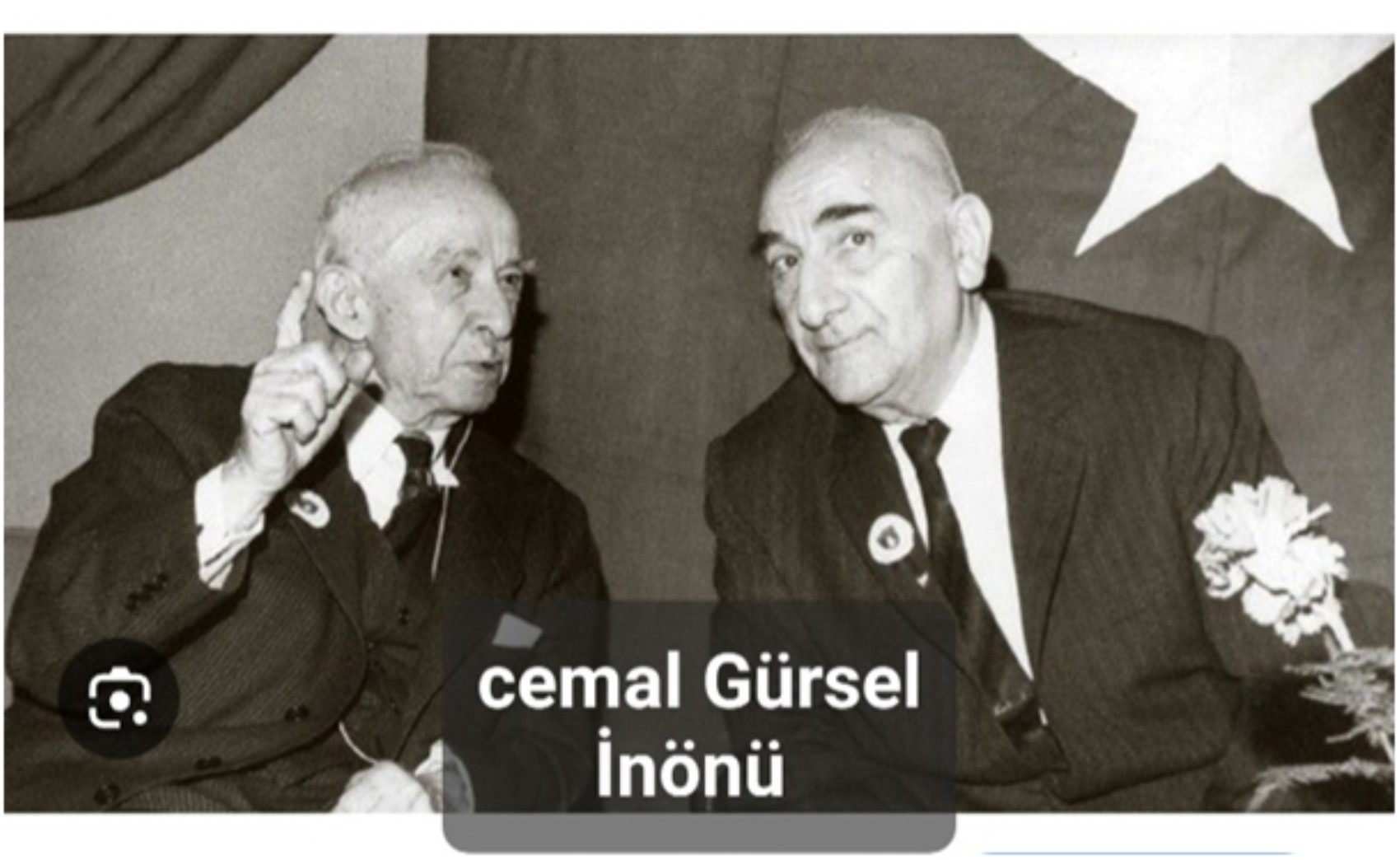
WHY INÖNÜ AS PRIME MINISTER?
İsmet Pasha left the premiership in 1937 and Çankaya in 1950. He remained the chairman of the main opposition party for 10 years. After the first elections following the May 27 revolution, he was tasked with forming a government by President Cemal Gürsel on November 10, 1961.
Inönü formed a government three times between this date and February 1965. This is a situation that might seem strange at first glance.
To me, İsmet Pasha thought his party would win the elections and, if this prediction came true, he would most likely be elected president by the Grand National Assembly of Turkey (TBMM). At the very least, he must have had this in mind. If he were to be put back into Çankaya by the CHP majority, he must have intended to appoint party secretary-general İsmail Rüştü Aksal to the premiership.
He was, of course, aware that this option would not be easily realized. Still, he was hopeful. It would not be wrong to say that the idea that the Turkish people would now realize the facts and give the CHP its due dominated the party leadership.
However, the election results showed that power remained up in the air. Extreme officers within the Armed Forces Union wanted to dissolve the parliament before it could convene. The Gürsel-Inönü-Sunay front blocked this move.
The main political actor here is Inönü. Without Inönü, the others lacked the power to achieve results. It was quite difficult for them to resist the Aydemir Junta. A strong barrier against tendencies to intervene in the regime could only be established with the Inönü lightning rod. And that is what happened.
After the collapse of the coalition with the Justice Party, tendencies emerged within the CHP not to take part in the government. This was an idea that was ethically correct but politically wrong.
Despite this, Inönü would form two more governments. Throughout the period, he would address parties like the AP, YTP, CKMP, and MP, which were positioned against the CHP, as follows: “You will have a hard time finding me again.” You cannot form a government. The political situation is not suitable for this. You see this too. If you do not agree to what I say, the country will remain without a government. Inönü was aware of his own power. And of the power of the political parties opposing him, both individually and collectively.
The reason for these words of Inönü was the conditions the country was in. Actually, he meant to say “I am not eager for it.” If you can take power, go ahead and take it.
Inönü’s presence in a position of political responsibility stopped interventionist tendencies. This led to relief in the parties opposed to Inönü.
In addition to this, a tense process had begun with the USA. The US administration was interpreting developments in Cyprus from across the Atlantic “insensitively.” Johnson did not have the equipment to grasp the importance of Cyprus in terms of Turkishness.
In my opinion, the Cyprus events are the fundamental reason why the anti-CHP bloc could not find the courage to remove Inönü from the premiership. They were against him. But they thought they could not get out of such a crisis without him. They could not find that courage in themselves until 1965.
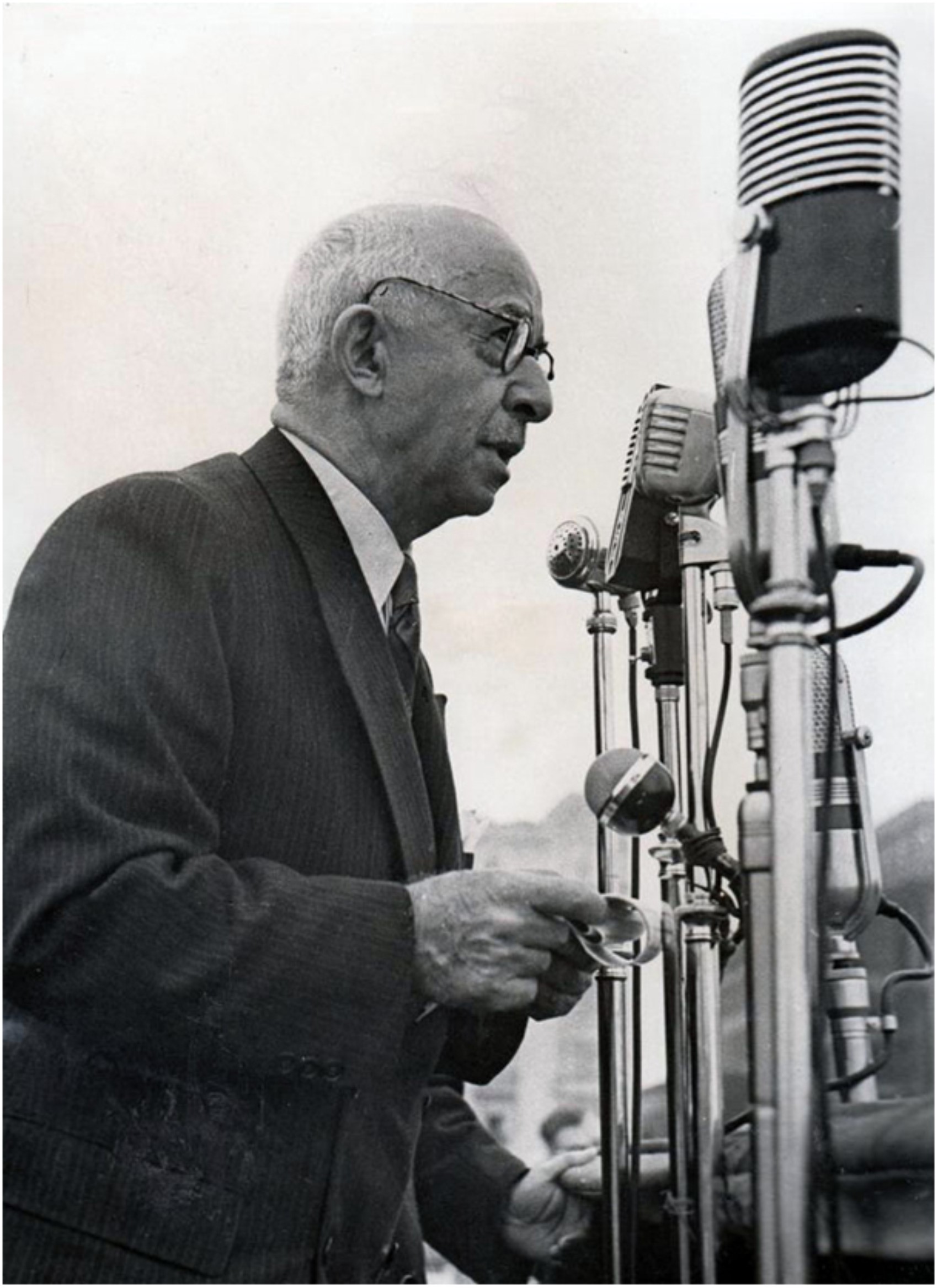
KENNEDY PRESIDENT IN THE USA, INÖNÜ PRIME MINISTER IN TURKEY
The USA had managed the Second World War with Democratic presidents. Toward the end of the war, Roosevelt had been elected president for the fourth time. He passed away while he had just begun his term. Vice President Truman assumed the duty. In the later period, Eisenhower, one of the war heroes of the USA, sat in the presidential seat from the Republican party. (1953-1961)
With the start of the Cold War, power in US politics passed to the Republican party.
In the 60s, there were important changes in the world. Revolutionary developments occurring in Latin America and Cuba caused the USA to review its policies.
The Cuban Revolution created worldwide effects. Turkey’s importance within the North Atlantic alliance increased further. Every increase in tension with the Soviets revealed Turkey’s geostrategic importance. Democratic candidate John F. Kennedy was elected president of the USA. (1961)
Kennedy’s election as president brought dynamism to US politics. While this transformation was taking place in the USA, the new constitution had come into effect in Turkey, and the founding tensions of the new democracy were being experienced.
The Commander of the Western Front of our national war of independence, the chief negotiator of the Turkish delegation in Lausanne, our second president İsmet İnönü, had been appointed to the premiership by President Gürsel.
Especially the Cuban tension encouraged the new US administration to tighten ties on the Southeastern flank of NATO and to encourage non-alliance countries to take a stance against the Soviets under US protection.
During Inönü’s second premiership, Vice President Johnson made a wide Middle East tour that also included Turkey. Turkey, Iran, Lebanon, Cyprus, and Greece.
Johnson was met with very positive impressions in all the countries he visited. Warm interest was shown to him everywhere.
We can say that exaggerated festivities were held in Turkey. The most marginal examples of Turkish hospitality were displayed. Similar things had been done when President Eisenhower came to Turkey. (1959) We loved America. We liked the visits of US presidents to Turkey.
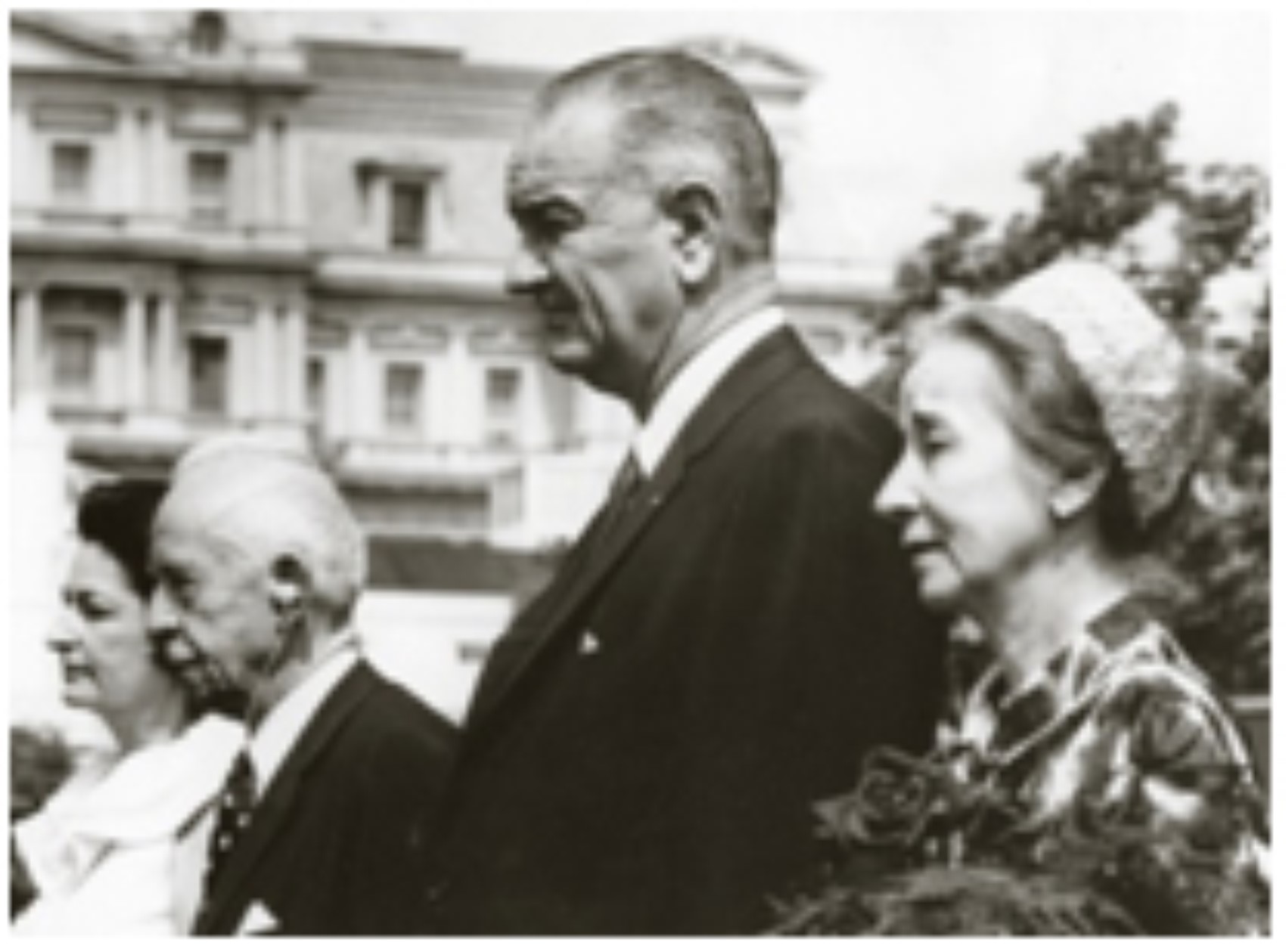
Prime Minister İsmet Pasha’s first meeting with Johnson took place on the occasion of this visit. The famous two-flag picture that the AKP chairman resorted to in order to portray İsmet Pasha as pro-American is from that date.
The picture was taken at the welcoming ceremony for the friendly and allied US vice president. Ankara of 1962 is seen in the background. The country is Turkey. The head of government is welcoming the US vice president.
Johnson’s visit to Turkey took place between August 26-30, 1962. The date seemed meaningful to me. But perhaps it is a coincidence. Let the reader decide that too.
As can be seen, the visit took place immediately after Kennedy was elected president in the USA. One year later, an incredible event happened. 35th US President John F. Kennedy was killed in an assassination in Dallas, Texas, on November 22, 1963. There is quite a wide literature on how this event could have happened. I recommend you examine the assassination and the developments at the end of it a little. I am one of those who believe that such an event could not be outside the knowledge of the US deep state.
This event, which shocked the world, was followed by a very widely attended funeral ceremony. Turkey was represented by Prime Minister İsmet Pasha. Cemal Gürsel had suffered a partial stroke. There are pictures of Inönü getting off the plane in the USA with Mevhibe Hanım.
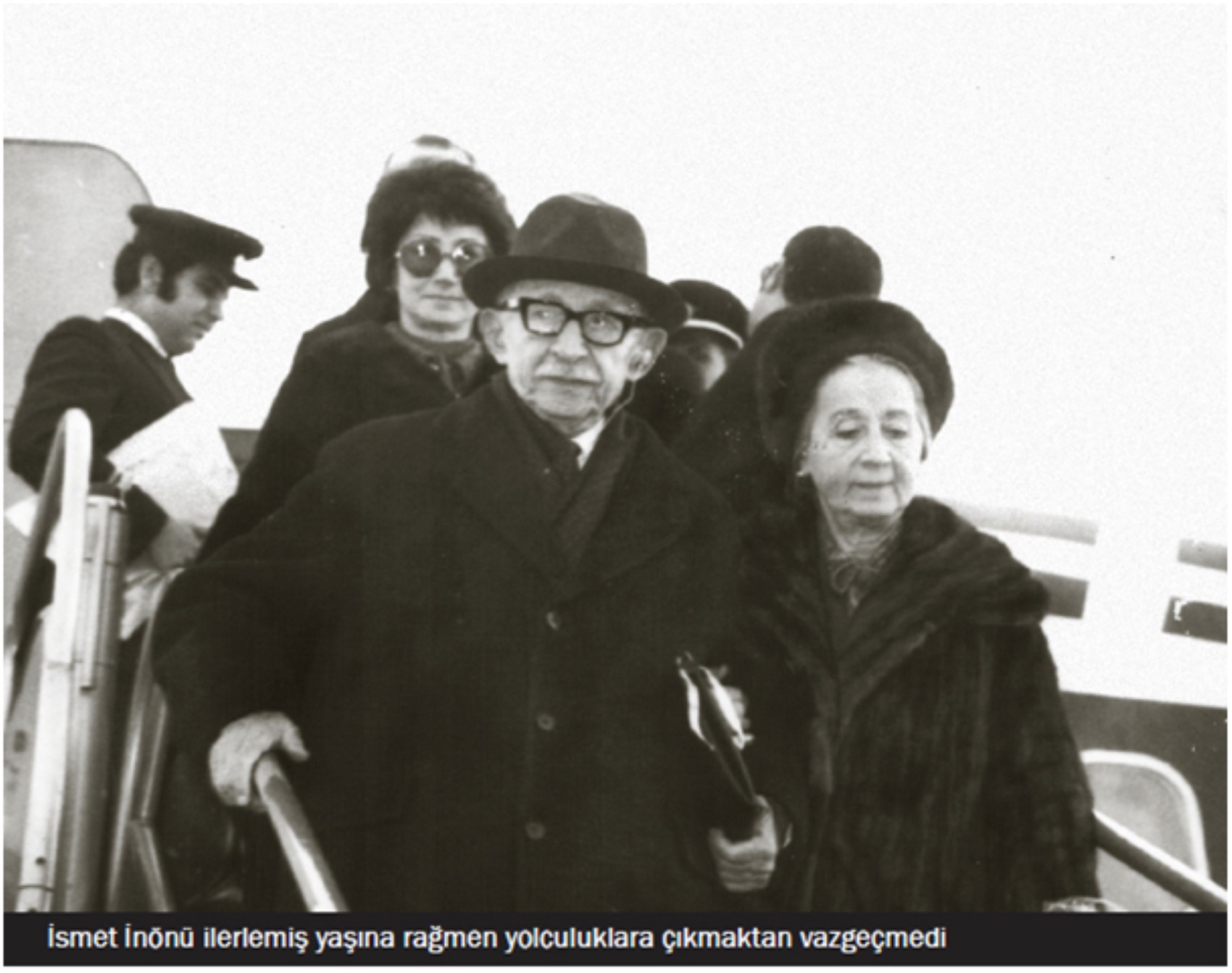
Here, in addition to condolence meetings, Inönü met with Johnson, who had visited Turkey as vice president the previous year, this time as US president. Visit dates: November 25-30, 1963.
I cannot pass without noting it, perhaps a reminder would be useful.
According to the US Constitution, if the Presidency becomes vacant (for whatever reason), the vice president takes over the duty immediately by taking an oath. He completes the remaining mandate of the executive.
The seat vacated by Roosevelt was filled by Truman, the seat vacated by Kennedy by Johnson, and the seat vacated by Nixon by Gerald Ford.
Turkish-American relations had experienced their brightest years during the Menderes period. US officials were constantly praising the Turks. We had sent a Brigade to Korea to fight under US command, and we had given hundreds of sons of the homeland as martyrs.
Many US bases had been established on our lands. Under the guise of a NATO joint defense facility. All political parties had entered into an anti-communism race. Associations for the Struggle Against Communism were organizing trips to the USA.
But we Turks were not very aware that the USA was an unreliable “superpower.”
We liked our flag waving at NATO headquarters. We thought the alliance consisted of equal members. The letter dated June 4, 1964 (Johnson Letter), which was written in a humiliating language to Turkish Prime Minister Inönü, enabled us to come to our senses.
Turkey’s justified reaction to the Bloody Christmas events that took place on December 20-21, 1963, was not met with the sensitivity we expected among our allies. Turks were being massacred in Cyprus. The events would continue until Cengiz Topel was shot down and martyred during a warning flight. (August 8, 1964)
President Johnson, understanding the sensitivity of the Turkish government, invited Inönü to the USA. And he sent a private plane. It was a “you misunderstood me” gesture aimed at reducing the Turkish-US tension.
Johnson was trying to win Inönü’s heart. Inönü’s visit to the USA: June 23-26, 1964. The main purpose of the meetings was for the Cyprus issue not to damage Turkish-US relations.
GOVERNMENTS FORMED BY INÖNÜ AFTER 1961
First of all, it is useful to emphasize this. İsmet Pasha served as prime minister for a little over three years from November 1961 to February 1965. He formed three governments. For this reason, it is more accurate to speak of İsmet Pasha’s premierships rather than his final premiership.
Each government was weaker than the previous one in terms of numerical support. The third one, in fact, could only be established as a minority government with YTP support.
Turkey and world conditions had caused political parties to need Inönü.
After the third Inönü government, parties other than the CHP came together under the chairmanship of Suat Hayri Ürgüplü and formed a government.
The governments Inönü formed starting from 1961 are the 26th, 27th, and 28th governments.
To summarize, the 26th Government with the Justice Party: November 20, 1961-June 25, 1962. The 27th Government: between CHP, YTP, CKMP (June 25, 1962-November 22, 1963), and the 28th Government, which Inönü formed with independents with YTP support: served between November 22, 1963-February 20, 1965.
During this sub-period, the May 27 debate was continuing feverishly. Dealing with the decisions of the Yassıada High Court of Justice and the consolidation problems of the Second Republic (an expression very much adopted at that time) was Inönü’s main issue.
The CHP-AP government, which was also supported by the deposed president Bayar who was in Kayseri Prison, was the first coalition government in Turkish history. The reason for its short life was Talat Aydemir’s coup attempt.
İsmet Pasha pledged that the active officers who attempted the coup would only be retired—on the condition that they abandon their actions and no blood was shed. No criminal prosecution would be opened against them. He also passed a law ensuring this.
The Aydemir junta could not understand what a great favor this was. Aydemir tried to hold a press conference with arrogant attitudes. He accused Inönü. He began to make statements like a party chairman. He was taken into custody. But the promises made to the coup plotters were kept.
The Justice Party wing of the coalition was extremely uncomfortable with this. They wanted to include Yassıada prisoners in the amnesty law as well.
What they did was a politically correct move. However, despite İsmet Pasha, the mood of the army was not suitable for this. The army stood behind May 27. They wanted the protocol, which had been pledged by all political parties and the army on September 5, 1961, to be followed. Even these conditions did not satisfy the extreme wing of the army.
In the autumn of 1961, the power of the National Unity Committee had weakened considerably. It would not be an exaggeration to say that power had effectively passed to the Armed Forces Union even before the announcement of the decisions at the Yassıada High Court of Justice.
To put it more clearly, it was the hardline colonel cadres within the Armed Forces Union who were applying pressure regarding the execution of the death sentences given on Yassıada. The Talat Aydemir junta was at the forefront of these groups.
The Justice Party members justifiably withdrew from the coalition, saying we are pardoning the coup plotters, why are we not pardoning the Democrats?
Apart from this, one of the most important events during the first coalition period was the enactment of the Law on the Establishment of the Constitutional Court, the election of the court panel, and the start of their duty by taking an oath in the presence of the president.
The establishment of the State Planning Organization and its start of duty, and the return of the “147s” to the university should be mentioned as the other two important developments.
As can be seen, İsmet Pasha had suppressed the Aydemir junta, established the Constitutional Court, and readmitted the 147s, which was a measure of the radical wing of the NUC, to the university. Date: April 12, 1962, law no: 114.
If the structure of the first coalition is examined, the first thing that draws attention is that Ragıp Gümüşpala did not enter the government. I think Gümüşpala did not want to be worn out alongside Inönü. He was waiting for a possible Justice Party government. Akif İyidoğan from the AP assumed the deputy premiership.
As for the CHP cadres in the government, the presence of conservative-Atatürkist profiles other than Ecevit draws attention. It would be more accurate to call this right-wing Atatürkism.
Names like Turhan Feyzioğlu, Emin Paksüt, Fethi Çelikbaş, Feridun Çemal Erkin, Selim Sarper, Sahir Kurutluoğlu. Most of these names would break away from the CHP after a while.
Inönü filled the space vacated by the Justice Party with other parties. The YTP agreed to enter the coalition with the suggestions of Cemal Gürsel. Gürsel’s favorite politician from the beginning was Ekrem Alican. Osman Bölükbaşı left his party after a tumultuous congress in order not to enter the coalition, despite the willingness of the CKMP cadres. He re-established the Nation Party. A behavior just like Bölükbaşı, to be honest.
The CKMP cadres, who united around Hasan Dinçer, Kemal Yörük, and Ahmet Oğuz, joined the Inönü government.
Names like Ekrem Alican, Raif Aybar, and Fahrettin Kerim Gökay from the YTP also entered the government. Thus, the triple coalition was formed.
The most important problem that emerged during the triple coalition was this: forming a government with the CHP was not good for other parties. They were losing altitude in the eyes of the right-wing electorate.
The Justice Party had saved itself by breaking the government in 1962. Now it was the turn of the YTP and CKMP.
Following the 1963 local government election results, the collapse began in the YTP and CKMP. The organizations were dissolving. The wind had turned in favor of the Justice Party.
While these developments were happening in Turkey, John F. Kennedy was killed. Prime Minister Inönü went to the USA for the funeral.
The coalition partners announced that they had withdrawn from the government without even waiting for Inönü’s return. The second coalition thus came to an end.
Inönü’s final government was a government that was truly formed reluctantly. This government was able to receive a vote of confidence by providing a weak majority with the support of independents and the YTP. This government, which was given a vote of confidence reluctantly, remained in office until February 1965.
The famous shipowner and press boss Malik Yolaç was also in this government. Let us remember that Refik Erduran had taken Nazım Hikmet out to the Black Sea with Yolaç’s speedboat. (1951)
CELAL BAYAR’S RELEASE AND BRINGING TO ANKARA
Deposed president Celal Bayar was in Kayseri prison. His wife Reşide Bayar had passed away on December 24, 1962. He had been extraordinarily worn out while traveling on the Kayseri roads. At the end of 1962, a portion of the former Democrat Party members had been released by making a sentence reduction.
Celal Bayar, on the other hand, was brought to Ankara on March 22, 1963 (during Inönü’s second coalition period) due to health problems. However, the Justice Party members could not manage Bayar’s release well. On the contrary, they welcomed him with a convoy of hundreds of cars. According to Metin Toker, this was a welcome that reminded one of Napoleon’s return from his exile on Elba.
This attitude, of course, violently provoked the May 27 forces. Disturbances broke out in Ankara. Justice Party buildings were stoned by May 27ist youth. It is said that Demirel, who was a member of the AP general administrative board during this period, left the party headquarters after the events, saying “democracy will not come to this country for 50 years.”
As understood from his diary, Bayar stayed in Kayseri Prison for about three years. He was released in March 1963 due to health reasons and brought to Ankara. Upon the events that broke out, he was hospitalized. After a while, he was taken back to Kayseri. He was released once more in 1964 for similar reasons, and was pardoned by President Sunay in 1966.
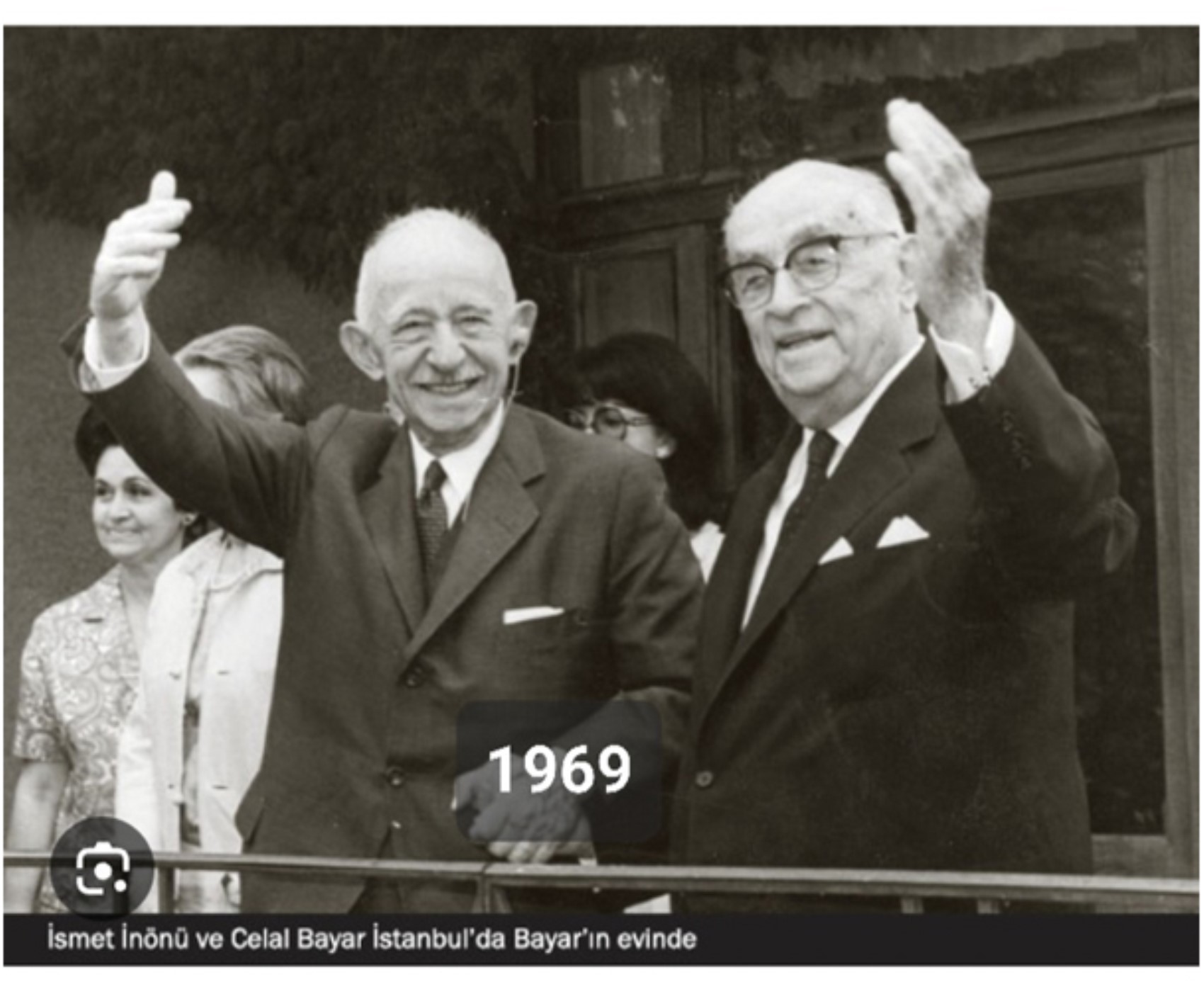
The restoration of Bayar’s political rights (along with other Democrats) came to the agenda thanks to Inönü’s sincere initiatives. A constitutional amendment was required for this. When the matter reached that point, Demirel’s acting ambiguously by citing the “army” is the reason why Bayar never fully supported Demirel in the true sense.
Let us remind you in the meantime that political rights mean the right to vote and be elected. The Democrats had been released in various ways. Some through sentence reduction, some for health reasons. But they were restricted from public rights. They could not be candidates.
Celal Bayar, who was finally convinced of İsmet Pasha’s sincerity regarding the restoration of all the rights of the Democrats, went to visit Inönü with his daughter on May 14, 1969. The date is meaningful in my opinion. In the sense of thanking him.
However, the constitutional amendment proposal with 218 signatures remained at the Senate stage. It was left until after the elections. The restoration of the political rights of the Democrats did not happen until the 1974 general amnesty law (Prime Minister Ecevit). Demirel did not act very willing until the end regarding the pardon of the Democrats.
1963 LOCAL GOVERNMENT ELECTIONS
The November 17, 1963 local government elections showed that the YTP and CKMP were melting away; the Justice Party was on the rise. 1963 was also the year when the 1/3 Senate renewal elections were supposed to be held. Local government elections were held in the autumn. I could not reach definitive information as to why these two elections were not held together. Perhaps it might be related to the local government elections having many ballot boxes. Also, the practice of electing mayors by general vote was just about to be switched to. This might be the reason.
Another point I should remind you of is that there were two cities that constituted an exception to the 1930 Municipality Law: Ankara and Istanbul. The governors of these cities were also mayors at the same time. As in the examples of Dr. Fikri Kırdar and Dr. Fahrettin Kerim Gökay.
While the parties that formed a coalition with the CHP were melting away in the local government elections, the Justice Party was rising steadily, winning in every election.
The Justice Party had also won the election in Istanbul. However, since their candidate (Nuri Eroğan) did not withdraw from public duty (did not resign) in time, Eroğan’s certificate of election was canceled. It was given to the second-place CHP candidate Haşim İşçan. İşçan became mayor in this way.
This cancellation event is one of the mistakes in CHP history. The CHP was legally right. The candidate of the winning party had done something contrary to the procedure shown in the election law. The cancellation of the certificate was in accordance with the law. But what was done was politically wrong.
The Justice Party had won the election. The duty from which he had to resign was the legal consultancy of Denizbank. The bank was an SEE (public bank).
I had heard the story of the event from the late Tarhan Erdem. Erdem was a young CHP member at that time. He was a young engineer who graduated from ITU. He had explained how they noticed this gap of the opponent.
This meant taking this election not at the ballot box but through election law. Haşim İşçan was a former civil administrator and a beloved name. But the way he sat in the mayoral seat was dubious.
The Justice Party exploited this “mistake” of the CHP to the end. Until the 1968 elections, the way İşçan received the certificate was constantly kept on the agenda. İşçan passed away before completing his term of office. The municipal council elected Faruk Ilgaz instead. Ilgaz had been elected from the Justice Party.
In the 1968 elections, the Istanbul Mayor became Dr. Fahri Atabey from the Justice Party.
In short, the Justice Party proved that it was the party filling the space vacated by the Democrat Party.
NEW LEADER IN THE JUSTICE PARTY: SÜLEYMAN DEMİREL
Meanwhile, an important development occurred in the Justice Party, which was the largest party of the anti-Inönü bloc. Party chairman Gümüşpala passed away at the Lido hotel in Ortaköy, Istanbul, during the 1964 Partial Senate elections.
Süleyman Demirel, a civil engineer, was elected chairman of the Justice Party. The Justice Party had found a new and dynamic leader.
Demirel was a peasant child from İslamköy, Isparta. It is possible to see the “Republican revolution” very concretely in his rise. He himself had said this too. Demirel remained the most important actor in Turkish politics until the 2000s.
The Justice Party was, of course, the party of the Turkish bourgeoisie. To put it more clearly, the “comprador bourgeoisie.” But the fact that the founding chairman of the party was a retired general who had been liquidated by the May 27ists was preventing the party from taking off.
Ragıp Gümüşpala was loved. But it was doubtful whether he could bring the party to power. In the Justice Party Grand Congress held in November 1964, Süleyman Demirel, supported by international finance capital, showed great success against the conservatives (supporters of Sadettin Bilgiç). He was elected Chairman.
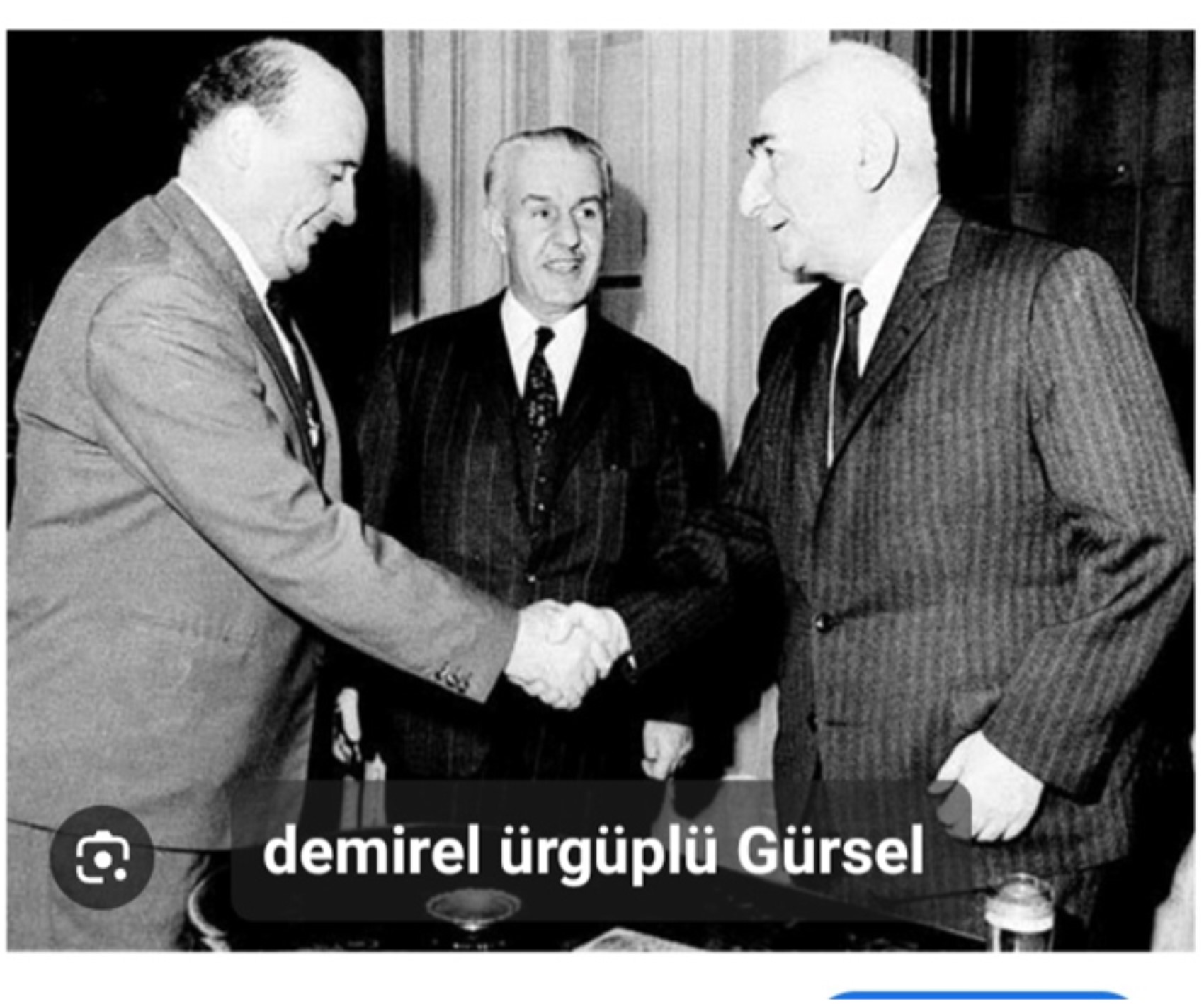
Not much time had passed from November 1964, when Demirel was elected AP chairman, to February 1965, when the Inönü Government was toppled with 225 votes. While Inönü was handing over the premiership to Suat Hayri Ürgüplü with great satisfaction, he was aware that the prime minister of Turkey would very soon be Süleyman Demirel. (Autumn 1965)
Demirel’s respectful attitude during his presentation to President Gürsel by Suat Hayri Ürgüplü would be evidence of his conciliatory line from 1965 to the March 12 interim regime.
İsmet Pasha, on the other hand, had been under pressure since 1961. He was always the one put forward on all important issues. Both he and his party had been worn out. But it was he who carried Turkey to the 1965 plateau.
CHP DISCOVERS LEFTISM
Until the 1961 democracy was established, “left” was a political term used almost synonymously with communism. At the beginning of 1961, in addition to the Justice Party’s market-oriented, populist center-party image, a party that defined itself with “socialism” for the first time in Turkey had emerged: the Workers’ Party of Turkey (TİP).
Since 1946, there had been no other legal political party that openly pronounced the class issue. For this reason, the establishment of the TİP in 1961 and its entry into parliament in 1965 were important. Actually, the TİP had entered the Assembly with the participation of CKMP senator Niyazi Ağırnaslı and Quota Senator Esat Çağa. But this had been an indirect representation.
The real radical left opening happened with the Yön Declaration. In December 1961, a strong intellectual circle appeared around Doğan Avcıoğlu. The number of those who signed the declaration was over 1000. When the subsequent careers of the signatories are examined, it is seen that people with very different views signed the declaration. There were left-leaning names like Mümtaz Soysal, Fethi Naci, İlhan Selçuk, and İdris Küçükömer, as well as young assistants who believed in liberal economics like Erdoğan Alkin (Faculty of Economics assistant). Their common point was the diagnosis that, while hopeful about the new regime, the country had very complex problems.
The tendency toward “Left Kemalist” revolutionism became evident in parallel with the radicals gathered around this magazine moving further and further away from parliamentary democracy.
Under these conditions, the CHP had to position itself somewhere between AP capitalism and the socialism of the TİP.
Every version of leftism derived from Yön despised ballot-box democracy. They had entered a different path. Even if there were differences in content and method, “revolutionism.”
For this reason, there was a need for a political opening that would place Turkey’s production and distribution relations on a social democratic ground. Only there was an important problem. The economic and political conditions that enabled the development of social democracy in Europe had never existed in Turkey.
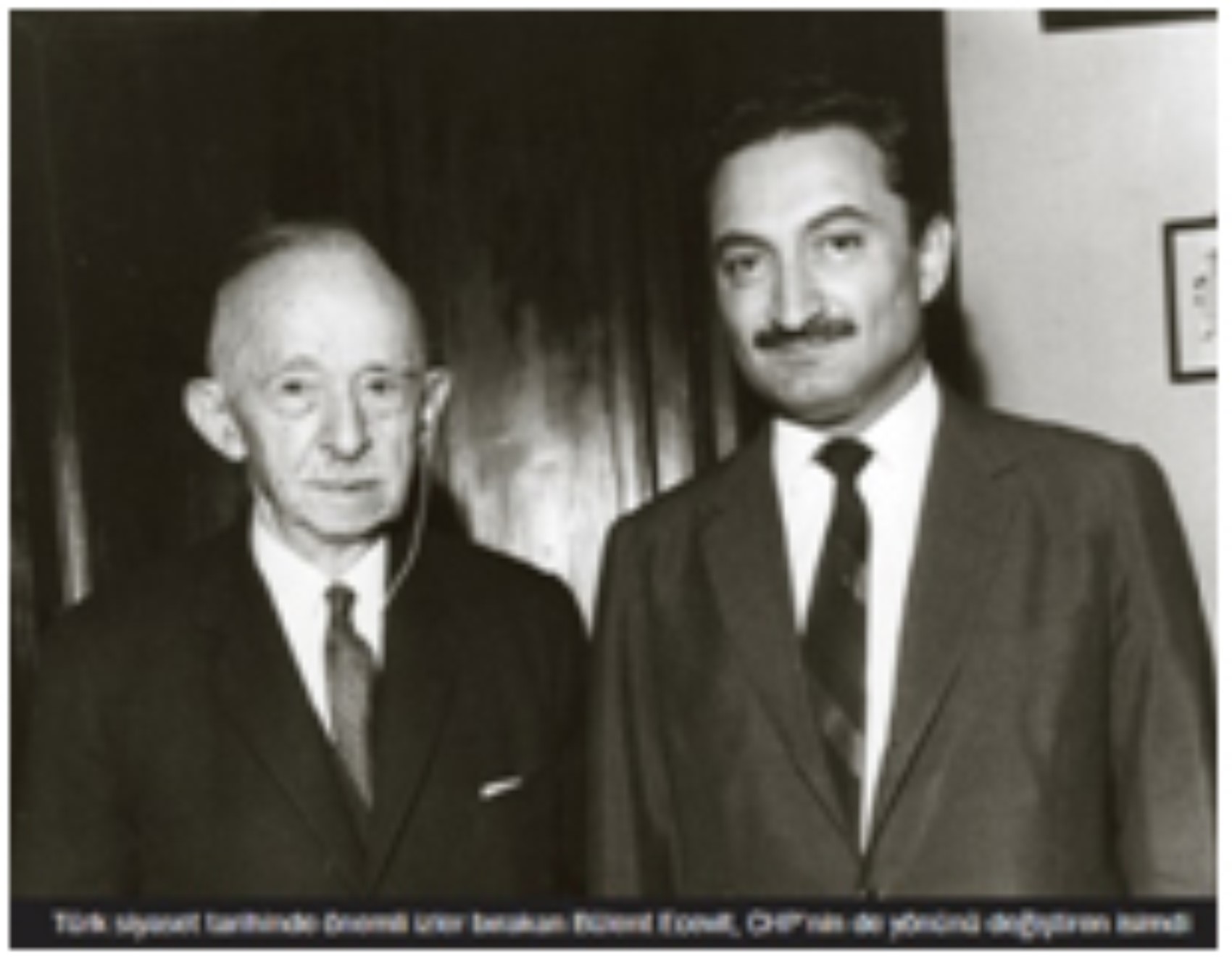
The “Left of Center” policy, which would later be associated with Ecevit, was born this way. If one pays attention, there is no side in this expression that directly evokes social democracy. Left of Center is the name of taking a position against Turkey’s conservative forces.
If one needs to take a look at the emergence of the concept, even if it has been identified with Bülent Ecevit, he is not the one who pronounced the concept for the first time. It is İsmet Pasha. Left of Center was first emphasized in the interview İsmet Pasha gave to Abdi İpekçi in Milliyet. (Summer 1965) In this speech, Inönü interpreted Left of Center as the natural result of the party’s principles of secularism and statism.
WHY LEFT OF CENTER?
In the mid-60s, there was something that had become quite clear: the CHP had not made any progress with the coalitions it had made, it had only become the guarantor of multi-party political life. In 1961 and 1965, it had remained far behind its 1957 success.
Although Inönü had taken Bülent Ecevit into his governments as Minister of Labor, the backbone of the governments he formed relied on right-wing Atatürkist elites like Feyzioğlu, Paksüt, Melen, and Satır. These people had formed the pool that would provide ideological political cadres to the CGP.
I am of the opinion that the political careers of these names show which ideological line the party had been on since the 50s.
There was a need for a new maneuver that would bring the party to power. And of course, a new enthusiasm…
The party continued its search from the time Inönü left the premiership until the 1966 Congress (18th Grand Congress) where Ecevit was elected secretary-general. The 1965 election failure was the most important factor in the innovative wing (Ecevitists) obtaining intra-party dominance.
The rise of Ecevit’s leftism continued until the 1972 congress. Who would be Inönü’s heir had been talked about ever since the party fell into opposition. In the 50s, names like Kasım Gülek, Turhan Feyzioğlu, and Nihat Erim had been talked about a lot. Ecevit was not a name that could come to mind.
Bülent Ecevit’s discourse contained elements that corresponded to Turkey’s transformation in the 1960s. Populism and leftism. This was an explicitly class-based discourse. But if you ask me, Ecevit never fully filled the content of these concepts that waved the rally fields with enthusiasm. Ecevit’s Populism could not exceed the limits of left-wing populism. It hit the wall of the comprador bourgeoisie.
Would you like to get notifications about new developments and save news?
- NotificationsNew developments and breaking news
- SaveNews is stored in the app
Most Read
Statement from Nihat Zeybekci on the fund investigation

New 75,000-seat stadium plan for Fenerbahçe
Fistfight at the Istanbul Bar Association elections!
Interpol and MIT tracking yields results in Izmir
ID convenience for KPSS candidates

2027 Budget: Taxes for the people, tax exemptions for capital

To whom and how was the Petition of Intellectuals submitted? Who accepted the petition?

The reality of Akkuyu and the longing for national nuclear power

The Çanakkale robbery -1- How was the Troy treasure smuggled out?

Artificial intelligence and the new imperialism