


Latife Hanım's Abandoned Papers



Latife Hanım'S CIRCLE IN ANKARA
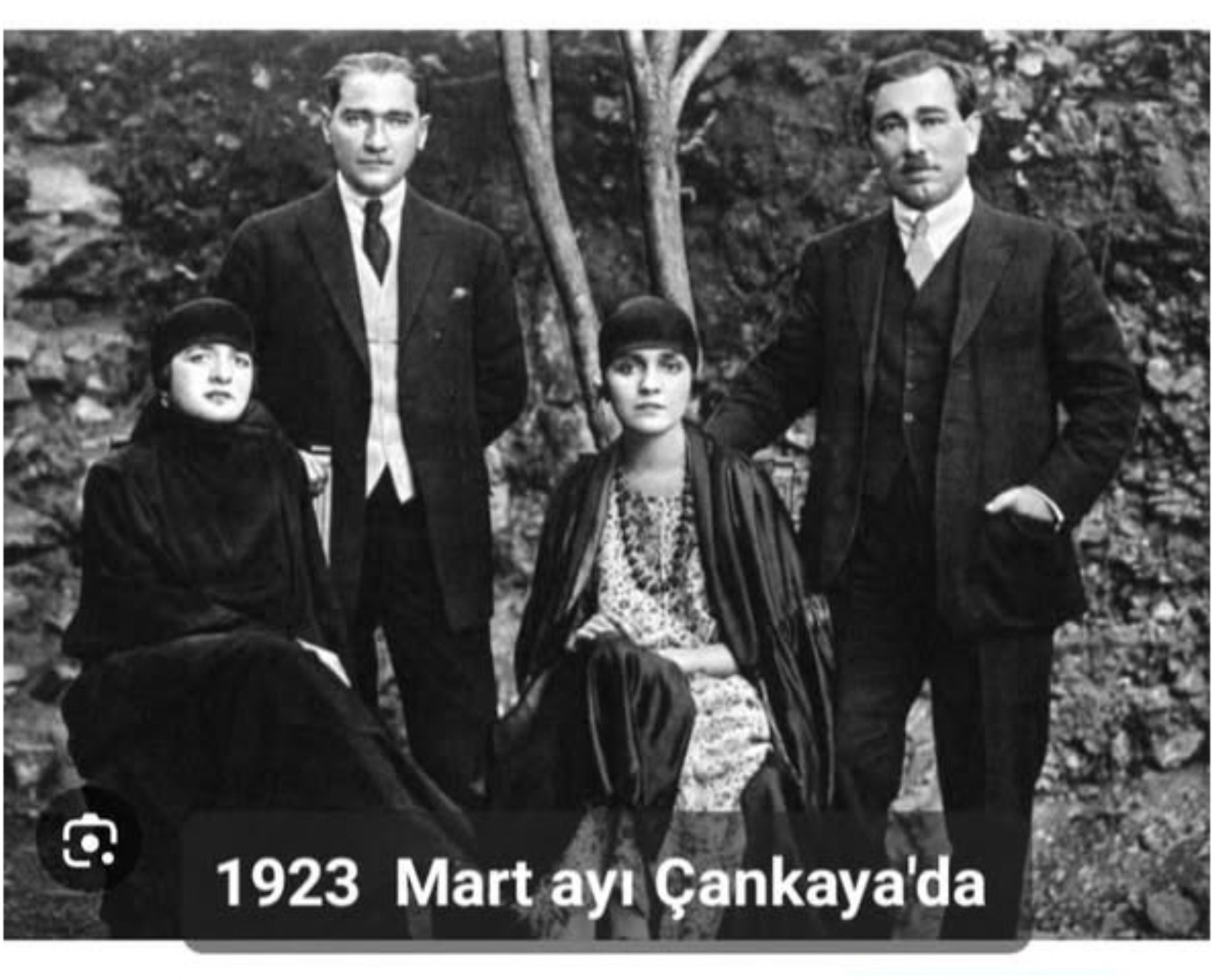
The first striking photographs regarding the marriage of Gazi and Latife are those taken with Fethi Bey and his wife, Galibe Hanım.
Galibe belonged to a family affiliated with the Ottoman Ministry of Foreign Affairs. Her father was İsmail Hakkı Bey (Eldem). The family is related to Osman Hamdi Bey. They had met during Fethi Bey's ambassadorship in Sofia. In later generations, the family also had ties to the dynasty.
Latife, although her uncle was Halit Ziya Uşaklıgil, was the daughter of a family that had transitioned from merchant status to the bourgeoisie. In my opinion, Okyar's wife, Galibe, came from a more elite family. These pictures show that at the beginning of the republic, Gazi Pasha's 'number one man' was Fethi Bey.
In terms of her age and education, Latife was different from the wives of the Ankara elite. İsmet Pasha's wife, Mevhibe Hanım, was in İzmir. She came to Ankara after Latife.
Saliha, the wife of Ruşen Eşref; Müfide, the wife of Ahmet Ferit; Şefika, the wife of Falih Rıfkı (Mina Urgan's mother); the wife and daughters of Ağaoğlu Ahmet; the wife of Süreyya Yiğit; Reşide Hanım, the wife of Celal Bayar; and the wife of Salih Bozok were also in Ankara.
İffet, the wife of Dr. Rıza Nur, was also among those who came to Ankara. İffet Hanım was the daughter of Serasker Rıza Pasha. As can be seen, some of the wives of the Ankara elite came from the Ottoman ruling class.
I can say that Latife's favorite was Galibe. Let us recall the chronology of events. With the Second Parliament, Fethi became the Chairman of the Council of Deputies, replacing Rauf. This was very important. It meant: number 1 was Mustafa Kemal, and number 2 was Fethi Bey. With the proclamation of the Republic, Gazi became the President and Fethi became the Speaker of the Grand National Assembly of Turkey. İsmet Pasha was the Prime Minister. The numbers 1 and 2 remained the same. A number 3 had been added to them: İsmet Pasha, who conducted the negotiations in Lausanne. Fethi Bey became Prime Minister again to appease the opposition of the Progressive Republican Party (1924). With the Sheikh Said Rebellion and the Law on the Maintenance of Order, he withdrew from domestic politics. He was appointed as the ambassador to Paris. He was seen off to Paris from the Ankara train station by Mustafa Kemal Pasha. Galibe would no longer be in Ankara. The friendship between Latife and Galibe would now continue through correspondence.
IN-LAWS AT ÇANKAYA
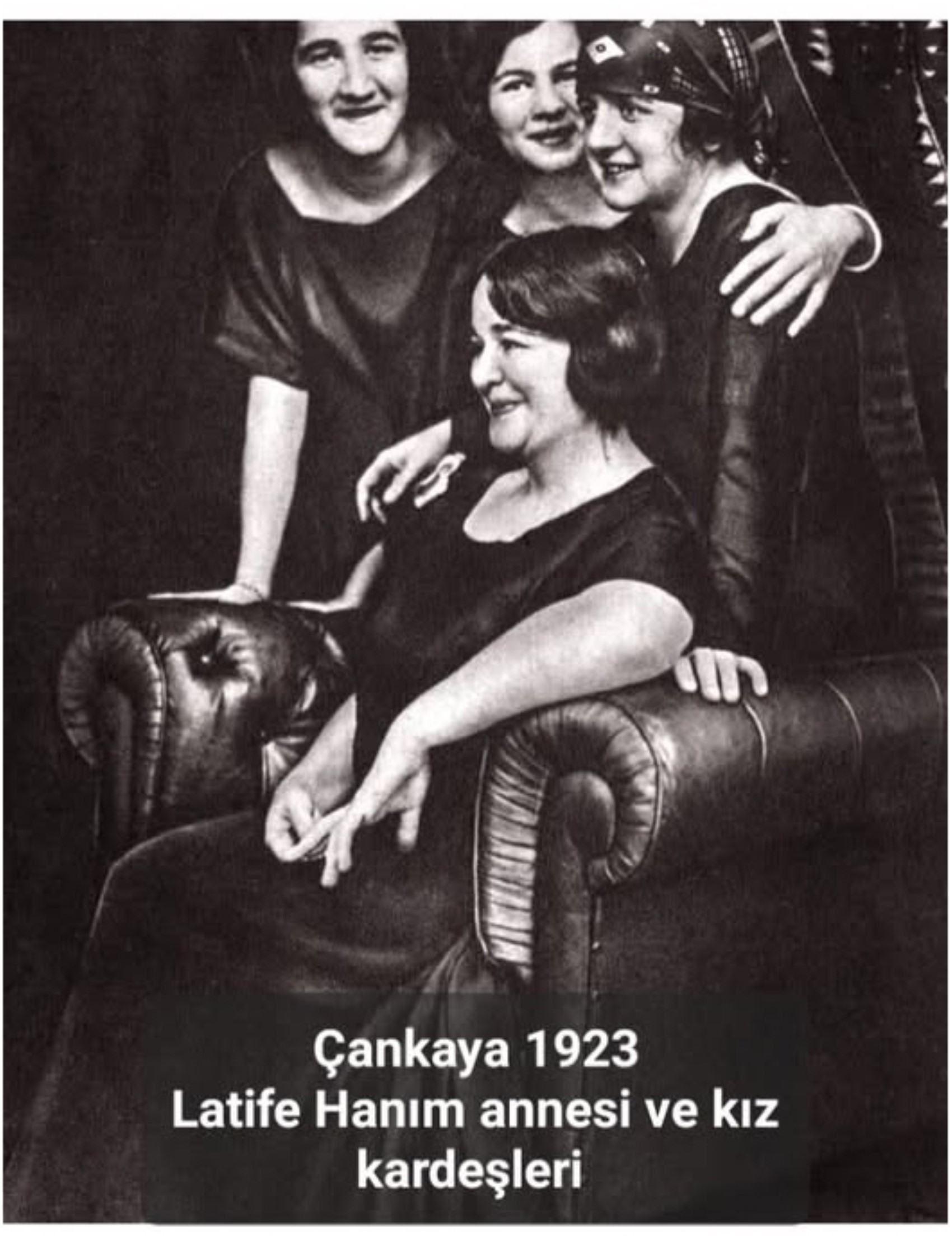
The Uşakizades, the bourgeois family from İzmir who "gave their daughter Latife in marriage to Gazi Pasha," were guests at Çankaya between July 5 and 8, 1923. Latife's parents, Muammer Bey and Adeviye Hanım, as well as her sisters Vecihe and Rukiye, had also come. In the photographs, it is evident that the women are not wearing veils. This is a significant change.
A PROPOSAL FROM GAZI TO HIS FATHER-IN-LAW MUAMMER BEY
Mustafa Kemal Pasha wanted to establish a Turkish bank other than Ziraat Bank for the development of national capital (1924). It is no coincidence that he brought Celal Bey (Bayar) to lead this endeavor. Until Bayar became the Minister of Economy again in the 30s, he was solely occupied with the task of institutionalizing İş Bank.
While having Bayar establish İş Bank, President Mustafa Kemal Pasha contributed 250,000 liras to the founding capital. In addition, he opened a personal account of 207,400 liras. The bank's founding capital was one million liras.
Among the founders of İş Bank was Gazi's father-in-law, Muammer Bey. Muammer Bey had wanted to establish a strong exporters' union. The bank's management, however, had embarked on the business of national industry and turned toward other areas.
Considering that Muammer Bey was involved in the New York and New Orleans stock exchanges, it can be concluded that he was a quite visionary bourgeois. In my opinion, Latife's father, Muammer Bey, was a highly successful example of the developing commercial bourgeoisie.
CLASH AT ÇANKAYA: THE TOPAL OSMAN SIEGE
Latife was now a young bride in Çankaya. At the beginning of April 1923, the murder of Ali Şükrü Bey was uncovered. The perpetrators were Topal Osman and his team. A clash broke out between the Giresun detachment and the “new guard battalion” under the command of İsmail Hakkı Tekçe. It is well known that Topal Osman had been the commander of the irregular forces from Giresun, which had provided security for the Speaker of the Grand National Assembly of Turkey (TBMM) since the beginning of 1920. They took part in the Koçgiri rebellion and the Great Offensive. However, Osman Ağa’s men (much like Ethem’s mobile forces) lost their function of providing security and became a security problem themselves. Upon this, the new guard battalion under the command of İsmail Hakkı Tekçe was assigned to duty in Çankaya. The murder of Ali Şükrü coincided exactly with these events. The causes and consequences of these events are the subject of a separate article. However, it is frequently emphasized in literature citing Rıza Nur that the Gazi left Çankaya in disguise during the conflict.
LATİFE’S LAST FIFTY YEARS
Latife Hanım lived alone for the last fifty years of her life. It would be accurate to say that she was closely monitored by the Ministry of the Interior during Atatürk’s lifetime. You could also call it close protection if you wish. During Atatürk’s lifetime, Latife went abroad twice for medical treatment. She was issued a passport under the name Fatma Saliha (1926). She stayed at the Tatra Sanatorium near Prague. At that time, Vasıf Çınar was the ambassador there. According to accounts, the famous biographer Emil Ludwig was also there. He wanted to get close to this intellectual Turkish woman. After a while, Latife Hanım had to reveal her true identity. She rejected Emil. Emil Ludwig came to Turkey in the 30s. He met with Mustafa Kemal Pasha in Çankaya and Trotsky on Büyükada. His goal was to write biographies of both. Ludwig’s most famous work is Napoleon.
When Armstrong’s book 'Grey Wolf' was published in 1932, the Gazi became suspicious of Latife. I think he thought she might have shared things that should have remained private. However, the primary source on these matters is Dr. Rıza Nur. In his 'Life and Memoirs,' Rıza Nur knows no bounds in his opposition to Atatürk. Armstrong, on the other hand, was a British intelligence officer who had been captured by the Turks at Kut. He held an official position at the British Embassy during the armistice and the republic. He played an important role in organizing all anti-Anatolian movement circles in Istanbul. He wrote many books on the political developments of the entire Near East geography from the First World War to the 30s. One of these is the book 'Grey Wolf, Mustafa Kemal: An Intimate Study of a Dictator.' In his book, Armstrong portrays Mustafa Kemal as a ruthless historical figure like Tamerlane or Genghis Khan. He praises his military successes. He uses disparaging expressions regarding him as a person.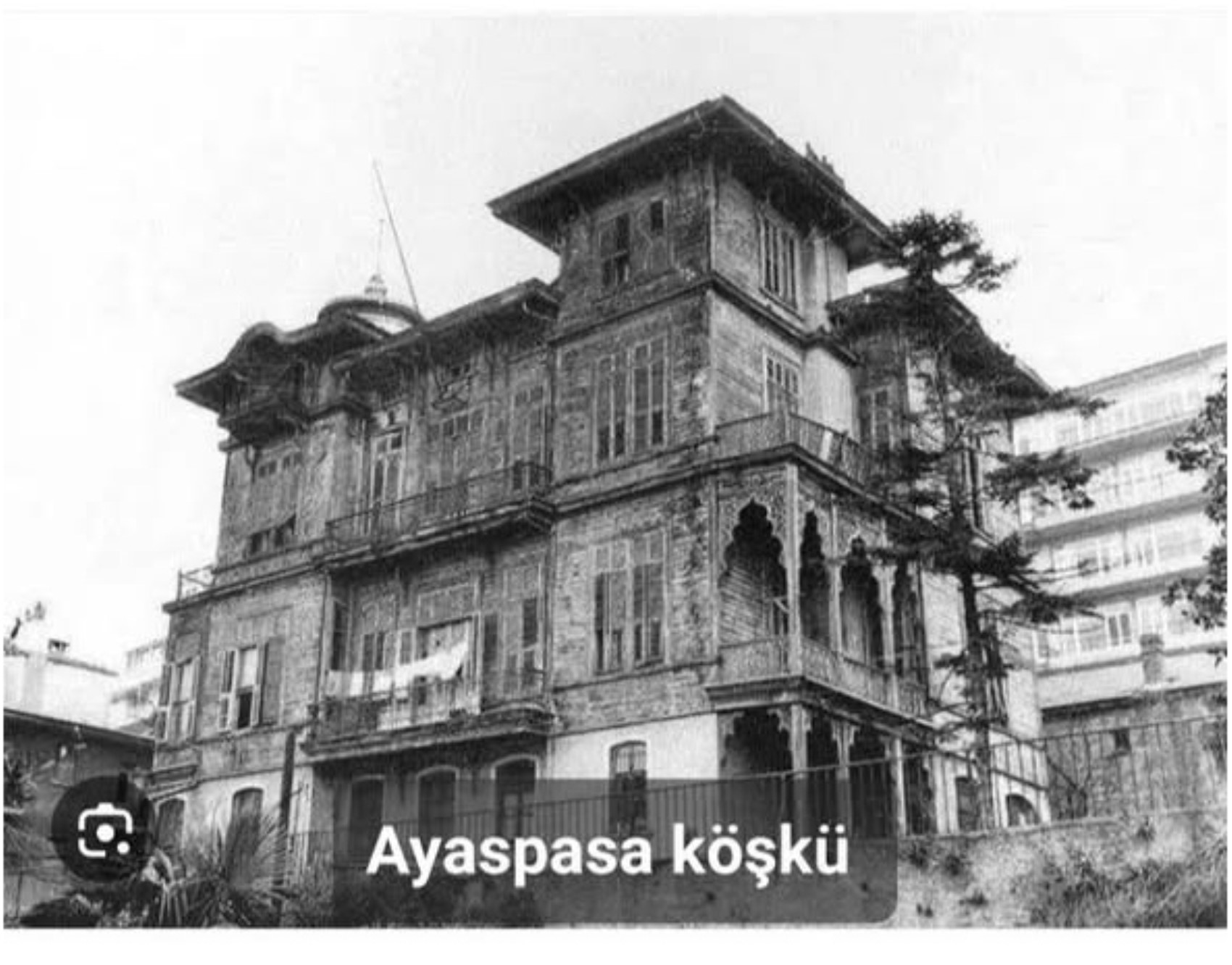 Latife Hanım’S LIFE IN ISTANBUL
After living for a long time on the top floor of the Uşakizade mansion in Ayaspaşa, Latife Hanım moved to the Safir Apartment in Harbiye in the 60s. She had not brought some of her belongings, not even her piano. During these years, there were quite a few requests to interview her, starting as courtesy visits but aimed at gathering some information. For example, Niyazi Ahmet Banoğlu knew when to stop, but Mete Akyol’s excessive eagerness led to him being rebuffed. He was scolded. In this regard, let me mention something that should be known. Akyol conducted a series of interviews with Abdürrahim Tunçak that lasted 15 days. He published them later. It is possible to read the records of these meetings, which left Tunçak’s identity ambiguous, on Akyol’s website.
AFTER Latife Hanım’S PASSING
Latife Hanım passed away on July 12, 1975. Fahri Korutürk was the president and Demirel was the prime minister. Demirel had formed the Nationalist Front government at the beginning of that year. The Governor of Istanbul was Namık Kemal Şentürk. He knew the Uşakizade family from İzmir. For the first time in many years, the mayor was a member of the CHP: Ahmet İsvan.
No state funeral was held for her. A modest ceremony was organized on the initiative of Governor Şentürk. Latife Uşşaki Hanım’s coffin was draped in the Turkish flag. She was buried in the family cemetery in Edirnekapı with the minimum level of state involvement.
The heirs gathered some time later to make a decision regarding the estate. The rightful claimants were her siblings and their children.
Latife Hanım was an educated and literate woman. She was born in 1898. After graduating from the American College in Üsküdar (some sources incorrectly state Robert College), she went to the Sorbonne to study law. Under the conditions of the Armistice, she returned to İzmir to be with her grandmother in 1921 without completing her studies. İzmir was under Greek occupation at the time. Her family was living in Marseille. Latife did not hold a diploma from the Sorbonne; she only studied there. Her education remained incomplete. She was hurt when Gazi jokingly remarked, "You couldn't even show a diploma." It is said that Latife replied, "My education was cut short. Because of you."
A FEW WORDS ON THE BOOKS WRITTEN
There are quite a few publications regarding Latife Hanım. Some of these are speculative in nature. The ones that should be consulted are: The Memoirs of Kılıç Ali, Armstrong’s Grey Wolf, the Memoirs of Salih Bozok, the memoirs of Hasan Rıza Soyak, İpek Çalışlar’s book titled Latife Hanım, Fatih Bayhan’s book on the contents of Latife Hanım’s trunk, and Murat Bardakçı’s book on the divorce documents published under the title "I Found It Appropriate to Release You and Divorced You." These are the primary sources that can be cited.
SOME EXAMPLES FROM Latife Hanım’S DOCUMENTS
The information I provide here is based on documents seen in the appendices of books written about Latife Hanım. Some of these books contain inventories of the contents. For example, the letter written by Mustafa Kemal Pasha to the Speaker of the Grand National Assembly of Turkey (TBMM) stating that he had moved his civil registry to Göztepe, İzmir, before the marriage. I believe this refers to his residence. The document is dated January 28, 1923. There are also telegrams of congratulations from relatives regarding the wedding, a congratulatory telegram from the daughter of Gazi’s stepfather, Ragıp Bey, and the divorce documents. These include the "divorce certificate" written by Mustafa Kemal Pasha to Latife Hanım, the letter written by Gazi to Latife’s parents informing them that he had divorced their daughter, and the reply letter written by her father, Muammer Bey, to Gazi. Other documents include the record of 25 items left by Latife at Çankaya being inventoried and sent to the Uşakizade mansion in Istanbul, and the document dated October 26, 1926, showing that a passport was issued to Latife Hanım under the name Fatma Sadık, as well as papers showing that Çankaya was notified upon her return.
EXPLANATION REGARDING THE ESTATE PAPERS
Following the death of Latife Hanım, Enver Ziya Karal made an attempt with her family to have her abandoned papers handed over to the Turkish Historical Society (TTK). (1976)
In addition to the documents kept in two bank vaults, there were also numerous valuable items gifted by Atatürk during their marriage.
After Enver Ziya Bey requested the documents for the TTK, the heirs took legal action. The Beyoğlu Civil Court of First Instance appointed Ord. Prof. Reşat Kaynar as an expert witness. The documents were opened, classified, and recorded. The court tasked Professor Reşat with preparing a report on the contents of the documents. Professor Reşat wrote the report and expressed his opinion that the documents should be kept under seal for a period of time. This period was set at 25 years.
The vaults containing Latife Hanım's documents were as follows: Vault number 32 at the Ottoman Bank Beyoğlu Branch and vault number 615 at the Ziraat Bank Harbiye Branch.
In summary, the following items were found inside the Ottoman Bank vault: a 172-page handwritten novel, letters written by Halit Ziya to Latife, correspondence with Fethi Bey's wife Galibe Hanım, and the document regarding Atatürk's divorce from her. There were also documents from the President of Religious Affairs and the Minister of Justice dated 1341 (1925) confirming the divorce, Latife Hanım's application to Atatürk for medical treatment abroad, correspondence regarding the issuance of a passport to her under the name Fatma Sadık, letters written by Latife to Mevhibe Hanım and Recep Peker's wife, notes written to Prime Minister İsmet Paşa, and real estate title deeds.
In the Ziraat Bank vault, 104 documents were identified. Most of these were wedding congratulatory telegrams and documents regarding the information Latife provided to Gazi Paşa during the stay of Gazi's mother at the Karşıyaka Mansion. Zübeyde Hanım stayed in this house for only one month before passing away. A letter from Suat Davaz's wife to Latife was also found in this vault.
After working extensively on the documents, expert witness Ord. Prof. Reşat Kaynar submitted his report to the court. After the documents were recorded in the minutes, they were resealed and placed into safekeeping on April 14, 1979.
Beyond the documents in these vaults, there were also keepsakes of Atatürk that Latife Hanım had kept at home. Her sister, Vecihe İlmen, donated these to the Harbiye Military Museum on July 12, 1978.
These heirlooms include the "La ilaha illallah" and "Surah Al-Fath" banners used during the "Great Victory," two Colt pistols, signed photographs of Atatürk, and pictures of the couple taken together.
Mehmet Sadık ÖKE'S APPEARANCE IN THE MEDIA WITH THE "MY AUNT LATİFE" AGENDA
Mehmet Sadık Öke is the grandson of Latife Hanım's sister, Vecihe İlmen Hanım. Vecihe Hanım had married into the Süreyya Pasha family. Öke gave an interview to Akşam newspaper in 2007, following a 2005 court ruling. According to the court decision, the documents of Latife Hanım kept under protection at the Turkish Historical Society (TTK) that contained "private" content were not to be disclosed to the public.
Öke later spoke on Akit TV. I watched the videos. I suspect he was unaware of the counter-revolutionary nature of the channel that invited him, or perhaps he did not care. He used expressions such as claiming Abdürrahim was Atatürk's child by Fikriye, and that if he were to reveal the real reason for the divorce, things would get complicated, attempting to present speculative remarks that have been discussed within the family for three-quarters of a century as undisputed historical truths. Fatih Bayhan had interviewed him extensively while writing the book "Latife Hanım'ın Kağıtları" (Latife Hanım's Papers).
Öke appeared not to realize that he was providing material for the counter-revolutionary narrative with the "words taken from his mouth" by the reactionary front.
 MY VIEW ON FİKRİYE
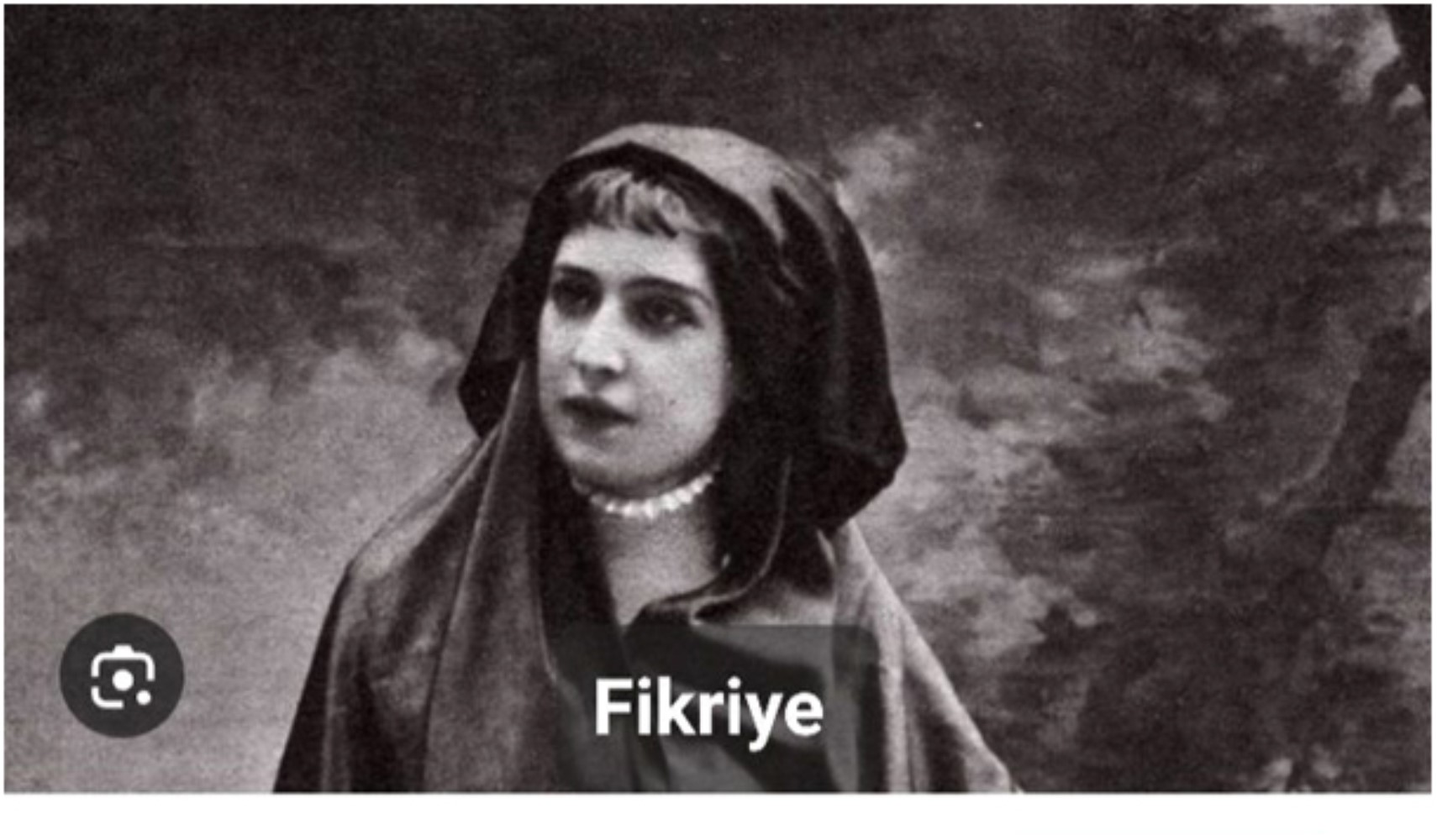
I must confess that my feelings about Latife Hanım are not very positive. For me, Fikriye is the "Veilless Bride" of Çankaya. Fikriye is the woman who established Çankaya. She strove to keep Gazi Pasha comfortable until she went to Europe for treatment in 1922. When she was brought to Ankara from Istanbul through the mediation of Fuat Bulca, Atatürk was residing in the station building at the Ankara Train Station. Fikriye also stayed in a room allocated to her in that building until they moved to Çankaya. There are photographs taken there.
After receiving tuberculosis treatment in Europe, Fikriye returned to Turkey. She was not permitted to come to Ankara. Gazi Pasha had married a bourgeois girl from İzmir. Latife was now in Çankaya. Governor Muhittin Üstündağ was given instructions to this effect. However, Fikriye found a way and came to Çankaya. Ten months apart. The source on this matter is Ali Çavuş, the grandfather of Zeynel Lüle, who was part of Gazi's service staff.
In my opinion, she was a beautiful woman. It must be said that there are some aspects of her death that require explanation. However, I do not believe she was shot.
SOME POINTS REGARDING LATİFE THAT SURPRISED ME
As for Latife, I have read a great deal about her. Naturally, I had an opinion. However, I must admit that there were things I thought about incorrectly. Upon carefully examining her writings, I encountered a writer with an extremely strong literary talent. Her due must be given. This must be the influence of the language and literature lessons she received from her uncle, Halit Ziya Uşaklıgil.
Latife Hanım ALSO SOUGHT TREATMENT DURING THE NATIONAL CHIEF İNÖNÜ ERA
During the Gazi's lifetime, Latife Hanım had received treatment at several sanatoriums in Central Europe. Penicillin and streptomycin had not yet been discovered. Finding a definitive cure was difficult. Good care, healthy nutrition, and pine-scented air were considered important in the treatment of tuberculosis. Latife Hanım was abroad when Atatürk passed away. She wrote a letter of condolence to İsmet Paşa. One year after returning to Turkey, she went abroad again for treatment. The Second World War had broken out. She was in Switzerland. Government permission was required for foreign currency transfers. Her father, Muammer Bey, applied to the government for foreign currency on December 17, 1939. In 1940, with a report from Surgeon General Tevfik Sağlam, an allocation of 2,000 Swiss francs per month was made. Permission was granted by the Prime Ministry.
WHAT SHOULD BE SAID ABOUT THE MARRIAGE OF Latife Hanım AND GAZİ MUSTAFA KEMAL PAŞA?
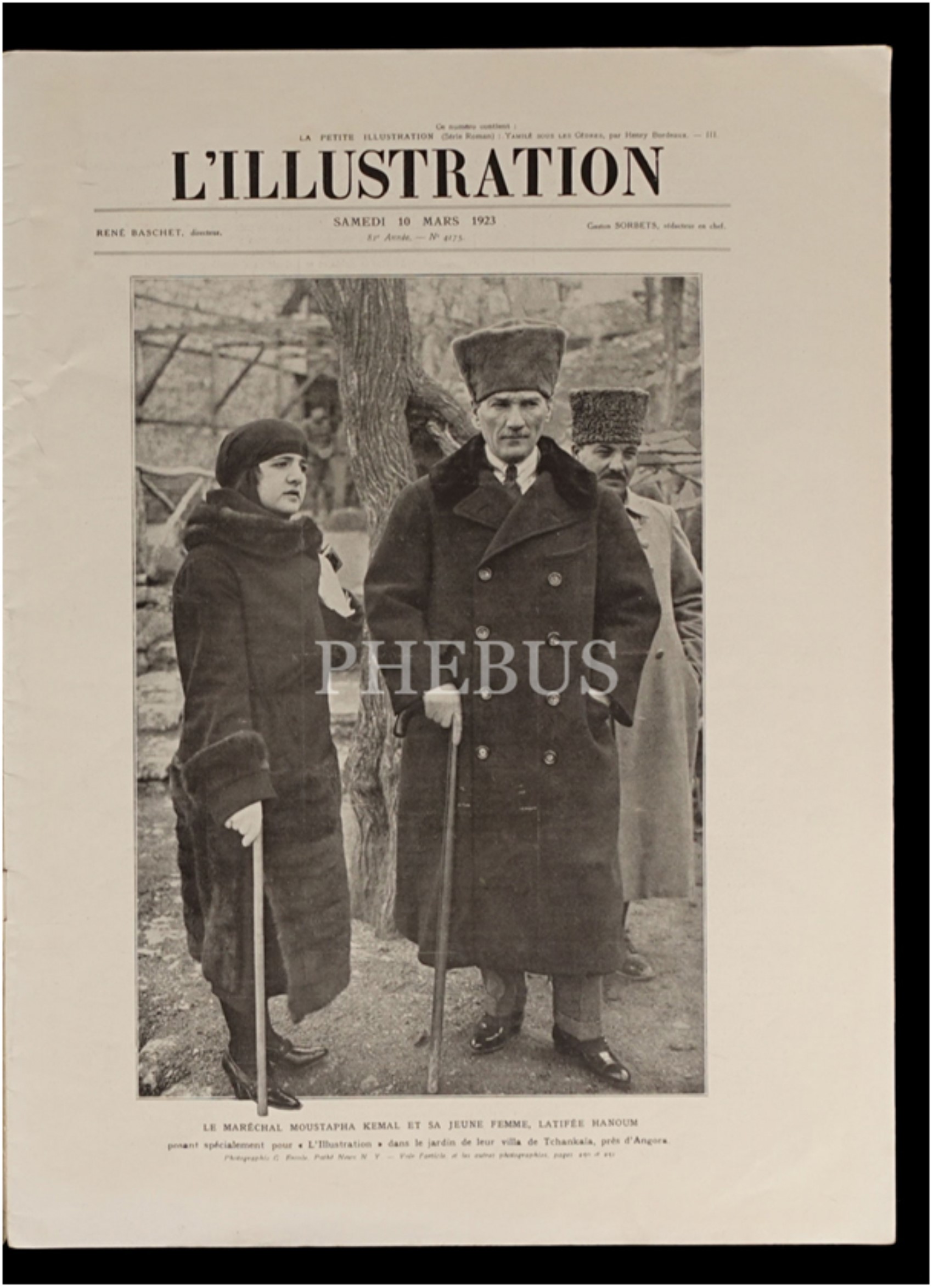
The marriage of Latife Hanım to Gazi Paşa was followed with interest by both domestic and foreign public opinion. Various magazines featured the marriage on their covers. The marriage, which lasted two and a half years, was quite tense. It ended in divorce. Despite Gazi Paşa's patience, I believe the fundamental problem was Latife's desire to be overly involved in every aspect of Atatürk's life. It is well known that Latife repeatedly put the Great Atatürk in difficult situations in front of ambassadors, state and government officials, and commanders. In response, Atatürk always tried to honor Latife and worked to maintain the marriage. However, Latife's attitude had reached levels that were "unbearable." In my opinion, the final straw was when she addressed the commander-in-chief of our war of independence and the founder of our state as "Kemal, come upstairs" in front of the soldiers of the guard battalion. Fikriye was an Eastern woman. Latife, on the other hand, was a bourgeois. But a local bourgeois.
In my view, it was impossible for this marriage to continue. Once Atatürk became fully convinced that the marriage would not work and was even causing him harm, he decided to end it, perhaps with a bit of anger. And he implemented his decision without hesitation.
It is clear that both parties remained faithful to the 'memory of their shared life.' In my opinion, Latife realized only later that the man she lost was 'Gazi Mustafa Kemal Pasha.' She was overcome with deep sorrow. It can be said that she went through a long period of depression. It is also true that Atatürk was saddened.
The real issue is that, starting from the 60s, circles wishing to undermine the republican revolution and the cherished memory of Atatürk sought to exploit Latife. They were not successful. Latife did not allow this.
SPECULATION REGARDING THE PAPERS OF Latife Hanım
After her passing, the narrative of the 'truths hidden from the nation' by the counter-revolution, based on 'Latife Hanım’s abandoned papers,' gained increasing momentum. The goal is to dismantle the state founded by Kemal Atatürk. The offensive, which began with Rıza Nur’s 'My Life and Memoirs,' continues to gain strength. The counter-revolutionary front is attempting to construct a counter-history by fueling rumors spreading from Latife Hanım’s family.
The contents of the documents transferred from Latife Hanım to the Turkish Historical Society (TTK) are available in the expert report and in the appendices of books written based on it.
The conclusion I draw from these is that Latife Hanım preserved her personal papers. She kept a diary. She wrote novels. She corresponded. These are things consistent with her personality and class identity. Perhaps she maintained the habit of keeping a diary from 1925 until 1975.
The marriage of Mustafa Kemal and Latife Hanım took place during the early phase of the republican revolution. When they married, the Lausanne peace negotiations were ongoing. The negotiations were interrupted after a while. When İsmet Pasha returned, he brought a pair of 'wedding rings' as requested by the newlyweds.
Revolutionary changes such as the organization of the Progressive Republican Party opposition, the abolition of the caliphate, and the exile of the dynasty took place, as well as a reactionary-feudal uprising (Sheikh Said) against the foundations of the republic. It was suppressed. It is impossible for there to be information within Latife Hanım’s papers that would change the historical paradigm regarding these events. This is my opinion.
REGARDING EXPERT WITNESS PROFESSOR REŞAT
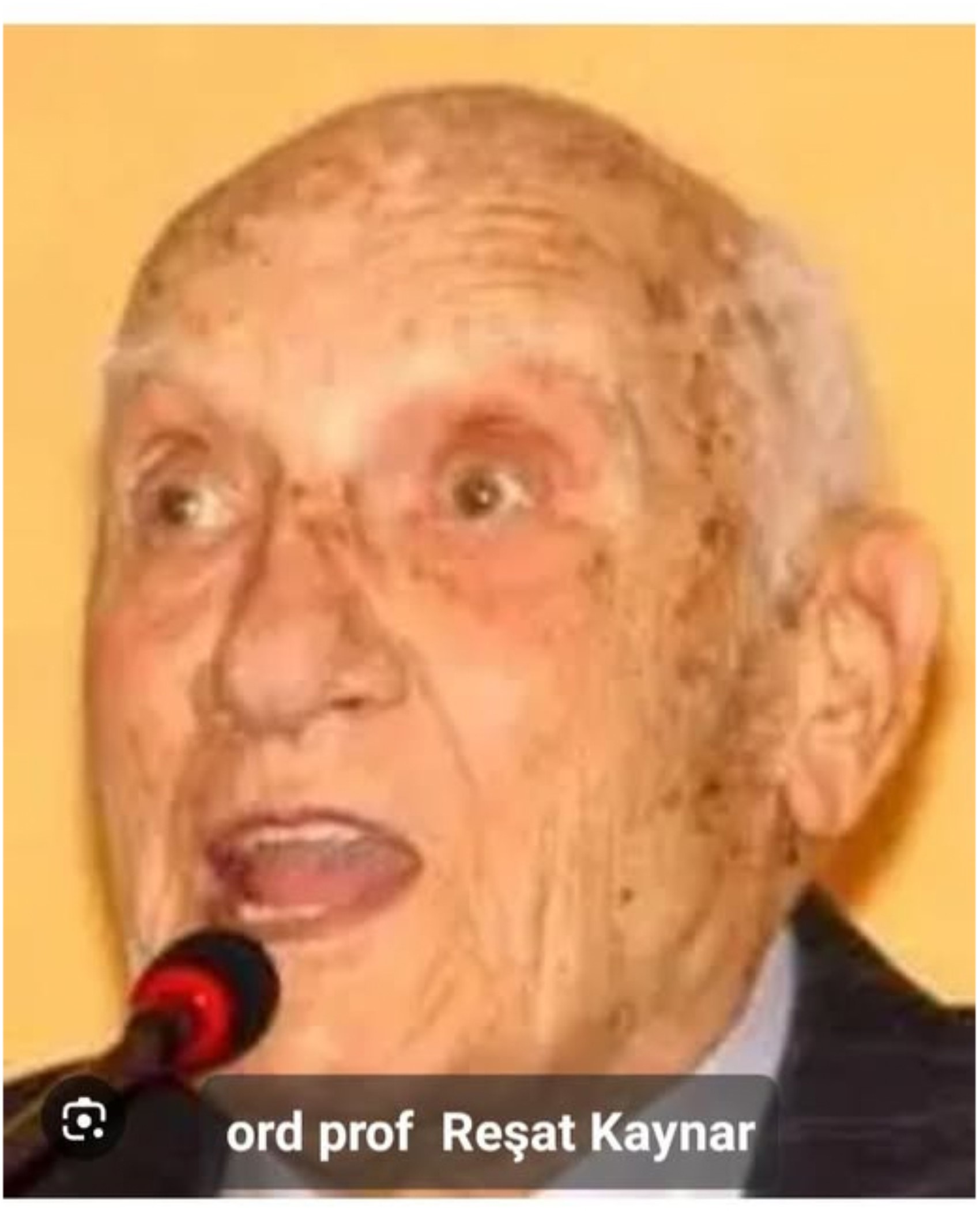
I met Professor Reşat Kaynar at the end of the 80s. He was born in Üsküdar in 1910. He was an incredibly vigorous and energetic person. He would come to Boğaziçi University. I had also served as his assistant in his History of Revolution courses. He was an Ordinary Professor. He had become an Ordinary Professor without a doctorate during a time when doctoral education did not yet exist in Turkey. He began his teaching career as a primary school teacher. He told me that he was the primary school teacher of Yusuf Akçura's daughter in Ankara. Meanwhile, he had attended and graduated from the newly opened Ankara Faculty of Law. He also received a diploma from the philosophy department of the Istanbul Faculty of Letters.
Professor Reşat was not a professor at the university. He had built his entire career at the Istanbul Academy of Economic and Commercial Sciences. When Suphi Nuri İleri was dismissed from the school for being a "communist," he was appointed as a professor of "political history and civil law" by the decision of the professorial board. His greatest work is his professorial thesis: Mustafa Reşit Pasha and the Tanzimat.
When I met him, he had long since retired. He would come to give lectures at Yıldız and Boğaziçi. I would like to share my observations about the professor with you. His eloquence was extremely powerful. Despite his advanced age, he would give long and enthusiastic speeches. He was a member of the Atatürk Supreme Council for Culture, Language and History, which was established by the September 12 administration. The junta had nationalized the Turkish Historical Society (TTK) and the Turkish Language Association (TDK), violating Atatürk's will. The institution was placed under constitutional protection. The professor was also appointed as a member of this institution as a "doyen of Atatürkism." For this reason, I witnessed him being condemned in leftist circles as a man of the junta.
Towards the end of his life, Professor Reşat did good work with Necdet Sakaoğlu. In my opinion, Professor Reşat Kaynar was a missionary of the revolution.
As is known, for the last quarter-century, we have been facing a counter-revolutionary move. A broad campaign against Atatürk is being carried out on many fronts. In the 1960s, the main reference for reactionaries was what Rıza Nur had written. Recently, a new source is being added to reactionary propaganda: The abandoned papers of Latife Hanım.
THE CONCLUSIONS OF PROFESSOR REŞAT KAYNAR'S EXPERT REPORT
Based on the report submitted by Reşat Kaynar, it was decided that the documents would not be disclosed to the public for 25 years, from 1980 to 2005. You hear such claims in "deep history" circles: "There must be evidence in Latife Hanım's papers that would shake the republic to its roots. The ban cannot have any other meaning." They ask what other meaning could there be for keeping the documents under lock and key at the Turkish Historical Society.
Beyond Reşat Hoca, Utkan Kocatürk and Yusuf Halaçoğlu have also seen Latife Hanım's papers. Halaçoğlu made a statement claiming he had read and examined the documents during his tenure as president of the Turkish Historical Society (TTK).
When Halaçoğlu was appointed president of the TTK, the 25-year period was nearing its end. Halaçoğlu had announced that the documents would be opened to researchers in 2005 as required by a court decision. Following this, the family applied to the court once again. This time, their request was that private correspondence within the papers should not be made available for public use. In my opinion, this is an extremely justified request.
I have also examined the inventory of the documents in the safes. I saw that the papers included private correspondence between a couple who had been married for two and a half years. Some of these are love letters.
They met for the first time on September 11, 1922, and married on January 29, 1923. Their union lasted until August 5, 1925. Many significant political developments occurred during this period. I did not see any evidence within Latife's papers suggesting that they contained information regarding these events.
Reactionary circles continue to fuel speculation that Latife Hanım's diaries contain information that would upend the literature on the history of the Republic.
The interview that M.S. Öke, the grandson of Vecihe Hanım, gave to Akit became a tool in the hands of reactionaries. Grandson Öke presented conversations that should have remained private within the family as if they were political documents. This was entirely wrong.
Furthermore, the late Reşat Hoca had submitted an expert report to the court after examining the papers. In this report, he stated that he had seen private matters within the documents. The professor did not provide any information regarding the political content of the papers. He only made an exaggerated statement to the effect that 'the history of the revolution would remain incomplete without these documents.'
The statements made by grandson Öke and Reşat Hoca provided 'fringe historians' with the opportunity to fabricate new claims against Atatürk.
Professor Reşat, in his excitement from having examined the documents, had spoken in an overly exaggerated manner. However, as Halaçoğlu has occasionally pointed out, there is nothing in Latife Hanım's papers that would necessitate changes to the literature on the history of the revolution. I am certain of this.
There are only love letters, correspondence regarding grievances, the emotional worlds of the parties involved, and notes. The supplementary pages in İpek Çalışlar's book are sufficiently explanatory. Professor Reşat's excited statement does not point to a veil of secrecy that would turn everything upside down.
WHAT WOULD I DO IF I WERE AN EXPERT WITNESS?
If I had been appointed as an expert witness in place of Professor Reşat, I would have done the following: I would have separated the letters of an intimate nature. I would have added information notes regarding the content of these letters. Beyond that, I would have written in my report that it would be unethical for researchers to view the intimate documents. I would have expressed the opinion that there is no objection to making the remaining documents available for examination in a digital environment.
Would you like to get notifications about new developments and save news?
- NotificationsNew developments and breaking news
- SaveNews is stored in the app
Most Read
Statement from Nihat Zeybekci on the fund investigation
New 75,000-seat stadium plan for Fenerbahçe
Interpol and MIT tracking yields results in Izmir
ID convenience for KPSS candidates

2027 Budget: Taxes for the people, tax exemptions for capital
The reality of Akkuyu and the longing for national nuclear power
To whom and how was the Petition of Intellectuals submitted? Who accepted the petition?

The Çanakkale robbery -1- How was the Troy treasure smuggled out?

Artificial intelligence and the new imperialism
Ministry investigation into unauthorized promotional messages