


Law No. 431: Abdülmecid Efendi and the exile of the Dynasty



PERCEPTIONS OF THE CALIPHATE IN SOME CIRCLES TODAY
Last week, an article caught my attention that stated in angry language that “the abolition of the caliphate was contrary to the Law of Fundamental Organization (Teşkilat-ı Esasiye Kanunu) and that the caliphate legally remains in place.” The article interpreted the abolition of the Caliphate as a betrayal of the Islamic world by the Kemalist dictatorship.
According to this article, despite so much time passing and three constitutional amendments, the caliphate continued to live on. There was simply no caliph.
Isn't it strange that this theocratic monarchist language is being pronounced more loudly after 2002, and that we are even living in a political environment where such rhetoric finds supporters?
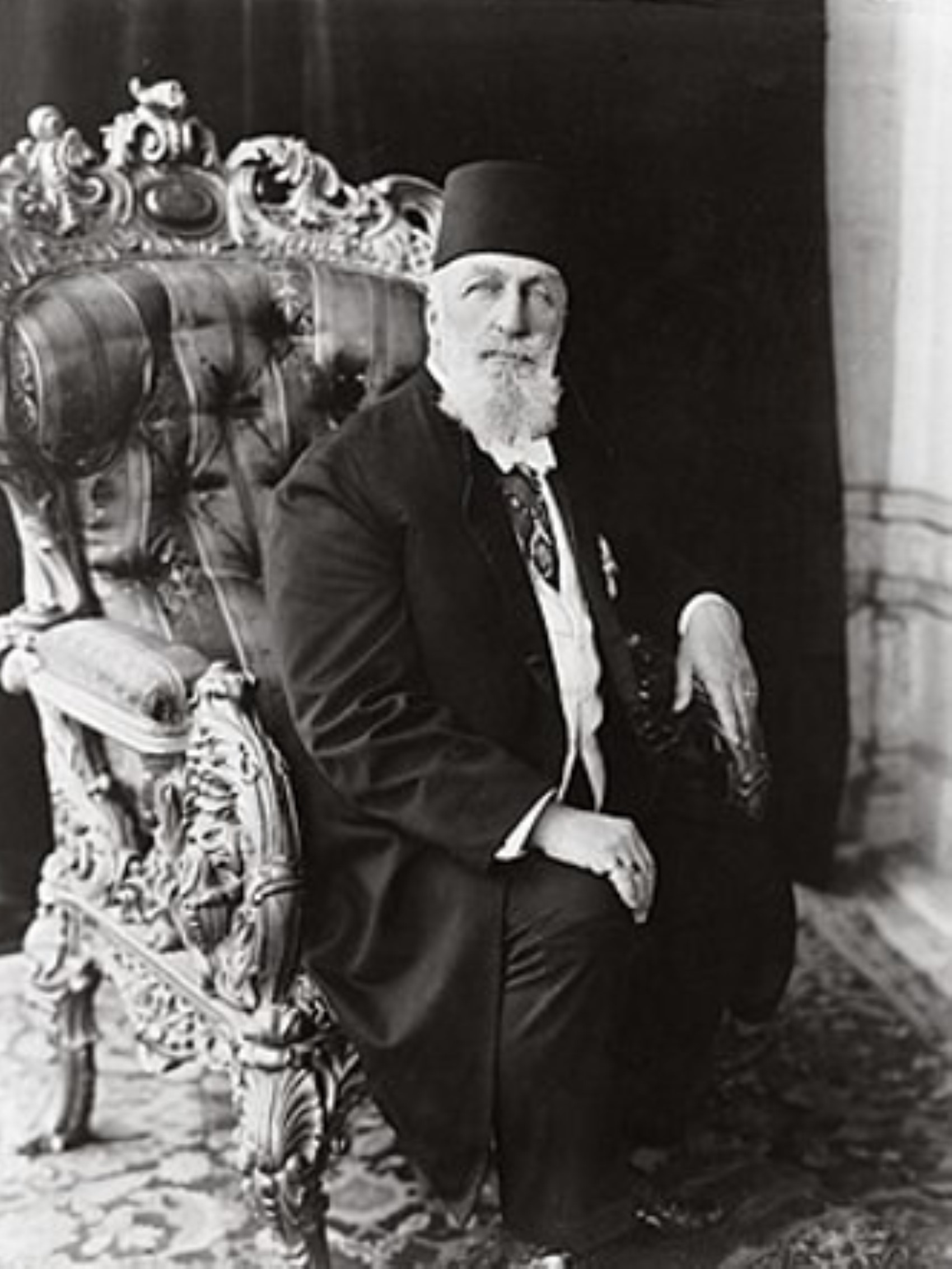
INTERNAL CONTRADICTIONS OF THE DYNASTY
The three sultans of the Constitutional Monarchy period were the sons of Sultan Abdülmecid: Abdülhamid II, Mehmed V, and Vahdettin. Even when considered independently of the Basic Law (Kanun-ı Esasi), the order of succession to the throne would have been more or less the same according to the Sultan Ahmed I Code (the principle of the eldest and most mature son). The 1876 Constitution had turned Ottoman custom into a constitutional provision. After Sultan Abdülhamid II and Mehmed Reşat, Yusuf İzzettin Efendi was expected to ascend the throne. His suicide disrupted the order. Vahdettin was declared crown prince. Upon the death of Sultan Reşat in the summer of 1918, the Young Turks (İttihatçılar) brought Vahdettin Efendi to the throne. Şehzade Abdülmecid Efendi, who was of the lineage of Abdülaziz, was also declared crown prince.
All these changes corresponded to a period when the empire was at the point of collapse. Let us not forget this important point.
In addition to this, an important but less emphasized dimension of the Armistice period is the contradictions between Crown Prince Abdülmecid Efendi and Vahdettin.
First of all, let us state that no sultan's reign was undisputed, even during the constitutional monarchy period. Sultan Aziz, Murad V, and Abdülhamid II were deposed and removed from the throne. In the turbulent political environment of the Armistice, it was likely that Crown Prince Abdülmecid Efendi had such an expectation. There were strong indications/circumstantial evidence of this.
For one thing, Sultan Vahdettin's education was extremely weak. His intellectual vision/political capacity was almost non-existent. After the Young Turks left their positions of power, he began to feel stronger. He hoped that he could transition to peace with a pro-British policy. He tried to manage the Paris Peace Conference process through the governments of his brother-in-law, Damat Ferit Pasha. Evaluating the national independence movement rising from Anatolia as a rebellion prepared his own inevitable end. Every wrong step he took caused the political ground beneath him to slip even further.
As for Abdülmecid Efendi, the following can be said: He had received a relatively better education. He was closely following political developments and tracking political magazines published in the West. He behaved in every way like a Western Crown Prince.
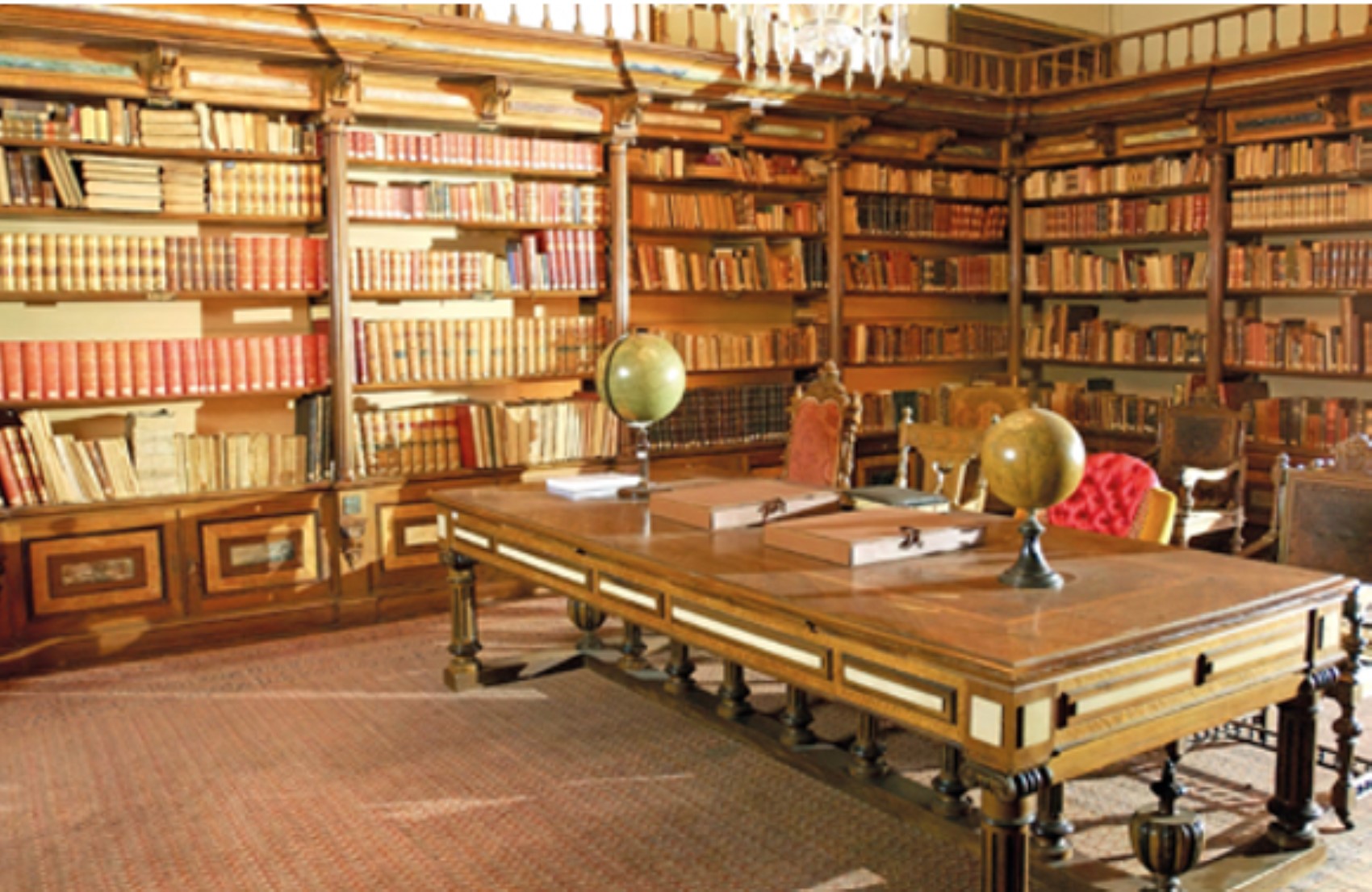
He had a library that he had developed since he was a prince. When he became caliph, he moved his library to Dolmabahçe Palace. He was proficient in foreign languages. He was a painter and understood Western music well enough to compose.
After the Armistice, he had attended the Sultanate Councils (1919-1920) that Vahdettin was forced to convene. He did not find it correct that Vahdettin insisted on the Damat Ferit option for the Grand Vizierate.
After the assembly convened, the transfer of Minister of War Fevzi Pasha to the Anatolian Revolution was an important development in terms of gaining legitimacy for the national liberation movement.
But it is more important that TBMM (Grand National Assembly of Turkey) President Mustafa Kemal Pasha, with the encouragement of some deputies, primarily Hamdullah Suphi, invited the crown prince to Anatolia.
This event took place shortly after the convening of the TBMM.
Faced with the possibility of the crown prince moving to Anatolia, the occupation administration kept Abdülmecid under surveillance for a long time. Vahdettin supported this regime applied to the crown prince. As can be seen, the allies perceived the crown prince as the supporter of the rising nationalism in Istanbul.
However, Abdülmecid had other plans. I believe that he was conditioning the Anatolian offer on the deposition of Vahdettin and his own proclamation as caliph-sultan. That is, he was expecting that Anatolia would bring him to the throne as Abdülmecid II. The crown prince cared about deposition and allegiance (biat). The argument he put forward was in accordance with historical facts and Islamic law.
Abdülmecid Efendi wanted to say, "Depose Vahdettin and I will move to Anatolia." What he wanted to do was actually a change on the throne, of which there were many examples in Ottoman history.
We cannot exactly predict what such a development at the head of the National Liberation movement would have changed. Ultimately, it would have been a step that shook the power of the allied administration in Istanbul. But could an operation that could achieve this have been successful? That is a bit difficult to guess.
In the end, the situation remained as it was.
The division between Crown Prince Abdülmecid Efendi, who "appeared to support the Nationalists" on one side, and Sultan Vahdettin under the protection of the allies on the other, continued until the end of the national liberation war.
ŞEHZADE ÖMER FARUK EFENDİ’S ATTEMPT TO MOVE TO ANATOLIA
Ömer Faruk Efendi was the son of Abdülmecid, born in 1898. He was acquainted with Mustafa Kemal Pasha. In the autumn of 1917, they had accompanied the crown prince on the return visit Vahdettin made to Kaiser Wilhelm on behalf of Sultan Reşat. During the visit, they had gone to the German headquarters.
It is well known that during this long trip, the "honorary aide-de-camp to His Majesty," Brigadier General (Mirliva) Mustafa Kemal Pasha, asked Vahdettin for his daughter Sabiha's hand in marriage. In my opinion, this was a fabrication. The Enver Pasha-Naciye Sultan marriage had become an example. The marriage of successful young Ottoman pashas into the dynasty was encouraged.
But in the end, Sabiha Sultan married her cousin Ömer Faruk Efendi, contrary to established Ottoman customs. The dynasty had not approved of intra-family marriage for centuries. In fact, this marriage between cousins was contrary to Ottoman customs. Despite this, the marriage took place. Abdülmecid Efendi even went to ask for the girl's hand from Vahdettin. In the end, they became in-laws. Neslişah, the eldest daughter of the Ömer Faruk-Sabiha couple, was born in 1921.
Ömer Faruk Efendi wanted to move to Anatolia via İnebolu near the birth of his daughter Neslişah. His father had not accepted the proposal to move to Anatolia a year earlier—in the end. This time, TBMM President Mustafa Kemal Pasha did not accept his son on the grounds of "not causing discord in Anatolia." The prince was politely returned to Istanbul.
Regarding this event, one might also think: The crown prince had not joined the Anatolian movement. But he might have wanted to have a share in a possible victory by sending his son. Ömer Faruk Efendi was a charismatic prince. He was a tall, handsome, European-looking, well-educated member of the dynasty. He had been a student of Tevfik Fikret at the Mekteb-i Sultani (Galatasaray High School). Fikret was the director of Galatasaray at the time. He was close to his father, Abdülmecid Efendi. Let us remember the paintings he gifted him at the Aşiyan Museum.
He had studied at military schools in Vienna and Germany. Since Germany was our ally in the World War, he participated in the war in the ranks of the Prussian army. He was present at the battles of Verdun. He was a charismatic Ottoman prince who had been accepted into the Kaiser's cavalry regiment. Three years after his attempt to move to Anatolia, Ömer Faruk Efendi was deported along with all members of the dynasty.
TURKEY’S POLITICAL REGIME FROM THE ABOLITION OF THE SULTANATE TO THE ABOLITION OF THE CALIPHATE
The TBMM had abolished the sultanate with its decisions numbered 307 and 308, and declared that a new Turkish state had been born. These decisions of the assembly actually meant the abolition of the caliphate as well. However, the caliphate was defined as a historical trust independent of the sultanate. Since the TBMM had abolished the sultanate, what was it actually choosing by electing one of the Ottoman dynasty as caliph?
According to the Law of Fundamental Organization, it was meaningless to elect a caliph while there was a TBMM and its president who held all state powers. What was meaningful was the question asked by a deputy when this decision was being made: "Is the Head of State now Mustafa Kemal Pasha or Abdülmecid Efendi?" And he was extremely right to ask this question.
The "head of state" of the Turkish State could be either the TBMM President or the elected caliph. Since the TBMM President was exercising the powers of the head of state, it could not be the caliphate/caliph.
CAN THE BIAT (ALLEGIANCE) CEREMONY HAVE A MEANING?
Refet Pasha, who was in Istanbul as the representative of the Ankara Government, was tasked with notifying the newly elected caliph of the TBMM decisions.
The former Crown Prince Abdülmecid Efendi had been elected caliph by the Grand National Assembly of Turkey, and Dolmabahçe Palace had been allocated to him as the caliphate office. Staff and budget allocations had been made in a way that imitated the dynasty bureaucracy.
In the meantime, let us not forget that peace negotiations were ongoing and Istanbul was under allied occupation.
Since the Istanbul government was dissolved, there was an Istanbul Administration affiliated with the Ankara government. Istanbul was governed as a province affiliated with Ankara. Ankara had an extraordinary representative (Refet Pasha and Adnan Adıvar held this position) and a governor in Istanbul.
The Grand National Assembly of Turkey sent a delegation headed by Kırşehir deputy Müfit Efendi to the caliph with a document reminding him that "the caliphate is a non-political office."
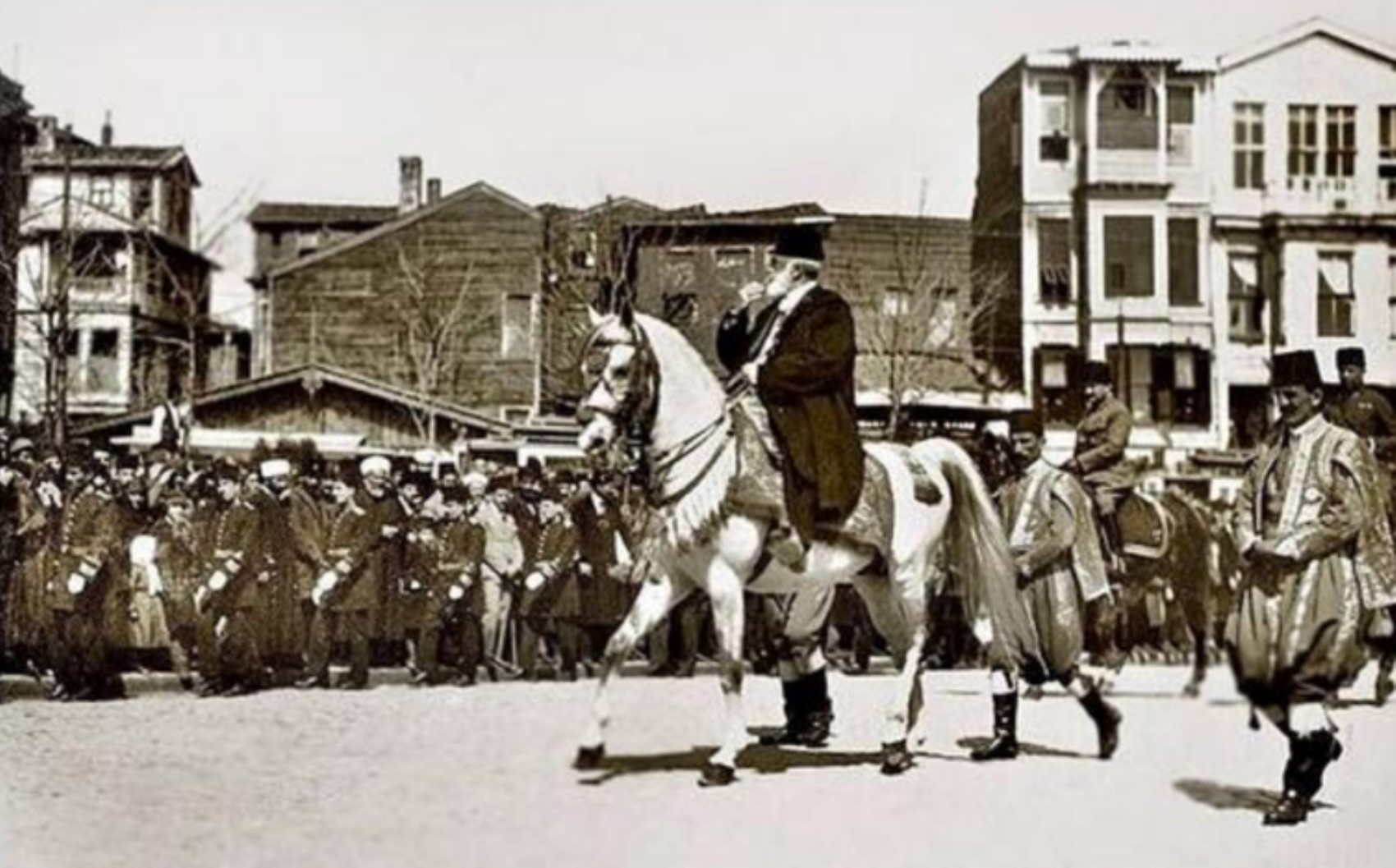
On November 24, 1922, a series of rituals imitating Ottoman enthronement ceremonies were performed at Topkapı Palace. After visiting the Chamber of Sacred Relics, the Holy Mantle, and the Holy Standard, the TBMM delegation presented him with the mandate informing him of the election result at the Baghdad Pavilion. Abdülmecid's caliphate was celebrated with a 101-gun salute.
This was also a politically strange situation. Yet the truth was this: Since the sultanate was abolished, the caliphate was also abolished. In this ceremony, there was only the outward appearance of the old regime.
İSMAİL ŞÜKRÜ ÇELİKALAY’S TREATISE AND ITS RESULTS
İsmail Şükrü Çelikalay (Afyon), one of the deputies from the religious class (ilmiye) who thought that there could not be a caliphate office without power, government, and politics, published a treatise titled "The Islamic Caliphate and the Grand National Assembly" on January 15, 1923. In the treatise, it was argued that where there is a Caliphate, the head of state must be the Caliph. Hoca Şükrü Efendi ended the treatise by saying, "The Caliph belongs to the Assembly, the Assembly belongs to the Caliph." This actually meant putting the TBMM Presidency under the authority of the Caliphate and making it dependent on it.
Upon these developments, the First Assembly, just before the decision to renew the elections, passed "Law No. 334 on the prohibition of propaganda regarding the sultanate" on April 15, 1923. The elections were held in this environment.
ABDÜLMECİD EFENDİ’S CALIPHATE
What function could a caliph elected by the TBMM in Istanbul have? It could have the function of creating a focus around which the opponents of Mustafa Kemal Pasha could gather.
Abdülmecid Efendi enjoyed playing the role of sultan under the guise of caliph. He would go out for the Friday greeting in the imperial mosques and accept the petitions presented to him. His covert political role was the increasingly frequent visits of the cadres who would later establish the Progressive Party (Terakkiperver Parti). Most of them were Istanbul deputies.
The end of the Caliphate and the House of Osman was the ratification of the Lausanne Peace Treaty by the Second Assembly and the proclamation of the republic. The abnormality in Turkey's political regime had become even more pronounced. In 1922, there was the Government of the Grand National Assembly of Turkey and a caliph. After 1923, there was a caliph along with the republic. As of October 29, 1923, Turkey had become a Republic with a president in Ankara and a caliph in Istanbul. Caliph Abdülmecid Efendi sent a message congratulating the President of Turkey, Gazi Mustafa Kemal Pasha.
In the meantime, the caliph making some statements with exaggerated titles and organizing meetings at Dolmabahçe Palace and the Abdülmecid Pavilion, attended by art, literature, and political circles, was perceived in Ankara as a "sultanate show."
The Indian Caliphate Committee sending letters to Prime Minister İsmet Pasha expressing their concerns about the fate of the caliphate, and these letters appearing in the Istanbul press before reaching him, led the Republican revolutionaries to send an Independence Tribunal to Istanbul. The sentences given were not heavy. But they were of a nature to intimidate.
THE EXILE OF THE DYNASTY
On the morning of March 4, 1924, the Governor of Istanbul and Mayor Ali Haydar Uluğ Bey went to Dolmabahçe Palace. To the Caliph's office. His duty was to notify Abdülmecid Efendi that the requirements of Law No. 431 would be fulfilled immediately. The TBMM decision was as unwavering and revolutionary in its implementation as it was radical. The radical implementation of the decision was in the form of the caliph being immediately seized along with his family and taken abroad on the Orient Express.
I think in those days, he was working on the portrait of Halil Ethem Bey (Eldem), the director of the Museum of Antiquities. The caliph, who received the decision, wrote the phrase "unfinished" on the painting and signed it. The caliph and his family were taken to Çatalca in several cars and boarded the Simplon Express from there. They were given 2000 pounds as they went into exile. Thus began the exile life that would last for twenty years for Abdülmecid Efendi.
The deposed caliph behaved like Vahdettin at the beginning of his exile years. He had an attitude of not recognizing the assembly decision and trying to gather the Muslims of the world around him with the title of "Caliph of the Muslims." Over time, especially when he saw that the Arabs did not care about the Caliphate claims at all, he gradually lost hope. He returned to his own world.
Abdülmecid Efendi, Vahdettin, and Damat Ferit Pasha lived in places close to each other during their exile lives. The French and Italian Riviera: Nice and San Remo.
Vahdettin held his brother-in-law Damat Ferit Pasha and his sister Mediha Sultan responsible for the fate of the dynasty. He blamed them. He accused Damat Ferit, whom he had brought to the Grand Vizierate five times, of stupidity. Abdülmecid, on the other hand, saw Vahdettin as the person responsible for the disaster that befell the House of Osman.
Damat Ferit, Vahdettin, and Mediha Sultan passed away one after another in financial distress. Abdülmecid, on the other hand, did not live a difficult life thanks to the marriages made by his daughter Dürrüşehvar and his grandchildren. Vahdettin died in 1926. After arduous efforts, he was able to be buried in the treasury of the Umayyad Mosque in Damascus.
This situation changed Abdülmecid Efendi's role. One of these was to play the role of the leader of the Muslims in the place where he lived (France) as a deposed caliph. The other was to manage the family as the head of the House of Osman.
I think at the beginning of his exile life, he thought he could "revive the House of Osman." He dreamed of this.
The most important issue of the dynasty was financial distress. To find a solution to this, they went after the dynasty's assets (real estate and property) that remained outside the borders of the Republic of Turkey. Especially the Kirkuk Oil. Sultan Hamid had personal properties there. The dynasty thought they could reach their interests in countries outside the lands of the Republic of Turkey. They thought they could obtain these private properties through inheritance. They tried to organize. They were not successful, they fell out with each other. Abdülmecid wanted to lead this struggle of the dynasty. After a while, he gave up on that too.
After a while, financial resources were exhausted. Only the Indian Muslims responded positively to the caliph's call for help.
Those who were against the person of Mustafa Kemal wanted to take advantage of him. When the dates showed 1927, the situation had become clear. Despite the Progressive Party opposition, the Sheikh Said rebellion, and the İzmir assassination attempt, Mustafa Kemal Pasha continued to walk on his path. For the dynasty, the old regime was now nothing more than a dream.
In the meantime, the Nizam of Hyderabad (meaning the Muslim lord/maharaja of Hyderabad) had tied an allowance to him. Other than that, I don't think they had any financial means. In the end, he married his daughter Dürrüşehvar, born in 1914, to the Prince of Hyderabad. This was the salvation of the caliph's family. After 1932, he lived until the end of his life without suffering financial distress.
In the meantime, the Nizam of Hyderabad married his sons to girls from the Ottoman dynasty, one of whom was the daughter of the deposed caliph, Dürrüşehvar. Through these marriages, the two dynasties became relatives.
Abdülmecid Efendi's son, Şehzade Ömer Faruk Efendi, had also gone to Egypt. His daughters Neslişah, Hanzade, and Necla made marriages from the Kavalalı dynasty. This was their salvation in terms of finances. While the Second World War was continuing, his daughter Dürrüşehvar was in Hyderabad, and his son Ömer Faruk was in Cairo with his family.
The branch of the family that went to Egypt, Ömer Faruk Efendi, found the opportunity for a relatively comfortable life until the Kingdom administration ended with the Free Officers coup in 1952. Because they were in-laws with the Kavalalı dynasty.
Şehzade Ömer Faruk Efendi lived in Egypt until 1969. He died there. After the 1974 amnesty, his body was brought to Turkey. He was buried quietly in the tomb of his ancestor Sultan Mahmud.
THOUGHTS ON THE EXILE OF THE DYNASTY
It was seen during the First World War that the caliphate had no function. After the great victory, Abdülmecid Efendi's election as caliph by the TBMM decision only concerned the Indian Muslims. It was not taken into account by the Arab world.
After Vahdettin took refuge with the British and was deposed, Crown Prince Abdülmecid Efendi, who considered himself worthy of the Ottoman throne, was elected to the "caliphate without sultanate" institution. He accepted this.
Since national sovereignty was manifested and concentrated in the TBMM due to the convention regime, the TBMM decisions numbered 307 and 308 had actually abolished the caliphate as well. Separating the sultanate and the caliphate did not carry any meaning in terms of public law. The decision was a political decision.
The composition of the First Assembly was not suitable for declaring that the abolition of the sultanate was actually the abolition of the caliphate.
On the other hand, a difficult peace negotiation process had begun. Until the registration of the new Turkey, the caliphate staff, a remnant of the dynasty, continued to exist in Istanbul. Abdülmecid Efendi was a figure who sat in Dolmabahçe Palace, worked in his library, painted, met with the elite people of Istanbul, and although he was preserved as a historical trust, he was carefully watched.
The transition to the republican regime disturbed the conservative forces of Turkey. Opponents tried to build a political power focus around the caliph against the rising wave of the Kemalist revolution that would continue until the 1931 congress. Among these were also counter-revolutionary forces.
Finally, the "decision to abolish the caliphate," which should have been announced with the November 1, 1922 decision, was taken on March 3-4, 1924, with Law No. 431.
The outward appearance of the Ottoman caliphate was abolished by stating that it was "already included in the meaning and concept of government" (it was already definitely so).
All members of the dynasty were stripped of their citizenship. They were taken abroad. The abolition of the caliphate is a decision that completes the decision to abolish the sultanate. It is the liquidation of the monarchy and the dynasty with all its institutions.
Yes, this is true. There are dramatic aspects to the deportation of all members of the dynasty. Especially for women. Women who had lived in the palace all their lives, ladies of the sultan, kadınefendis, former sultan's wives of advanced age, and princes maintained their lives abroad with great difficulties.
But when we compare it with the Russian Revolution, French Revolution, Chinese Revolution, English Revolution, and Egyptian Revolutions, the result of the Turkish revolution for the dynasty was only being banned from citizenship. No one was sent to the guillotine. Nor were they shot by firing squad.
CONTENT OF LAW NO. 431
The "Law on the abolition of the Caliphate and the removal of the House of Osman outside the lands of the Republic of Turkey" is dated March 3, 1924. When the justification and articles of the law are examined, the following reasoning is seen.
"Since the Caliphate is already included in the meaning and concept of government and republic, the caliphate office is abolished." It is possible to understand this expression as follows: Caliphate means government. Since 1920, there has been the Government of the Grand National Assembly of Turkey, and since 1923, the Government of the Republic of Turkey. Therefore, the caliphate institution cannot exist in the same sovereignty area. According to the law, "all members of the dynasty and sons-in-law and sultanzades lost their citizenship status," these people could not dispose of their real estate, and they had to liquidate their assets through a proxy within one year.
While such a regime was applied regarding the private properties of the dynasty members, all the properties of those who had reigned as sultans, whether registered in the land registry or not, were transferred to the nation. This meant that the Palaces and everything inside them were transferred to the nation.
The aspect that should be emphasized most in this law is the liquidation of all dynasty properties along with the abolition of the caliphate due to the principle of national sovereignty. With this law, all remnants of the old regime (in terms of political, public, and private law) were liquidated.
THE MEANING OF THE 1924 CONSTITUTION
1924 is a year in which a series of revolutionary steps were taken. The Second Assembly had taken an important step at the very beginning of the legislative year, the Law of Fundamental Organization was changed, and the republican regime was transitioned to. This step brought the circles disturbed by the rise of the Kemalist revolution wave even closer around the caliph.
After the long speech of the People's Party Minister of Justice Seyit Bey, the caliphate was consigned to history. The 1924 constitution followed. For this reason, it would be correct to evaluate laws 430 and 431 together with the 1924 constitution. The 1924 Constitution made the institutions of the republican revolution more distinct. It made them indisputable.
THE BURIAL OF ABDÜLMECİD EFENDİ 10 YEARS AFTER HIS DEATH
Abdülmecid Efendi left Nice in 1939. He settled in Paris. Due to health problems. This change of place allowed for scenes that reminded the Paris Muslim community of his caliphate days. He went to the Great Mosque of Paris every Friday and enjoyed being treated as the "Caliph of the Muslims." During the Second World War, Paris was under occupation by Hitler's Germany. Abdülmecid and his family had been stripped of Turkish citizenship and were continuing their lives in this city as a former dynasty. In 1932, his daughter Dürrüşehvar had married into Hyderabad. His son Ömer Faruk Efendi was also in Egypt with his wife Sabiha Sultan and his daughters.
In the meantime, the Allies' Great Offensive began from Normandy. On June 4, 1944. The war continued for a long time between the Allies-Resistance Front and German forces throughout all of Northwest France. When the bloody clashes reached the streets of Paris, Abdülmecid Efendi passed away: August 23, 1944.
His will was to be buried in the lands where he was born. But there was no possibility for this. Vahdettin had been buried in the treasury of the Umayyad Mosque in Damascus with great difficulty. (1926) Abdülmecid Efendi was saying: "Never take me next to him. Beirut or Cairo would even do." He thought that what happened to the dynasty was because of his lack of foresight.
In the end, the inevitable had happened. According to Islamic belief, he had to be buried immediately. The last caliph could have been buried in the Paris Muslim cemetery. He should have been buried too.
Surprisingly, the last Islamic caliph was embalmed and kept in the basement of the Paris Mosque. This decision to embalm must have been upon the request coming from Dürrüşehvar.
His daughter, now as the Princess of Hyderabad, struggled quite a bit for 10 years to bring her father's funeral to Turkey.
She met with President İnönü and Mevhibe Hanım. The matter kept coming back to the decision of the Grand National Assembly of Turkey. In the meantime, between 1946-1950, no one had any concern about defending the rights of the House of Osman. Everyone would naturally say, "You are right, he should lie in the homeland soil," and welcome the request, but would not do anything more.
Along with the ruling party CHP, the Democrat Party also welcomed the request. But the Grand National Assembly of Turkey was not showing interest in the subject in the feverish internal political environment.
In the end, elections were held. Power changed hands. With a law passed in 1952, the way was opened for "dynasty daughters, women, and sultanzades to be accepted into citizenship under limited conditions." However, the law did not contain a provision that would ensure Abdülmecid's burial in Turkey.
Finally, most likely with the involvement of President Celal Bayar (this is my opinion), the approval of the Saudi Arabian Government was obtained, and he was taken to Jannat al-Baqi, which is the most important cemetery in Islamic history in Medina.
Abdülmecid Efendi was buried in this cemetery on March 30, 1954, with a ceremony supervised by Salih Keramet Nigar, who had always been in his service (his private secretary).
This meant being next to the Prophet's Mosque. That is, Abdülmecid Efendi had become a neighbor to the Prophet after waiting for 10 years. However, in accordance with Wahhabi beliefs (due to their principles), there should not be any sign on his grave to indicate his identity. Whatever was necessary was done. In the meantime, journalist Murat Bardakçı wrote that he had the sketch of where the last caliph's grave was. I would like to remind you. (Habertürk, 2005)
DEMOCRAT PARTY POWER AND THE BURIAL OF THE LAST CALIPH IN JANNAT AL-BAQI CEMETERY
Immediately after the Second World War, the Cold War began. The important events of our recent political history were the Korean War and our acceptance into the North Atlantic alliance. Countries that took a stand against the Soviet system took positions behind the USA.
The kingdoms in the Arabian Peninsula were connected to the US system. After 1952, Egypt, Syria, and Iraq passed to the Soviet front under Baath administrations (nationalist Arab socialism).
Arab monarchs took their place on the same front as the Democrat Party. One of the concrete results of this new political positioning was the bringing of Mithat Pasha's funeral from Taif.
Mithat Pasha is seen as a symbol of the struggle for freedom in terms of the Democrat Party line. My personal opinion is that Mithat Pasha was eliminated by a plot of the Yıldız Monarchy. He was brought to Turkey with a grand ceremony in 1951. He was buried at Freedom Hill (Hürriyet Tepesi). The Democrats sanctified the bringing of Mithat Pasha as one of the most important events in Turkish political history.
The Democrat Party government must have contributed to obtaining such permission for the body of the last caliph, who was kept embalmed in Paris. I am of the opinion that it would be correct to evaluate the burial of the last caliph in the Jannat al-Baqi cemetery within this international conjuncture.
WHO WERE HIS FRIENDS?
Halil Ethem Bey, Rıza Tevfik, Abdülhak Hamid Tarhan, Şeker Ahmet Paşa, Fausto Zonaro, Pierre Loti, Pianist Furlani, Pianist Hesyei, Ahmet Rasim, Namık İsmail, Hüseyin Avni Lifij, Claude Farrere.
HIS PAINTING
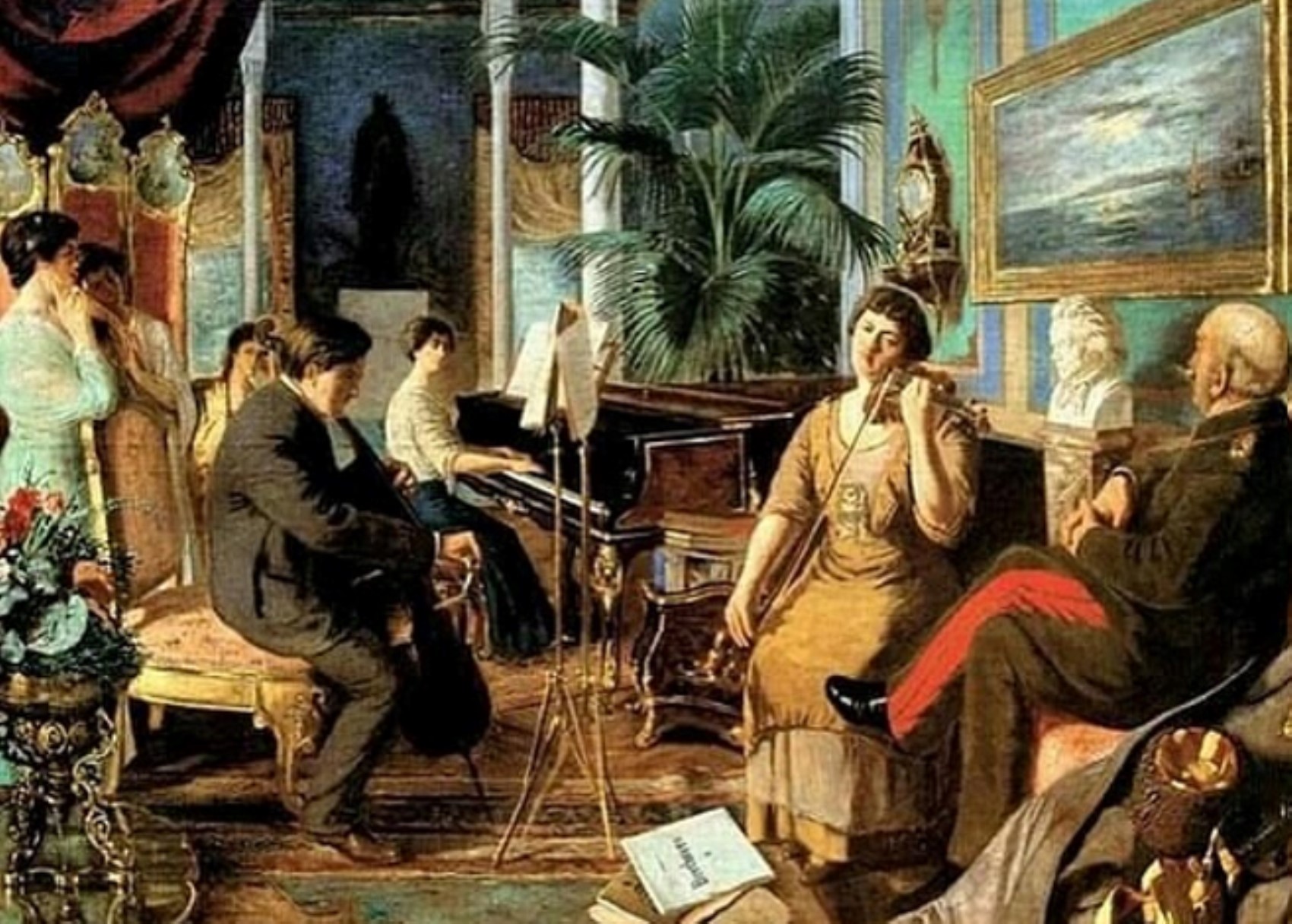
Abdülmecid Efendi took painting lessons from the most important artists of his time, such as Osman Hamdi Bey, Şeker Ahmet Paşa, and Fausto Zonaro. He made portrait and landscape paintings. He made portrait paintings of his daughter, his son, and the musicians he loved. For example: Johannes Brahms, Chopin, Mozart, etc. He also played the cello himself.
The places where Abdülmecid Efendi's works are exhibited are as follows: Dolmabahçe Palace, Mimar Sinan University Painting and Sculpture Museum, Aşiyan Museum, Topkapı Palace, Ankara Painting and Sculpture Museum.
The exhibition of his works in the republican period was as follows. It was exhibited for the first time in 1986 at the Şişli Beymen Store. This was followed by other exhibitions in 1993, 1998, and 2004. While the Abdülmecid Efendi Pavilion was owned by Yapı Kredi, 35 oil paintings were exhibited in this pavilion.
HIS LIBRARY
Abdülmecid Efendi's library was in the Feriye Palace before he became crown prince. The palace is the Kabataş High School today. Because he was one of the princes.
When he was declared crown prince, he moved his books to the Crown Prince apartment of Dolmabahçe Palace. When he was elected to the caliphate office, the Library was moved to the Hünkar Apartment in Dolmabahçe Palace. When Atatürk came to Istanbul, he benefited from this library and the Istanbul University library in his work. The library has been enriched by obtaining new books. Approximately 14,000 books are registered in the library.
ABDÜLMECİD EFENDİ PAVILION

The ownership of the Abdülmecid Pavilion belongs to the Koç Group today. The pavilion is on Kuşbakışı Street within the Bağlarbaşı Grove. It is used as a venue where various exhibitions and elite meetings are held. The pavilion was built by Alexandre Vallaury for the Egyptian Khedive dynasty at the beginning of the last century. Later, I think it was purchased during the Sultan Hamid period and passed into the ownership of Şehzade Abdülmecid Efendi.
As is known, in the Republican era, the properties (assets and real estate) of the dynasty members were liquidated. In accordance with the provisions of the law. The ownership of the pavilion changed hands several times. One of its first owners is Yapı Kredi Bank. It finally passed into the ownership of the Koç Group. Until recently, the pavilion was a mysterious place behind walls for me. Like the Vahdettin Pavilion. The veil of mystery over both of them has been lifted. Although in different ways. The pavilion had become a venue where Abdülmecid Efendi organized pleasant meetings during the constitutional and armistice periods. Abdülmecid would gather the most elite writers, musicians, and painters of the period here from time to time and give long receptions.
After the Republican revolution, the Pavilion experienced a long period of mysterious abandonment. Now it is owned by the Turkish bourgeoisie and beautiful events are held.
THE MEANING OF THE CALIPHATE IN THE FACE OF TODAY'S REALITIES
We Turks dream as if the Caliphate is an institution that should remain in our hands forever. An important reminder: Five years ago, Hagia Sophia, which was registered as an important part of the World civilization heritage with the signature of the Great Atatürk, was the scene of counter-revolutionary demonstrations. And in the middle of the pandemic. The government almost reconquered Istanbul, which the TBMM Army had saved from occupation.
While the government's ulema were cursing the founder of our republic, they were also heralding the rebirth of the caliphate with a sword show.
However, just taking a look at the Arab world shows that the masses behind the government are swimming in a sea of dreams.
For one thing, the caliphate is a theocratic monarchical way of governing. Where there is a caliphate, there is no freedom, democracy, or republican administration. There cannot be. In the thousand-year history of Islam, since the Umayyads, the caliphate institution has been a medieval institution with all its political practices.
The fact that it remained in the hands of the Ottoman dynasty after Yavuz Selim's Egyptian campaign is also proof of the nature and function of the institution.
In terms of the Arab world, we Turks are second-class Muslims. We are Mawali. According to them, the caliph must be from the Quraish tribe. Turks have usurped the caliphate for hundreds of years. As expressed in the 1917 Sharif Hussein uprising, "the property, life, and blood of the usurper Turk are halal." For this reason, all monarchs in today's Arab world are the caliphs of their own countries.
In today's world conditions, the caliphate is nothing more than a dream (a historical myth) to satisfy the complexes of Muslim societies that have been defeated, crushed, left behind, and exploited by imperialism in the face of Western civilization.
In terms of Arabs, it is possible to see the concrete equivalent of the Turks' caliphate claims in the progress of the Khashoggi murder committed at the Saudi Arabia Consulate in Istanbul. The well-known murder was covered up after a while. The file was sent to Crown Prince Mohammed bin Salman, who was accused as the organizer of the murder. Salman's mocking facial expression in the "well-known picture" is proof that the caliphate dreams of Turkey's conservative forces have no meaning.
Would you like to get notifications about new developments and save news?
- NotificationsNew developments and breaking news
- SaveNews is stored in the app
Most Read
Statement from Nihat Zeybekci on the fund investigation

New 75,000-seat stadium plan for Fenerbahçe
Interpol and MIT tracking yields results in Izmir
ID convenience for KPSS candidates

2027 Budget: Taxes for the people, tax exemptions for capital
The reality of Akkuyu and the longing for national nuclear power

To whom and how was the Petition of Intellectuals submitted? Who accepted the petition?

The Çanakkale robbery -1- How was the Troy treasure smuggled out?

Artificial intelligence and the new imperialism

Ministry investigation into unauthorized promotional messages