


Leon Trotsky's years on Büyükada (1929-1933)



WHAT IS TROTSKY'S PLACE IN THE BOLSHEVIK REVOLUTION?
Lenin, described Trotsky as a party member who joined the Bolsheviks last but then became more Bolshevik than anyone else. Indeed, Trotsky played a crucial role in the creation of the revolution's cadres, He was one of the most important actors in the founding of the Red Army and in emerging victorious from the civil war. He was one of the key figures.
Bukharin, Kamenev, Zinoviev, Trotsky, and Stalin, who are the most frequently mentioned names in the literature of the socialist revolution, were the primary actors in the ideological and political conflict within the party. became. It is significant that the ultimate winner of this conflict was Stalin, who had the least intellectual background.
WHY WAS TROTSKY'S SITUATION DIFFERENT FROM THE OTHERS?
After Lenin's death, the revolution's brain trust, through tactics of gradual discrediting, exile to remote regions, and forced oblivion, from the agenda was removed by being toppled.
The purge, which began with exile sentences, expanded with an ever-increasing intensity until 1938. Those loyal to Stalin's faction outside of all opposition factions were eliminated through show trials. This process, in Soviet history, is known as the Great Purge.
Trotsky's situation, however, was different. Lenin after the leadership would pass to Kamenev or Trotsky was expected. Stalin, the right-wing opposition led by headed by Bukharin the right-wing opposition, Trotsky's led against the Left Opposition by using to remove anyone who could be a rival from the Politburo, from the Central Committee, and finally from the party distanced him.
Ultimately, Trotsky lost the political struggle he waged against Stalin between 1924 and 1927. He was removed from the Communist Party leadership and the party itself. Stalin had him with a sham trial could not risk eliminating him. Along with key leaders of the Left Opposition such as Radek, he was sent into exile to Alma-Ata. Stalin was not satisfied with this. Outside the Soviet Union thought it would be more appropriate to send him somewhere else. But where could that country be?
WHAT WAS THE POLITICAL SITUATION IN EUROPE?
The international climate and the political environment in Europe did not make it possible for Trotsky to be sent to any European country.
The Weimar Republic was in the midst of a major political and economic crisis. Hitler's party was steadily gaining power. Despite being strong in parliament and even leading the establishment of the republic, the Social Democratic Party (SPD) Trotsky's in such an environment his presence in Germany could not be accepted.
In France and England, the left-wing conciliators were close to socialism, that is, the Second International. The theorist of the European Revolution (permanent revolution) theorist They did not want a charismatic political figure like Trotsky to be in their countries. Meanwhile, the Communists in these countries had adopted a stance close to the Stalinist line.
To put it more clearly, for European governments, Trotsky was a figure who carried political risks. For socialist and communist parties, Trotsky was also a name that—for their own reasons—should not be supported.
WHY TURKEY?
It was in such an international environment Mustafa Kemal's Turkey was a young republic with friendly and good neighborly relations. The Soviet government through its Ankara ambassador Lev Suritz facilitated such a residency for made a request. The request came through Stalin and Foreign Minister Karahan.
ARRIVAL IN TURKEY
As of 1929, President Gazi Mustafa Kemal Pasha, who had firmly consolidated his power, accepted the request conditionally. accepted. Turkey him not as a political exile, but as a guest would accept. If he wished, to another country he could go, and what he wrote in Turkey on the condition that it be published abroad would not be interfered with. His safety would be the responsibility of the Turkish government. The Soviet government, for its part, would pledge not to organize an assassination attempt against Trotsky on Turkish soil. The conditions were mutually as accepted. Thus began the stay of Trotsky and his family in Turkey as guests.
THE WINTER OF 1929 AND THE ILYICH SHIP
First of all, there is something that must be said. The winter of 1929 was an exceptionally harsh winter. It was the year the Bosphorus was filled with ice floes coming from the Danube. Trotsky and his family from Alma-Ata to Odessa under harsh winter conditions, they were brought by a journey made by bus and train. His wife Natalia and son Lev Sedov were with him. His daughter was not permitted to accompany him. Later, she would also come and go to Germany for treatment.
The journey It lasted about 20 days. Departing from Alma-Ata on January 22, Trotsky and his family arrived in Odessa on February 10. For the journey, Kalinin ship had been planned.
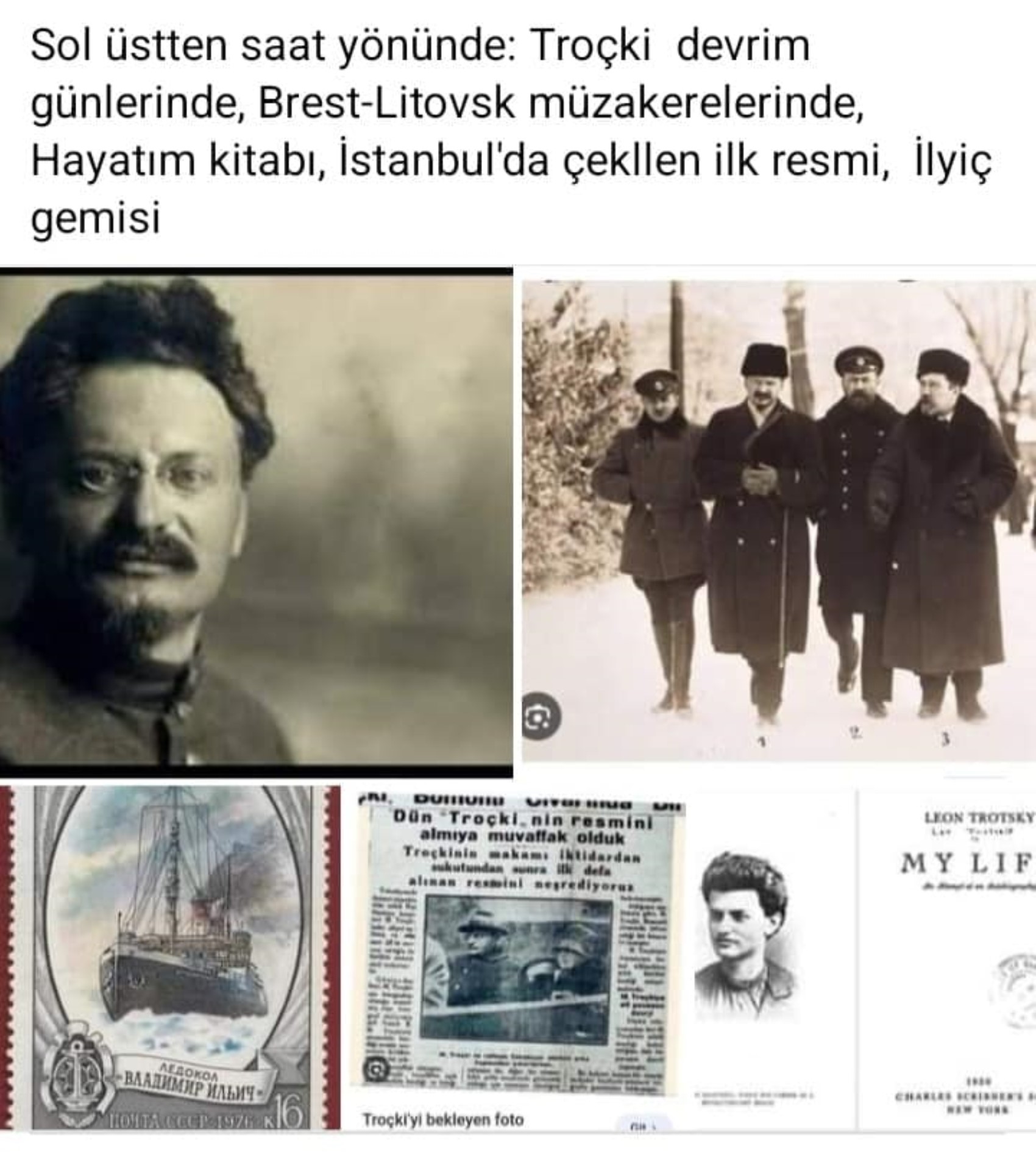
However, since the ship was stuck in the ice, instead of it—as a strange manifestation of history—the Ilyich (Lenin) ship was allocated. Since the Black Sea was covered with ice, a ship with an "icebreaker" was needed. Quite interestingly, the "Ilyich," which bore the name of the leader of the revolution, ship, of the revolution's most important theorists one of- Trotsky- became the ship that would bring him to Istanbul.
FIRST DAYS IN ISTANBUL
The founder of the Comintern and the Red Army, the Brest-Litovsk peace negotiator, former commissar for foreign affairs, war, and navy, Trotsky, from the entrance of the strait, to the President of Turkey Gazi Mustafa Kemal Pasha a telegram sent. When the Ilyich ship Büyükdere arrived off the coast.
The main idea of the telegram was that he did not come to Turkey of his own volition. The telegram showed that Trotsky was concerned about being assassinated in Turkey. Turkish authorities would alleviate his anxiety even though they offered suggestions, Trotsky would long harbor the concern that he would be the target of an assassination.
Trotsky at the Tophane pier, was personally met by Istanbul provincial officials and the Soviet Consul General. On February 12 at 16:00 Soviet citizen Leon Sedov with a passport he had entered. His family and his accompanying staff were taken to the consulate general.
On February 14 so much so that the Turkish press must have been warned, as no news mentioning Trotsky was published. In the early days, there was an atmosphere of uncertainty. The Turkish government did not want to get involved in anything other than his safety and comfort.
Surprisingly in a way that was not expected, the British consulate was aware of Trotsky's arrival. Consul General Sir George Clark was in office at that time.
Within a short time, foreign press representatives stationed themselves around the Soviet consulate. The London Times and Reuters began monitoring entries and exits at the consulate. The Markiz and Parissien patisseries became the hubs for reporters awaiting news. A few days later, the first to go out was his son Lev Sedov. He went to the Galatasaray Post Office. At that time, Lev Sedov was a young man in his early twenties. He returned with books and newspapers.
At that time, the administration in Istanbul was headed by the governor and mayor Muhittin Üstündağ. was present. He was given 1500 USD as an allowance. As exile expenses. To maintain contact with European and American leftist circles and to to earn a living by writing articles was his intention.
The articles he sent by telegram from the Galatasaray Post Office, starting from February 26, appeared in the Paris Journal, New York Times, and London Daily Express newspapers. began to be published.
Trotsky's Western in media outlets against the Soviet administration articles beginning to publish brought his residence at the consulate to an end. On March 8, he moved to the Tokatlıyan Hotel. Rooms numbered 67, 68, and 69 were allocated.
INTERVIEW WITH JOURNALISTS AT THE TOKATLIYAN HOTEL
During the days when Trotsky was expelled from the Russian consulate and moved to the Tokatlıyan Hotel, he gave an interview to the local and foreign press. At the press conference that drew great interest, Vala Nurettin, who had gone to Russia with Nazım in the 20s and received a university education at KUTV, was also present. I believe at that time he was a writer for the Akşam newspaper .
He had been a student at KUTV and Trotsky was an admirer. He wanted to ask questions in Russian. With the air of a diligent student seeking to impress his teacher. He was warned by his former teacher that they should speak in a common Western language that everyone could understand. At the press conference The views expressed by Trotsky resonated widely in the West. The Turkish press was also keen on following this famous politician. There were even some strange reports, such as claims that Trotsky was going to convert to Islam. They were highlighting the tabloid side of the matter rather than political issues. Even any implication that could affect Turkey's friendship with the Soviet Russian administration was not being brought up.
THE SEARCH FOR A PERMANENT AND SECURE RESIDENCE
Once it was understood that Trotsky's stay would be long-term, Istanbul the provincial administration began searching for a sufficiently secure house for him.
The authorities, regarding such an extremely closely watched and significant figure, sought to ensure his safety in some way he could live he explored the options. First, the Yeniköy area was considered. It was abandoned. As of April 1, in Bomonti, the Arab Izzet Pasha Mansion (Holo Pasha) as a residence was rented.
Trotsky's His residence at the Arap İzzet Pasha mansion did not last very long. 28 days later, he moved to the mansion known today on Büyükada as the Trotsky house, which also belonged to the heirs of Arap İzzet Pasha. The point that needs to be clarified here is this: Holo Pasha, Abdulhamid's Jurnal at the head of the organization. He was one of the monarchy's palace secretaries at Yıldız. Thanks to his closeness to Abdülhamit, he had significant had amassed wealth and drawn the reaction of the Young Turk opposition. After the Committee of Union and Progress came to power, he disappeared.
The mansions in Bomonti and on Büyükada might have even been abandoned in the Turkey of the 1920s. Whether or not there was any rent payment involved is not entirely clear. My view: Trotsky was considered a guest of the Republic of Turkey. In the mansion on the island, serious renovations and even some windows being walled up and closed off given that it is in question, it is understood that his heirs at that time were not in a position to claim the estate. The Arab Izzet Pasha mansion, in fact, It is known as the Iliasko mansion. The reason is that it belonged to Konstantinos Iliasko, the manager of the Bank of Athens in Yüksek Kaldırım. Ownership later passed to Arab Izzet Pasha.
SPOUSES AND CHILDREN
His first wife, Alexandra Sokolovskaya, was the woman who introduced Trotsky to Marxism. She was the mother of Zinaida and Nina. While it is more or less certain that she was killed in a labor camp in 1938, there are also some sources that claim she survived and lived until the Khrushchev era. exists. His second wife, Natalia Sedova, is the mother of Lev and Sergei. She lived until 1962. She died in Paris.
Trotsky had two daughters and two sons. The daughters were Zinaida Volkova and Nina Nevelson. They were born during the couple's Siberian exile. In 1901 and 1902. His young daughter Nina had passed away from tuberculosis in 1928. Stalin did not allow his daughter Zinaida and his young son Sergei to come and join him. They remained in Russia as hostages. Lev Sedov, born in 1905, and Sergei, born in 1909.
ZINAIDA'S SUICIDE
Zinaida, who was ill and suffering from severe mental health issues, was granted permission to join her father in 1931. Zinaida arrived on Büyükada. After a while, she went to Germany with her half-brother Lev Sedov to receive treatment, Hitler's rise to power and Stalin by the Soviet citizenship upon being stripped of ended his life by committing suicide.
THE FATE OF LEV AND SERGEI
From his second wife Natalia, his eldest son Lev Sedov, had come to Turkey with his father. In 1931, he went to Germany with Zinaida. When Hitler came to power, he moved on to Austria and France. In Paris, following an emergency appendectomy, he died. Just like Frunze. It is highly probable that Lev's death on the operating table was the work of Stalin's agents.
His younger son, Sergei Sedov, was born in Vienna in 1908.. He was a young engineer who had received his engineering education in Moscow and was not very interested in political affairs. He was forced to remain in Russia. In 1935, he was arrested on fabricated charges. He was sent into exile. In 1937, he was killed in exile. Ultimately, all of Trotsky's children either died due to severe health problems, or were murdered by Stalin through a conspiracy.
TROTSKY'S VISITORS
After Trotsky moved to Büyükada, he engaged in intense writing activity we see. My Life and The Russian Revolution were written on Büyükada.
During his years in Turkey, he had many visitors. Most were European socialists and communists. All of these took place in Mustafa Kemal's Turkey. Some of the figures can be listed as follows: French former leader of the Communist Party Albert Treint (the new one naturally Stalinist) among other visitors were Spanish, American, and Austrian communists who were ideologically close to him it must be stated that.
For the Turkish History Congress, having come to Ankara as a guest of Atatürk, the German biographer Emil Ludwig met with Trotsky in Istanbul upon his return and published his impressions Living Age in the 1930 issue of the magazine published. British Labour Party in the government (Ramsey MacDonald government) who served as a minister Sydney Webb was among the visitors. was among the visitors. An interesting name was the deposed Afghan King Amanullah Khan. He was also among those who visited Trotsky.
There is also a Chinese man, Ling Che, who was in all likelihood a member of the anti-Stalinist faction of the Chinese communists. In China at that time, there was an alliance between bourgeois revolutionaries and socialist-communist forces against feudalism. Mao's Long March and There is still more time for the Chinese Revolution.
OTHER DETAILS OF TROTSKY'S LIFE IN ISTANBUL: FISHING, HUNTING, AND TARGET PRACTICE
Trotsky likely did not anticipate that he would stay in Turkey for such a long time. After a while, he must have found the residence provided to him by the Turkish government to be secure, because, fishing, and began target practice on Sedef Island. He started In photographs remaining from those years, the size of the fish caught by Trotsky shows what kind of abundance existed around the Islands. fish productivity shows.
Trotsky, who was keen on hunting, went through the forests of Kartal-Küçükyalı-Alemdağ as far as Ömerli. He evenwent. had reached as far as Sahilköy, which is now a village in Şile. It was evening, and when a heavy rain began, the Red Army founder was hosted that night in Sahilköy. The house he stayed in is interesting: the imam's house.
A YOUNG GIRL CLINGING TO THE GUNWALE OF TROTSKY'S BOAT: MİNA URGAN
A pleasant anecdote from Trotsky's days on Büyükada is mentioned in Mina Urgan's "Memoirs of a Dinosaur." When Mina's father passed away, her mother entered into her second marriage with Falih Rıfkı Atay . They are sending Mina to Robert College as well. To the Arnavutköy American College for Girls. She is a classmate of Behice Boran. They spend the summers on the island. Mina loves the sea very much, and has been an excellent swimmer since she was very young.
One day, she had swum quite far out. And very exhausted, off the coast of the island clung to the gunwale of Trotsky's boat while he was out fishing. One of the armed security officers prevented him from holding onto the boat with the butt of his rifle. Lev Davidovich Bronstein Trotsky, looking on coldly, did not say a word did not pull her out. Yet, from a revolutionary, tired from swimming a young girl, I would have expected him to take her hand and pull her onto the boat, and allow her to rest on the boat. In fact, since Mina knew English, and Trotsky had learned German, English, and French at the Odessa gymnasium, who would later become Halide Edib's assistant, a professor of English Language and Literature, and the wife of Cahit Irgat, Mina Urgan and Trotsky, off the coast of Büyükada, in a fishing boat could have had a conversation. But it didn't happen. Armed by the men was intimidated.
A STUDENT STRANDED ON A FERRY IN KARAKÖY: AZİZ NESİN
Another event that interests me is, Trotsky's In February 1929, when he arrived in Istanbul, ice floes that had broken off from the Danube had filled the Bosphorus.
At that time Aziz Nesin was living with his father, Abdülaziz Efendi, on Heybeliada. His mother had recently died of tuberculosis. He was attending Davutpaşa Middle School. Due to renovations, Davutpaşa Middle School had moved to the vicinity of Cağaloğlu.
He was late for school every day and was not being admitted to class because he could not get his books is not being done. He writes in his memoirs, in particular, that his English book is very expensive. The Bosphorus is covered with ice, so the ferries cannot make their trips. Voyages are being canceled. Aziz Nesin is penniless on the ferry gets stranded. Fortunately, an acquaintance who lives on Heybeliada and works at the Archaeology Museum takes Aziz Nesin in.
That night, they stay with a relative in the vicinity of Şehzadebaşı. Aziz Nesin finds the daughters of the house where they are guests to be very strange in their free behavior. Faced with the extreme conservatism of his father, Abdülaziz Efendi, the republic's concept of a "new life" is a middle school seems strange to his student.
It was during such a harsh winter of 1929 that Trotsky, who had been expelled from Russia, held a press conference at the Tokatlıyan Hotel, while at the same time, a middle school student named Mehmet Nusret, who was struggling to find money for a ferry ticket, (Aziz Nesin) was left stranded at the Karaköy pier. After a while, Trotsky would move to Büyükada, while Aziz Nesin would continue to commute to school from Heybeliada until he moved into the garden of the abandoned mansion in Mevlanakapı. continue to commute to school.
GOING TO THE CINEMA: CHARLIE CHAPLIN'S CITY LIGHTS FILM
We know that the Great Atatürk went to the cinema in Istanbul. There are photographs and they are very valuable. The President of Turkey is at the cinema with the citizens. In the Turkey of the 30s.
While in Istanbul, Trotsky also went to see Charlie Chaplin's film "City Lights." The cinema where the film was shown was the Artistik Cinema. Trotsky's experience of going to the cinema and watching films in Istanbul is worth remembering. One truly dreams of being among the audience in the cinema where Atatürk and Trotsky came to watch a film.
HIS DEPARTURE FOR AND RETURN FROM THE CONFERENCE IN DENMARK
We know that from the moment Trotsky arrived in Turkey, he preferred to go to France. Germany Developments over time had shown that the option was not possible. Going to France was also, in the political conditions of those days, not seen as possible.
However, 1932 in December of the year he received an invitation to a conference and went to Denmark. He traveled to Europe as a guest of the Young Socialist League with a passport issued in the name of Leon Sedov. Via the ship Prague and through France. The journey lasted between November 14 and 23.
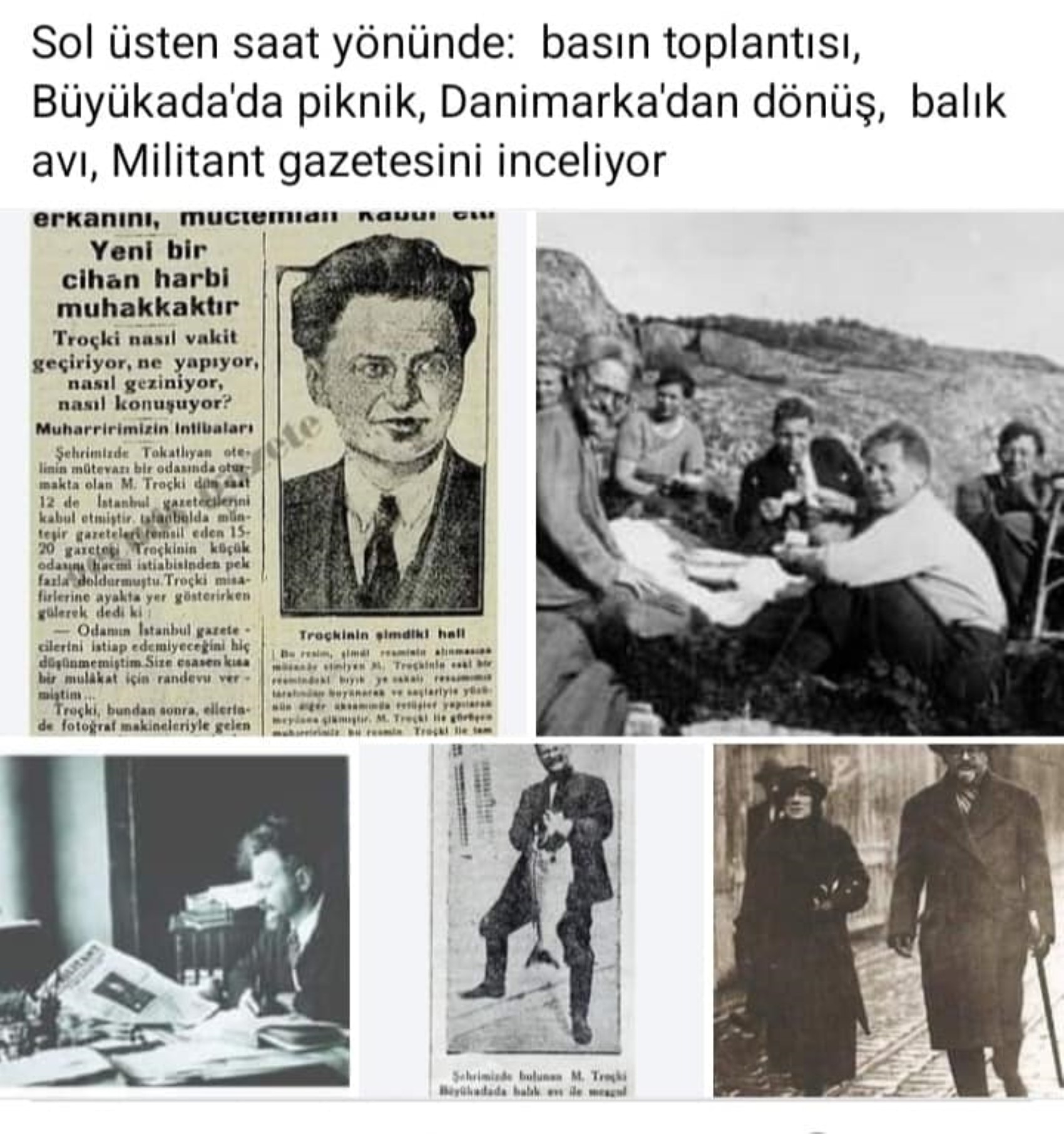
After giving a lecture in German on the Bolshevik Revolution in Copenhagen, on December 12 aboard the ship Adria he arrived in Istanbul. returned. Upon his return, he went from Paris to Venice. Although Mussolini was in power and Gramsci was in prison, he passed through Italy with a transit visa and returned to Turkey.
TROTSKY'S DEPARTURE FROM TURKEY
While Trotsky was living in the Arap İzzet Pasha mansion on the island, a fire broke out on the upper floor and the house was destroyed. Initially, it was thought that this could be an assassination attempt. It was understood that the fire started due to the carelessness of the maid, Kolyapi. From the hot water installation. In the newspapers Trotsky's documents were completely destroyed there is news.
After residing in Moda for a while again on Büyükada Arab Izzet Pasha which is a smaller house near the mansion Triandafilidis to his mansion. After a while (in 1933), he left Turkey and went to France.
This is the story of the four-year stay of Leon Trotsky, one of the leaders of the Bolshevik Revolution, on Büyükada. This is it.
Would you like to get notifications about new developments and save news?
- NotificationsNew developments and breaking news
- SaveNews is stored in the app
Most Read
Statement from Nihat Zeybekci on the fund investigation
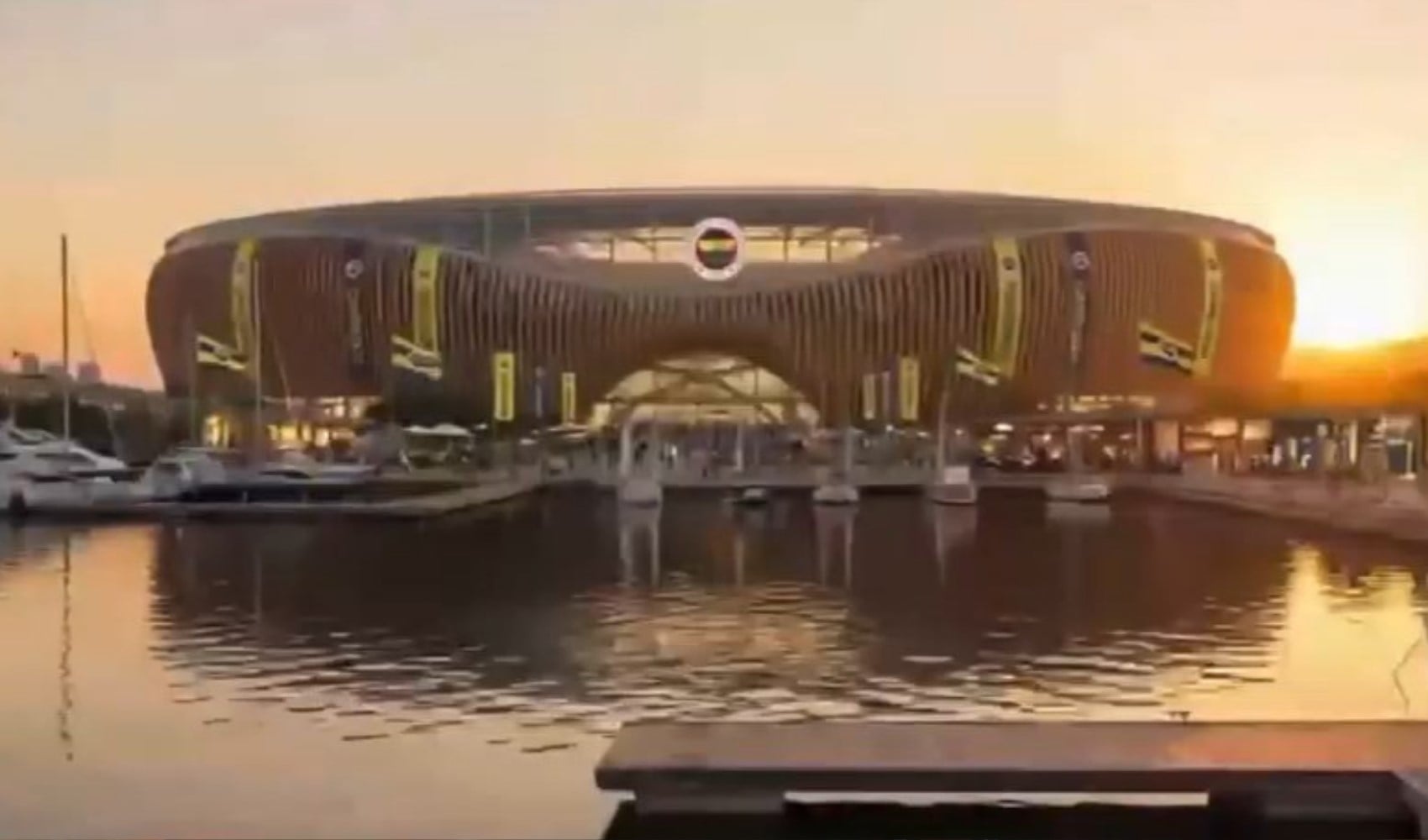
New 75,000-seat stadium plan for Fenerbahçe
Interpol and MIT tracking yields results in Izmir
ID convenience for KPSS candidates

2027 Budget: Taxes for the people, tax exemptions for capital

The Çanakkale robbery -1- How was the Troy treasure smuggled out?

To whom and how was the Petition of Intellectuals submitted? Who accepted the petition?

The reality of Akkuyu and the longing for national nuclear power

Artificial intelligence and the new imperialism

Ministry investigation into unauthorized promotional messages