


New dynamics on the opposition Islamist right



WHAT HAPPENED WITHIN THE AKP?
Since 2002, various dynamics have been at play within the ruling party. These can be classified as grievances arising from unfulfilled career expectations within the party, centrifugal tendencies against the party leadership, and rebellions against Erdoğan's leadership.
To give some examples: the arrest of Murat Yalçıntaş, President of the Istanbul Chamber of Commerce (ITO) and son of the respected conservative figure Prof. Dr. Nevzat Yalçıntaş, and the son-in-law of Kadir Topbaş; the forced resignation of Minister of Public Works Erdoğan Bayraktar; the departures of Abdüllatif Şener, Ali Babacan, and Ahmet Davutoğlu from the party at different times and their attempts to form alternative parties to topple the Erdoğan administration; and the forced resignations of metropolitan mayors as if they were being dismissed. These examples could be multiplied under other headings.
WHAT IS THE AKP ACCORDING TO THE SAADET PARTY?
There are circles that interpret the way the AKP came to power/was brought to power as a heresy in the ancient tradition of Islamism, and who see themselves as the uncompromising defenders of the National View (Milli Görüş). Their representative is the Saadet Party. From this party's perspective, the AKP is an example of disloyalty to the cause. It was brought to power as a result of an agreement with capitalism and Zionism.
Over time, there have been splits from this party. There were defections to the AKP, lured by the attraction of power. For example, figures like Şeref Malkoç and Numan Kurtulmuş. These examples were—naturally—vehemently condemned by the old core cadre who faithfully continued the National View line.
THE SAADET PARTY'S KEY ROLE WITHIN THE NATION ALLIANCE
Starting with the 2018 elections, Kılıçdaroğlu's attempt to form a front against the government materialized under the name of the Nation Alliance (Millet İttifakı).
In addition to the Saadet Party, there were others who would join this front by breaking away from the Erdoğan bloc: the DEVA and Future (Gelecek) parties. Davutoğlu had served as Erdoğan's prime minister. Babacan had been the executor of AKP economic policies. The Saadet Party, on the other hand, was the party of the circle that persistently maintained the Erbakan line within the Islamist segment. It viewed the establishment and policies of the AKP as being a pawn of the US and Israel, and as serving Zionism. It was a party based on strict Sunni conservatism and the imagination of the Age of Bliss (Asr-ı Saadet). It was understood that it had a small and stable base since 2002. In other words, Saadet was the cleanest among the parties that emerged from the National View. According to the Saadet members, the AKP was already a heretical party. The leaders of the DEVA and Future parties, Babacan and Davutoğlu, were sinners. They seemed to have repented. There were also those like Numan Kurtulmuş who betrayed the movement for the sake of prosperity. The Has Party incident. Karamollaoğlu was not like that. The caveat regarding him—due to the Madımak incident—had been placed by the left-wing segment. He was consistent in his own line. He appeared as an ally for a democratic Turkey with Kılıçdaroğlu's Y-CHP (New CHP).
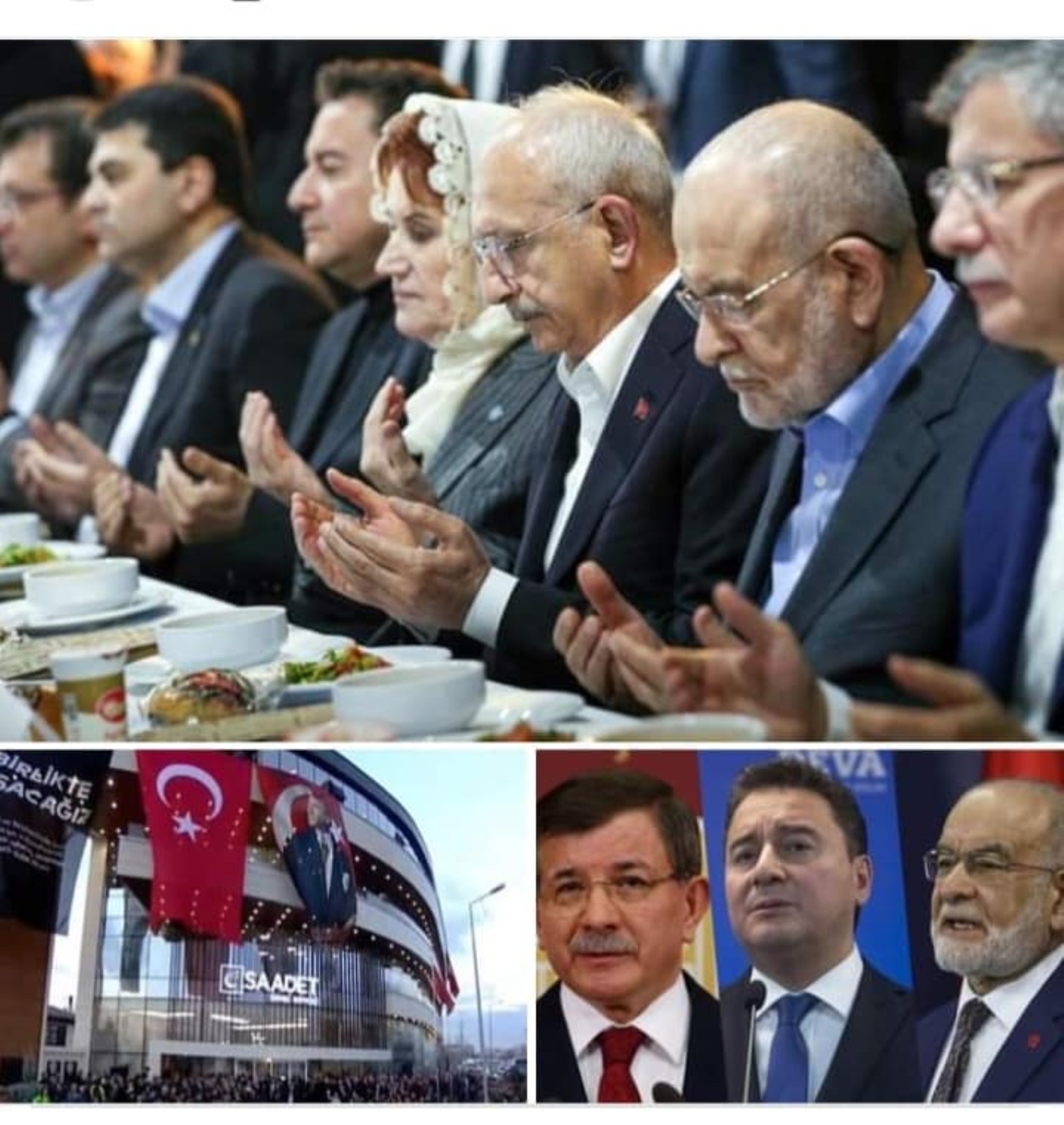
In that respect, the announcement of the Nation Alliance's presidential candidate by Karamollaoğlu at the Saadet Party headquarters was an exciting and positive move. A large poster of our state's founder, Gazi Mustafa Kemal Atatürk, wearing a kalpak, had been hung on the building. The message was clear: we are all different, but we unite here.
WHAT DOES BABACAN REPRESENT?
Ali Babacan has an important difference from other Islamist parties. DEVA is within the paradigm of global capitalism. Its only caveat is to be accepted into the club with a stylish hijab costume. And perhaps some predictable legal security. If one were to create a political scale with the AKP at the center, it is possible to rank the Islamist parties as follows: AKP, DEVA, Future, Saadet, YRP. In my opinion, the closest party is DEVA, and the furthest is the YRP.
I would like to express my misconception regarding the DEVA Party and Babacan. I had perceived Babacan's resignation from the AKP as a signal flare. And I had attached great importance to it. I thought that Ali Babacan's departure from the party took place with US approval. Just as the AKP was supported in 2002. I thought that DEVA would find significant support with the aim of replacing the Erdoğan regime. With these thoughts: First of all, Babacan's identity completely overlapped with US interests. He was a fine example of Islamist capitalism. He had been a supporter and executor of the privatization policies that had continued without hesitation since Özal, and had participated in the establishment of the AKP. He had served as Minister of Foreign Affairs, EU negotiator, and minister responsible for the economy. I thought that the US, just as it brought Erdoğan to power, now wanted to liquidate him with a new option. Perhaps there really was such a plan. But it did not succeed.
The fact that Babacan kept his distance from other Islamist parties with his 15 deputies might still indicate that he is waiting in the wings as a US-approved option in the Y-AKP format. I interpret Babacan's coldness toward the others in this way.
PROF. DR. AHMET DAVUTOĞLU AND HIS PARTY
Ahmet Davutoğlu's struggle with the AKP is personal. It is a problem of a wounded ego. Davutoğlu and his team are a political party born out of hostility toward Erdoğan's decisions. We cannot say the same for Babacan. Babacan was part of a larger plan.
However, as Erdoğan very aptly identified, Davutoğlu has no real success of his own. As long as Erdoğan was behind him, his political identity had meaning.
Davutoğlu's "Hoca" (Teacher) charisma also seems to need examination. When the AKP came to power, because it did not have a trained, experienced staff in the field of diplomacy (it still doesn't), he was treated as a big name in that empty space and was respected.
Besides this, the content of his voluminous books shows that he is not a foreign policy theorist, but a dreamer. With his thinking and attitude, Davutoğlu missed the realpolitik. His dream of Neo-Ottomanism has harmed Turkey.
As will be remembered, after 2014, when he entered the minefield of becoming the real chairman of the AKP against Erdoğan, he became a prime minister who was effectively dismissed by Erdoğan in a very hurtful way. I used the expression "effectively" on purpose. Because in a parliamentary system, the prime minister is appointed by the president but cannot be dismissed. He can be brought down by the Grand National Assembly of Turkey (TBMM). This is the underlying reason for Davutoğlu's hostility toward Erdoğan.
I also think that Davutoğlu dreamed of emerging as the presidential candidate from the Table of Six. I am of the opinion that the deputies elected from the Future Party are largely personal victims of Erdoğan's policies. With the exception of Antalya deputy and Constitutional Law Professor Serap Yazıcı Özbudun.
DID THE YRP HAVE A SHARE IN THE NATION ALLIANCE'S DEFEAT?
This alliance—after spending quite some time with long academic studies—appeared before the public with a broad democratization plan. Supported by misleading public opinion polls, it allowed for dreams of ending the AKP era. The alliance was defeated by the coalition that positioned itself behind Erdoğan in 2023. The result was a complete fiasco.
In this defeat, apart from intra-alliance factors, Dr. Fatih Erbakan's joining the People's Alliance (Cumhur İttifakı) with a last-minute maneuver should be considered. I am of the opinion that the YRP's joining the Erdoğan front—in the first round—made a serious contribution to the result.
As a result, in the legislative elections held concurrently with the presidential election, the anti-Erdoğan New Welfare Party (Yeniden Refah Partisi) managed to enter the TBMM with five deputies without giving up its own party identity, by supporting Erdoğan only in the presidential election.
This result meant that while Erdoğan was winning on one hand, he was also bringing his mortal enemy into the parliament on the other.
WHAT IS THE SITUATION IN PARLIAMENT AFTER 2023?
Since political parties entered the 2023 elections within an alliance system, the distribution of seats in parliament has shown changes since that date. The YRP crossed the national threshold in exchange for supporting Erdoğan. It won five seats. The YRP received 2.8% of the vote independently of the AKP. This was an important success that seemed small.
The Saadet, DEVA, and Future parties, which were part of the Nation Alliance, entered the elections with quotas provided to them on CHP lists.
The vote share the CHP received in the parliamentary elections was only 25.3%. This result showed that the parties that entered the elections on CHP lists did not have a meaningful contribution. This was already the vote the CHP would receive under any circumstances. The votes these parties received in the 2024 local government elections are of a nature that explains what the alliance made in 2023 was good for.
The CHP had won 169 seats in the 2023 election; however, when the alliance parties' deputies returned to their own parties, the number of CHP members in parliament fell to 126. DEVA 15, Saadet 10, Future 10, Democrat Party 3.
DEVA is following a separate line. The other two Islamist parties came together to form a group in parliament. Let us remind you that the Future Party deputies joined the Saadet Party, the root party of the National View, and formed an alliance in parliament. This alliance is not a legal entity merger, but only a merger in parliament. The death of Saadet Party Kocaeli deputy Hasan Bitmez, who fell ill under the constant heckling of AKP members during the controversial Grand National Assembly of Turkey meeting on December 14, 2023, reduced the group's number of deputies from 20 to 19. It was announced that CHP Kütahya deputy Dr. Ali Fazıl Kasap had joined the Saadet Party for a while to save the group. But this situation cannot be permanent for a politician. The Saadet group now seems to intend to save the group by transferring a member from the Democrat Party.
WHERE WILL THE SAADET-FUTURE ALLIANCE LEAD?
The last elections show this. The Saadet Party is a party with 1/6 the vote share of the New Welfare Party. The alliance only exists in the TBMM. And that is thanks to the CHP's gesture. The political future of this baseless alliance is unknown. There is also a possibility of it falling apart in the face of developments. The reason for this is not Saadet, which has been standing in place for 20 years. It is Davutoğlu. His party's latest performance shows that there is no longer a refuge left for Davutoğlu to join.
SAADET-NEW WELFARE SEPARATION
Dr. Fatih Erbakan probably saw himself as the crown prince from the moment he entered politics. In the East, this is a normal expectation. But the staff who had been comrades-in-arms with Prof. Erbakan for 50 years did not give him the leadership of the National View. They treated him like a prince who wanted to ascend the throne at a young age. Realizing that his father's political legacy would not be handed over to him, Dr. Erbakan left the Saadet Party in 2018 and founded the New Welfare Party (Yeniden Refah) with an emblem reminiscent of his father's party. He started the fight against the old wolves with an attack on the ownership of the Saadet Party's headquarters building in Balgat. In the end, he seized the building that the Saadet Party had been using for many years.
An important image problem for the Saadet Party was declaring and supporting the CHP chairman as a presidential candidate at its own headquarters. Despite all of Karamollaoğlu's good intentions, this was not something the party base could wholeheartedly accept. It was contrary to the ideological codes of the party members.
If the Kılıçdaroğlu formula had been successful, we do not know what the developments would have shown. But when the Alliance lost, the Saadet Party's gain was limited to 10 seats. On the other hand, the New Welfare Party proved that it was ahead of the Saadet, DEVA, and Future parties in the Islamist wing positioned against the government.
Although the Saadet Party appears to be an alliance with a group in parliament, the real party of the opposition Islamist right is the New Welfare Party.
REASONS FOR THE RISE OF NEW WELFARE
The YRP became the sixth party with 1,527,048 (2.8%) votes in the May 14, 2023 parliamentary elections. In the local elections held a year later, it received 2,995,951 (6.9%) votes. It came in third. This was a very meaningful success.
The YRP has become the political party to which the right-wing voter (the ummah-ist right), who is dissatisfied with the AKP and perhaps completely cooled off from this party, has turned, with the motive of not stamping the ballot for the Six Arrows (CHP) in any way, unlike the other Islamist parties stationed within the Nation Alliance. We can call this a kind of ummah-ist instinct.
In my opinion, even in the 2023 general elections, the YRP had a higher vote share than all the other Islamist parties to which the CHP gifted 35 seats.
The fact that the YRP emerged as the 3rd party across Turkey in the local government elections and caused the AKP to lose in some places means, in my opinion, that it is a new center of attraction.
In this result, rather than Dr. Muhammed Ali Fatih Erbakan's great political vision, the decay of the AKP government has been decisive. For these reasons, the address to which the segment that will never vote for the left in the face of great economic destruction turned was the YRP.
This voter segment is the segment that has given up on the AKP but is looking for an option within Islamism. Whether this is a real orientation or a protest vote motive, this is the New Welfare Party.
The YRP became the third party across Turkey in the 2024 local government elections with 6.9 percent of the vote. The YRP finished the race ahead of the MHP (6.5%) and the DEM (5.8%). The vote share the Saadet Party received in the last local elections is 1.2%. Number of votes: 589,518. The decline of Saadet and the fact that the DEVA and Future parties have descended to the borders of erasure indicate that the YRP is the new center among the National View parties.
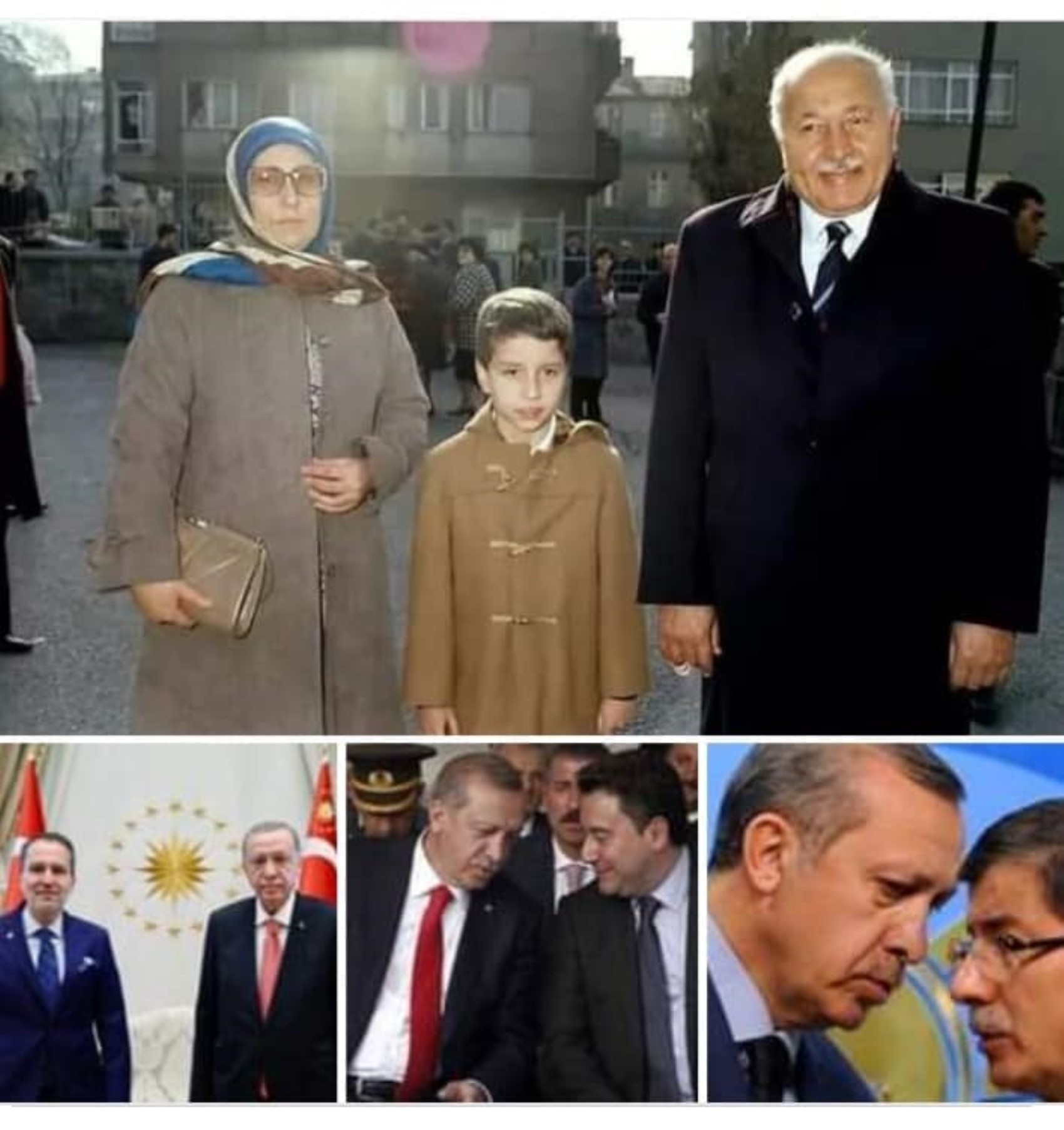
WHAT IS THE IDEOLOGY OF NEW WELFARE?
The YRP does not actually have a fundamental problem with the system of exploitation. In the ancient Just Order (Adil Düzen) argument, justice actually includes a class society. In Islamist thought, the only principle that binds the "ulu'l-amr" (those in authority) is piety. At the root of the YRP's objection to the AKP is the way green capital is integrated into international capital. The YRP's place on the political thought scale is the far right. Its dominant ideological characteristic is ummah-ism.
At the discourse level, it is anti-capitalist, anti-imperialist, and anti-Zionist. What the real equivalent of this discourse is can only be understood through the practice of power. I think that the New Welfare is not an anti-capitalist party, but an anti-Semitic party against Jewish capital.
In my opinion, if the gilding of this party is scraped a little, medieval mercantilism will emerge from underneath. And this is nothing other than primitive merchant capitalism.
CAN NEW WELFARE BE AN OPTION?
Now let's dwell on some possibilities. The AKP was parachuted into power by transatlantic forces in the 2002 elections, replacing the rotten center-right politics. As some Islamist writers have confessed. The main motive of this project was to destroy the Kemalist institutional design in Turkey. The real target of the project was to disable the public-statist-civil-military-administrative-judicial structure and elite that resisted global capital.
The AKP was supported by international capital not because it was Islamist, but because it was the most functional political apparatus to carry out this task.
For this reason, it is not possible for the New Welfare to be released into the market for the post-Erdoğan era with similar motives. The YRP's Islamism is not a liquid Islamism like the AKP's. It is a rigid Islamism with hard contours.
The goal of the mass gathered around Fatih Erbakan can be summarized as follows: to curse the AKP as a party that betrayed the National View and to open a large gap in the voter base through the economic policies implemented. This will create trauma for the AKP elites and accelerate the party's dissolution process. If this threshold is also crossed, a wide field will emerge regarding candidacy for power.
I am sure that Fatih Erbakan will want to create a ground for reckoning over the myth of the founding leader Necmettin Erbakan on this issue. This is the soft underbelly of the Erdoğan movement from an ideological perspective.
Even if this projection I foresee comes true, Dr. Erbakan's YRP will not be supported by finance capital as a substitute party for the AKP. There is no shirt for the YRP to take off. For the reasons I have put forward above, its coming to power will not receive support from the West. The YRP may increase the division within Islamism.
WHAT IS THE LATEST SITUATION?
As a result, it was seen in the last local government elections that there is an internal challenge to the AKP government from an ideologically related party. The signs of this have been seen. The 6.9% received by the New Welfare—even if it seems like a small vote share—is important. The YRP can widen the gap it opened in the AKP wall. The situation may change in the coming times according to the political conjuncture and the general economic trend. I am of the opinion that the situation will change in favor of the YRP.
In the meantime, let us not forget the fact that 4/5 of the majority in parliament consists of parties other than the CHP. The AKP, even if it has fundamental objections to it—in the new constitution debate—may try to make the opposition Islamist parties partners in new moves toward the regime. It should not be forgotten that there is a historical texture similarity with these parties.
As can be seen, the situation is clear. Every political party has its own calculations.
WHAT CAN THE GOVERNMENT DO?
I see the latest situation as follows: With this structure, the government has lost the power/ability to make a balance adjustment to the economy. It will strive to keep the agenda busy with methods of distraction and buying time, such as a new constitution and softening.
In the meantime, the DEM Party can be put into the dilemma of reconciliation with the government through heavy penalties; it can be drawn to the ground of negotiation. The DEM is a party suitable for this. The government can force its 3/5 chance for a new constitution/constitutional amendment by including the Islamist opposition segment in this as well. This is the number within parliament required for a referendum.
Can the opposition Islamist parties be included in this game? My answer to the question is: Yes, on the condition that they expand their own maneuvering space in the government's game.
Would you like to get notifications about new developments and save news?
- NotificationsNew developments and breaking news
- SaveNews is stored in the app
Most Read
Statement from Nihat Zeybekci on the fund investigation
New 75,000-seat stadium plan for Fenerbahçe
Interpol and MIT tracking yields results in Izmir
ID convenience for KPSS candidates

2027 Budget: Taxes for the people, tax exemptions for capital

The Çanakkale robbery -1- How was the Troy treasure smuggled out?

To whom and how was the Petition of Intellectuals submitted? Who accepted the petition?

The reality of Akkuyu and the longing for national nuclear power

Artificial intelligence and the new imperialism

Ministry investigation into unauthorized promotional messages