


Notes on Turkish socialists from the Armistice to the Republic (1918-1933)



THREE SOURCES OF TURKISH SOCIALISTS
In this article, the concepts of socialist and communist will be used synonymously. The reason is as follows: the time period covered by the article and the fact that the individuals mentioned were mostly affiliated with the TKP (Communist Party of Turkey). The TKP was a party affiliated with the Comintern. As is known, in Marxist literature, socialism is envisioned as a working-class state (dictatorship of the proletariat) that aims for a classless society (communism).
The article begins with the Armistice. The Armistice is the starting point of the developments following the Bolshevik revolution. The scope of the article ends in 1933. That is also the year Kliment Voroshilov was sent to Ankara to attend the 10th-anniversary celebrations of the Republic. This mission marks the peak of Turkish-Soviet relations. The concepts, institutions, and individuals mentioned in the article should be considered within this historical and political context.
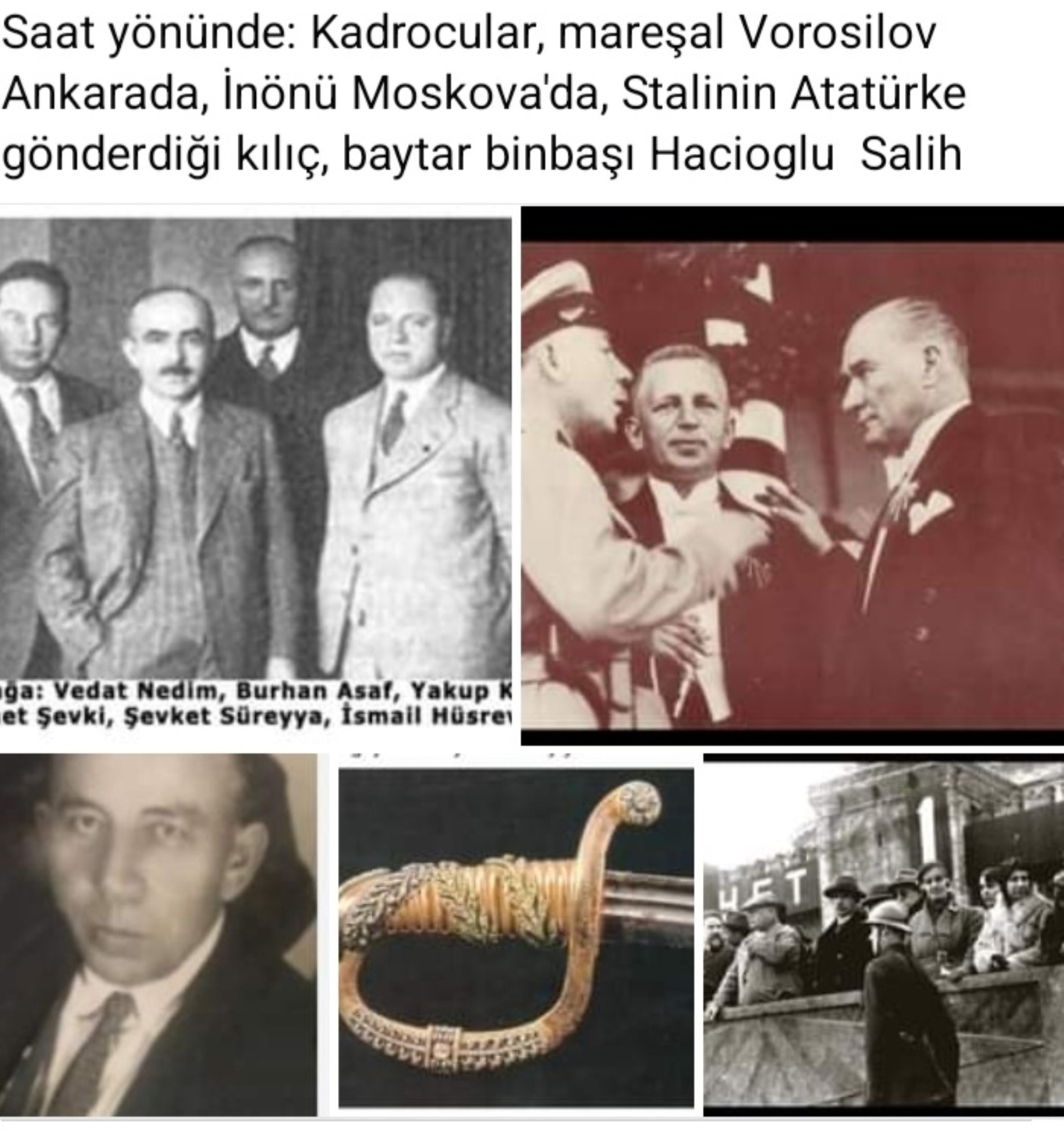
Now we can begin to address the subject: It can be said that there are three sources of Turkish socialism. The first is the source that comes directly from within the Bolshevik Revolution. This is the TKP and the Mustafa Suphi circle. The second consists of those who were in Germany during the Spartacist uprising. Most of these were students sent by the Committee of Union and Progress to receive education. Some of these students were undergraduates, while others were doctoral students. The third source is Dr. Şefik Hüsnü Değmer, who studied medicine in France. I should note, by the way, that I do not consider İştirakçi Hilmi Bey, who emerged in Istanbul during the Armistice, as a source.
First, let us consider the TKP circle led by Mustafa Suphi, whose name is mentioned in the Turkish socialist literature in connection with the 15s incident. Suphi and his friends had fled by sea from Sinop, where they were in exile before the First World War, to Russia. They were welcomed with interest by the Jadidist Crimean Tatars—the reformists. When the First World War broke out, the Tsarist Russian Government detained these political refugees. They were kept in camps as citizens of an enemy country.
It would be appropriate to talk a little about Mustafa Suphi's identity here. Suphi had received a good education at Galatasaray High School and in France. In the early period of his intellectual life, he was a Turkist and a Unionist. He clashed with the Unionist leaders and moved into opposition. He was among those exiled to Sinop after the assassination of Mahmut Şevket Pasha. In Russia, where he went with dissident, reformist Turkist ideas, he was influenced by the great transformation the country was undergoing. He joined the Bolshevik ranks.
During the civil war, he took his place on the side of the Bolsheviks. He was the representative of Turkish communists at the Comintern and the Congress of the Peoples of the East in Baku. The Communist Party of Turkey, which he led, was founded in Baku in September 1920. Let us recall that representatives from the Anatolian Government had also been sent to the Baku congress.
The circle in Anatolia that was in ideological and practical cooperation with the TKP was the People's Communist Party of Turkey (THİF). THİF was a circle in Ankara with complex connections, including members of parliament. These connections were established through the Baku TKP, the Green Army, and Çerkes Ethem. It is useful to remember that Ethem was the commander of the Kuvayı Seyyare. Kuvayı Seyyare means an irregular guerrilla force. This means a political focus with over 2,000 armed men.
THİF had also succeeded in getting Tokat deputy Nazım Bey elected as Minister of the Interior—before the Law on Candidacy. This process carried the potential to take away the power base of TBMM (Grand National Assembly of Turkey) Speaker Mustafa Kemal Pasha.
There was a period when the THİF circle was influential from the autumn of 1920 until the 1921 Ankara Independence Tribunal trials. There were those who were convicted of attempting to overthrow the government and those who were acquitted. The acquitted Bursa deputy was Sheikh Servet Efendi. This circle was in an interaction with the People's Group (Halk Zümresi), the Green Army, Çerkes Ethem, Arif Oruç, and the Seyyare-i Yeni Dünya newspaper, the boundaries and content of which were not entirely clear.
This circle, which blew winds of socialism in Ankara, also included figures such as Veterinary Major Hacıoğlu Salih, Şerif Manatov, and Ziynetullah Nişurevan. It would be correct to associate these names with the Baku TKP in terms of ideological color.
This circle, which was on the line of the Bolshevik Revolution, fell silent after the enactment of the 1921 Law of Fundamental Organization (Teşkilatı Esasiye Kanunu), the decisions of the Ankara Independence Tribunal, and the tragedy that occurred off the coast of Sürmene, Trabzon.
Thus, the attempt of Turkish communists to come to power in Anatolia and to Bolshevize the bourgeois democratic character of the revolution through permanent revolution failed.
TURKISH SPARTACISTS
The second source of Turkish socialism is the leftist student group under the influence of the Spartacist movement. They returned to Istanbul when the Armistice was signed. Some stayed in Istanbul and attempted to form a political party with Dr. Değmer. Others wanted to cross into Anatolia via İnebolu. Some of these names were accepted. Some were rejected.
Spartacists—as is known—are German Marxists. Taking courage from the Bolshevik revolution, they attempted to carry out a German revolution by taking advantage of the chaotic environment of defeated Germany. The Spartacist movement, including their leaders Karl Liebknecht and Rosa Luxemburg, was suppressed in a bloody manner.
Turkish students sent to Germany had also witnessed these events. Among them were Vedat Nedim Tör, Burhan Asaf Belge, Nafi Atuf Kansu, Mehmet Eti, and the painter Namık İsmail. These figures returned to Istanbul after the war ended on the Gülcemal Steamer, which departed from Hamburg. While some of them were about to cross into Anatolia via İnebolu, they encountered two young men: Vala Nurettin and Nazım Hikmet. Many of these names would later join the Kemalist elite, and even take part in the revolution and party cadres.
UNIVERSITY STUDENTS IN MOSCOW: AYDEMİR, VALA, NAZIM
In the winter of 1921, Nazım Hikmet and Vala Nurettin, who were in their 20s and wanted to cross into Anatolia, met the Spartacists in İnebolu. While the young men were waiting for Ankara's approval together, they found themselves in an environment where ideas of a classless society and a world without exploitation were discussed. They were very influenced by these thoughts.
When they reached Ankara, they were appointed as teachers to Bolu through the mediation of İsmail Fazıl Pasha (Ali Fuat Cebesoy's father) and Hamdullah Suphi Bey. They were presented to Mustafa Kemal Pasha in the Assembly. Perhaps they might have also listened to Şerif Manatov's Ankara Conferences.
Due to the conservative environment in Bolu and the influence of the Marxist criminal judge Ziya Bey they encountered, they decided to go to Russia. The duo crossed into the Caucasus via Zonguldak, Trabzon, and Batum. After Tiflis, their destination would be Baku. Nazım and Vala Nurettin met Şevket Süreyya Aydemir there. Aydemir was someone who had gone from Edirne to Azerbaijan as a teacher with Turkist-Turanist ideas. When the Red Army descended into the Caucasus, the conditions changed completely. Just like Mustafa Suphi, Şevket Süreyya discovered another world: he became a socialist teacher in pursuit of the ideal of a classless society. The bond of the Vala-Nazım-Şevket Süreyya trio dates back to that date.
The young people, taking Şevket Süreyya's wife Leman among them, established a Social Family. Although there were resentments, their friendship always continued. In an environment where the Civil War and famine continued to have scorching dimensions, they went to Moscow to study at KUTV (Communist University of the Toilers of the East). It was Ahmet Cevat Emre who enabled their admission to the university. Ahmet Cevat had previously found a job at the Turcology chair and gone to Moscow. I think with the reference of Sultan Galiev.
This small communist group, who believed in a classless society, arrived in Moscow after a long and arduous journey. They were admitted to KUTV. This university would later become a higher education institution where all Turkish Marxists were educated. İsmail Bilen, Zeki Baştımar, Nail Vahdeti Çakırhan, Nizamettin Nazif Tepedelenlioğlu, İsmail Hüsrev Tökin, and many other figures were educated at this university. The main purpose of the university was to train the cadres of the World Revolution. Students from everywhere, from China to India, the USA, and Africa, were trained with the ideal of being able to say, "everywhere, in everything, all together, except for the lover's cheek," in a classless, exploitation-free world. Names like Ho Chi Minh, Roy, and Nikolaos Zachariadis had also passed through there. Turkish students, upon completing their education (in accordance with the Comintern decision), would be sent to their own countries; as trained TKP members, they would serve the revolution.
These revolutionary cadres of the TKP went through the training of Sultan Galiev, Trotsky, and other revolutionary leaders at the University of the Toilers of the East. The training continued as a series of seminars. The program was quite loose. Every teacher who came taught what they knew. Nazım was studying from the lecture notes of Şevket Süreyya and Vala. Şevket Süreyya was the most hardworking in the class. In the period when the first signs of the Stalin-Trotsky conflict appeared (Lenin had not yet died), we understand from Vala's memoirs how Vala and Nazım were influenced by Trotsky as two young communist students.
Meanwhile, the THİF members, who were released with the 1921 amnesty, attempted to revive the party in the summer of 1922, taking advantage of the conjuncture where relations with the Soviets were very good. After a temporary period of tolerance, party activities were banned by the Rauf Orbay government.
I must immediately state that the official policy of the Soviets towards the Grand National Assembly of Turkey government was to appear unaware of the activities of the THİF and TKP cadres. While relations between the Soviet Government and the TBMM government were developing, the activities of the TKP were mutually ignored. Finally, the Comintern decided on the return of the young Turkish communists, including Nazım and Şevket Süreyya, with the belief that they had matured enough. Vala had returned earlier with a sudden decision. The young people returned to Istanbul via Odessa in the autumn of 1924. Their goal was to organize the TKP within the working class. They would work with Dr. Şefik Hüsnü Değmer, who had now become attached to Comintern ideals in Istanbul.
DR. ŞEFİK HÜSNÜ DEĞMER: TKP GENERAL SECRETARY
Doctor Şefik Hüsnü is a name who led the TKP for a long time. As a pasha's son—against his father's will—he studied basic sciences and medicine in France. He became a doctor.
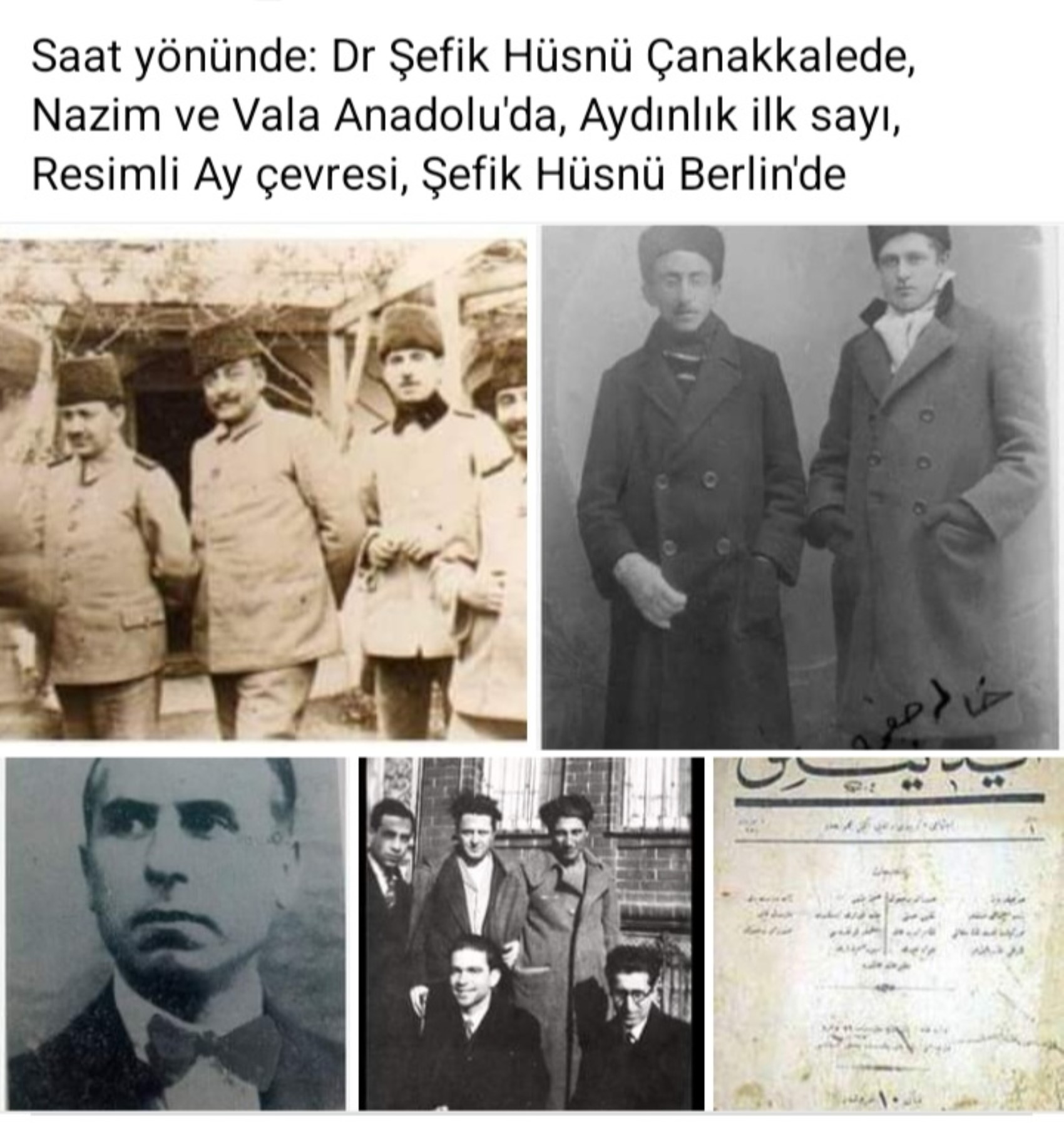
During his student years, he had come to know the French socialists on the Second International line. He was especially fond of Jean Jaures. Değmer had married a Polish Jew who was a French citizen (Leokadya Sterniaka). During the First World War, he was conscripted and served as a military doctor on the Gallipoli Front.
During the Armistice, he founded the Workers' and Peasants' Socialist Party of Turkey together with the Turkish Spartacists who returned from Germany. After the establishment of the Comintern, he joined the ranks of the Communists in the great rupture that occurred. The Comintern is the Third International. The parties affiliated with the Second International are the Social Democratic and Socialist Parties of Europe. This tradition still continues today.
Şefik Hüsnü is one of those who attended the first congress of the French Communist Party. Ho Chi Minh was also at that Congress. When the 1920 Baku TKP and the People's Communist Party of Turkey were liquidated by the Ankara regime, the TKP leadership passed to Dr. Şefik Hüsnü.
This corresponds to the period when Nazım, Vala, and Şevket Süreyya returned from Russia. The famous Akaretler Congress would take place during this period.
Publications of Şefik Hüsnü's TKP, such as Aydınlık, Kurtuluş, and Orak Çekiç, had the opportunity to be published in an environment where relative freedom was experienced in Istanbul in the first years of the Republican Revolution. One of the reasons for this was the positive atmosphere created by the 1921 Moscow and 1925 Friendship and Cooperation agreements. The Soviets were acting as if they had no official connection with the TKP against the Turkish Government. The penalties given were not very heavy until the 1938 Navy and Military Academy trials.
After 1925, the CPSU saw Doctor Şefik Hüsnü as the interlocutor as the TKP General Secretary. After receiving a one-and-a-half-year prison sentence in the 1927 arrests and being released in 1929, Dr. Şefik Hüsnü's contact with Moscow seems to have increased. He found a way and crossed into Russia.
In the 30s, Dr. Değmer, who was in Berlin with Comintern Europe official Georgi Dimitrov, was among those arrested after Hitler came to power and the Reichstag fire.
Perhaps because he was a Turkish citizen, he was released 6 months later—by the Hitler regime. Doctor Şefik Hüsnü, who returned to Turkey before the World War (1939), was called up for military service once again as a medical captain during the war years. Just like in the Gallipoli War. After this, the Reşat Fuat Baraner and İsmail Bilen era began in the TKP.
1925-1927 ARRESTS
The activities of Turkish communists were interrupted by the 1925 and 1927 arrests. The cadres, which were already limited in number, were completely pacified. After the second parliamentary elections and the ratification of Lausanne, and the registration of the new Turkish State, the regime's pursuit policy towards communists turned into light prison sentences. No heavy sentences were given in the 1925 arrests. Young Doctor Hikmet Kıvılcımlı was also in this group.
Meanwhile, Nazım was in İzmir during the operations against the TKP in Istanbul. He had been assigned to awaken the working class in İzmir. I should also say that there is a story of Nazım being bitten by a dog and hiding in a shack here. He is in fear of having rabies and being caught. He secretly returns to Istanbul. He is taken out of the Bosphorus by a boat from Moda by the TKP and his passage to Russia is ensured.
An interesting point is that it is said that Nazım's father also died because he was given rabies and tetanus vaccines together after a dog bite. Hikmet Bey is the manager of the Süreyya Pasha cinema. Let us also remember that his father, Hikmet Bey, was the son of the former governor of Aleppo and the Thessaloniki Consul. Nazım holds Süreyya Pasha responsible for his father's death and is convicted because of the poem "An experiment of the pen in the valley of satire" that he wrote against him.
After the 1927 arrests, Vedat Nedim (Tör) and Şevket Süreyya left the TKP to create the ideology of the Turkish revolution. Meanwhile, Nazım is in Russia. He applies to our Embassy to come to Turkey to benefit from the amnesty issued on the occasion of the entry into force of the Turkish Penal Code and the 5th anniversary of the republic (1928).
When the Turkish Embassy did not respond to his passport and visa requests for a long time, they entered Turkey from Hopa together with İsmail Bilen without a passport. They are arrested upon the denunciation of the villagers. Nazım has telegrams sent from here to some influential acquaintances in Ankara and his friend Vala, in the vein of "I have returned to my homeland, will you mediate for me?"
It is decided that the detainees in Hopa will be sent to Istanbul by steamer and under guard. The process ends with Nazım and Bilen (Marat İsmail) being taken to Sultanahmet prison by being passed through the public while chained on the Galata Bridge. The amnesty law enacted becomes decisive in this case. In 1928, the republican judiciary convicts them only for violating the Passport Law. Since they had already remained in prison long enough, they are released. Thus, Nazım's new period in Turkey, which would last until 1951, would begin.
In summary, as of 1928, Turkish communists had been disciplined and silenced. Some of them consisted of cadres who had joined Kemalism. After this date, there were those who went to the Soviets in various ways. Nazım rejected the offer to join the Kemalist cadres and started working at Zekeriya Sertel's Resimli Ay magazine and later at İhsan İpekçi's film company.
His first poems would begin to be published in this period and would attract great attention from the public. He met Nail Vahdeti (Çakırhan), Sabahattin Ali, and Emin Türker (Eliçin) in this environment. Meanwhile, the early period of the conflict between Stalin and Trotsky in the Soviets had ended, and Trotsky had been sent into exile in Alma-Ata.
GENERAL EVALUATION
As can be seen, the cadre source of Turkish communists consisted of figures who were mostly educated in France or Germany. These cadres were successful, intelligent, young people loyal to their countries who belonged to Ottoman elite families in terms of class or were sent abroad with government scholarships.
Attempts to Bolshevize the National Liberation movement faded with the decisions of the Ankara Independence Tribunal and the strengthening of the Kemalist leadership. The Soviets ignored the policy implemented by the Turkish Government towards communist cadres.
Until the 1927 arrests, the TKP—essentially—consisted of partisans based in Istanbul, most of whom were educated at the Moscow University of the Toilers of the East and sent to Turkey by Comintern decisions. After 1927, these cadres dispersed.
Some of them embarked on the job of being the left wing of the Kemalist revolution. İsmail Hüsrev Tökin, Şevket Süreyya Aydemir, Vedat Nedim Tör, and Burhan Asaf Belge became writers for the Kadro Magazine. (1932-1934) Others crossed into Soviet Russia. After this, the TKP turned into a dependent party managed from Berlin, Leipzig, and Moscow under the orbit of the CPSU.
After the power struggle after 1924 (after Lenin's death) was won by Stalin, there were also Turkish communists who got their share of the great purge operations: For example, Veterinary Major Hacıoğlu Salih.
Meanwhile, as for the attitude of Turkish communists towards Trotsky, who lost the power struggle against Stalin, when the founder of the Red Army came to Turkey as an exile—in 1929—there was no Turkish communist who could be close to him.
When Vala Nurettin Bey asked him a question in Russian with a sympathy remaining from his student years at KUTV at the press conference Trotsky held at the Tokatlıyan Hotel in the very early period of his arrival in Istanbul, he was scolded by being told, "No one here knows Russian, ask your question in French, English, or German." Let us also remember that during this period, Nazım was busy publishing a brochure praising Stalin's Russia and Soviet democracy.
The situation of Turkish communists cannot be thought of independently of Turkish-Soviet relations. After the hesitations between the TBMM Government and the Bolsheviks were resolved, Ali Fuat Pasha was sent to Moscow as ambassador. This was a very important stage. The Russians also sent Angarski, Frunze, and Aralov to Ankara in turn. In the early republican period, the Russian ambassador in Ankara was Yakov Zakharovich Suritz.
Three concrete events are sufficient to explain the content of Turkish-Soviet relations. The first is that Trotsky was sent to Turkey and not to another country. The second is that after Suritz, Stalin sent Lev Karakhan to Ankara as ambassador. Karakhan is an important name of the Soviet Revolution. Let us not forget that he was Stalin's deputy People's Commissar for Foreign Affairs and responsible for Eastern affairs. The last one is that the Soviets participated in the Republic's 10th-anniversary celebrations with a large delegation headed by Marshal Voroshilov and were hosted in the honorary box. Finally, we know that Stalin sent a sword covered with emeralds, diamonds, and brilliants as a gift to the President of Turkey—with Voroshilov. The presence of the Republic of Turkey emblems on one side of the sword's hilt and hammer and sickle emblems on the other points to the friendly relations between the two states. In such an environment, it can be better understood that the TKP was only one of many parties under Russia's protection.
Would you like to get notifications about new developments and save news?
- NotificationsNew developments and breaking news
- SaveNews is stored in the app
Most Read
Statement from Nihat Zeybekci on the fund investigation
New 75,000-seat stadium plan for Fenerbahçe
Interpol and MIT tracking yields results in Izmir
ID convenience for KPSS candidates

2027 Budget: Taxes for the people, tax exemptions for capital
To whom and how was the Petition of Intellectuals submitted? Who accepted the petition?

The Çanakkale robbery -1- How was the Troy treasure smuggled out?
The reality of Akkuyu and the longing for national nuclear power

Artificial intelligence and the new imperialism

Ministry investigation into unauthorized promotional messages