


Queen Elizabeth II’s accession (1952) and coronation (1953)



THE INTEREST SHOWN IN ELIZABETH AND SORAYA IN TURKEY
From the date of her accession to the throne until her passing, Elizabeth II was followed with interest in our country.
It would be accurate to mention two dynasties that were the most talked about in the public opinion of 1960s Turkey, a time when communication was limited to daily newspapers, magazines, and the radio. One was the United Kingdom. The other was Iran.
Queen Elizabeth was followed with interest through her husband, children, and travels.
The misfortune (childlessness) and dazzling beauty of Soraya, the first wife of the Shah of Iran, were frequently discussed. (Soraya Esfandiary-Bakhtiary) Queen Soraya was one of the most popular topics of conversation in neighborhood laments and discussions about fate. The fact that God did not grant her a child was a common source of sorrow.
When the Shah of Iran, Pahlavi, came to Turkey, the Democrat Party was in power. (Date of visit: 1956) The President was Celal Bayar. The interest shown in Soraya was of immense proportions. Everyone, including Bayar, could not take their eyes off Soraya. For the story of Soraya being taken to a fortune-teller in Yalova on the yacht Savarona and her search for a cure for her troubles, I recommend my article titled “Who used the Savarona the most?”. Such are the stories of dynasties in the Orient.
But one must say other things for the “Empire on which the sun never sets.” The Queen of England (United Kingdom, Britain), Elizabeth II, was not subjected to speculation like the Pahlavi dynasty. She was a symbol followed with admiration. Her lineage traced back to Queen Victoria, English and Scottish kings, Cerdic of Wessex, and Kenneth MacAlpin. Even Charlemagne was indirectly among her ancestors. Queen Elizabeth II belonged to the Hanover/Windsor dynasty.
ENGLAND AT THE END OF THE SECOND WORLD WAR
During the years of the Second World War, George VI sat on the English (United Kingdom) throne. The country was governed by Prime Minister Lord Winston Churchill. The government was a Conservative-Labour Party coalition.
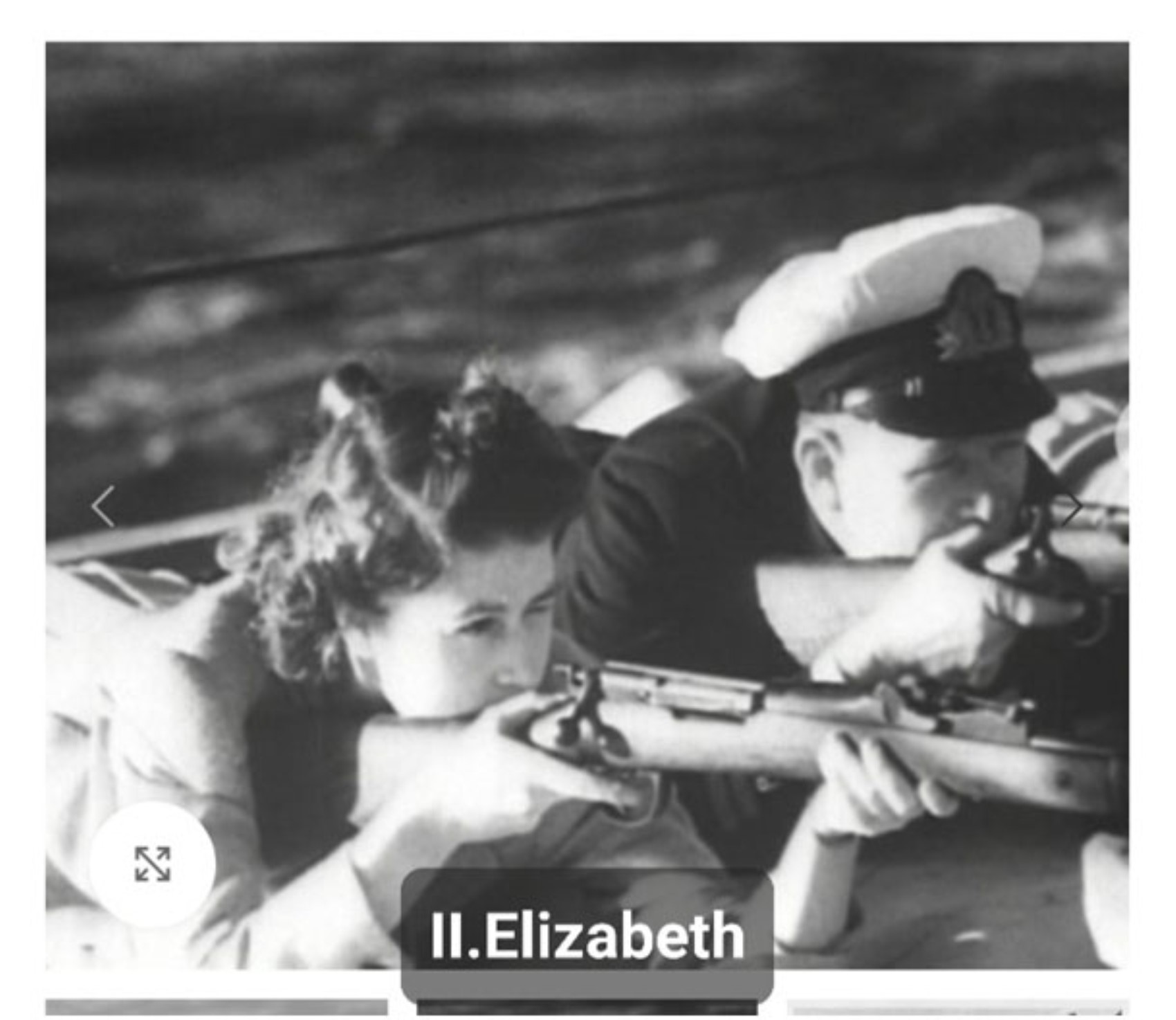
The British are a nation capable of forming a “national unity government” under extraordinary conditions. Elizabeth also served in the auxiliary services during the war years. She participated in the defense of Britain.
The anti-fascist front emerged victorious from the war. The greatest allies of this front were the governments of the USA, the United Kingdom, Soviet Russia, and the French Resistance front.
When the war ended, the leadership of the free world had passed to the USA. England had been under fascist aerial bombardment for four years. The “empire on which the sun never sets” of the Queen Victoria era had become a thing of the past.
However, British democracy remained in place. The Westminster model had emerged through a historical course of development. The British Isles were known as the cradle of parliamentarism. For this reason, its political institutions and customs aroused interest everywhere in the world.
Throughout history, great political conflicts had been experienced in Britain, and England, Scotland, Wales, and Ireland, each a separate kingdom, had united under the name of the United Kingdom. The country we refer to as England in daily usage is actually the United Kingdom.
A political consensus has formed on the islands over the centuries. But sensitivities regarding regional identities still persist: Scottish, Irish, or Welsh identities suddenly emerge.
In parallel with these developments, British democracy became established with the expansion of the powers of the House of Commons within the political system. An important step in this regard is known as the 1918 Lloyd George reforms. British democracy developed on the basis of the expansion of the general suffrage base. The most important result of this was the strengthening of the Labour Party.
However, the fundamental institution of the British political system is the monarch: The Crown or the Sovereign.
It was so in the past. It is so now. All political processes begin and end around their identity.
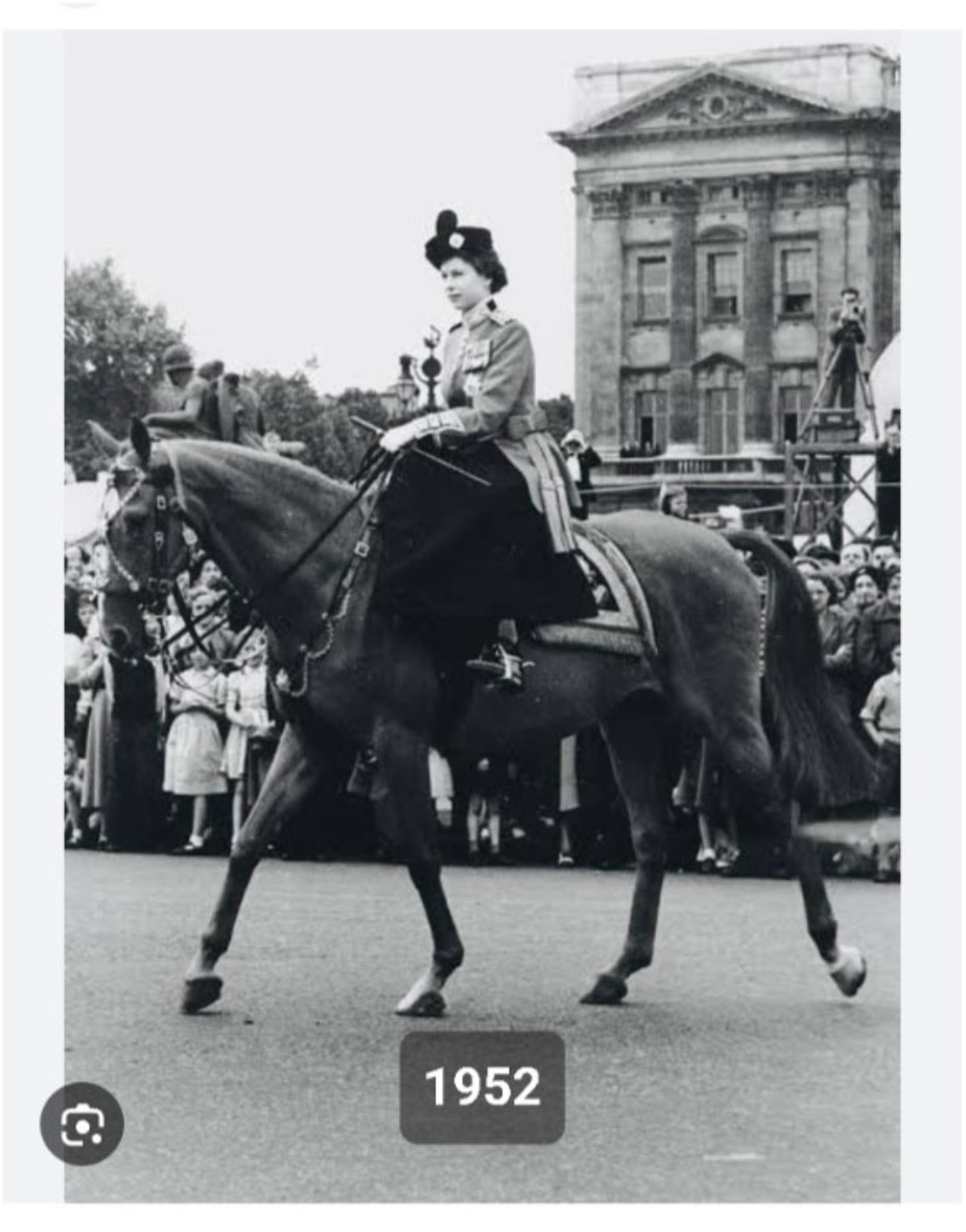 HOW DID ELIZABETH II ASCEND TO THE THRONE?
When George VI passed away at the age of 57 in 1952, Churchill was prime minister. The heir to the throne, Elizabeth, was in Kenya with her husband, Philip, Duke of Edinburgh, and her two children.
Elizabeth II was immediately proclaimed monarch (queen) as the heir to the throne.
The commission to proclaim the heir to the throne met before she returned. It was announced that the legitimate heir was Elizabeth: February 6, 1952.
There were procedures to be followed in this regard. Her father had become king due to the abdication of his elder brother, Edward VIII. (1936)
Edward made an abdication speech on the radio that plunged all of England into sorrow for the sake of his love. This speech became one of the most iconic moments of 20th-century history.
During his short reign, they came to Turkey with Wallis Simpson and were guests of President Atatürk. The couple is visible in pictures taken on the yacht Ertuğrul. After a while, the King abdicated.
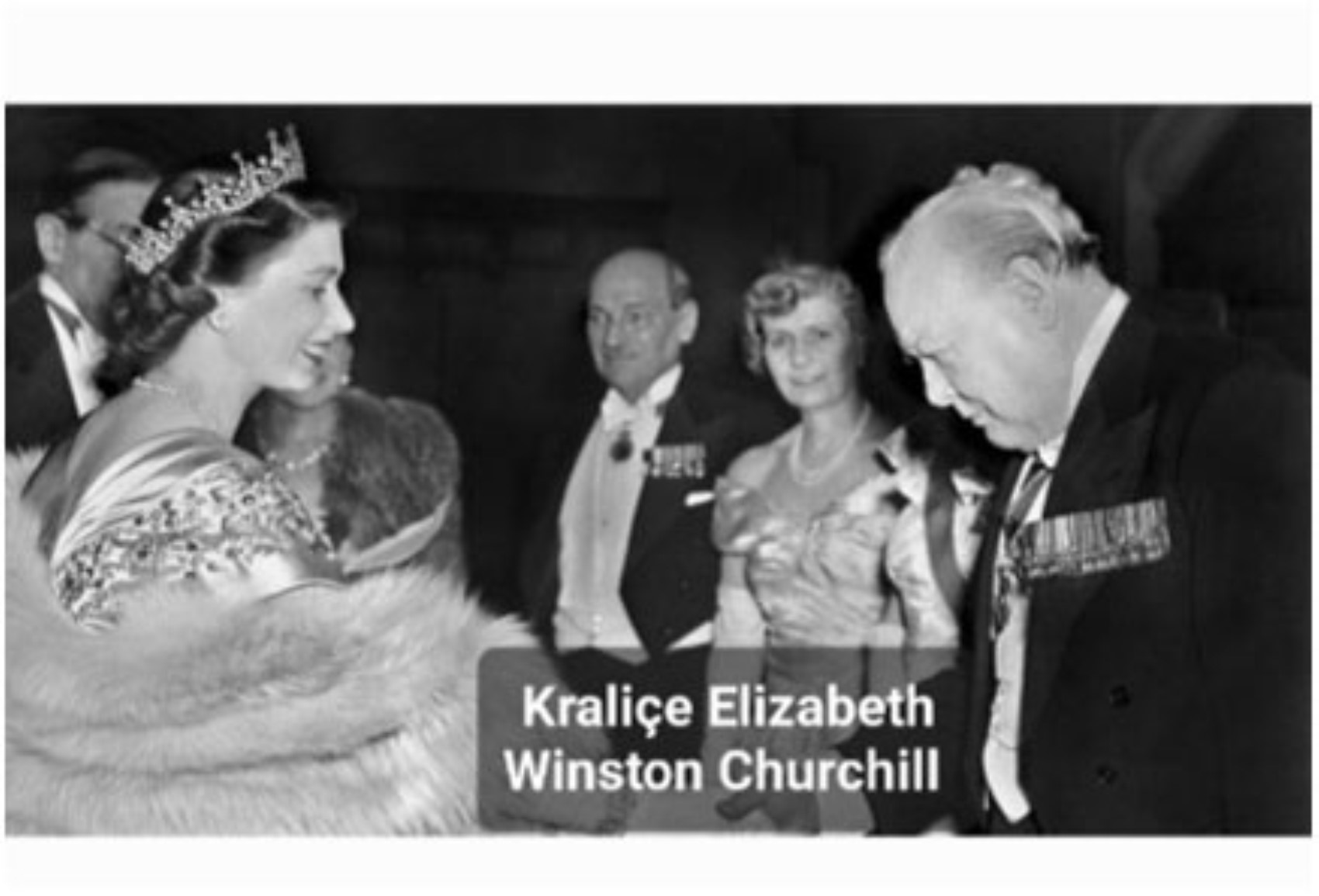
Elizabeth II’s father was on the throne during the Second World War years. Winston Churchill was also prime minister. After the war, the British voted for the Labour Party. The Conservatives fell from power. Churchill’s final premiership took place during the reign of Elizabeth II. (1951-1955)
WHAT IS THE ACCESSION COUNCIL?
The Accession Council is the body that approves the candidate who will ascend to the throne. Immediately after the death of the monarch, it meets (spontaneously) at St. James’s Palace. Privy Council members and important figures such as the Mayor of London are present. The accession is declared before parliament.
This is also a commitment. It includes guarantees such as allegiance to the Protestant church and respect for the Church of Scotland. These customs, which seem strange when viewed from today, are based on historical events for the British monarchy.
CORONATION CEREMONY (JUNE 2, 1953)
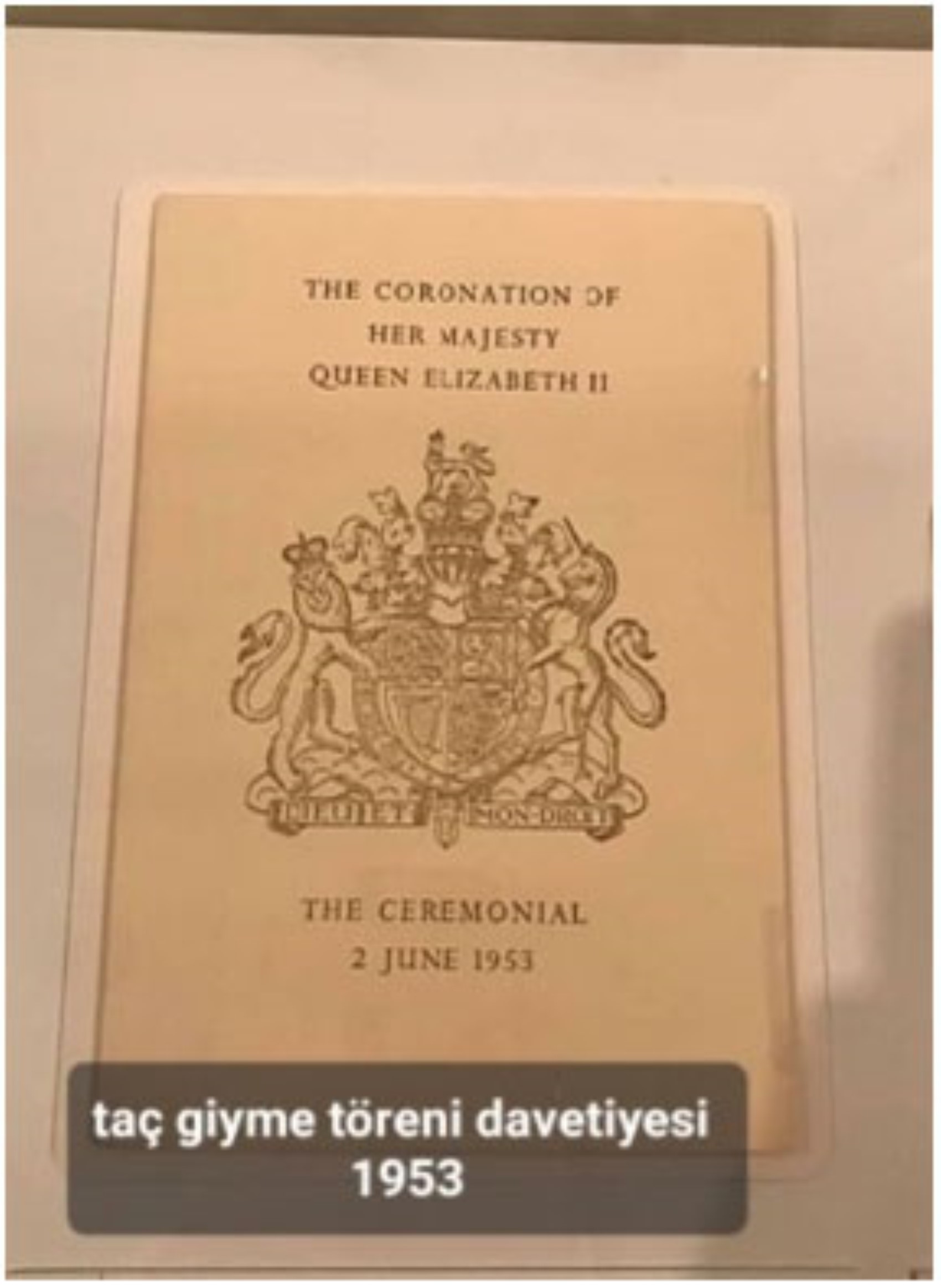
The British hold two ceremonies: accession to the throne and coronation. Elizabeth’s coronation ceremony was held on June 2, 1953.
George VI had died at the age of 57. (1895-1952) In British tradition, although the new monarch ascends to the throne, there is a mourning period of nearly a year for the deceased king. This period also allows for preparations to be made for the ceremony.
The British attach great importance to the coronation ceremony. The Queen takes an oath and is anointed.
The ceremony for Elizabeth was held at Westminster Abbey and was broadcast by the BBC. It was the first live TV broadcast in British history. It is said that 27 million people watched the ceremony. The previous coronation had been held in the same church for her father. (1937) However, the government had not wanted to share this sacred ceremony with the common people and had not permitted it to be broadcast on TV.
Children receiving treatment at a nearby children’s hospital were also considered. A live broadcast setup was installed in the hospital. The sick children watched the new queen’s coronation ceremony with joy. The name of the hospital: Great Ormond Street Hospital.
The coronation ceremony was also broadcast in France, Belgium, West Germany, the Netherlands, and Denmark. For a Europe that had overcome great traumas and suffered pains just ten years earlier, the broadcast of Elizabeth’s accession to the throne was an extraordinary psychotherapy.
Soldiers from the land, sea, and air forces were lined up along the route to Westminster, where the ceremony would take place. There were also other ceremonial units such as the Royal Guard regiment.
Members of other monarchies’ dynasties had been invited. Heads of state of countries governed by other regimes had also been called.
Some of the invited countries sent representatives at the government level, and some at the head of state level.
The Queen was placed in the Royal Coach, adorned with gold leaf. We can call this the State Carriage. The Royal Coach is also referred to as the “Royal State Coach.” It has been used since 1760. The first to use it was George III.
The Irish State Coach brought the Queen Mother, right behind Elizabeth.
The crown worn by the Queen carried the Koh-i-Noor diamond. Today, Charles III wears this crown at state ceremonies.
Wives or daughters of elite aristocratic families serve as ladies-in-waiting to the Queen. On the Queen’s shoulders is the “robe of state.” The robe of state is important for the British monarchy. It is always worn at coronation and state opening of parliament ceremonies. A velvet cape made of ermine fur is worn.
The “Household Cavalry” is present at the ceremony. A unit equivalent to our guard regiment. Its Ottoman equivalent is the Hassa Regiment. The origin of the unit dates back to 1660.
400 musicians took part in the ceremony, and Great Britain welcomed its new monarch with a 41-gun salute.
The finale of the ceremony takes place with the royal family greeting the public from the balcony of Buckingham Palace. 165 jets belonging to the British Air Force perform a flypast to salute the queen.
Meanwhile, the queen of Tonga, a small island in Polynesia, also participated in the ceremony with her own state carriage. The people of the Tonga islands are an indigenous people. The famous anti-communist and originator of the Marshall Plan idea, George G. Marshall, was also among the guests.
Meanwhile, Edward VIII, who abdicated in 1936, was also invited to the coronation ceremony, but since his wife was not of noble birth, only a single invitation was sent. Edward rejected the invitation. He did not attend the ceremony.
PROCEDURE AT THE CORONATION CEREMONY
The coronation ceremony for Elizabeth II was held at Westminster Abbey on June 2, 1953. However, it had been announced that she ascended to the throne on February 6, 1952. The coronation ceremony was held a year later; the time interval between the two ceremonies should be understood as a mourning period for the deceased king.
In Turkish-Mongol traditions, speed is essential. In the Ottoman Empire, all of the sultan’s sons were candidates for the throne. The prince who ascended to the throne would have all his brothers strangled. The peak example of this is Mehmed III. He based this action on the provision in the Fatih Kanunnamesi (Law Code of Mehmed the Conqueror) stating, “For the order of the world, your brother should be killed. Most scholars have also permitted it,” and the dynasty continued through him.
Meanwhile, there is one more point that should be noted. The Queen of England (United Kingdom) is also the Queen of Canada, Australia, South Africa, Pakistan, and Ceylon.
Joan Hassall had prepared Elizabeth’s ceremony invitation. The Queen’s costume (coronation gown) was sewn by Norman Hartnell. It featured symbols of all the countries she was sovereign over, including the Tudor rose.
Elizabeth II wore her grandmother Queen Victoria’s necklace at the coronation ceremony.
THE QUEEN’S OATHS
According to the Act of Union of 1707, the Queen swears to respect the Church of Scotland. (The Act of Union) This is a prerequisite for accession to the throne. The 1707 act unites the thrones of England and Scotland. It binds the owner of the throne to the Church of England. This has meant Lutheranism since George I.
After this, the Garter Principal King of Arms proclaims the new monarch. The Garter Principal is an institution that has existed since 1415.
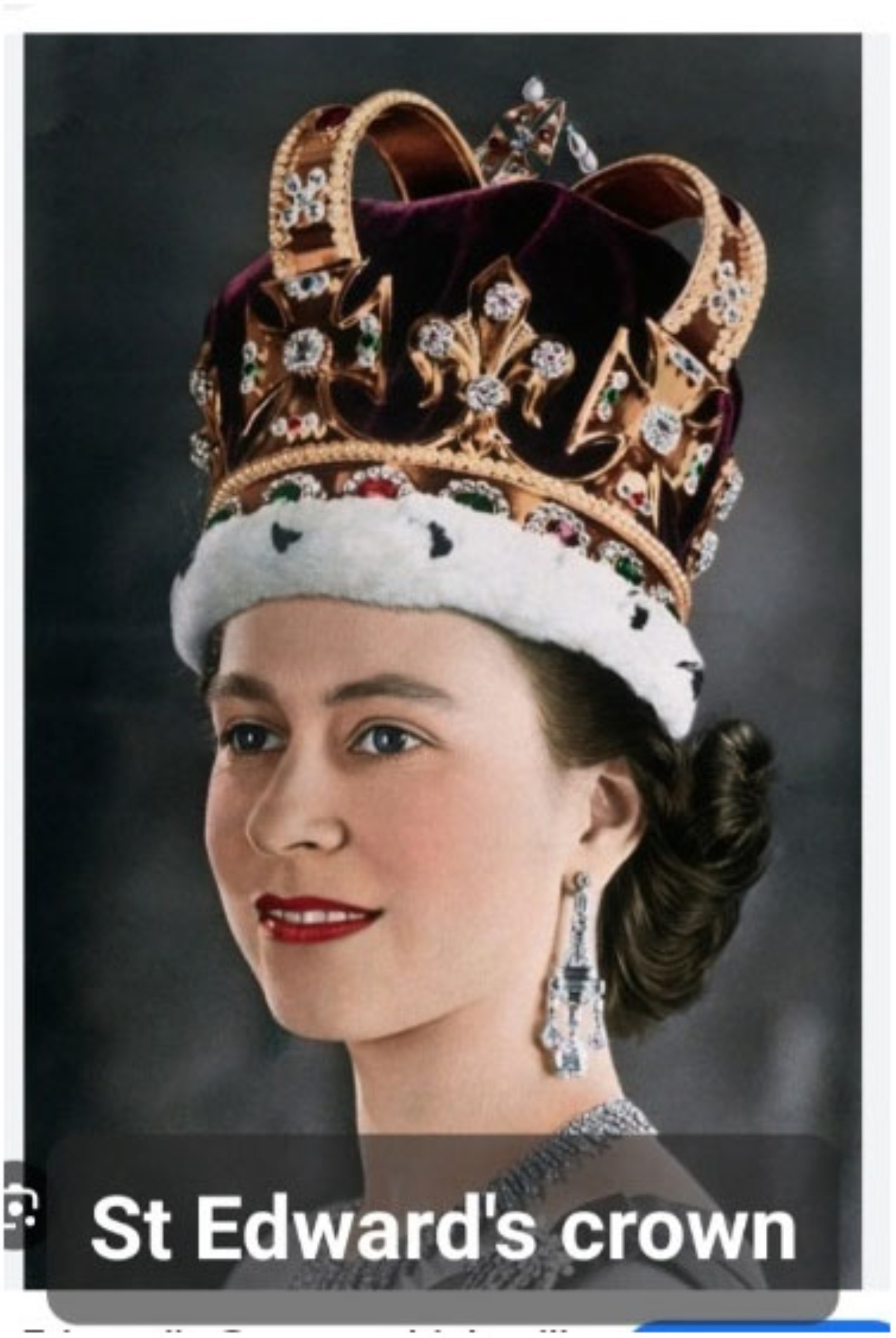
TWO IMPORTANT CROWNS OF THE BRITISH MONARCHY
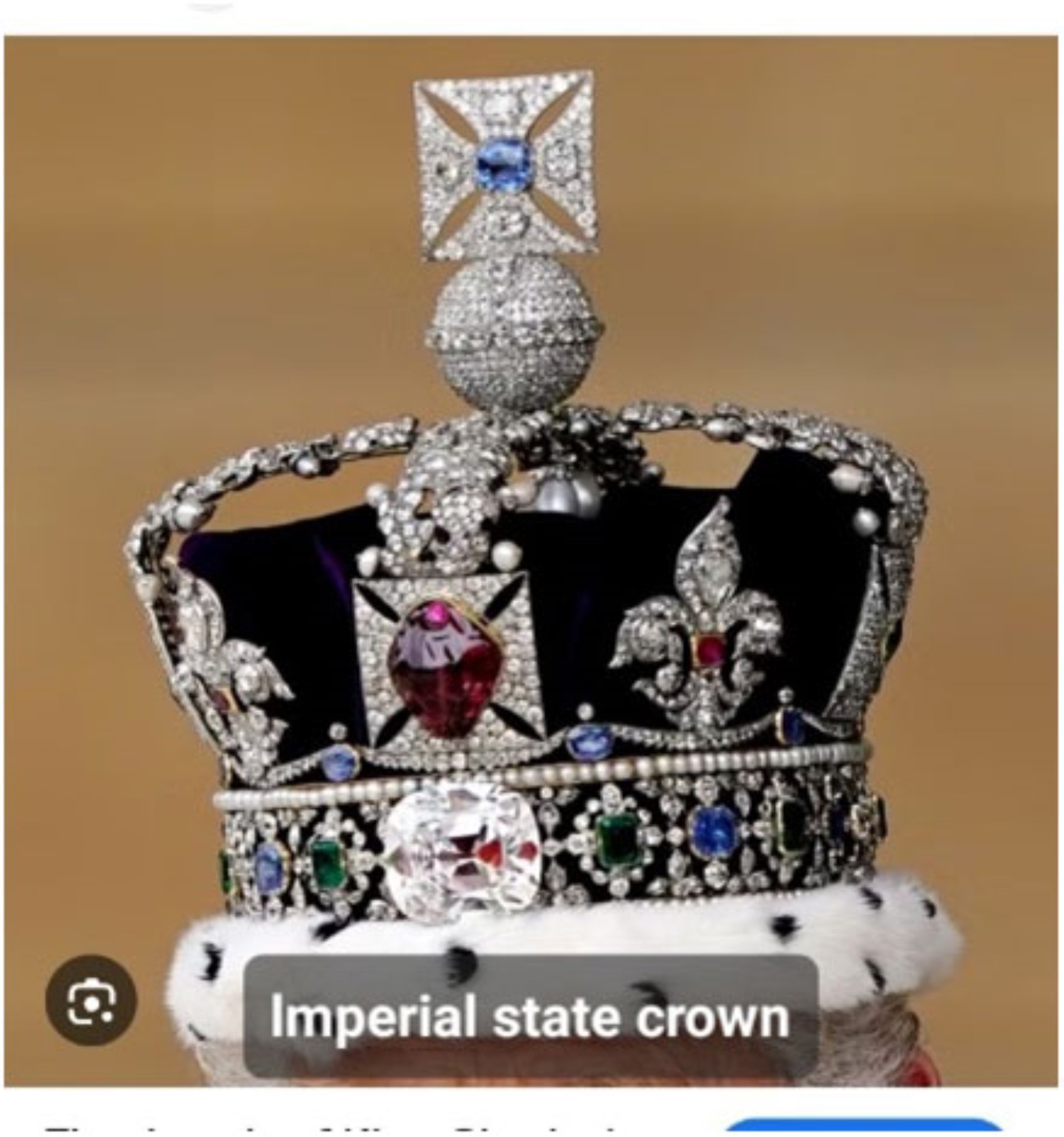
United Kingdom monarchs use one of two crowns at ceremonies. The first has been used since 1661. It is known as the St. Edward’s Crown. This crown was used at Queen Elizabeth’s ceremony.
The other is known as the Imperial State Crown. It was first used by Queen Victoria in 1838. It is mostly used at the state opening of parliament.
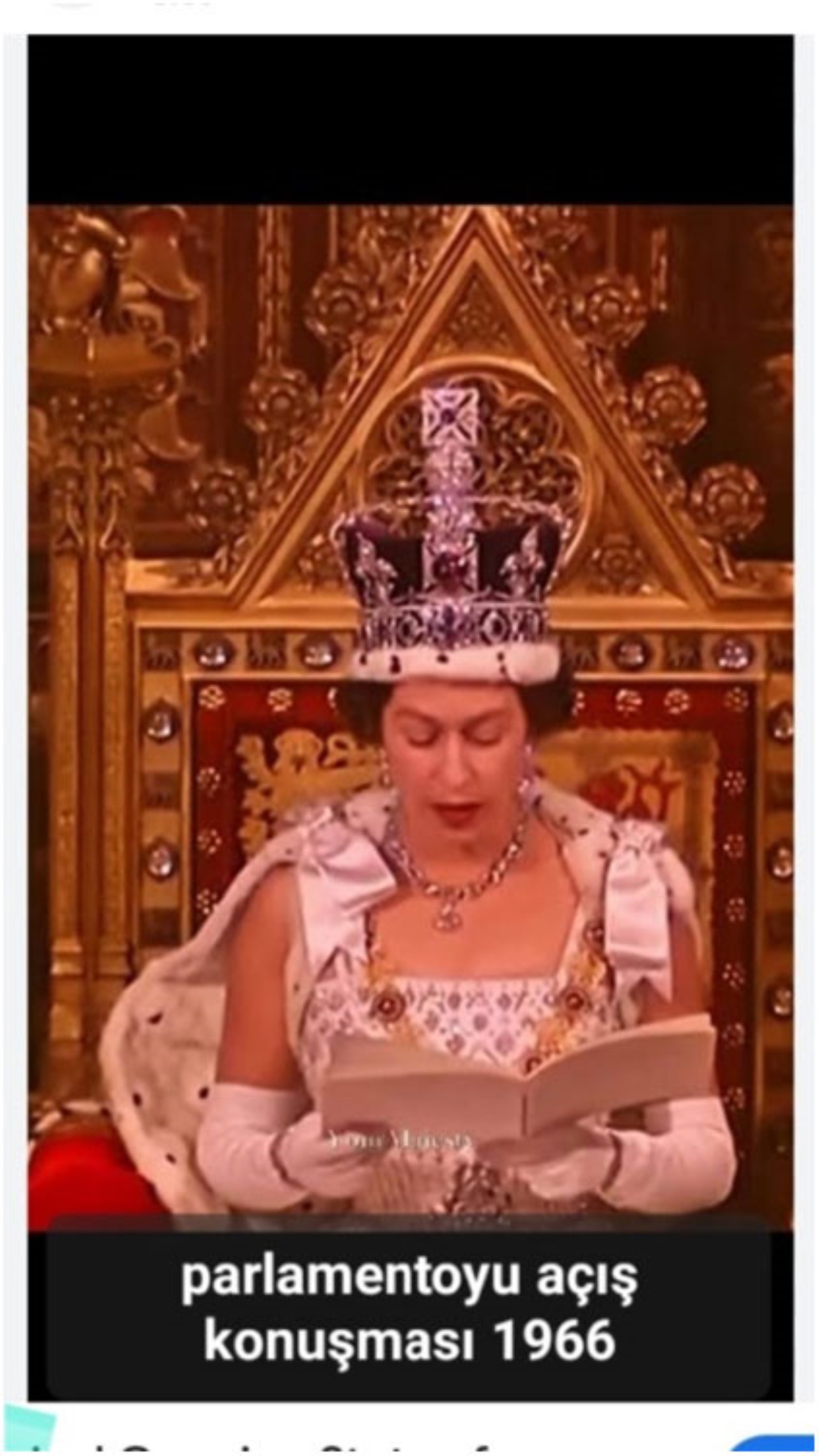
THE MEANING OF THE QUEEN’S SPEECH AT THE OPENING OF PARLIAMENT
This speech is a very important speech within the United Kingdom state system. It is the monarch’s speech to initiate the work of parliament. The speech has historical importance and meaning. With this speech, the monarch pledges to share the right of legislation with parliament. The speech that corresponds to this in our history is the “Nutk-u iftitahi” (Opening Speech).
Until this speech is made, parliament (House of Lords and House of Commons) cannot convene to begin legislative activity. There are traditions regarding this speech. The speech is made at the Palace of Westminster in early November. The monarch preferably wears the Imperial State Crown. She wears the robe of state. This garment is also known as the parliamentary robe.
Members of the House of Lords are present at the meeting in their Lordly attire. Members of the House of Commons come to the meeting in their daily clothes. This is a tradition related to the history of the development of British democracy.
Sovereignty, from that moment on, is shared between the monarch, the lords, and the elected members of the House of Commons.
THE INTEREST SHOWN IN ENGLAND IN TURKEY
Turkey had actually waged its National War of Independence against England. Other hostile states remained in the background. Even Greece, with whom we fought the Field Battle, is included in this. The reason: Greece was present in Anatolia as a subcontractor occupation force. At Lausanne, our main adversary was the United Kingdom government.
After the peace, our relations with England settled into a reasonable balance. Ambassadors were mutually appointed. The visit of Edward VIII to the Turkey of Kemal Atatürk aroused great interest.
Edward’s abdication also occupied the Turkish press for a long time.
In the 1950s, the military and political leadership of the free world had passed into the hands of the USA. However, the tabloid press was more concerned with the British monarchy.
Elizabeth II’s accession to the throne in 1952 and the coronation ceremony held in 1953 were also followed with great interest in Turkey.
Prime Minister Adnan Menderes was sent to represent Turkey at the coronation ceremony. President Bayar could have gone personally. He did not. He was more focused on the USA.
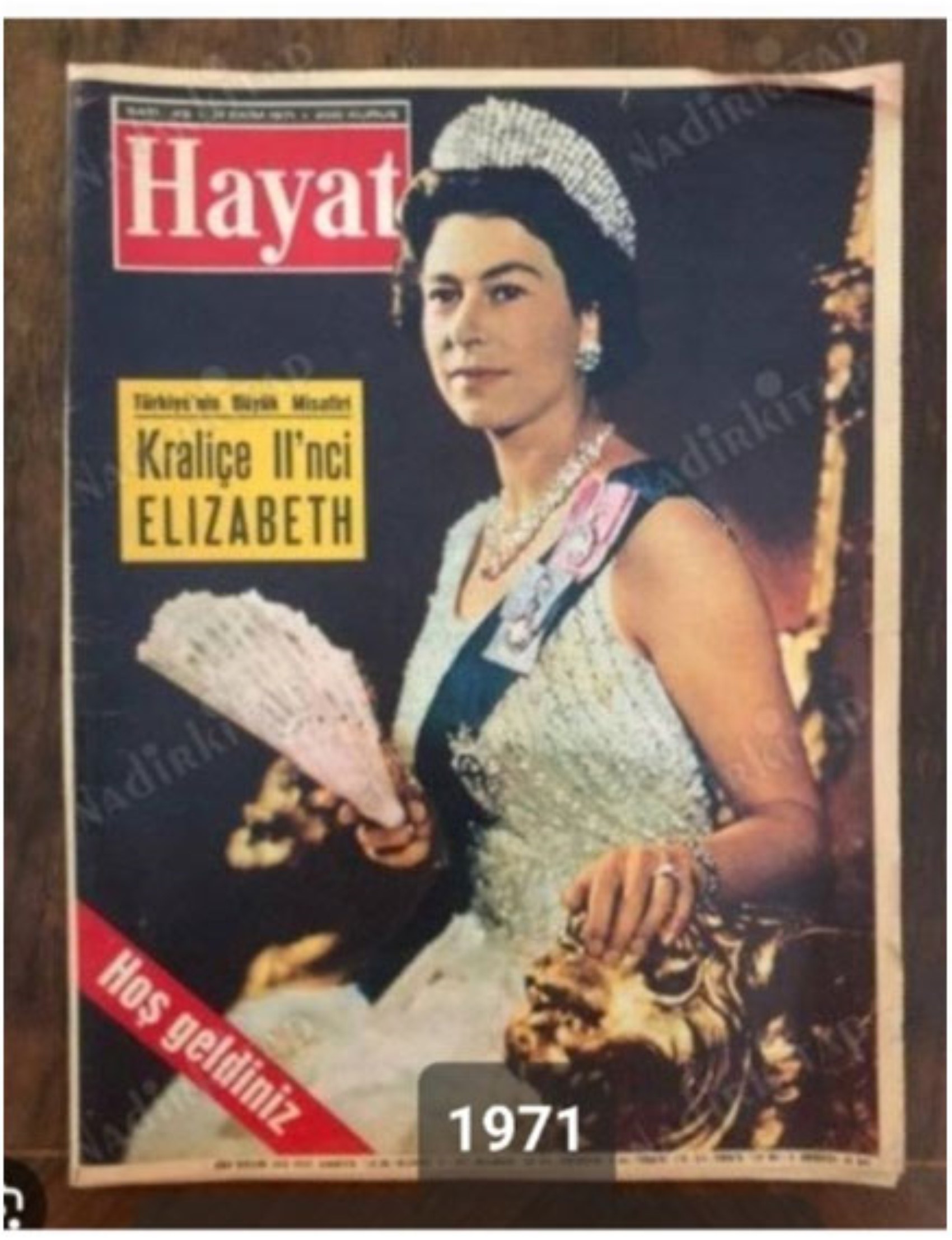
After Hayat magazine began its publication life, the queen and the dynasty began to be followed with more interest. (1956)
The plane crash Menderes had in London in 1959 caused attention to turn to England once again. The Queen and her government were closely concerned with the crash victims. Menderes and the Ministry of Foreign Affairs delegation had come to London to sign the agreement that would establish the Republic of Cyprus. Due to dense fog, the plane crashed; while Menderes survived with minor scratches, 14 people lost their lives. The accident remained on the agenda in the British and Turkish press for a long time. The farm-owning family who found Menderes was invited to Turkey and hosted.
Turkey’s official interest had turned more towards the USA. President Bayar being invited to the USA and speaking in Congress was considered very important. (1954) In 1959, President Eisenhower came to Turkey. He was welcomed with tremendous festivities.
After the Second World War, there was no contact between Turkey and England at the level of heads of state.
THE QUEEN’S VISITS TO TURKEY
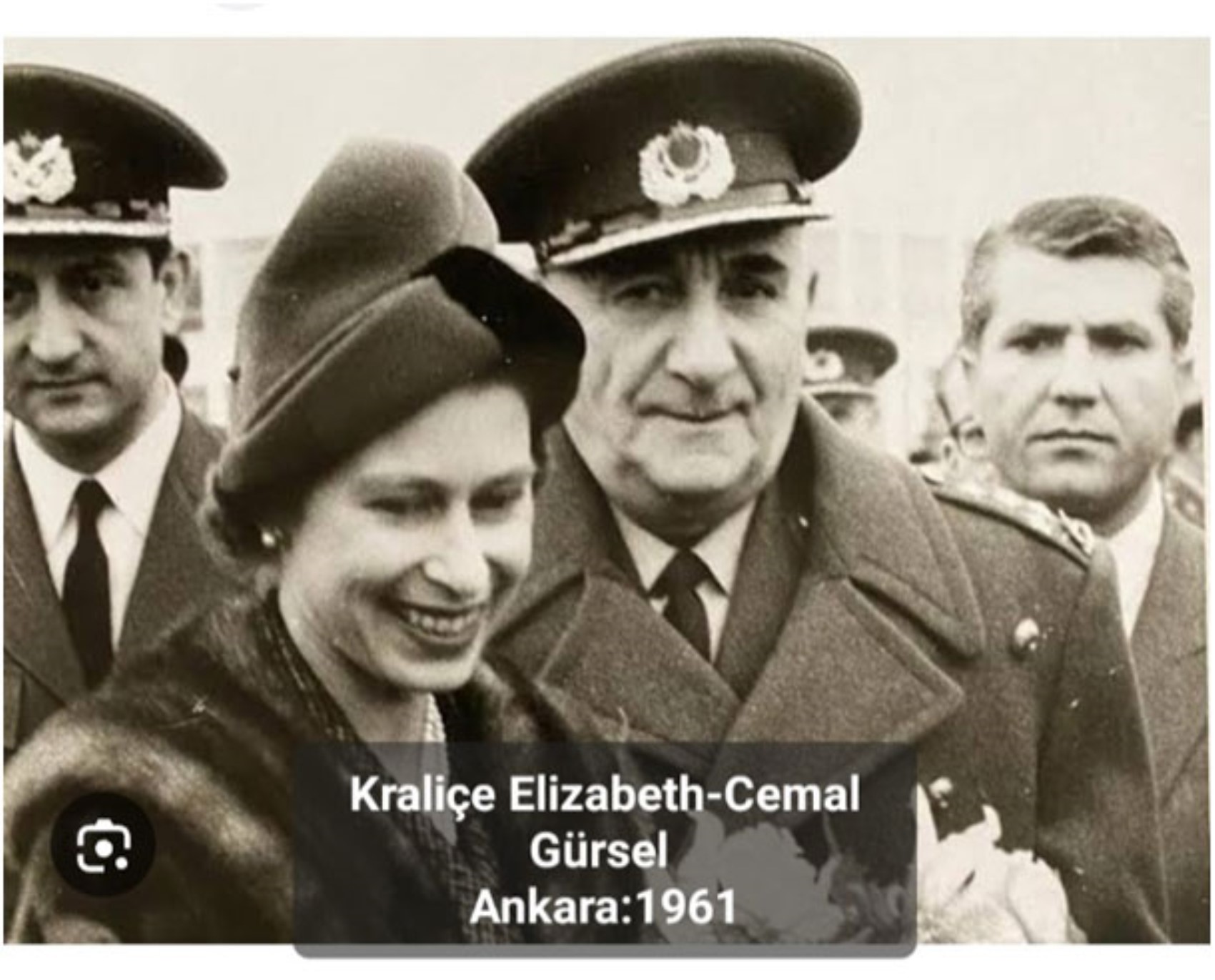
Queen Elizabeth II’s first visit to Turkey would be in the form of an unofficial stopover in 1961.
The National Unity Committee was in power. The presidency of the state and government was held by Cemal Gürsel. The deposed Democrat Party administrators were being tried at the Yassıada High Court of Justice. The Constituent Assembly had convened and begun its work. While returning from her Iran trip, the Queen landed at Ankara Esenboğa Airport. She met with Head of State Cemal Gürsel for 40 minutes. The agenda, as can be guessed, was the Yassıada trials.
After this, the Queen would come to Turkey as a guest of President Cevdet Sunay (1971) and Abdullah Gül. (May 2008)
In return, Sunay would officially visit the United Kingdom in 1967, and Kenan Evren in 1988, and meet with the Queen.
I will address the Queen’s visits to Turkey and return visits as a separate topic in the future.
MONARCHS WHO ASCENDED TO THE UNITED KINGDOM THRONE IN THE LAST CENTURY
George V 1865-1936, Edward VIII, 1894-1972, George VI (1895-1952), Queen Elizabeth II (1926-2023), today Charles III sits on the United Kingdom throne.
A FEW FINAL WORDS ON THE BRITISH MONARCHY
Although the British monarchy lost its political power throughout the 20th century, it continues to maintain its legitimacy stemming from British traditions.
Throughout the last century, four people from the dynasty ascended to the throne. Among these names, the one who made herself talked about the most is Elizabeth II.
Although the sovereign powers appear symbolic, the British constitutional order based on tradition attaches great importance to the monarch.
During her reign, the Queen continued to exercise her powers regarding legislation and execution with great care.
The Queen’s tense relationship with her daughter-in-law Diana, her son Charles’s flirtation with Camilla, Diana’s unhappy life, the growing up of her children William and Harry, her finding a lover (Dodi al-Fayed), and her still-debated suspicious death were followed with interest in Turkey and the world.
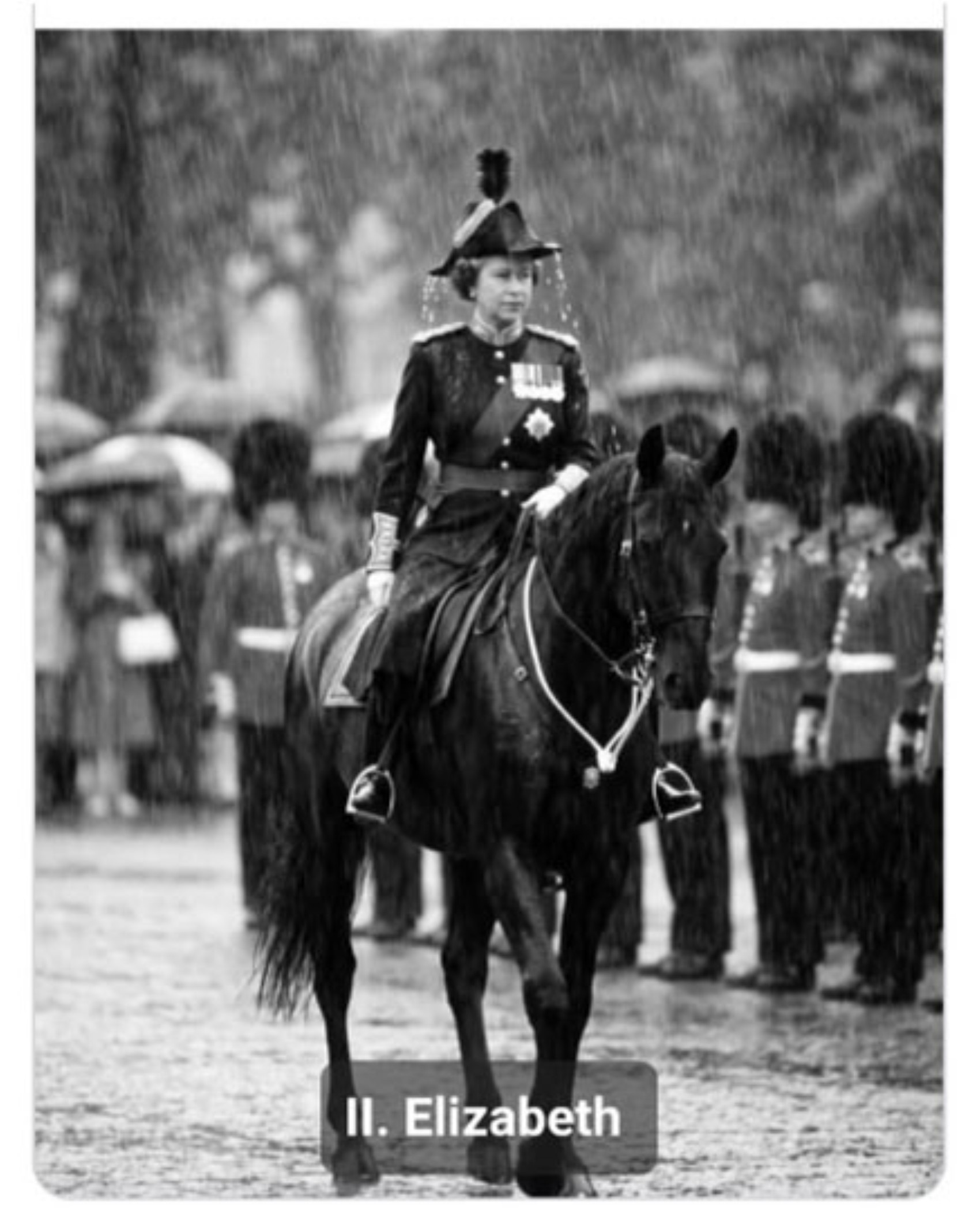
Throughout her long years of reign, she gathered attention with her interest in horse riding and hunting.
Charles III, who ascended to the throne after the Queen’s passing, also continues the traditions of the dynasty.
As a final word, I would like to say this: In England, exalting the sovereign is synonymous with exalting England.
Would you like to get notifications about new developments and save news?
- NotificationsNew developments and breaking news
- SaveNews is stored in the app
Most Read
Statement from Nihat Zeybekci on the fund investigation

New 75,000-seat stadium plan for Fenerbahçe
Fistfight at the Istanbul Bar Association elections!
Interpol and MIT tracking yields results in Izmir
ID convenience for KPSS candidates

2027 Budget: Taxes for the people, tax exemptions for capital

To whom and how was the Petition of Intellectuals submitted? Who accepted the petition?

The reality of Akkuyu and the longing for national nuclear power

The Çanakkale robbery -1- How was the Troy treasure smuggled out?

Artificial intelligence and the new imperialism