


Reflections on Gazi Mustafa Kemal Atatürk and the Turkish Revolution



WHO IS MUSTAFA KEMAL?
Mustafa Kemal is the leader of the Turkish War of Independence and the Turkish Revolution, and the founder of the Republic of Turkey. There are very few leaders who have had as much influence on the destiny of their nation as he did.
The era in which the founder of modern Turkey lived is significant. The founder of the Republic of Turkey was a contemporary of leaders who governed their countries between the two World Wars, such as Woodrow Wilson, Friedrich Ebert, F.D. Roosevelt, Hindenburg, Hitler, and Mussolini. Edward VIII, lived in the same era as Lenin, Stalin, and Trotsky.
WHICH THINKERS INFLUENCED THE LEADER OF THE REVOLUTION?
The ideas that influenced the entire Young Turk generation also influenced Mustafa Kemal. These ideas are positivism and rationalism. In other words, factualism and rationalism. This is the background of the statement, 'The truest guide in life is science and knowledge.' background of this.
As for the political values he acquired, in an interview he gave to a Le Matin correspondent on March 8, 1928, he touched upon the parallels between the Turkish Revolution and the French Revolution.
The three principles of the French Revolution—liberty, equality, and fraternity—formed the foundation of republicanism. These principles are also the core values of Mustafa Kemal's thought. As is well known, Rousseau's 'The Social Contract' is one of the most frequently cited works. Mustafa Kemal read 'The Social Contract' in 1913, taking notes in the margins of Ziya Pasha's translation. What Mustafa Kemal found in Rousseau was republicanism.
We know that Mustafa Kemal was influenced by various poets. Foremost among them are Namık Kemal and Tevfik Fikret.
Ali Fuat Pasha (Cebesoy) and Asım Gündüz, while at the Military Academy, secretly read Namık Kemal, as they wrote in their memoirs. As for Fikret, he knew most of his poems by heart and enjoyed reciting them to the groups he was with when the occasion arose. He visited Fikret's home, Aşiyan, twice in 1917 and 1918, and wrote his feelings in the guest book.
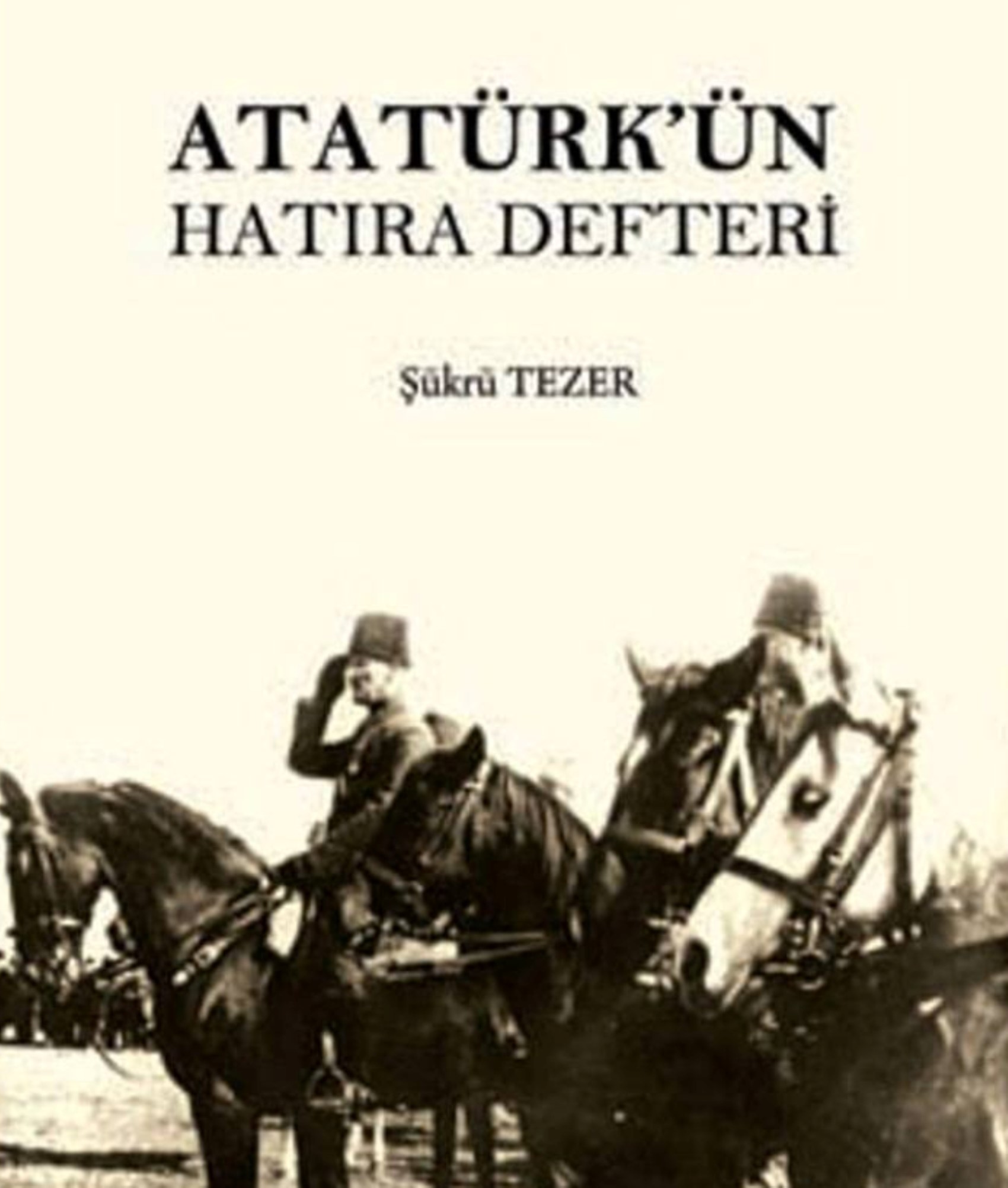
We learn from the 'Memoir' preserved by his aide-de-camp Şükrü Tezer, who served between 1916 and 1918, that Mustafa Kemal Pasha read Namık Kemal's 'Makalat-ı Siyasiye' (political articles) while in Silvan, Diyarbakır.
It would be accurate to mention two other figures who influenced Mustafa Kemal's thoughts. These are Şehbenderzade Filibeli Ahmet Hilmi and Ziya Gökalp. Şehbenderzade is one of the most important names in the idea of reform in Islam, while Gökalp is a key figure in Turkish nationalism. Ahmet Hilmi was one of the most widely read authors of the (1908-1918) period. His fundamental idea was that it was imperative for Muslims to emerge from their medieval way of life and transition to a modern existence.
Another important name in Mustafa Kemal's intellectual repertoire is Ziya Gökalp. Gökalp is the author of the books “Turkification, Islamization, Modernization” and “The Principles of Turkism.” In The Principles of Turkism, Gökalp makes a distinction between civilization and culture (hars). Atatürk finds this distinction artificial. He does not separate civilization from culture. It is more accurate to establish the intersection between him and Gökalp through Durkheim. It must be acknowledged that Atatürk's readings of Durkheim were influential on his concept of the state.
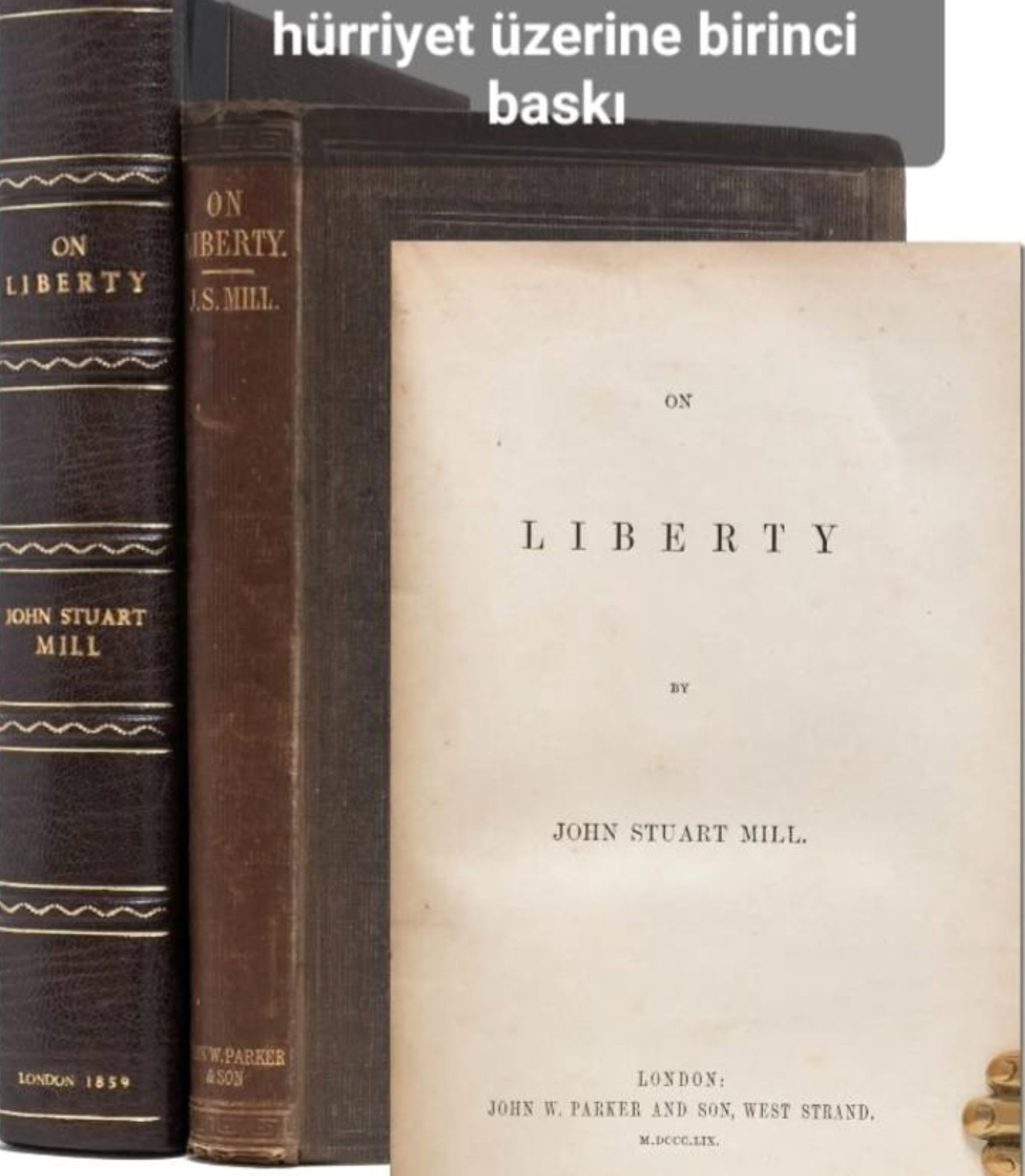
It should not be forgotten that Kemal Atatürk said of himself, “Liberty and independence are my character.” Atatürk read the French version of John Stuart Mill's book On Liberty.
Hüseyin Cahit Yalçın translated and published Leon Marblier’s “Freedom of Conscience” and Stuart Mill’s “On Liberty” (in 1924 and 1927) and gifted signed copies of each to Mustafa Kemal. It is also worth remembering that he personally wrote the section on Liberty (Freedom) in the book “Civic Knowledge for Citizens,” published in 1931.
Mustafa Kemal He read the French translation of H.G. Wells' book titled "The Outline of History." This book was an important work of the 1920s and was translated into many languages. In his work, Wells interpreted world history not as a history of nations, but as a history of humanity. There are references to this work in the Nutuk (The Speech). This book, which Atatürk valued highly, would be published by the Ministry of Education in 1927 under the title "Cihan Tarihinin Umumi Hatları" (General Outlines of World History).

Mustafa Kemal was a revolutionary statesman who read and wrote. The number of his personal books is 4,289. The Gazi's relationship with books was not limited to this number. We know that he made use of the Istanbul University Library and had books brought to him to read. We can say that Atatürk's primary areas of interest were language, history, and creation. A portion of his books in Çankaya were moved to Anıtkabir in 1967.
GAZI MUSTAFA KEMAL PASHA: THE SAVIOR OF THE TURKISH NATION
One of the most important turning points in Mustafa Kemal's life is—without a doubt— the great victory. Despite poverty, lack of funds, a shortage of ammunition and logistical support, and the enemy's numerical and military superiority, he led the Turkish nation to victory. Although he was the Speaker of the Grand National Assembly and the Commander-in-Chief, he was under the heavy pressure of circumstances. He was not a commander-in-chief around whom the entire nation was united and whose every wish was accepted without question. He had many opponents, and even those who harbored hostility toward him.
Despite all these adverse conditions, he won the battles of Sakarya and the Great Offensive, becoming the 'Savior' of the Turkish nation. Even his staunchest opponents were forced to thank him. On September 10, 1922, the Istanbul Government found itself compelled to send a congratulatory telegram to this former general—whose ranks they had once stripped and whom they had sentenced to death—addressing him as 'commander of valor'.
He had now fulfilled what the homeland expected of him. With this great victory, he had proven his command to both friend and foe. From then on, he would have to accomplish tasks even more difficult than those on the battlefield, both domestically and internationally.
OF THE REVOLUTION HIS PARTY: THE PEOPLE'S PARTY
Mustafa Kemal had proven his leadership and invincibility, and had established a group loyal to him in the Parliament. In the new era, he gave the first signal that he would transform his political movement into a political party at the Izmit Press Conference. Later, he would announce the nine principles that served as the party's program.
There were those who wanted Mustafa Kemal to retire to the sidelines. For instance, Halide Edip was one of them. There were two reasons behind this demand: first, some politicians wanted the restoration of the old regime. Others were uncomfortable with the growth of Mustafa Kemal's charisma.
However, without paying heed to these, Mustafa Kemal set out to implement the political project he had kept in his mind; he now believed he was strong enough. This project was a project to build a new society.
Yet, leading the army to victory and securing liberation was one thing, while convincing the nation to undergo social transformation was another. People had endured much for liberation, carrying ammunition to the front lines day and night for kilometers; children, youth, and soldiers had lost their lives in the sacred war. Now, the situation was entirely different.
He had personally witnessed how the local notables who supported him during the War of Independence could turn into a coalition of conservative forces. He was aware that the support behind him was not unconditional. He had to be careful and take every step at the right place and at the right time.
He had achieved victory by relying on the legitimacy of the Grand National Assembly of Turkey (TBMM), which he led in its establishment. He would also carry out the revolution by relying on it. He needed an organization: this was a political party. He first announced this idea to journalists from Istanbul at the Abdülaziz Pavilion in İzmit; he also named his party: the People's Party (Halk Fırkası). After the republic, the party would take the name Republican People's Party (Cumhuriyet Halk Fırkası).
Thus, by bringing together the Defense of Rights movement, which he had led since the Sivas Congress, within the framework of a political program, Mustafa Kemal established a solid front and a had founded a party. This political party would become the engine of the Turkish Revolution: the People's Party (Halk Fırkası). Mustafa Kemal was the founding leader of the Republican People's Party and remained its chairman until his death. Therefore, it is not accurate to evaluate him independently of the People's Party.
After the establishment of the party was announced, the First Parliament decided on April 1, 1923, to renew the elections. This decision paved the way for the second term of the Grand National Assembly of Turkey (TBMM). The 1923 Parliament was quite different from the 1920 Parliament. Mustafa Kemal achieved liberation with the First Parliament, while he realized the revolution with the Second Parliament, in which his party held the majority. The Republic, the abolition of the caliphate, the Turkish legal revolution, and the new constitution were all implemented during the term of the second parliament.
HOW SHOULD ATATÜRK'S RETURN TO ISTANBUL AFTER AN EIGHT-YEAR ABSENCE BE INTERPRETED?
Despite the proclamation of the Republic and his election as the "President of Turkey," Mustafa Kemal did not visit Istanbul until July 1927; considering he left Istanbul in May 1919, this represents a period of eight years. This timeframe encompassed a series of developments, including the congresses, the establishment of the Grand National Assembly of Turkey (TBMM), the power struggle with the Istanbul governments, the Turkish War of Independence, the abolition of the sultanate, the Treaty of Lausanne, the second parliament, the republican revolution, the abolition of the caliphate, the opposition of the Progressive Republican Party, and the trials following the İzmir assassination attempt. developments were packed into this period.
It can be argued that there were two reasons for Atatürk's distant stance toward Istanbul until 1927: First, that Istanbul symbolized the old regime; and second, that the opposition during the revolutionary process had organized itself around the deputies from Istanbul. He chose not to come to Istanbul until he had emerged completely victorious from this process.
Mustafa Kemal arrived in Istanbul on July 1, 1927, with a grand welcoming ceremony. The journey took place by train from Ankara to İzmit, and from there, he crossed to Istanbul on the Ertuğrul Yacht.
With the Grand National Assembly of Turkey's decisions numbered 307 and 308 dated November 1, 1922, the sultanate had been abolished and the Istanbul Government had been dissolved. The former capital, which was taken over from the Allies on October 6, 1923, remained a city where the opposition to the Ankara regime organized until 1926. Despite this distant relationship, following the Great Victory, the Istanbul Darülfünun (University) granted the title of honorary professor to Commander-in-Chief Mustafa Kemal upon the suggestion of Yahya Kemal, and in 1923, the Istanbul Municipality bestowed upon him the title of honorary citizen.
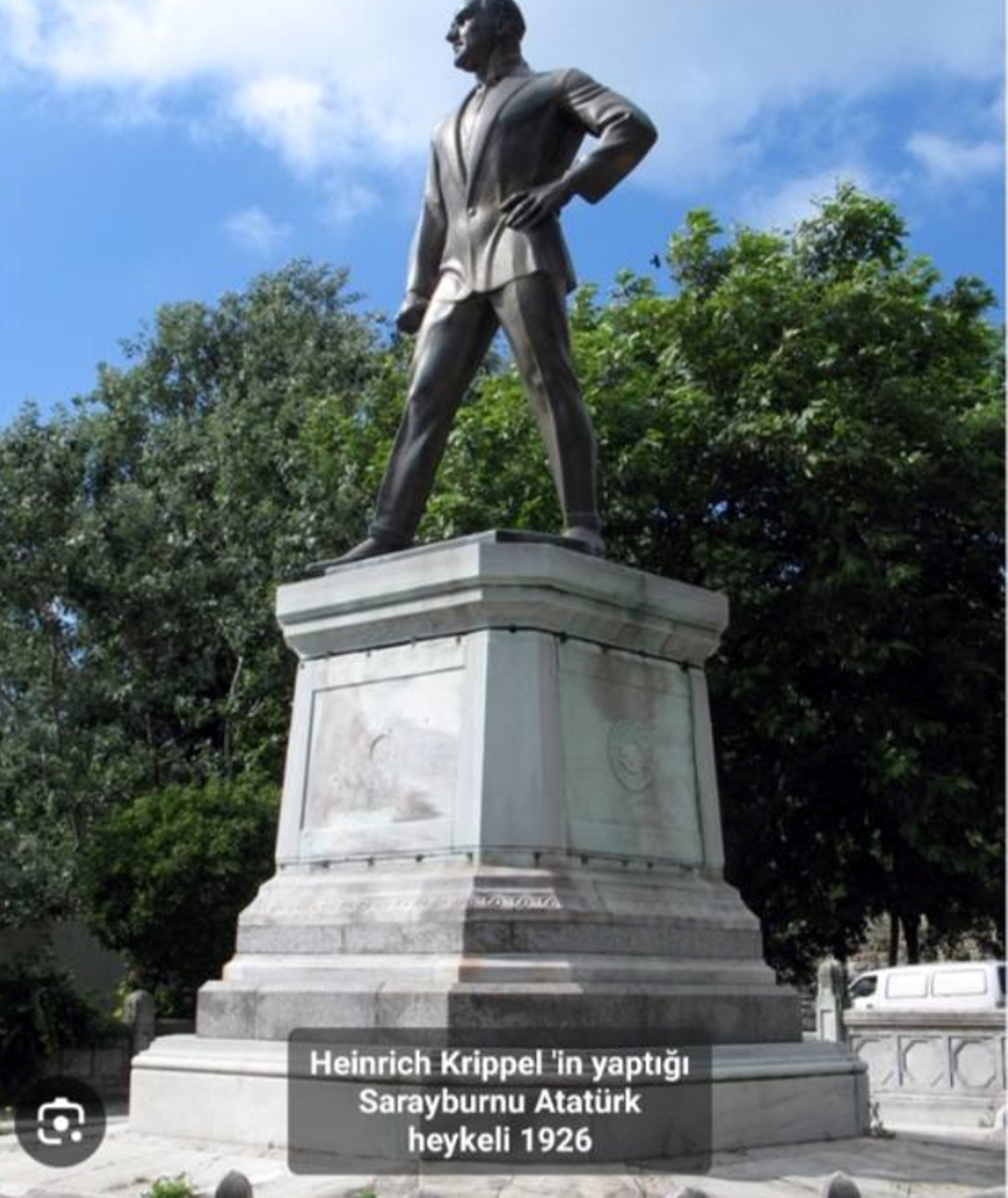
In fact, the first statue of Gazi Mustafa Kemal was unveiled at Sarayburnu on October 3, 1926. The work had been commissioned by the Istanbul Municipality to Heinrich Krippell.
This work holds special significance in terms of the visualization of the Turkish revolution. However, as of that date, the "President of Turkey" had still not visited Istanbul. THE LEADER OF THE REVOLUTION AND THE GREAT SPEECH (NUTUK)
The Great Speech, which is the primary source for the history of the Turkish War of Independence and the establishment of the Republic, was delivered by Mustafa Kemal Pasha between October 15 and 20, 1927, at the Grand National Assembly of Turkey. READING
A large part of the Nutuk (The Speech) was written in Istanbul in the summer of 1927. The period in which it was penned is also significant: It was written after the 1926 Izmir assassination attempt. The Nutuk was written after he had definitively defeated all his political rivals.
The Nutuk is the story of Mustafa Kemal’s own political struggle. This story came directly from his own pen. It was read to party delegates at the Second Grand Congress of the Republican People’s Party between October 15 and 20, 1927. In terms of content, it explains how the national liberation cause was brought to success and what obstacles were encountered. In the Nutuk, a very harsh, belittling (dismissive) tone is observed in places. There are polemics, especially with the founders of the Progressive Republican Party. polemics.

The Great Nutuk was first published in 1927 in two volumes using the old script, one being the main text and the other the documents. In the same year, a luxury edition was also produced in a single volume. After the alphabet reform, it was reprinted in three volumes by the Ministry of National Education in 1934. The Nutuk was most recently reprinted by the Atatürk Research Center of the Atatürk Supreme Council for Culture, Language and History.
THE FOUNDATION OF THE TURKISH REVOLUTION IS SECULAR REPUBLICANISM
The Turkish Revolution is based on three primary principles and three secondary ones. The primary principles of the revolution are republicanism, secularism, and nationalism. Statism, reformism, and populism are principles that were added over time. These principles would be codified into the program of the Republican People's Party (CHP) at its 1931 congress. The CHP, born from the movement for the defense of rights, is a party. It is the organized power of the revolution.
The foundation of the Turkish revolution is, without a shadow of a doubt, secularism. The reason we are a more developed society today than the Muslim countries around us is the principle of the secular state, which is often mistakenly perceived as 'selling snails in a Muslim neighborhood'.
Secularism is not, as is incorrectly claimed, freedom of religion and conscience. Freedom of religion and conscience is a different concept. Secularism is a principle that prohibits religion from interfering in worldly affairs and empowers the state in this regard.
Secularism means that the law does not derive its legitimacy from religion. It means not seeking approval from religious authority when enacting regulations that create innovation in the legal sphere. There is no other country in the Middle East that has implemented the principle of secularism, which Atatürk introduced into Turkish state and social life, in the same way. The Atatürk Revolution lies at the foundation of Turkish secularism.
WHAT DID THE TURKISH LEGAL REVOLUTION ACHIEVE?
The second pillar at the foundation of modern Turkey is the Turkish Legal Revolution. The Turkish State, whose foundations were laid with the 1921 Constitution, transformed into the Republic of Turkey with the 1924 Constitution; through a series of amendments in the field of law, it acquired a brand-new appearance.
Count Ostrorog—a keen observer of recent Turkish history who had been in Turkey during the Constitutional Era to serve as a legal advisor to the Committee of Union and Progress— would write in his book titled "The Angora Reform," published in London in 1927, that the reforms carried out between 1922 and 1927 were unparalleled in the world and that the Turks had achieved major changes in their legal order.
Similarly, Kurt Steinhause, in his "Sociology of the Atatürk Revolution," while evaluating the 30s, would write that Turkey, where rural and pre-capitalist production relations were largely dominant, possessed all the superstructure institutions of a developed Western country under the leadership of the Kemalists.
In Turkey, it is sufficient to compare the 1876 and 1924 constitutions to see what has changed in the field of law. This comparison reveals the direction in which the legal order changed from the constitutional monarchy to the republic.
An important dimension of the Turkish Legal Revolution is the implementation of the principle of constitutional equality in its true sense. This means that women have attained all public rights and have been granted the right to vote and be elected as well. Women in Turkey gained the right to universal suffrage long before many European countries. Political rights were granted to women on December 5, 1934, and the first female members of parliament entered the assembly in the 1935 Grand National Assembly of Turkey (TBMM) elections as well.
Some of the first women deputies to enter the Grand National Assembly of Turkey (TBMM) include Dr. Fatma Memik (Edirne), Fakihe Öymen (Istanbul), Satı Kadın (Hatı Çırpan, Ankara), and Bahire Bediş Morova (Konya). During those years, Turkey also hosted the world's first Women's Congress.
THE LAW ON THE UNIFICATION OF EDUCATION IS ONE OF THE FOUNDATIONS OF THE REVOLUTION
Another dimension of our revolutionary history is the educational revolution. The changes made in the field of education during the early republican period were radical in nature. The fact that the Law on Unification of Education (Tevhidi Tedrisat) was enacted alongside the law abolishing the caliphate is extremely significant.
The most important step taken in this field was the decision to centralize education and instruction. All educational institutions were placed under the Ministry of National Education. This practice provided free, general education opportunities that ensured equal opportunity for all children across the country.
While the War of Independence was still ongoing, Minister of National Education Hamdullah Suphi Bey (Tanrıöver) He had convened the National Education Council. At this Council, important decisions were made.
Since the Tanzimat era, basic education services in Turkey had been attempted to be carried out by the local administrations of each province. This caused basic education to lag behind in provinces with limited resources and led to insufficient teacher employment.
Counter-revolutionary literature claims that the alphabet revolution severed the people from their past, and left them uncultured. they say. Has the Turkish public truly become uncultured due to the adoption of the new Turkish alphabet? In my opinion, the reality is quite the opposite: The alphabet revolution did not make the public uncultured; on the contrary, it paved the way for civilization.
When looking at the literacy rates of our people as of November 1, 1928, when the new Turkish alphabet was put into effect, it is seen that 3% of women and 7% of men were literate. From the introduction of the printing press to Turkey in 1727 until that date, a meaningful Turkish library could not be created; the foundation of libraries consisted of handwritten religious books. As of that date, it is not possible to speak of an accumulation written in Ottoman Turkish regarding science, art, and civilization.
Changing the Arabic script, which 90% of the public did not know but sanctified for religious reasons, was born out of a determination to change Turkey's course. In my opinion, claiming that the alphabet revolution made the public uncultured is nothing more than a desire to maintain the past status quo.
THE CLOSURE OF THE DARÜLFÜNUN THE ESTABLISHMENT OF THE UNIVERSITY
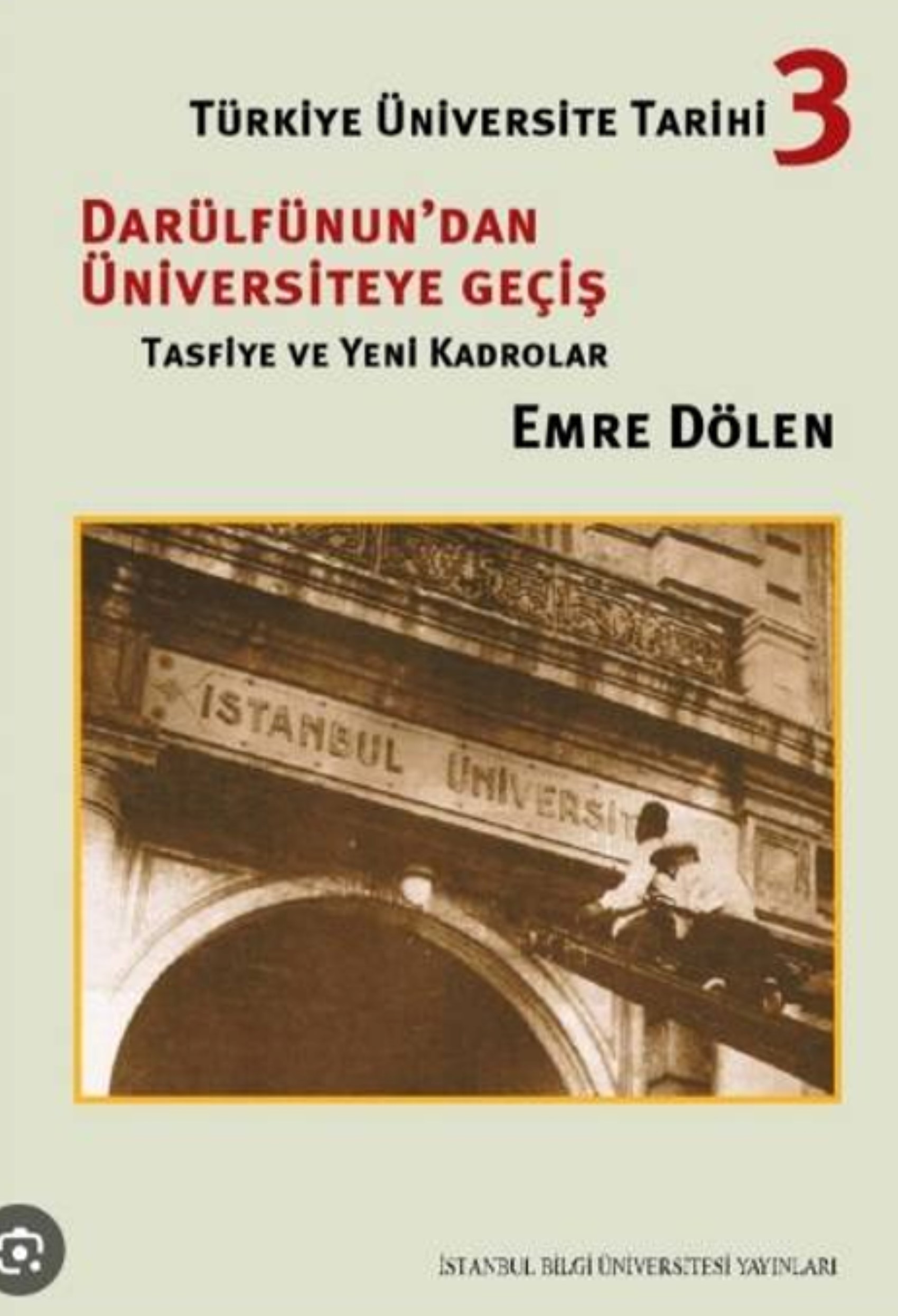
Another revolutionary development took place in the field of higher education. There was no university in Turkey until the era of Atatürk. There was only the Darülfünun in Istanbul. A significant portion of its faculty did not support the national struggle and observed the republic from afar with disdainful glances.
Atatürk's 1933 University Reform became a turning point in the history of Turkish higher education; the Darülfünun was abolished and replaced by Istanbul University, which remained Turkey's only university until 1946. In Ankara, the faculties of Political Science, Law, and Language, History and Geography were organized as individual public legal entities. Among these schools, the Faculty of Political Science is the Mülkiye Mektebi of the Ottoman era; it was transferred from Istanbul to Ankara in 1936.
The two schools Atatürk founded in Ankara hold special significance: the Ankara Law School and the Faculty of Language, History and Geography. Both are rooted in the idea of a "Turkish Renaissance." Through the Ankara Law School, the republic's legal professionals, judges, and prosecutors were trained. In the Faculty of Language, History and Geography, the Turkish language, history, and civilization have been subjects of research. The Turkish Language Thesis and the Turkish History Thesis were born from this climate. Our renowned historian Halil İnalcık and Sumerologist Muazzez İlmiye Çığ are among the faculty's first graduates.
The rise of fascism in Europe provided a source of faculty members for the Turkish university reform, and the scientists who came to Turkey enabled the emergence of an elite scientific environment. These scientists, each a major name in their own field, remained in Turkey until the end of the Second World War and some even longer, making very significant contributions in the fields of medicine, engineering, and social sciences.
Today, many scientists who have proven themselves in every field were students or assistants to these academics who were guests in Atatürk's Turkey. Some of the world-class scientists and artists that Turkey embraced during that period include: Andreas Schwarz, Fritz Neumark, Clemens Holzmeister, Bruno Taut, Ernst Hirsch, Paul Hindemith, Béla Bartók, and Carl Ebert.
WHAT WAS THE PURPOSE OF THE TURKISH HISTORY AND LANGUAGE THESES?
At the beginning of the 20th century, there were two issues that influenced all Young Turks: the Eastern Question and the thesis that Turks belonged to an inferior race. This race was the yellow race, which had historically hindered the development of civilization. The latter was a thesis put forward by the dominant anthropological paradigm of the period.
The Eastern Question was a Western problem that emerged in 19th-century Europe, with the East as its object. It was a concept first introduced in the book titled "La Question d'Orient," published by Albert Sorel in 1889. Mustafa Kemal had also read this book. In his work, Sorel proposed the collapse of the Ottoman Empire, the expulsion of the Turks from Europe, and the re-establishment of the former Eastern Roman Empire (under the name of Greater Greece). The Young Turks were aware of what this approach meant. In the eyes of Europeans, the First World War had resolved this issue to the detriment of the Turks. The response to this solution, which meant leaving the Turks without a homeland or a state, was the War of Independence.
During the period when Atatürk was working on the Turkish History Thesis, he had approximately 100 books published in the West, including Marx's "Eastern Question," brought from the Istanbul University Library and examined them.
The source of the second question lay in the thesis that Turks belonged to an inferior race. This thesis was based on the book titled 'An Essay on the Inequality of the Human Races,' published by J.A. Gobineau between 1853 and 1855. Gobineau, who found a wide following, argued that civilization was created by the Aryan race, and that the yellow race—which included the Turks—played a negative, destructive role that hindered the development of civilization at every stage of history.
Mustafa Celaleddin Pasha, a Polish noble refugee, responded to this thesis with his book 'Les Turcs Anciens et Modernes' (Ancient and Modern Turks), published in Paris in 1870. In his book, the Pasha did not debate the influence of the yellow race on civilization; instead, he countered Gobineau's claims by asserting that the Turks were a Turanian people. In other words, the Turks were not of the yellow race. This rebuttal sparked great interest among all the Young Turks and boosted their morale.
Within the same problematic, another important book was Leon Cahun's 'Introduction to the History of Asia: Turks and Mongols.' Cahun had published his book in Paris in 1896. His novel 'La Bannière Bleue' (The Blue Banner), published in 1877, was also related to Turkish history. Mustafa Kemal read these books, underlining passages as he went. These were, fundamentally, the issues that occupied the minds of all intellectuals during the final period of the empire.
After consolidating his power, Mustafa Kemal turned his attention to history and language studies. It is accurate to evaluate these efforts within the process of building a nation-state. The history and language studies, which are criticized in some circles today, are extremely significant in terms of the History of the Revolution. At the foundation of them all lies the desire to find an honorable place for Turks in history and to become an equal member of the modern world.
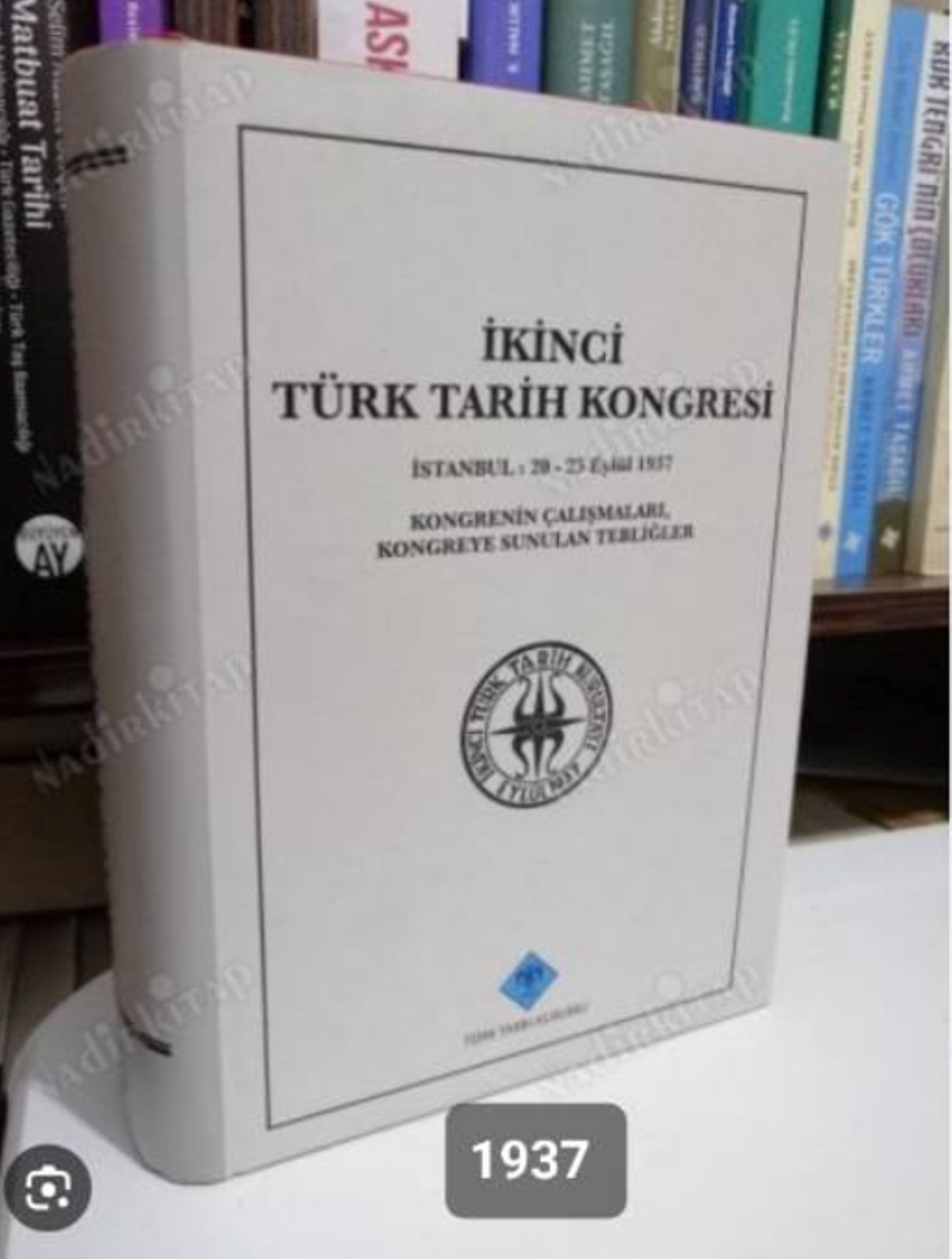
Mustafa Kemal led the establishment of the Society for the Study of Turkish History in 1931, and the first Turkish History Congress was held in 1932, followed by the second in 1937.
The prevailing idea at these congresses was the historical origins of the Turks and their place in the history of civilization. The fundamental problematic of the Turkish History Thesis was to prove that the Turks held a positive, rather than a negative, place in the history of civilization. The Turkish History Thesis, which we may find strange in some respects today, was born from a climate of proving our "civilization."
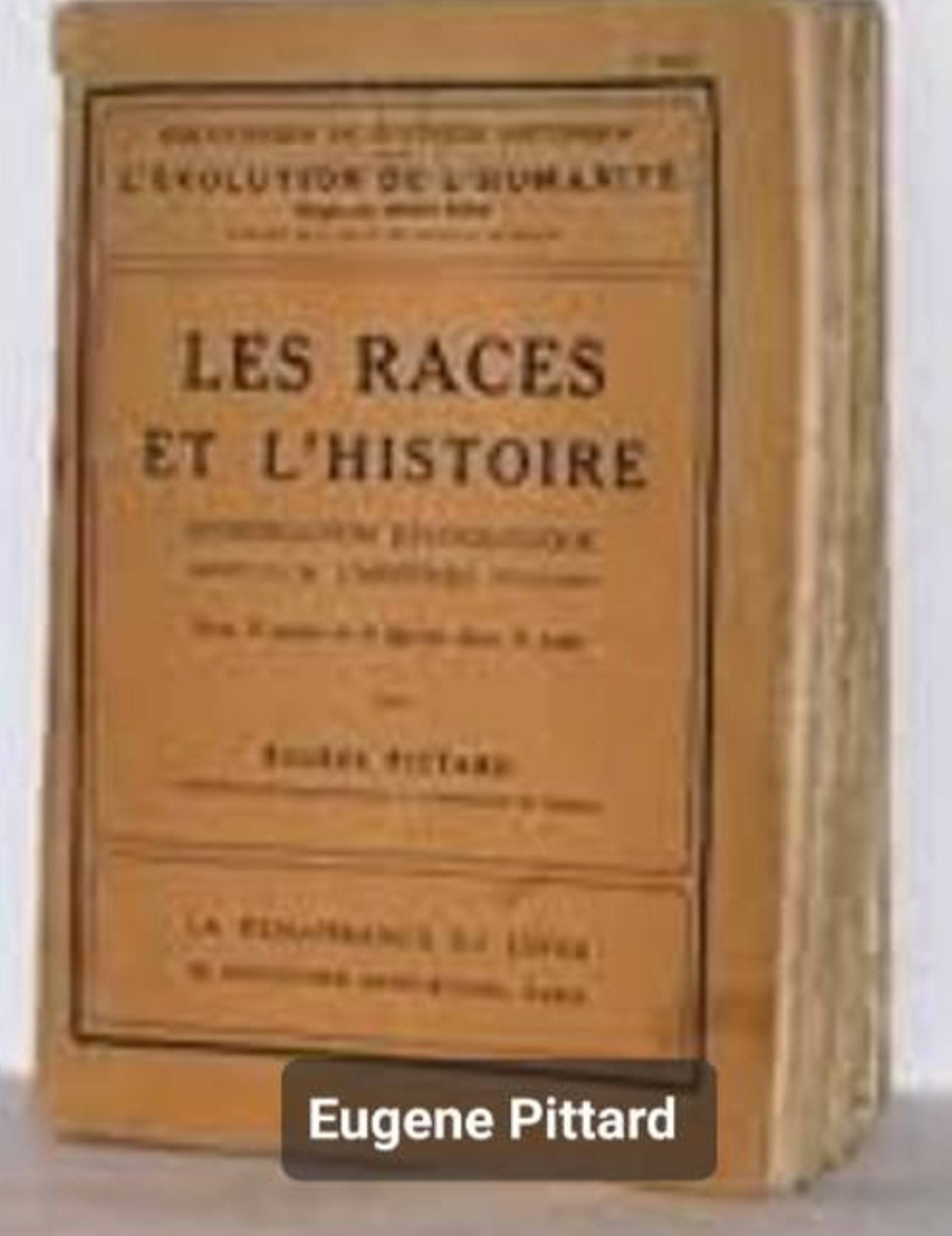
During the period when Atatürk was working intensively to find a place for the Turks in the history of civilization, he was drawn to the work of Eugene Pittard, a professor of anthropology at the University of Geneva. Contrary to the dominant paradigm of the era, Pittard traced the origins of civilization back to Anatolia and Mesopotamia; based on the finding that the societies that achieved the Neolithic Revolution used an agglutinative language, he argued that the Hittites, the oldest people of Anatolia, were a Turanian people.
Pittard, who published a book titled Les Races et l'Histoire (Race and History) in 1924, was invited to the Second Turkish History Congress and participated with a paper. In the meantime, it is worth noting that Afet İnan was sent to Pittard's chair to pursue a doctorate. The History Thesis, which is often distorted in today's discourse, was nothing more than an effort to prove that Turks were not an inferior race. The excavations carried out in Çatalhöyük, Alacahöyük, and Yazılıkaya were conducted to legitimize the rights of Turks to the title deed of Anatolia and to prove that Anatolia had been Turkish and civilized not just for the last thousand years, but since the Hittites. The cause pursued by the Turkish History Thesis was not the brachycephaly of the Turks, but the fact that they were a civilized people.
Ultimately, the historical understanding of the republic, which was born as a reaction to the Ottoman chronicler tradition, would materialize in the History-1-2-3-4 series and become the official historical understanding of the Turkish nation-state.
The Turkish Language Thesis (Sun Language Theory), which was carried out in parallel with the Turkish History Thesis in the 1930s, was actually put forward with the aim of reviving the Turkish language, which had been neglected by the Capital for hundreds of years, in its original form.
During this period, the theory of Austrian linguist Prof. Hermann Kvergic that "the Turkish language is a fundamental language in the world" caught the attention of the Turkish elite, who were in pursuit of creating a national identity, and influenced the studies on the Turkish language. The adoption of the Sun Language Theory at the Third Language Congress, which gathered at the Dolmabahçe Palace in 1936, completed the process.
Mustafa Kemal's following words clearly prove that "language" is actually a matter of nation-building: "The Turkish language is one of the richest of languages. Provided that this language is cultivated with consciousness. The Turkish nation, which knows how to protect its country and its high independence, must also liberate its language from the yoke of foreign languages."
In conclusion, both theses are extremely important for understanding the Atatürk Reforms. Their function has been to instill self-confidence in the Turks in the face of the West.
One of the important milestones in the process of building a nation-state is the book "Civic Knowledge for Citizens". book. It is clear that this work serves the purpose of creating a new citizen who has been liberated from the subject mentality of the past. Prof. A. Afet İnan appears as the author on this book, which was published in 1930. Atatürk personally wrote the "freedom" section of this book and dictated the other sections to Afet İnan. In reality, the book's its author is Atatürk. The goal of 'Civic Knowledge' (Medeni Bilgiler) is to create the citizen of the republic. This work is one of the documents of the republican revolution that should be valued in terms of political education.
HOW SHOULD THE TURKISH REVOLUTION BE INTERPRETED?
The Turkish Revolution lies at the foundation of the Republic of Turkey. It is accurate to speak of two aspects of this revolution. These are, respectively, the war of independence and the liquidation of the old regime. At the root of the developments that give meaning to the Turkish Revolution lies the war of independence waged against imperialism. This war is a regional conflict appended to the end of the First World War. Its cause is the 'Eastern Question' proposed by the allies is a rejection of the solution. The Turks do not accept the plan. The Defense of Rights resistance transforms into the Anatolian Revolution. Under the leadership of Mustafa Kemal, the Turks reject the Treaty of Sèvres, which left them with nothing but a dependent peasant state confined to Central Anatolia. This rejection is the declaration of the Turkish War of Independence.
There is no doubt that the leader of the revolution had the idea of realizing a Turkish Renaissance. This meant implementing in a short time the social transformation that the West had achieved in two hundred years. The path to this lay through the Turkish democratic revolution. With legal regulations, which are belittled in some circles as superstructure revolutions, Atatürk carried out the bourgeois democratic revolution of the Turks in an environment where the bourgeoisie could not lead social change. The "contemporary civilization" he expressed in his various speeches is nothing other than this.
The "democratic" nature of the Turkish Revolution stems from its anti-feudal and anti-monarchical character. In this respect, it bears the traces of the French Revolution. Today, at the root of the anger of the revolution's opponents lies Kemal Atatürk's determination to remove the Turks from the civilization circle to which they had belonged for a thousand years and place them into another.
As is known, there are circles that characterize Atatürk's Turkey as a "dictatorship." Undoubtedly, the Kemalists did not hesitate to use the repressive apparatus of the regime they established. However, the "state's coercive apparatus" was used against the reactionary forces of the old regime, just as it was in the French Revolution. Those who faced the wrath of the Kemalists were feudal, separatist, monarchist, and counter-revolutionary centers that were remnants of the Middle Ages.
How interesting it is that in today's Turkey, this period is described as a dictatorship those who characterize the despotism of Sultan Hamid, or the lack of vision of Vahideddin, are none other than those circles attempting to justify them in history through incredible scenarios.
Mustafa Kemal undoubtedly eliminated his opponents. But his opponents were not the "democratic" forces of Turkey. There was not yet an infrastructure in Turkey to sustain a multi-party political life (bourgeois democracy). The forces opposing Atatürk were remnants of the old regime. It was not they, but Mustafa Kemal, who won the struggle for power.
The Atatürk regime was authoritarian against reactionaries, supporters of the dynasty, and feudal lords who resisted the revolution. Apart from this, people with different political views even received patronage during his era. For instance, just as there were leftist intellectuals in his party such as Şevket Süreyya Aydemir and İsmail Hüsrev Tökin, liberals like Ahmet Ağaoğlu, Ahmet Hamdi Başar, and Celal Bayar were also able to find a place for themselves.
The temporal overlap between the rise of Kemalism in Turkey and the rise of totalitarian regimes in Europe should not be misleading. Mussolini came to power in Italy in 1922, Hitler in Germany in 1933, and Franco in Spain in 1936. They were accompanied by other dictatorial regimes in Central and Eastern Europe, such as the administrations of Marshal Pilsudski in Poland, Admiral Horthy in Hungary, King Carol in Romania, King Alexander in Yugoslavia, and Tsar Boris in Bulgaria. However, none of these have any relation to the regime of Mustafa Kemal Atatürk.
One of the significant proofs of this is that 142 scientists fleeing Hitler's fascism took refuge in Turkey, an 'Island of Enlightenment'. King Edward VIII of England surely did not come to witness the Turkish miracle in vain. The head of state he came to visit was a revolutionary leader who had become an example to oppressed nations, a leader of a national liberation movement.
Kemal Atatürk's greatest achievement is secularism, which his opponents vehemently opposed. Atatürk saw secularism as the foundation of social progress and sought to adapt his nation to it. Thanks to secularism, by the end of the 1930s, the Turks' entire legal system had been made functional with contemporary norms.
It is possible to evaluate the Turkish Revolution, carried out under the leadership of Kemal Atatürk, from three perspectives. First of all the Atatürk revolution is a Turkish Renaissance. Secondly it is a populist political movement. Thirdly it is total development. In Atatürk's thought, development is a whole. The establishment of Istanbul University and the Faculty of Language, History and Geography was considered at least as important as the establishment of the Karabük Iron and Steel Works. During the Atatürk era, material development and the cultural revolution went hand in hand. The fundamental goal was for the state to be strong, the country to be prosperous, and the nation to be civilized and affluent.
Kemal Atatürk is a politician and statesman. He is a revolutionary. The Kemalist revolution, in the final analysis, is the version of bourgeois democratic revolutions for underdeveloped in a country is its implementation.
Would you like to get notifications about new developments and save news?
- NotificationsNew developments and breaking news
- SaveNews is stored in the app
Most Read
Statement from Nihat Zeybekci on the fund investigation

New 75,000-seat stadium plan for Fenerbahçe
Interpol and MIT tracking yields results in Izmir

ID convenience for KPSS candidates

2027 Budget: Taxes for the people, tax exemptions for capital

The reality of Akkuyu and the longing for national nuclear power

To whom and how was the Petition of Intellectuals submitted? Who accepted the petition?

The Çanakkale robbery -1- How was the Troy treasure smuggled out?

Artificial intelligence and the new imperialism

Ministry investigation into unauthorized promotional messages