


Representation of Rumelia provinces in the Ottoman Parliament



RUMELIA PROVINCES AND ELECTORAL DISTRICTS
The Grand National Assembly of Turkey (TBMM) Presidency has published the albums of the members of the Chamber of Deputies (Meclis-i Mebusan) and the Senate (Ayan). It is a very useful service. In this article, I examine the deputies of the first legislative term of the Second Constitutional Era (1908-1912). By analyzing the biographies of the deputies who represented the Rumelia provinces, I have reached certain conclusions. I would like to state that a limited number of parliamentarians are discussed in this article due to their distinctive representative qualities.
All of the electoral districts discussed in my article have remained outside the borders of modern Turkey. The deputies were elected according to the Provisional Law on the Election of Deputies (İntihab-ı Mebusan Kanun-ı Muvakkat).
The electoral districts were as follows: In the Salonica (Selanik) province, the central district was Salonica, with the attached districts of Drama and Serres (Serez). The Scutari (İşkodra) Province consisted of the Scutari and Durrës (Draç) districts. In the Ioannina (Yanya) province, there were Berat and Preveza. Manastır (Bitola) consisted of Elbasan, Debar (Debre), Korçë (Göriçe), and Servia (Serfiçe). The Kosovo Province was composed of the Skopje (Üsküp), Peja (İpek), Pristina (Priştine), and Pljevlja (Taşlıca) electoral districts.
WHERE DID THE PARLIAMENT CONVENE?
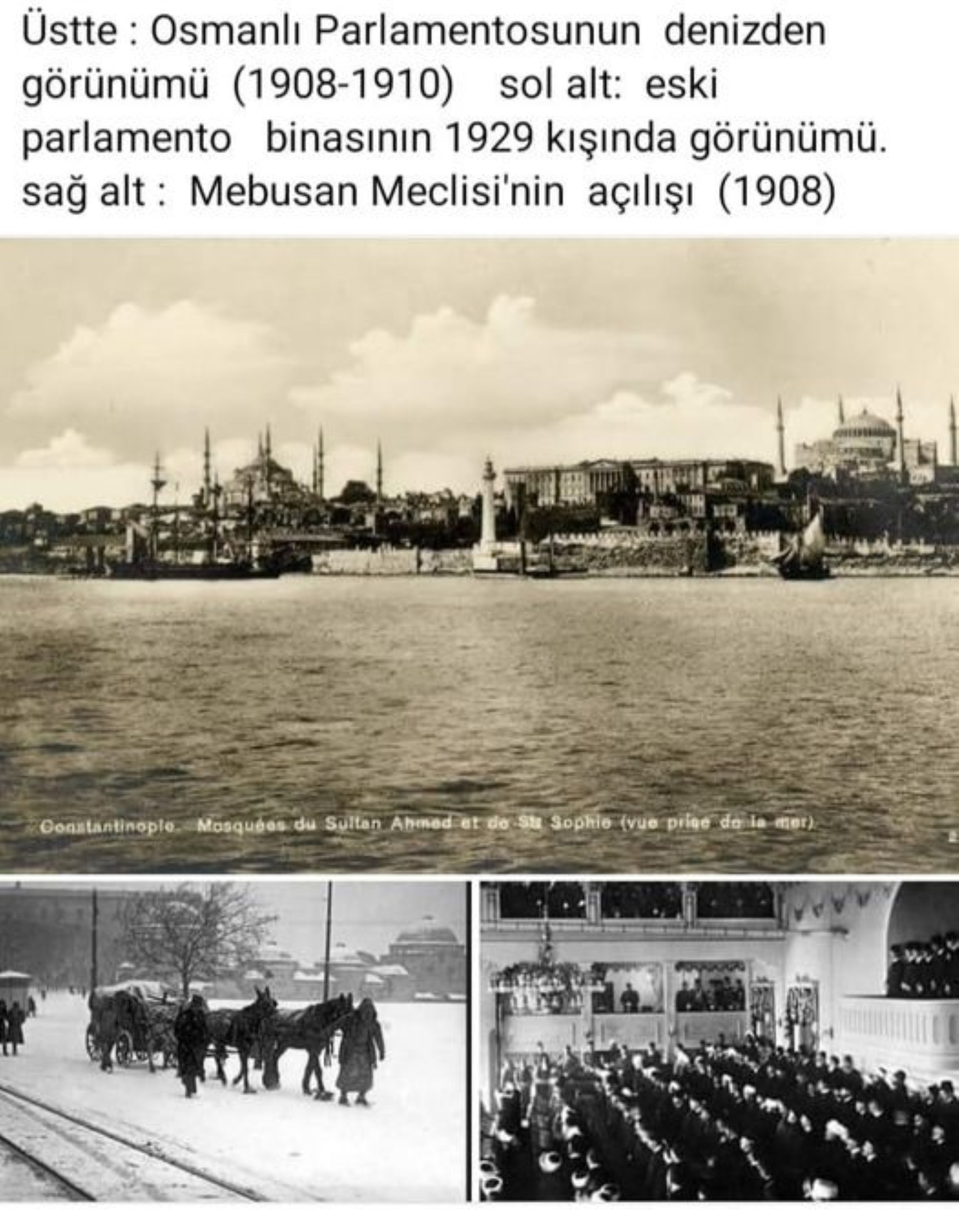
At the beginning of the last century, someone arriving in Istanbul by sea would see an impressively large building rising behind the Ahırkapı Lighthouse. This massive building, located in the area where the old Byzantine palace stood next to the Hagia Sophia, was built by the Italian Fossati brothers.
The building was eye-catching in terms of its architectural style. It had been designed in the previous century as a university building (Darülfünun). However, it could never be used for this purpose because establishing a university was more difficult than constructing a building.
After the 1908 elections, a location was sought for the parliament (the Chamber of Deputies and the Senate). This place was deemed suitable. The assemblies met here until the autumn of 1910. Later, the Çırağan and Fındıklı Palaces would be used.
The building is better known as the Ministry of Justice (Adliye Nezareti). The Ministry of Pious Foundations (Evkaf Nezareti) was also located here. The Ottoman Parliament opened here in 1908. The Ministries of Justice and Pious Foundations remained there for some time longer.
As the first parliament of the Second Constitutional Era began its work with the reading of a speech by Sultan Abdülhamid, representatives of the Ottoman Empire's Rumelia provinces were also present in the general assembly hall.
 ALBANIANS IN PARLIAMENT
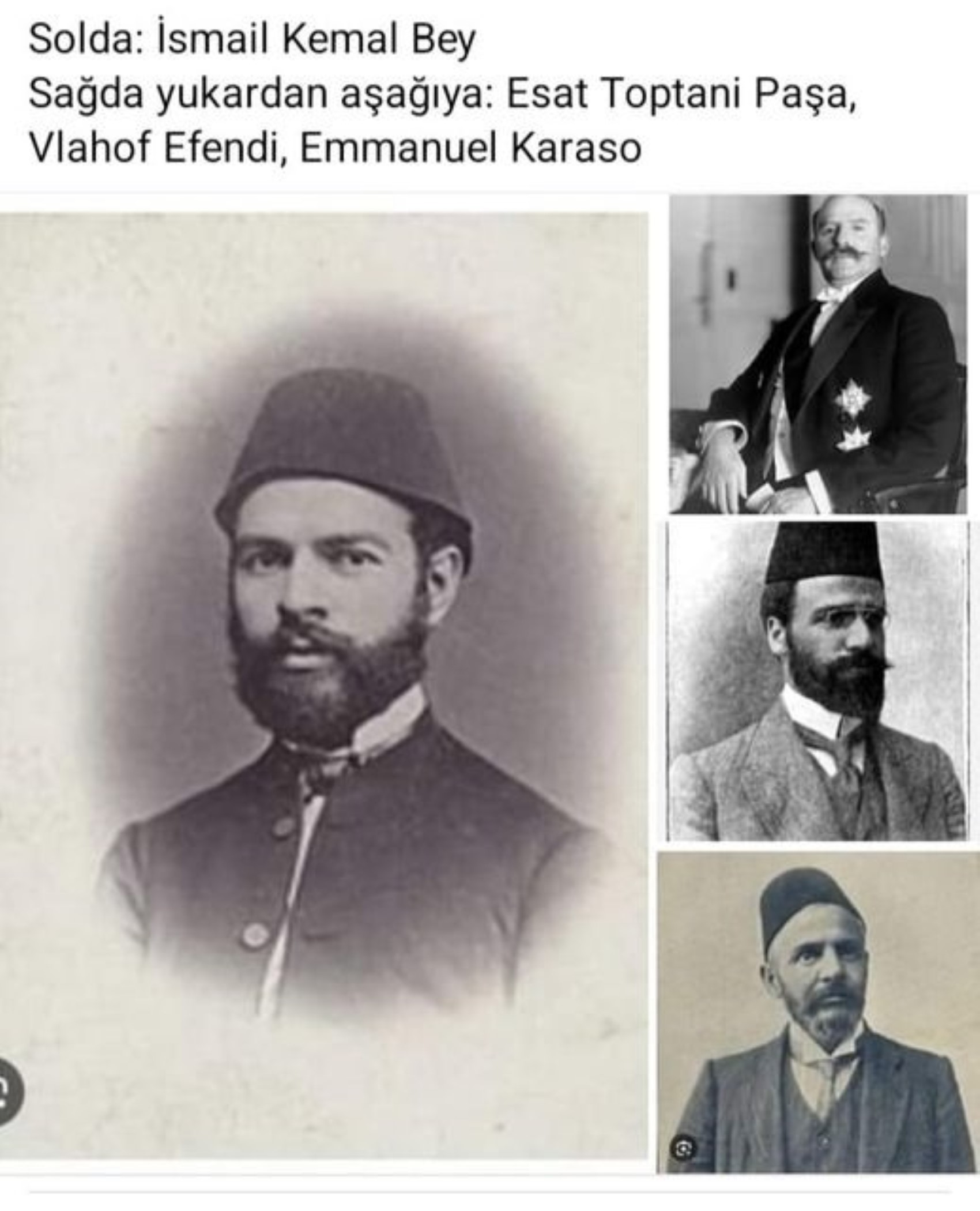
For example, Ismail Qemali Bey, who prepared the Albanian Declaration of Independence, was there. Ismail Qemali Bey was the deputy for Berat in the Second Constitutional Chamber of Deputies.
Ismail Qemali Bey was a relative of Ferid Pasha of Vlorë, one of Sultan Abdülhamid II's grand viziers. He studied at the Greek High School in Ioannina and at the Law Faculty of the Darülfünun in Istanbul. He is an important figure of the Young Turk opposition.
In Albania, there is a class of nobles whose origins go back to the Eastern Roman Empire. They have occasionally compromised with the Byzantines and Ottomans, but have mostly fought them. Albanian lords have never been fully loyal to authority.
Muslim Albanians are included in this. Although Albanians were quite powerful within the Sublime Porte bureaucracy, nationalism always simmered beneath the surface among them, just as it did among other Balkan peoples.
Albanian nationalism has always been an attitude that transcends religious identity. It has contained Muslim, Catholic, Orthodox, and ancient Christian elements.
Just as the historical hero of Albanian identity is Gjergj Kastrioti Skanderbeg, the founding hero of modern Albania is Ismail Qemali Bey (1859-1919).
He served as prime minister between 1912 and 1914 and was exiled to Paris by the Allies during the First World War. He passed away in Perugia (Italy) in 1919.
Just four years before the declaration of independence, Ismail Qemali Bey was a member of the Ottoman Chamber of Deputies. Similarly, Mufid Bey, who was also a representative for Ioannina during the same period, became a minister in the Albanian government after the declaration of independence.
Esad Toptani Pasha, who was on the delegation that notified Sultan Abdülhamid of his deposition, was also of Albanian origin. He was the deputy for Durrës. He was highly favored by Abdülhamid at the time and served as the commander-in-chief of the gendarmerie. He is one of those most condemned in Ottomanist-Islamist literature. There is a discourse around his name to the effect that he betrayed the Caliph whose bread he ate. Toptani Pasha commanded the Redif (reserve) regiments during the Balkan Wars, and it is among the accusations that he did not provide capable command. He was one of those who played a role in Albanian independence. Toptani Pasha served as regent until Prince Wilhelm (1914-1925), who was brought to the Principality of Albania, arrived. He was killed by an Albanian nationalist in Paris, where he had gone for negotiations, in 1920.
DEPUTIES OF THE MANASTIR PROVINCE
Ismail Naki Bey (1865-1919), a deputy for the Korçë district of the Manastir Province, was among the founders of the Ahrar Party (Liberal Party) along with Ismail Qemali Bey. When he parted ways with the leaders of the Committee of Union and Progress, he became one of the founders of the Ottoman Democratic Party along with Ibrahim Temo and Abdullah Cevdet.
Likewise, Koço Drizi Efendi (1851-1927), the deputy for Servia, joined the Venizelist Party after Macedonia was annexed by Greece.
Yorgo Boşo Efendi, who is remembered in political history for a single statement, was also a deputy for Servia. The phrase “I am as Ottoman as the Ottoman Bank” belongs to Boşo Efendi.
This statement by Boşo Efendi clearly shows that the Ottoman identity was a construct from the perspective of non-Muslims. Boşo Efendi was a graduate of the Heybeliada School of Commerce. He later served as a minister in the Greek government.
Another point that needs to be emphasized is this: the Greek bourgeoisie was represented in the Ottoman parliament. For example, Harisios Vamvakas (Haris Vamvaka Efendi) (1872-1952) came from a bourgeois family. He belonged to one of the rich and famous families of Kozani. He had studied law in Geneva. He was one of the founders of Minerva, the first Greek student association. After Salonica fell during the Balkan War, he served as the Mayor of Salonica for a long time. Vamvaka Efendi was also a deputy for Servia.
It is significant that decentralist parties like the Ahrar and Democratic parties were popular among the deputies of the Rumelia provinces. The deputies representing the Rumelia provinces in the Ottoman parliament were among the founders of independent states in the near future and served in governments.
The representative for the central district of the Manastir province, Panço Doref Efendi, was a famous researcher and jurist who served in diplomatic posts in Hungary and London after the region separated from the Ottomans.
Among the deputies of Manastir, Dr. Yanko Dimitrović (1879-1946) graduated from the Serbian High School in Istanbul and the Istanbul Faculty of Medicine; he moved to Belgrade after the First World War and practiced medicine there.
It is observed that the deputies who participated in the Chamber of Deputies representing the Balkan provinces, especially the Greek, Serbian, and Albanian elements, received medical or legal education in Istanbul. Most of the time, they also spent their secondary education in boarding schools in Istanbul, such as the Heybeliada Greek School of Commerce or the Serbian High School.
DEPUTIES OF THE KOSOVO PROVINCE: PAVLOV AND DRAGA
Todov Pavlov (1878-1948), who was elected from the Skopje region of the Kosovo Province, was appointed as the regional governor of Vardar Macedonia during the Second World War; another important figure elected from Skopje is Mehmet Necip Draga (1867-1920). Draga, one of the important figures of Albanian nationalism, was the son of Ali Draga Pasha. Hüseyin Fuat Pasha, who was elected from Pristina, was elected as a deputy for Pristina while he was a member of the Council of State (Şurayı Devlet).
SALONICA DEPUTIES
Among the deputies for Salonica is an interesting figure, Dimitar Vlahov Efendi. He was originally from Macedonia. A well-known chemist and socialist revolutionary (1878-1951), Vlahov Efendi submitted a bill to the Ottoman parliament on the “Law regarding the employment of workers.” He was a parliamentarian who attempted to regulate the rights and socio-economic rights of the working class by law. After the October Revolution of 1917, he organized the Macedonian Bolsheviks and joined Tito's movement during the Second World War.
Rıza Bey, who was elected from the Drama district of Salonica, was a large landowner and a figure engaged in agriculture.
The most remembered name among the representatives of the Salonica province is undoubtedly Cavit Bey. Cavit Bey was the famous Minister of Finance of the Committee of Union and Progress governments. Cavit Bey was a figure supported by the Salonica bourgeoisie. He drew attention in the Constitutional parliament with his powerful oratory and mastery of financial matters.
He did not have direct contact with the Anatolian government during the National Struggle period. However—interestingly—he was selected as a member of the advisory board for the Turkish delegation at the Lausanne peace negotiations. In Lausanne, his knowledge and experience as a former minister were trusted and needed regarding the liquidation of the Public Debt Administration (Düyun-u Umumiye) and foreign debts.
It is understood that Cavit Bey was involved in attempts by the Committee of Union and Progress to return to power during the early republican period. The Unionists held various meetings to take power from the Kemalist Party. One of these is the Büyükada meeting. It is alleged that the Unionists wanted to eliminate the leader of the national war of liberation and President Gazi Mustafa Kemal Pasha through an assassination because they knew they could not defeat him through political struggle. Cavit Bey is one of those named in the event known in our history as the 1926 Izmir Assassination trial. I am not of the opinion that Cavit Bey was the primary perpetrator in this plot. But as is known, Cavit Bey was one of the 15 people sentenced to death by the Independence Tribunal. His son, Şiar Yalçın, was protected and educated by the chief editor of Tanin, Hüseyin Cahit Yalçın.
Another person who should be mentioned among the Salonica deputies is Emmanuel Karaso. Karaso was on the delegation that notified Sultan Abdülhamid of the decision to depose him. The notification of the parliamentary decision was also decided by the General Assembly (Meclis-i Umumi). The delegation included deputies of Turkish, Armenian, Jewish, and Albanian origin. Karaso being Jewish is an event that is highly condemned in Islamist circles. Karaso's presence in the delegation is a theme frequently used in defining the Committee of Union and Progress as a Jewish-Masonic organization. However, the National General Assembly had decided on the deposition of Sultan Hamid and the accession of Crown Prince Reşat Efendi to the throne as Mehmed V. The person who wrote the fatwa for the deposition was Elmalılı Hamdi Yazır. Aram Efendi, Emmanuel Karaso, Arif Hikmet Pasha, and Esad Toptani Pasha were in the delegation that notified the assembly's decision.
Yet Karaso was a politician who advocated for Turkification for the Jews of Turkey, just like Moiz Kohen (Tekin Alp). He used to say, “A Jew must be a Turk before being a Jew.” This expression showed that he valued citizenship identity before minority identity. In fact, the Jews of Turkey have always been loyal to the state and integrationist in the face of the separatist attitudes of other elements. Their attitude has always been like this since the great Sephardic migration of 1492.
Rahmi Bey, a deputy for Salonica, also served as a parliamentarian during the four terms of the Second Constitutional Era. He was elected from Salonica in the first two terms and from Istanbul in the last two terms. At the beginning of the armistice, the Committee of Union and Progress government appointed him as the Governor of Izmir. Rahmi Bey was among those exiled to Malta by the British. Later, he was tried in absentia in the 1926 assassination trial. During the trials, he was abroad, like Rauf Bey. He remained abroad until 1933.
Rahmi Bey's family roots go back to Gazi Evrenos Bey, one of the conquerors of Rumelia. I think this is the reason he was a deputy for Salonica. He was a relative of Mithat Şükrü Bleda and, like him, was among those buried at the Hill of Eternal Liberty (Hürriyet-i Ebediye).
Born in Salonica in 1874, Mithat Şükrü Bleda served as the “General Secretary” (kâtib-i umumi) of the Committee of Union and Progress for a long time. He was elected to the Ottoman parliament from Serres and Drama. He also served as a member of the TBMM during the Republican period.
He served as a deputy for Sivas for three terms after 1935 and passed away in Istanbul in 1956. Bleda was buried in the Hürriyet-i Ebediye Martyrs' Cemetery upon his will.
Yorgi Huneus Efendi, a deputy for Salonica, was born in Burdur in 1872. He studied law in Athens. It is possible to interpret this situation as follows: A wealthy artisan-bourgeois Greek community lived in Inner Western Anatolia. This segment sent their children to Istanbul or Athens for law or medical education. Greek deputies in parliament mostly consisted of such profiles.
Dimitri Dinga Efendi, a deputy for the Salonica-Serres electoral district, studied law in Athens and was one of those who later served as a minister in the Greek government. He lived between 1876 and 1974. His long life shows that he lived through every era of Greek history: monarchy, junta, democracy. A person who lived through these was a member of the Ottoman Chamber of Deputies in 1908. I would like to remind you of this.
Another name among the deputies for Serres is Hristo Dalçef Efendi. He had received a legal education. He submitted bills in the parliament regarding the rights of the Bulgarians of Thrace and Macedonia. Dalçef Efendi was one of those who joined Tito's movement during the Second World War. Dalçef's family is a very well-known family in Macedonia. His children are poets, sculptors, and architects.
REPRESENTATIVES OF THE PROVINCE OF THE AEGEAN ISLANDS
The electoral districts of the Cezair-i Bahri Sefid (Aegean Islands) province consisted of the islands. The central district of the province was Rhodes. The islands of Chios (Sakız), Rhodes, Lemnos (Limni), and Lesbos (Midilli) were electoral districts. While each island was represented by one deputy, only Lesbos was represented by two deputies. Among the representatives of these islands, Mihalaki Salta participated in the elections from the Liberal Party in 1915, meaning he engaged in politics there after the islands were annexed by Greece, having previously served as a parliamentarian in the Ottoman Chamber of Deputies.
THE RUMELIA FACTOR WITHIN THE NATIONAL STRUGGLE CADRE
When the biographies of the leadership of the national war of liberation and the founding cadre of the republic are examined, one encounters something surprising: the fact that many of them were born in Rumelian lands.
The proportion of those of Rumelian origin within this cadre, which led the Turkish war of independence and established a new Turkish state in Anatolia, is remarkable. To give a few examples: Fahrettin Altay Pasha (Scutari), Fahrettin Türkkan Pasha (Shumen), Ali Fethi Okyar (Prilep, Manastır), Kazım Özalp Pasha (Köprülü, Macedonia), Abdülhalik Renda (Ioannina), Şükrü Kaya (Kos), Dr. Reşit Galip (Rhodes). Gazi Mustafa Kemal Atatürk, the founder of modern Turkey, was born in Salonica. And he had lived in the Balkans until he came to the Military Academy (Harbiye) in 1899.
POLITICAL CONSEQUENCES OF PARLIAMENTARY REPRESENTATION
The Committee of Union and Progress, as a Rumelian organization, found the opportunity to develop within the cosmopolitan, bourgeois environment of Salonica. It was the main determinant in the implementation of the Constitution (Kanun-ı Esasi).
The restoration of the constitutional regime was supported by the developed Balkan bourgeoisie. Local forces, which were essentially pro-independence and advocated for decentralization and local administration at the level of discourse, were in pursuit of a constitutional order and political participation. Most of the deputies who came to the parliament in Istanbul by being elected from these regions became the highest-level political leaders of the independent states that would be established within a few years.
The reason for the relatively low number of Turkish deputies elected from these regions is the demographic structure. The Turks elected from Rumelia were mostly notables (eşraf-mütegallibe) or high-ranking soldiers, civil administrators, and members of the judiciary stationed there.
Considering that assembly members Ismail Qemali Bey and Esad Toptani Pasha were the founding leaders of Albania, it would be correct to say that parliamentary representation resulted in centrifugal/separatist tendencies being voiced loudly in the Ottoman legislative body. There were also atypical members among these deputies, such as the socialist revolutionary Vlahof Efendi.
After the great separation, the Greek deputies were included in the Greek political elite. Most of them took part in Venizelist cadres. The Serbs and Macedonians, on the other hand, found a place in Tito's cadre after the Second World War.
Constitutional parliamentarism accelerated the disintegration process of the empire. While the non-Turkish deputies of the Chamber of Deputies assumed the leadership of the founders of their own independent states, the Turkish deputies of Rumelian origin, the military and civilian elite, provided serious cadre support for the establishment of the Government of the Grand National Assembly of Turkey and the new Turkish State in Anatolia. This result shows that the Rumelia provinces contained many ethnic and class dynamics within them.
Would you like to get notifications about new developments and save news?
- NotificationsNew developments and breaking news
- SaveNews is stored in the app
Most Read
Statement from Nihat Zeybekci on the fund investigation

New 75,000-seat stadium plan for Fenerbahçe
Interpol and MIT tracking yields results in Izmir
ID convenience for KPSS candidates

2027 Budget: Taxes for the people, tax exemptions for capital

The Çanakkale robbery -1- How was the Troy treasure smuggled out?

To whom and how was the Petition of Intellectuals submitted? Who accepted the petition?

The reality of Akkuyu and the longing for national nuclear power

Artificial intelligence and the new imperialism

Ministry investigation into unauthorized promotional messages