


Şevket Süreyya Aydemir’s Communism



ON THE BIOGRAPHIES OF ŞEVKET SÜREYYA AYDEMİR
Şevket Süreyya Aydemir is one of the significant figures in the history of Turkish leftist thought. He is known for the biographies he published in succession during the 1960s. His major works include Tek Adam: Mustafa Kemal (The Only Man: Mustafa Kemal, three volumes), İkinci Adam: İsmet İnönü (The Second Man: İsmet İnönü, three volumes), Makedonya’dan Orta Asya’ya Enver Paşa (Enver Pasha: From Macedonia to Central Asia, three volumes), İhtilalin Mantığı (The Logic of Revolution), and Menderes’in Dramı (The Drama of Menderes).
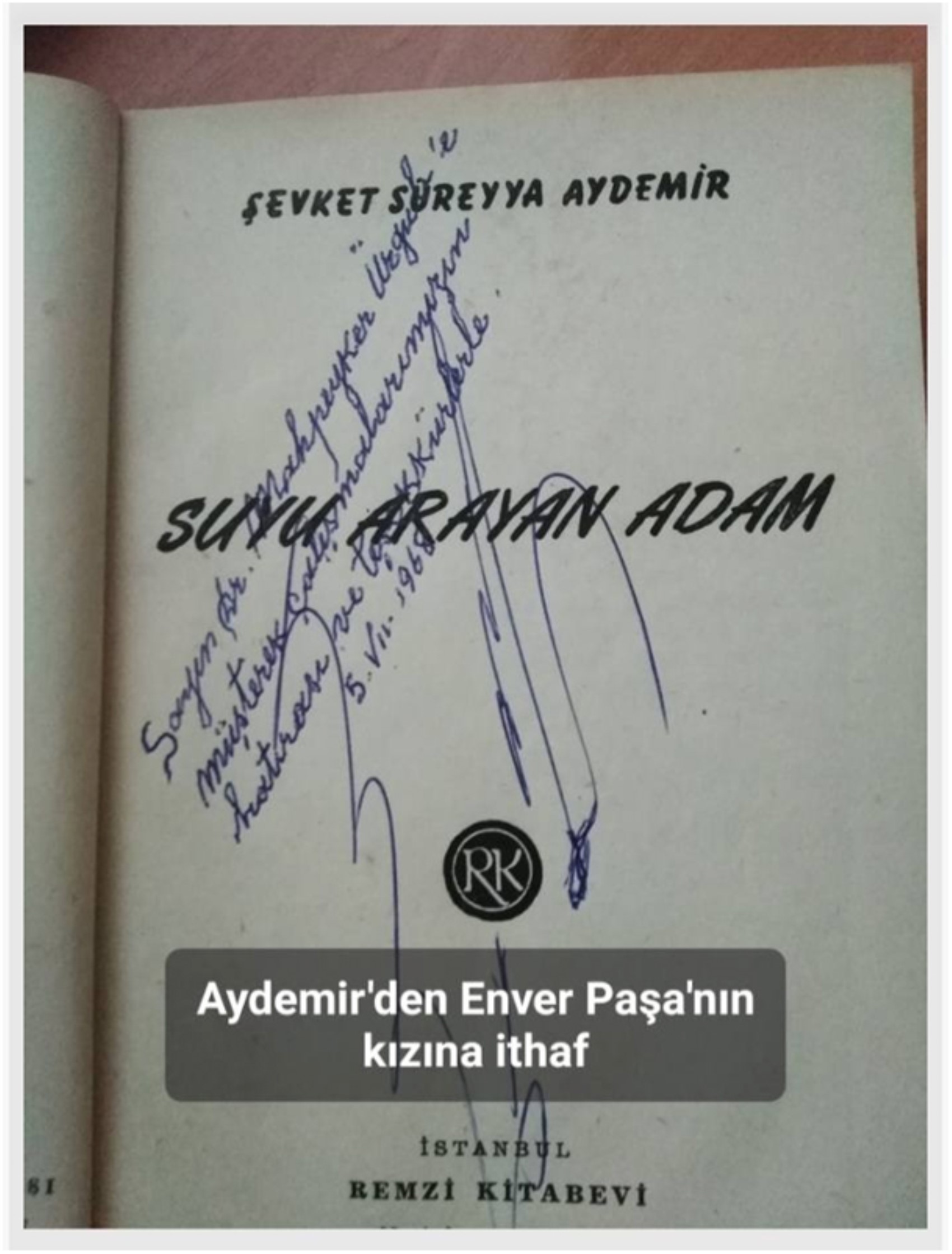
Aydemir wrote these books after being forced into retirement at a relatively young age by a government decree issued by the Democrat Party. His retirement date was the end of 1950. His first monograph is his own autobiography: Suyu Arayan Adam (The Man Who Sought the Water).
A REVOLUTIONARY COURT JUDGE: THE FISHERMAN OF ASTRAKHAN
Şevket Süreyya performed his reserve officer duty beyond the Munzur Mountains, as the new front line could only be established there after the Sarıkamış defeat. In the winter of 1917/18, Reserve Officer Aydemir was injured after being trapped under his horse on the battlefield. It is understood that he also faced the danger of freezing during this time. He received treatment in a field hospital for a long time. He was demobilized during the armistice. He returned to Istanbul via Trabzon. From there, he went to his family living in Edirne. He completed his interrupted education (Edirne Teachers' School: 1919 graduate).
While the civil war was ongoing in Russia, the Musavat government was established in Azerbaijan. This government requested teachers from Turkey. Influenced by Müfide Ferit Tek’s novel Aydemir, Şevket Süreyya went to Baku both to find a solution to his livelihood concerns and to do something for the Turan ideal. The Ministry of Education assigned him to Nuha. During the same period, the parents of our famous physicist Feza Gürsey were also teaching there: Dr. Reşit Süreyya Gürsey and Remziye Hisar.
When the Red Army entered Baku, they returned to Turkey (1921). Some time after the Red Army entered Baku, the Bolsheviks appeared in Nuha. An incident that took place in the house in Nuha where Aydemir worked as a teacher is sufficient to explain the new regime.
Şevket Süreyya’s house was raided. It was seized by a revolutionary (perhaps a Cheka official) who had come from Astrakhan. A while later, he saw the same fisherman acting as a revolutionary court judge, handing down a death sentence for a young female teacher on the grounds that "she did not hand over her gold to the government." The details regarding this story are examined under the heading "The Fisherman of Astrakhan" in Suyu Arayan Adam. Astrakhan is a city in the Don-Volga delta. Şevket Süreyya witnessed the radicalism of the Red Army in Azerbaijan.
He left there at the insistence of his girlfriend, Sitare. He went to Batum. During this time, the TBMM (Grand National Assembly of Turkey) government had appointed Memduh Şevket Esendal as our diplomatic representative in Tbilisi and Baku. He also met with him.
THE BOLSHEVIZATION OF AZERBAIJAN AND AYDEMİR
Şevket Süreyya had attended the Congress of the Peoples of the East in Baku, which began its work on September 1, 1920, as a delegate from Nuha.
There, he encountered Enver Pasha and representatives of the TBMM government. Turkish communists Mustafa Suphi and Ethem Nejat were also there. The broad participation at the congress and the enthusiastic anti-imperialist atmosphere impressed Şevket Süreyya. Thinking that a new world was being born, he attended the founding congress of the Communist Party of Turkey (TKP). In Azerbaijan, where he had come as a young teacher in pursuit of the Turan ideal, significant changes occurred in his worldview. However, Şevket Süreyya’s impressions regarding the founding congress of the TKP cannot be considered very positive. The majority were already Turkish soldiers who had escaped from prisoner-of-war camps. They had no agenda other than returning to their homeland.
The 11th Red Army’s crossing of the Caucasus barrier and descent into Tbilisi and Baku resulted in the Bolshevization of all newly established states in the Caucasus. This process was completed by the end of 1921.
STUDENT LIFE AT THE COMMUNIST UNIVERSITY OF MOSCOW
In January 1921, Nâzım Hikmet and Vâlâ Nurettin wanted to cross into Anatolia with nationalistic feelings. They boarded a ship with fake identities. Before going to Ankara, they were kept in Inebolu. They needed to obtain visas. During the three weeks they spent there, they encountered "Turkish Spartacists" who had come from Germany. The two young men were very impressed by this group wearing red scarves. Abandoning the teaching positions they had been assigned in Bolu, they reached Batum in September of the same year via the Düzce, Akçakoca, Zonguldak, and Trabzon route.
Their goal was to see the socialist society where people were equal and to live there. Thinking that there was no money in the socialist utopia, they spent the last of their money.
At this time, Şevket Süreyya was in Batum. Ahmet Cevat Emre, who had found a job at the KUTV University in Moscow, was also there. Until their agenda for going to Moscow became clear, they stayed for a while at the France Hotel and then in an abandoned villa belonging to a banker who had fled from the Bolsheviks. Ahmet Cevat Hoca cooked their meals. Vâlâ had taken on the responsibility for other tasks. It fell to Müşir Mehmet Ali Paşazade Nâzım to wash the dishes.
Ultimately, after a long journey, the "social family" in Batum arrived in Moscow. Here, they would receive an education based on scientific socialism.
During the education of Şevket Süreyya and his friends in Moscow, Lenin was seriously ill. Competition for the future leadership of the party and Soviet Russia had already begun. Theoretically, the debate revolved around the concepts of "socialism in one country versus world revolution." This debate would end within the borders of Russia in 1929. Stalin would become the "socialist tsar" of Russia. Trotsky would be sent into exile in Turkey.
Students who were considered to have received sufficient education at the university were graduated and sent to their countries as communists. Şevket Süreyya arrived in Istanbul at the beginning of 1924 with these ideals.
AYDEMİR’S COMMUNISM
Şevket Süreyya’s first activities as a member of the TKP took place in Batum: giving speeches. The year was 1921. Due to the conditions of the day, the TKP was able to operate as an Organization Bureau in Batum.
Şevket Süreyya’s true commitment to the ideal of communism began with the education he received in Moscow. Aydemir went to Moscow together with Ahmet Cevat Emre, Nâzım Hikmet, and Vâlâ Nurettin. His wife, Leman, was also with them. Their goal was to study at the newly opened KUTV University in Moscow. Ahmet Cevat had found a Turcology job there. He had also taken the young people with him through the mediation of Budu Mdivani. This small group, which Şevket Süreyya had called a "social family" since their days in Batum, reached Moscow with feelings of a "communist utopia."
There were students from all over the world there. For this reason, educational activities were carried out in a multilingual, multicultural environment. Some of the professors were leaders of the revolution (such as Trotsky, Bukharin, Stalin, and Kamenev). The classes were conducted as a series of seminars. In my opinion, the most successful student was Aydemir, while Nâzım Hikmet was not very interested in the classes. Nâzım was attending theater courses.
I had read somewhere that Şevket Süreyya attended a Comintern meeting. This must have been during his student years in Moscow. It must have been 1922 or 1923.
An anecdote regarding Şevket Süreyya’s life in Moscow is a protest demonstration in front of the Turkish Embassy. Here, Aydemir was giving a speech on a truck protesting the policies of the TBMM government regarding the Turkey People's Communist Party (THİF).
My thoughts on this incident are as follows: The incident cannot be related to the trial of the THİF in 1921. At that date, Aydemir was still in Batum. In all likelihood, the sequence of events must have been as follows: At a meeting commemorating the Paris Commune held at the Soviet Embassy in Ankara on March 18, 1922, it was decided to reactivate the THİF. Aralov was in Ankara. Preparations for the Great Offensive were proceeding rapidly. In accordance with the decision, the founding declaration was submitted to the Council of Deputies. This shows the party’s willingness to emerge legally. At that time, the head of the council of ministers was Rauf Orbay. The party held its congress in Ankara on August 15 under the chairmanship of Veterinary Major Hacıoğlu Salih. The government banned the party from operating on the grounds that foreigners (Russians) were present at the congress (September 12, 1922). The executives were sentenced to light prison terms in 1923.
Aydemir’s protest speech from the top of the truck must have been after this event. I may be mistaken, but the course of historical development suggests that this interpretation is correct.
THE RETURN OF A YOUNG TKP REVOLUTIONARY TO ISTANBUL
At the beginning of 1924, Şevket Süreyya returned to Istanbul by ship, equipped with revolutionary feelings. The journey had been quite arduous. In Istanbul, there was still the circle of the Turkey Workers and Peasants Party. This circle would turn into the TKP organization under the leadership of Dr. Şefik Hüsnü Değmer. At this time, Aydemir was accepted as a teacher at the Beşiktaş Barbaros Hayrettin Primary School. He wrote articles for the newspapers Aydınlık and Orak Çekiç. Şevket Süreyya Aydemir defines this period in Suyu Arayan Adam as "party automatism."
TKP AKARETLER CONGRESS (1925) AND A 10-YEAR PRISON SENTENCE
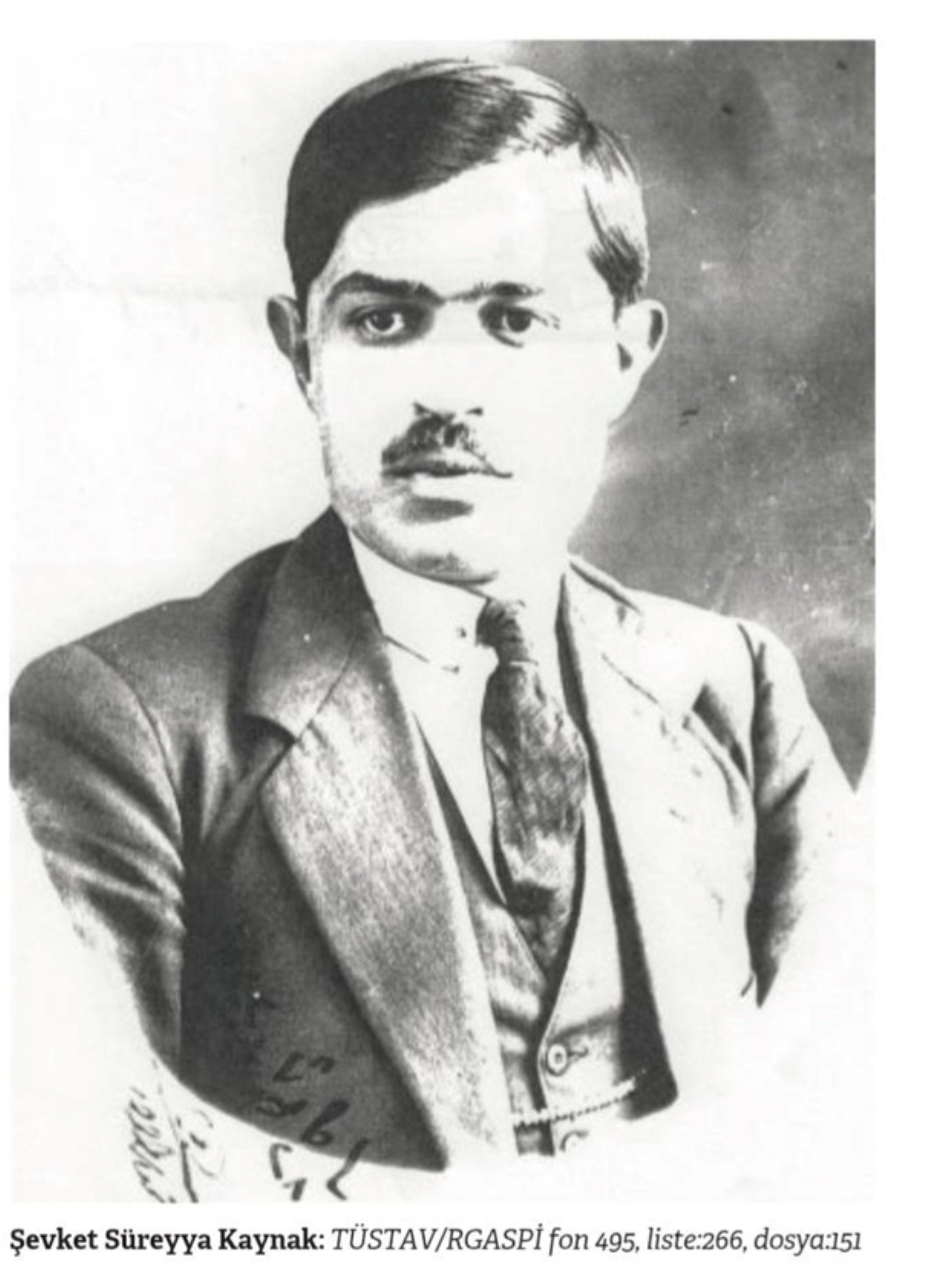
Since Aydemir returned to Turkey at the beginning of 1924, it is understood that he worked for the Bolshevik revolution in Turkey for one year. Following the Sheikh Said rebellion, the government banned the activities of the TKP circle upon the enactment of the Law on the Maintenance of Order (Takrir-i Sükûn). After the party’s Akaretler Congress (February 15, 1925), the TKP case was opened. Nâzım and Şefik Hüsnü went abroad with an escape plan organized by the TKP. They were tried in absentia. The trials took place at the Ankara Independence Tribunal. I believe the president must have been Kılıç Ali. On May 1, 1925, Dr. Hikmet and Aydemir were sentenced to 10 years in prison. Aydemir was sent to Afyon Prison to serve his sentence.
In his autobiography, Aydemir recounts how he was released on October 29, 1926. While Republic Day was being celebrated with fireworks in Afyon, the execution prosecutor arrived at midnight. He announced that he would be released before morning. He was taken out of the prison and taken to the city. This must have been a shock of freedom. The reason for the release was not a general amnesty. The Turkish Penal Code (TCK) enacted by the Republican government had come into force.
Probably, according to the new TCK, Şevket Süreyya’s "crime and punishment" remained undefined. Also, the "goodness" of Turkish-Soviet relations in the conditions of 1926 should be taken into account.
THE MEANING AND CONSEQUENCES OF THE 1927 ARRESTS
Only one year had passed between October 29, 1926, when Şevket Süreyya was released, and the TKP case opened on October 25, 1927. It is unknown what kind of activities Aydemir engaged in on behalf of the TKP in the meantime. In my opinion, it is more likely that it was related to his family’s livelihood.
Prosecutions against the TKP were initiated on October 25, 1927. This date corresponds to after July 1927, when President Gazi Pasha came to Istanbul for the first time.
Contrary to claims, the decisions of the 1927 TKP case cannot be considered harsh. Şefik Hüsnü and Kıvılcımlı were sentenced to three months. Vedat Nedim Tör and Şevket Süreyya were acquitted. Aydemir told the trial panel that the TKP was not a party operating in Turkey. Along with him, 25 others were also acquitted. Immediately after the decision, Aydemir would go to the Ministry of Education in Ankara to request a teaching position. Aydemir would be appointed to a much more important public office.
MEETING WITH THE UNDERSECRETARY OF THE MINISTRY OF EDUCATION
In Suyu Arayan Adam, Aydemir describes his meeting with the Undersecretary of the Ministry of Education after going to Ankara as follows. The Undersecretary was Kemal Zaim Sunel. With a slight smile, the Undersecretary said: "If the goal is the cause of the proletariat, we are all proletarians as a nation. Which country is as needy of its children as ours? Which nation is as poor as ours? We are involved in such a task that everyone must pour out whatever they have in their bag." When Aydemir left the room, he was now the Deputy General Manager of Higher and Technical Education at the Ministry of Education.
This appointment shows the desire of the republican regime to utilize Aydemir’s intellectual capacity. The Turkish revolution had taken him into its staff and paved the way for him to use his accumulation for our republic.
WHEN WAS İNKILAP VE KADRO PUBLISHED?
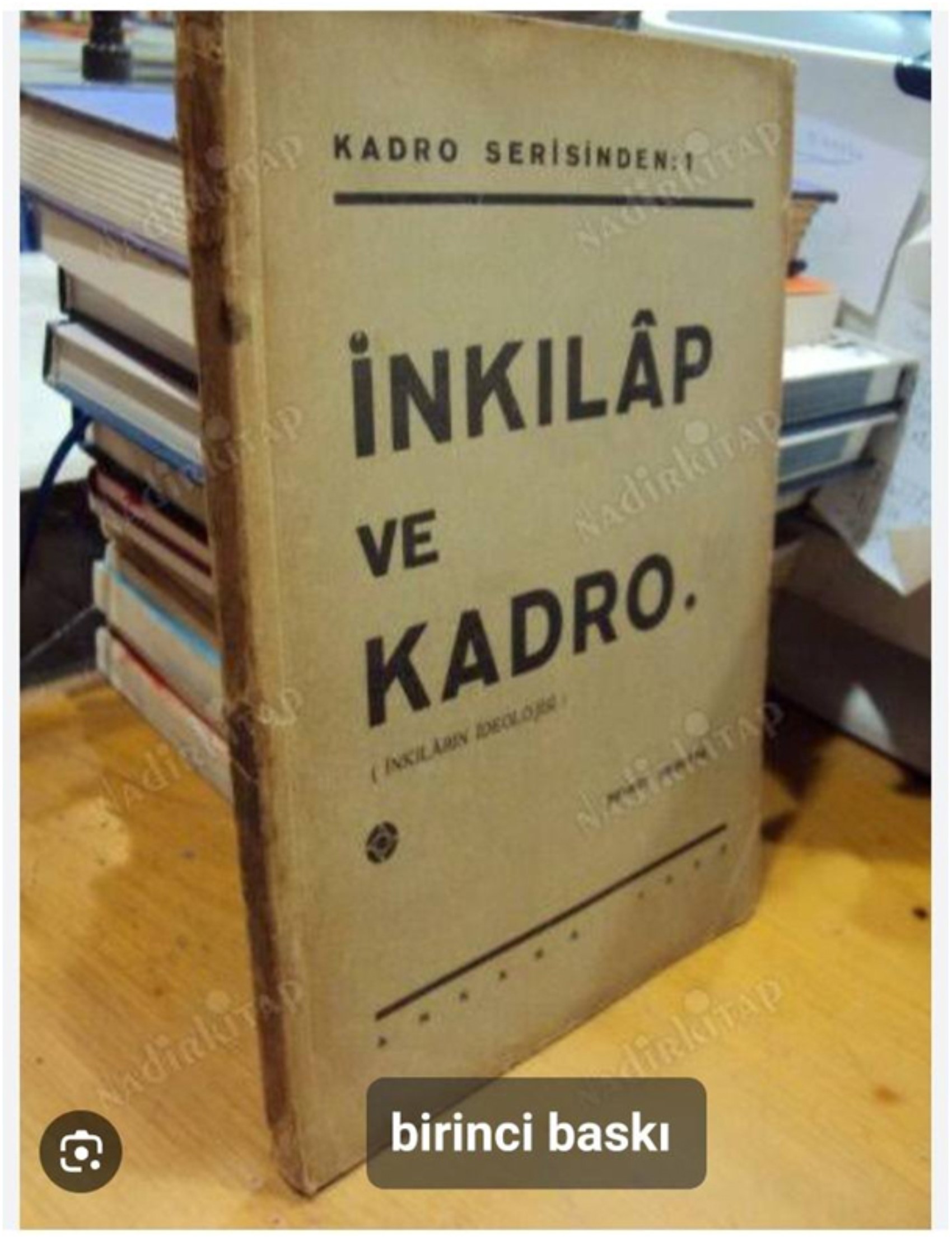
İnkılap ve Kadro (Revolution and Cadre) is the first book Şevket Süreyya published after the Kadro magazine began publication. The book is an improved version of the polemical articles Aydemir wrote on the "ideology of our revolution" published in Hakimiyet-i Milliye in 1931 and the conference he gave at the Turkish Hearth (Türk Ocağı).
THE KADRO MOVEMENT IS AYDEMİR’S MOVE TO PULL KEMALISM TO THE LEFT
The 3rd Grand Congress of the CHP dates back to 1931. At this congress, the "Six Arrows" of the CHP were determined. There was not much debate regarding republicanism, nationalism, and secularism among these principles. There were no problems with these issues. However, the debate over the party’s principles of revolutionism, populism, and statism has continued to the present day.
These principles are essentially leftist principles. The move to "pull Kemalism to the left," which began with the conference titled "The Ideology of the Revolution" that Şevket Süreyya gave at the Ankara Turkish Hearth, would continue with the start of the publication life of the Kadro magazine.
The editorial board, which included Şevket Süreyya, Vedat Nedim Tör, and İsmail Hüsrev Tökin from the old TKP cadres, aimed for a public-oriented economic understanding. In Turkish conditions, this meant state management.
In my opinion, this approach proposed a path of development to the Kemalist party’s undefined line in the economic field using Marxism and historical materialist analysis methods. In his articles, Aydemir named this the economics of "national liberation movements." His proposals were, in reality, one of the early examples of third-world socialism.
Şevket Süreyya bases his argument of "giving a leftist aspect to Kemalism" on the following theoretical foundation: In countries like ours that have fought a war of national liberation, the fundamental contradiction is not the labor-capital contradiction. The fundamental contradiction is between imperialism (colonialism) and colonial or semi-colonial states. The "vanguard cadre" of the war of independence must also be the pioneer of economic development.
ABDİ İPEKÇİ’S INTERVIEWS WITH ŞEVKET SÜREYYA AYDEMİR
Abdi İpekçi had interviewed Şevket Süreyya twice, towards the end of his life. The dates are as follows: November 1975 and March 1976. The interviews were published in Milliyet. It is seen that the conversations revolved more around the Tek Adam biography. The İkinci Adam (İnönü) and the establishment of the single-party administration were secondary topics. These interviews were the last ones conducted with him.
A CONSTANT GUEST OF ŞEVKET SÜREYYA: METE TUNÇAY
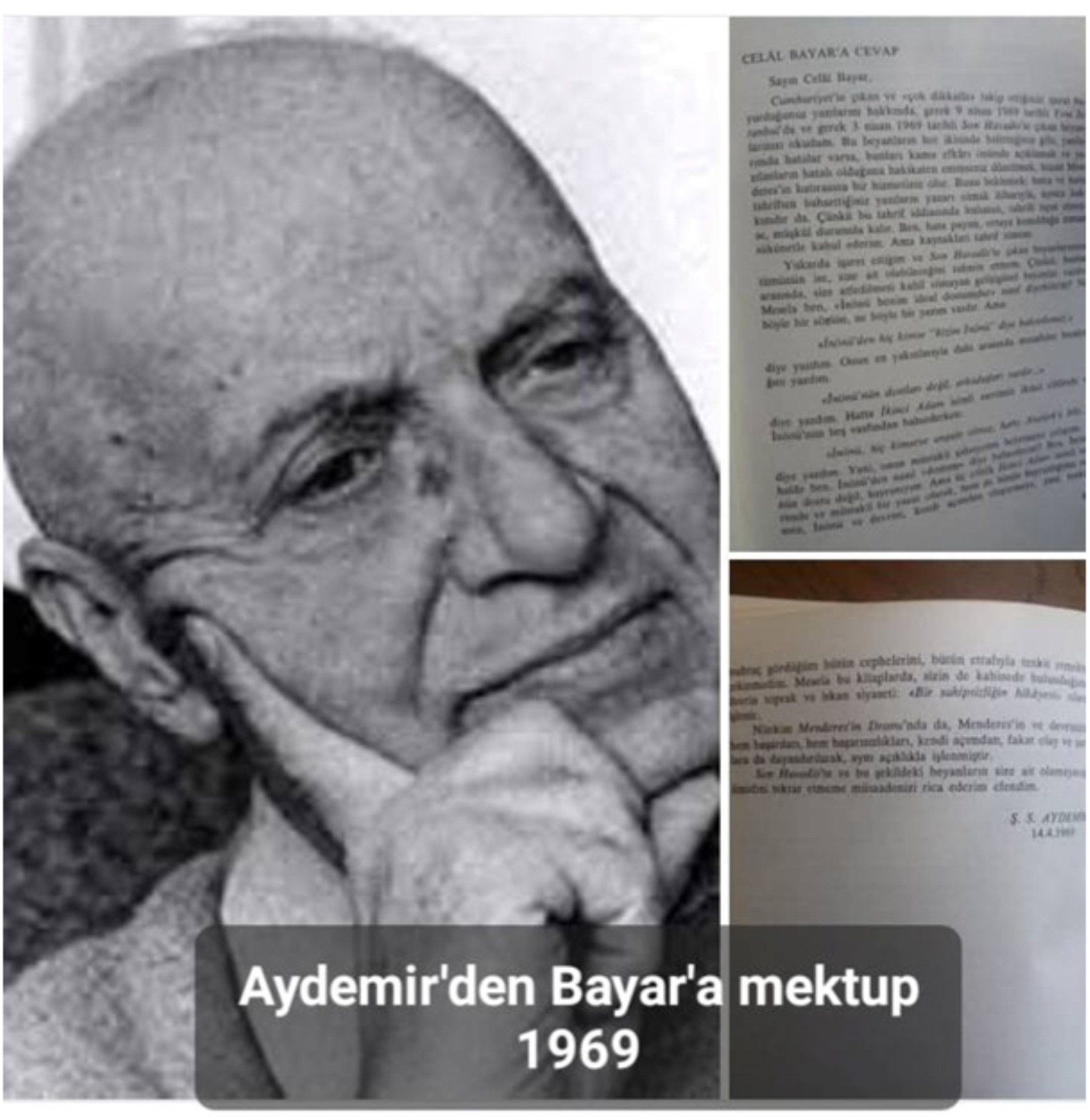
We know Mete Tunçay from his books Türkiye’de Sol Akımlar (Leftist Currents in Turkey) and Tek Parti İktidarının Yükselişi (The Rise of Single-Party Rule). I also read his books with great curiosity when I was a student at the SBF (Faculty of Political Sciences). Tunçay displayed a critical approach to our history of the national struggle and revolution in his research and publications. He even followed a line that was at times "anti-Atatürk revolutions." We understand from Halil İbrahim Göktürk’s book Bilinmeyen Yönleriyle Şevket Süreyya Aydemir (Şevket Süreyya Aydemir with His Unknown Aspects) that Mete Tunçay was a frequent guest of Aydemir. This frequency of visits must have been while he was writing Leftist Currents in Turkey. Aydemir had a small house in Bahçelievler. He would go there often. Later, an apartment building was built in place of this house.
Şevket Süreyya Bey liked to serve tea to his guests himself from his samovar. Tunçay’s relationship with Aydemir gradually strengthened; he also went to the famous author’s old farm by the Kayaş stream and his house in Umurbey. I do not agree with Mete Tunçay’s views on the Atatürk revolutions. In fact, I am completely against them. However, I agree with this view of his regarding Şevket Süreyya Aydemir: "I saw that Aydemir had not deviated from his views before 1925. The Kadroists had not turned back. The party (CHP) had become too bourgeois to be steered toward a non-capitalist path of development. This was the reason why Kadro could not hold its ground against the 'İş Bankası circle'."
A FEW WORDS ABOUT ŞEVKET SÜREYYA
Şevket Süreyya’s real fame came in the Turkey of the 1960s, during the democracy of 1961. His first product to herald this was Suyu Arayan Adam. The first edition of the book was published in 1959. This is an autobiography.
An important feature of Şevket Süreyya was that he had a broad tolerance that bordered on indifference. He was always prepared, even in the face of the harshest attacks. The most beautiful example of his power of self-criticism was his signing of his book for Vâlâ Nurettin, his friend since the Batum days, with these words: "I guess the finding of the water was at the expense of losing the way." The dedication is beautiful. But it is not very accurate. In my opinion, the author had not lost his way. Turkey had moved very far away from following his diagnoses and analyses.
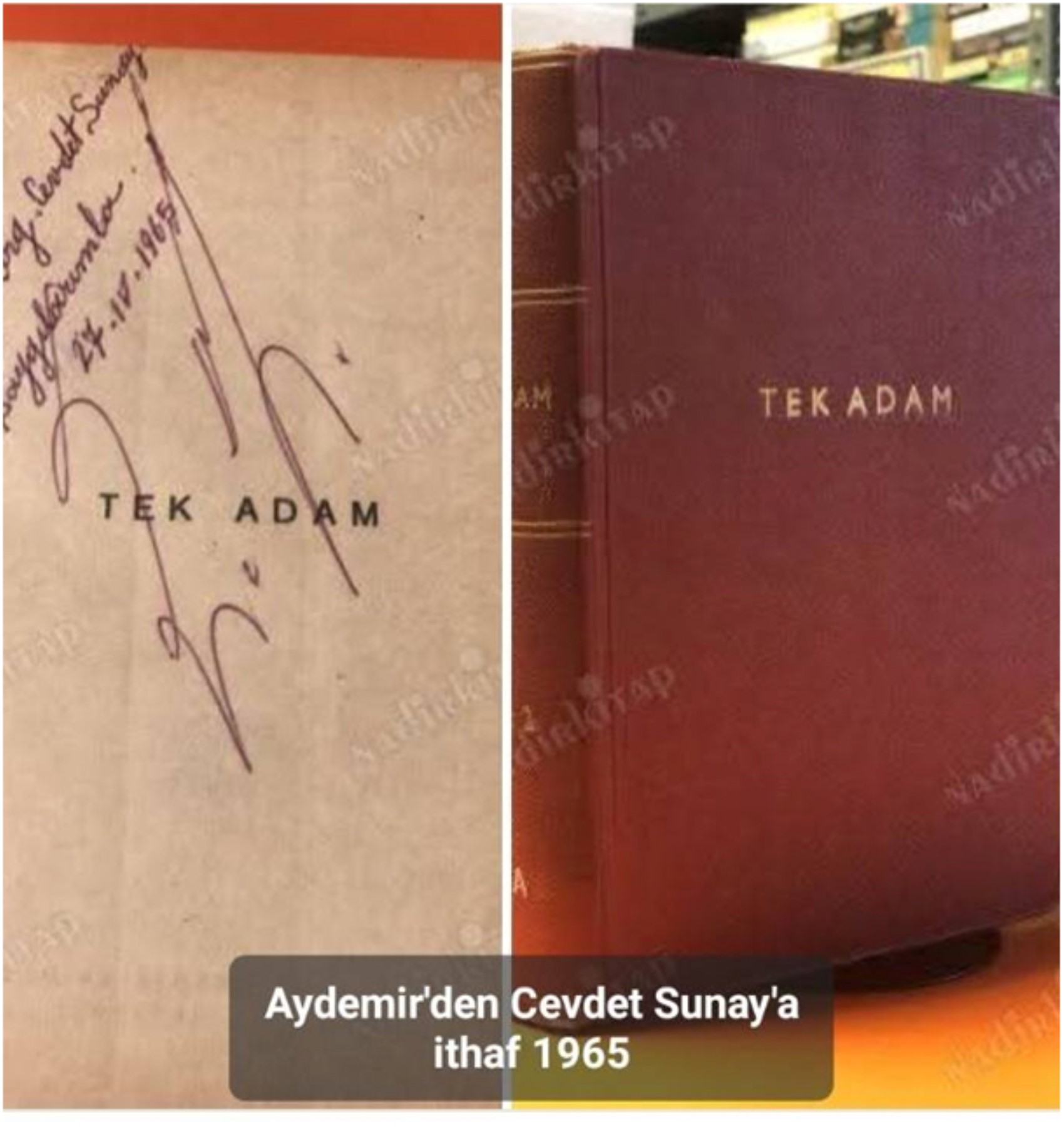
WHAT DID ŞEVKET SÜREYYA WANT TO DO?
Şevket Süreyya had tried to adapt the concepts of Marxist theory to Turkey’s unique conditions. Ideologically, he pushed Bolshevism into the background and continued his writing life through the concepts of development and social equality. He believed that Turkey could implement a unique development model without being integrated into international capitalism.
These views largely overlap with the "National Revolutionary Development Path" proposed by Doğan Avcıoğlu in Türkiye’nin Düzeni (Turkey’s Order) approximately 30 years later.
Would you like to get notifications about new developments and save news?
- NotificationsNew developments and breaking news
- SaveNews is stored in the app
Most Read
Statement from Nihat Zeybekci on the fund investigation
New 75,000-seat stadium plan for Fenerbahçe
Interpol and MIT tracking yields results in Izmir
ID convenience for KPSS candidates

2027 Budget: Taxes for the people, tax exemptions for capital
The reality of Akkuyu and the longing for national nuclear power
To whom and how was the Petition of Intellectuals submitted? Who accepted the petition?

The Çanakkale robbery -1- How was the Troy treasure smuggled out?

Artificial intelligence and the new imperialism

Ministry investigation into unauthorized promotional messages