


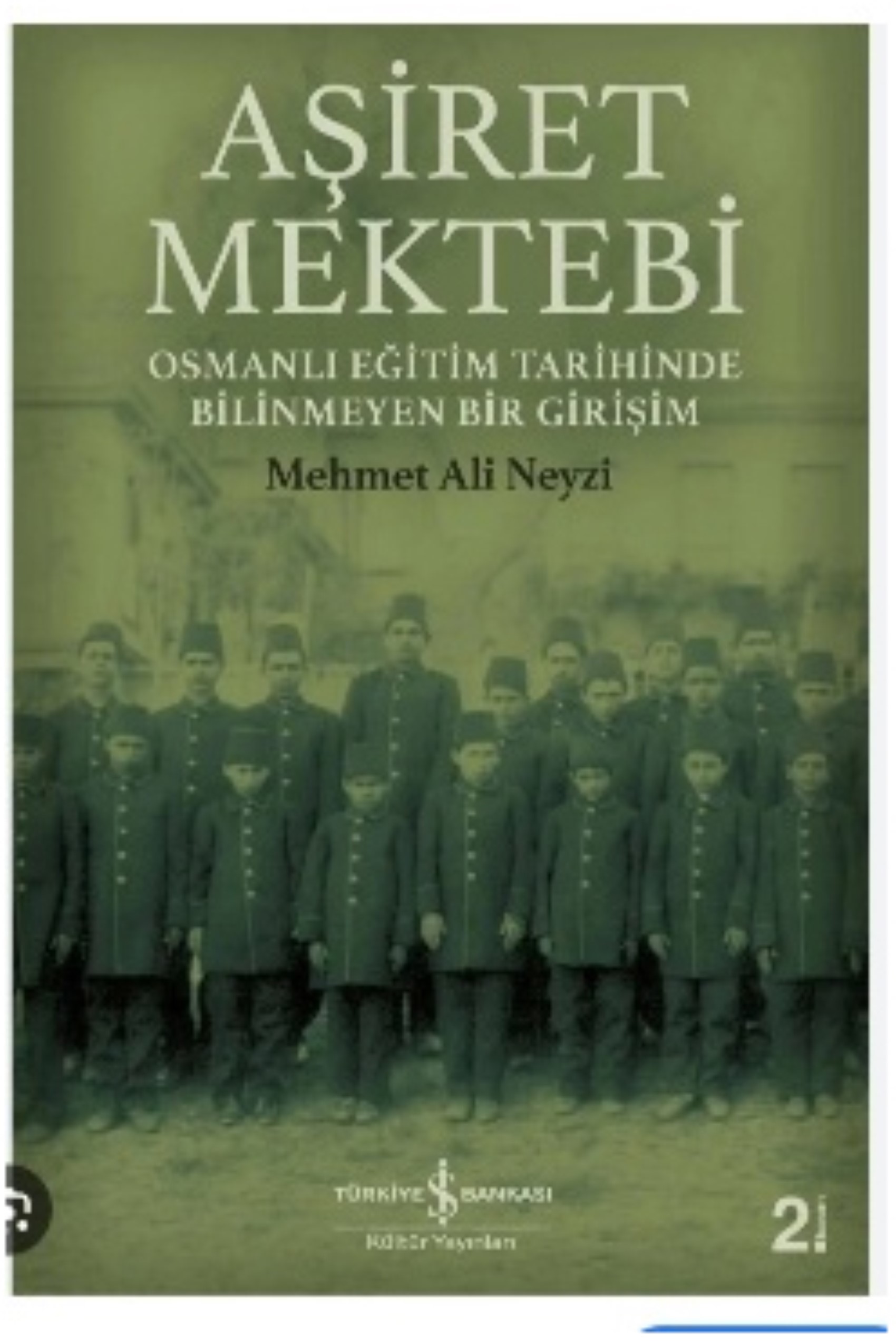
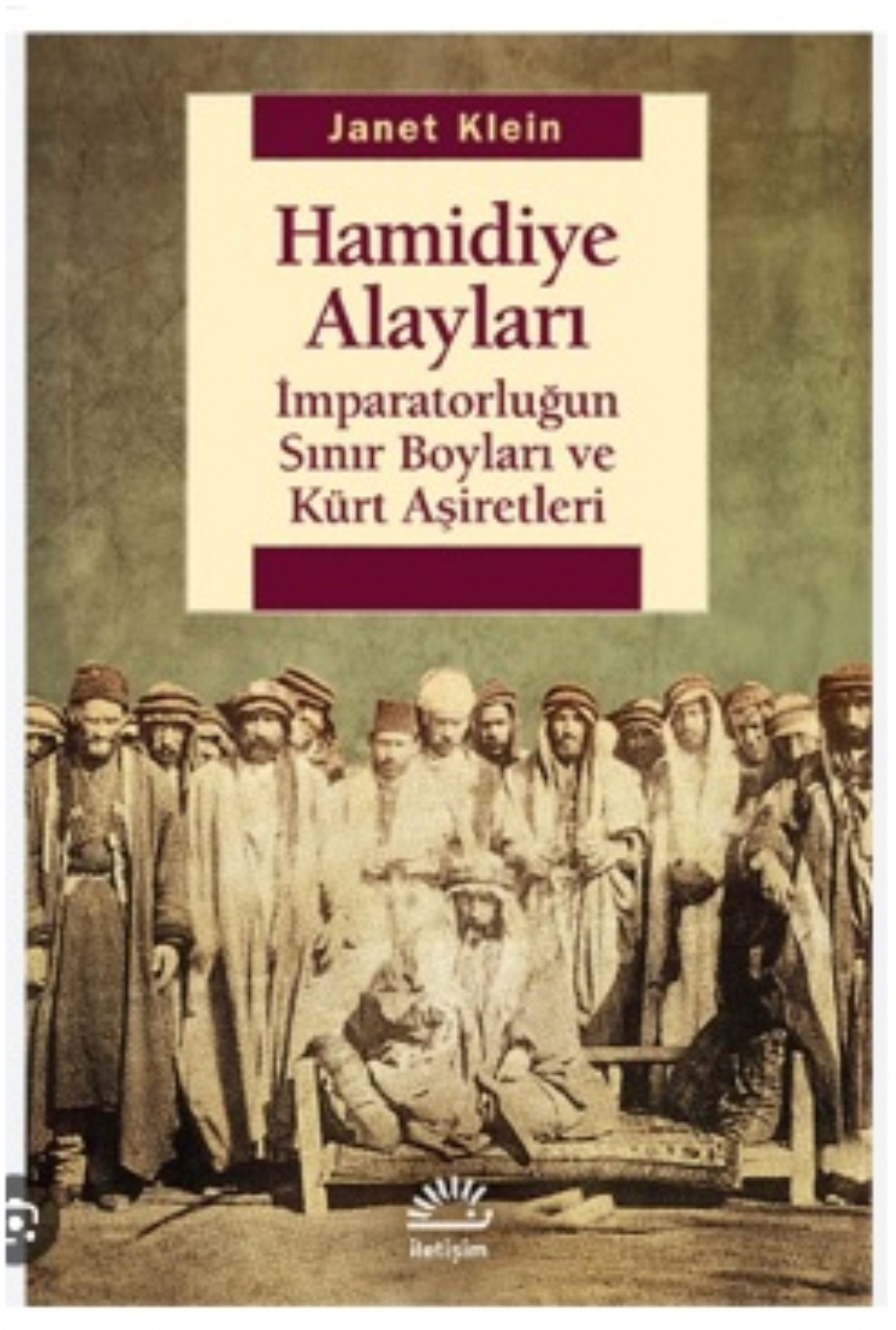
Sultan Hamid's Tribal School, a private educational institution: The Imperial Tribal School



The idea first came from Osman Nuri Pasha, who had served as governor in Hejaz and Yemen. He also prepared the founding proposal. The hometowns of the first students admitted to the school were as follows: Syria, Aleppo, Baghdad, Basra, Mosul, Tripolitania, Hejaz, Benghazi, Zor, and Jerusalem. At its inception, the school was intended for the "Aşair-i Urban" (meaning Arab Tribes).
A notable point is that the candidate students were children of tribal leaders. It would not be wrong to call this school a Sultan Hamid-style devshirme school (Enderun). The children recruited were Muslim children. They were not Turkish, with the exception of two Terekeme children.
Following this, Kurdish children were enrolled in the school upon the request of the tribal leaders of the Hamidiye Regiments. The school continued its education at the Esma Sultan Mansion until it was closed in 1907.
HOW WAS THE SCHOOL FOUNDED?
On June 30, 1890, it was announced in the newspapers that the Tribal School would be established. Education began in 1892.
A 5-year education period was envisioned for the school. Osman Nuri Pasha was tasked with preparing the school's regulations (bylaws).
THE VISIT OF TRIBAL LEADERS TO SULTAN ABDULHAMID II
Tribal leaders were invited to the capital in 1891. When we look at the history of center-periphery relations, an invitation from the Ottoman palace is something met with suspicion. At the end of such an invitation, something might happen to you.
The tribal leaders certainly had anxieties based on historical reasons. They suspected that this invitation might be an Ottoman ploy. I am sure they thought they could be arrested and exiled, just as happened after the May 27, 1960, coup. Once the situation became clear, they were relieved. The Caliph had truly invited them.
The first group, consisting of 112 people, was brought to Istanbul from Trabzon. The convoy set off from Trabzon by steamship on March 21, 1891. The Arslan steamship had been sent from Istanbul to bring them.
In Trabzon, the tribal leaders were welcomed by the governor, military and civil officials, and the mayor with a military ceremony accompanied by a band.
Those who came in the first group left their horses in Trabzon and only took their saddles with them. Later arrivals, realizing there was nothing to worry about, brought their horses to the capital by steamship as well.
The tribal leaders in the first group were from the following tribes: Sıpkı, Hasenanlı, Cibranlı, Karapapak Saraçlı, Karapapak Taştan, Haydaranlı, Zilanlı, Celali, Adamanlı, and Milan tribes.
The tribal leaders, who reached Istanbul with their entourages, were hosted at the Rami Barracks and the New Barracks.
On May 7, 1891, the second group arrived in Istanbul, again via the port of Trabzon. This time, those who arrived were the leaders of the Haydaranlı, Zırkanlı, Adamanlı, Makuri, Takuri, İlan, Şemski, Loli, and Şuyuli tribes, along with the men they brought with them.
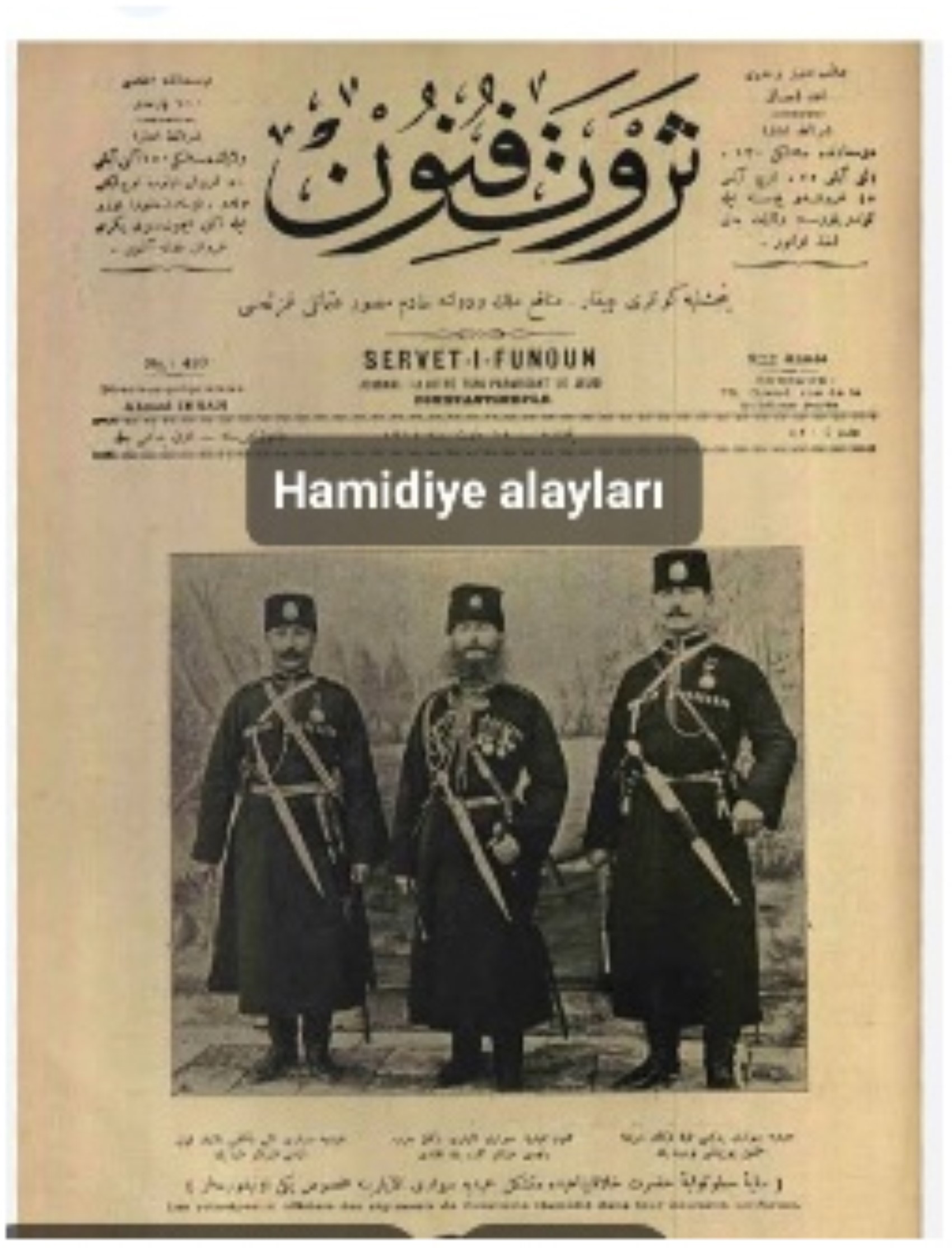
The tribal leaders held a parade for Sultan Abdulhamid II. As cavalry, 15, 10, and 5 gold coins were distributed to those who arrived according to their local importance. Other favors were also granted. Sultan Hamid personally pinned the medals on the tribal leaders.
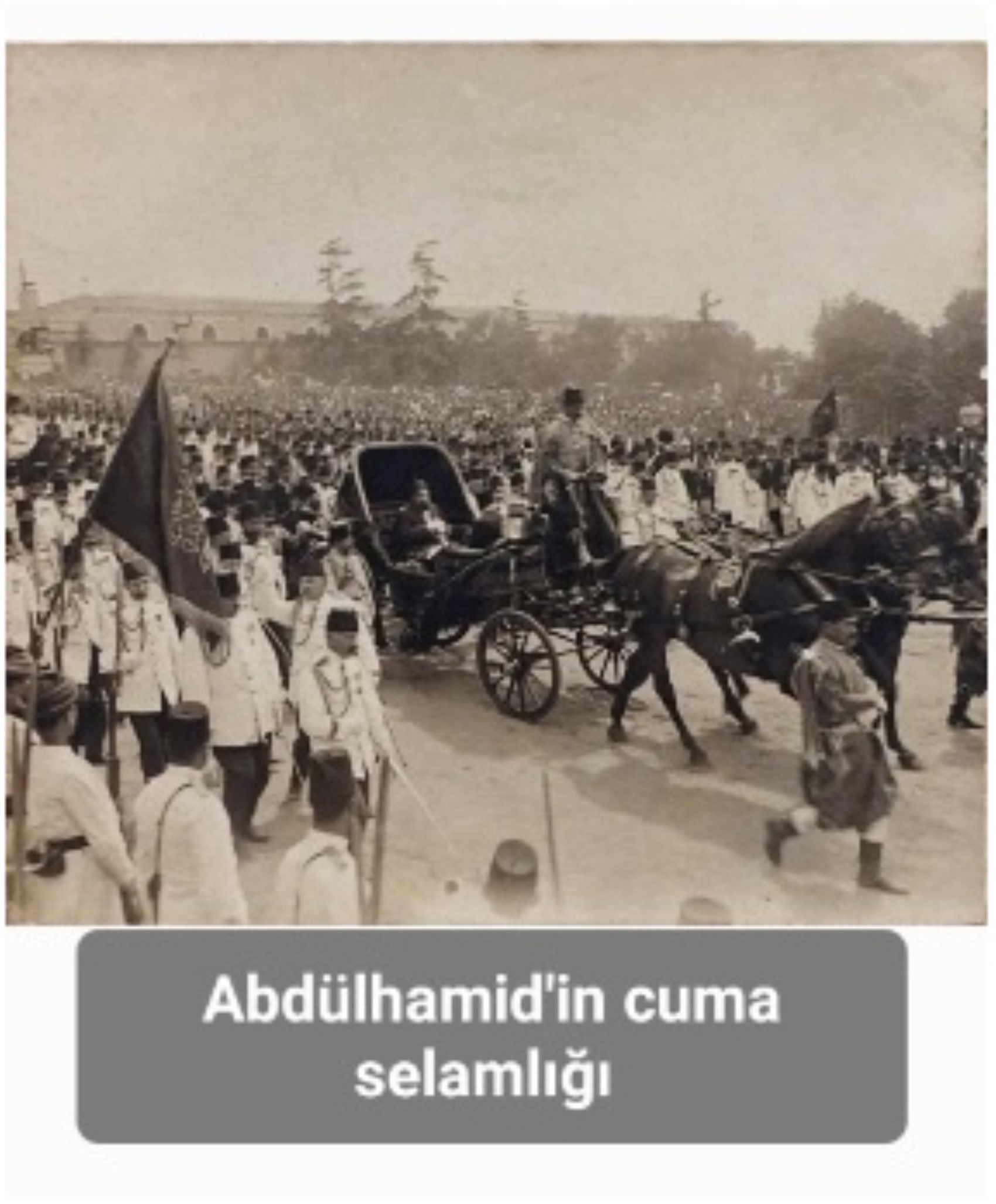
After this date, tribal regiments continued to be present at the Sultan's court at a representative level.
During the Friday procession (Cuma Selamlığı), in addition to the Karakeçili Cavalry Regiment (Ertuğrul Regiment), a representative unit from the tribal regiments and the Guard Regiment consisting of Albanians would be present at the ceremony. These units would oversee the Caliph's journey to and from the mosque. The Friday procession was the most important religious-political ceremony of the Sultan Abdulhamid era. Diplomatic representatives in Istanbul were specifically invited. The guests would watch the ceremony from the Viewing Pavilion.
When looking at the photographs taken by Fausto Zonaro, the marching order in front of and behind the four-horse royal carriage taking the Sultan to the Hamidiye Mosque explains the "Ottoman understanding" of the era.
ABDULHAMID'S TRIBAL POLICY
After the 1877-78 Ottoman-Russian War, Sultan Hamid sent a Reform Committee to the Six Provinces (Vilayat-ı Sitte). The Six Provinces are the six provinces around Lake Van, referred to as Armenia in Western literature. This committee would be followed by the establishment of the Hamidiye Regiments and the Tribal School. Its goal was to ensure loyalty to the palace.
It is significant that Sultan Hamid organized the palace guards from Albanians and the Hamidiye Regiments from Kurds.
The name of the school he founded is the Imperial Tribal School (Aşiret Mekteb-i Hümayunu).
Abdulhamid primarily wanted to open a private educational institution in the capital for the children of Arab tribes. This was followed by Kurdish and Albanian tribal children.
Abdulhamid was aware that decentralist demands would be the end of the empire. Tribal leaders initially thought their children would be taken hostage. There were examples of this in Ottoman history.
After a while, the Kurdish elites assigned to the Hamidiye regiments shed their anxieties (after the Arab tribal children arrived in Istanbul and were settled in the school) and became willing to have their own children educated in the capital under the Sultan's protection.
This willingness coincided with the Sultan's expectations. Thanks to receiving education at this school, the children of tribal leaders would become public officials when they returned to their homelands instead of becoming tribal leaders in the future—as officers or civil administrators.
HOW WERE THE FIRST STUDENTS OF THE TRIBAL SCHOOL WELCOMED?
The first students of the school, the tribal children, were welcomed at the pier by students of the School of Political Science (Mülkiye Mektebi). Those coming from Arab provinces were put on steamships from the Port of Beirut, while those organized from Kurdish tribes were put on steamships from the port of Trabzon.
 WHERE WAS THE TRIBAL SCHOOL?
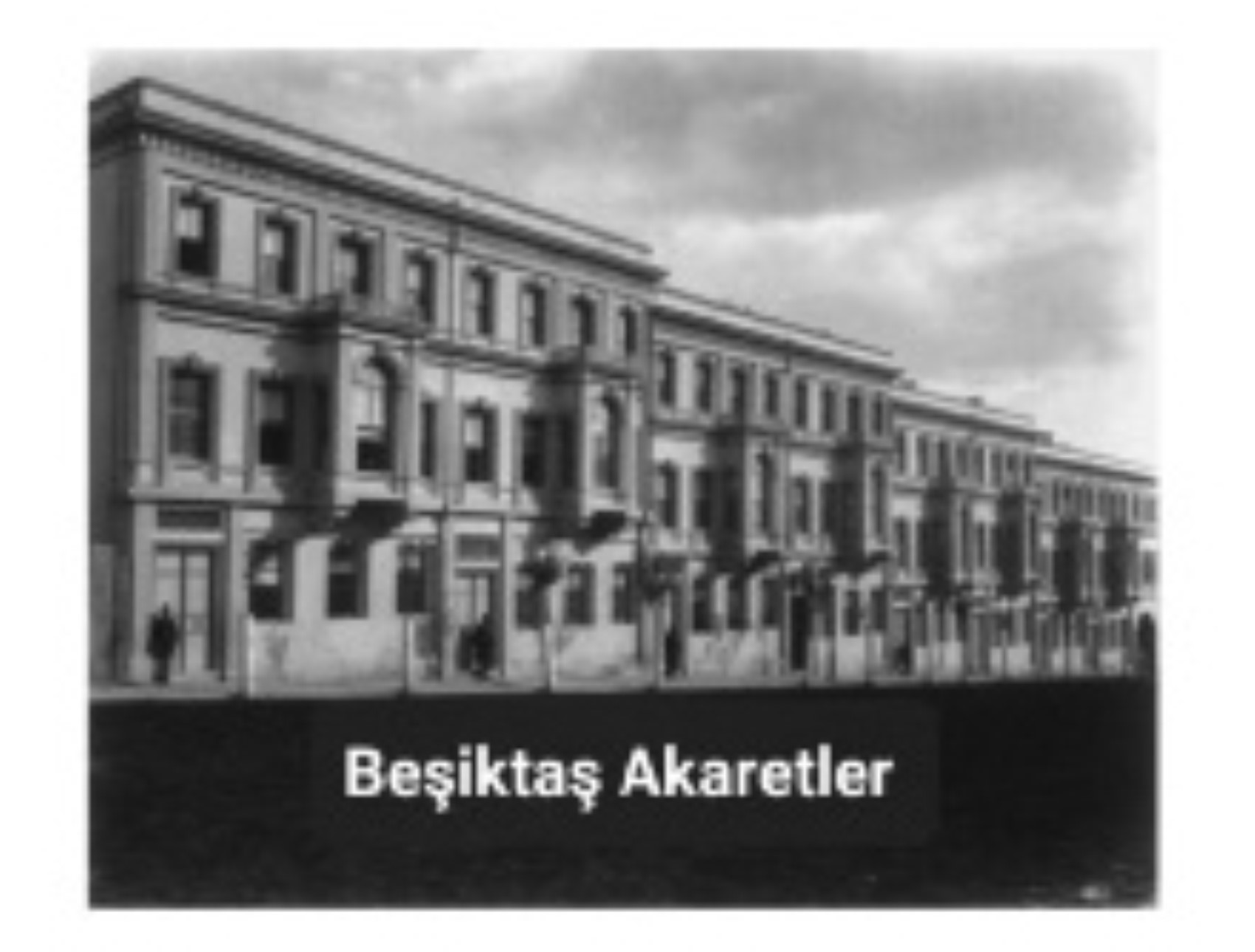
The first location of the Tribal School was in Akaretler, Beşiktaş. However, when it was understood that the physical conditions in these buildings were not suitable for students coming from different climates of the Ottoman realm, a search for a new location was initiated under the direct instruction of Sultan Hamid.
As a result, it was decided that the Esma Sultan Mansion in Kabataş was suitable for the school. Esma Sultan was one of the daughters of Abdulaziz. Another mansion in Kuruçeşme was allocated to her. Education continued in the mansion on the Kabataş slope until the date the school was closed (1892-1907). After the school was closed, the students were sent to the Military Academy (Harbiye Mektebi). Today, there is a vocational high school on the site of the Esma Sultan Mansion.
I would like to add a few more words to clear up any doubts regarding the location of the school. As is known, there is an Esma Sultan Mansion next to the Grand Mecidiye Mosque on the Ortaköy coast today. It should not be confused with the Esma Sultan Mansion allocated for the Tribal School. It was a mansion purchased by Sultan Hamid to look after the children who were orphaned after Esma Sultan's death at a young age. Esma Sultan never lived in the building, which suffered two fires.
SOME GRADUATES OF THE TRIBAL SCHOOL
Some graduates of the Tribal School were elected to the First Grand National Assembly of Turkey. For example, Hasan Sıddık Haydarani (Van) and Dersim deputy Kankozade Hasan Hayri Bey. A very interesting example: Cibranlı Halit, the founder of the Azadi (Kurdish independence committee) organization, is a graduate of this school.
Hasan Sıddık Haydarani recounted the years he spent at the Tribal School in an issue of the magazine *Yakın Tarihimiz Mecmuası* published in 1963. In the interview he gave to the magazine, Haydarani described how the students were taken to their homes for vacation in the summer months under the supervision of officers, that the education was very good, and mentioned their uniforms with velvet cuffs and their closed collars that read "Aşiret Mekteb-i Hümayunu".
Sultan Hamid would invite the school's students to iftar twice during Ramadan. After the meal, the Sultan would appear on the balcony and call out, "How are you, my children?" The students would respond three times, "Long live my Sultan!" From what Hasan Hayri Bey recounted, it is understood that the students continued their education under the protection of the Caliph Sultan in their flashy uniforms.
After graduation, the students were sent to their own provinces, especially with official duties. This duty would be as a junior official in civil administration or as a first-level officer in the tribal regiments.
A FEW SOURCES ON THE SUBJECT
Bekir Biçer, *Sultan II. Abdülhamid’in Kürt Politikası* (Sultan Abdulhamid II's Kurdish Policy); Rahmi Tekin, Esmer Duran, *Osmanlı Arşiv Belgeleri Işığında Aşiret Mektebi* (The Tribal School in the Light of Ottoman Archive Documents); Celal Temel, *Aşiret Mekteplerinde kimler okudu?* (Who studied at the Tribal Schools?).
I came across an article on the Tribal School written by the late Necdet Sakaoğlu in the *Istanbul Encyclopedia* (Yurt Publications). There is also an entry on the Tribal School in the *Maarif Encyclopedia*. The authors are Fatih Demirel and Ahmet Vurgun. It is also necessary to mention the article and papers on the Imperial Tribal School written by Bayram Kodaman for the *Islam Encyclopedia*.
THE SCHOOL'S CURRICULUM
Language and religious education seem to be the priority at the school. There are courses in the Quran, Islamic History, Ottoman Turkish, Ottoman geography, Catechism (İlmihal), arithmetic, and geometry (algebra and geometry), and French. Although the school was not a military school, military training courses were also included in the program.
Students admitted to the school start with the alphabet. This means starting from scratch in everything. There are courses such as Tajweed, vocabulary, calligraphy (beautiful handwriting), *Qisas al-Anbiya* (History of the Prophets), Turkish grammar, and Arabic grammar.
In the theses I examined regarding the Tribal Schools, there are also student achievement charts compiled from the archives.
TWO INTERESTING NOTES
The first of these is the admission of students from the Dersim Alevis. However, Alevis were not admitted to the Hamidiye Regiments. I could not research how many of these students there were. The second is the admission of two students from the Karapapak tribes. The Karapapaks are Terekemes living in the Kars, Ardahan, Iğdır, and Muş regions. The Karapapaks are an Oghuz-Turkmen tribe. They most likely migrated from the Caucasus during the 1878 Ottoman-Russian War and settled in Ottoman lands.
PROBLEMS AT THE TRIBAL SCHOOL: FIGHTS BETWEEN STUDENTS
After educational activities began, some problems started to arise. It was understood that Abdüsselam, who came from Tripolitania, was married.
Abdüsselam missed his wife very much. He wanted to return home to his wife. Since it was understood that it was not very possible to keep Abdüsselam, who should not have been older than 16 according to the student admission regulations, in the school in this longing, he was sent to his homeland after receiving 4-5 months of training at the Military Academy.
After a while, fights began between Arab and Kurdish students. I have seen writings mentioning these events. The administration decided to keep gendarmerie at the school as a solution. Security matters at the school were referred to the Ministry of War (Bab-ı Seraskeri).
In the first year, 40 students were admitted. An age limit of 12-16 was set for admission. The idea of the Ministry of Education was to send the graduating students to the School of Political Science or the Military Academy. Students who wished could return to their homelands and be assigned to the Hamidiye Regiments.
Several buildings in Akaretler, Beşiktaş, were arranged for the school. The first-term students experienced adjustment problems there. Because Istanbul's air was more humid than the Arab and Eastern provinces, the children became ill. The difference in climate caused them to experience serious health problems.
It was decided to keep a permanent physician at the school. The students were examined morning and evening. Students who could not recover despite treatment were sent to their homes with escorts.
IDRIS BITLISI (IDRIS-I BITLISI)
Idris Bitlisi is a Kurdish bey who lived during a period when there were wars of dominance between the Ottoman and Safavid states. He is an intellectual figure of the era who wrote in Persian and Arabic. Like Sharaf Khan, he comes from a family that ruled Bitlis. His first contact with the Ottoman State was during the reign of Bayezid II. He went to Istanbul at his invitation. At Bayezid's request, he wrote the book *Heşt Behişt* (Eight Paradises), which covers the first eight Ottoman sultans. The book is in Persian. During the reign of Yavuz Selim, he became an advisor on Eastern policy. Idris Bitlisi is the most important actor who ensured that Kurdish feudal lords took part on the Ottoman front against Shah Ismail. He was personally present at the Battle of Chaldiran in 1514. He was at Yavuz's headquarters during the battles of Ridaniya and Marj Dabiq.
He died in Istanbul at the beginning of the reign of Suleiman I (the Magnificent). His tomb is near the Eyüpsultan Mosque. I saw a photo recently. The HÜDA PAR chairman visited his tomb. I recommend you think a little about the historical origins of the visit.
The importance of Idris Bitlisi is not so much the books he wrote, mostly in Persian, but that he took a position on the side of the Ottomans against the Safavid State.
The Kurdish status quo established by the Ottomans through Idris Bitlisi lasted until the era of Abdulhamid II. This status quo was decentralization in the broadest sense in exchange for loyalty to the Caliph. This policy meant that the regional feudal lords were almost independent.
SHARAF KHAN AND SHARAFNAMA
While writing this article, I came across an article by Seyfi Cengiz analyzing the *Sharafnama*. As is known, the *Sharafnama* was written in 1597. Its author is Sharaf Khan Bitlisi. It is understood that there were a large number of tribes in Eastern Anatolia as of that date. The tribes showed differences in terms of their languages and demographic structures.
The Kurds, who were mostly Shafi'i before Ottoman rule, became closer to the Hanafi-Sunni faith after the defeat of the Shiite Safavid state. The *Sharafnama* was written in Persian. The author, Sharaf Khan, states that his ancestors were the rulers of Bitlis. The ruler must have been the sovereign—the feudal lord—of Bitlis and its surroundings. The book provides a detailed inventory of Kurdish tribes. The Kurdish translation of the book was done at a late date: 1858. Its title is "Tevarih-i Kadim-i Kürdistan". This means the ancient history of Kurdistan.
PROBLEMS FACED BY ABDULHAMID
Sultan Hamid had ascended to the throne by forming an alliance with the reformist wing of the Sublime Porte elite. It is also possible to call this the compromise he made with Midhat Pasha. The declaration of the Basic Law (Kanun-ı Esasi) and the convening of the parliament were based on the agreement he made with the elite led by Midhat Pasha.
Sultan Hamid was not satisfied with the weak ground on which his reign rested. He was displeased. The regime he committed to had established a constitutional monarchy limited by political representation and a constitution.
He broke the alliance shortly after by relying on the conservative faction. At the head of this faction was Ahmet Cevdet Pasha. He had the liberal constitutionalists arrested through a conspiracy. He had them tried in a sham court: The Tent Court trials turned the constitutional regime into an absolute one.
Until the re-declaration of the Constitutional Monarchy on July 23, 1908, the regime was *de facto* an absolute monarchy. I use the word *de facto* specifically. Sultan Hamid had dissolved the Chamber of Deputies, but the members of the Senate (Ayan Meclisi) maintained their status. They were receiving their salaries. This situation continued until the Young Turk revolution.
In addition to this, the Basic Law continued to be published in the State Yearbooks every year. On paper, the constitutional regime continued. The situation continued like this until 1908 without the representative assembly of the parliament being invited to meet.
Abdulhamid cared about the appearance that the constitutional regime was continuing. This diagnosis of mine is confirmed by the opening speech (nutk-u iftitahi) he made when the Chamber of Deputies reconvened in 1908.
The despotic regime that Sultan Hamid managed from the Yıldız Palace gave birth to the Young Turk opposition. A secret organization was established at the Military Medical School. This organization was the Committee of Union and Progress. Its founding date is also very significant: 1889. The centenary of the French Revolution.
This date contained a political message: The Young Turks were bourgeois revolutionaries.
Abdulhamid never fully managed to bring the Young Turk opposition under control. He tried to compromise from time to time.
He tried to disperse the anti-Yıldız Monarchy front by satisfying them in various ways. As in the example of Mizancı Murat Bey.
The second issue Sultan Hamid faced was Serbian, Greek, and Bulgarian nationalism in the Balkans. The version of this in Anatolian lands was Armenian separatism.
The Armenians caused very serious security problems from the first constitutional period until the end of the armistice period (1876-1922). They established militant organizations: such as Dashnak and Hunchak.
There was also an underlying Arab nationalism. It would be more accurate to call this "kavmiyatçılık" (ethnic nationalism).
The Arabs did not see the Caliphate being in the hands of the Ottoman Sultan as legitimate. According to them, the Caliphate was the right of the "Quraysh". The Turks were not Arabs. They could not be the standard-bearers of Islam.
When Sharif Hussein raised the flag of rebellion in 1917, he said the words "the blood, life, and property of the usurper Turk are halal" for this reason.
Sharif Hussein based these words on his claim that he was a descendant of the Prophet.
The complaints of the non-Turkish Muslim peoples of the empire, such as the Albanians and Bosniaks, were not religion-based. They were complaining about the maladministration of Ottoman officials.
Despite this, they did not pursue the cause of separatism until the 1908 constitutional monarchy. They appeared loyal to the sovereign, the Caliphate, and the sultanate.
After the Young Turk revolution, they were represented in the Chamber of Deputies and the Senate.
The hottest issue that Sultan Abdulhamid II had to deal with was Armenian separatism.
From the 1878 Treaty of Berlin to the 1915 Deportation Decree, Westerners demanded reforms in favor of the Armenians. And they did so continuously. By reform, they meant the establishment of an autonomous administration for the Armenians.
In the eyes of the Westerners, no matter what the Armenians did, they were right; the violent acts they resorted to were legitimate. All of Europe supported the Armenian cause. The Armenians were right even in their acts of rebellion, the Ottoman Bank Raid, and even when they organized an assassination attempt on the Sultan going to the Friday procession.
KURDS-ARABS-ARMENIANS
The Kurds did not seem to have any serious problems with the capital. First of all, they were Muslims and loyal to the Caliph.
In the Safavid-Ottoman wars, they took sides with the Sunni Yavuz Selim against the Shiite Shah Ismail. From Idris Bitlisi onwards, the Kurds became allies of the Ottoman sultanate.
In fact, the order of the Kurds had not changed since the Seljuks. The real rulers of the region were the Kurdish feudal lords and sheikhs.
They did not have tax responsibilities like those in Anatolia and the Balkans. They were only expected to contribute to the Ottoman army with their tribal forces if there was an imperial campaign on the Iranian front. The order continued like this until the Tanzimat. The order changed with the Tanzimat.
A geography called Kurdistan was being mentioned. But it is not clear exactly where it is. The earliest equivalent definition for this is in Xenophon's *Anabasis* (The March of the Ten Thousand) as Kardaka.
Here, the main issue was that the place that Armenian separatists saw as their own country more or less overlapped with Kurdistan.
For these reasons, Abdulhamid thought that the survival of his state in the face of internal and external threats could only be possible if the Arabs, Kurds, Albanians, and Bosniaks rallied around him. This was the policy of "Islamic brotherhood" (uhuvvet-i İslamiye). All of the elements in question were Muslims.
The way for the policy of Islamic brotherhood to be successful was through the satisfaction of the mentioned ethnic elements. This policy could be the employment of the mentioned ethnic elements in the administration and the army without discrimination.
He would try this path first.
As long as the Kurdish rulers were not interfered with, there would be no serious problem with them. In short, as long as the ancient order beyond the Euphrates continued, the feudal lords would obey the Sultan. This projection was tested and verified in practice. Things changed with the Tanzimat. Equality on the basis of Ottoman citizenship and central administration wanted to change the centuries-old status quo.
The real issue was the Arabs. It was known that they were on the verge of betrayal. The Ottomans had always favored the "Noble Arab Nation" (Kavm-i Necib-i Arab). It was necessary to respect them. Because they were descendants of the Prophet.
The Ottomans had served the Arab provinces. The Arabs, on the other hand, had made no contribution to the Ottomans, and the resources of the capital had always been used for them. Preparing the Kaaba for Hajj every year and the Surre Processions required a serious expense. But the Ottomans could not avoid this. Since the Ottomans were the standard-bearers of Islam, nothing could be avoided. One of the Sultan's titles was *Hadim-ül Haremeyn* (Servant of the Two Holy Cities). This phrase means that the Sultan is the servant of Mecca and Medina.
Sharifs who are descendants of the Prophet are always respected. Favors were sent to these families.
Let me state my sincere opinion: While the Ottomans exempted the Arab provinces (especially the Hejaz, which is called the holy lands) from all kinds of taxes, the people of Anatolia paid the taxes and military obligations (blood tax). This meant the Turks.
Despite all this favoritism, because Sultan Hamid was not sure of the loyalty of the Noble Arab Nation, he had the Tribal School established; he wanted the admission of Arab students to the Military Academy and the School of Political Science. In this way, he thought he could create an Arab elite that would support his sultanate.
 A FEW FINAL WORDS
In my opinion, local sovereignty relations continued without undergoing a serious change until the 19th century. Modernization and the strengthening of the central government created discontent in the Arab provinces and among the Kurdish tribes. Especially the loyalty of Kurdish aghas, which had continued for centuries on the basis of Sunnism and decentralization, eroded.
The *Sharafnama* I examined while writing this article addresses the demographic structure of Eastern Anatolia, Mesopotamia, and the Arab provinces from a historical perspective.
The existence of a remarkable Armenian population is described in the *Sharafnama*. I think this reality can be traced back to the Eastern Roman Empire.
The West's constant provocation of the Armenian issue forms the basis of Sultan Hamid's idea of building a loyalty bloc consisting of Arabs, Kurds, Bosniaks, and Albanians.
Sultan Hamid thought that the Muslim identity could be the cement of his "State". He hoped that he could keep the empire together with this policy.
The Imperial Tribal School and the Hamidiye Cavalry Regiments are the products of these thoughts.
Would you like to get notifications about new developments and save news?
- NotificationsNew developments and breaking news
- SaveNews is stored in the app
Most Read
Statement from Nihat Zeybekci on the fund investigation

New 75,000-seat stadium plan for Fenerbahçe
Fistfight at the Istanbul Bar Association elections!
Interpol and MIT tracking yields results in Izmir
ID convenience for KPSS candidates

2027 Budget: Taxes for the people, tax exemptions for capital

To whom and how was the Petition of Intellectuals submitted? Who accepted the petition?
The reality of Akkuyu and the longing for national nuclear power

The Çanakkale robbery -1- How was the Troy treasure smuggled out?

Artificial intelligence and the new imperialism