


The first nine months of the First Assembly



FROM CONVENTION TO STATEHOOD: THE ESTABLISHMENT OF THE ADMINISTRATION AND THE ARMY
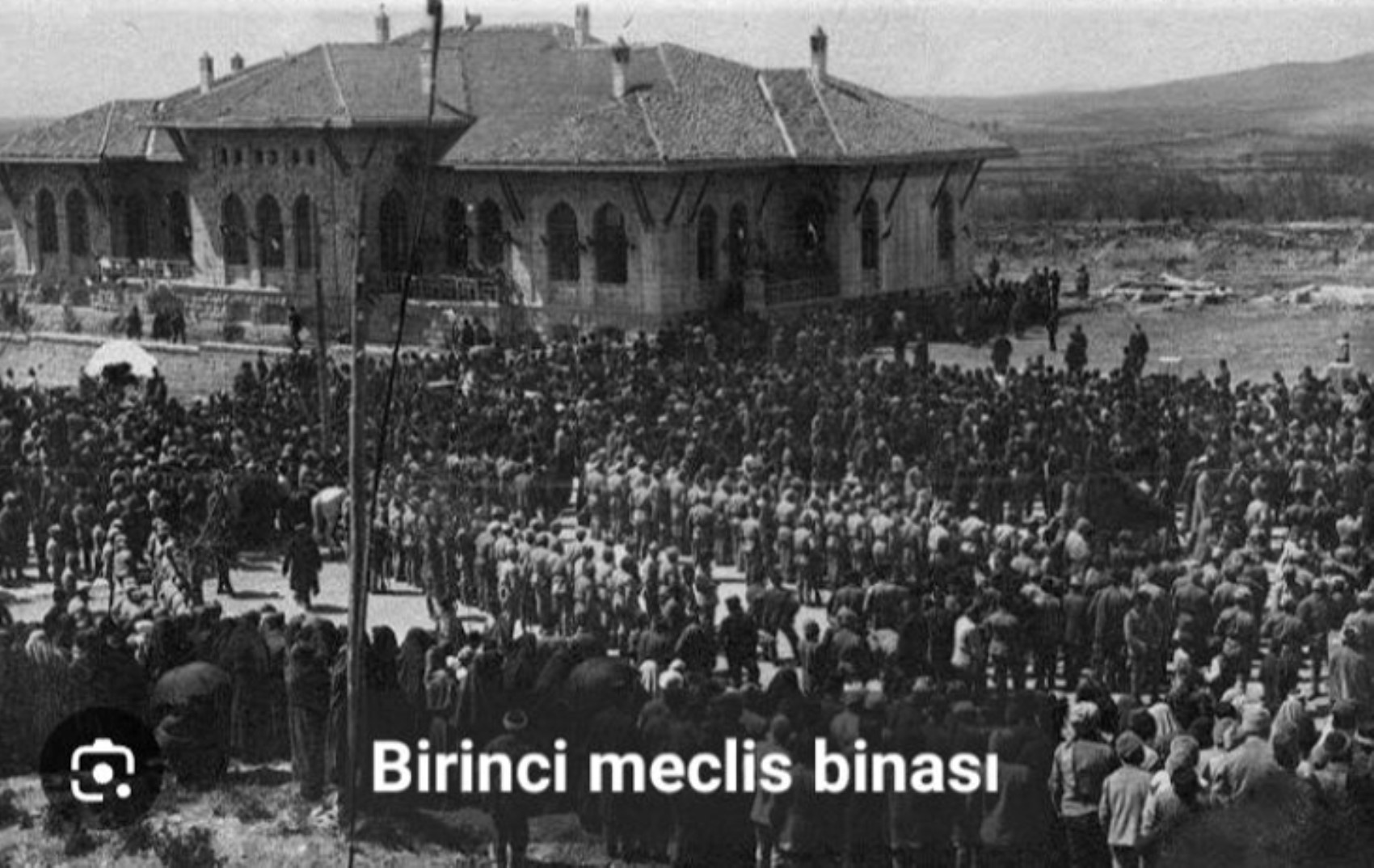
In the nine months between the opening of the Assembly and the enactment of the Law of Basic Organization (Teşkilatı Esasiye Kanunu), the new state faced challenges of establishment and consolidation.
Foremost among these, of course, is the establishment of the army and the administration. First and foremost, an administrative mechanism it was necessary to establish. Very urgently. For this, it was essential to access and make available both financial and human resources.
The alignment of the civil administration with the "nationalists" had been largely completed during the Representative Committee period. Persuading some district governors and provincial governors to join the national liberation front had been quite difficult. In fact, by force. Once the ministries were established, the wheels of the Anatolian State began to turn.
The most important issue was establishing the army. The available staff was extremely weak two army corps and the divisions and regiments attached to them existed. Do not be misled by their names as army corps, divisions, and regiments. These were units with minimal organization. Apart from Karabekir's 15th and Cebesoy's 20th Army Corps, the army had dwindled to almost nothing.
There were no resources for the conscription and deployment of soldiers. Those called to arms were joining their units on foot. For this reason, the reorganization of the army (from the Kuvayı to be able to speak of (regular army) nearly a year will have to pass.
The greatest gain in the command echelon was the joining of Fevzi Pasha, the Minister of War of the Istanbul government, to Ankara.
It was also not easy to persuade the cavalry corps commander, Fahrettin Altay Pasha. He held the rank of Colonel at that time.
Yakup Şevki Pasha and Ali İhsan Sabis Pasha had been exiled to Malta.
The participation of these figures in the national army could only be realized after the Victory of Sakarya. İsmet Pasha and Kazım Özalp entered the service of the national government with the rank of colonel.
Nurettin Pasha, under the leadership of Mustafa Kemal, a movement hesitated for a long time to join. He joined the movement with reservations. He was appointed as the commander of the Central Army. This army acted together with the Giresun volunteer regiment in the Pontus and Koçgiri disciplinary operations. The operations in which 'Sakallı' (Bearded) Nurettin Pasha actively served were internal security operations. He always caused problems for Gazi Pasha and only reluctantly consented to his leadership. has demonstrated.
Officers and reserve officers (ihtiyat zabitleri) gradually strengthened the ranks of the national army. The reason this process was spread over time was that financial resources were extremely limited.
Ultimately, the Army was established. As stated in the Populism Program, the army was the army of the Grand National Assembly of Turkey. However, for it to reach the capacity to achieve victory, it needed to be strengthened in terms of training, equipment, and ammunition. Resources needed to reach a level that could enable the army to launch an offensive. This would not be easy at all.
THE BASIS OF DIVISIONS: FOR WHAT PURPOSE DID THE PARLIAMENT CONVENE?
The First Parliament had a conservative majority. Under these conditions, the great savior of us Turks led the way to liberation and revolution. Doğan Avcıoğlu used the following expression for this situation had used: Conservative forces and revolutionism. A very accurate expression.
The First Parliament the first thing that needs to be emphasized regarding its history is this: Many who personally objected to it deputies certainly existed. But for liberation, they were not raising their voices too much. Even if a debate arose, the tension was eventually lowered. After a quite tense session, Hüseyin Avni Ulaş “I am proud to have been a friend of His Excellency the Pasha since the very first days,” as in the words he used. They believed that he should be supported for the liberation.
For Mustafa Kemal, the principles of the unity of powers and parliamentary supremacy adopted in the first sessions of the Parliament -when the time and place were right- had established a solid legal foundation for making revolutionary decisions.
Conservative As for the others, they too, for different considerations, defended parliamentary supremacy. The following words of Erzurum Deputy Hüseyin Avni Bey are famous: “We are in favor of parliamentary dictatorship. We are against individual dictatorship.” It is well known who he meant by the individual. It is also well known what kind of thoughts lay behind these words.
Mustafa Kemal Pasha's opponents were also planning to block his path with this principle.
Until May 1921, there was no environment in the Parliament that could be fully described as a political party. The fundamental reason for this is the state of national defense and military vigilance.
In the winter of 1921. the situation became clear. In terms of the political regime, of course. The nationalist resistance against the Allied occupation had to strengthen. To reach final victory, a policy of unity was essential. They made him commander-in-chief. They made him commander-in-chief.
AFTER LIBERATION, WHAT WILL HAPPEN TO THE CALIPHATE AND THE SULTANATE?
The Law of Fundamental Organization had clearly stated that "sovereignty belongs to the nation." In other words, national sovereignty.
The place where sovereignty was manifested and concentrated was the Grand National Assembly of Turkey. Previously in the laws enacted the "law of the caliphate and sultanate" was addressed. The first article of the Law on Rules of Procedure (September 5, 1920) was as follows: "The Grand National Assembly shall convene continuously under the following conditions until the goal of the caliphate and sultanate, which consists of the salvation and independence of the homeland and the nation, is achieved." Similar expressions were included in the "Law on the Manner of Election of the Executive Deputies of the Grand National Assembly" was also included. (May 3, 1920) The concept that the clergy deputies relied on mostin this regard was that the Caliph was a prisoner in the hands of the Allies. The consensus of the community (icma-i ümmet) to the situation was in control.
The political content of this conceptualization was empty. It was also legally contradictory. Where there is national sovereignty, there cannot be a sultanate administration. Before much time had passed, republicanism will be defined as “national sovereignty”.
From time to time, to appease conservative deputies, it was stated that “Once success is achieved, the Caliph of the Muslims will take his rightful place within the framework of the constitutional laws and it was said that it would take its 'venerable place.' Mustafa Kemal Pasha also used these words. But he did not neglect to add that now was not the time to discuss these matters.
After the liberation, what did 'the exalted office of the sultanate and caliphate within the framework of the law takes its venerable place' actually mean? This law the content of the expression of its what it would be time and circumstances would determine.
Within the scope of the law in other words there was actually a "reserve." A caveat. This implicitly meant that both the caliphate and the sultanate could be abolished. But by law. And that is what happened.
THE FUNCTION OF THE PRINCIPLE OF THE UNION OF POWERS AND PARLIAMENTARY SUPREMACY WHAT WAS IT?
In the summer of 1920, for a significant number of deputies, the Ankara Parliament had only one purpose for convening: the salvation of the homeland and the nation— the liberation of the office of the Caliphate and Sultanate from captivity.
Beyond this, the Parliament that there could be no other purpose, and was insisting that this expression be included in the decisions and laws regarding the regime.
After the Parliament convened, the first issue that needed to be resolved was the government was to be established. Who would on what legitimacy would govern Anatolia? For many deputies, a new government could not be formed. The government Ottoman government. Until liberation was realized, it was sufficient to establish a "provisional administration." After liberation, however, A return to Istanbul should be made Ottoman constitutional institutions should have been restored.
For deputies who thought in this way, the convening of the Parliament in Ankara meant that the Chamber of Deputies, due to security concerns, of the homeland consisted merely of gathering in a safe place. According to them, the Grand National Assembly of Turkey was the Third Constitutional Chamber of Deputies.
First, a temporary Executive Committee was established. Then, the Council of Executive Deputies.
Regarding the administration of the country (governing affairs), there was confusion. At this point, the tactic adopted by Mustafa Kemal Pasha proved effective. After the Gazi Pasha's enlightening speech to the Assembly, “all power” in the assembly ensuring it was concentrated submitted a motion. This was very important for the history of the Turkish parliament as a threshold was crossed. The motion's acceptance parliamentary supremacy and the unity of powers principle would result in its application throughout the national war of independence. These principles would later serve as a lever for the revolution.
Conservative deputies were also pleased with this principle. Because they were suspicious of Mustafa Kemal Pasha's dictatorial tendencies. The Parliament's legal personality had to be above his. This sentiment drove them was providing relief. The Assembly was supreme. His Excellency the Pasha was not. According to them, the rights of the Caliphate and the Sultanate had been, for a temporary period, referred to the “consensus of the community” or icma-i ümmet.
TWO CENTRIFUGAL TENDENCIES: WHAT IS HAPPENING IN ERZURUM AND KONYA?
The administration of the TBMM—in its early phase—was irregular was busy resisting with forces and establishing the military and civil organization. Just at this time, there were also those within the Parliament who engaged in suspicious behavior.
This attitude is not only related to the negative impressions regarding Mustafa Kemal Pasha. The essence of the matter is this: Some figures “while participating in the defense of rights” were of the national liberation movement did not believe it would end in victory.
I would like to give two examples. The first of these is the peculiar attitude of Erzurum deputies Celaleddin Arif Bey and Hüseyin Avni Ulaş. Both of them were opponents of Mustafa Kemal. These figures two months from the parliament by obtaining permission in Erzurum and its surroundings (the eastern provinces) an autonomous administration to establish they attempted.
Celaleddin Arif Bey was planning to assume all civil and military powers in the province. Pasha Karabekir was suspicious of the course of events. He reported the situation to Ankara. TBMM Speaker Mustafa Kemal Pasha warned the deputies in question via telegram. He stated that according to the Law on Rules of Procedure, this was not possible, and that in the event of Celaleddin Bey's resignation from his deputyship, his request for the Governorship of Erzurum would be decided by the Parliament. stated that he could submit it to his approval. The interesting part of the matter is that Celaleddin Arif Bey, at the Istanbul Darülfünun constitutional law professor (constitutional law professor). The last Chamber of Deputies had been elected speaker. As of that date, he was the second speaker of the Grand National Assembly of Turkey (TBMM) and the Minister of Justice. Hüseyin Avni Ulaş was one of the harshest opponents. During the opening session of the Erzurum Congress, he had caused a uniform crisis for Mustafa Kemal Pasha, a brigadier general who had resigned from his post as army inspector. He himself was opposed to the “gold-braided ones.” In 1922, he would be elected deputy speaker of the TBMM on behalf of the Second Group.
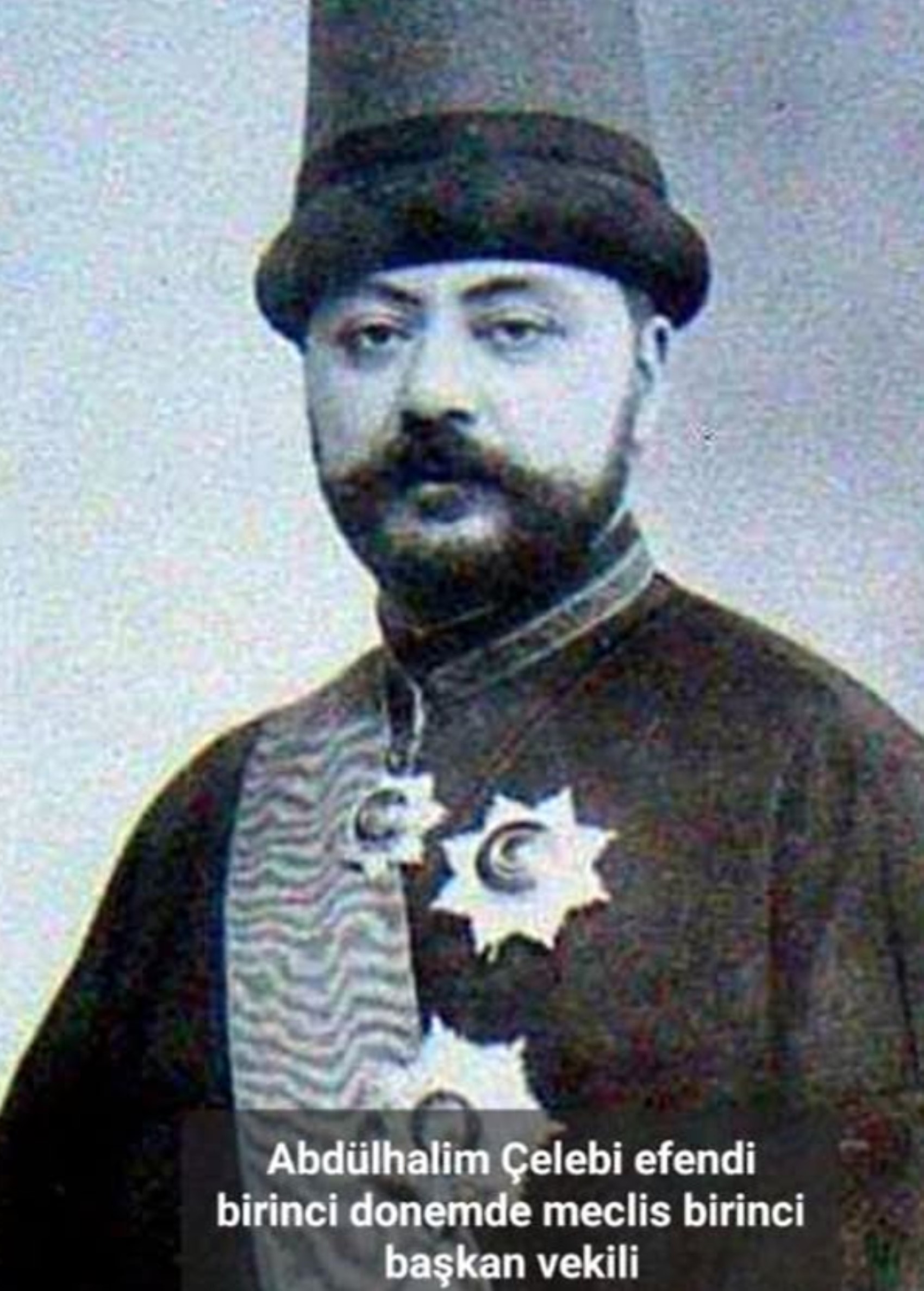
Another centrifugal example concerns the province of Konya. It appears that Konya deputy and one of the deputy speakers of the parliament, Abdülhalim Çelebi Efendi, planned to establish a Seljuk government under Italian tutelage. I believe the Delibaş rebellion was related to this.
After the rebellion was suppressed, those referred to the court-martial one of them was him. Due to parliamentary immunity and his position as the head of the Mevlevi lodge the review of the file was postponed. Later on the agenda did not arrive.
THE INTENSIFICATION OF THE CIVIL WAR: ALI FUAT PASHA, Çerkes Ethem, DEMIRCI MEHMET EFE FORCES
Until the date the Grand National Assembly of Turkey (TBMM) was opened, armed conflicts were relatively few. For that period, it is not possible to speak of a civil war in the full sense it is not very meaningful to speak of. There is rather a conflict between the Representative Committee and the Istanbul government. A real civil war emerged after the Grand National Assembly of Turkey was established.
1919-1920 In the period between, there was a power struggle: this struggle was carried out mostly through political means.
In the Istanbul press, for the Anatolian leaders it was terms such as bandits, rebels, and Kemalists were being used, yet the fact that the Amasya protocol concluded with an agreement shows that the struggle remained at a political level. shows.
Ankara Convention the situation changed after it convened. The National Struggle leaders were sentenced to death by the Istanbul Martial Law Court The decisions were ratified by Sultan Mehmed VI.
Just before the opening of the Parliament, a civil war began between the forces loyal to the Representative Committee and the supporters of the caliphate and sultanate. The earliest examples of these were the Bolu-Düzce-Hendek incidents. The Istanbul Government established the Caliphate Army (Kuva-yi Inzibatiye) under the command of Süleyman Şefik Pasha. This was a mercenary punitive force. power. It was a small-scale legionary army supported by the British, even though it was called the Caliphate Army.
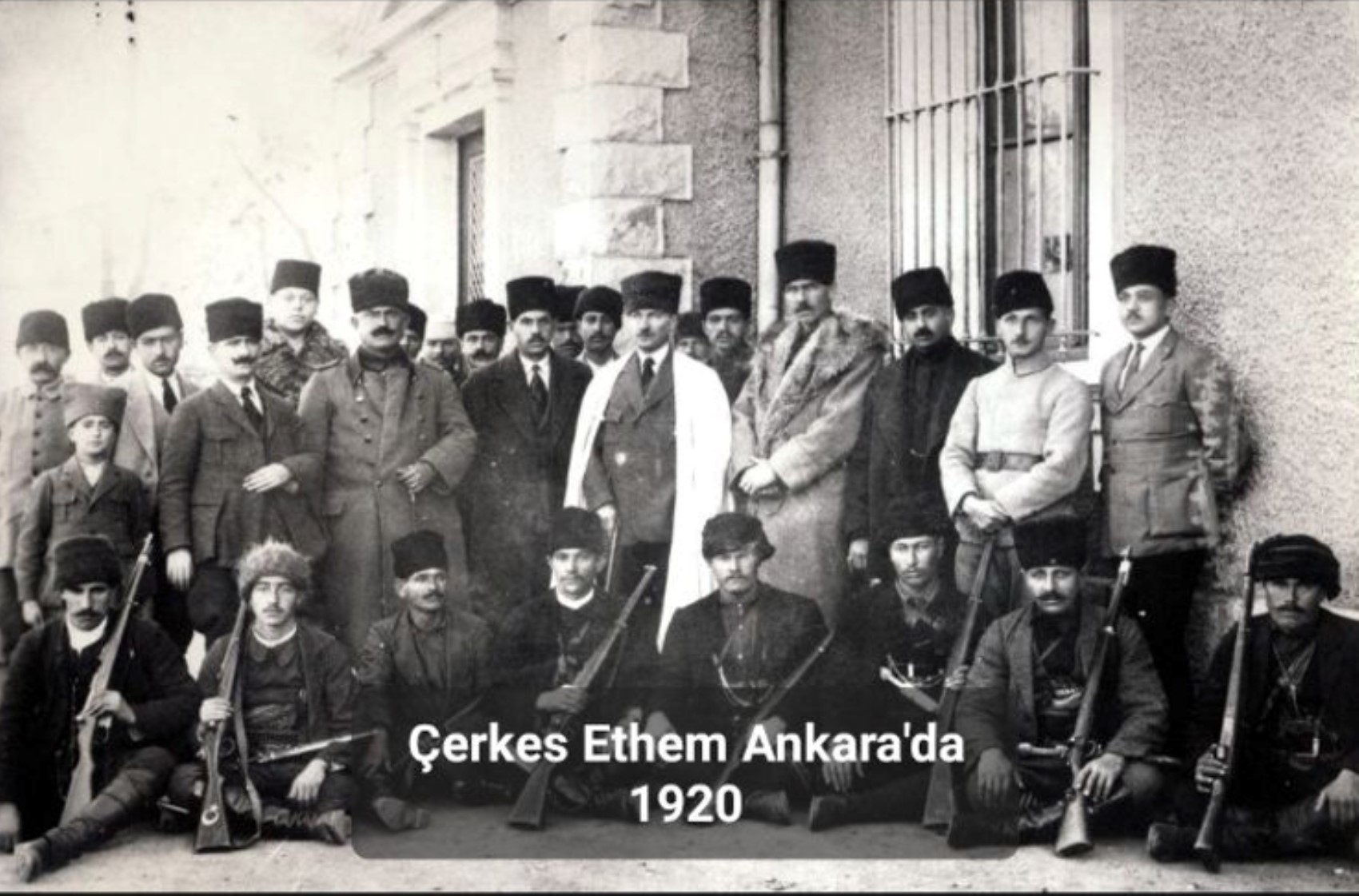
In this early period, the units under the command of Ali Fuat Pasha, the commander of the General Kuvayı Milliye, were the forces of Çerkes Ethem's Kuvayi the planet, under the command of Lieutenant Colonel Mahmut Bey forces were effective.
The TBMM government was established, after which the civil war intensified. Those disciplined by Çerkes Ethem The Yozgat rebellion is significant in this context. In the Battle of Arap Seyfi Gorge, 300 rebels were neutralized by Ethem's forces.
The name of the First Deputy Speaker of the TBMM, Abdülhalim Çelebi Efendi, was also implicated in the unrest following the Konya rebellion, (who was also the head of the Mevlevi lodge). To be tried by the Court Martial was referred. Once it was understood that he was a deputy and deputy speaker, his file was separated. Çelebi Efendi returned to Ankara.
The Denizli incident is another aspect of the civil war. Demirci Mehmet, upon the killing of Sökeli Ali Efe from his own Kuvayı Milliye forces, raided Denizli. He wanted to burn the city. He executed 114 people.
The way to end the civil war establishing a regular army. This took time. But in the end, it was achieved.
PROBLEMS CAUSED BY THE KUVA-YI MİLLİYE: BENEFITS AND DRAWBACKS WHAT HAPPENED?
As the Allied occupation began to expand, national resistance movements began. The organizations for the defense of rights financial and material support, militia forces were established.
These forces were called gangs, Kuvayı Milliye, or Kuvayı Seyyare were given names like these. This actually meant guerrilla warfare. The provisions and weapons of these groups were provided by local warlords. The most well-known gang leaders were Çerkes Ethem and Demirci Mehmet Efe, Yörük Ali Efe, and Postlu Mestan Efe.
These names at the beginning of the armistice had created public order problems for the government figures. For example, Çerkes Ethem Izmir had kidnapped the son of Governor Rahmi Bey and demanded a ransom. As can be seen, they were figures capable of banditry in a power vacuum. pioneers of the Kuvayı Milliye.
When the Greek occupation began to expand, Rauf Bey, and former Unionists like Celal Bayar went to the headquarters of these figures invited them to join the “national struggle.” (a call to abandon banditry and join the national struggle) Demirci and others gang leaders were also visited. These figures joined the cause of liberation.
Militia forces provided the first serious examples of resistance against the occupations demonstrated. Among these, the Malgaç Bridge raid holds special importance for me. A young military medical student also participated in the raid carried out by the Yörük Ali Efe gang: Hikmet Kıvılcımlı.
However, the arbitrary nature of the Kuvayı Milliye to act prone an organization that it was should not be forgotten. And that is often what happened. Ethem's hanging of an elected deputy in Bolu, Demirci's Denizli like attempting to burn it down.
Ethem was useful in suppressing the rebellions in Bolu, Düzce, Gerede, and Yozgat. His contributions were significant. Demirci's were as well. But balance is important. In the final analysis, what purpose did they serve? That is what needs to be examined.
As these groups grew stronger (Ethem's militia force had reached 2,500), they began to challenge the administration of the Grand National Assembly of Turkey (TBMM).
Ethem's rebellion process demonstrates just how narrow-minded and prone to violence he was. In the end, what he reached point has, in my opinion, erased his positive contributions to the “national cause.” Words such as “I will go to Ankara and hang Mustafa Kemal in front of the Parliament” show his true caliber. shows.
Demirci acted more wisely. He surrendered to the forces of Refet Pasha with mutual commitments. He disbanded his forces. He placed them under the government's command. He lived until the end of his life in the village of İğdecik in Isparta (1959). A pension was allocated to him. Because he had caused quite a lot of suffering in his time, after surrendering to the government, he was isolated a life he lived. In İğdecik, he was subjected to compulsory/voluntary residence.
What Ethem did, however, was to incite a civil war. During the Great Greek Offensive, the Western Front forces (Ismet Pasha) attacked. Faced with the regular army, he was defeated. He did not surrender. He joined the enemy. He was taken to Athens. He spent the rest of his life within the Circassian diaspora in Jordan. Even after the amnesty, he did not return. He died there.
In conclusion, The leaders of the Kuvayı Milliye contributed to the national cause during the early period of the War of Independence. However, starting from the autumn of 1920, from the perspective of the government became a problem. In fact, at a time when they were needed most, they caused a crisis.
ANOTHER DIMENSION OF THE CIVIL WAR: ARMENIANS IN ÇUKUROVA - PONTIC GREEKS IN THE BLACK SEA DEMANDING LAND AND STATE
When the First World War ended, a Greek Pontic State in the Black Sea and an Armenian state in Eastern Anatolia and Çukurova (ancient Cilicia) could have been established. If the demographic situation had been sufficient, with Allied support, this project could have been successful.
The Çukurova region being occupied by the French emboldened the Armenians. The French also wanted to take advantage of this. They established Armenian legions within the French army. Armenian gangs carried out an ethnic cleansing campaign they initiated. The region in order to be able to claim it historically belongs to the Armenians.
France's until the date it evacuated the region the French-Armenian cooperation continued. The Çukurova region even after being taken over by the Ankara government, Armenian resistance continued. If you wish, you can call this process the guerrilla war launched against the TBMM army. The Armenian civil war lasted almost until the end of the War of Independence. It lasted until the end.
The ideal of establishing a Greek Pontus state in the Eastern Black Sea region has always existed. The Greeks defined the region from the Sanjak of Canik to Batum as the historical Pontia (Pontus). During the armistice, this idea intensified. A Pontus Congress was convened in Batum. At the Paris Conference, Chrysanthos, the Metropolitan of Trabzon, demanded a homeland and a state for the Pontic Greeks. Kurdish Sherif Pasha also made similar demands for the Kurds.
The Grand National Assembly of Turkey (TBMM) government established the Central Army against the Pontic rebels. It appointed Sakallı Nurettin Pasha as its commander. Topal Osman Ağa’s guard regiment also played an active participated in the manner.
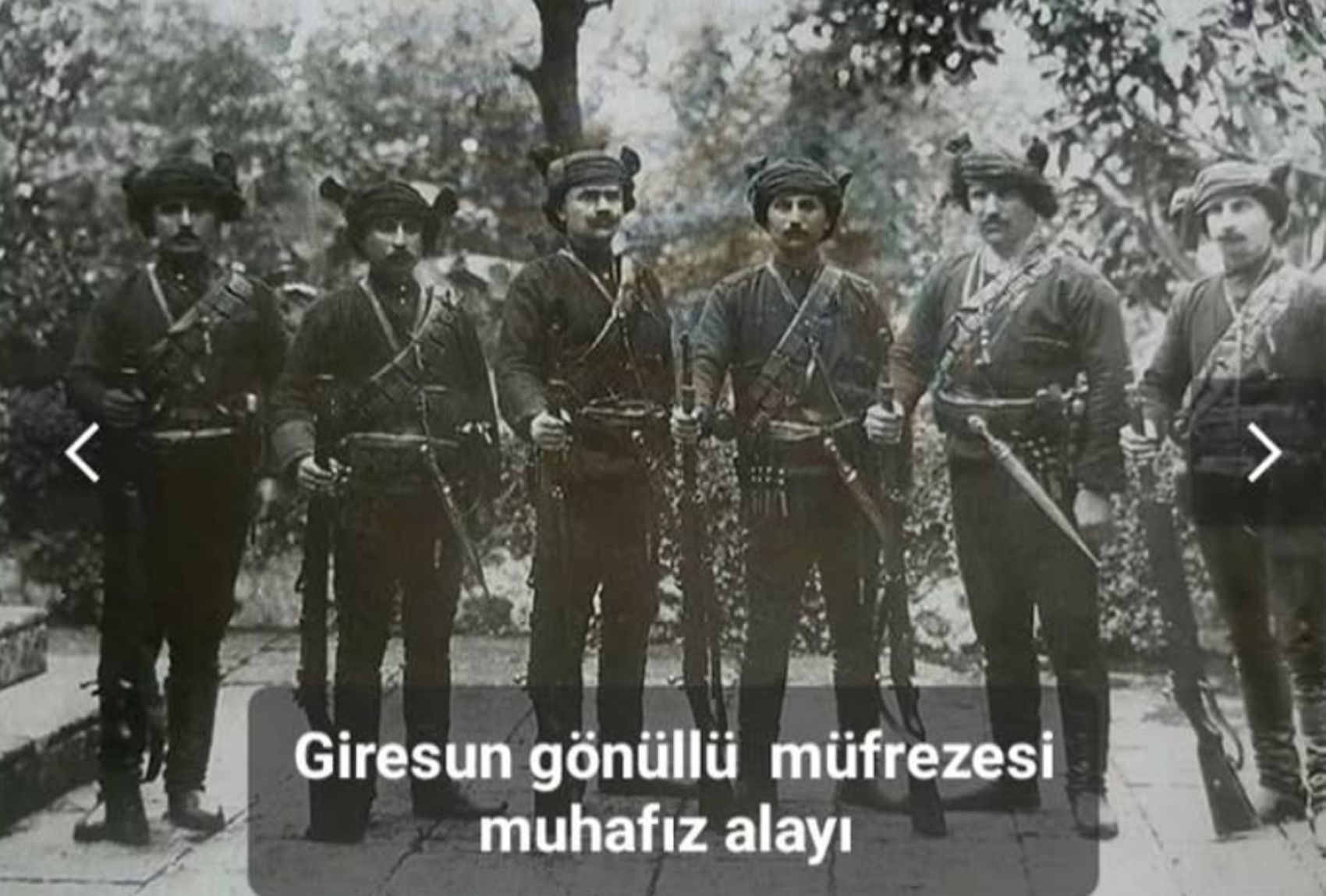
The struggle against Pontic activities was carried out by the Amasya Independence Tribunal and the Central Army by The Central Army's method of suppressing the Koçgiri rebellion was met with anger in the Assembly. The "Koçgiri punitive and disciplinary" operation is of such importance that it could be the subject of a separate article. For this reason, it will not be addressed here.
Pontic activities, Fethi Bey, Malta lasted until he returned from exile and was elected Minister of the Interior. Fethi Bey has a long speech on this subject. Regarding the Pontus issue, after the Great Victory, a result was achieved through the population exchange agreement.
Greeks capable of bearing arms in regions not under Greek occupation were handled by Demirci Mehmet Efe. were deported. (To the Isparta-Burdur region) The Aegean Greeks—who identified themselves historically as Ionians— defined themselves as such. By forming gangs, they clashed with the Kuvayı Milliye.
Beyond their insurgent activities, they served in the Greek army There were also Greeks involved. Local Greek Cydonia and Ionia divisions were established. The Greek issue was, in the final analysis, resolved through the population exchange.
A CHALLENGE TO MUSTAFA KEMAL FROM THE LEFT
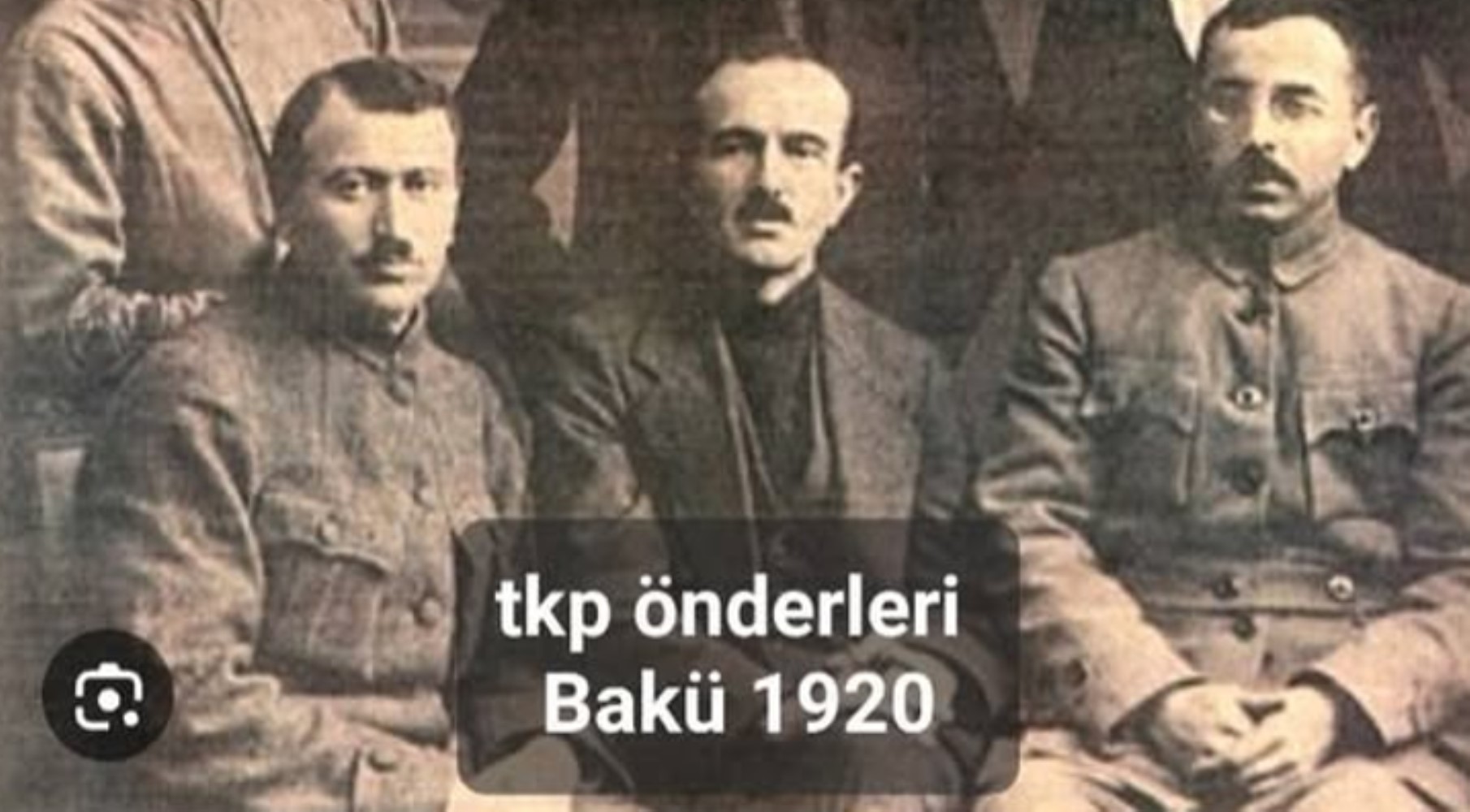
The first challenge to Mustafa Kemal Pasha did not come from the conservative front. It came from the left. The conservatives were remaining silent for the time being. Who made up the left-wing opposition, and from which circles did it emerge? In short, the Communist Party of Turkey and its extensions in Ankara. The People's Group and the People's Participation Party. These organizations' cadres came from the experience of the Committee of Union and Progress. Including Mustafa Suphi.
Participationism was the first contact with the Soviets emerged around the time it was founded. Participation meant Bolshevism and socialism.
Atatürk also had his close associates found a Communist party. In our political history, this is called the official communist party. The other is referred to as the secret party.
Most of these movements emerged under Soviet influence/inspiration. In the summer of 1920, leftism was in fashion in Ankara. Many people wore red scarves. Everyone was more or less a Bolshevik. In the winter of 1921, Vala Nurettin and Nazım Hikmet went to Anatolia while waiting in Inebolu to be accepted with other red-scarved individuals they encountered: these were the Turkish Spartacists. They were returning from Germany.
A group of names from the People's Participation (Halk İştirakiyyun) circle at the Ankara Independence Court on charges of "overthrowing the government" with they were tried. Some names were convicted. Some were acquitted. Central Army Commander Sakallı Nurettin Pasha's denunciation led to the opening of the People's Participation Party case, in which former Minister of Interior Nazım Resmor was convicted. Apart from him, Veterinary Major Hacıoğlu Salih, Ziynetullah Nişurevan and Bursa deputy Sheikh Servet Efendi were also tried. Interestingly, Servet Efendi was a member of the religious scholarly class (ilmiye). According to him, Bolshevism was the Islam of the Age of Bliss. The Bolsheviks represented complete equality (müsavat) they wanted. Sheikh Efendi was one of the deputies who served in the first Diyarbakır Independence Tribunal. Sheikh Efendi was acquitted in this case.
Many of the Unionist leaders who were abroad had moved to Russia via Germany. Only Talat Pasha had remained in Berlin, and he too would be assassinated by Armenians. Everyone, including Enver Pasha who had moved to Russia, was interpreting Bolshevism in their own way. Their own ideas socialism and were trying to reconcile it with socialism. The Baku Congress of the Peoples of the East of the Peoples Congress became proof of this. The minutes of the founding congress of the TKP also demonstrated this.
In my opinion, to the Turks Bolshevism that had spread behind the winds of a solid Marxist literature did not exist. The political atmosphere was like that. From the Caucasus to Anatolia Enver Pasha under the leadership of the Green Army, which was said to be passing through, was the result of such an aspiration. Green Army meant a Muslim and Bolshevik army. Of course, if such a thing were possible.
THE INCREASE IN THE DOSE OF OPPOSITION - MUSTAFA KEMAL ESTABLISHING HIS OWN PARTY
Until the beginning of 1921 opposition to Mustafa Kemal Pasha continued at a low level. One reason for this is that the identity of Mustafa Kemal was-not yet- an undisputed leader. Developments his leadership identity will clarify. After the Sakarya Victory, Gazi Pasha's leadership position became clear. Both his opponents and supporters understood that salvation was only possible by rallying behind him. Whatever your personal objections to him may be be. To make him commander-in-chief was one thing. Politically, to stand by his side was another.
The Chief Pasha needed a party. An organization. Law No. 47 The Candidacy Law was not enough. In every matter, it needed a parliamentary majority to support it. He secured this. This party was the Defense of Rights would be the First Group. Atatürk founded his own party on May 10, 1921. His opponents formed the Second Group in July 1922. And some political positions they also obtained. Especially by organizing behind Rauf Bey.
Speaker of the Grand National Assembly of Turkey and the head of government's reason for forming such a group (essentially an unnamed political party) was to consolidate his numerical strength within parliament. Around him, a group of deputies whose numbers increased over time was formed. This group formed the core of the Kemalist party.
MUSTAFA KEMAL PASHA'S FIRST COUNTRY OF CONTACT: SOVIET RUSSIA
Mustafa Kemal Pasha, as Speaker of the Parliament and ex-officio Chairman of the Council of Deputies, made it his first priority to establish contact with the Soviet Russian government. He wrote a letter to Lenin. The letter was held by Chicherin for quite some time will be answered later.
This step is extremely important for the national government. The letter spoke of the defeat of the common enemy, imperialism, and the need for money and weapons for the Turks' struggle for independence. it mentioned.
BEKİR THE SAMI KUNDUH-YUSUF KEMAL TENGIRŞENK DELEGATION IN MOSCOW
As soon as the Council of Deputies was established, it was decided to send Minister of Foreign Affairs Bekir Sami Bey (Kunduh) and Yusuf Kemal Bey (Tengirşenk) to Moscow to hold negotiations. (May 1920)
The delegation's journey via the Caucasus to reach Moscow took two lasted nearly a month. Initially, the parties acted with extreme caution toward one another. At a principled level, decisions could be reached. Chicherin stated that they wanted to change the status quo established in the Caucasus by the Treaty of Brest-Litovsk. He made demands in favor of the Armenians.
Bekir Sami Bey, regarding his relatives' under the pretext of going to Ossetia, where he was located, he left Yusuf Kemal stranded halfway on the return journey. (Bekir Sami was an Ossetian nobleman.) Yusuf Kemal returned to Ankara alone. Bekir Sami Bey was tasked with managing relations with the West until he resigned following the London Conference.
Yusuf Kemal, on the other hand, went to Moscow again with Rıza Nur to hold negotiations with the Soviet government. was sent. Meanwhile, Ali Fuat Pasha was appointed as ambassador to Moscow. (December 1920) Tengirşenk, Dr. Rıza Nur, and Ali Fuat Pasha signed the Moscow Treaty together . (March 16, 1921)
Yusuf Kemal was not the Minister of Foreign Affairs at that time. Following the vacancy left by Bekir Sami the acting for a time by Ahmet Muhtar Mollaoğlu was carried out. Upon his return, Yusuf Kemal Foreign Affairs was appointed to the ministry.
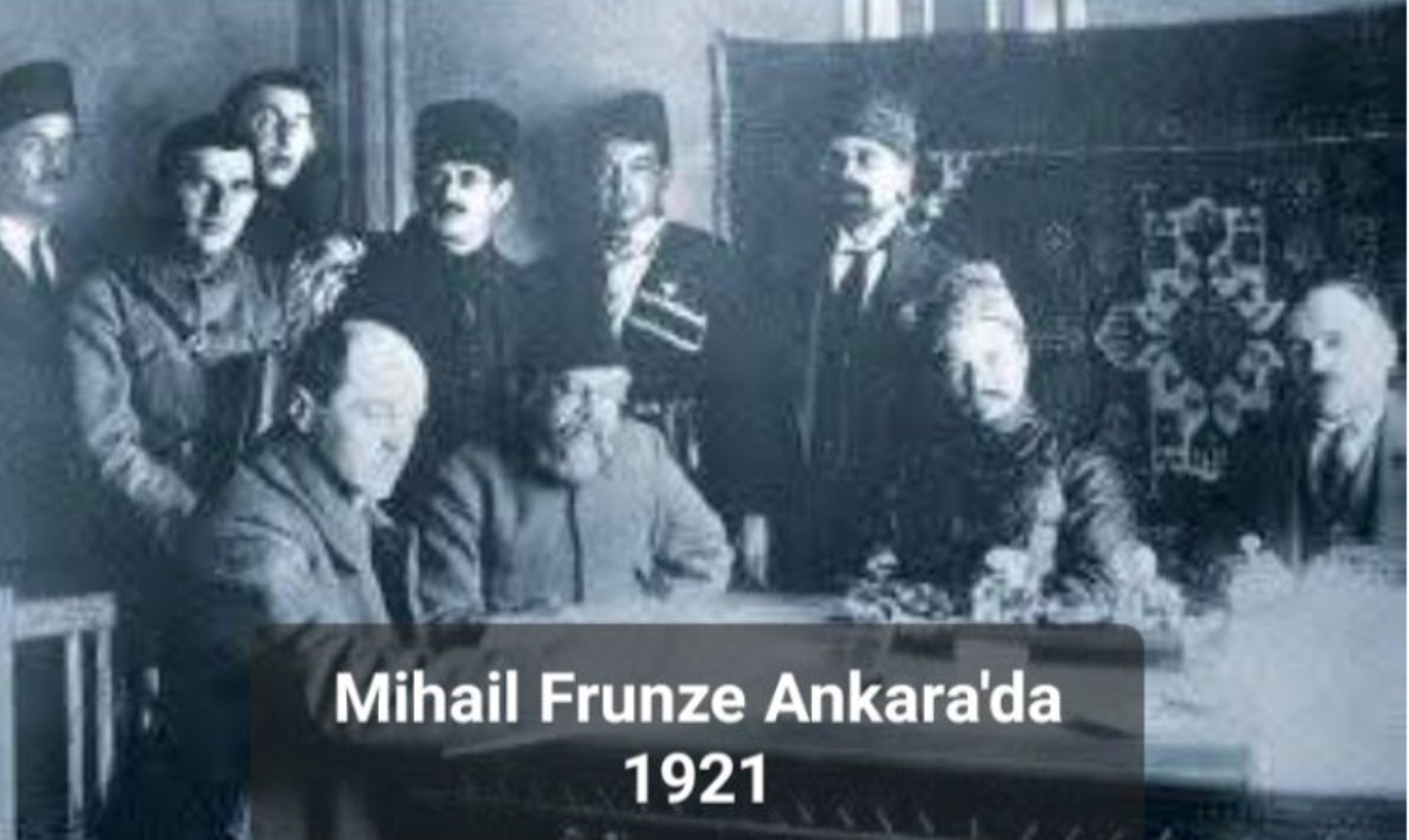
After the Caucasus was completely brought under the control of the Bolsheviks, Soviet Russia appointed the Georgian Budu Mdivani as its representative to Ankara. (Autumn 1920) His arrival would be followed by that of Mikhail Frunze. Frunze was one of the most influential commanders in bringing the civil war to an end in favor of the Red Army.
Frunze arrived in Ankara in December 1921 with a delegation. He returned after staying in Turkey for about 40 days.
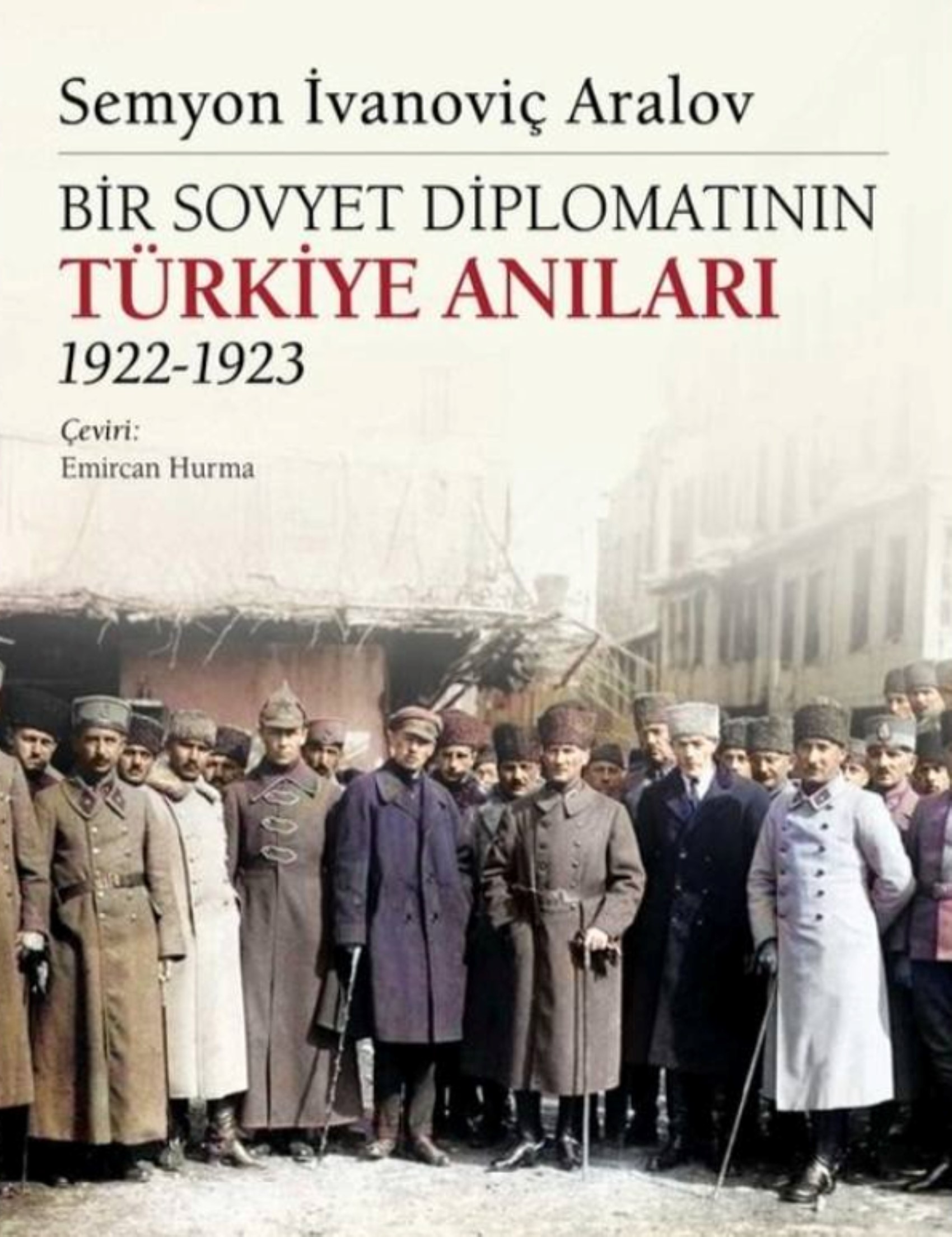
Once relations between Moscow and Ankara were based on mutual trust, Russia sent Aralov to the Ankara government to the appointed as ambassador.
THE SOCIALISM KNOWLEDGE OF THE ANATOLIAN REVOLUTIONARY CADRES WAS SUPERFICIAL
The cadres leading the Turkish war of independence were in the most favorable location in Anatolia after establishing a headquarters (Parliament and government) they turned their faces to the East. There was talk of an “Eastern ideal” circulating. In the West, to their cause allied that could be any power.
One can speak of the sympathy of socialists in France, Italy, and Germany, and to some extent, the partial sympathy of the British Labour Party.
The reason for that is also largely was to hold the bourgeoisie responsible for the economic and political chaos that emerged after the war.
In my opinion, in Ankara, apart from a few people, there was no one who knew about socialism. There was an imitation of Bolshevism. Such as Tevfik Rüştü Aras, Mahmut Esat Bozkurt, and Hakkı Behiç Bayiç. names had some degree of knowledge.
In general, the initial impressions regarding socialism were positive: Even conservative deputies interpreted socialism as the Islam of the Age of Bliss. The spring and summer months of 1920 passed in this manner.
In Baku, by Mustafa Suphi and his friends The established TKP cadres wanted to cross into Anatolia via Kars and Erzurum. The TKP's national desire to take part in the liberation movement is chronologically a continuation of the People's Group (Halk Zümresi), the People's Participation Party (Halk İştirakiyyun Fırkası), and Nazım Bey's (Resmor) election as Minister of the Interior.
The Ghazi, in his Nutuk (Speech), Nazım Bey speaks of his “secret participation” since the Sivas Congress. The Candidacy Law was enacted to curb such attempts.
The crossing of Turkish communists into Anatolia with a delegation can be interpreted as a challenge to the cadres surrounding Mustafa Kemal Pasha. interpreted as a challenge.
I would like to touch upon two more things regarding this matter. I would like to touch upon two more things regarding this matter. One is the parliament's in its very first days the "Eastern ideal" to examine a delegation to the Caucasus and to Russia is the decision to send them. The Eastern ideal meant socialism.
The other is the political program of the People's Group (Halk Zümresi). Its content the Islam of the Age of Bliss was trying to reconcile with the Soviet administration. The starting point was religion the point it reached It was a Soviet-style administration.
In response to these pursuits, Mustafa Kemal Pasha, as the Speaker of the Grand National Assembly of Turkey (TBMM) and the ex-officio head of the Council of Ministers, presented his own program to the Assembly under the name of the "populism program."
It would be accurate to interpret these developments as follows: The populism program provided the Kemalist cadres with the regime's content, direction, and provided the opportunity to define its boundaries.
Populism program was transformed into the Law of Fundamental Organization as a result of three months of negotiations. The point reached must be examined from several perspectives.
The Anatolian government had some common ground with the Bolsheviks. One of these was “sovietism” was. In Russia, this meant Soviet. But in Turkey, it did not. 'Şuracılık' (councilism) from the perspective of the Anatolian government populism and national sovereignty. In Russia, the ideal of reaching a classless society.
For the Turkish government, national sovereignty meant the powers unity, parliamentary supremacy, convention governance meant. It drew its ideological foundation from populism. Populism did not mean a classless society.
IF SOVEREIGNTY IS MANIFESTED IN THE PARLIAMENT, WHAT KIND OF STATE IS THIS STATE?
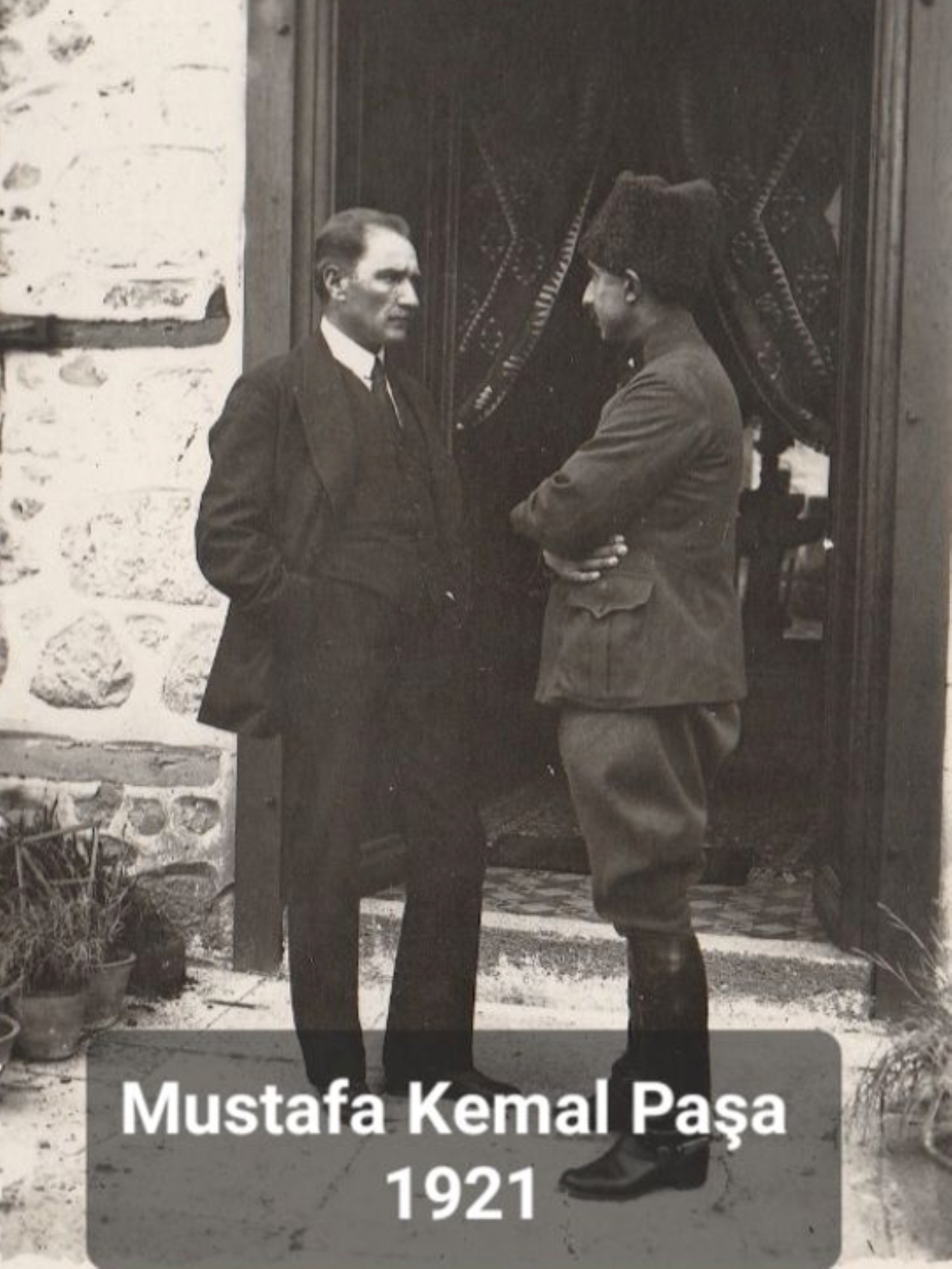
Grand National Assembly of Turkey (TBMM) its legal personality national With the 1921 Constitution, which identified itself with national sovereignty, a threshold was crossed. The Law of Fundamental Organization to the nation had delegated. Since national sovereignty was manifested in the parliament, there could be no power above it.
Legislative and executive powers were inherent in the legal personality of the parliament. Executive functions were to be carried out by executive deputies elected individually by the Parliament. The deputies would conduct the administration on behalf of the Parliament. In this distinction, during the First Term of the Grand National Assembly of Turkey State powers and administration (2000) titled doctoral thesis (2000) and my book titled The TBMM State (2001), I recommend that you take a look.
Until the Law of Fundamental Organization was negotiated and enacted into law, a portion of it laws of constitutional value were enacted. Some were laws aimed at consolidating the power of the Anatolian government.
Some of the laws at a constitutional level are as follows: Law No. 3 on the Method of Election of the Executive Deputies, Law No. 18 Law on the Quorum for Deliberation Law No. 47 on Candidacy law.
FROM THE POPULISM PROGRAM TO THE LAW OF FUNDAMENTAL ORGANIZATION FROM THE POPULISM PROGRAM TO THE LAW OF FUNDAMENTAL ORGANIZATION
Following these regulations, a brochure was presented to the General Assembly of the Parliament was presented. The brochure was printed by the Office of the Speaker of Parliament. The presented document bore the title Populism program. Date: September 13, 1920.
The first four articles of the program were Populism was accepted and declared under the name of a declaration. The draft first went to the Constitutional Law Committee. Then a special commission was established. The draft was debated heatedly in the general assembly. The Ankara Convention, in order to protect the regime of the Grand National Assembly of Turkey (TBMM), enacted the Law on Treason against the Nation on April 29, and subsequently the Law on Deserters and the laws regarding the Independence Tribunals. This laws are those that represent the coercive power of the Anatolian revolution.
Consequently, under the leadership of Mustafa Kemal Pasha, power in Anatolia was effectively the Representative Committee holding the Ankara Convention convened. With the decisions it took and the laws it enacted, nine months (April 1920-January 1921) in Anatolia, a new state it established. Of this state as referred to in the constitution as the State of Turkey. (Law No. 85 on the Fundamental Organization) The period discussed here is limited to the first nine months of the Grand National Assembly of Turkey (TBMM). Political developments from this date until the liberation will be the subject of another article. The deliberation of the Law on the Fundamental Organization the process and content analysis regarding on this platform published three I recommend you take a look at my articles.
AT THE BEGINNING OF 1921 HOW CAN THE REGIME BE DEFINED?
The Law on Candidacy had largely eliminated the heterogeneous structure within the government (Council of Ministers). The regulation (No. 47) provided Mustafa Kemal Pasha with the opportunity to work with his own men. Since October 25, the date onwards the debated Law of Fundamental Organization was enacted on January 20, 1921. The draft was initially presented as the government's political program. As a result of the deliberations, the nature of the regime took shape. For an early period article, my mentor, the late Tarık Zafer Tunaya’s “The Establishment and Political Character of the Grand National Assembly of Turkey” (1958) titled I recommend you take a look at his article. On this subject, for anyone who wants to work it is an article that must be consulted by everyone.
When the “Fundamental Provisions” section of the Law of Fundamental Organization (Teşkilat-ı Esasiye Kanunu) is examined, it is seen that there are no provisions that could be reconciled with socialism/Bolshevism. You can see a revolution in the law. This revolution is the Anatolian revolution. This revolution bears the traces of the great French revolution. The revolution takes place within the paradigm of the era of bourgeois revolutions. The dominant language, terminology, and political institutions Convention parallel to the period bears characteristics.
Would you like to get notifications about new developments and save news?
- NotificationsNew developments and breaking news
- SaveNews is stored in the app
Most Read
Statement from Nihat Zeybekci on the fund investigation

New 75,000-seat stadium plan for Fenerbahçe
Interpol and MIT tracking yields results in Izmir
ID convenience for KPSS candidates

2027 Budget: Taxes for the people, tax exemptions for capital

The reality of Akkuyu and the longing for national nuclear power

To whom and how was the Petition of Intellectuals submitted? Who accepted the petition?

The Çanakkale robbery -1- How was the Troy treasure smuggled out?

Artificial intelligence and the new imperialism

Ministry investigation into unauthorized promotional messages