


The function of the MHP before September 12



IN WHAT ENVIRONMENT WAS THE MHP BORN?
The MHP is a movement born from within the group known as the "14s." The 14s were the group removed from the National Unity Committee due to their radical tendencies. Alparslan Türkeş was among them. The exile of the 14s through overseas assignments effectively eliminated an option toward which the May 27 Revolution could have evolved.
How should this option be defined?
Establishing an authoritarian nationalist state order that does not trust universal suffrage and democratic competitive politics.
It is possible to find clues to this in the conferences Türkeş gave during his tenure as Undersecretary to the Prime Ministry. These speeches reveal Türkeş's thought structure quite clearly.
In these conferences, Türkeş opposed the idea of a Constituent Assembly and proposed a corporatist "National Council."
We see another extremely important finding in a draft law supported by Türkeş: the "Law on Unity of Ideals and Culture." The purpose of this draft law was expressed as "gathering the Turkish nation in the same idea and faith down to its smallest unit. To bring national consciousness to the level of contemporary civilization."
These thoughts are nothing more than a design for an authoritarian (perhaps totalitarian) state. This nationalist-authoritarian discourse has been identified by Tanıl Bora (in his book *Cereyanlar*) with the unity of ideals that was attempted to be created through the activities of the People's Houses (Halkevleri) in the 30s. I do not agree with this view.
Kemalism has no plan to organize the Turkish people around a unity of thought down to its smallest unit. If that were the case, Celal Bayar, Ahmet Ağaoğlu, Mahmut Esat Bozkurt, and Şevket Süreyya Aydemir could not have come together in the same party. It is possible to learn what unity of ideals means in Kemalism from the book *Medeni Bilgiler* (Civic Knowledge).
NOTES ON TÜRKEŞ'S BIOGRAPHY
Alparslan Türkeş is of Cypriot origin. He was born in Nicosia in 1917. In nationalist (Ülkücü) circles, it is specifically emphasized that he came from a family of Kayseri origin. Much like the search for legitimacy in the expression of Rumelian Turks that "our ancestors were exiled from Anatolia to the Balkans."
The family's arrival from Cyprus to Turkey is presented as a kind of nationalist uprising. The longing for homeland and freedom felt under British occupation (Crown Colony) led to this decision.
He is a graduate of Kuleli Military High School. He was enrolled as a student in the military high school before being accepted into Turkish citizenship. Later, he and his family were granted Turkish citizenship. This is an interesting point.
These themes have importance in Türkeş iconography. He is mostly described as an extraordinarily skilled staff officer in nationalist circles.
Alparslan Türkeş was one of the suspects in the 1944 Racism-Turanism trial. He was tried alongside Zeki Velidi Togan, Nihal Atsız, Reha Oğuz Türkkan, Dr. Hasan Ferit Cansever, and Fethi Tevetoğlu. He was sentenced to 9 months and 10 days in prison. When the Military Court of Cassation overturned the decision in 1945, he returned to the army.
During his detention, Türkeş stayed at the Toptaşı Military Prison. What is interesting is that he graduated from the War Academy in 1955. The fact that this took place during the Democrat Party era and after Turkey was accepted into NATO is a detail worth dwelling on.
Another interesting point is that he was convicted in a trial opened while the Second World War was ongoing; and that he was admitted to the Staff College long after the decision was overturned, and sent to America immediately after his graduation.
Türkeş graduated from the American War Academy and the Infantry School. I had read elsewhere that he received training at the Cavalry School. On the other hand, he represented the Turkish General Staff at the NATO Permanent Committee in Washington until 1957, and was sent to a nuclear school in Germany for an internship in 1959.
After these stages, he was promoted to Colonel; he was appointed as the NATO branch manager in the Land Forces. In my opinion, his General Staff and NATO duties are evidence that he was privy to certain connections.
In an interview conducted in 1995, Türkeş did not see any harm in revealing that he received special training in the USA together with South American officers. It is not difficult to guess his relationship with certain secret organizations within NATO.
After May 27—until he was sent into exile—Türkeş, who was quite influential in the Committee, spoke of CIA groups remaining from the Menderes era in the rooms at the Ministry of Interior. He says he was not against them but wanted them to continue their work elsewhere. In other words, when May 27 took place, there was an anti-communist organization established during the Democrat Party administration that had offices within the Ministry of Interior. From Türkeş's words, we can conclude that there were US agents in the Ministry of Interior during the DP era.
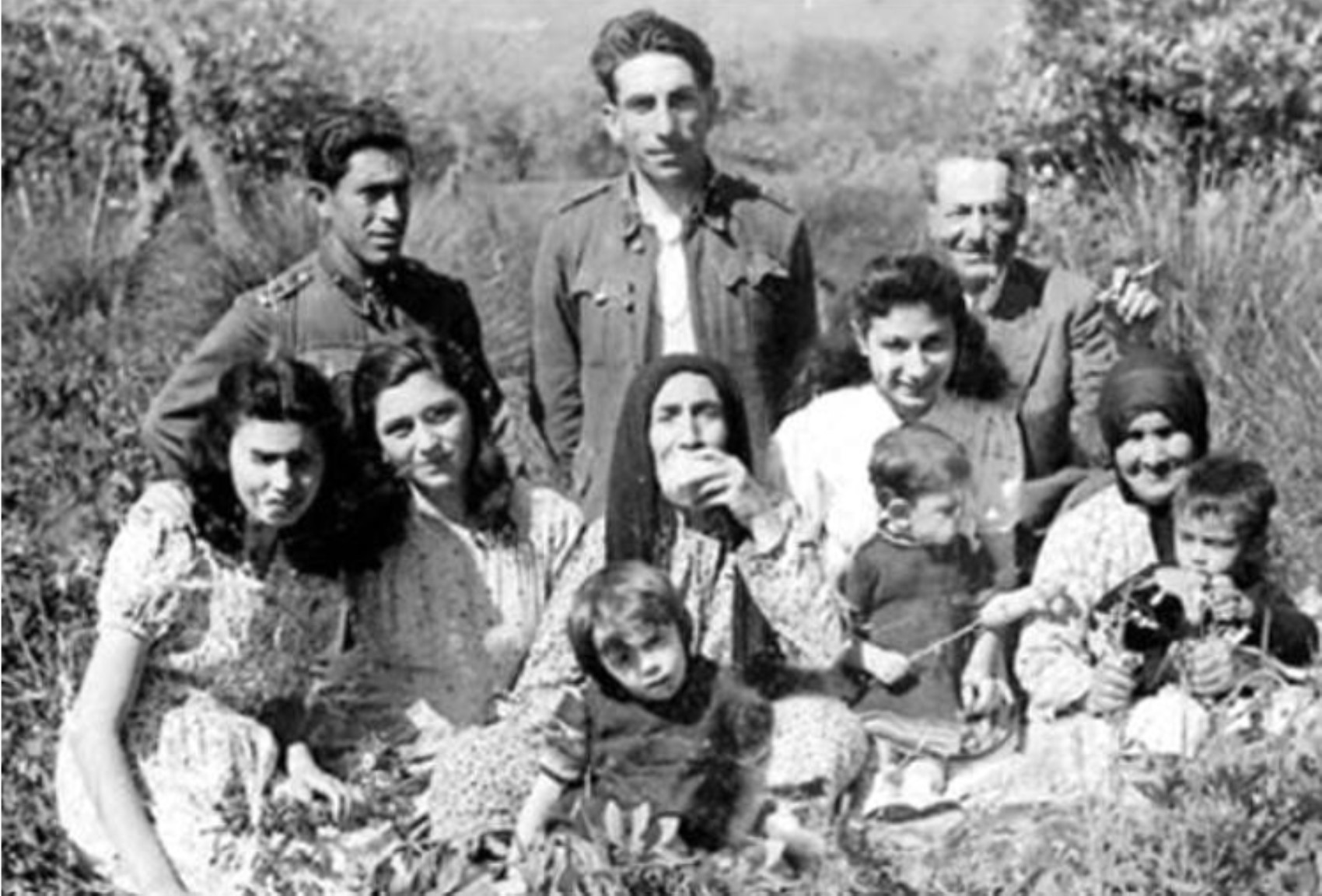
(Türkeş with his family in Erdek, summer of 1943)
Türkeş being sent to the USA after his staff training and his knowledge of the West are highly glorified in nationalist circles. As is his knowledge of English. I have listened to some recordings where he speaks with an upper-intermediate level of English.
I think Türkeş's relationship with the Americans within the scope of the anti-communist struggle must have started before the staff college. I suspect that the USA wanted to take advantage of his Pan-Turkist identity.
Starting from the 50s until 55, Türkeş gave speeches on Turkish radios on topics such as heroism, the warlike nature of the Turkish nation, and the spirit of conquest. I learned this fact during the research I did to write this article.
This means an officer being made to speak on the radio. And during the Democrat Party era at that. For this to happen, this officer must have had a special mission supported by NATO (USA).
THE REASON FOR TÜRKEŞ'S REMOVAL FROM THE NATIONAL UNITY COMMITTEE
Türkeş's plan to extend May 27 for an indefinite period and transform it into an authoritarian-nationalist regime (a right-wing Nasserism, if you will) disturbed not only the majority of the committee that overthrew the government but also business circles and political elites. For this reason, they were removed from the committee along with other radical members through an internal coup managed by the Madanoğlu-Gürsel duo. The committee was dissolved with a declaration signed by Cemal Gürsel in his capacity as Head of State and Commander-in-Chief, and was re-established with the remaining members. The decisions were published in the Official Gazette.
TÜRKEŞ'S RETURN FROM EXILE
We know Türkeş as the booming voice of the May 27 revolution on the radio. After the powerful colonel of May 27 was removed from the committee, he was in India as an advisor to the Turkish Embassy in New Delhi. 25 months later, on February 23, 1963, he returned to Turkey via Greece. There were National Unity members close to him by his side.
Türkeş entered Turkey via Europe (the Greek border) in February 1963. The political environment in Turkey was quite chaotic during these dates. A while later, Talat Aydemir's second uprising would take place and fail. I think Türkeş wanted to be involved in this. His contact with Aydemir stemmed from his willingness to take the lead in the coup. They could not agree on the principles. According to rumors, Türkeş had reported Aydemir. He was also tried for participating in the coup. He was acquitted.
We cannot know if Türkeş reported Aydemir. But—around the time he just returned—I don't think he had the idea of entering political struggle through a party. The possibility of him being after more radical things is higher.
TÜRKEŞ'S CKMP GENERAL CHAIRMANSHIP
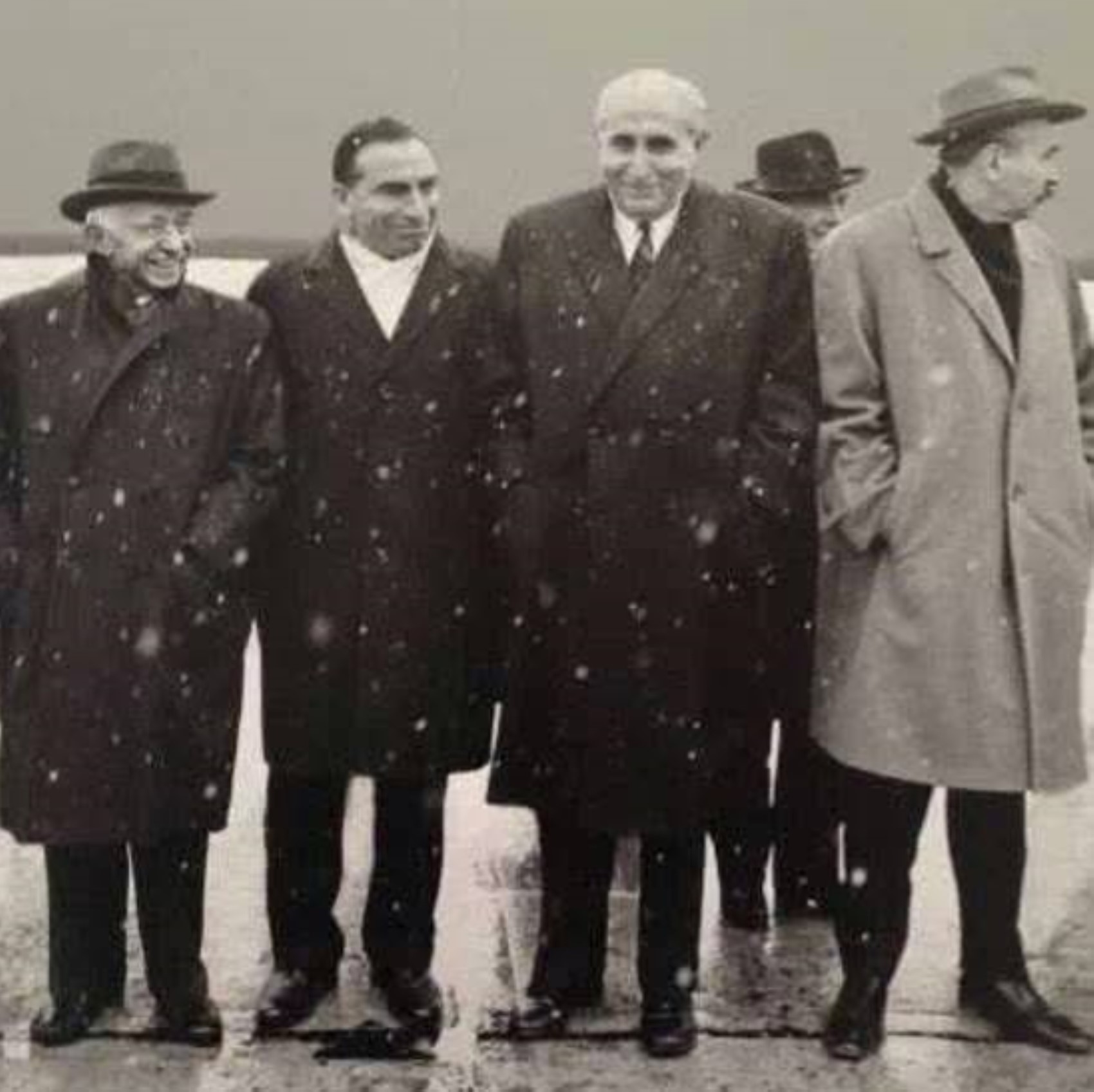
(İnönü, CKMP General Chairman Türkeş, MP General Chairman Bölükbaşı, TİP General Chairman Mehmet Ali Aybar)
When Türkeş and his friends returned to Turkey, the most unstable party was the CKMP. Osman Bölükbaşı had left the CKMP at the beginning of 1962. He had re-established his party (Nation Party) which was closed in the 50s.
The CKMP base was in search of something. Its representatives in the TBMM (deputies and senators) were in political indecision. They participated in İnönü's second coalition and Suat Hayri Ürgüplü's election government. The party became more unstable under the general chairmanships of Hasan Dinçer and Ahmet Oğuz.
On March 31, 1965, Türkeş, along with Dündar Taşer, Ahmet Er, Muzaffer Özdağ, Rıfat Baykal, and Mustafa Kaplan, joined the Republican Villagers Nation Party (CKMP). At the August 1, 1965 Congress, he was elected general chairman of this party. The party had been taken over by Türkeş's team. Thus, the CKMP became the party of the right wing of the 14s. Meanwhile, it is said that Türkeş said, "We will either establish a party or take over one of the existing parties."
As the 1965 elections approached, the Justice Party was the party closest to power as the representative of commercial and industrial capital. It was on the rise with the dynamism provided by their new general chairman, civil engineer Süleyman Demirel. In these elections, the AP would come to power alone—despite the national remainder system. The Republican Villagers Nation Party, on the other hand, relied on provincial small capital under the threat of capitalism. It appealed to out-of-power town nationalism, which we can define as conservative-Sunni. Alparslan Türkeş was elected general chairman of a party with such a base at the July 1965 congress. After that convention, he began to be called "Başbuğ" (Leader/Chieftain).
Although this expression is attempted to be explained with the Central Asian Turkish khanate, its symbolic meaning was different. Political science literature and historical facts show that the symbol of "başbuğ" corresponds to *Caudillo* or *Il Duce*.
The CKMP won 11 seats with 3% of the vote in the 1965 elections. In these elections, the Workers' Party of Turkey would also win 15 seats with a close vote ratio. It was the national remainder election system that allowed both parties to enter parliament.
An important event we should remember about Türkeş between 1965-1969 is that he was the candidate his party showed against Cevdet Sunay in the 1966 Presidential election. Türkeş received the votes of all CKMP deputies against the joint candidate of the AP and CHP, former chief of general staff and quota senator Cevdet Sunay: 11 votes.
Since the national remainder system was abolished in 1969, the MHP, like all small parties, was negatively affected by the change. The new system would effectively be a D'hondt system without a threshold thanks to the Constitutional Court decision. Demirel had legislated the D'hondt system with a threshold to keep small parties out of parliament.
The Leader's Party became a victim of the new election system. The MHP could not win any seats other than General Chairman Türkeş. Türkeş had been elected as an Adana deputy. In the same election, the Workers' Party of Turkey would also fall to two seats.
Before the elections, the CKMP had turned into the MHP at the Adana Congress. The party's emblem had become three crescents on a red background.
IDEOLOGICAL DISCOURSE CHANGE FROM CKMP TO MHP
During Osman Bölükbaşı's general chairmanship, the Republican Villagers Nation Party based its socio-economic discourse on romanticizing the resignation of the Anatolian people.
There was suffering in this romanticism. There was a challenge against the comfort of Istanbul and other big cities. When the CKMP passed into the hands of Türkeş and his supporters, it changed its romantic identity. It became the MHP.
The MHP was appealing to the anxiety of dispossession of the lower-middle classes of Central and Eastern Anatolia in the process of urban bourgeoisie and monopoly capitalism. Türkeş had openly stated that property was the guarantee of freedom.
This was a protectionist discourse for small capital. The MHP blamed the rich and the non-national cultural degeneration of intellectuals for the tensions arising from class contradictions. It adopted a discourse that promised to resolve contradictions with an authoritarian populism.
These themes were combined with anti-communist alarmism. This transformation was accompanied by the transfer to the MHP of Osman Yüksel Serdengeçti, the spokesperson of the discourse of piety, suffering, and belief of Anatolia, who had entered politics from the AP. The MHP managed to drag its own mass behind it with these concepts for a long time.
THE IMAGE OF THE LEADER (BAŞBUĞ) IN NATIONALIST CIRCLES
Türkeş began to be called by the title of "Başbuğ" starting from the 1967 CKMP congress. The party leader would be addressed with a historical mystical expression that defines the chiefs of ancient Turkish communities.
The increasingly developed Başbuğ cult and Türkeş image would turn into the hallmark of the MHP and the nationalist movement, and this circle would be called the "Türkeşists." In 70s Turkey, Türkeş is an absolute leader with his image rather than his thoughts.
TÜRKEŞ'S THOUGHT
It is no coincidence that Türkeş was a May 27th supporter. Nor that he was on the committee. Nor that he was likened to Turkey's Nasser. But it would be more accurate to call him a right-wing Nasser. He was trying to program the ambiguous Atatürkism of May 27 on the basis of a corporatist authoritarian nationalism. He was in pursuit of a restoration of Kemalism in his own way. It is possible to summarize Türkeş's thought briefly like this.
WHAT WAS THE NINE LIGHTS? WHY THREE CRESCENTS?
The views that Türkeş proposed in 1965 as a 100% domestic and national management system (referred to as doctrine) were published under the name Nine Lights. This was a pamphlet-sized booklet. It was put forward as an alternative to the CHP's Six Arrows. The Nine Lights envisioned a corporatist state instead of a class-based society and a social fiction consisting of six social layers compatible with each other.
Ultimately, the Nine Lights appealed to the search for stability of the lower-middle classes who were worried about dispossession and loss of status due to class contradictions deepened by capitalism. In the order where the Nine Lights were implemented, there was a design of an orderly, disciplined, and secure society where everyone would know their place. The CKMP underwent a name and emblem change on February 9, 1969, and became the MHP. The CKMP's scales logo was abandoned. The party's Three Crescent emblem actually symbolizes the longing for the powerful Ottoman centuries.
THE MHP'S SHIFT FROM TURKISM TO CONSERVATISM
In the 70s, the MHP began to appeal more and more to the conservative base. Necip Fazıl Kısakürek, the ideologue of the right wing, moved away from Erbakan and approached the MHP. The political order envisioned in Kısakürek's book *İdeolocya Örgüsü* shows the ideological basis of his rapprochement with Türkeş.
Let us also remember that Türkeş went on Hajj in 1976. The discourse of "As Turkish as the Mount of God, as Muslim as the Mount of Hira" stems from here.
In the 70s, Turkism turned into the Turkish-Islamic synthesis. Türkeş moved the MHP away from Atsız's pagan Turkism.
This view was already a thesis processed and matured in the Intellectuals' Hearth (Aydınlar Ocağı). The Intellectuals' Hearth became the headquarters of the academic front against the left. This circle would become more influential after September 12 and would form the civilian wing of the junta. This was what was defined as "his ideas are in power" while he was in the dungeon.
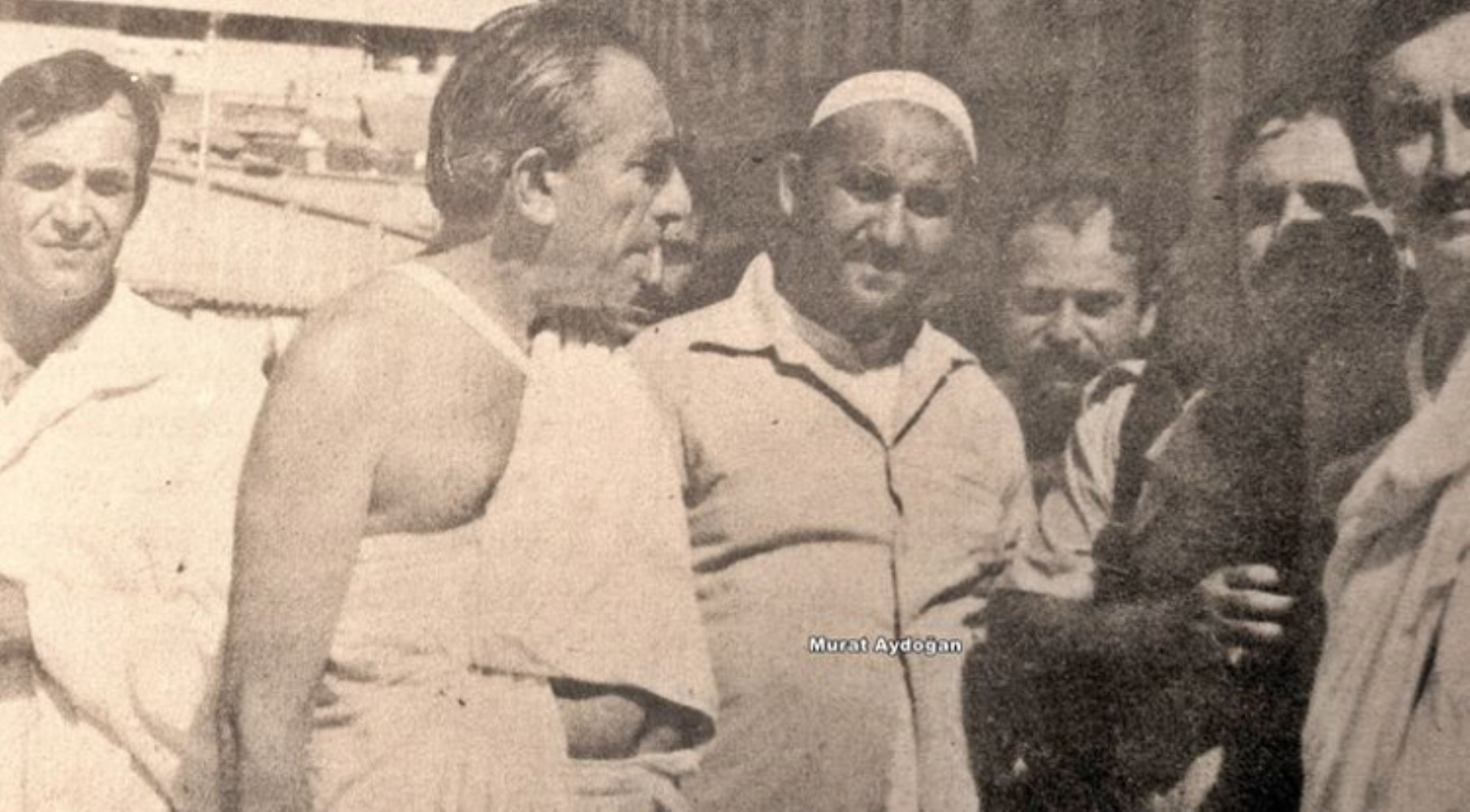
(Türkeş on his Hajj visit)
THE MHP IN NATIONALIST FRONT GOVERNMENTS
The 1973 election results showed that the social-political status quo established in the 1960s had changed. The CHP, with its new general chairman Bülent Ecevit, had risen; the right, which had united under the roof of the Justice Party in the past, had split into factions: such as the National Salvation Party and the Democratic Party.
The MHP had no historical or political intersection area with the Justice Party. The party had entered the TBMM with three deputies. But it was perceived as a party on the margins of politics.
What increased the MHP's value was the attitude of Demirel and Feyzioğlu: this was the idea of forming a right-wing front against the left. The main goal was to block Ecevit's path. Prof. Dr. Turhan Feyzioğlu was the first to propose the Nationalist Front idea.
After the Sadi Irmak government received a vote of no confidence, the government crisis lasted for months. With the positive response of the "Nine Movement" that broke away from the Democratic Party to the anti-left front calls of Feyzioğlu and Celal Bayar, the Nationalist Front government was established. Under the leadership of the AP, with Demirel as prime minister, and with the participation of the National Salvation Party, the Republican Reliance Party, and the Nationalist Movement Party, and the external support of the resigned DP members, the government we refer to in our political history as the First Nationalist Front government was formed. Turkey entered the year 1975 with a right-wing coalition.
What enabled the establishment of this coalition was Feyzioğlu's hatred of Ecevit and Demirel's idea of not letting the CHP take power. These are the main determinants. For the MSP and MHP, entering the government was important. For these two parties, taking part in the government meant settling into the state apparatus. This result was a success for the MSP and MHP, independent of Demirel and Feyzioğlu. They were also the parties that benefited the most from the coalition.
Feyzioğlu realized after a while that he had come together with the religious and totalitarian right while blocking Ecevit's path. It should be noted that joining the NF did not benefit the CGP. It regressed so much that it was almost wiped off the political scene in the 1977 elections.
I am noting the result of the vote to remind you how critical a number the MHP had in the vote of confidence: In favor: 222, against: 218. As can be clearly seen, the government could not have received a vote of confidence without the MHP.
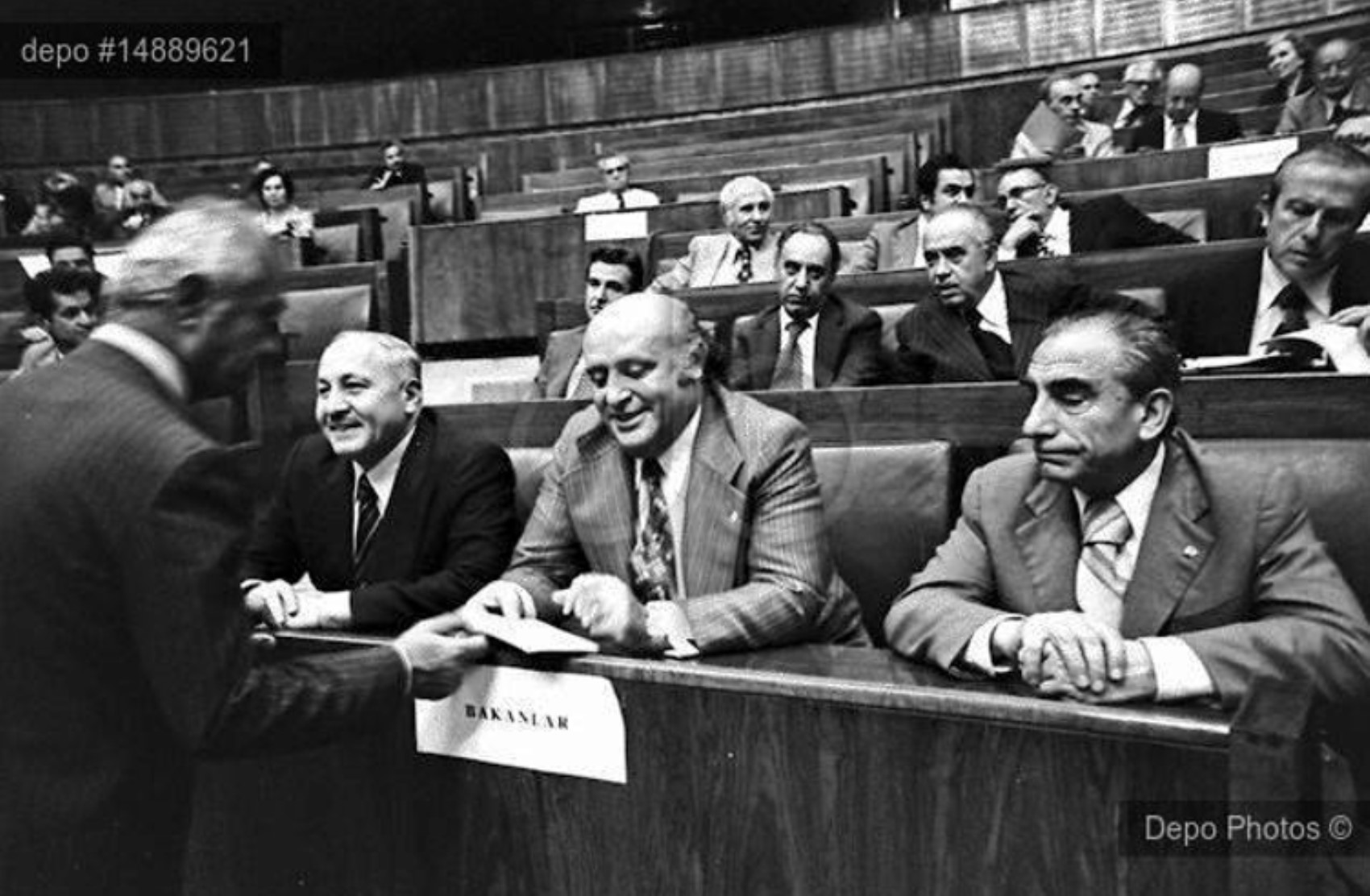
(Nationalist Front government)
WHO WERE THE MHP MINISTERS IN THE NF GOVERNMENTS?
The MHP entered the government with the first NF government. It reached power. Apart from Türkeş's Deputy Prime Ministry, Mustafa Kemal Erkovan (1929, Niğde) was brought to the Ministry of State. Erkovan passed away in 2024. He was an Ankara Law graduate; he served as an Ankara deputy in the 12th, 15th, and 16th terms.
In the Second NF Government, party leader Türkeş maintained his position. At the head of the other important figures is Agah Oktay Güner. Güner was born in Bayburt in 1937. He is an Ankara Law graduate. He did his master's degree at the Institute of Public Administration and his doctorate in economics in France. He was brought to the Ministry of Trade in the NF government. He was one of the important names of the MHP before September 12.
Cengiz Gökçek was born in Antep in 1934, a law graduate. I just learned while writing this article that he was Melih Gökçek's uncle. He served as Minister of Health in the Second NF. Gün Sazak is the son of Emin Sazak, who was an Eskişehir deputy in the First Parliament. He was the Minister of Customs and Monopolies. He had received agricultural education in America. He was killed on May 27, 1980. Minister of State Sadi Somuncuoğlu is a name who was influential in the organization of the Idealist Hearths (Ülkü Ocakları). He was elected deputy from Niğde, and we remember him for his presidential candidacy contrary to tradition in the 2000 presidential election.
WHO WERE THE MHP DEPUTIES IN 1977?
The MHP's deputies in 1977 consisted of these names: Alparslan Türkeş (Adana), İhsan Karaçam and Necati Gültekin (Ankara), Mehmet Irmak (Çorum), Mehmet Tahir Şaşmaz (Elazığ), Nevzat Köseoğlu (Erzurum), Turan Koçal (Istanbul deputy, the MHP is not a strong party in Istanbul), Mehmet Doğan (Kayseri). The MHP won two seats from Konya in these elections: İhsan Kabadayı and Agah Oktay Güner. Sadi Somuncuoğlu was elected from Niğde; Ali Gürbüz was elected from Sivas, and Ali Fuat Eyüboğlu was elected from Yozgat.
EVALUATIONS REGARDING THE MHP BEFORE 1980
The MHP was a party supported by Gladio, which was organized against the Soviets under Cold War conditions. Gladio was a secret organization of NATO. In a possible war, it would fight as a counter-guerrilla against the Soviets. It was designed as armed local right-wing militia forces. Turkey's irregular warfare organization was working together with Gladio. It is, of course, impossible to fully decipher its cadres. But it is certain that there was permeability between the counter-guerrilla and MHP organizations.
Apart from this, the MHP consolidated its power within the state with its cadres in the Idealist Hearths, ÜGD, the Police, the Ministry of National Education, and the army. After April 1, 1975, the MHP effectively assumed the function of the front's covert strike force.
The Justice Party was mostly silent on this issue. I would like to recall Demirel's bombastic words, "You cannot make me say that nationalists commit crimes," here. As a result of Prime Minister Demirel's utilitarian-opportunist approach, the MHP functioned as the pressure apparatus of provincial nationalism against all kinds of left-wing thought, ostensibly anti-communist in essence.
The Turkish bourgeoisie was pleased with this function—provided it stayed within certain limits. But it was understood that the MHP seemed determined to continue a state of action beyond the limit.
There was seemingly a Proxy War going on. Radical left-wing groups were clashing with the MHP and its side organizations. This was actually a civil war that showed a tendency to grow. There is a reference to this in the "preamble" of the original version of the 1982 Constitution. Parties and citizens, who made up three-quarters of the country, were watching this process as if from outside the stage. Big capital (the alliance of ruling classes), seeing that the MHP was acting with a mission beyond its envisioned function, did not establish very close contact with Türkeş and his circle.
The autumn 1979 by-elections would provide the Justice Party with the opportunity to form a minority government under the chairmanship of Demirel. Not a Third NF government.
This government was the penultimate option of the Turkish ruling classes. The last one would be a full military dictatorship regime.
The MHP consolidated its place in the state apparatus after 1975. It further increased its power on the right. Together with its side organizations, it was trying to give the image of doing anti-communist homeland defense. Thanks to this, it reached 16 deputies with 6.5% of the vote in 1977.
Taking part in both NF governments benefited the MHP the most. Both in terms of staffing and ideological effectiveness. The MHP put forward its most important actors in the Second Nationalist Front government. These people were appointed to ministerial positions in the government.
Türkeş could not make a "march on Rome." But he was a political actor who could attempt it. A careful look at political developments will support me on this issue.
In the end, the MHP provided a service against the left (paramilitary) to the ruling classes with the discourse of "we are helping the security forces" in a conjuncture where Turkish capitalism fell into a severe crisis and class struggle sharpened. This phenomenon could have validity in an environment where the dominant actors of the cold war had mutual moves. From the establishment of commando camps, it served as a subcontractor function that served to fortify the geo-strategic blockade applied to the Soviets.
While these processes were being linked to each other, while Idealist youths (MHP members) whose patriotism feelings were waiting at the threshold of violence in the small towns of Anatolia thought they were defending the homeland and the flag, a partisan senator in France could be caught for base morphine smuggling.
These cadres understood that the meaning they attributed to the MHP (the cause) was not what they thought it was in the MHP and Idealist organizations cases opened after September 12.
Would you like to get notifications about new developments and save news?
- NotificationsNew developments and breaking news
- SaveNews is stored in the app
Most Read
Statement from Nihat Zeybekci on the fund investigation

New 75,000-seat stadium plan for Fenerbahçe
Interpol and MIT tracking yields results in Izmir
ID convenience for KPSS candidates

2027 Budget: Taxes for the people, tax exemptions for capital
The reality of Akkuyu and the longing for national nuclear power

To whom and how was the Petition of Intellectuals submitted? Who accepted the petition?
The Çanakkale robbery -1- How was the Troy treasure smuggled out?

Artificial intelligence and the new imperialism

Ministry investigation into unauthorized promotional messages