


The meaning of Süleyman Demirel's pre-political career



WHY DID I WRITE ABOUT DEMİREL?
I have been thinking about writing an article on Süleyman Demirel for a long time. Tanıl Bora's successful biography of Demirel and three doctoral theses encouraged me to write about Demirel, who left his mark on Turkish politics for half a century. The doctoral theses I examined are as follows: Murat Arslan, Süleyman Demirel: A political biography; Ayşegül Komsuoğlu, Political leadership and the example of Süleyman Demirel; Zeynep Çağlıyan İçener, Ideas and praxis of Süleyman Demirel. Let me state immediately that in this article, Demirel's life will be handled solely within the axis of his pre-political engineering career. I am planning to cover Prime Minister Demirel and President Demirel in two separate articles.
PRIMARY AND MIDDLE SCHOOL YEARS
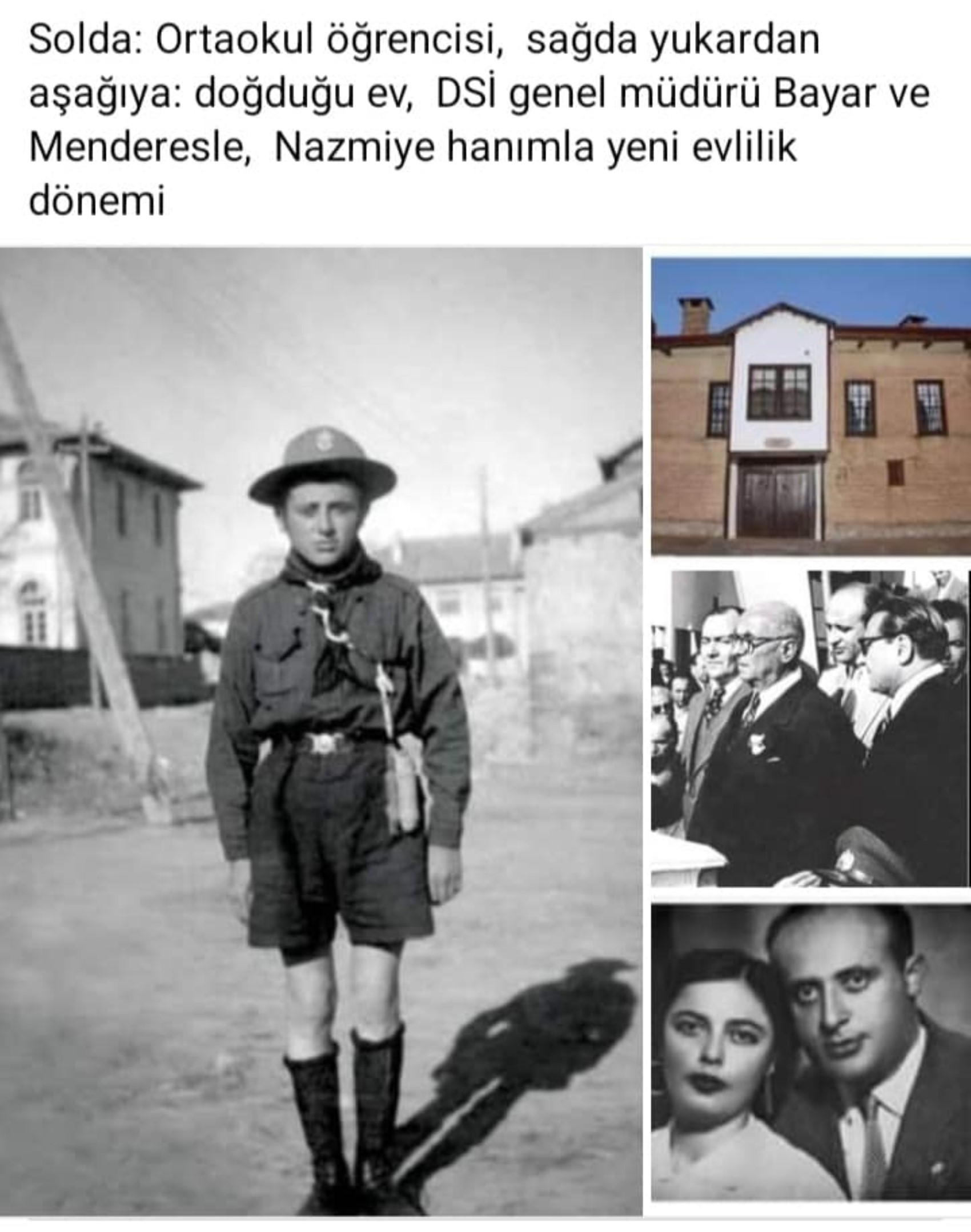
When Süleyman Demirel was born in İslamköy, a village in the Atabey district of Isparta, the Republic was only one year old. He began his education in a single-classroom primary school where animals were sheltered underneath. His teacher, Sadık Doğan, speaks of him as an intelligent, hardworking child who sat in the front row and stood out with his head, which was large in proportion to his body. Dolaksızoğlu Süleyman Sami was a child who did not care much for children's games and did not get into fights. The village was 21 km from the Isparta city center and 3 km from the district center. There was no middle school in the district center; there was one in Isparta. This meant studying in a place quite far from the village. There was no place to stay. He continued middle school together with his cousin under the care of his grandmother in a house rented by his father, Yahya Çavuş, a veteran of the War of Independence.
THE REPUBLIC'S FREE BOARDING SCHOOLS
From the early Republican period until recent times, the way for Anatolian children to build a career in the state was to pass the free boarding school exam. This also meant opening the door to higher education by receiving a good education.
With the encouragement of middle school principal Hilmi Dilmen, he took the free boarding school exam. He was one of the four students who passed the exam. They were sent off with a ceremony from the train station, which was completed in 1936 and opened by Prime Minister İsmet Paşa.
The school they were initially sent to was in Muğla. Three months later, the inspector who arrived found the dormitory conditions for the children inadequate. He sent a group, including Demirel, to Afyon High School. Afyon High School was a very good school. Our 10th president, Sezer, is also a graduate of that school. He won the School of Higher Engineering as a leyli meccani (state-funded free boarder). He studied in the mechanical engineering department for a while. Then he switched to civil engineering.
He did not care much for standard university student socialization. He did not go to Beyoğlu to have fun, nor did he participate in card games. He went to the Berlitz language course three times a week. According to his own statement, he had read most of the Western Classics translations pioneered by Hasan Ali Yücel in the library. The fact that Demirel read even a portion of these 691 translations while a student points to the success of the Turkish Enlightenment revolution. In 1948, before he even graduated, he was married to Nazmiye Şener.
ENTRY INTO PUBLIC SERVICE
After his graduation, Demirel worked for a while at the Istanbul Water Administration (İSİ, not İSKİ), and then, because he had studied as a state scholarship student, he was employed at the Electrical Power Resources Survey Administration. This department is the starting point of his career. In the spring of 1949, he had the opportunity to work with American engineers for the first time on a project to regulate the water resources of the Gediz Basin, towards the end of the CHP government. In the autumn of the same year, he was assigned to the USA under the Bureau of Reclamation with a small US scholarship to receive training in energy and water resources. 1949-1950. A significant advantage he had over his peers was his knowledge of English. His success in contacting the Americans during the Gediz project process played a key role in his first trip.
DEMİREL BEING SENT TO THE USA
Demirel had gone to the USA for the first time before the DP came to power. The year was 1949 when he first went to the USA with a CEA scholarship and assignment within the framework of the program to improve (manage) the waters of the Gediz basin. The CHP was in power. The government's official policy was to take its place in the “free world” led by the USA in the new world order.
Multi-party elections had been held, and the aircraft carrier Missouri had come to Istanbul, officially to bring the funeral of our ambassador Münir Ertegün. Turkey's side had been determined: a front against Soviet Russia. Meanwhile, Demirel was a brilliant engineer who had just graduated from ITU. On his first trip to the USA, he could not take his newlywed wife Nazmiye with him due to the insufficiency of his scholarship (8 USD/day). Let us also note that Demirel was the first engineer to go to the USA on assignment. This first trip would leave lasting effects on the young civil engineer Demirel, in terms of his worldview and political orientations.
Here, he worked for a year in offices in Arizona, Nevada, and Denver, and saw the realization of large irrigation and electricity generation projects alongside the engineers of the “free world.” He stayed in the USA for one year on this first trip. Upon his return, he became the project manager of the Seyhan Dam. In 1954, he was appointed as the Head of the Department of Dams.
HIS SECOND TRIP TO THE USA
When Demirel went to the USA for the second time, he was a favorite bureaucrat of the DP. He was in the USA with a Fulbright scholarship (during the Eisenhower era). This time he spent a year in New York, Washington, Boston, and San Francisco. This time, his wife Nazmiye Hanım was with him. The things Demirel saw in the USA that interested him greatly were: science, technology, large public works investments, a social order based on individual rights and freedoms, and private enterprise.
Demirel returned to his country by adopting these values. According to him, these values were also the basic motivations that would ensure development. This is the background of the term “free enterprise” that Demirel frequently pronounced. To this, the Cold War and anti-communism would be added over time.
CHANGE IN DEMİREL'S LIFESTYLE
In Demirel's lifestyle, conservatism is at the level of adherence to customs. Beyond that, his preference is to live like a Westerner. For him, the West means the daily life and consumption patterns he saw especially in the USA.
His preferences for shirt cuffs made with SD initials, quality whiskey brands, Havana cigars, Gitanes cigarettes, and French fedora hats provide important clues. Sitting cross-legged and joining the ranks with his fellow citizens from İslamköy during Eid prayers does not create a contradiction.
After returning from the USA, he was appointed as the General Manager of the DSI (State Hydraulic Works) upon the recommendation of the Minister of Public Works. He was only 31 years old. He was considered very young, and there were those who opposed it. He convinced those who opposed him by visiting them one by one.
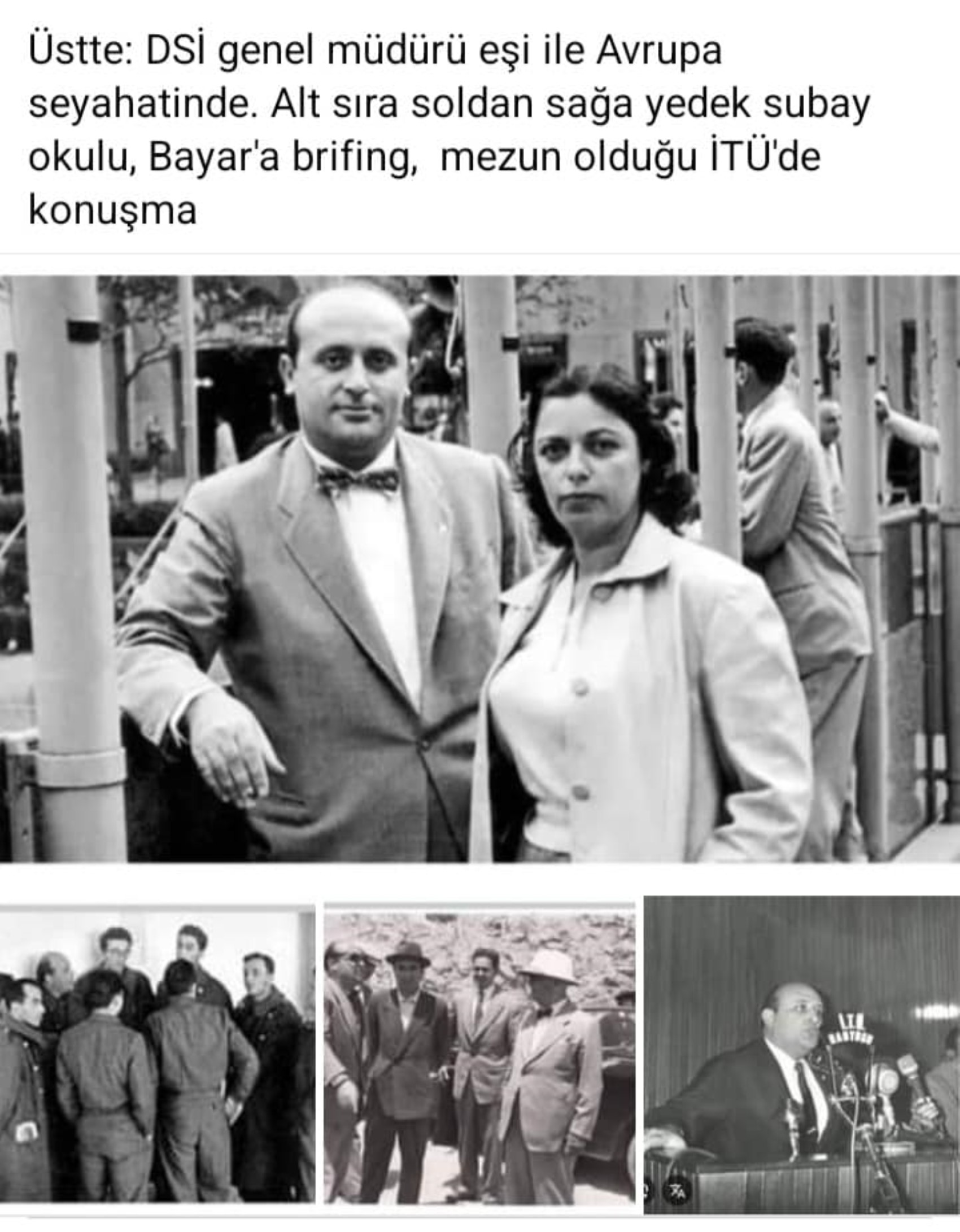
In Ankara, the young General Manager Süleyman Demirel and his wife Nazmiye Hanım, a graduate of primary school and the Girls' Institute of Arts, were now regulars at events such as Karpiç, cinema, theater, concerts, waltzes, and dancing. He started wearing a bow tie; with his support, they created an example of successful mobilization from the provinces to the central elite. This was a move by a couple who had come from a village to take their place within the Republican elite.
There are those who attribute this rapid rise to the Masonic lodge. In my opinion, the possibility of the exact opposite is higher. The intelligent, successful, young DSI General Manager who had seen America must have caught the attention of the lodge.
Nazmiye Hanım also did not draw a conservative appearance with her attitude regarding clothing, grooming, and daily life. They were successful in adapting to the environment and getting themselves accepted.
SUPPORT OF DEMOCRAT PARTY LEADERS
Demirel's brilliant engineering career would be the determinant of his future political life. He was adopted, supported, and protected as a “golden child” by the DP political elite, primarily Prime Minister Adnan Menderes, as well as Kemal Zeytinoğlu, Münif İslamoğlu, and Tevfik İleri. These people were the prime minister, and the ministers of public works and transport of the period.
In 1956, at the opening of the Seyhan Dam, Menderes left the speech to him. This was Demirel's first address to thousands of people. But behind him were President Bayar and Prime Minister Menderes. From this, the degree of trust the government of the era had in this young general manager is understood.
While Menderes, after leaving a briefing Demirel gave to the council of ministers, used the expression “pay attention to this young man, he is the prime minister of the future,” Tevfik İleri praised him to Münif İslamoğlu with the words “doctor, this man is like an electronic brain,” and Füruzan Tekil—in allusion to Şevket Süreyya Aydemir—said “this is the real man who seeks water.”
MY VIEW ON DEMİREL'S MASONRY
I think the starting point of Demirel's Masonic story must have coincided with his DSI general managership. This is my guess. As in the whole world, Freemasonry in Turkey is focused on gaining political and economic power. Members benefit from organization membership and are protected. The organization also consolidates its power through the reputation of its members.
The Masonic lodge recruits talented, intelligent human resources: like Civil Engineer Süleyman Sami Demirel. For Demirel, Freemasonry became a tool for gaining power and upward mobilization. It has nothing to do with serving Zionism, which is frequently repeated in Islamist literature. I think Demirel must have received an invitation from the Masonic lodge after his second return from the USA.
RELIGION AND TARIKAT RELATIONS
Demirel received Quran lessons from the students of Said Nursi, who was in exile in the village of Barla in Isparta, when he was a primary school student. It is also known that the Nurcu students in İslamköy copied the Risale-i Nur. This was already the working method of the Nurcus in the 30s. Demirel hid this until 1955, not because he had a hidden agenda, but so that it would not create a deficiency in his state career. Taking Quran lessons is also quite normal. This is a requirement of Anatolian Muslim conservatism.
Demirel did not have a very close relationship with religious circles even after entering politics. He partially benefited from these circles, provided them with representation opportunities by making a few people members of parliament, and received their support in elections. We can liken his attitude on this subject to the Bayar-Menderes duo. Important positions in the party and state were not given to the leaders of the tarikat. This was the red line. While Turgut Özal and Necmettin Erbakan had close relations with the İskenderpaşa Lodge when they were students at ITU, Demirel's relationship remained at the level of a distant acquaintance. He was not close to Abdülaziz Bekkine and Mehmet Zahit Kotku either. After entering politics, he allowed these circles to approach him only within the limits he set for them. Until the era of the Nationalist Front (MC) governments.
MAY 27 AND DEMİREL
Demirel was in Madrid, Spain, during the May 27, 1960 coup. Suat Hayri Ürgüplü was also the ambassador there. Just four years later, he was deputy prime minister in the Ürgüplü cabinet, and five years later, he was prime minister. He had not yet done his military service. During the DP government period, his service was deferred by a Council of Ministers decision. The officials of the revolutionary government wanted to take him into custody, treating him as a draft dodger. However, a reserve officer candidate should have been referred to a military court. Afterwards, there were various mediation scenarios involving Fahri Özdilek and Alparslan Türkeş. I would also like to add the “Masonic brothers” lodge to these. In the end, Demirel was conscripted. After his ordnance (army equipment) reserve officer training, he was assigned to the State Planning Organization with the rank of second lieutenant and the approval of the ministry.
It is known that after being discharged, Demirel carried out the representation of the Morrison firm, which won the tender for the construction of the METU campus in Ankara. He entered into contracting businesses with his father-in-law and brothers. This is the reason why he was criticized in leftist literature as “Morrison Süleyman.” He also taught water engineering courses as a lecturer at the METU Faculty of Engineering.
ENTRY INTO THE JUSTICE PARTY
While Demirel was in the military, the Justice Party was founded under the leadership of Ragıp Gümüşpala. Demirel became the member elected with the highest number of votes to the general administrative board at the First Congress held on November 30, 1962. He was brought to the position of deputy chairman responsible for organizational affairs. After Celal Bayar was released on March 22, 1963, he was in the GİK delegation that went to visit him to wish him well.
After the sudden—and in my opinion, also suspicious—death of the party's founding chairman Gümüşpala at the Lido facilities in Ortaköy, Istanbul, he was elected chairman of the Justice Party at the extraordinary congress held on November 29, 1964, receiving 1,072 votes out of 1,697 delegates. I think the contribution of the Istanbul bourgeoisie, the flagship of the press, Hürriyet Newspaper, and a photograph taken with Vice President Johnson in 1962 had a great impact on this result. While his most serious rival, Dr. Sadettin Bilgiç, received 522 votes, the Air Force commander dismissed by the May 27 coup plotters and future senate president Tekin Arıburun received 39, and the Ord. Prof. Dr. Ali Fuat Başgil, whose candidacy was blocked in the 1961 presidential election, received 4 votes. This development became an important turning point for the Justice Party. Thus began Süleyman Demirel's main acting role in Turkish politics, which would last for 40 years.
The essence of the matter is this: The intelligent and hardworking student, who sometimes walked to the middle school in the city center from Isparta's İslamköy, became the chairman of a modernist right-wing party. Less than a year later, he brought his party to power and became prime minister.
WHO IS THE REAL DEMİREL IN MY OPINION?
Within his personal development line, it is possible to speak of many Demirel identities. But for me, the dominant Demirel identity is the Demirel who testified before the High Investigation Board, to which he was invited as a former high-level bureaucrat of the deposed Democrat Party after May 27, while he was a reserve officer. Erhan Bener was the chairman of the board. Demirel appeared before the board having studied his lesson with two suitcases of documents. He defended his general managership period in a very solid way with information, documents, and figures. The former DSI general manager was speaking the language of science, technology, and reason. But there is one more very important point: Demirel, who spoke with an Isparta accent when the time came and enjoyed it, was addressing the investigation board with impeccable Istanbul Turkish.
Here we see Demirel as the hardworking student who was successful in free boarding exams. But there is something else; he had also made himself accepted by the ruling elite class. With the language he used and his performance.
WHAT SHOULD OUR JUDGMENT BE ABOUT DEMİREL?
The development line of the Süleyman Demirel identity before his political career constitutes a successful example of the Turkish education revolution. His story is one of the Demirel family, whom we can count among the small landowners and lower-middle class in the inner-western Anatolian Turkey, holding on to the political center. His success is not just a personal success. It has been the highest-level proof of the Republic, the nation-state, citizenship, and equal opportunity.
I cannot pass without adding one more thing here. A Bedii Faik aphorism regarding Demirel, who was heavily criticized after entering politics and becoming prime minister, is as follows: “With our Nadir Nadi, who never rode a tram in his life, and Demirel, who went from the village to the town with half-shoes, there are stones in their pockets. He might encounter dogs on the road. He works in the field during holidays. The former is a populist. Aren't they calling the other a comprador bourgeois....” I certainly have words to say about the master's last sentence. But this article is not the place for it. I will agree with the Republican elite Nadir Nadi interpretation—perhaps with a smile.
If he had lived a few centuries ago, he would not have been able to leave the Hamid sanjak where he lived, due to the order of “the subject's son is a subject” in Sultan Süleyman's Law Code. Under the supervision of a timariot sipahi, he would have paid the product he produced on his ancestral field as tax to the “Ottoman with baggy trousers and a shaky saddle.” Süleyman Sami, born one year after the Republic, reached Çankaya from İslamköy by benefiting from the education institutions and advancement opportunities of the new regime. This is not just his personal success. It is the success of the Republic's principles of citizenship and equal opportunity. These words that Demirel frequently pronounced are very meaningful: “They ask me what the republic is... The republic is me... I am...”
Would you like to get notifications about new developments and save news?
- NotificationsNew developments and breaking news
- SaveNews is stored in the app
Most Read
Statement from Nihat Zeybekci on the fund investigation
New 75,000-seat stadium plan for Fenerbahçe
Interpol and MIT tracking yields results in Izmir
ID convenience for KPSS candidates

2027 Budget: Taxes for the people, tax exemptions for capital
To whom and how was the Petition of Intellectuals submitted? Who accepted the petition?
The Çanakkale robbery -1- How was the Troy treasure smuggled out?
The reality of Akkuyu and the longing for national nuclear power

Artificial intelligence and the new imperialism

Ministry investigation into unauthorized promotional messages