


Vera Dumesnil’s Occupied Istanbul



WHEN WERE VERA DUMESNIL’S MEMOIRS PUBLISHED?
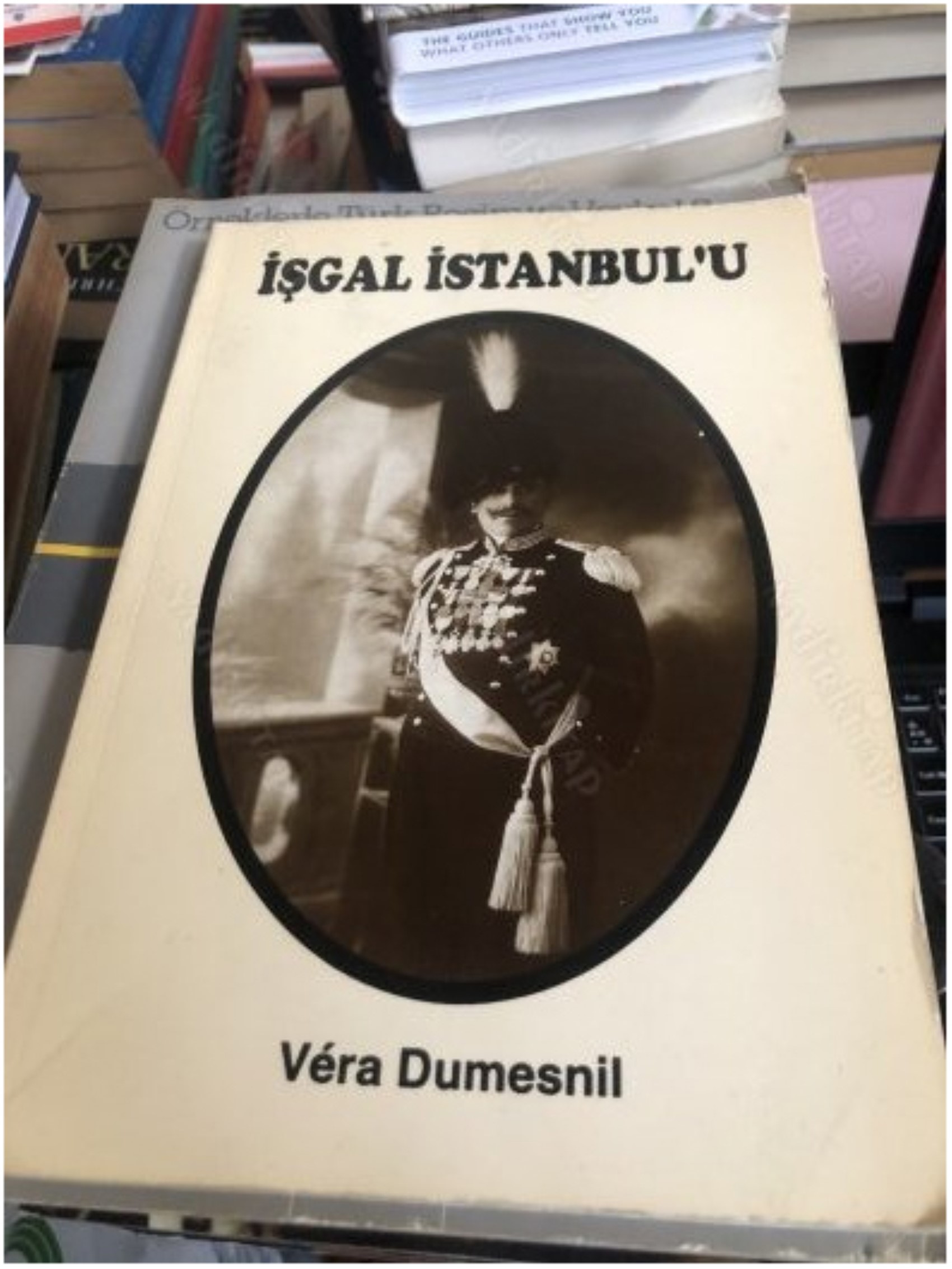
I read Vera Dumesnil’s book “Occupied Istanbul” with great pleasure, even though Vera misunderstood many things. The author is a Russian aristocrat, the wife of French Admiral Charles Henri Dumesnil. I could not find any information regarding how they met and married. They stayed in Istanbul for nearly three years, during the city’s most chaotic period (1920-1923).
The book was translated in 1993, around the time Çelik Gülersoy was establishing the Istanbul Library. The translator is Akif Emre Öktem, who is now a professor of International Law at Galatasaray University Faculty of Law. Emre is a friend of mine.
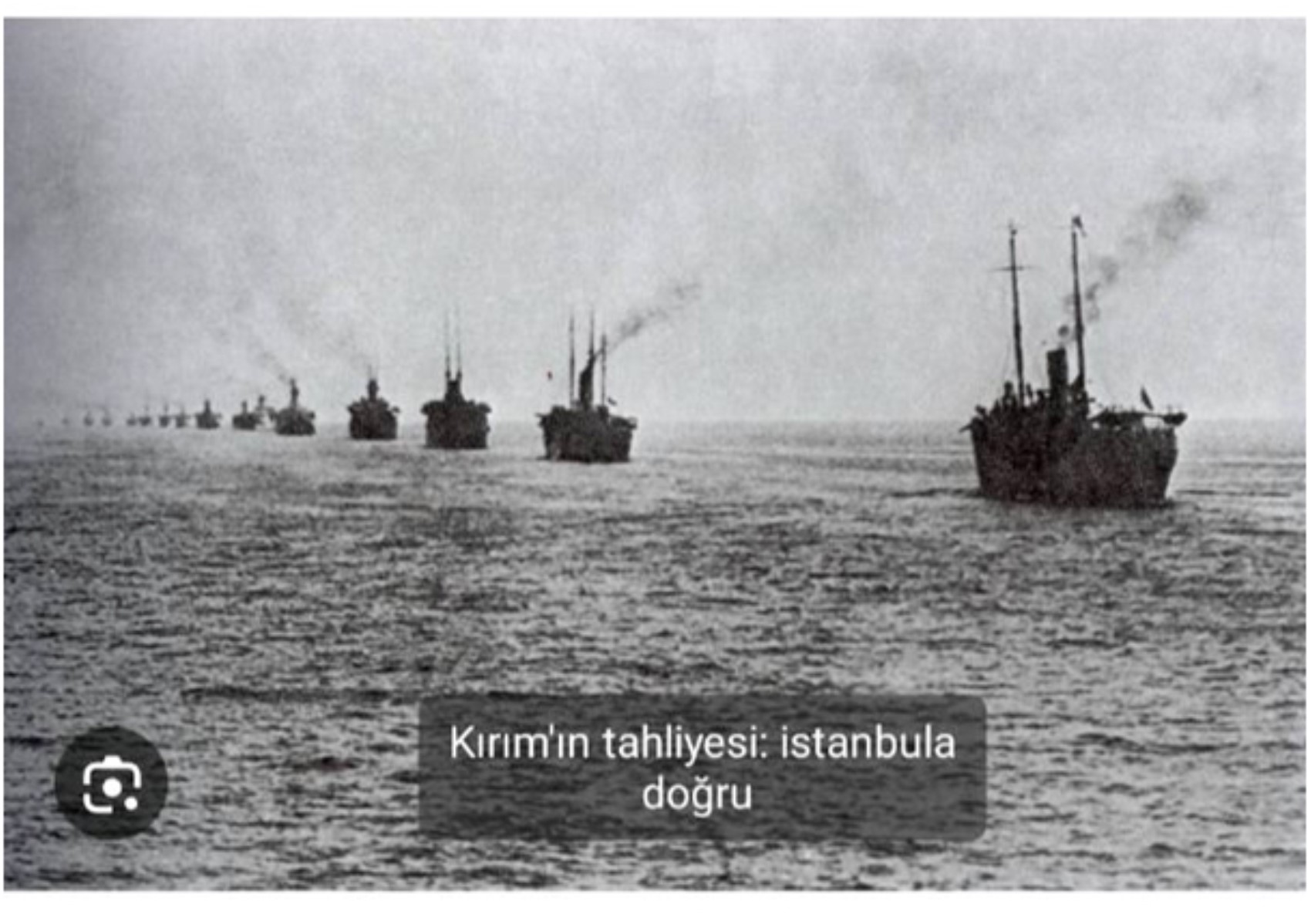
They witnessed many important events. For example, the evacuation of Crimea by the White Russian army, which was defeated by the Bolsheviks. Admiral Dumesnil organized this operation, which was carried out using ships from the French and Russian navies.
A significant portion of the book is devoted to refugees and migrants. The main theme is humanitarian aid, specifically food and shelter.
Another noteworthy topic is the diplomats, high-ranking officers, their wives, and other officials from the other allied countries, and the relationships maintained with them.
WHO LIVES IN THE COUNT OSTROROG MANSION AND HOW?
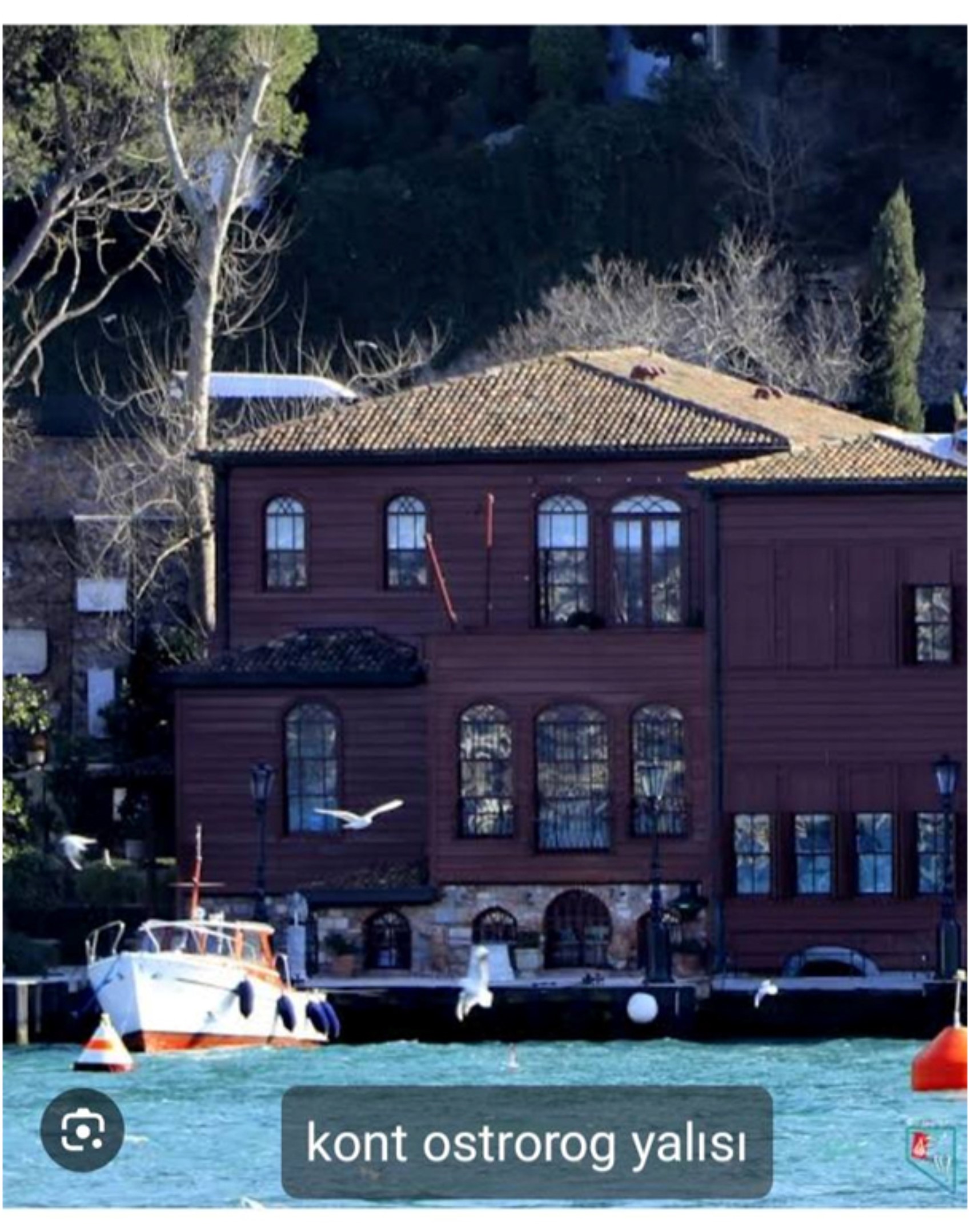
The Comte Leon Ostrorog mansion in Kandilli, which is currently owned by Rahmi Koç, holds a very central place in the memoirs.
The French High Commissioner (Ambassador) Normand, his wife Elizabeth, and the family of Ahmet Arif Pasha (Sarıca) live together in the mansion. Both families have children. Ahmet Arif Pasha is the brother of Ragıp Pasha, the chief chamberlain of Abdülhamid and a member of the Eğribozlu Sarıca family. Interestingly, he studied medicine in Athens. Arif Pasha found a mansion in Moda, which is currently the residence of Ayşegül Sarıca.
Ahmet Arif Pasha is married to a young woman. His wife is 35, and he is 80. They have two children. The Pasha dies in the mansion after a while. It is said that his young wife was a former member of the palace staff.
Countess Ostrorog and her handsome children are mentioned from time to time, but the Count is nowhere to be found. It is highly likely he was busy with other affairs in Europe. He was a Polish-born Frenchman and an important jurist who prepared drafts for the legal reforms of the Committee of Union and Progress. After the revolution, he wrote the book “The Angora Reform.”
It is not very clear how the Ahmet Arif Pasha family and the French ambassador’s family lived together in the mansion. Given that Rahmi Koç bought the mansion from the Count’s heirs, the property remained in that family until the 2000s. The Harem and Selamlık (men’s quarters) sections of the mansion allowed two families to live together. The total living area of the mansion is 684 square meters.
In all likelihood, Arif Pasha lived on the Selamlık side. If you look carefully at the mansion from the Küçüksu Pavilion side, you can see that it consists of two interconnected buildings. The smaller one is the Selamlık building.
Circumcision ceremonies, weddings, and funerals are held at the mansion, and important diplomatic guests are hosted there.
Selim Ağa, the famous eunuch of the late Ottoman period, was on the mansion’s service staff, likely through a connection via Arif Pasha.
The book reflects both the struggles of Russian refugees to hold onto life and the contradictions among the allied administrators.
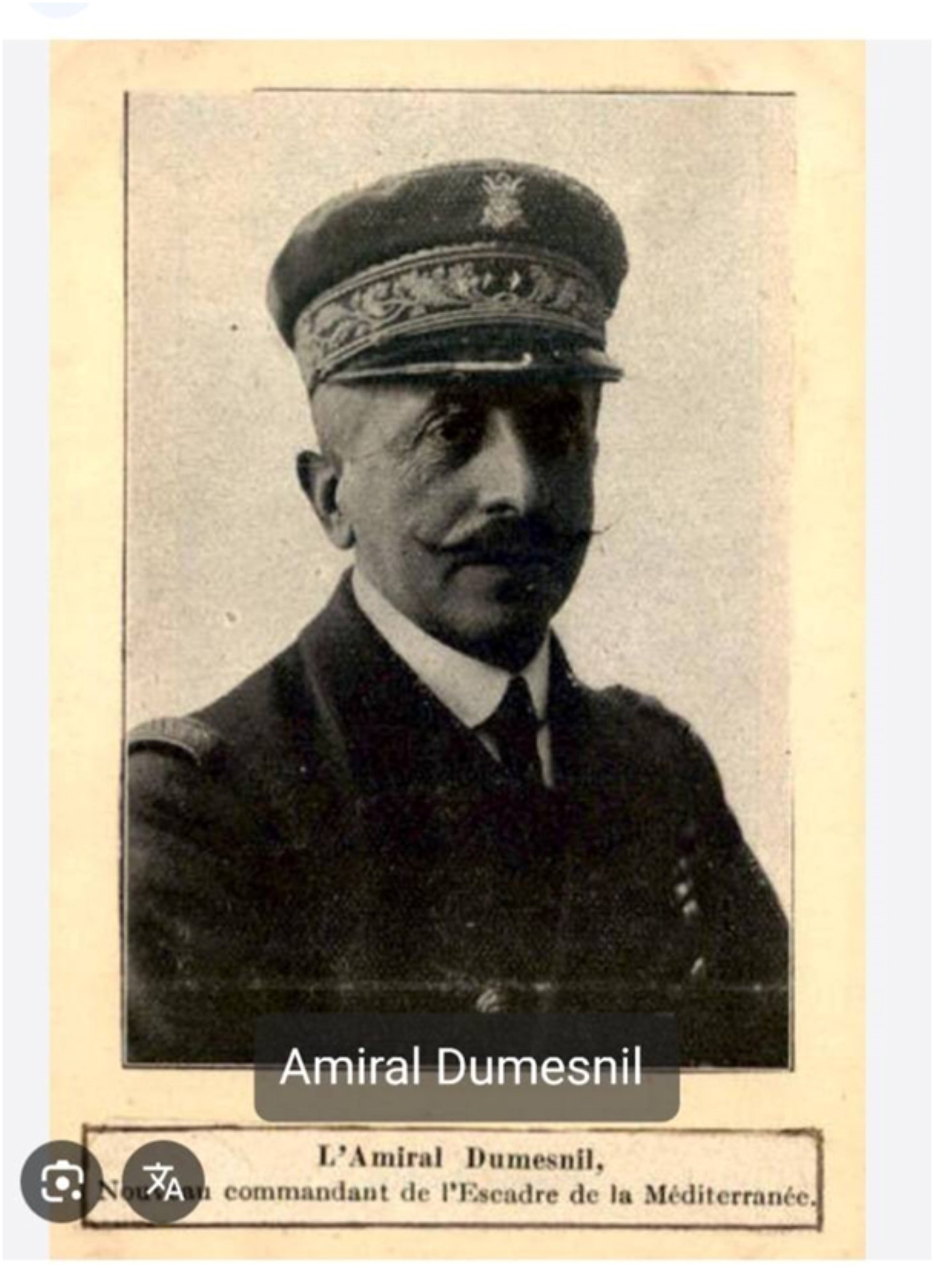
WHO IS ADMIRAL CHARLES HENRI DUMESNIL?
The author’s husband, Admiral Dumesnil, was the commander of the French Near East fleet. He took part in two important events. One was the evacuation of Crimea (1920). He transported 150,000 people, both men and women, across the Black Sea to Istanbul. The ships must have been packed to the brim. Some ships broke down on the way and were brought in under tow.
During the transport, one of the torpedo boats capsized and sank, disappearing in the open sea. The convoy continued on its way. The Admiral managed such a massive operation.
Camps were established for refugees around the city: Maltepe, Yıldız, Gülhane, Tarabya, Taksim, Selimiye, and Zeytinburnu. There were also people remaining on the ships. The fact that a city with extremely limited resources had to house and feed such a large mass of people would create serious problems.
His second mission was his intervention in the Great Fire of Smyrna and the preparation of a report (1922).
FRENCH SCHOOLS IN ISTANBUL
Elizabeth has a daughter named Christine, whom they enrolled at Notre Dame de Sion. They are very pleased with the education. The French schools in Turkey were Catholic or Lazarist. The Ottoman government did not close foreign schools during the war, and educational activities were permitted.
ELIZABETH SWIMS FROM KANDILLI TO BEBEK
The French ambassador’s wife, Elizabeth, is a good swimmer. She can swim across the Bosphorus from Kandilli to Bebek. Like Vera, she is of Russian descent.
There were dead horses in the Bosphorus drifting with the current from the Bosphorus to the Sea of Marmara. They must have died during the war and drifted from the Black Sea coasts. Vera writes that Elizabeth would hold onto them like buoys to cross to the other side.
ARMISTICE ISTANBUL THROUGH VERA’S EYES
The victors of the war appointed High Commissioners to the Ottoman government (in Istanbul). This was a diplomatic post, not a military one. High Commissioners like Rumbold and Pelle were the ones who signed the Treaty of Lausanne. There was also a military occupation administration; generals like Harrington, Charpy, and Montbelli are the most remembered names.
Vera’s husband was Admiral Dumesnil, commander of the French navy. The book contains many stories about diplomats, commanders, and their wives, some of which are quite exaggerated.
From the notes in the final section of the memoirs, it is understood that they were written after the Admiral’s death (1946).
While reading the book, the chaos created by the migrants and refugees filling Istanbul passes before one’s eyes like a film strip.
The astonishment caused by Russian officers dragging their light artillery through Beyoğlu, the dead horses drifting with the current in the Bosphorus... Vera, like the wife of the French ambassador Normand, is a Russian aristocrat.
WHO IS ALEXANDRE, WHO IS CONSTANTLY MENTIONED IN THE BOOK?
Alex, or Alexandre, who is mentioned quite often in the book, is the brother of the French ambassador’s Russian wife. He was one of those who came to Istanbul from Crimea as a patient. He was treated and saved. Alexandre would later be married at the Ostrorog mansion.
AN ENVIRONMENT OF SOCIAL COLLAPSE IN THE CITY: THE DEMOGRAPHIC STRUCTURE IS CHANGING
Many barracks were allocated to immigrants. For example, the Davutpaşa barracks were allocated to women with children, and to orphans. While the World War was ongoing, there was a migration of Greeks and Armenians from Anatolia to Istanbul, likely because they felt safer there.
After the Great Victory, this time the Greeks of Western Anatolia began to migrate to the Aegean islands or to Istanbul via Bandırma-Erdek.
When the exchange agreement was being made in Lausanne, the “établis” (established) debate arose from this. Who is a native of Istanbul? The debate over who would be excluded from the exchange began. The Patriarch, who was not a native of Istanbul, would be deported.
Another important population movement was the arrival of Wrangel’s army from Crimea. Wrangel’s army consisted of Don Cossacks and the White Army. In November 1920, they were evacuated by a fleet consisting mostly of French ships. Their numbers were around 150,000.
The refugees reached Istanbul after a three-day journey on their feet and in inhumane conditions. Camps were established around Istanbul only for civilians. The soldiers were sent to Gallipoli and Lemnos. Wrangel’s family was settled on Heybeliada.
ALLOCATION OF BARRACKS TO REFUGEES
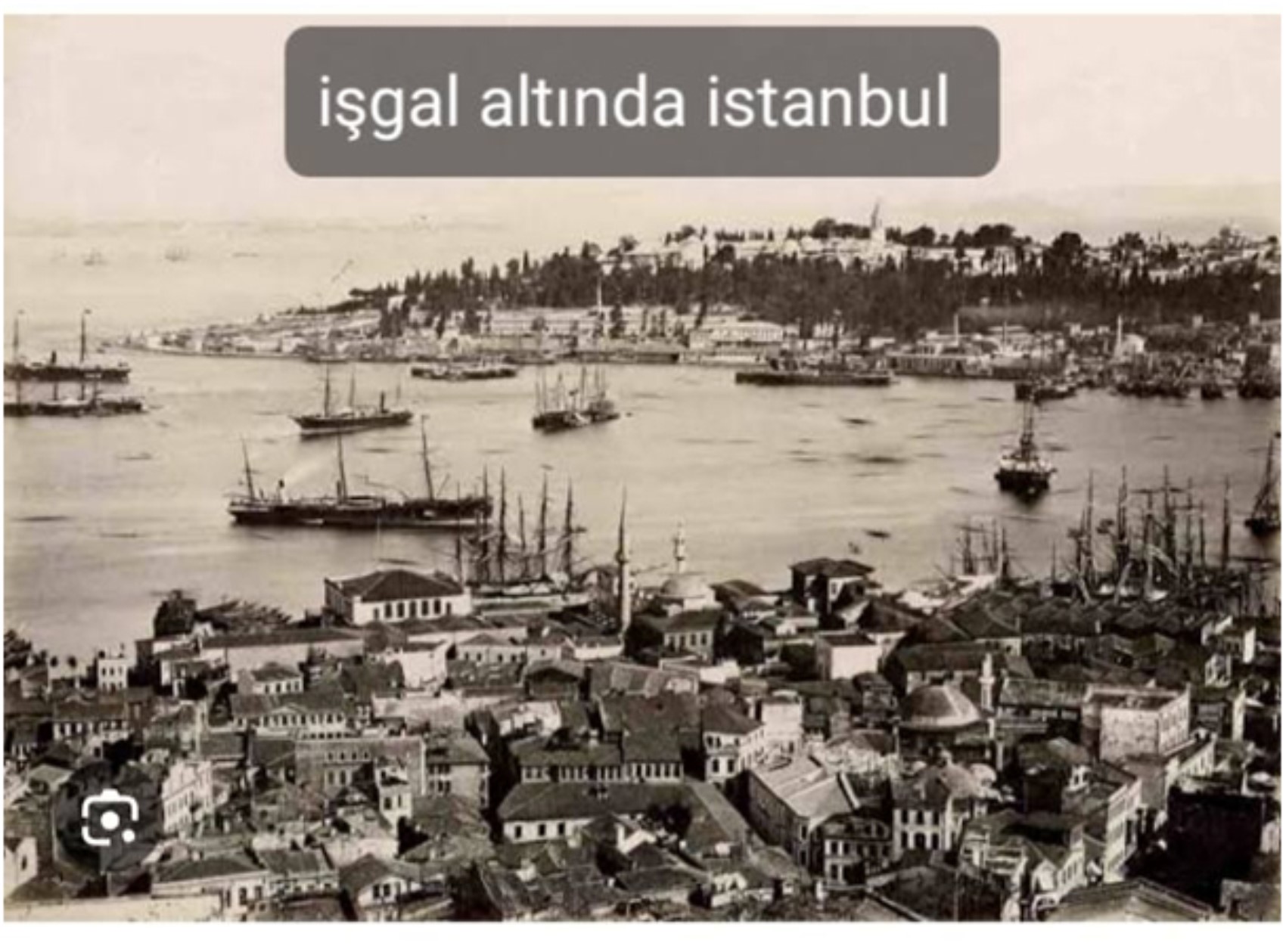
The Taksim Artillery Barracks, Davutpaşa Barracks, Gümüşsuyu Barracks, and the Istabl-ı Amire (stables and barracks) behind Dolmabahçe began to be used to house people.
Elizabeth was in contact with all the allied commanders in the city for people in need of help. She met with de Robeck and Bristol to secure soup and tea. She succeeded in obtaining field-type kitchens from the ships to be used. Elizabeth was an enterprising and organized woman. She struggled to provide a few bowls of food and tea to thousands of people, and she was largely successful.
The French had a hospital whose location I cannot quite understand. Its name is the Jean d’Arc Hospital. Perhaps it was a temporary hospital.
THE TRAGIC DEATH OF A RUSSIAN WOMAN
Russian refugees who died in Istanbul were buried in Orthodox cemeteries. Maria Ivanova’s death was a tragic one. Ivanova was only able to board the ship with what she was wearing during the great panic in Crimea. Some women were cautious; they came having sewn their jewelry into their clothes. This was able to sustain them for quite a while. Ivanova, however, could not take anything with her. She died in misery in a shack. There are many such human stories in 1920s Istanbul.
THE SAD STORY OF A RUSSIAN GENERAL
One of the dramatic events mentioned in the memoirs is the story of a Russian general. The general had participated in the 1905 Russo-Japanese War. He fought heroically. He was among those who came to Istanbul with the defeated White Russian army. He must have been an elderly general. He was trying to hold onto life in miserable poverty in Armistice-era Istanbul. He could not find work. Vera writes that the general eventually went to Paris and died there. She mentions a woman who took care of his grave.
THE MOST BEAUTIFUL TITLE IN THE BOOK: WHEN THE DOUBLE-HEADED EAGLE RECEIVED A FATAL WOUND
This was the title I liked the most in the book. The “Double-Headed Eagle” symbolizes Tsarist Russia, as is known.
A small group of officers from the “double-headed eagle” left their ships for some reason I cannot understand and went down to Pera with machine guns and a cannon. It must have been a light mountain gun that could be pulled by hand. We can imagine such a scene: a small group in uniform dragging a cannon and walking around on the Cadde-i Kebir (Grand Avenue). This could also have been a small-scale Russian demonstration.
After a while, the allied gendarmerie intervened. I am sure they treated the Russian officers with courtesy. All the officers wanted to go to France, not to any other country.
ACCIDENT IN THE PORT: A SHIP SINKS
Some of the ships used in the evacuation of Crimea were anchored in the port of Istanbul. An Italian ship bringing passengers from Odessa collided with a ship housing some of Wrangel’s army. The ship sank. There were also casualties. Considering that there were many ships anchored, I think the narrowness of the maneuvering area could have been the cause of the accident.
COUNTERFEIT MONEY CIRCULATING IN THE MARKET
There was a very chaotic environment in Istanbul in every sense. Refugee problems, the Spanish flu, food supply, etc. Civil servants could not receive their salaries. The Sublime Porte had no resources. To these were added counterfeit money incidents. There were gangs printing counterfeit money. The ambassador and his wife were also victims of this money; they were also given fake currency.
MARRIAGES ARE INCREASING
Meanwhile, many marriages were taking place. Human mobility was very high in occupied Istanbul. Single allied generals were the center of attention. These were people coming from the battlefield.
For example, General Pelle. He was the High Commissioner in the newly established Czechoslovakia. Later, he would come to Istanbul with the same duty. This state was one of the states established after the dissolution of the Austro-Hungarian Empire. He came to Istanbul from Prague with a very beautiful woman, as his fiancée. General Pelle would marry this lady. He would represent France during the second phase of Lausanne, and would pass away one year after signing the agreement on behalf of France.
The Czech beauty that Pelle brought from Prague would occupy the allied public opinion quite a bit.
Another marriage was that of Elizabeth’s brother, Alex. Alexandre was engaged in Belgrade. The parties were Orthodox. They wanted to get married in Istanbul and go to Paris. However, there was a traditional obstacle. Something like our saying, “there is no wedding between two holidays.” Among the Orthodox, marriage between two Easters is not looked upon very favorably.
But they were in a hurry to get married and go to Paris. When they went to the Phanar (Fener) to get permission from the Patriarch, they happened to coincide with the election of a new Patriarch. The day Alexander went to the Phanar must have been the election of the newly elected Patriarch Meletios IV. I reached this conclusion as a result of my research. Let me also give the date: November 25, 1921.
The Patriarch welcomed the couple’s request. He immediately approved the marriage out of necessity. This time, there was an Orthodox wedding at the Ostrorog mansion. A suckling pig decorated with beets was served at the wedding dinner. The guests were very distinguished people. Thus, after the circumcision ceremony of Arif Pasha’s son with blessed lamb pilaf, this time Alexandre’s lavish Orthodox wedding dinner with pork was served at the mansion.
VERA’S WRONG IMPRESSIONS ABOUT GENERAL PELLE
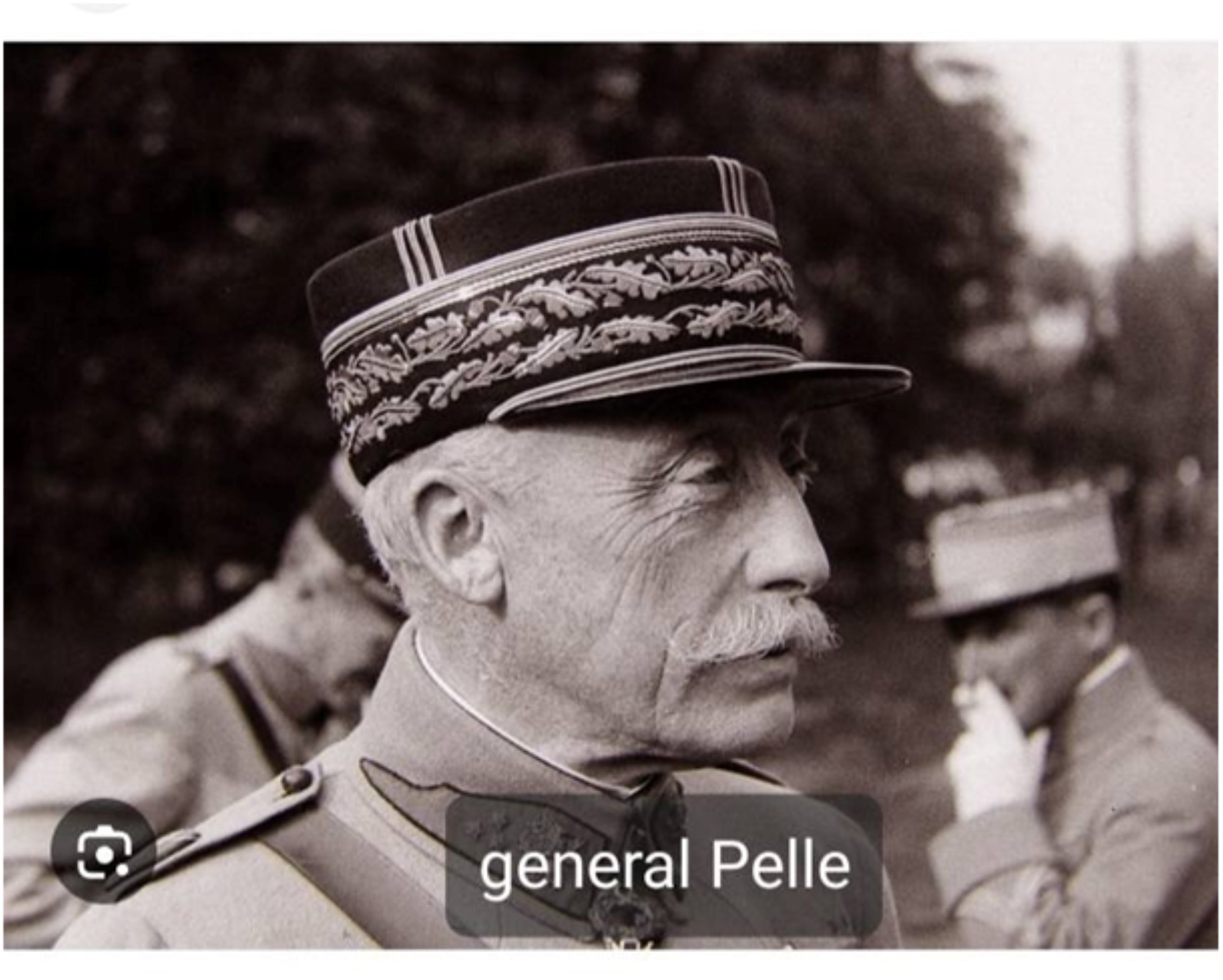
In her memoirs, Vera wrote that High Commissioner General Pelle was 48 years old. The general’s full name was Maurice Cesar Joseph Pelle. Pelle looks quite vigorous in pictures. He has a stately appearance, as the old folks would say. He was born in 1863. He passed away some time after signing the Treaty of Lausanne (1924).
The general participated in the second round of the Lausanne negotiations in the capacity of High Commissioner. He was the one who signed the agreement on behalf of France.
The general was someone women admired. He was also an intellectual. Vera mentions that he could recite several pages of Candide from memory.
CRITICISM OF HIGH COMMISSIONER PELLE’S MARRIAGE BY FRENCH WOMEN
Maurice Cesar Joseph Pelle was a handsome general who attracted a lot of attention from women. When he returned with a young and beautiful Czech girl from Prague, he was criticized, with people saying, “as if there weren’t enough French girls.” The French women in Istanbul were offended by him. Pelle was an important figure in the convening of the armistice conference and the signing of Lausanne.
RUSSIAN FASHION IN ISTANBUL
Receiving services from Russians, riding in a carriage driven by an old Tsarist general, or going to a restaurant run by Russians was described as a privilege.
While there were Russians struggling in misery on one hand, there were also Russians who found a place for themselves in the social life of Istanbul. The first beach where women could swim in the sea together was opened by Russians near Florya.
It was possible to see Russians painting oil and watercolor portraits, playing the accordion, or playing the balalaika on the streets of Pera.
There was a competition among women: wearing a costume sewn by a Russian noble. This made quite a splash. Some even exaggerated it, saying, “a dress I had sewn by a noble lady from the Tsar’s palace.” Indeed, there were Russian women who worked as tailors.
Marriages with Russian women were also in vogue. Allied officers seemed very interested in Russians. This is not surprising at all. Vera wrote that a Caucasian princess married an Englishman and that the groom was a complete lover and gentleman.
ORIENTAL LINES IN WEDDING ATTIRE
Istanbul was under allied occupation. But the occupiers wanted to wear Turkish costumes on important days. Especially the women. It is probably more accurate to call this Oriental fashion.
Ahmet Arif Pasha’s widow (the Pasha passed away) bought a two-hundred-year-old Ottoman women’s outfit from the Grand Bazaar for the ambassador’s wife, Elizabeth. She must have bought it from the Bedesten. She personally prepared Elizabeth for Alexandre’s Orthodox wedding ceremony. Hair was braided. A combination was made with necklaces and bracelets.
French, Americans, Poles, and Armenians attended the wedding. Turks were also invited, of course. They would also attend the ceremony at the Count Ostrorog mansion with great curiosity and enthusiasm.
VERA WRITING ABOUT THE SULTAN ABDÜLAZIZ-EMPRESS EUGENIE RELATIONSHIP AS IF IT WERE A GREAT LOVE STORY
It is interesting that Vera describes the week she spent in Istanbul as a guest of Sultan Abdülaziz as a great love story. This is a story that is also told a lot in Turkey.
Abdülaziz is the only Ottoman sultan who went on a European tour. He also took Abdülhamid Efendi (II. Abdülhamid) from the princes with him. The fact that the Ottoman State was now considered a European state and the curiosity about the “Orient” had made Sultan Abdülaziz’s European tour a center of attention. The official reason was the 1867 Paris Exposition. But he also went to England, the Netherlands, and Germany.
Empress Eugénie stopped by Istanbul while going to the opening of the Suez Canal. She stayed at the Beylerbeyi Palace for a week. This trip is the source of the 150-year-old love rumor.
DISTANT RELATIONS WITH THE BRITISH
Since each allied country had its own calculations, they were polite but distant toward each other. At the Lausanne table, each country would take a stance according to its own interests. Vera mentions Rumbold and Harrington, whom she encountered at receptions. The Italians were generally looked down upon. Their ceremonial uniforms were likened to those of operetta performers. The French were intimate with the Americans and distant with the British.
ARMENIANS EMULATING THE FRENCH
Vera generally mocks the Armenians. Armenians were very much emulating the French. There are lines in the memoirs making fun of them. Let us not forget, by the way, that there was an Armenian legion within the French forces in Cilicia. She says their accents and the “oily shimmer of their eyes” give them away.
PICNIC ON HEYBELIADA: THE ADMIRAL WHO FELL OFF A DONKEY
In accordance with the commitment given to the allies, Wrangel’s army did not disembark in the city. They were sent to camps on the Gallipoli peninsula and the island of Lemnos. Those who could come to the city were some officers. Their families were settled on Heybeliada. Wrangel’s wife and children were also there.
Wrangel and Admiral Charles Henri Dumesnil had been friends since the days of the evacuation of Crimea. One day, they decided to have a picnic together. They intended to have the picnic at the most dominant point of the island. This must have been somewhere near the Saint George Monastery and the Theological School. Everyone rode donkeys. Admiral Dumesnil fell off his donkey on the slope. They had quite a laugh. General Wrangel was so tall that his feet touched the ground while on the donkey.
RECEPTIONS HELD ON ALLIED SHIPS
Parties with dinner and dancing were held on allied ships. Turks participated in these with enthusiasm. Palace women loved to be present at these events. They were very eager to be in such environments. The most popular receptions were those on American ships.
Admiral Bristol and his wife were very popular figures in other allied circles. This is how Vera describes it. Everyone addressed them as Mark and Helen.
ARIF PASHA’S SON IS CIRCUMCISED: THE FRENCH ARE ALSO INVITED TO THE DINNER WITH LAMB PILAF
The time had come for Ahmet Arif Pasha’s 12-year-old son to be circumcised. Elizabeth was invited to the ceremony as Madame Normand. She was present for the prayer and dinner parts of the circumcision. There was pilaf and lamb on the menu. She describes the food as delicious. The young pasha-to-be was circumcised along with about 15 other children from the neighborhood. This is a wealthy Muslim tradition. At the same time, it is a way to earn merit.
 A RECEPTION IS HELD FOR CLAUDE FARRERE IN THE GARDEN OF THE OSTROROG MANSION
Claude Farrere is a name that the Turks value very much. He was always treated like a friend. He was a former naval officer. He was also someone the Anatolian government valued. He was first hosted with a reception on the French flagship Waldeck Rousseau. He went to meet with the Anatolian government to ensure peace (June 1922). There were Izmit-Adapazarı negotiations before the Great Offensive.
A dinner was given in honor of Farrere in the garden of the mansion, at the Ostrorog mansion. There was a very pleasant atmosphere. The ambassador’s daughter Christine and the late Arif Pasha’s children, İclal and Adnan, were allowed to attend this distinguished invitation in white clothes. Meanwhile, Madame Arif Pasha (this is what the late pasha’s young widow was now called) organized a Turkish music concert in honor of Farrere. The French watched the songs and instruments with interest.
ARMISTICE AND CELEBRATION AT THE ADMIRAL’S BAR
Upon the successful conclusion of the Great Offensive, the Allied powers put France’s High Commissioner in Istanbul, Pelle, into play. We had an agreement with the French and our relations were good. For this reason, Pelle came to Izmir. He prepared the ground for the Armistice negotiations by contacting the Turkish commander-in-chief.
Gazi’s “Chanak Affair” maneuver prevented a conflict with the British. The Armistice negotiations began.
Vera knows many things about the Mudanya Conference incorrectly. For example, that the commander-in-chief did not know a single word of French. However, all of the great Atatürk’s classmates had a better command of French than him, except for Ali Fuat Pasha. He was a pasha’s son who studied at Saint Joseph. He had attached great importance to this since his days as a student at the War Academy, in order to become a staff officer. His French reading, writing, and speaking skills were at a good level. His second foreign language was German.
Madame Dumesnil says that the Armistice was signed on the flagship Waldeck Rousseau. Of course, that is not true. She mentions that after the signatures were signed, the Turks were so cheerful that they consumed all the drinks at the Admiral’s bar. She writes that the Turkish Commander-in-Chief made the most important decisions accompanied by rakı. She ends it like this: The liquor collection on the flagship was in danger of running out because of the Turks. She exaggerated quite a bit. Since our negotiator was İsmet Pasha, the claim of alcohol consumption is highly exaggerated. İnönü may have had a glass out of courtesy, but not more.
WHO COULD HAVE BURNED BEAUTIFUL IZMIR?
A few days after the liberation, a fire broke out in Izmir that largely destroyed the city. The fire could not be brought under control. It lasted for days. There were those who claimed that the fire was a Turkish operation aimed at completely erasing the non-Muslim presence in the city. There was even speculation that the mastermind behind this was Sakallı Nurettin Pasha. Nurettin Pasha was the former governor of Izmir. He had participated in the National Struggle reluctantly and had been made commander of the Central Army. He had business cards printed calling himself the “conqueror of Izmir.”
An investigation commission, which included Bristol and Dumesnil, was established. In the report, Dumesnil wrote that it was impossible for the Turks who recaptured the city to be the perpetrators of this act. The fact that the fire started in many districts at the same time indicated that there were looters behind the incident. This is the strongest possibility. There was an atmosphere of panic after the army entered the city. Saboteurs who wanted to take advantage of the chaos started the fire. Then they looted the houses. This is the highest probability.
 WHAT HAPPENED TO THE RUSSIAN NAVY BROUGHT BY WRANGEL?
The Black Sea fleet of Tsarist Russia was in the hands of the Whites during the civil war. The ships that were in usable condition were used in the transfer to Istanbul. The navy remained unmaintained and idle after a while. I am not sure if those ships were used when Wrangel went from Turkey to Serbia. The navy was interned by the French in the port of Bizerte, Tunisia. After a while, Wrangel gave these ships to France, which had supported them for two years, as compensation. There was nothing else he could do anyway. He was not in a position to board the ships and shell Petersburg. His army was struggling with the problem of food in Serbia.
After a while, the French put the ships, most of which were now rotting, up for tender to be dismantled. It was not difficult to market the ships. I think French capital gained the most from this business. The ships met the same fate as our Yavuz battleship. They were sold to the French metal industry as recycling material.
WRANGEL’S SUDDEN DEATH IN BRUSSELS
Vera attended the funeral ceremony held in Brussels after General Wrangel’s sudden death in Belgium (1928) and wrote about her impressions at length.
Wrangel’s date of death: May 15, 1928. After leaving Istanbul, Wrangel went to Serbia. The Serbs are Orthodox, like the South Slavs and the Russians.
They dreamed that they could re-establish the old regime with other Russians in exile. They even formed a government in exile. One of the Romanovs was among them. Over time, hopes faded. Wrangel was a mining engineer; he went to Belgium to work with those from his army who wanted to join him.
As I mentioned in a previous article, Wrangel died in a suspicious manner. I think it is highly likely that he was poisoned by Stalin’s agents.
From what Vera wrote, it is understood that Wrangel’s funeral was magnificent. The cortege reached one kilometer in length. The Cossacks, who were now working as miners in coal mines, walked in a sorrowful manner, singing hymns after their commander.
VERA THINKS ABDÜLMECID EFENDI IS THE CALIPH-SULTAN
Vera, who visited Abdülmecid Efendi at Dolmabahçe before leaving Istanbul, defines him as the sultan. She must be seeing the Caliphate as a sultanate. She spoke with the Caliph’s wife through an interpreter. They drank coffee together.
It is not very clear in the memoirs how Vera’s relationship with Abdülmecid Efendi began. Abdülmecid became caliph very shortly before the Admiral and his wife left the country.
Vera writes of Abdülmecid Efendi as Sultan Abdülmecid II. She thinks the Caliphate and the Sultanate are the same thing. She mentions his blue eyes and his daughter Dürrüşehvar, who would later marry a maharaja.
As is known, after the caliphate was abolished, Abdülmecid Efendi went to Nice. He mostly lived there. The deposed caliph paid a surprise visit to Vera by going to Paris.
VERA’S DEPARTURE FROM ISTANBUL
Vera’s husband, Admiral Dumesnil, was appointed to the Brest Naval Command in February 1923, and they left Istanbul. The Admiral went to his new post on a ship belonging to the navy, and Vera left Turkey on the Pierre Loti ship belonging to the Messageries Maritimes company.
Would you like to get notifications about new developments and save news?
- NotificationsNew developments and breaking news
- SaveNews is stored in the app
Most Read
Statement from Nihat Zeybekci on the fund investigation
New 75,000-seat stadium plan for Fenerbahçe
Interpol and MIT tracking yields results in Izmir
ID convenience for KPSS candidates

2027 Budget: Taxes for the people, tax exemptions for capital

The reality of Akkuyu and the longing for national nuclear power

To whom and how was the Petition of Intellectuals submitted? Who accepted the petition?

The Çanakkale robbery -1- How was the Troy treasure smuggled out?

Artificial intelligence and the new imperialism

Ministry investigation into unauthorized promotional messages