


Who is Prof. Dr. Tarık Zafer Tunaya to me?



MY PROFESSOR TARIK ZAFER TUNAYA
I am one of the last students of Tarık Zafer Tunaya. Our professor was the founding dean of the Istanbul Faculty of Political Sciences. He had also served as dean at the Faculty of Law. I learned that there was a professor of constitutional law named Tarık Zafer Tunaya at the funeral of Ümit Yaşar Doğanay. The year was 1979.
At that time, I was a student at Istanbul Technical University (İTÜ), in the MMF. This abbreviation stands for the Maçka Faculty of Engineering and Architecture. The MMF building had previously been used as the Gendarmerie General Command. Today, the İTÜ Faculty of Management is located on that site.
Ümit Yaşar Doğanay, one of the nine founders of our faculty (İÜSBF), was attacked and lost his life on November 20, 1979. Like Professor Doğanay, Cavit Orhan Tütengil, Bedri Karafakioğlu, and Abdi İpekçi had also fallen victim to terrorism. Professor Server Tanilli had also been seriously wounded and left paralyzed in a similar attack.
The brutal murder of Professor Doğanay caused a great public outcry. The funeral was held at the Şişli Mosque and he was laid to rest in the Zincirlikuyu Cemetery.
As students from all of İTÜ’s campuses—Gümüşsuyu, Taşkışla, and Maçka—we were all present at the funeral ceremony. As students of the İTÜ MMF and the Faculty of Mines, we walked through Nişantaşı, Teşvikiye, and Halaskar Gazi to the Şişli Mosque. Then, we went to the Zincirlikuyu Cemetery. The slogans chanted under the Mecidiyeköy viaduct still ring in my ears.
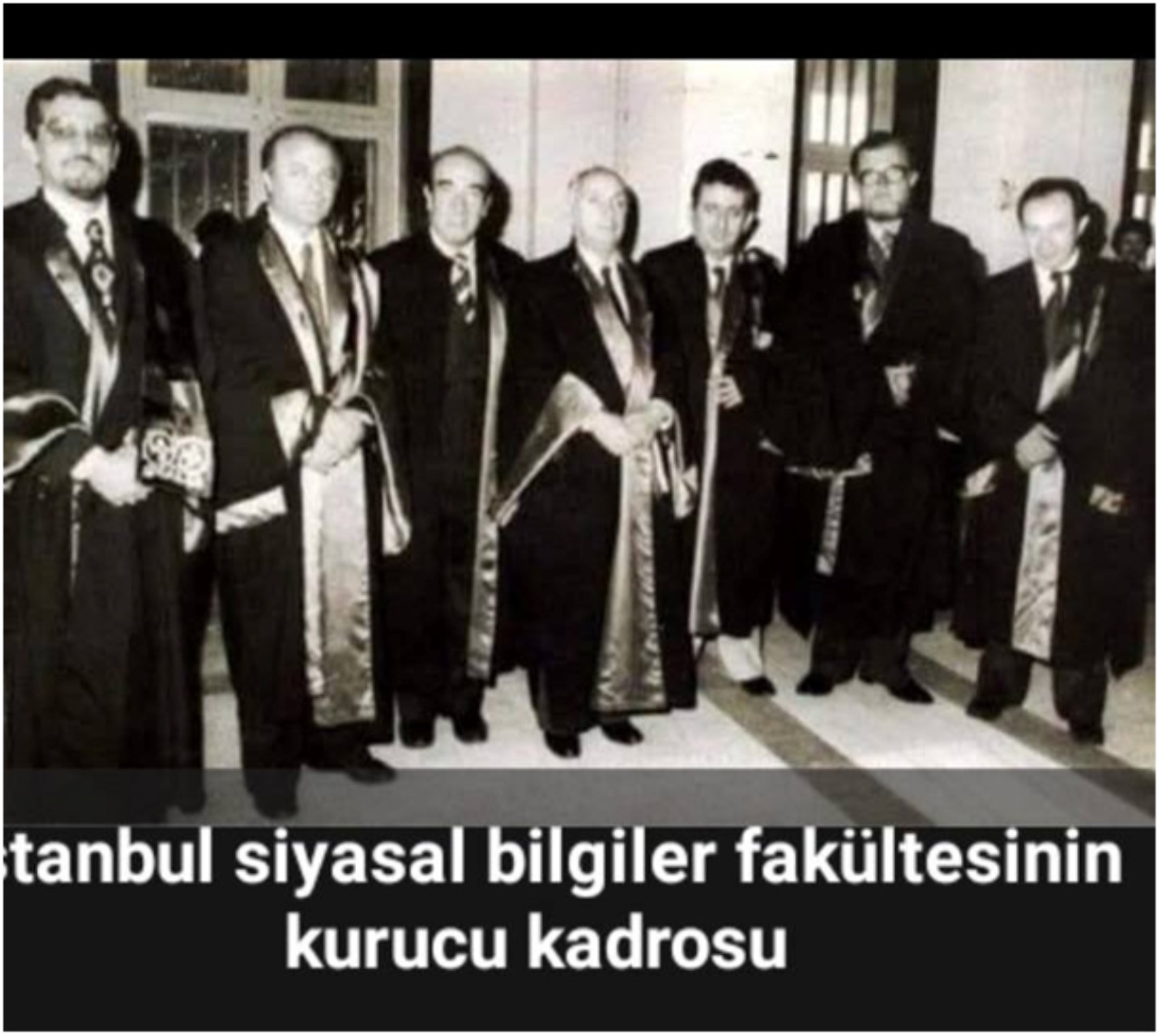
It was on this occasion that I learned that the Faculty of Political Sciences in Istanbul had been newly established. The name of the faculty was later changed to the Faculty of Political Sciences during the deanship of our professor, Cumhur Ferman.
I took the university entrance exam once more and was accepted into the Istanbul Faculty of Political Sciences (SBF). I was one of the 150 students who entered the faculty in 1980. My student number is 185. A few days after I was accepted into the faculty, the September 12 coup occurred. I enrolled under the conditions of September 12. I studied under the conditions of September 12.
WHEN DID I SEE HIM FOR THE FIRST TIME?
How did I first see my professor, Tarık Zafer Tunaya? The first scenes are still before my eyes today. We were only two classes anyway: the '79 cohort who entered the faculty before us, and us. We were invited to the opening lecture in the New Amphitheater I, right across from the Doğanay classroom. The arrival of our professors all together was very impressive. They all sat in the front rows wearing their robes. Professor Tarık Zafer gave a very beautiful speech. He spoke of the Gülhane Edict and the dialogue between liberty and authority. From the very first lecture, he had established a magical authority over all of us. He had a charisma. A special charisma. After each of his lectures, we grasped his greatness even better.
I would like to list the founding professors of our faculty here. Most of them were faculty members assigned from the Faculty of Law to contribute to the establishment of the Istanbul University Faculty of Political Sciences: Tarık Zafer Tunaya, Aydın Aybay, Ümit Yaşar Doğanay, Murat Sarıca, Ali Ülkü Azrak, Ersan İlal, İzzettin Doğan; Nur Vergin. Sevim Görgün, Nazif Kuyucuklu, Ersin Kalaycıoğlu, Burhan Şenatalar, and Şükrü Hanioğlu later transferred to our faculty from the Faculty of Economics. Our professors Yıldızhan Yayla, Duygun Yarsuvat, Ata Sakmar, and Mesut Önen came to the faculty after we moved to the second year.
Our late professor Murat Sarıca had a special place. We loved him. We were a bit intimidated by Professor Tarık Zafer. He was the founding leader. We only stood up for him when he came to class. He had a gentle authority over all of us.
ORAL EXAMS
In this tiny faculty, there was something in those years that did not exist in any other faculty: oral exams. The "oral" exam, which used to exist in the Faculty of Law, had returned with the establishment of our faculty.
The written exam was in the nature of a midterm for the big exam. The big exam was oral and public. The question my professor Tarık Zafer asked in the written Constitutional Law exam was about the social state, while the question he directed to me in the oral exam was about unwritten constitutions.
He would come to the History of Revolution classes together with Professor Şükrü Hanioğlu.
The professor would teach Constitutional Law classes together with Ersan İlal, and History of Revolution classes together with Professor Şükrü. Our professor for the Turkish Constitutional Order classes was Bakır Çağlar.
OUR PROFESSORS MURAT SARICA AND AYDIN AYBAY BEING DISMISSED UNDER DECREE 1402
Two things saddened him deeply. The dismissal of our professors Aydın Bey and Murat Sarıca under Decree 1402. The year was 1983. I can say that my professor Murat Sarıca died of grief. In the autumn of that year. Those who made the decision to uproot and cast out such an intellectual, who was so wholeheartedly devoted to the university, are guilty before history.
Aydın Aybay, Bülent Tanör, Hüseyin Hatemi, and Gencay Gürsoy were able to return to the university years later through a Council of State decision. The military regime took and implemented this crude decision just as it was leaving. The decisions were communicated through martial law commands. Those removed from the university were purged "never to be employed in public service again."
The strange thing is that all these practices took place in the spring of 1983. On the other hand, the calendar for the return to multi-party political life had begun to work. Özal had founded ANAP, Sunalp had founded MDP, and Calp had founded the HP. The National Security Council wanted one of these acceptable parties to come to power. Meanwhile, parties that were not trusted, such as SODEP and the DYP, were being vetoed. The 1402 incident came to the agenda in such an environment.
It was only after a long time had passed since these decisions that they could be corrected by a Council of State decision (1991). Professor Tarık was very saddened by this. His friends had been removed from the university. I remember how sadly he would walk in the upper corridor with his resignation letter requesting his retirement in his pocket.
In the spring of 1983, Professor Tarık left the faculty. Leaving his heart and soul at the school.
THE NSC ADMINISTRATION WANTED TO CLOSE OUR FACULTY
His second sorrow was the junta's desire to close our faculty with the Higher Education Organization Law (1981). Yet, the struggle for the establishment of the İÜSBF went back to the 1960s. They had encountered many obstacles. The Mülkiye graduates did not want an SBF to be established in Istanbul anyway. The other members of this "we don't want it" front were the faculties of law and economics. They said it was unnecessary. With their own justifications.
In the second year of its establishment, our faculty faced the danger of being closed. The SBF was intended to be made a department of the Faculty of Economics.
He would always tell of an appointment he had with Necdet Üruğ. General Üruğ was the Istanbul Martial Law Commander. When they went to meet with the General (together with our professor Aydın Aybay), there was an organizational chart of the faculties on the table. On the chart, our faculty had been crossed out and connected to the Faculty of Economics with an arrow. The detail that makes one smile was this: this entire organizational law operation had been done with a pencil. Including the arrow.
THE PROFESSOR'S HUMAN SIDE
I would especially like to emphasize the "human" side of the professor. He would find jobs for people, make phone calls for people. He would take an interest in people's health problems. He would sincerely care about their troubles. During my faculty years, I also had some health problems. Bülent Berkarda was the dean at Cerrahpaşa at the time. He gave me a business card. He sent me to Berkarda. He also called Professor Hasan Yazıcı for me.
There was a boy from the Black Sea region in the class above us. One day in the corridor, he was complaining to the professor at length about his ear hurting very severely. He listened and listened. He took out his business card. He wrote something. Then he gave it to the boy. "Take this, go to Cerrahpaşa, find Nurettin Sözen there, he will find a cure for your trouble," he had said.
He would listen to civil servants and staff with seriousness and sincerity. One day in the lower corridor, a boiler man was telling the professor something. I think he wanted to get a relative hired. Then, when the professor left the man, the expression on the man's face showed that he had "received a promise from the professor." He liked to please people. He did good deeds. He would hold people's hands. He would support them. If there was something he could do for people, he would not hesitate at all. These are rare virtues as days go by.
He was extremely attentive to friends who had just arrived from Anatolia. He had a style that included the message, "I care about you, your development is important to me," especially to conservative children.
There was a group of Imam Hatip graduates in our class. They were about 15 people (the 1980 entrants).
I must confess that I always had a question mark in my mind about these friends of mine. He would try to take these children out of their village and town mentality and turn them into urban, modern, refined people.
After the AKP came to power, these friends of ours became ministers, members of parliament, ambassadors, governors, mayors, administrative court judges, members of the Council of State, and faculty members. I have no objection to them becoming these things. That is what the Republic is. My objection is to the way they became them.
He wanted us to read newspapers. He would always suggest that we read two newspapers with different views every day. Read and listen to people with different views, he would say, take their words into account.
MY ADMISSION TO BOĞAZİÇİ UNIVERSITY IS THANKS TO HIM
In the 80s, two letters of reference were requested from those applying for the master's program at Boğaziçi University. Professor Tarık wrote one of these letters, and my professor Şükrü Hanioğlu wrote the second (summer of 1984).
I was accepted into the Boğaziçi University graduate program. Thus, it was my professor Tarık Zafer who ensured my entry into academia. He first wanted to place me with Yaşar Gürbüz. He was also a former student of his. Marmara University had just been established. The staff law for Yaşar Hoca's department had not yet been issued. It didn't happen.
I was accepted into the Boğaziçi University Atatürk's Principles and History of Revolution Institute. I worked there for 22 years as an assistant, instructor, and lecturer. I have been at Galatasaray University since 2009.
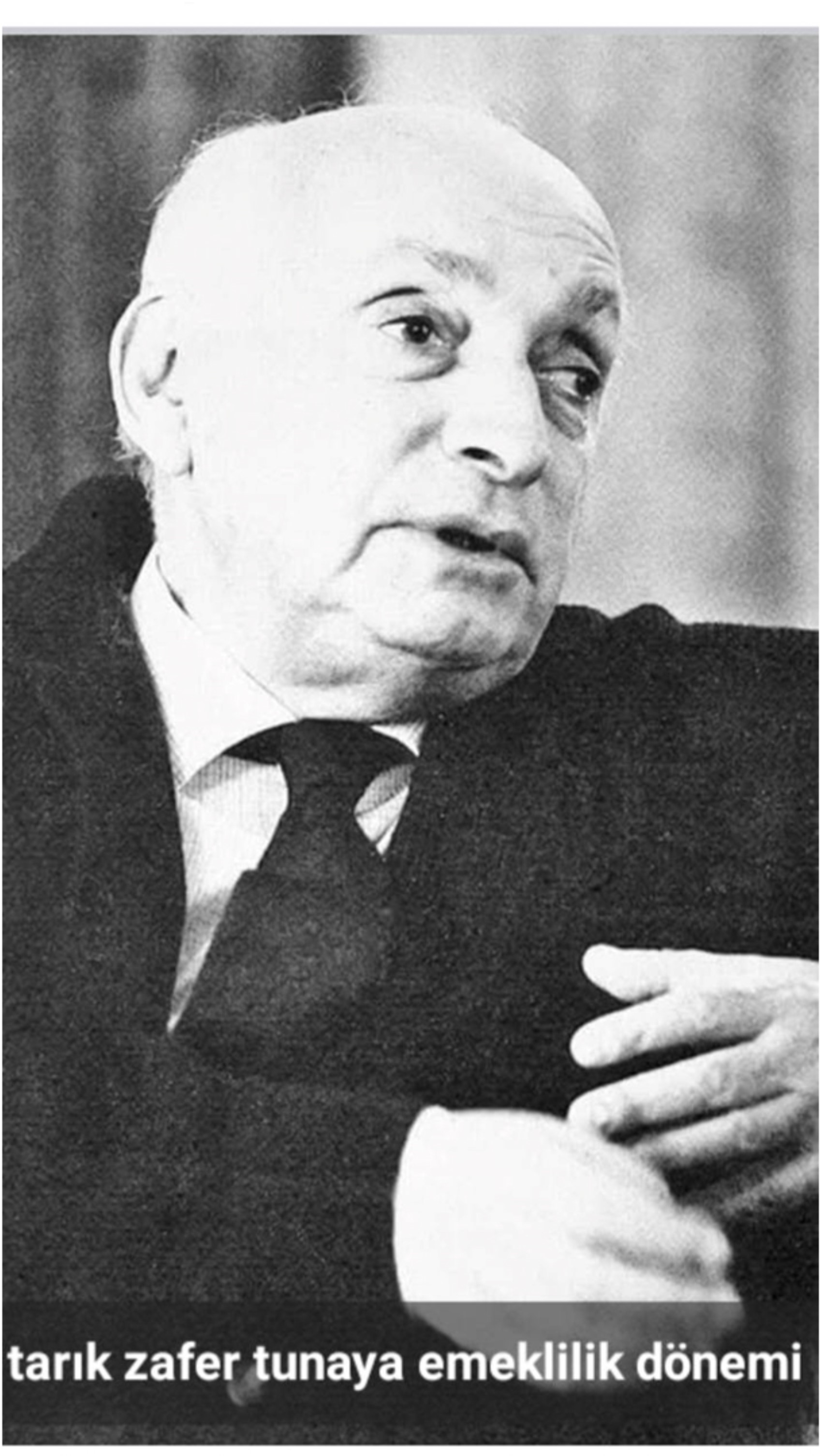
My real closeness to the professor, getting to know him more closely, was during his retirement period. 1984-1991. I was close to him in the last period of his life. I heard many things from him, I learned many things. After becoming an assistant at Boğaziçi University, I would go to the professor once a week. To help him.
The professor was diabetic. Diabetes, as it damages all vital organs, also affects the eyes. His vision deteriorated more and more. I started reading everything he needed to read. I would take summary notes from books.
He would have me read what he wrote/had written over and over again, and he would correct it. I learned that speech is an art and how words can be played with in these exercises.
MELAHAT HANIM
There were two women in the life of my professor Tarık Zafer Bey. One was his mother, İrfan Hanım, and the other, as a blessing from God, was his wife, Melahat Hanım.
Professor Reşat Kaynar and his classmate from Saint Benoit, Burhan Oğuz (an engineer and cultural historian), would envy my professor Tarık Zafer's luck.
I have never seen another marriage in my life that was so late but so right. The professor had hit the bullseye after waiting so long. He married Chemical Engineer Melahat Başoğlu in 1965, at the age of 50.
Melahat Hanım is the most noble, most polite, most lady-like, and most aristocratic woman I have ever known. It was clear that the professor was someone of a delicate constitution, gentle, and raised with care by his mother. His advanced diabetes required strict control. I remember how he would bicker with Melahat Hanım to eat a little more dried fruit.
One day, the professor was very cheerful. He explained that a device called LVA had arrived in Turkey. The device was a new one. It stood for Low Visual Aid and was used for age-related macular degeneration. He couldn't use the device very efficiently.
He would start working by having me read newspaper articles. Cumhuriyet and Hürriyet were bought for the house. Cumhuriyet was the professor's newspaper, and Hürriyet was Melahat Hanım's.
Sometimes İsmet Hanım's Milliyet would also be around. These were the secular newspapers of the old Turkey. İsmet Hanım was Melahat Hanım's older sister. They lived in the same apartment building.
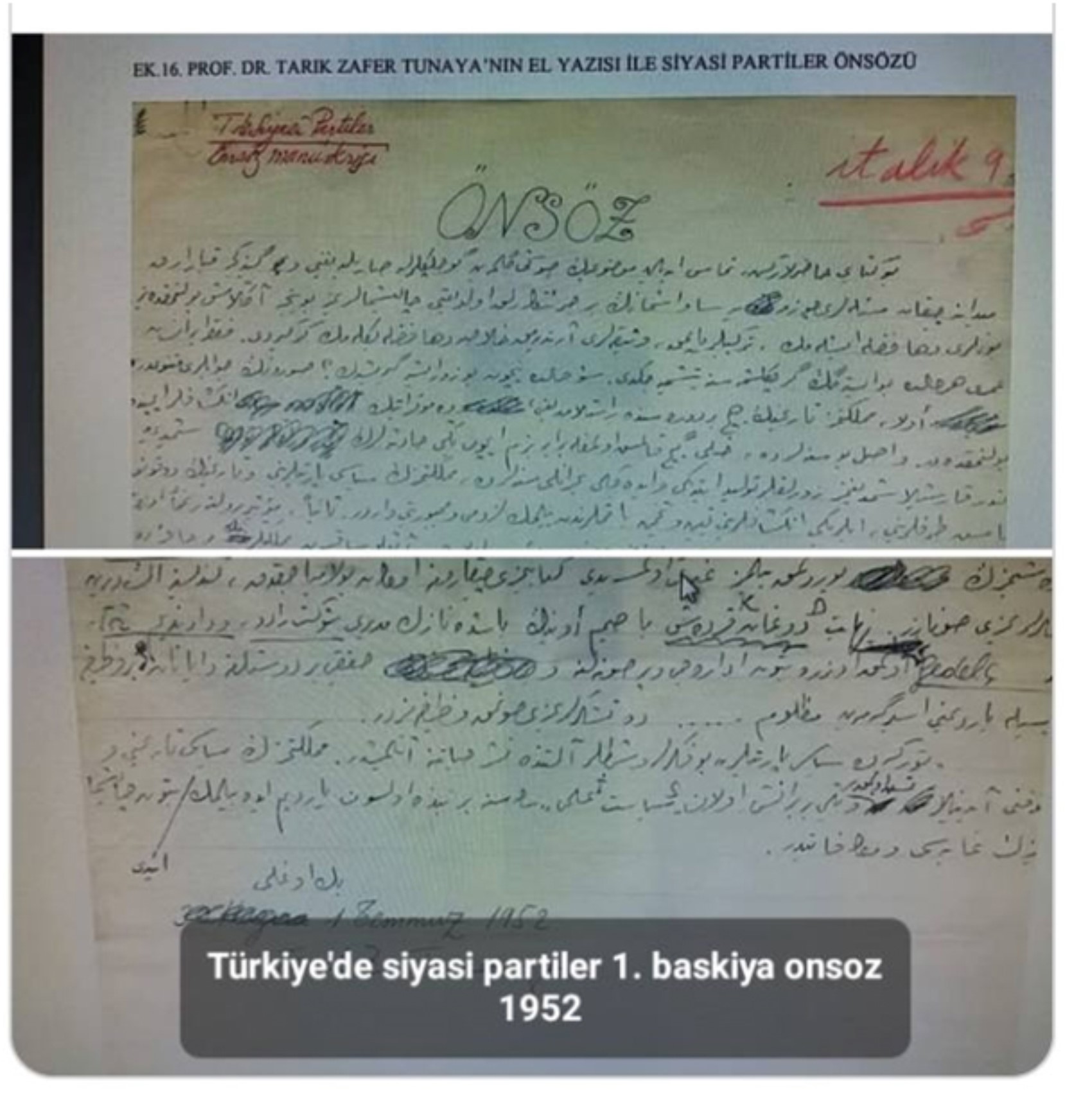
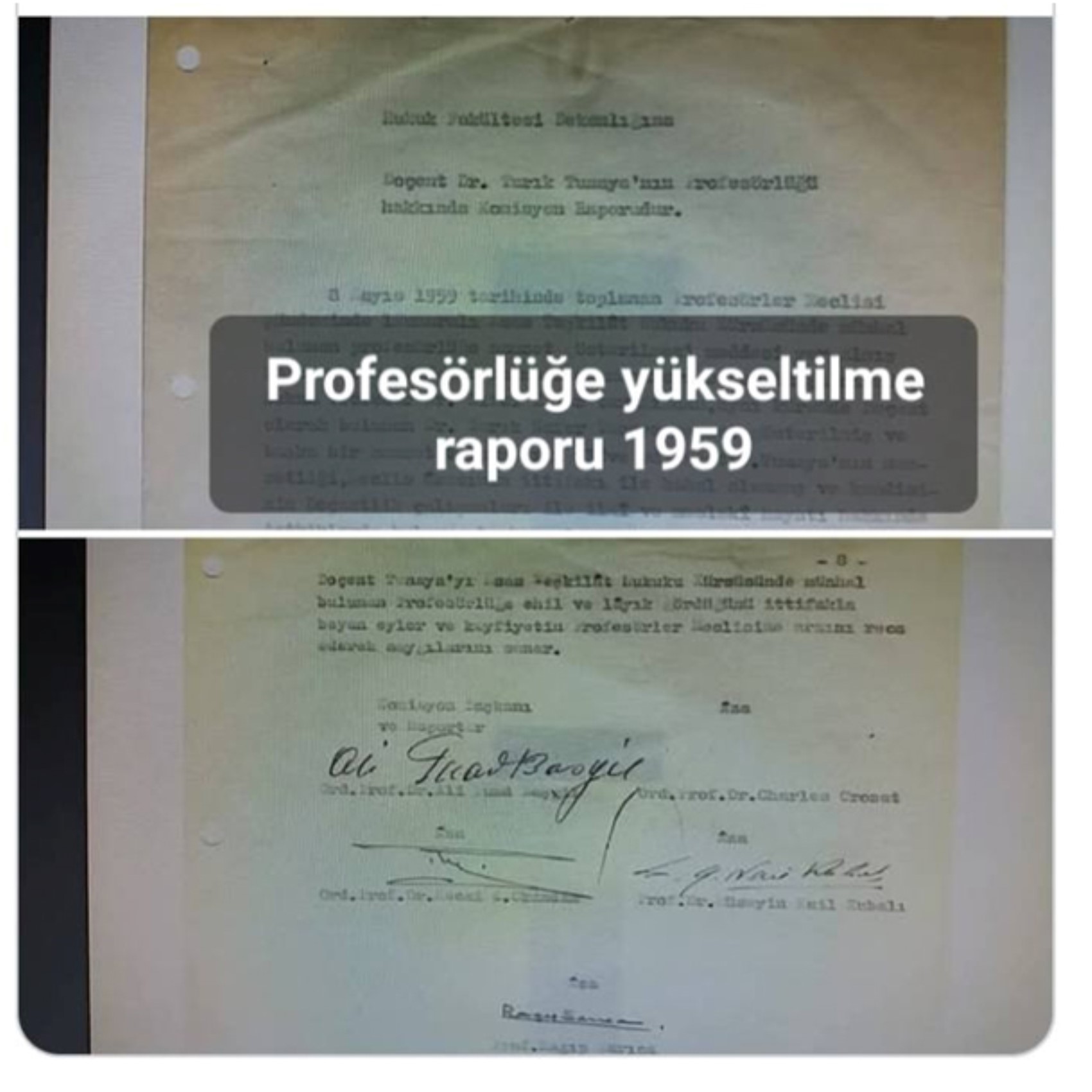
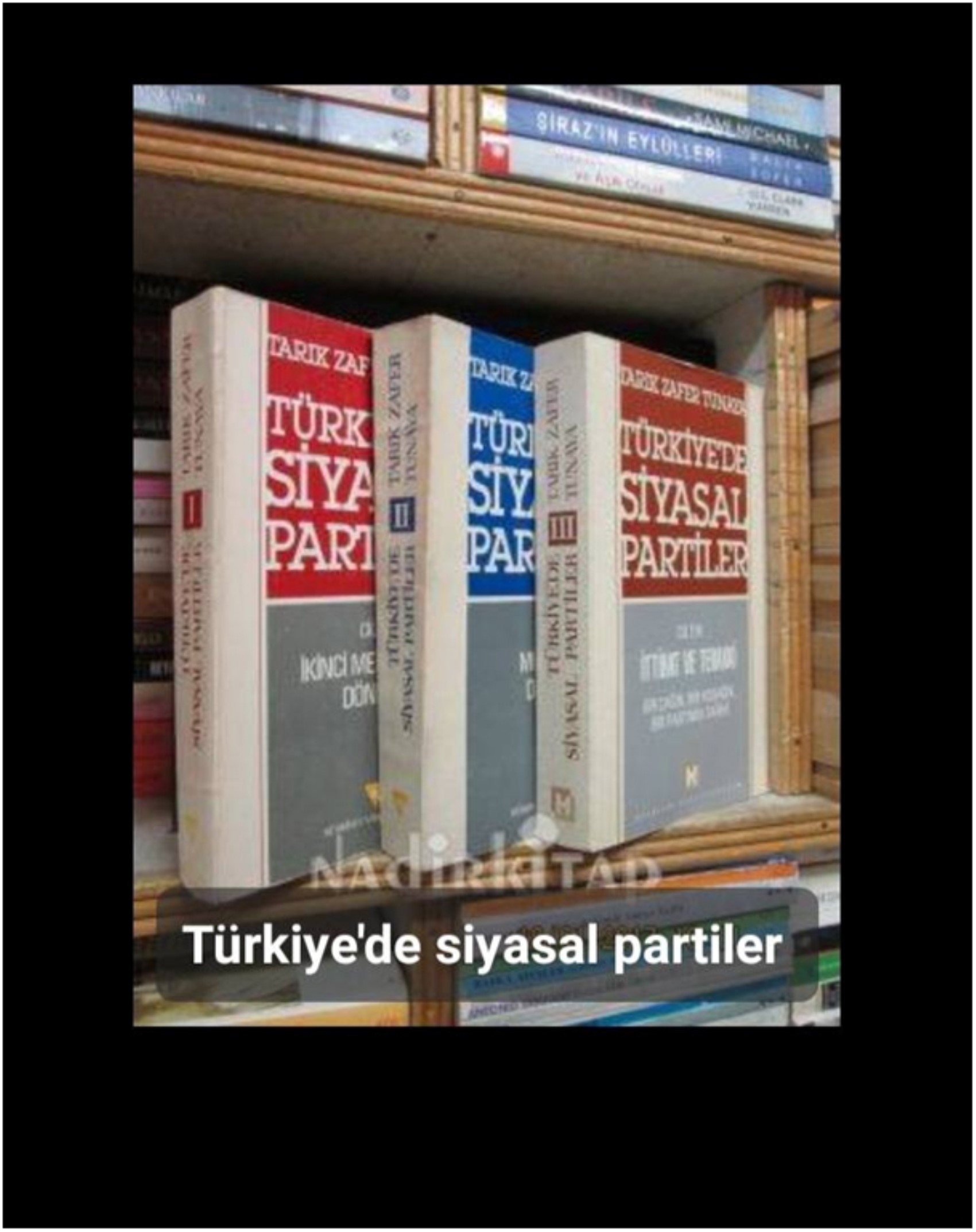
Tarık Hoca is the author of Political Parties in Turkey. The first edition of the book was published in 1952. He was thinking of the second edition of Political Parties as five volumes. However, his life was only enough for three. I was by his side during the writing and annotation of the Armistice and Committee of Union and Progress volumes. This was a very great stroke of luck that I caught at the beginning of my academic life. I learned a lot from him.
Melahat Hanım came from an Ottoman and elite family. In contrast, the professor was a child of the people. He would tell how his father worked as a translator-guide, his mother as a women's tailor in the Syria Passage, and how they managed to educate him at Saint Benoit with great difficulty. He would call the school he attended the "Priest School." Burhan Oğuz, an Electrical Engineer and one of the founders of the Turkish Socialist Party, was his classmate. I used to find it strange that Burhan Bey would call Melahat Hanım "sister-in-law... sister-in-law." He liked to sit on the terrace with his classmate and talk about the old days. In these pleasant moments, it was possible to listen to a long speech on the etiquette of rakı from Professor Burhan Oğuz.
I think part of his childhood was spent in Sarıyer. Then they came to Beyoğlu. From his words, I had concluded that they lived in the Syria Passage.
His mother, İrfan Hanım, was probably the owner of a women's clothing business in that passage.
The professor would frequently speak of someone named Dr. Fahri Can brother. This person was an old Unionist and a member of the Special Organization. He was also a forensic medicine expert. Much later, I learned that this person was Gencay Gürün's father and that his childhood was also spent in the Syria Passage. Gencay Hanım had served as the General Art Director of the Istanbul City Theaters. 1984-1994.
ACADEMIC CAREER
Professor Tarık had finished the Faculty of Law in 1940, but he could not become an assistant immediately. He was teaching French at Beykoz Secondary School. Meanwhile, he wrote his doctoral thesis. The title of his thesis was as follows: The Element of Idea in Institution Theory and Some of Its Characteristics.
My professor Tarık Zafer did not like Recai Galip Okandan, the head of the General Public Law department. But he tried not to show it.
General Public Law is the field of general public law today. Professor Tarık had been accepted into Recai Galip Bey's department and had started his assistantship there.
As far as I understand, Recai Galip did not see my professor Tarık Zafer Bey's preoccupation with political parties as a subject of law. His associate professorship thesis titled "Ideological Currents of the Second Constitutional Era in Terms of Our General Public Law" must have been very contrary to the scholars of the time, as it was not accepted. My professor's delayed associate professorship could only be realized in 1949.
My professor Tarık Zafer Bey had a resentment towards Recai Galip. Even though he tried not to show it. When Recai Galip Okandan died, he hesitated for a long time about whether to go to his funeral or not. Then he went. (1986)
I think he probably decided to move from the general public law department to the constitutional law department because of the associate professorship thesis issue.
POLITICAL PARTIES IN TURKEY (1952)
The professor's publication of Political Parties in Turkey in 1952 is, in my opinion, the founding date of Turkish political science. It is its milestone. The book was published by Doğan Kardeş publications. He would always tell of the difficulties he faced in publishing the book. The book initially experienced problems with promotion and reaching readers.
ABOUT SOME PROFESSORS
He did not like Kemal Karpat. He would say that when he was first sent to America as a professor, he asked him to translate a speech text into English, and Karpat came with a careless and sloppy translation. He would complain, "He brought me a text written with middle school English." His anger continued even in the 80s.
He did not like Ali Fuat Başgil's views. He found Başgil's view of the Turkish revolution to be wrong. Although he did not approve of his pro-Democrat Party stance, he always spoke of him with respect.
The first classroom named in the faculty was the Ümit Yaşar Doğanay classroom. The '79 cohort would have classes there. We were in Amphitheater-I. While we were in the first year, renovations were continuing on the upper floor. We would enter the school from the side, by the fire tower. Not from the current door.
When the upper floor was completely taken over from the Morphology Institute, he wanted the first two classrooms built to be named after Ali Fuat Başgil and Sıddık Sami Onar. Yet, his understanding of law and politics was different from Başgil and Onar's. Their understanding of democracy was also different. The idea of continuing a tradition must have been effective in my professor's decision.
He found Professor Hıfzı Veldet Velidedeoğlu a bit egocentric. Let me tell you when the time comes: After May 27, there was no idea of a Constituent Assembly in the National Unity Committee. This idea was reached after the purge of the 14. In the first days of the revolution, the idea of transferring power to civilians within a few months through a new constitution and elections was dominant. In the days following May 27, the person the Committee consulted the most was Professor Hıfzı Veldet.
Professor Hıfzı was arguing that the National Unity Committee was the "original constituent power" and that it could go to elections by having a constitutional text prepared and published in the Official Gazette. The idea of trying the deposed Democrat Party administration also came from him. That is what is told and written. I am of the same opinion.
While the Ankara and Istanbul commissions were working on the draft constitution (Autumn 1960), Professor Hıfzı one day "said that his hemoglobin levels had dropped (according to Professor Tarık, as an excuse) and went to Uludağ." When he returned, he had a draft constitution in his hand. Professor Tarık had said: "He made the constitution and came." With a dismissive expression on his face. In some cases, a single sentence reveals "judgment" very clearly. That was such a sentence. In the nature of making a note for history.
TWO TRAUMAS IN HIS LIFE
There were two trauma periods in my professor's life. One was being one of the 147. (1960) The other was being arrested during Nihat Erim's "Balyoz (Sledgehammer) operation." During the March 12 interim regime period. (1971)
He had told how they were taken from Istanbul to Ankara by a C-47 on the morning of the May 27 Revolution, their first encounter with the National Unity members, and the constitutional work of the Ankara Political and Istanbul Law science commissions. He was of the opinion that the National Unity members were patriotic but ignorant. "They didn't know anything," he said once.
He had opposed the Natural Senator position in the Constituent Assembly. He would always say that he warned the members of the constitutional commission that in the future, people would say "they did this for themselves." My professor's words came true. They called the natural senators "permanent senators." Emphasizing their unelected status.
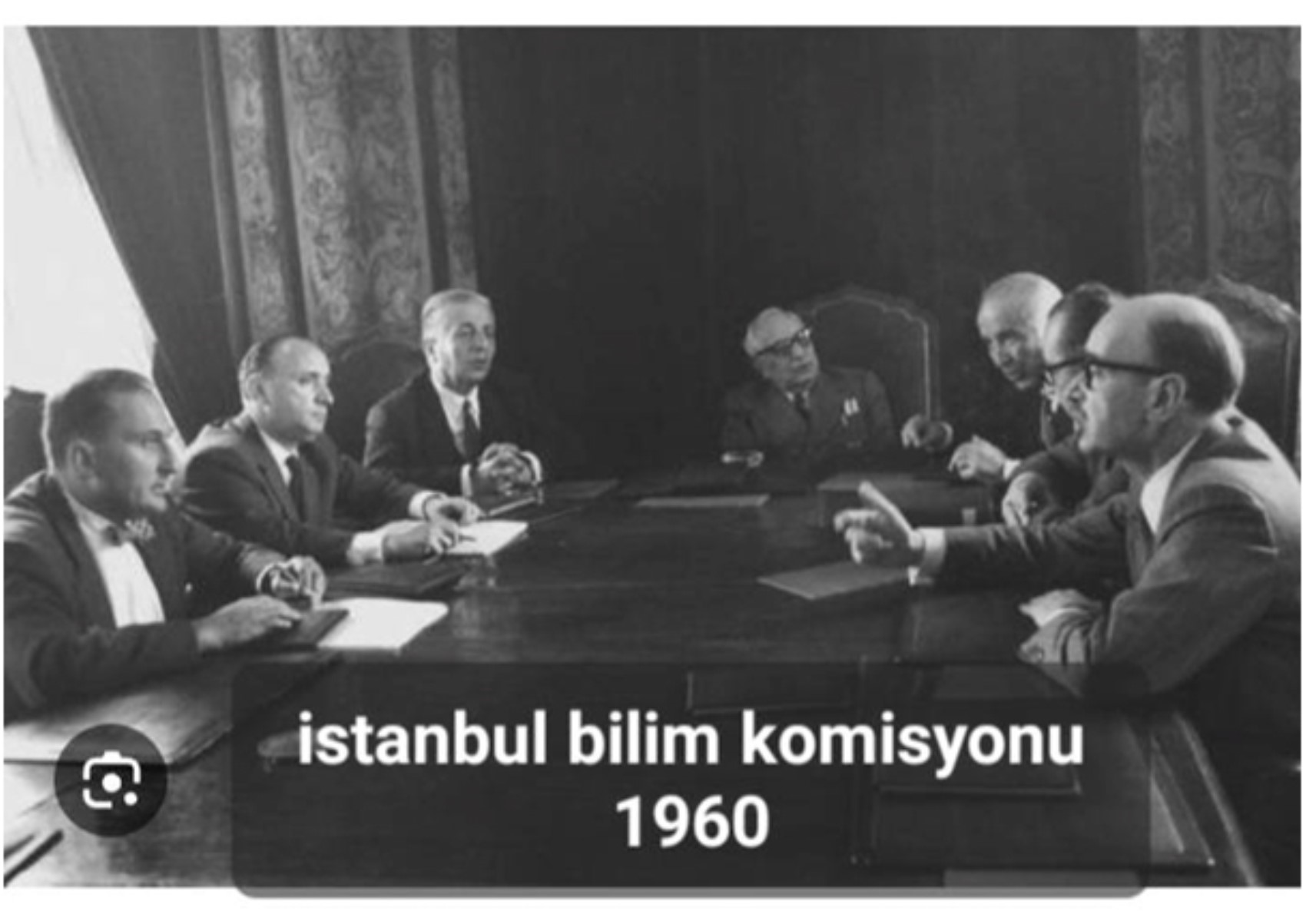
Something I have always been curious about is my professor Tarık Zafer Bey's being one of the 147. In November 1960, 147 faculty members were removed from the university. One of them was Tarık Zafer Tunaya. The reason was strange: academic failure and laziness.
CONSTITUENT ASSEMBLY MEMBERSHIP
My professor had been removed from the university. (November 1960) Despite this, he entered the Constituent Assembly as an Istanbul provincial representative. (January 1961) The point that my 40-year-old mind could not grasp was this: How could someone removed from the university by May 27 enter the Constituent Assembly?
I think the division within the committee explains this. When the 14, who ensured the removal of the professor and others, were removed from the committee, the situation had changed.
When the Constituent Assembly gathered, my professor Tunaya was elected to the constitutional commission. He served as rapporteur and commission spokesperson. The preamble of the 1961 Constitution largely came from his pen.
Still, due to the Revolution's measures, the 147 could not return to the university until İsmet Pasha's premiership. (April 1962)
He would tell about the days of the Constituent Assembly. He told how Kazım Orbay, who was elected president of the House of Representatives, sat in the general assembly on the first day forgetting his fedora on his head.
He would speak of Enver Ziya Bey: Ord. Prof. Dr. Enver Ziya Karal. Both as a historian and as a member of the constitutional commission. He loved and appreciated him. When Enver Ziya Karal passed away, he had published an article in Cumhuriyet.
Bahri Savcı's head was different. His conversation with Professor Reşat Kaynar was good. They would bicker from time to time. Once, Professor Reşat got very angry. He tried to leave in a rage. He ran after him. He caught him at the door. He talked for a long time. He brought him back.
Tarık Zafer Tunaya was a moderate, balanced, polite person with a sense of empathy. When the time came, he was brave and bold. In the spring of 1983, the academy graduates' association (Higher Commerce School) had organized a panel. The topic must have been Atatürk's revolutions. The venue was the Intercontinental Hotel, as it was called then. They took us to dinner too. That day, I went to the top of the Intercontinental Hotel for the first time: to the Roof.
I saw İlber Ortaylı and Reşat Kaynar there for the first time. There were five days left until the end of the September 12 regime. Parties had just been allowed to be founded, and timid political meetings had begun here and there. Someone with the rank of colonel did not like the presentation of one of the speakers. This person, who thought Atatürk had descended from the sky, said things like, "What does Atatürk have to do with the Young Turks? The Young Turks are anarchists." The professor asked for the floor. He went to the podium. And turning to the Colonel, he said, "Atatürk is a Young Turk. You don't know anything. You haven't read anything."
In those days, doing such a thing was a bit of a risky business. Morning and evening, we were listening to Kenan Evren's speeches with "netekim" (anyway) on our single-channel black and white television.
His eyes had deteriorated significantly by then. He needed to be accompanied outside.
I took him once to give a speech at the Faculty of Economics Alumni Association, and once to the newly opened Mülkiyeliler Birliği (Association of Mülkiye Graduates) venue in Kuruçeşme. He participated in a panel where Sadun Aren was also present. We talked to someone there. He treated the man very distantly. That person was probably İsmet Bozdağ.
A JURY MEMBERSHIP
I also took my professor once to a jury meeting for the Sedat Simavi Social Sciences Award. The jury met at the Intercontinental. Before the meeting, it was necessary to examine the works of nearly a hundred candidates. It was impossible for him to read them. He gave me a task. "Examine these carefully. Separate the ones worth considering, and you will read the ones you think should receive a degree to me," he said. The topic was secularism. The year must have been 88 or 89. I narrowed the candidates down to ten. He asked for my opinion, and I told him.
In that competition, two studies I recommended to the professor received awards from the jury. One is Prof. Dr. Serap Yazıcı, who is currently an Antalya deputy. She was doing her master's at Ankara Law at the time. I didn't know who she was. The other was Doğu Perinçek. When the professor came out of the jury meeting, he said, "Well done, the jury made the evaluation entirely in line with our suggestions." You did a good job. A certain amount of honorarium was given for the jury membership. Then he gave me a check for 50,000 old Turkish liras. I didn't want to take it. He insisted. "This is your right," he said. I didn't spend the check for a long time. Then I had it photocopied and bought myself a black coat.
AN ENCOUNTER AT TÜYAP
The first TÜYAP must have been around 87 or so. Most likely where Vakkorama is. TÜYAP was in Taksim at that time. Not even in Tepebaşı. I took the professor to the book signing. A little later, things got chaotic. We looked. Mesut Yılmaz. ANAP had just come to power. There was another embarrassed man with him. I don't know him. They especially wanted to come to Tarık Hoca. To pay their respects. The person with Mesut Bey kissed the professor's hand: the professor teased him a little: "What's up, Cavit?.." he said. In a meaningful way. It turned out that Cavit was the former Dev-Genç member Cavit Kavak. A student of the professor from Istanbul Law. He was now an ANAP member. He became an ANAP deputy for four terms. Turgut Özal had shown the skill of adding Dev-Genç to the "four tendencies." I saw Cavit Bey much later at the Koşuyolu Music Study Center. I was taking my daughter. He was probably taking his grandchild.
I would go twice a week in the afternoon and we would work until evening. Melahat Hanım would have cheese simits and canapés prepared. For Zülfiye. If it was very late, I would be insisted upon to stay for dinner. The olive oil dishes were delicious. Especially the fresh beans. One day, semolina halva had been made. By coincidence, İlber Ortaylı came. He ate two or three rounds.
WEDNESDAY MEETINGS
I don't know when he started the Wednesday Meetings. It must have been the March 12 period. I met many people there. Hasan Esat Işık (I learned later that he was the son of the famous ophthalmologist Esat Pasha, who was exiled to Malta during the armistice). İrfan Özaydınlı, Professor Nermin Abadan Unat, Professor Bahri Savcı, hand surgery specialist Dr. Sacit Bey, the last Young Turk Erol Şadi Erdinç, Professor Fatma Mansur, Doğan Hızlan, Orhan Birgit. I saw many more people there. Thanks to the professor, I met many distinguished people.
I learned a lot from my professor. Just listening to what he told was enough. The professor was as much a historian of revolution as he was a constitutional lawyer. Watching his history of revolution lectures was a separate pleasure. He would almost take you to that day.
The main reason I chose the First Parliament as my doctoral topic is the perspective of the history of revolution that my professor put before my eyes. He had conducted interviews with the symbolic names of the history of revolution, Ali Fuat Cebesoy, Refet Bele, and Rauf Orbay. Before the 1952 edition of Political Parties in Turkey.
He had also met with the famous opposition Erzurum deputy Hüseyin Avni Ulaş. Hüseyin Avni Bey used to live in Kandilli, and he had told me once how he went to his house. He had seen and talked to Yusuf Hikmet Bayur, Yusuf Kemal Tengirşenk, and Hasan Rıza Soyak. This would affect me a lot. I would feel as if I had gone to visit them together with my professor.
FAREWELL
We had started working on the Defense of Law period (Fourth Volume). We had started organizing his old notes (he liked to write with colorful pens). He would write in a calligraphic hand with colored pens on lined paper. A writing with large letters, slightly leaning to the right. "The priests taught me handwriting," he would say. Referring to his teachers at Saint Benoit.
The last evening, I was about to leave. "Don't you have a scarf? Why don't you use a scarf?" he asked. "I don't know, I don't use it much," I said. He took his own scarf from the coat rack. He put it around my neck. "Use this," he said. I kissed his hand, I thanked him. I really liked the feeling of the professor's scarf being around my neck. We couldn't meet again. I still have the scarf....
One day, İsmet Pasha also listened to the speech he gave at the Turkish History Congress, and as the professor was sitting down, İsmet Pasha stood up and said, "I listened to you with great pleasure." He always recalled this praise with great pride.
I also always listened to my professor with great pleasure. I learned the "art of teaching" from him.
Would you like to get notifications about new developments and save news?
- NotificationsNew developments and breaking news
- SaveNews is stored in the app
Most Read
Statement from Nihat Zeybekci on the fund investigation
New 75,000-seat stadium plan for Fenerbahçe
Interpol and MIT tracking yields results in Izmir
ID convenience for KPSS candidates

2027 Budget: Taxes for the people, tax exemptions for capital
The reality of Akkuyu and the longing for national nuclear power
To whom and how was the Petition of Intellectuals submitted? Who accepted the petition?
The Çanakkale robbery -1- How was the Troy treasure smuggled out?
Artificial intelligence and the new imperialism

Ministry investigation into unauthorized promotional messages