


Who used the Savarona the most?



FEATURES OF THE SAVARONA
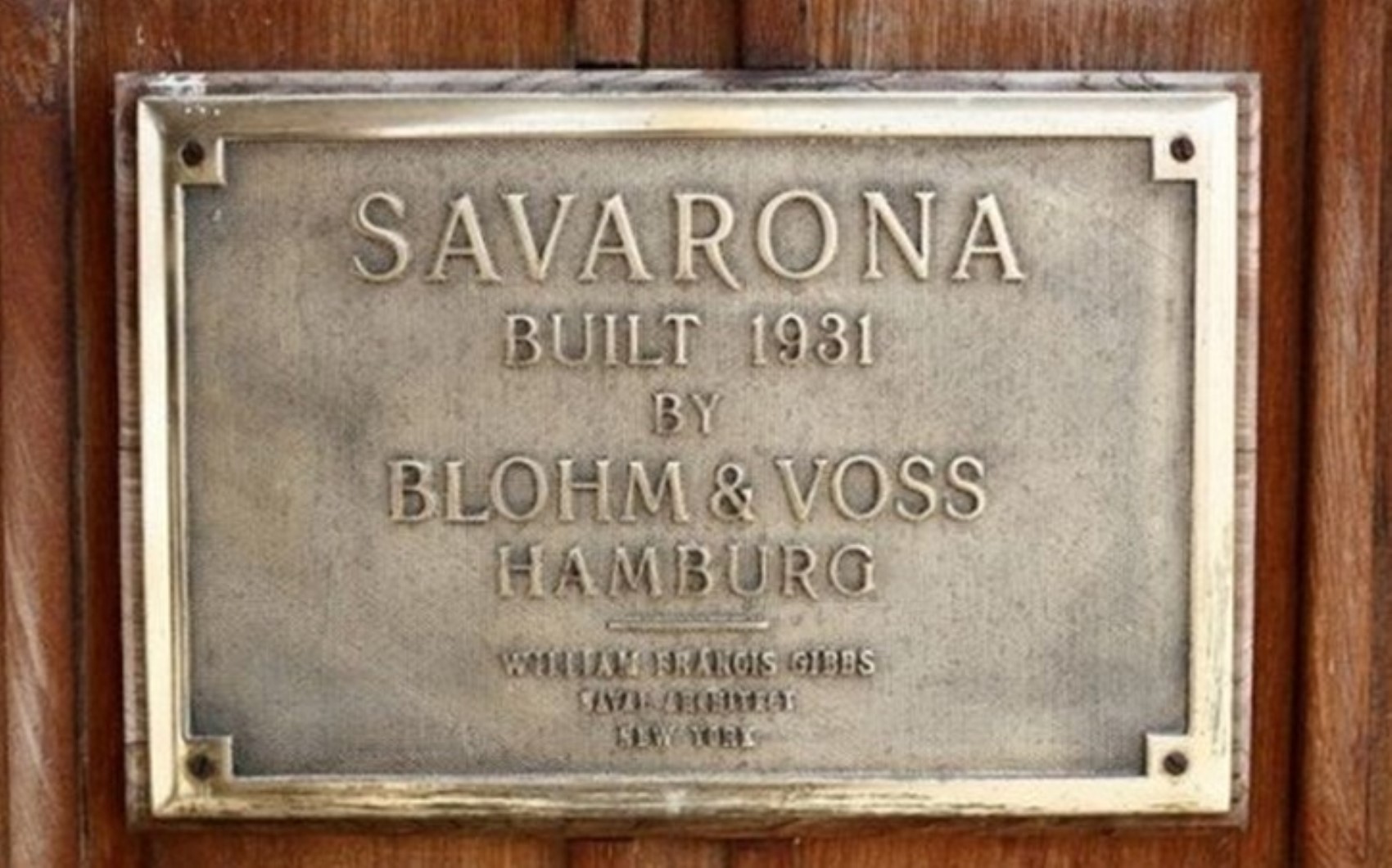
The yacht, where Atatürk spent 55 days, was built in the Hamburg shipyards at the Blohm & Voss docks between July 29, 1930, and February 28, 1931. The yacht was launched in July 1931 after the fine craftsmanship was completed. It is stated that the yacht cost 10.4 million dollars.
The name of the Savarona's first owner was Emily Roebling Cadwalader (1879-1941). This lady was the daughter of a billionaire family. It is said that the magnificent fireplace on the yacht was seen by Mrs. Cadwalader in a castle in Portugal and purchased along with the castle. It was then installed on the ship. It is clear that it was a dazzling space with its dinnerware, furniture in the lounge, and the crystals used.
HOW WAS THE SAVARONA PURCHASED?
Prime Minister Celal Bayar managed to purchase the Savarona at a price far below its cost by taking advantage of the fact that the effects of the 1929 economic depression were still continuing in the USA, Adolf Hitler's National Socialist Party had come to power in Germany, and the tension in US-German relations. It is more or less certain that the cost price of the yacht was 10.4 million dollars. I have seen different figures regarding how much it cost the Turkish government. These are figures between 1.2 million dollars and 2 million dollars. What I know for sure is this: The government passed a law in the Grand National Assembly of Turkey (TBMM) for the Savarona to be purchased as a presidential yacht. This is Bayar's statement.
The main issue in the purchase of the Savarona, in addition to the fact that the Ertuğrul and Söğütlü yachts purchased during the reign of Abdul Hamid II had old technology, was that the president's illness had begun to reach a critical state. A small note: Abdul Hamid almost never used these yachts.
Prime Minister Celal Bayar had received the news that the Savarona was put up for sale from Zeki Rıza Sporel and Mahmut Baler, whom he knew from the Moda Sea Club. He immediately took action. As Atatürk's most capable man in financial matters, he carried out a very good deal. He bought the ship very cheaply.
SHIP PURCHASE PROCEDURES
The ship's purchase procedures were completed on March 1, 1938. Our flag was hoisted by our London Ambassador Ali Fethi Okyar at the Port of Southampton in England. It was sent back to Hamburg with the Turkish flag for renovation and repair work. This work lasted about two months.
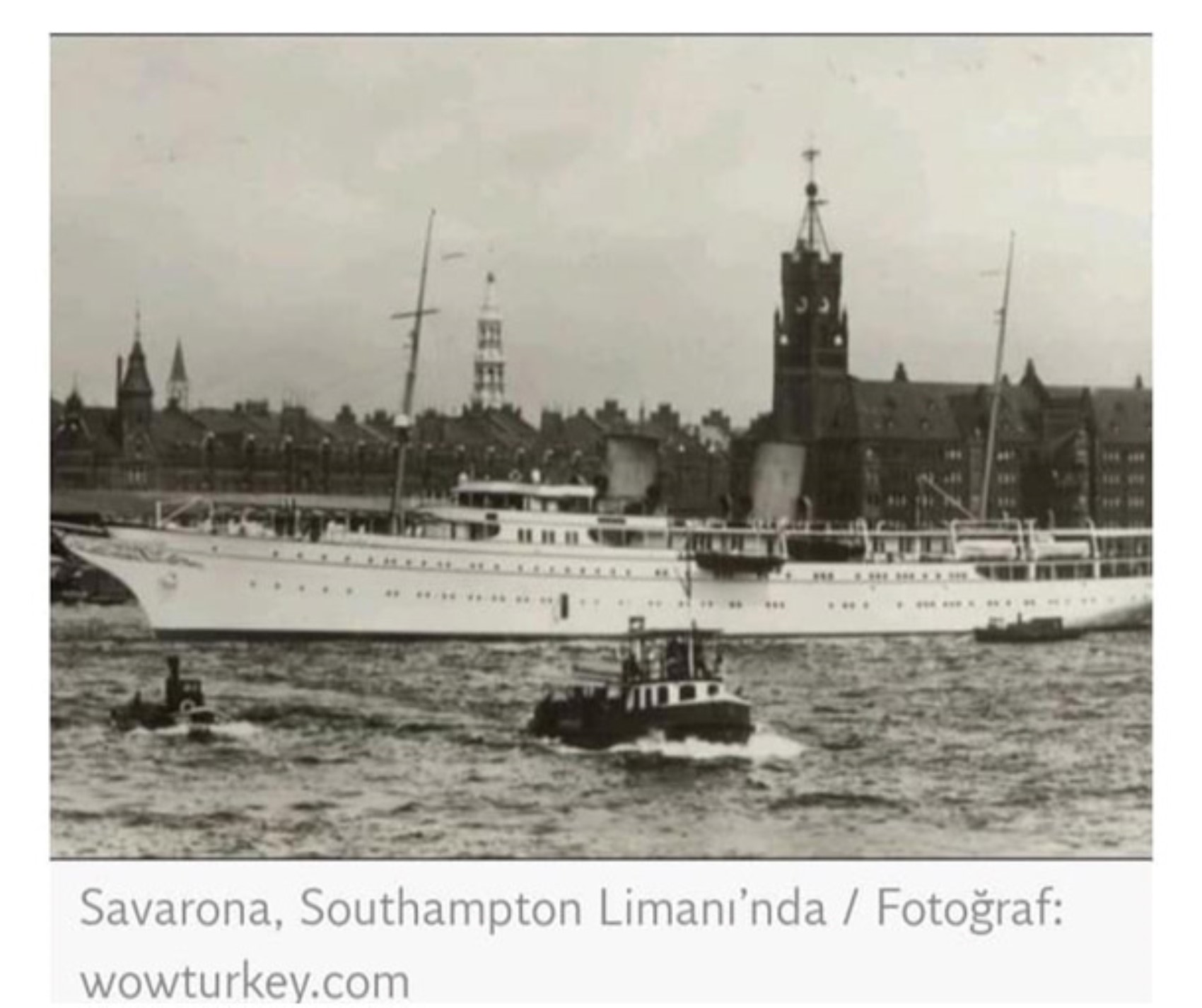
Captain Sait Özege, the skipper of the Ege ferry, was assigned to bring the Savarona. Özege brought the Savarona together with his 45-person crew. Atatürk, Prime Minister Celal Bayar, Kılıç Ali, Cevat Abbas, and Salih Bozok boarded the Savarona for the first time together.
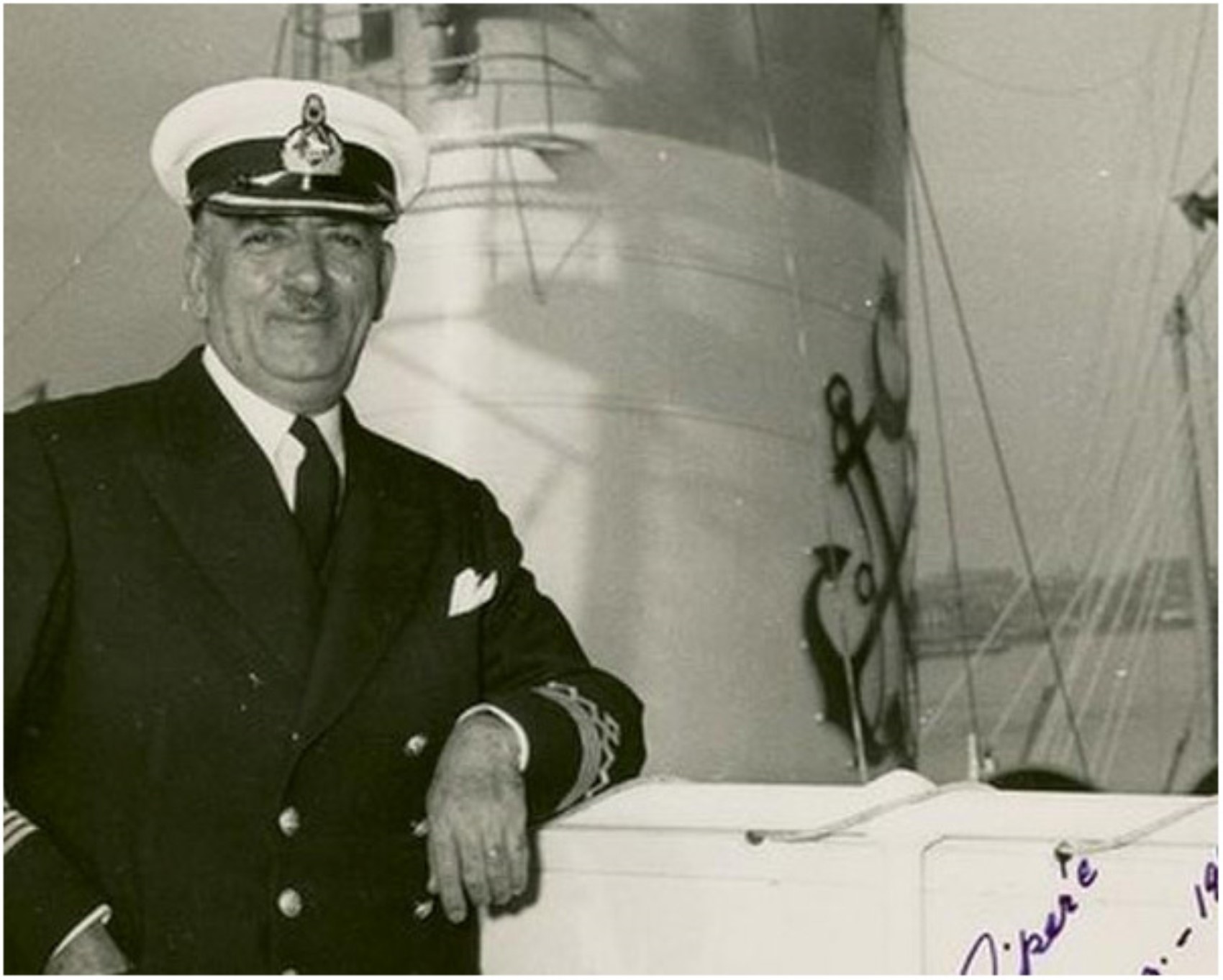
(Captain Sait Özege)
EXPECTATION THAT SEA AIR WOULD BE GOOD
In the 1930s, there was no definitive treatment that could cure liver failure. It was thought that slowing the progression of the disease might be possible with precautions. Treatment consisted of proper nutrition (diet), rest, and supportive care.
In the 30s, the standard advice regarding serious illnesses was more or less the same. For example, in the treatment of tuberculosis. Before the discovery of antibiotics, sanatoriums in pine forests and clean air. Good nutrition to strengthen the body. Remember that Latife Hanım and Yakup Kadri went to Europe for these reasons.
Great hope was placed on continuing treatment in a comfortable environment at sea. Most of all, Atatürk himself.
There is something strange to me here. I cannot help but write it. It seems strange to me that the great Atatürk, a statesman and politician with magnificent intelligence, high perception, and foresight, seriously believed that he could recover by getting sea air. At the same time, I find such an expectation normal.
ATATÜRK'S TREATMENT AND PROF. FIESSINGER
Prof. Dr. Nihat Reşat Belger had diagnosed that Atatürk's illness was a liver condition in Yalova (early 1938). Atatürk, who partially applied the diet and rest treatment given by Belger, abandoned the treatment regimen when he felt a little better.
After the opening of the Bursa Merinos factory, he lost his physical resistance. He fell ill. As can be understood from the pictures starting from 1937, Atatürk's physical appearance already showed that he was facing a serious health problem.
Celal Bayar, who was brought to the prime ministry in November 1937, persuaded Atatürk to bring Prof. Noel Fiessinger, a very well-known internal medicine specialist in his field, for consultation. Fiessinger was a famous internist at the Paris Faculty of Medicine. His name is mentioned as Dr. Fissenger in many places.
Fiessinger came to Turkey three times during the Gazi's illness. Probably by the Orient Express. In March, June, and September, respectively.
The edema in Atatürk's abdomen had become quite prominent. He seemed to be following Fiessinger's advice during his first visit. Since his liver functions were not completely impaired, he wanted to return to active life by meeting the small signs of improvement with great dynamism, and the disease was rapidly entering a worsening course again.
KILIÇ ALİ WARNING CEMAL GRANDA
Cemal Granda was also among the crew sent to Hamburg to pick up the ship. Perhaps to get used to the ship. Granda, as you know, is a figure who served at Atatürk's table. His memoirs were published in 1973 with a strange title: "I was Atatürk's valet." Granda was sent on leave upon his return with the Savarona. When he returned from leave, while he was watching with bewildered eyes that the swelling in Atatürk's abdomen had increased even more, he was warned by Kılıç Ali: "Çelebi, don't let anything slip out of your mouth outside..."
LETTER WRITTEN TO AFET İNAN
Afet İnan was writing her doctoral thesis under Eugene Pittard at that time. At the same time, she was corresponding with Atatürk. As he said at the Council of Ministers meeting held on the Savarona, the Gazi had also written to Afet Hanım about "how he waited for the ship like a child."
I would also like to note an interesting point: Atatürk, turning to the delegation, says, "I wish we could have bought this ship a few years ago." In these words, I understand that he fully believed that he would find healing with the arrival of the Savarona.
In the letter he wrote to Afet İnan dated June 14, he wrote: "the hope and promise of full recovery is strong." These words support my thought.
SAVARONA DAYS
The total time President Atatürk spent on the Savarona is six weeks. Between June 1 and July 25.
He had waited for the ship's arrival with great excitement, Prime Minister Celal Bayar had also come from Ankara on the same day, and they had moved to the Savarona around 15:30.
Atatürk's hope was very high. Even though medical facts showed the exact opposite. After moving to the Savarona, the course of Atatürk's illness worsened even further. The increase in the fluid collected in the abdomen began to impair lung and heart functions.
Dr. Nihat Reşat Belger was constantly with him on the Savarona. In addition to him, a cabin was allocated for Kılıç Ali, Salih Bozok, little Ülkü, and her mother Vasfiye Hanım.
Meanwhile, the summer of 1938 was well above seasonal norms. The weather was extremely hot. The Savarona, which was anchored off Dolmabahçe, was absorbing more heat. Attempts were made to provide coolness by placing ice blocks on the inner surfaces and floor edges of the ship.
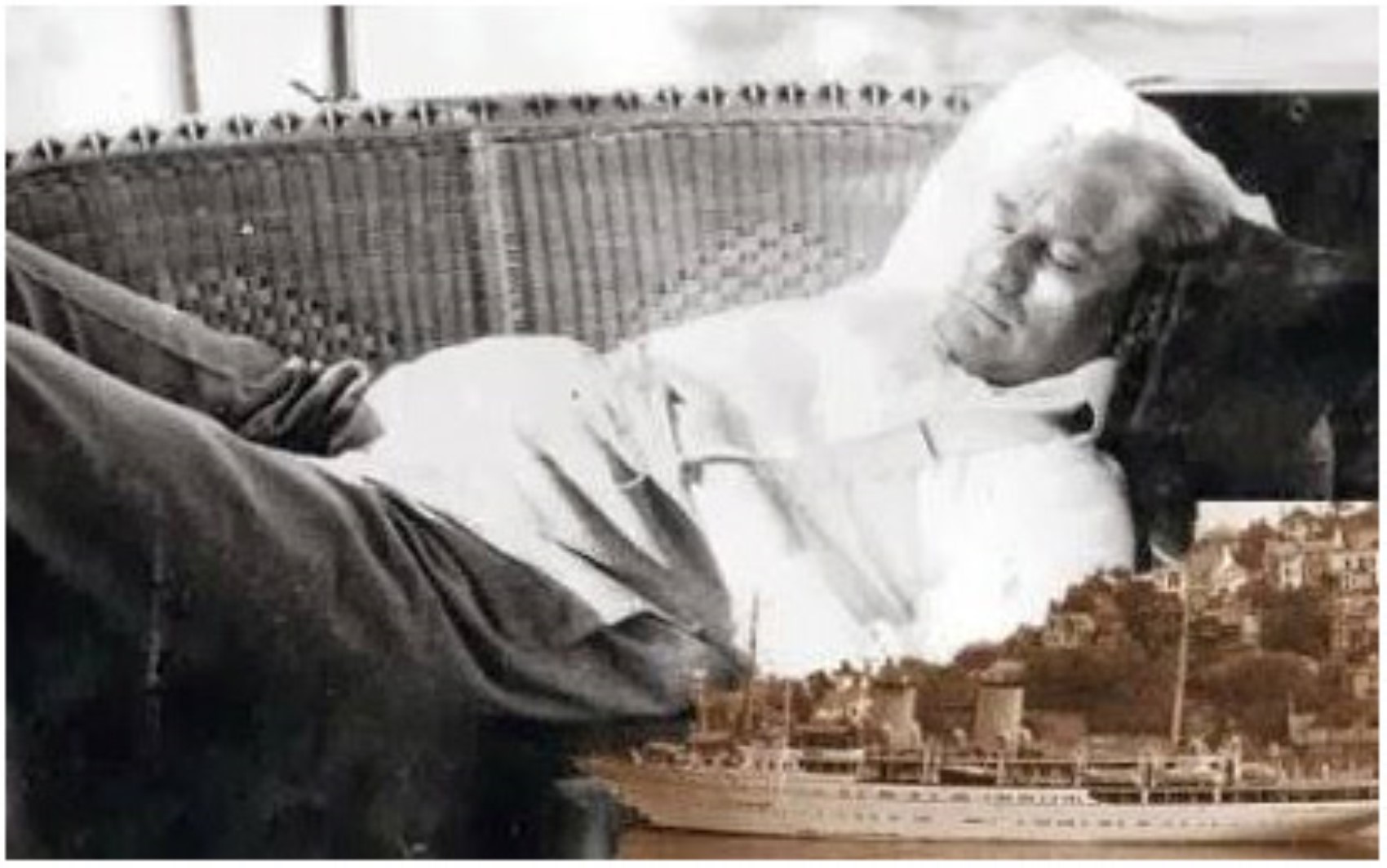
In all likelihood, his fever was also rising. To provide some relief, attempts were made to alleviate Atatürk's distress by sailing into the Bosphorus sometimes and into the Marmara sometimes. One day, they went as far as Erdek.
Dr. Fiessinger had previously come to Ankara on March 28, examined Atatürk, and upon his return, gave a conference that attracted wide attention at the Istanbul Faculty of Medicine. Upon invitation, he was called once more on June 8. He examined Atatürk on the Savarona. At Atatürk's request, he went to Ankara to see İsmet Paşa, who was ill. He left Turkey on June 10. On this second visit, his wife was also with him. His third visit was on September 6. This time his daughter would be with him.
He was present during the risky intervention performed by Mim Kemal Öke on September 7. However, during his second visit, he had suggested that no intervention should be made to the abdomen—that it was risky—and that the edema should be tried to be dispersed with medication.
The decline in Atatürk's physical condition showed the outcome. For this reason, during Fiessinger's second visit, Atatürk had said to Interior Minister Şükrü Kaya, "Host the doctor in Florya this evening and talk about everything..." What was meant by "everything" here was known. Atatürk would write his will in his own handwriting after Dr. Fiessinger's last visit.
Within the possibilities of the day, everything that could be done medically continued to be done. Given the size of the ship, the long distances between the spaces, and the fact that Atatürk's movements were becoming increasingly difficult, it was decided to continue his treatment at the Dolmabahçe Palace.
The great Atatürk was moved to the palace with the Istanbul motor on the night of July 25/26. He got angry when they wanted to put him on a stretcher. Upon this, one of the wicker chairs on the Acar motor was brought, and he was seated. He was moved to the motor by holding onto the shoulders of Salih Bozok and Kılıç Ali.
He was taken to room number 71 in the harem section of the Palace. He said he felt a little more comfortable here.
ACCEPTANCE OF KING CAROL OF ROMANIA
In the days when they had just moved to the Savarona and his health condition had not yet deteriorated much, he was accepted on the deck—with an official protocol—while King Carol of Romania was passing through the Bosphorus with his yacht, the Nahalin. The Nahalin was the British royal yacht. In fact, Edward VIII had come to Turkey with it. Perhaps the British King might have sent the yacht to pick up Carol.
RELATIONS WITH İNÖNÜ DURING ATATÜRK'S ILLNESS
There is quite a bit of speculation on this subject. The truth is this. Of course, their relationship was not like it was in the old days. But both were trying to act as if nothing had happened. Mutual respect continued. İsmet Paşa was also ill. He was suffering from his gallbladder. When Dr. Fiessinger came from Paris, Atatürk sent him to Ankara to examine İsmet Paşa as well. İnönü was diabetic. For this reason, surgical intervention was seen as risky. Dr. Fiessinger gave medical treatment and returned to Paris via Istanbul.
Meanwhile, it is known that İsmet Paşa sent letters to Atatürk at regular intervals in beige envelopes. Nafi Atuf Kansu, who was appointed as the trustee after Atatürk's death, returned all these letters to İsmet Paşa.
LAST MEETING ON THE SAVARONA
The last Council of Ministers meeting (Heyeti Vekile) held on the Savarona under the chairmanship of Atatürk could be held on July 9. The agenda was the Hatay issue. After that, since his health deteriorated further, no meeting could be held under his chairmanship.
THE NECESSITY OF REMOVING THE EDEMA IN THE ABDOMEN
Fiessinger's treatment protocol during his second visit included dispersing the fluid accumulated in the abdomen with medical treatment. No results were obtained. Upon Atatürk's insistence, Prof. Dr. Mim Kemal Öke managed to remove the fluid with an abdominal puncture. Fiessinger was also present during the operation on September 7. The fact that the fluid removed was 10.5 liters showed what kind of distress our Ata was in. After spending a few comfortable days, the body would start to accumulate fluid again, and this time the irreversible process would accelerate. In the meantime, let us note that Atatürk went into a coma three times, the first being mild.
ATATÜRK'S FUNERAL CEREMONY: YAVUZ BATTLESHIP AND SAVARONA
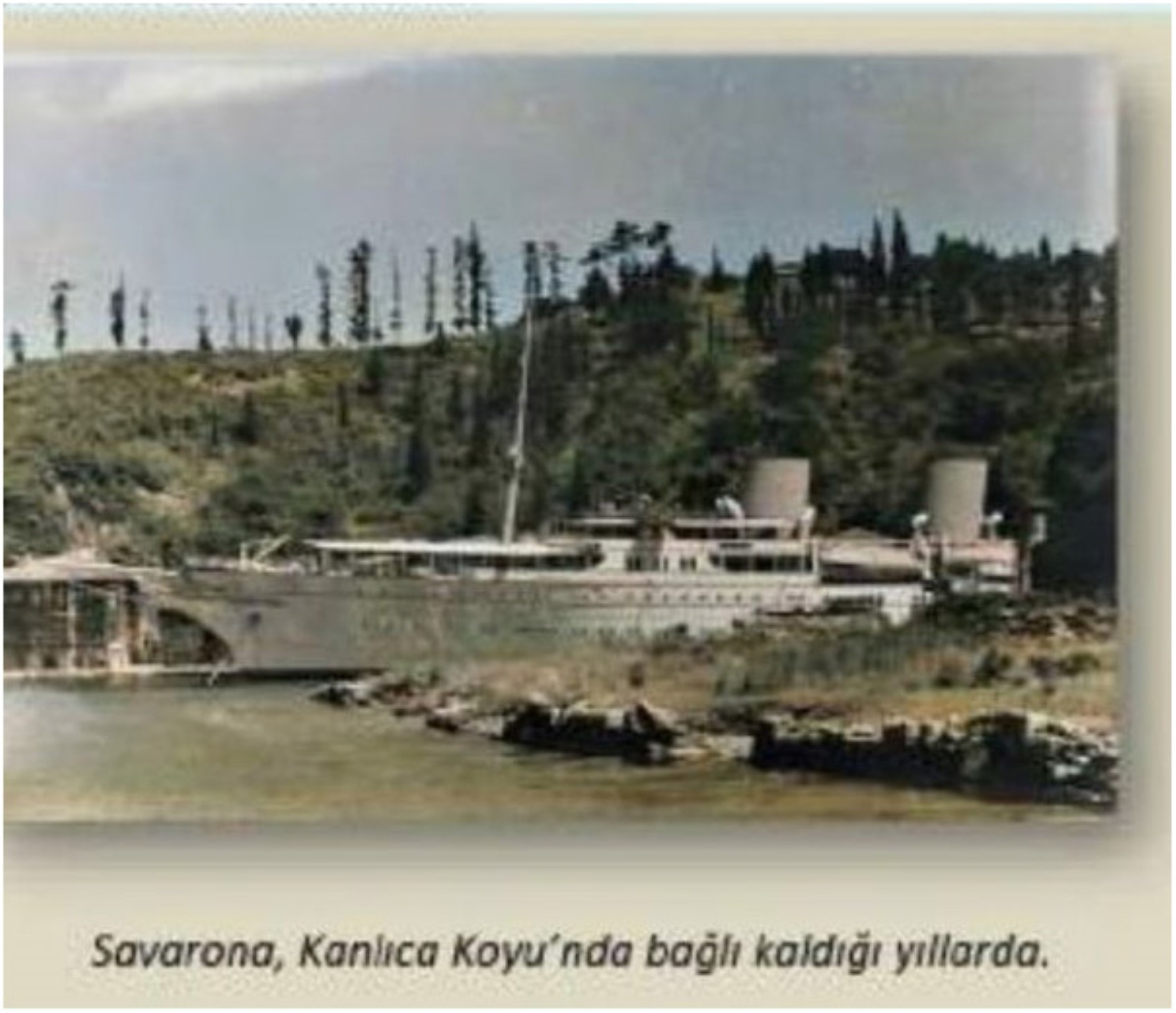
The Savarona, which had hosted Atatürk for only 55 days, escorted the Yavuz Battleship from behind while it was carrying the Ata's funeral—as far as İzmit—on its deck. During the Second World War years, it was taken under protection in the Kanlıca Bay against a possible air attack.
REGISTRATION OF THE SHIP TO THE PORT
After the death of the Great Atatürk, the Savarona was registered to the Istanbul port ship registry file with the number 2051 on behalf of the treasury by the order of the Minister of Transport (Münakalat Vekili).
SAVARONA DISCUSSIONS AFTER 1946
After the transition to multi-party political life, especially after the 1946 elections, the Savarona yacht was one of the standard topics of criticism of the single-party period. According to some Democrat Party deputies, the Savarona was a symbol of the CHP sultanate and should have been sunk.
Others were saying that the ship was a great burden for the country's budget and wanted it sold. Among the criticisms is that each voyage of the ship cost 500,000 liras and that İsmet Paşa enjoyed it. However, İnönü is the politician who used the ship the least. He was also the first to bring up the sale of the ship.
I saw only one news item in the newspapers of those years about İnönü and the Savarona. That was that the president had gone by sea to inspect the Zonguldak Coal Basin, Iron and Steel Facilities, and the Küre Copper mine operations. I think to Zonguldak and İnebolu. He had used the Savarona then.
The person who bought the Savarona was Atatürk's last prime minister, Celal Bayar. And he was now the chairman of the Democrat Party. He made a broad statement to the TBMM regarding the purchase cost and meaning of the ship. I don't really guess that Bayar's statements satisfied the deputies of his own party.
Democrat Party Chairman Celal Bayar would say, "If we only sold what is inside it right now, it would cover the purchase price," in order to appease the anger of his own group. In fact, he would defend the decision he made during his own prime ministry in a way.
Retired General Naci Tınaz, one of the former Ministers of National Defense, also said that İsmet Paşa wanted him to study the possibility of using the ship as a Naval Fleet Hospital.
DEMOCRAT PARTY ADMINISTRATORS USED THE SAVARONA THE MOST
When the Democrats came to power in 1950, Celal Bayar decided to transfer the ship to the Naval Forces Command as of July 2, 1951. To be used as a training ship for Naval Academy students.
The ship underwent renovations to be used as a school ship. New cabins were built for naval students.
Although it was given to the Naval Academy, the Savarona was used many times for other reasons. For example, foreign statesmen were hosted. Menderes and Bayar also used the Savarona. I would like to remind you of other examples. King Faisal II of Iraq liked the Savarona very much. He requested it from the DP leaders. The Savarona took the King to Italy. To Capri. Naval students were also given to his service.
Let us also add the rumor that our late prime minister Adnan Menderes enjoyed moonlight tours on the Bosphorus with the Savarona—and that it was used for this purpose from time to time.
As for Celal Bayar, we know that he went to Greece in 1952, Yugoslavia in 1954, and Pakistan via the Lebanon, Bahrain, and Basra route in 1955 with the Savarona. Turkey's third president was the one who used the Savarona the most.
PRINCESS SORAYA ON THE SAVARONA
The Savarona also has a story related to Princess Soraya. In 1956, Shah Reza Pahlavi came to Istanbul with his then-wife Soraya Esfandiary. They were hosted on the Savarona. The fact that Soraya could not give the dynasty a male child was on the agenda of the entire world public opinion. This was an issue that was on the agenda even in the slums in Turkey—in neighbor visits.
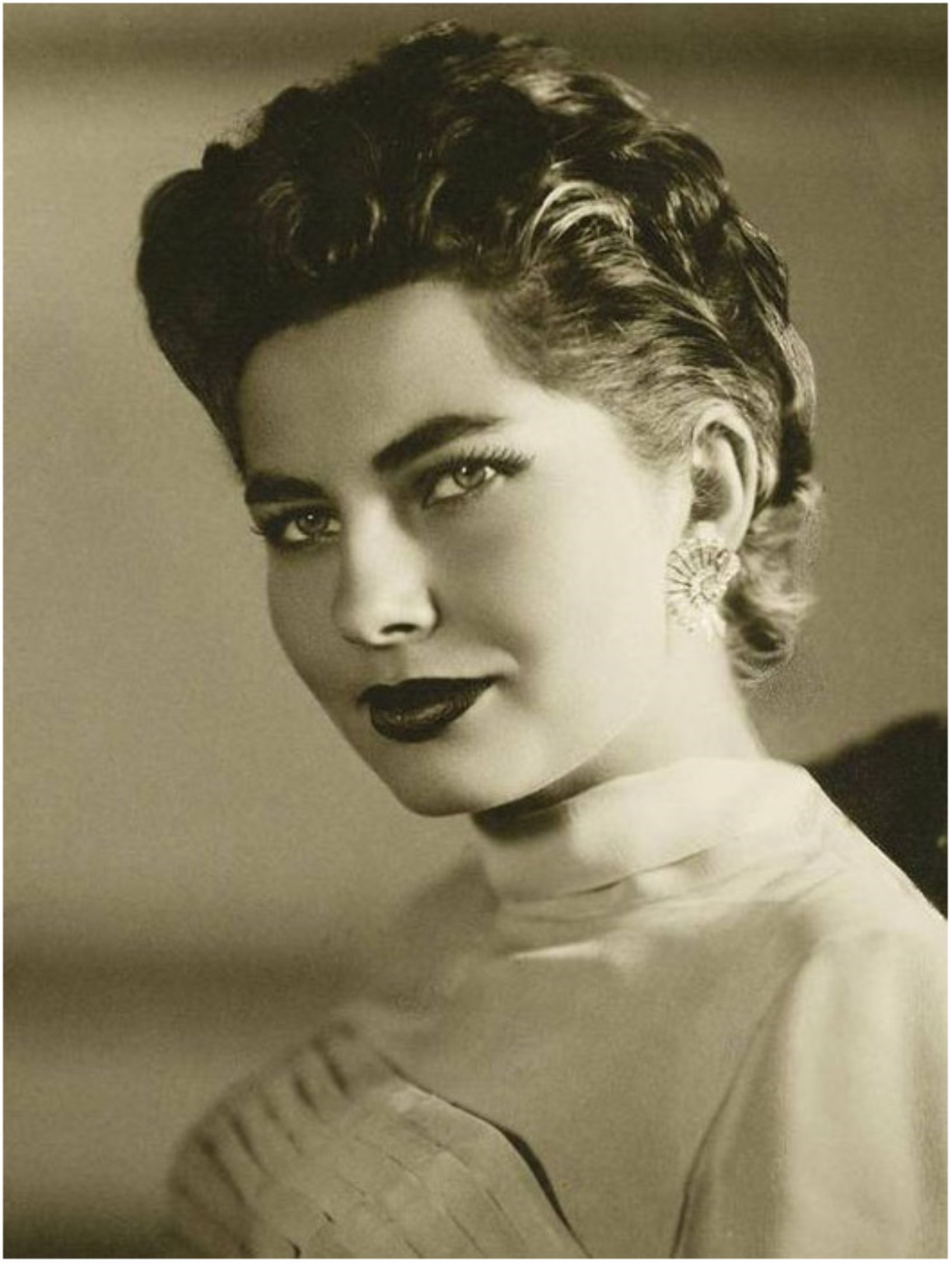
(Soraya)
While the Shah and his wife were being hosted on the Savarona, it was announced to Soraya that Fatma Bacı (a famous healer) in Yalova was finding cures for troubles with a medicine she made. Fatma Bacı was brought to the Savarona. Soraya and Fatma Bacı met for a long time—woman to woman. Treatments were performed. They even went to Yalova with the Savarona. They also received spa treatment for a while. But alas. No results were obtained.
BAYAR'S TRIP TO GREECE WITH THE SAVARONA
President Celal Bayar went to Greece with the Savarona ship on November 25, 1952, accompanied by Naval Academy students from in front of Dolmabahçe. King Paul of Greece had visited Turkey on June 7-12. Bayar was going to Greece for a return visit. The destroyers Sultanhisar and Demirhisar also accompanied the President.
King Paul of Greece (Paul I) welcomed the Turkish president at the port of Piraeus. Bayar returned to Istanbul on 3.12.1952 via Kavala and Thessaloniki.
NAVAL ACADEMY TRAINING SHIP AND FIRE
Until 1976, the Savarona was the ship where Naval Academy students had their first open-sea experiences. The ship had a fire on October 3, 1979. It was most likely sabotage. It was seriously damaged.
SCRAPPING AND KAHRAMAN SADIKOĞLU RENTING THE SHIP
The Savarona was scrapped on July 27, 1986. It was said that the ship would be dismantled for 6000 dollars. Turgut Özal's ANAP was in power. Shipyard operator and shipowner Kahraman Sadıkoğlu became a candidate for the ship. Sadıkoğlu rented the Savarona from the Ministry of Finance on the condition that he use it until 2035. The ship was renovated and started to be used for touristic purposes. The ship was 124 meters long and 15.8 meters wide. The engine parts were changed and it was made to run on diesel.
THE MEANING OF THE SAVARONA FOR ME
Old center-right parties on the Democrat Party-Justice Party line, while criticizing the ship on one hand because of its expenses, used it quite well. Quite harsh words were said to wear down İsmet Paşa over the Savarona. However, it was İsmet Paşa who used the yacht the least. Because the prime minister who bought it was Celal Bayar, the DP members could not be as aggressive as they wanted, and they continued the war of attrition with speculations.
When the Democrat Party came to power, the Savarona was used by DP leaders in a quite enjoyable way—under the guise of official service. This also includes the Pahlavi dynasty.
As for Atatürk, he spent the most troubled days of his life on the Savarona, which he had waited for with great hopes, and in the end, he had to be transferred to his apartment in Dolmabahçe.
For me, the meaning of the Savarona is hidden in two pictures: The first is the smile that appeared on the face of the Great Atatürk when he saw the ship gliding like a swan in the open waters of the Marmara under the command of Captain Sait Özege. The second is that it escorted the Yavuz Battleship from behind after his death to his great guest, whom it had hosted for 55 days.
The Savarona is a memory left to us by the savior of our homeland. It is his legacy.
Would you like to get notifications about new developments and save news?
- NotificationsNew developments and breaking news
- SaveNews is stored in the app
Most Read
Statement from Nihat Zeybekci on the fund investigation
New 75,000-seat stadium plan for Fenerbahçe
Interpol and MIT tracking yields results in Izmir
ID convenience for KPSS candidates

2027 Budget: Taxes for the people, tax exemptions for capital
The reality of Akkuyu and the longing for national nuclear power
To whom and how was the Petition of Intellectuals submitted? Who accepted the petition?
The Çanakkale robbery -1- How was the Troy treasure smuggled out?

Artificial intelligence and the new imperialism
Ministry investigation into unauthorized promotional messages